


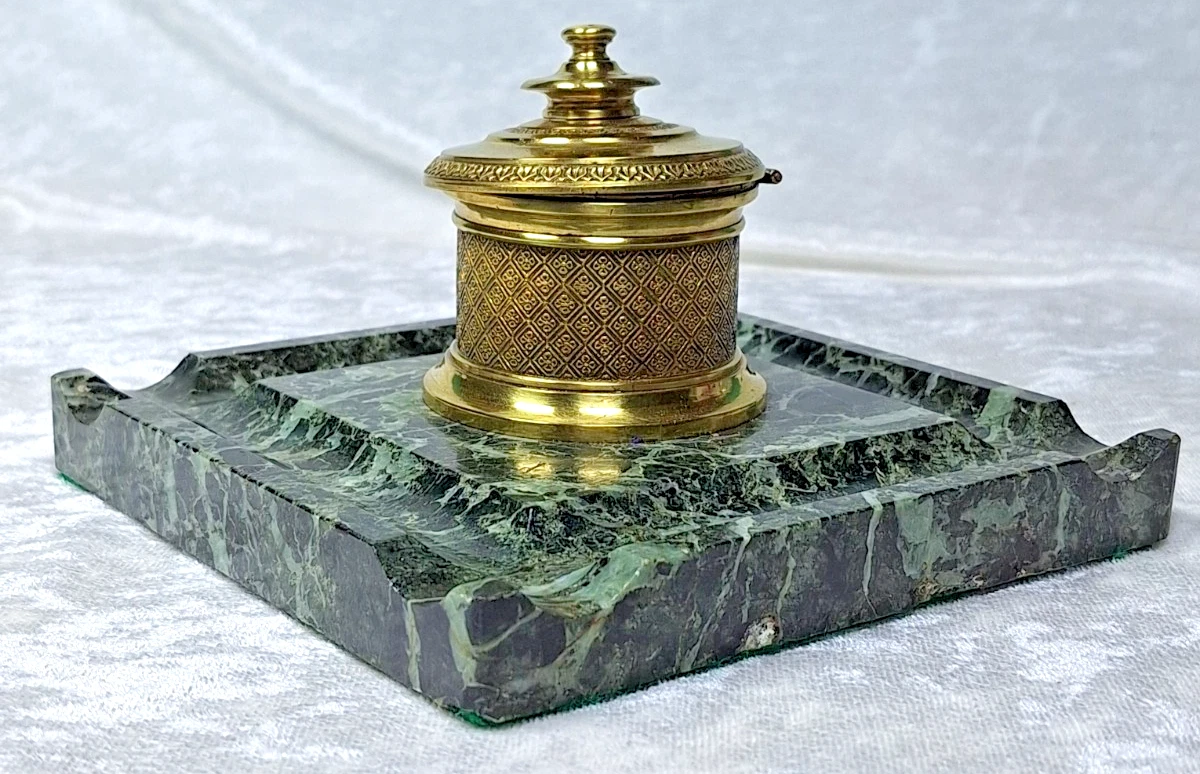

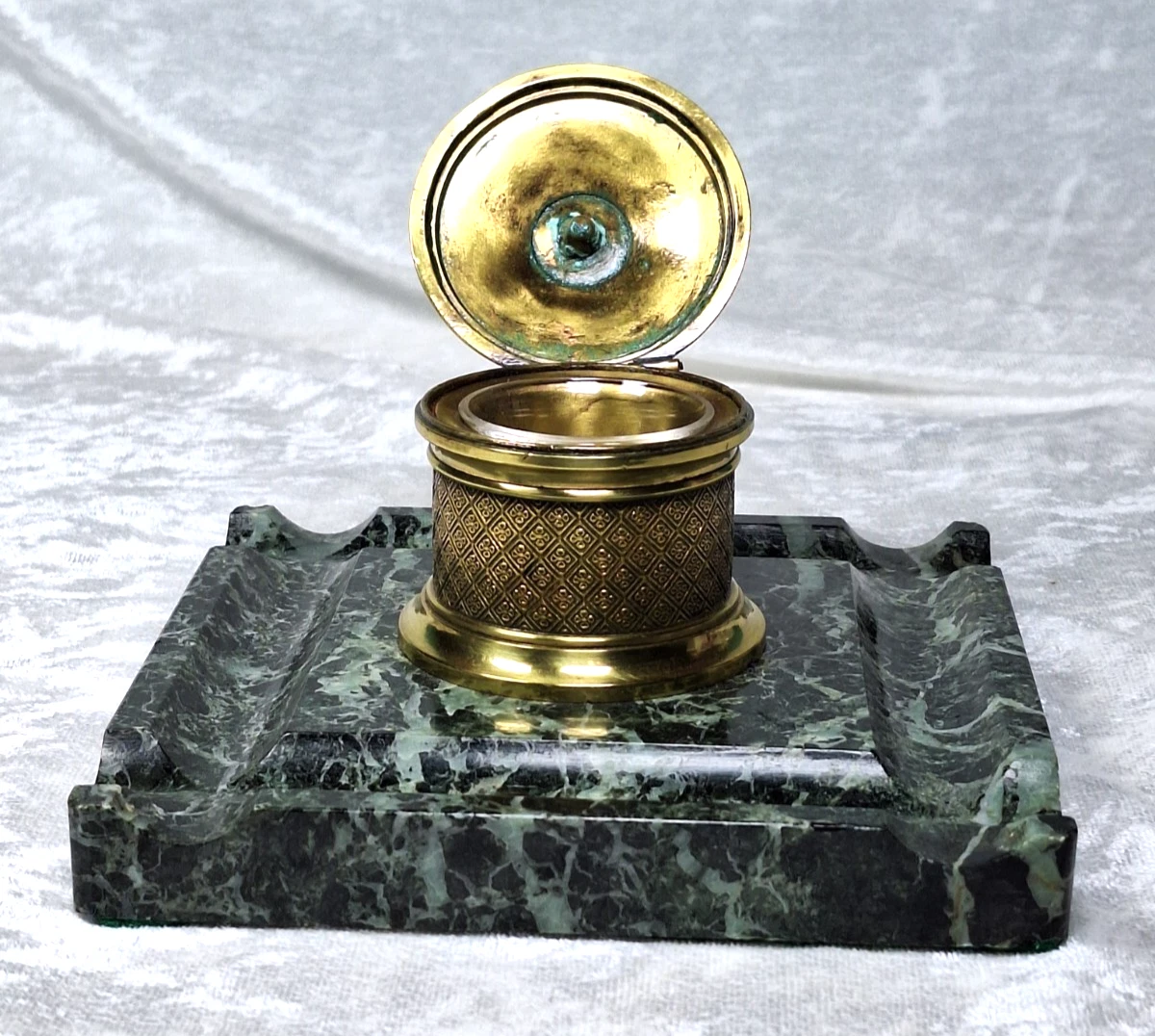
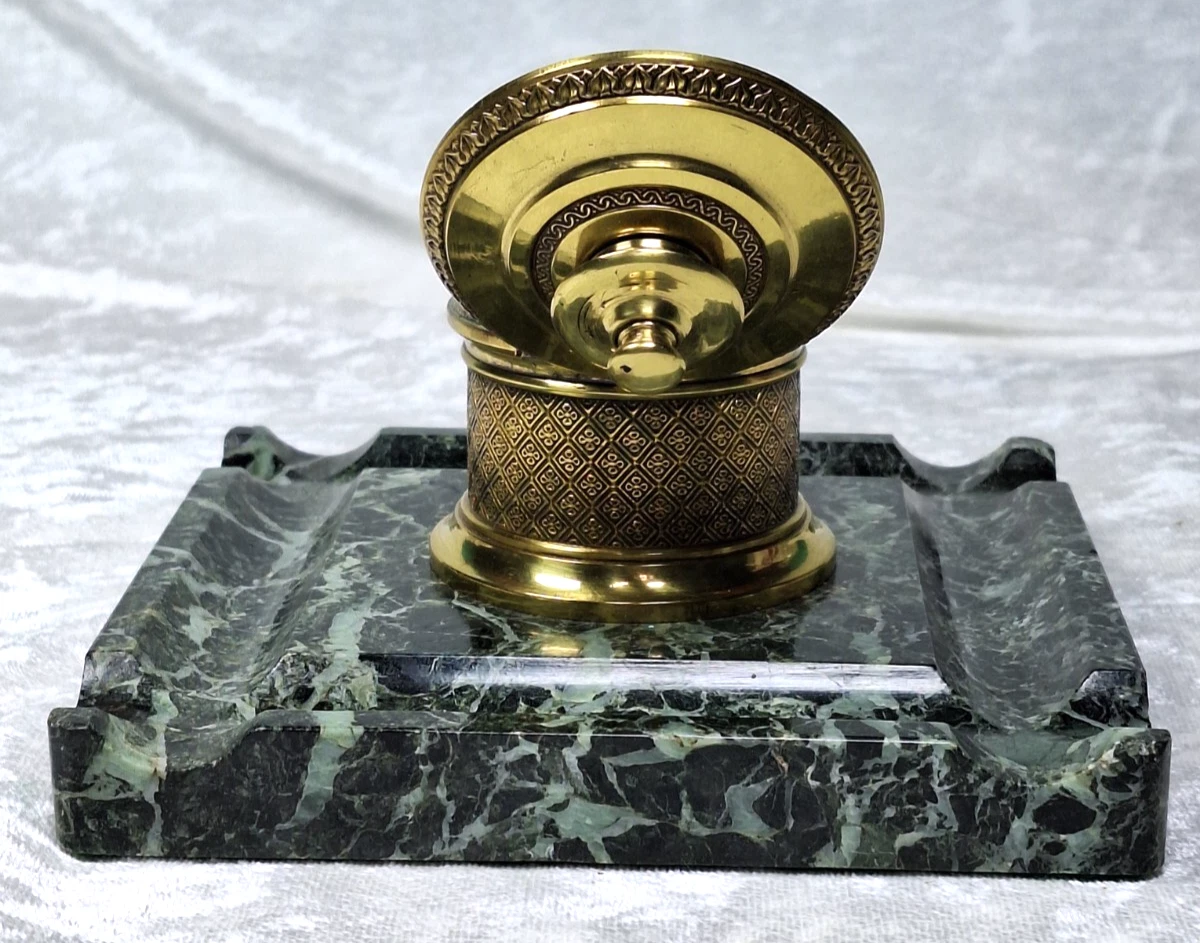
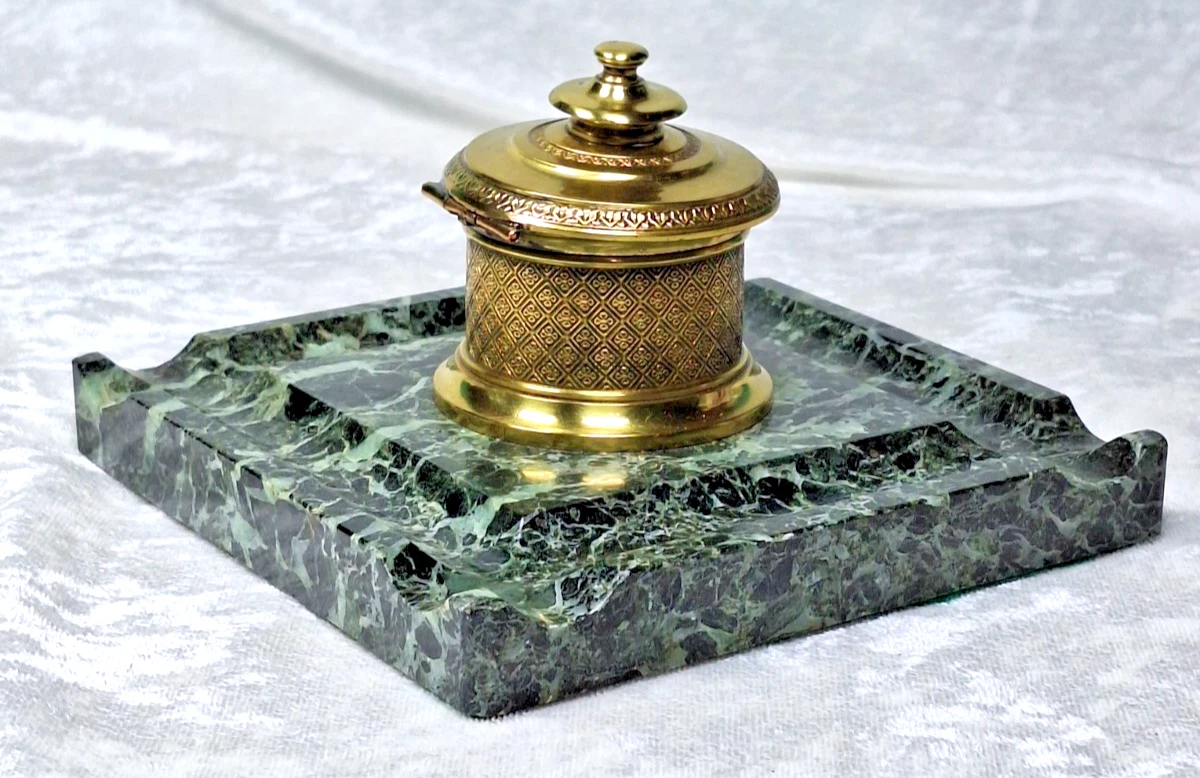
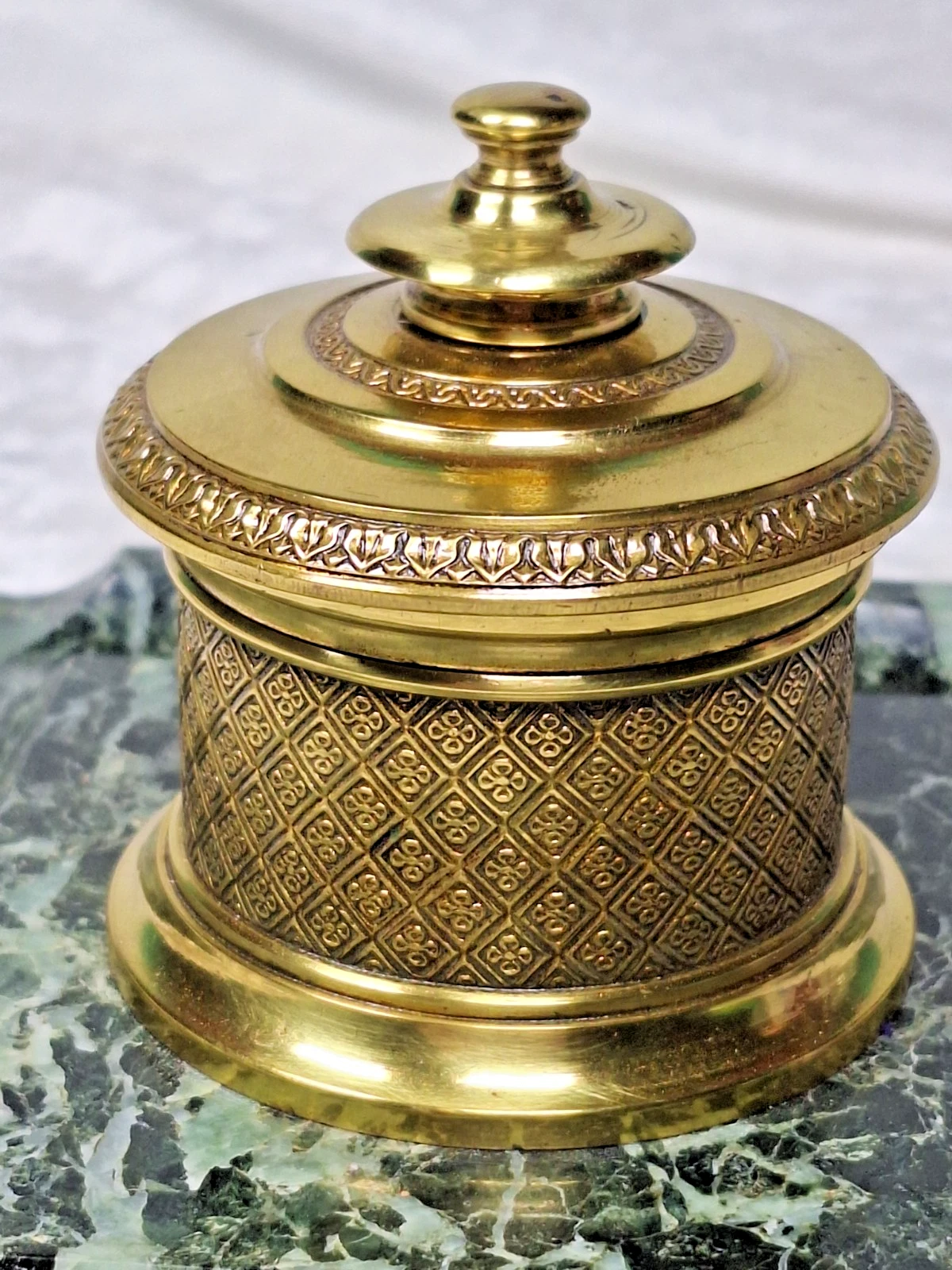
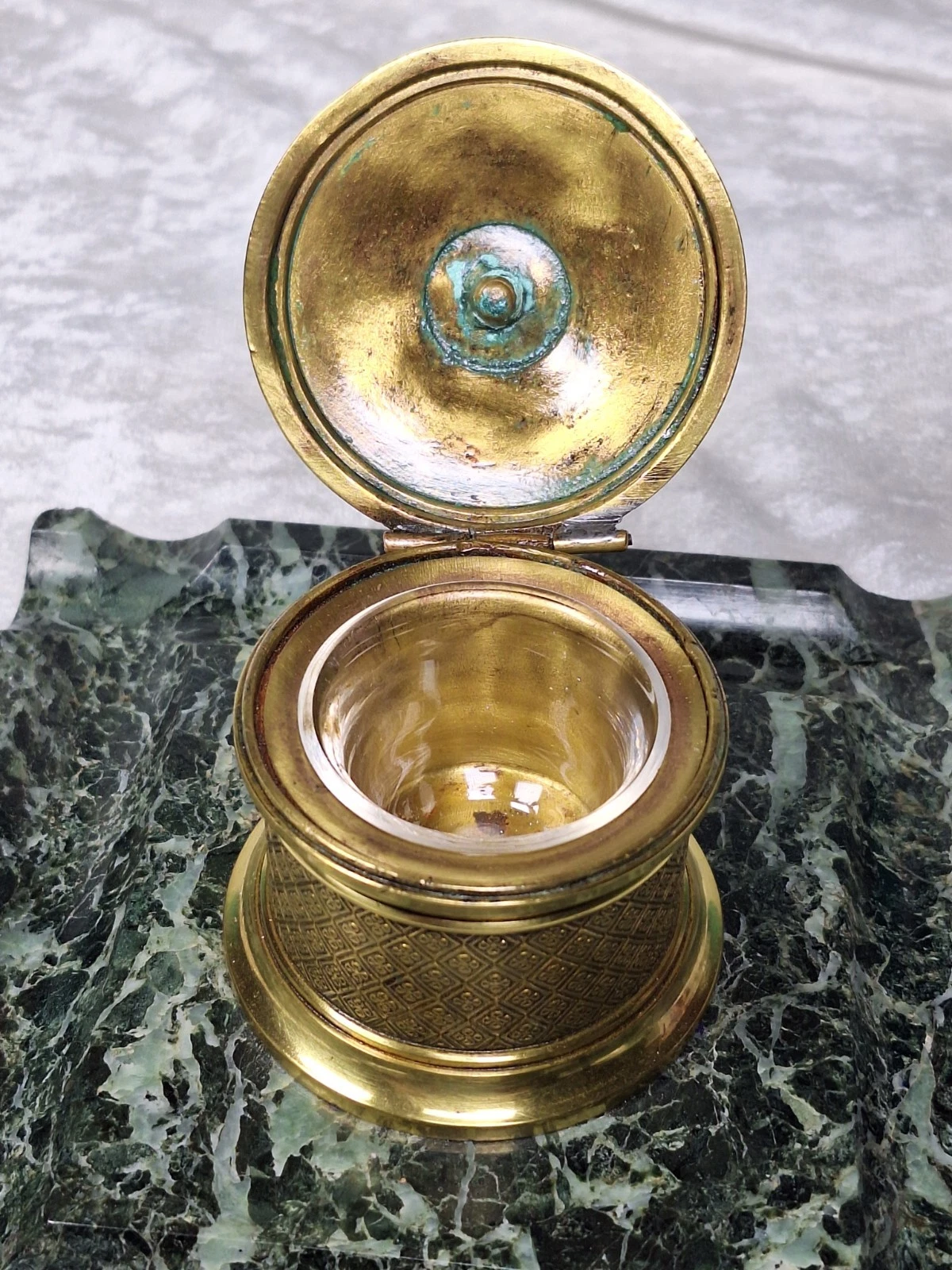
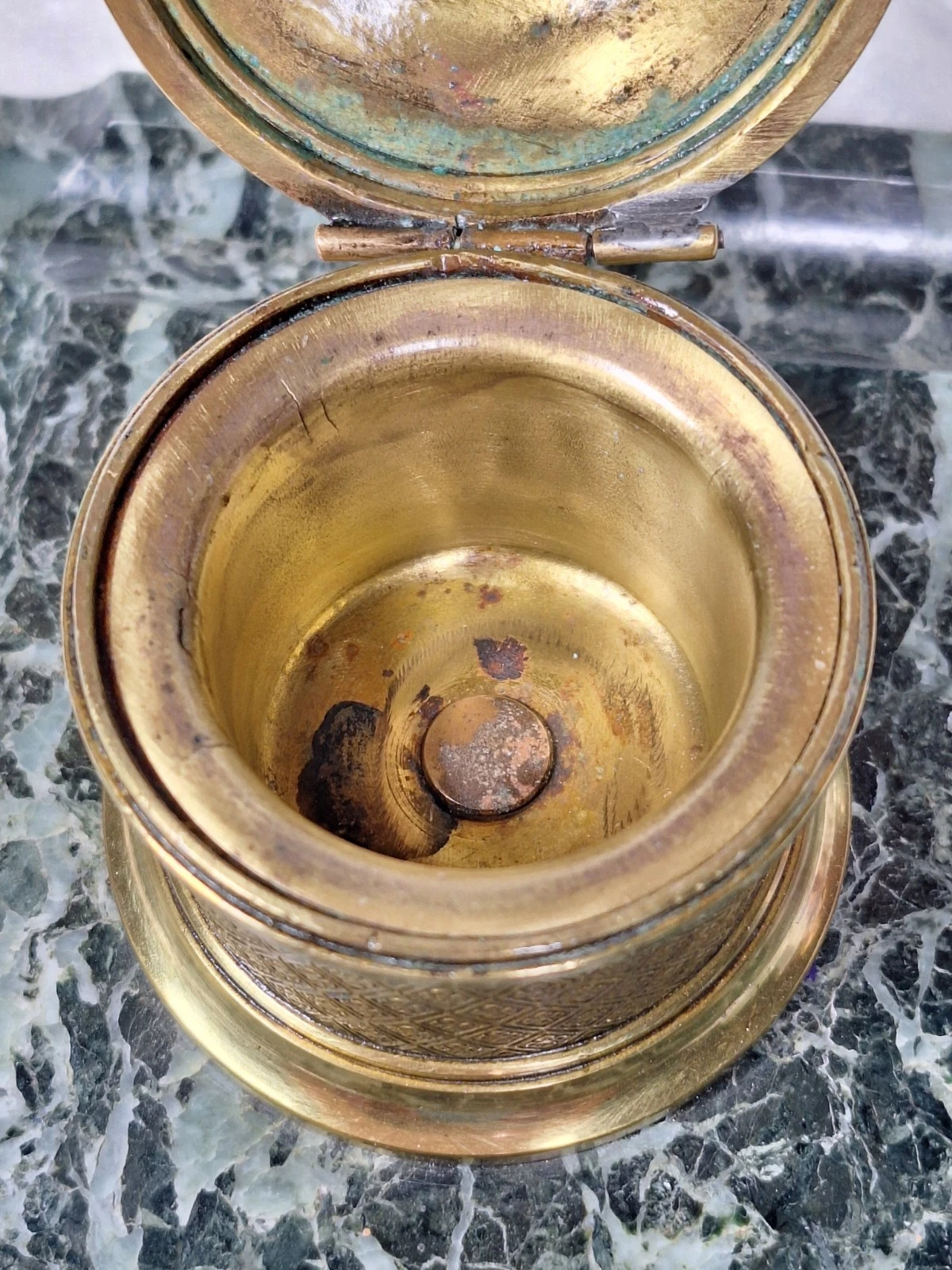
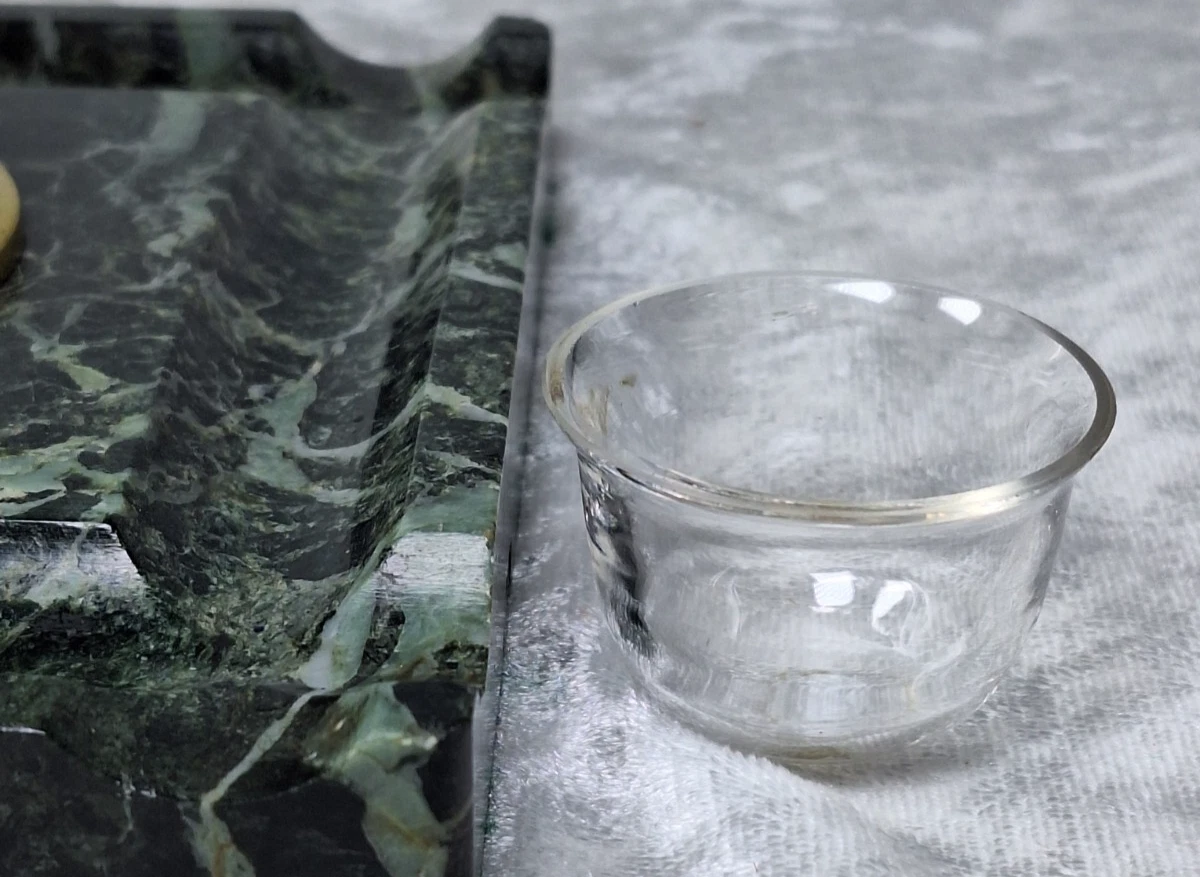
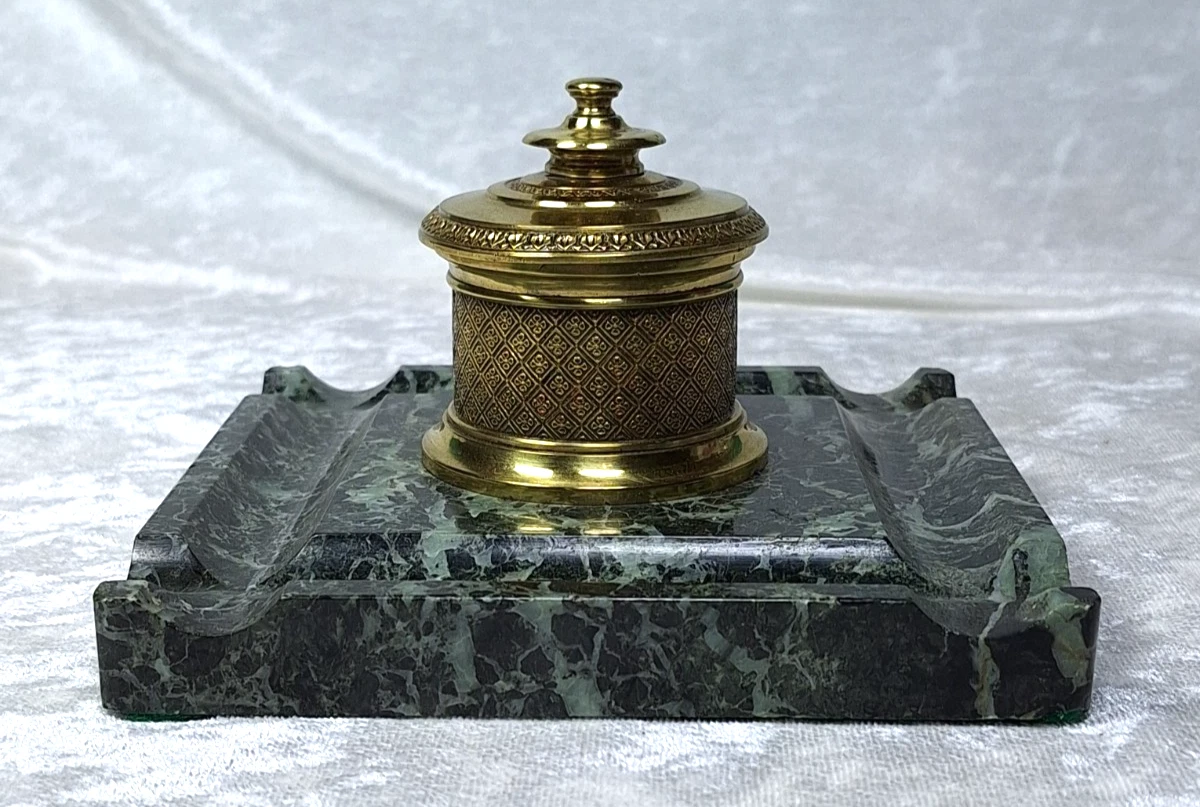
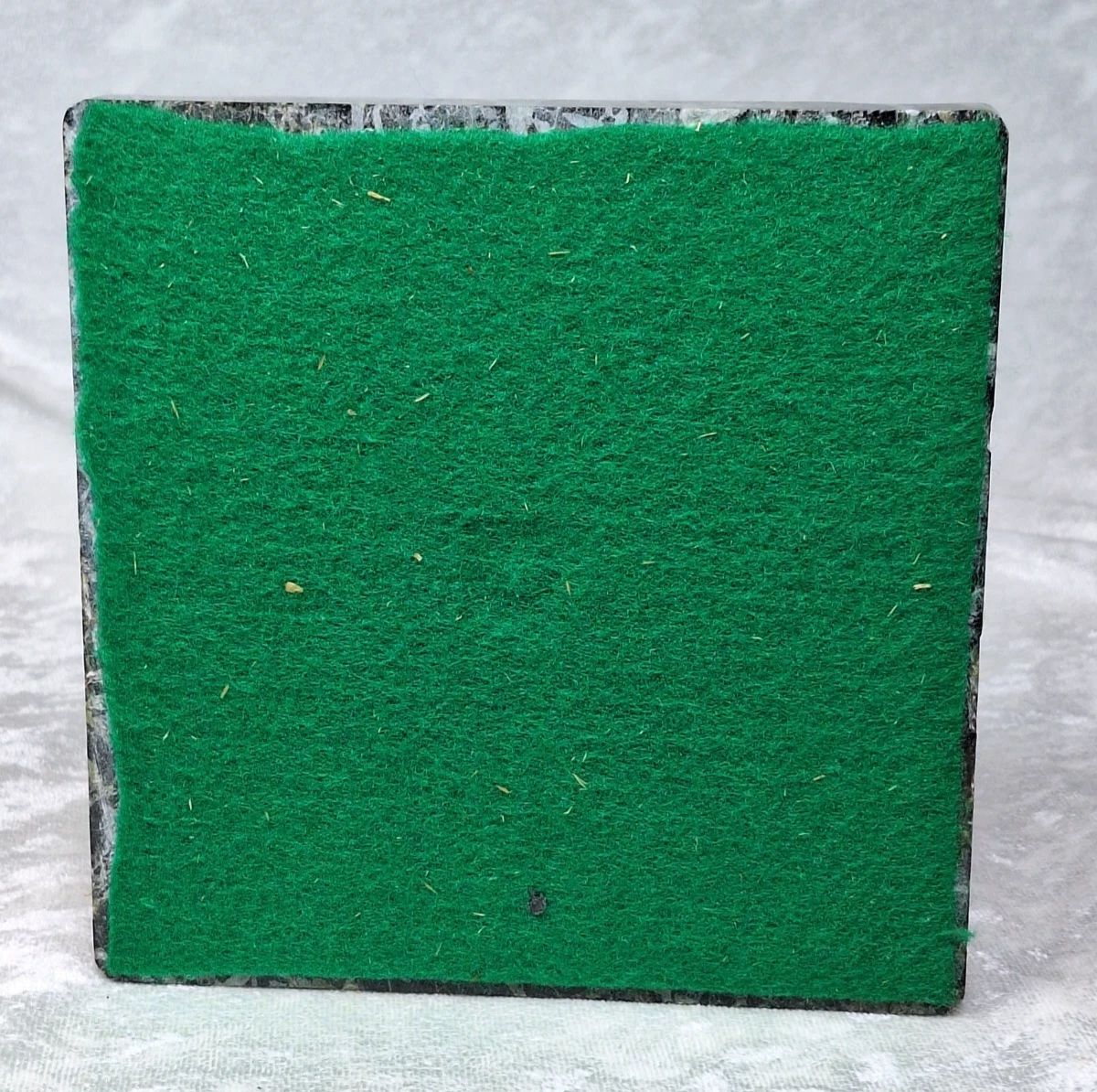
French Empire Style Square Marble Inkstand
| Categories | Stone/Marble/Ivory/Bone/Hoof/Leather |
| Material | Marble |
| Markings | Unmarked |
| Manufacturer | Undetermined |
| Origin | France |
| Date or Era | circa 1890 |
| Measuring | 6 ½” x 6 ½” x 3 ¼” high |
This inkstand is an example of the formal, geometric aesthetic popularized during the Napoleonic era and revived multiple times throughout the 19th and early 20th centuries.
- Style Confirmation: French Empire (Neoclassical Revival)
The style of this piece is French Empire (or Neoclassical Revival):
- Symmetry and Geometry: The square shape and the strict symmetry of the four pen channels reflect the Empire style’s foundation in classical Roman architecture, which valued balance, order, and geometry above all.
- Material Authority: The use of a substantial, highly polished marble block emphasizes durability and permanence, key tenets of the Imperial aesthetic.
- Formal Utility: The design prioritizes clear function and formality, suitable for a ceremonial or official desk.
- Description and Materials
- Material: The presence of black/dark grey and green colors suggests the following:
- Verde Antico (Antique Green): This is the strongest possibility. This stone is a highly prized Italian and Greek marble (technically a serpentine breccia).
- Appearance: It is characterized by its deep, dark green matrix (the main body) intermingled with irregular, jagged clasts (fragments) of black, dark gray, and sometimes white calcite/dolomite.
- Structure: The central brass inkwell is set into the marble block. The pen channels on all four sides ensure the inkstand is fully accessible and visually symmetrical from every angle.
- The Brass Inkwell Design:
- Description: The inkwell likely features a simple, yet sophisticated low-relief Rosette design.
III. Age and Origin
The strict Empire design was continuously revived, making the dating span generous:
- Age: c. 1880–1920. The specific combination of cast brass fittings and a clean-cut marble block places it firmly in the late Neoclassical Revival period.
- Origin: Given the style, a French manufacturer (catering to high-end tastes) is most likely.
Sold for $150 in November 2025
Content disclaimer. The information posted is the owner’s best knowledge and may not have been vetted by the SOIC. We welcome comments, corrections, and additions, working to make our website information comprehensive and accurate.
Join the Society of Inkwell Collectors (SOIC) – it’s free!
Founded in 1981 as a non-profit organization,
we are documenting inkwells (and accessories).
We’re here to help and inform!