


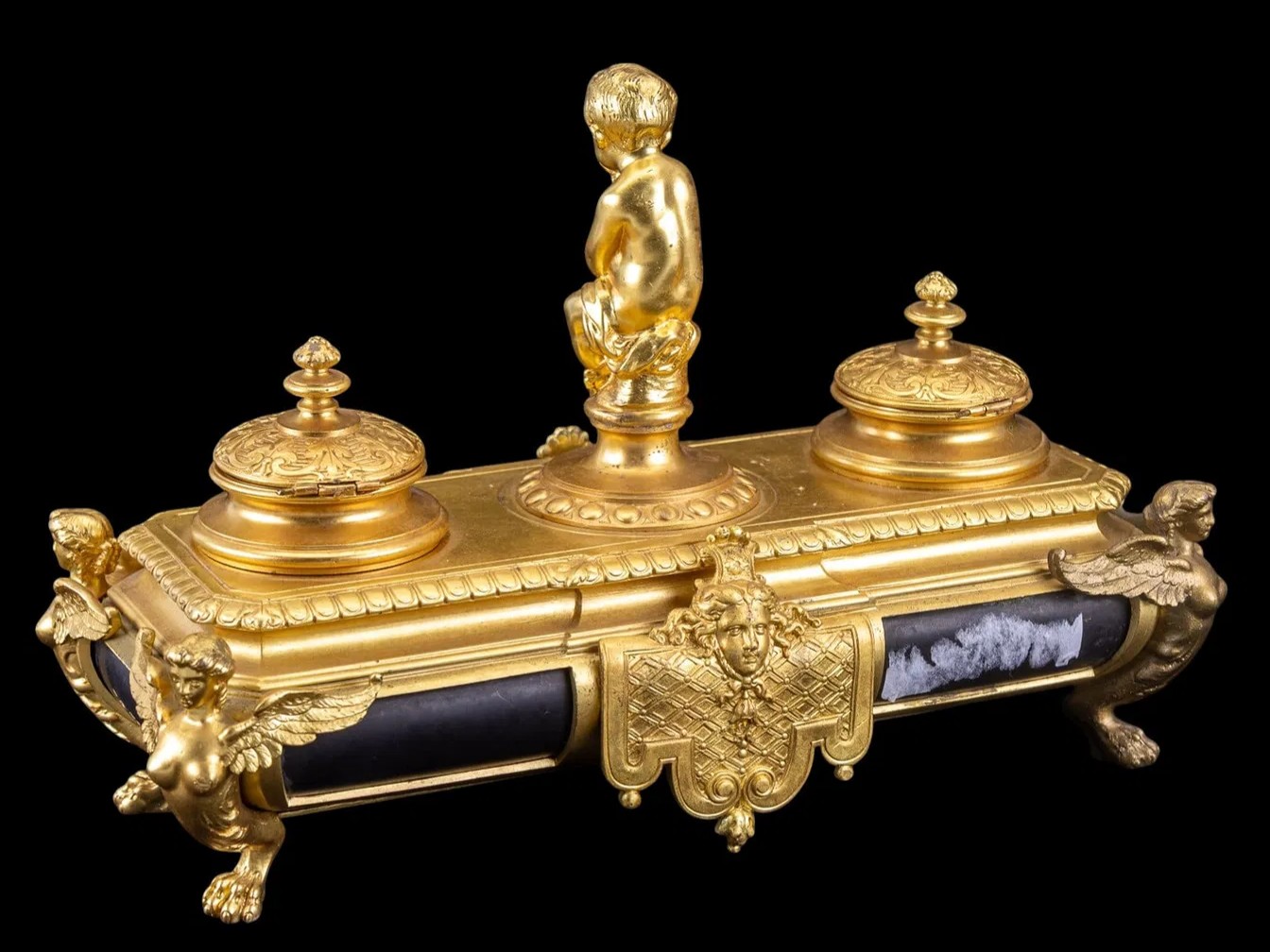


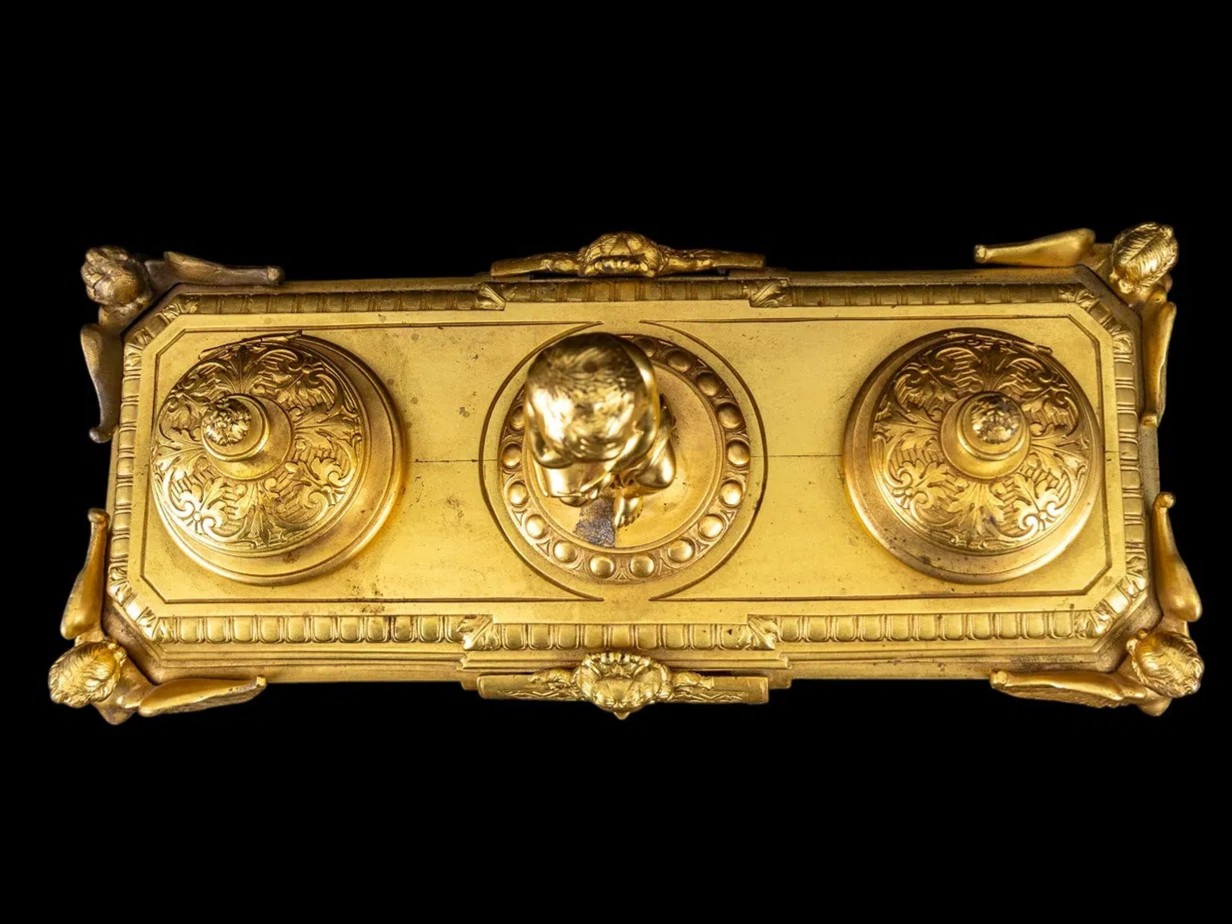

French Empire Gilt Bronze Inkstand
| Categories | Figural - Mythology; Literature; Religion; Fictional |
| Type | Cupid / Cherub / Angel, Grand Tour |
| Material | Ormolu, Slate |
| Markings | Unmarked |
| Manufacturer | Undetermined |
| Origin | France |
| Date or Era | circa 1870 |
| Measuring | 13” x 6” x 9” high |
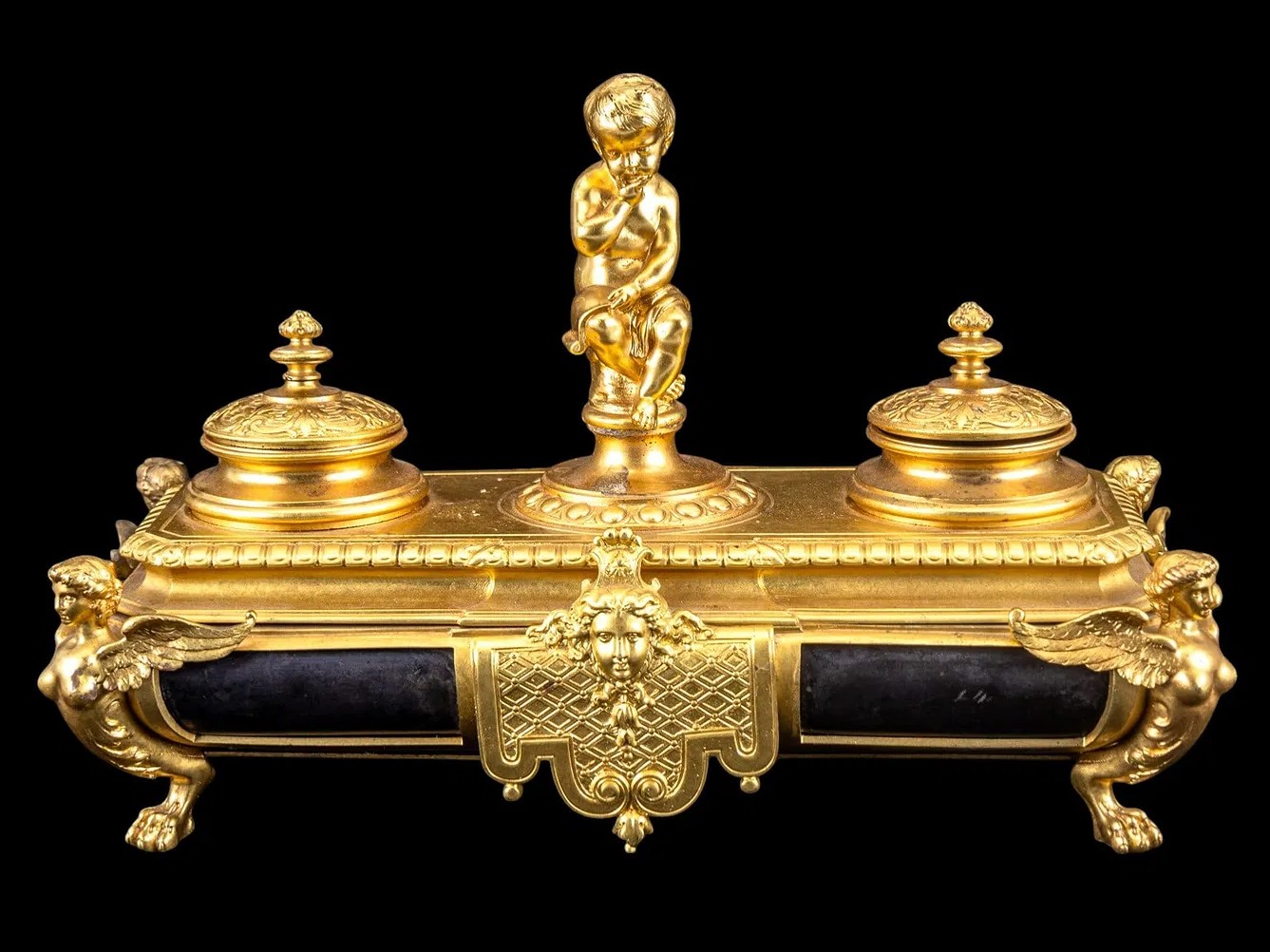
This 19th-century inkstand, a nice example of French Empire-style decorative metalwork, likely dates to the mid-to-late 19th century (circa 1860–1880) during the Napoleon III period. It utilizes the classic contrast of “noir et or”—polished black stone (likely Belgian black slate) and finely chased ormolu (gilt bronze).
Description
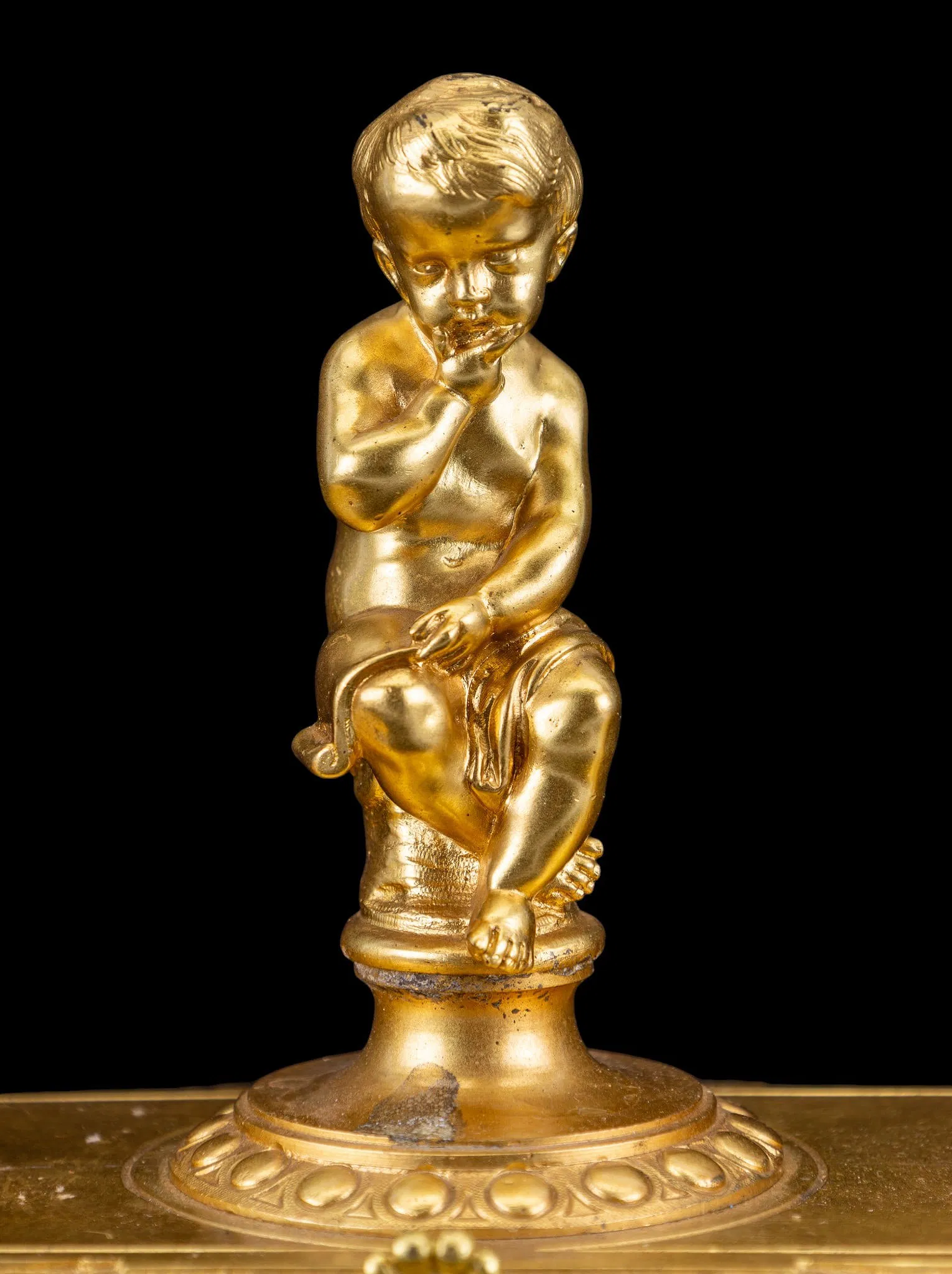
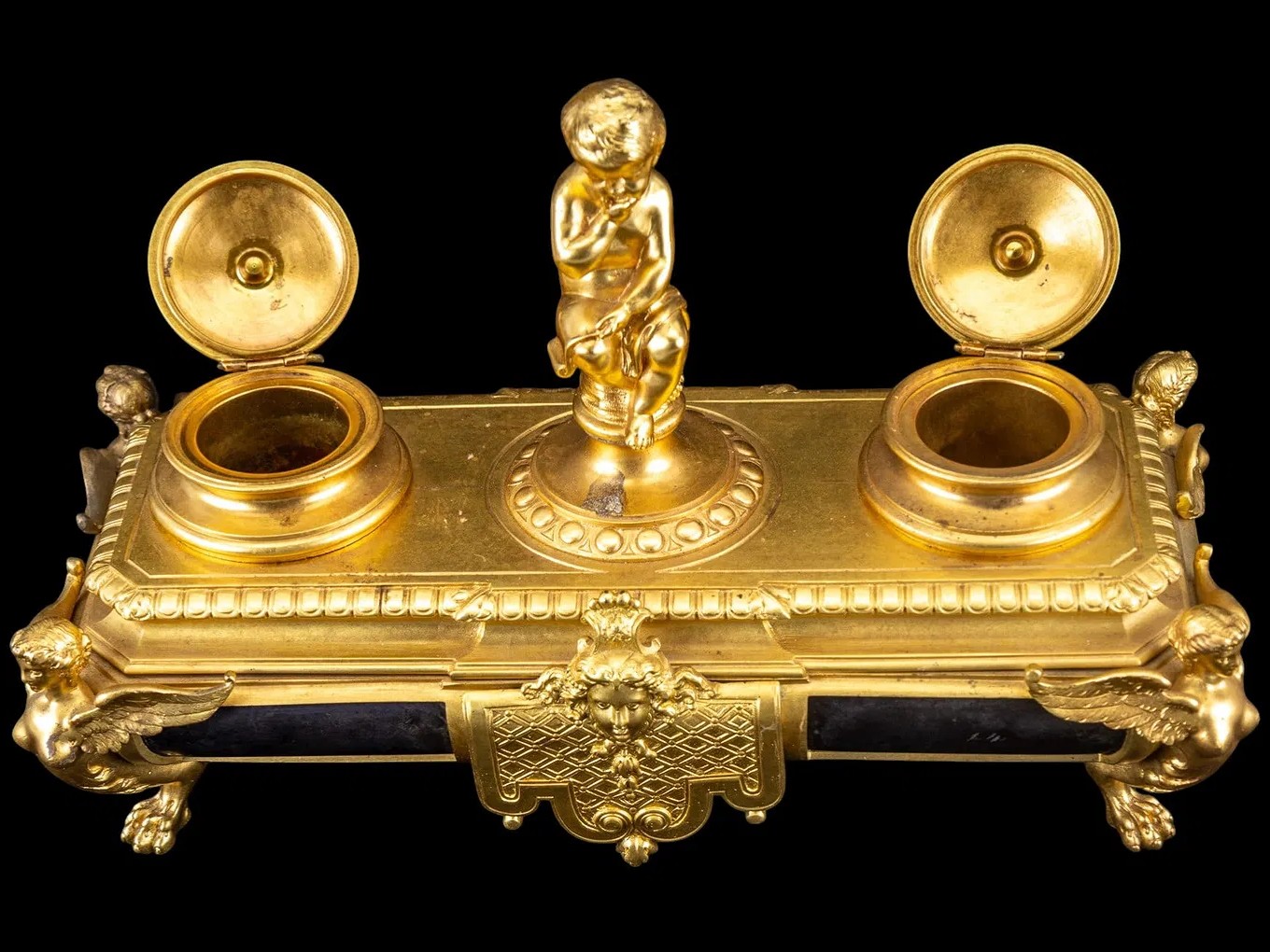
- Central Figure: The centerpiece is a cast bronze figure of a seated, pensive putto (cherub) in a contemplative pose with one hand held to the chin. This “thinking” motif was popular in Neoclassical art, symbolizing inspiration or the act of writing.
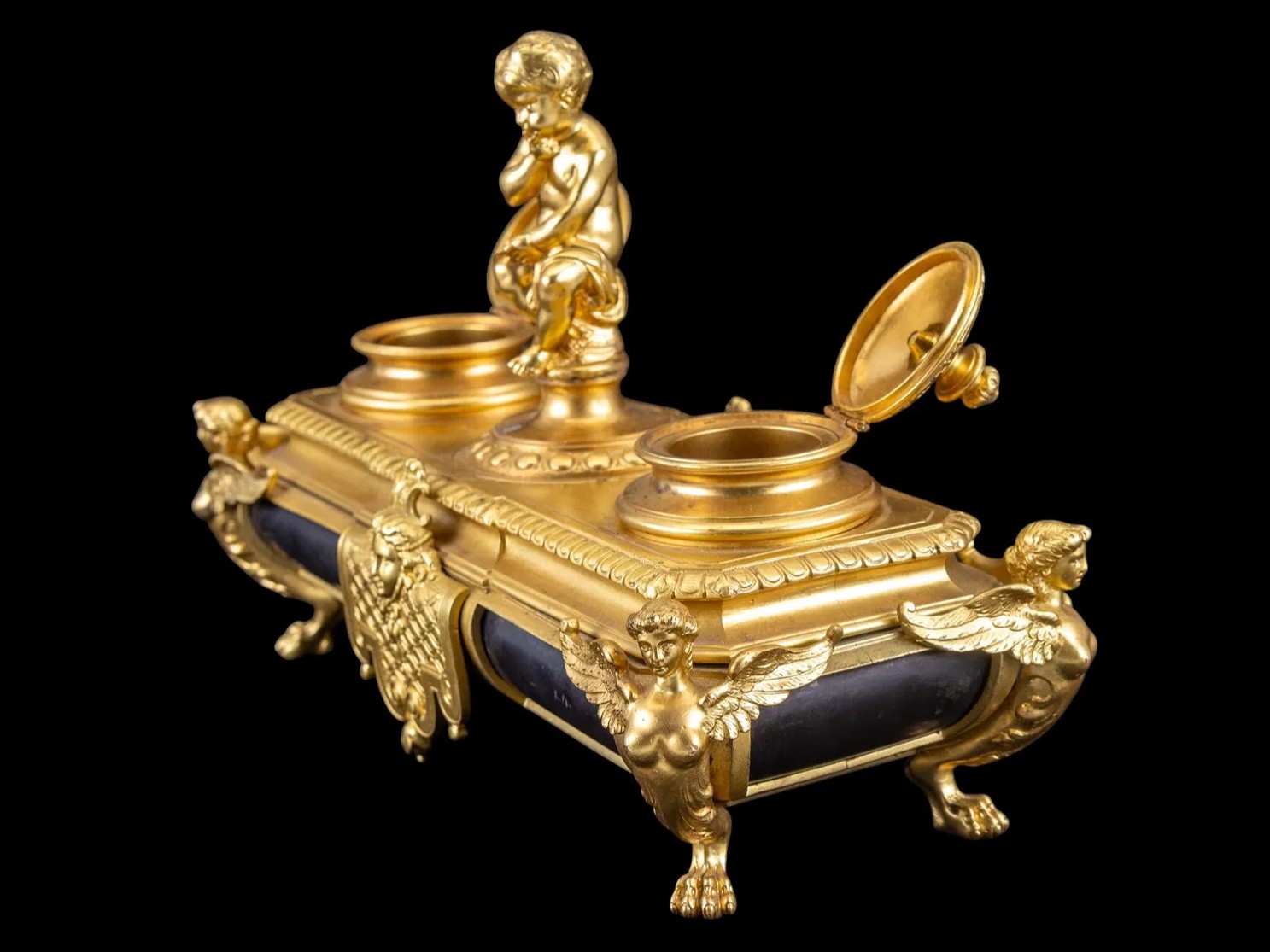
- Inkwells: Flanking the central figure are two circular gilt bronze inkwells. The wells feature fluted bases and hinged, domed lids decorated with cast foliate scrolls and topped with bud-shaped finials.
- Corner Supports: The most striking features are the four monopodial corner mounts. These consist of winged female busts—often referred to as harpies or sirens in this context—that transition into single legs terminating in powerful lion’s paw feet. This “monopodium” leg is a hallmark of the Empire style, inspired by Roman archaeological finds.
- Apron and Ornamentation: The front of the inkstand features a central mascaron (a female face/head) centered on a lattice or “diaper” pattern apron. This intricate geometric background provides a rich texture that catches the light, a technique often used by premier 19th-century Parisian bronziers to showcase the quality of their chasing.
- Base: The body is constructed with inset panels of black slate, framed by gilt bronze molding with a gadrooned or “egg-and-dart” border.
Age and Attribution
- Estimated Age: While the design is strictly Empire (early 1800s), the sharpness of the casting and the specific combination of the lattice-work apron suggest it is a high-quality Napoleon III-era revival piece, produced roughly between 1860 and 1880.
- Manufacturer: Without a visible foundry mark, a definitive attribution is difficult. However, the superior quality of the chasing and the complexity of the figural work are consistent with top-tier Parisian foundries of the 19th century, such as:
- Ferdinand Barbedienne: Known for high-quality bronze reductions and desk accessories.
- Suss Frères: Renowned for their “Grand Prix” quality desk sets.
- Maison Millet: Specialists in high-end 18th and 19th-century revival bronzes.
Sold for $413 in April 2026
Content disclaimer. The information posted is the owner’s best knowledge and may not have been vetted by the SOIC. We welcome comments, corrections, and additions, working to make our website information comprehensive and accurate.
Join the Society of Inkwell Collectors (SOIC) – it’s free!
Founded in 1981 as a non-profit organization,
we are documenting inkwells (and accessories).
We’re here to help and inform!