










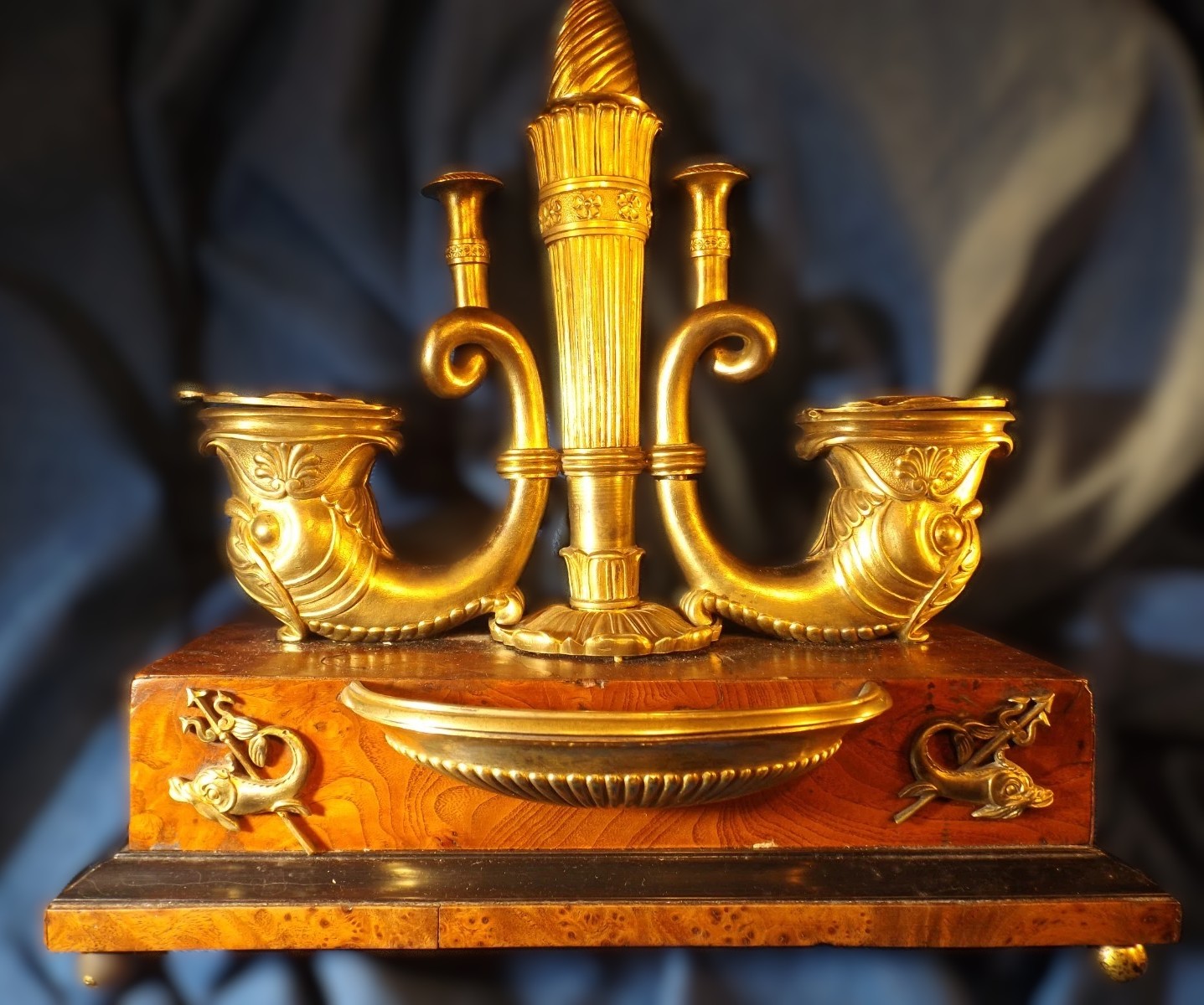
French Double-Sided Partner’s Inkstand with Integrated Candlestick
| Categories | Bronze - Brass - Copper |
| Material | Ormolu, Wood |
| Markings | See Narrative |
| Manufacturer | Undetermined |
| Origin | France |
| Date or Era | circa 1810 |
| Measuring | 9 ¾” x 6 ¾” x 10 ⅜” high |
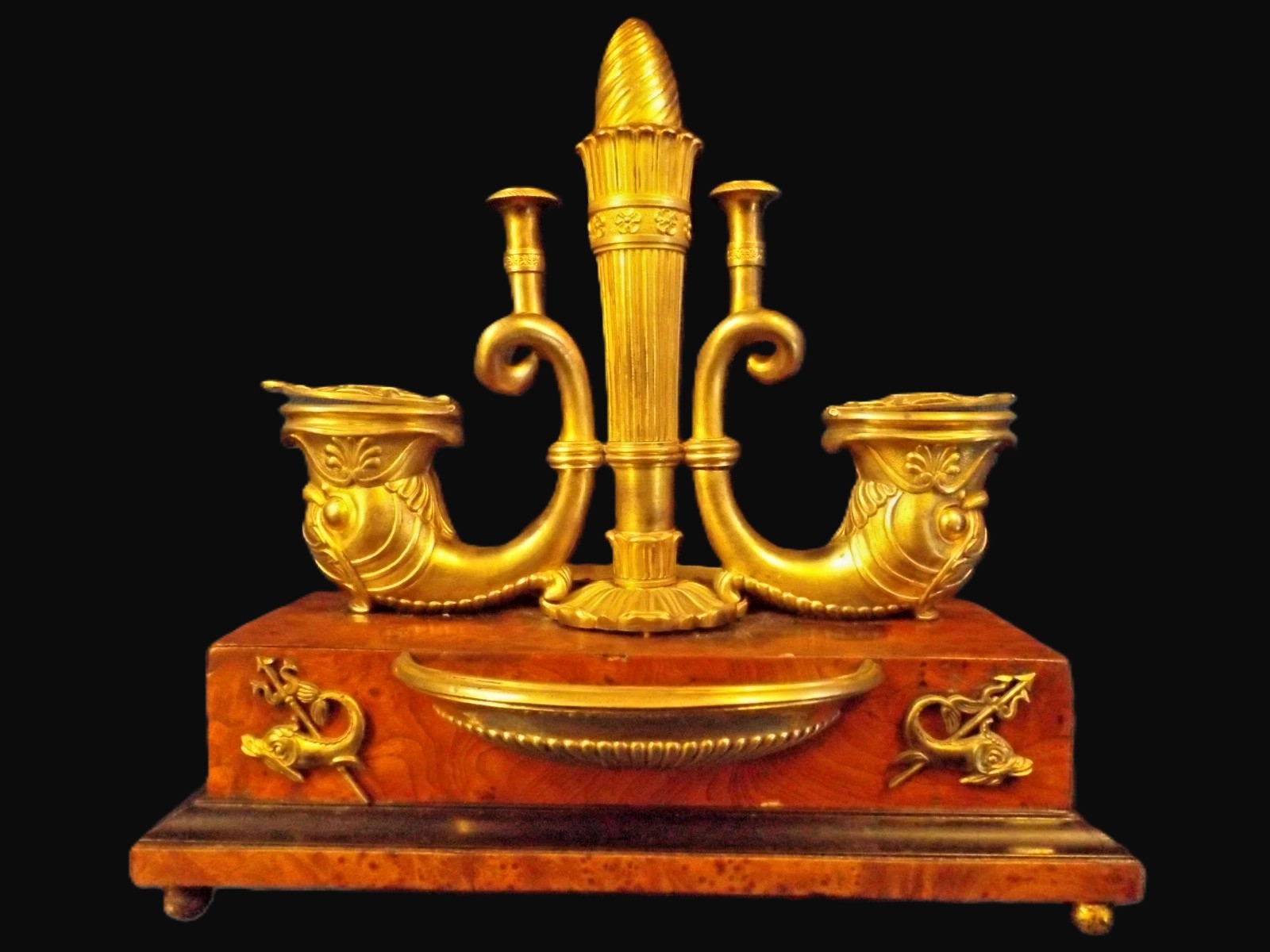
This is an exceptional example of a French Empire period (c. 1805–1815) double-sided inkstand. The piece exemplifies the “Return from Egypt” and neoclassical influences favored during Napoleon’s reign, combining high-quality mercury gilt bronze (ormolu) with rare wood veneers.
Description
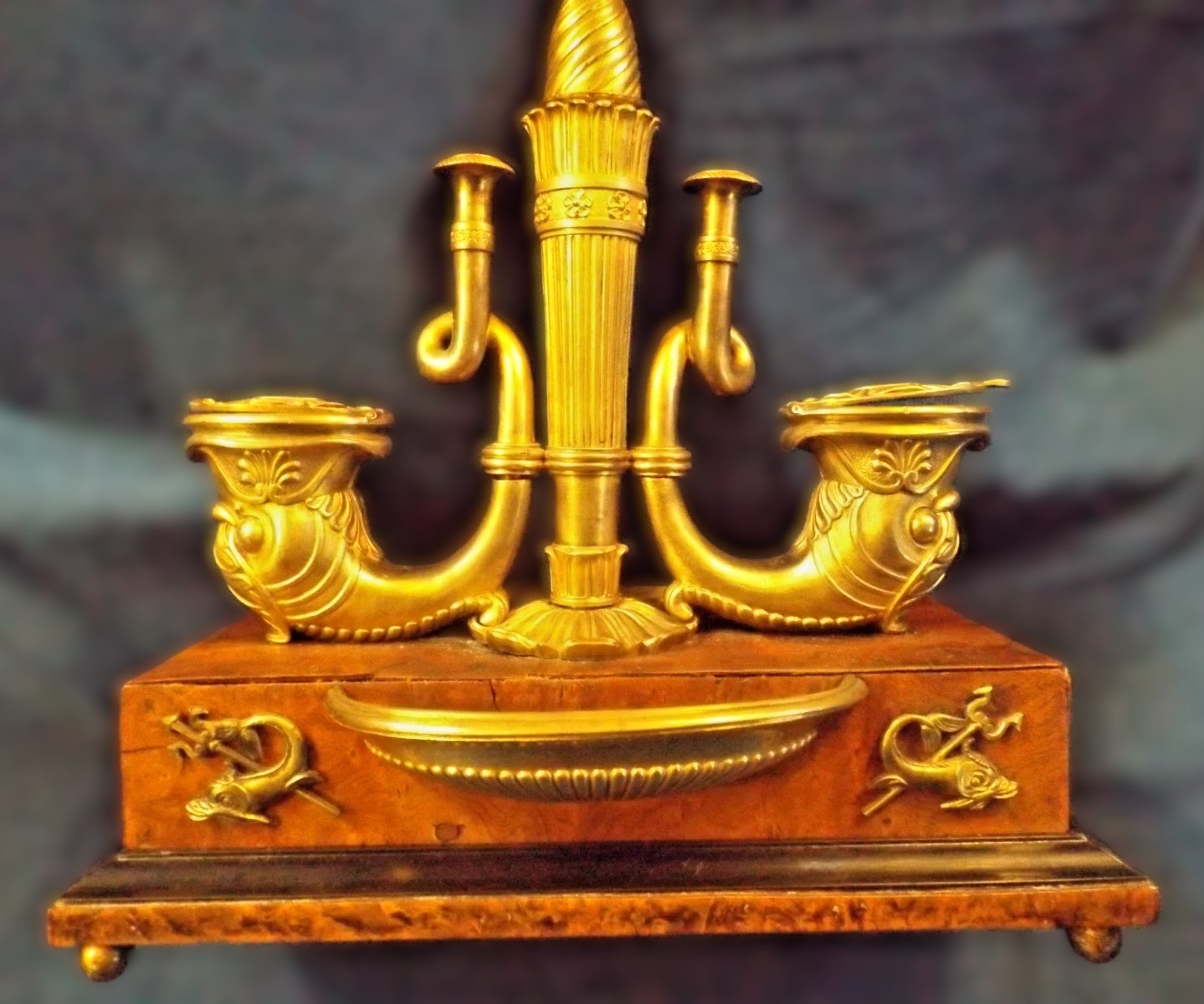
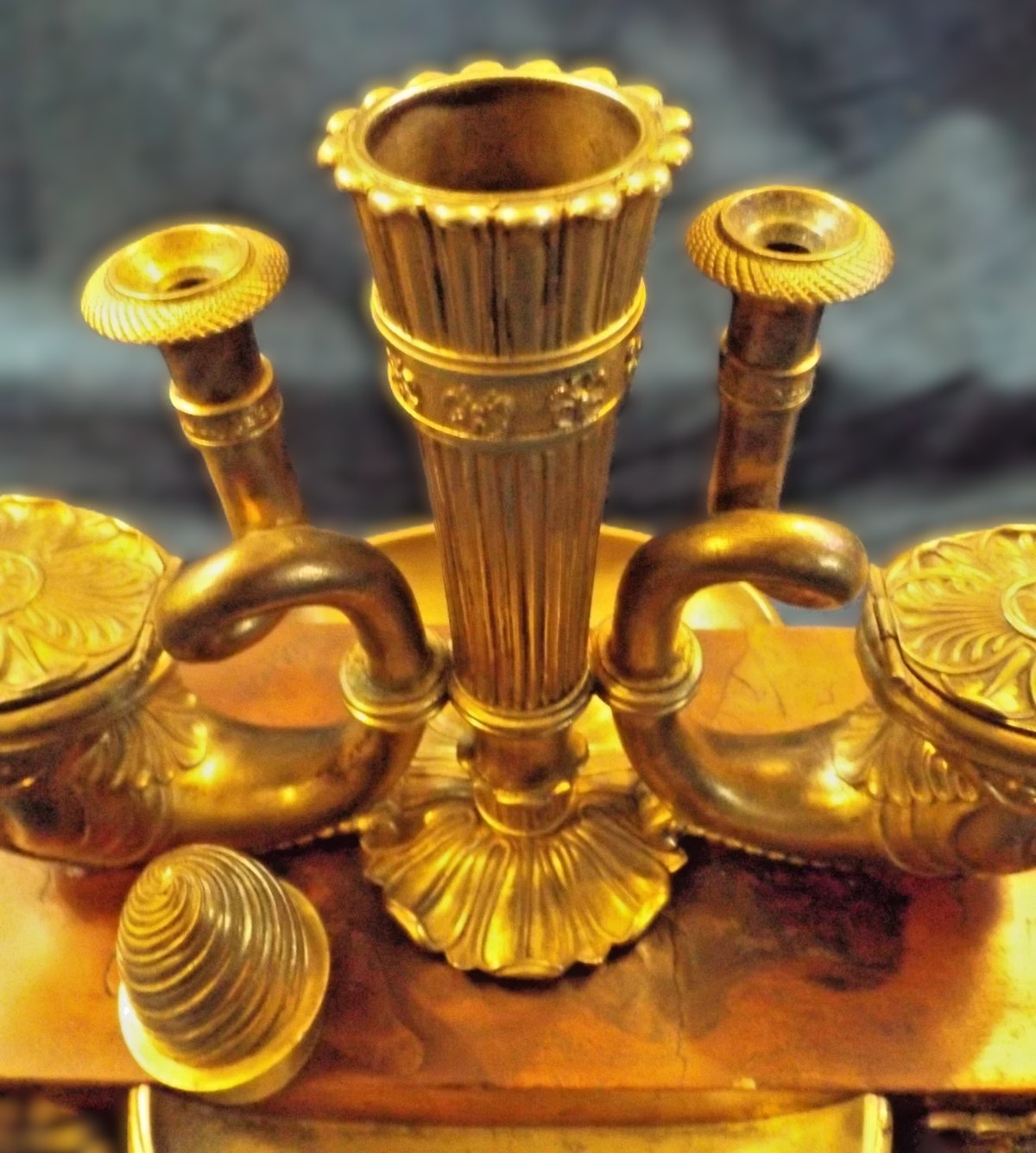
The Central Column and Candleholder The centerpiece is a fluted, torch-form column that functions as a candlestick. It is topped with a removable flame-shaped snuffer. Flanking the central column are two elegant, scrolling arms specifically designed as quill holders. The casting here is crisp, with floral banding around the neck of the torch.
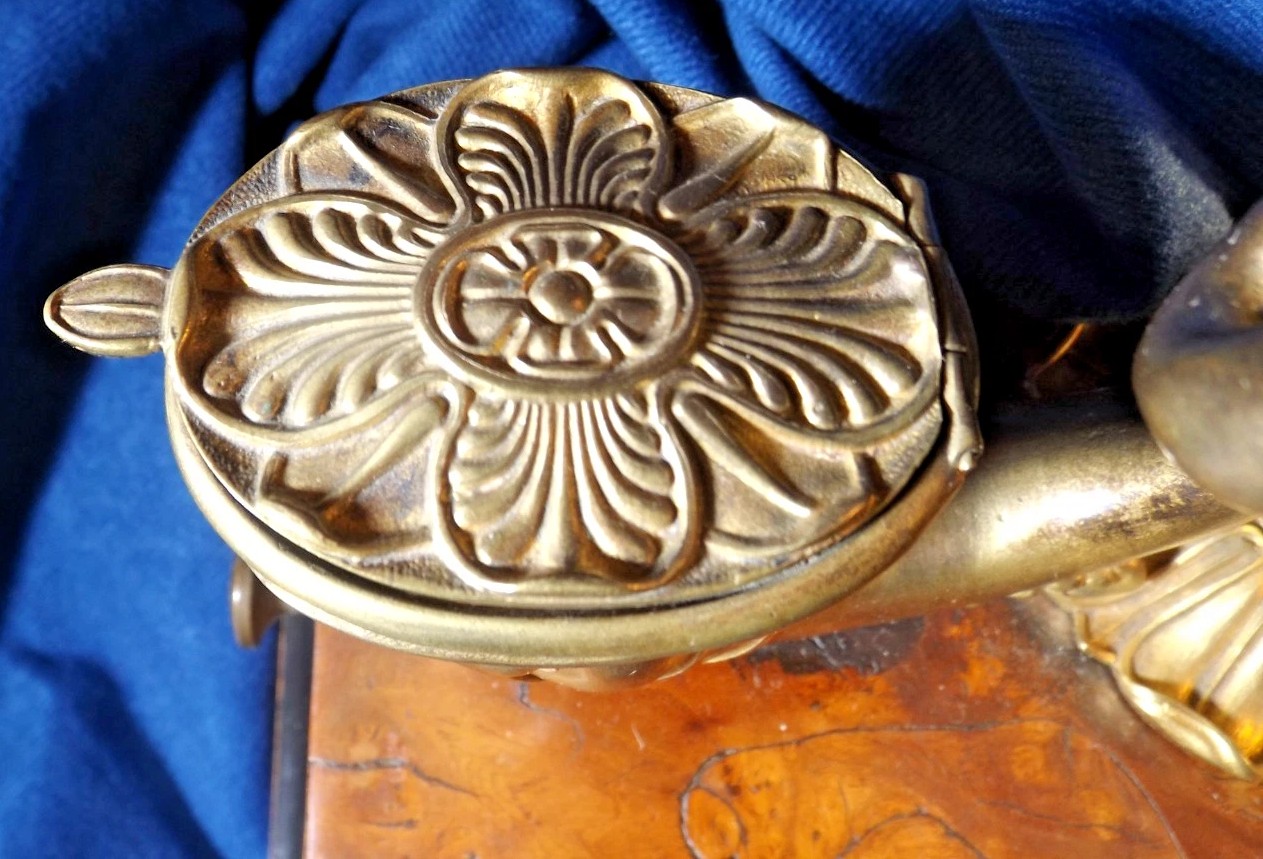
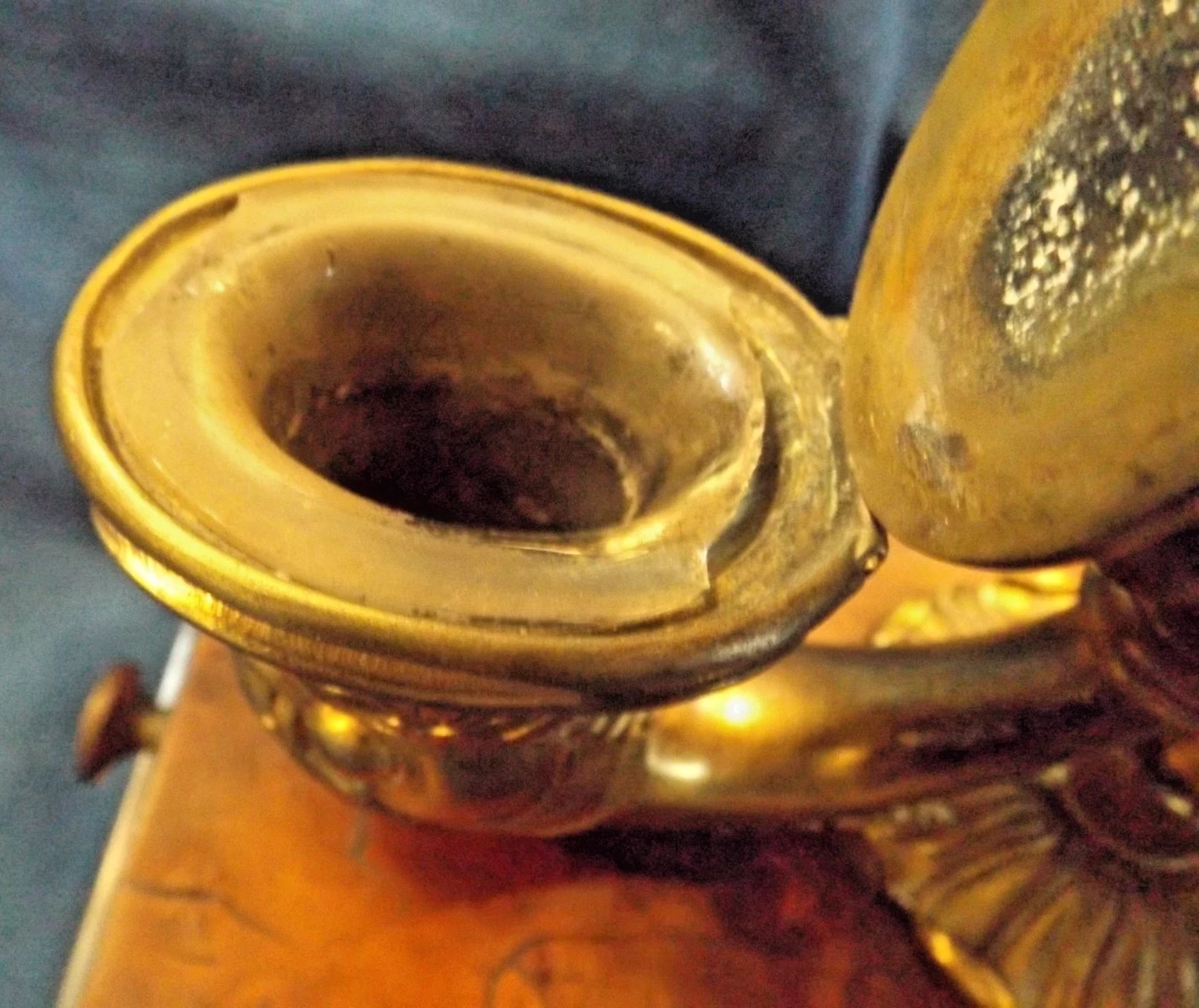
The Dolphin Inkwells The most striking features are the two cornucopia-style inkwells.
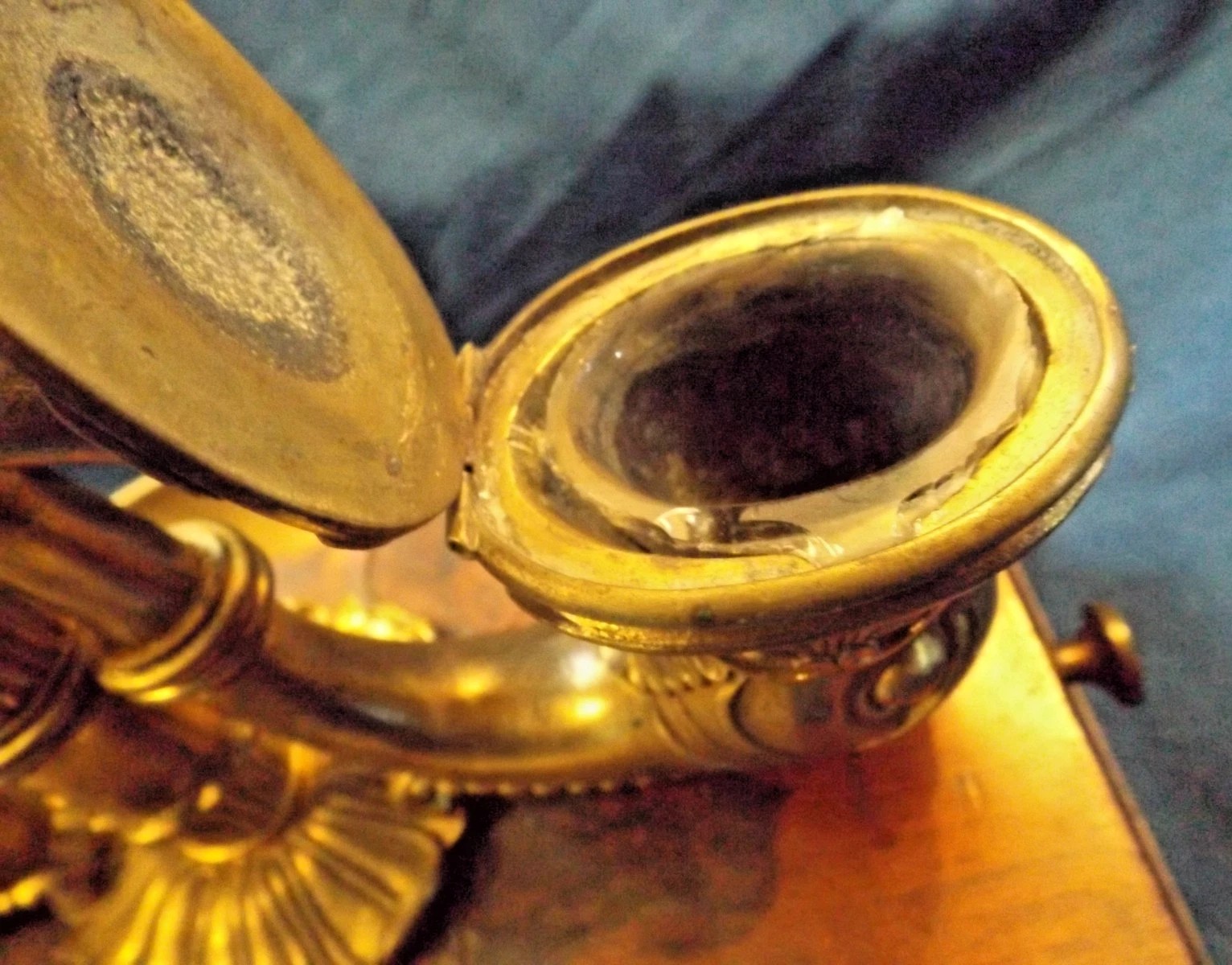
- Lids: The hinged lids are decorated with deeply cast foliate rosettes and feature a small protruding thumbpiece for ease of opening.
- Liners: The original glass liners are present.
The Base and Cabinetry The base is constructed of a high-grade burr wood veneer (likely walnut or amboyna), chosen for its complex, swirling grain.
- Symmetry: This is a “two-sided” or partner’s desk accessory. It features identical gilt bronze fluted pen trays on both long sides, allowing it to be used from either direction.
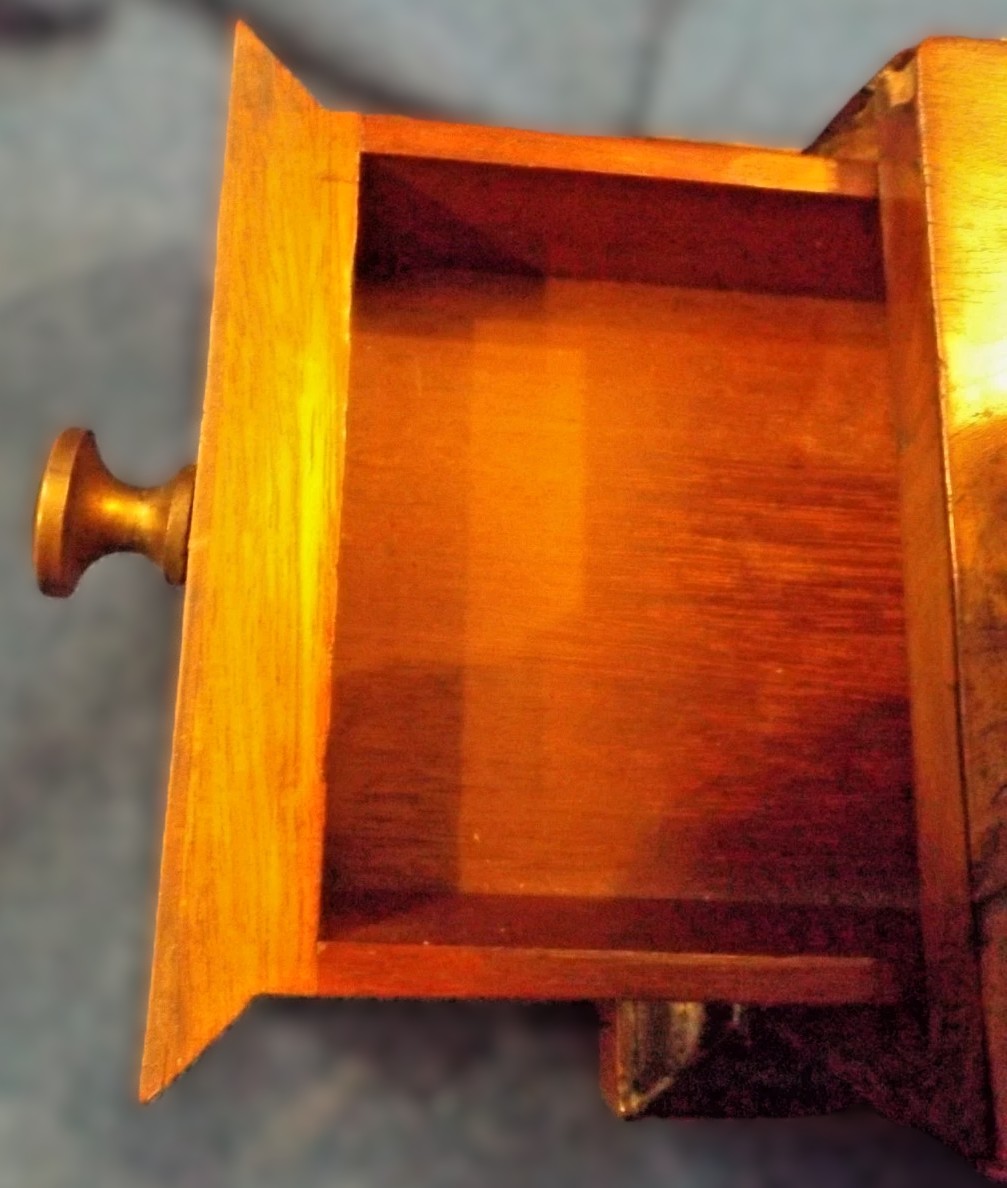
- Joinery: The functional drawer at the end displays hand-cut dovetail joinery. The tightness and thinness of these dovetails are hallmarks of 19th-century master cabinetmaking. The use of a “dummy” drawer on the opposite end ensures the piece remains perfectly symmetrical.
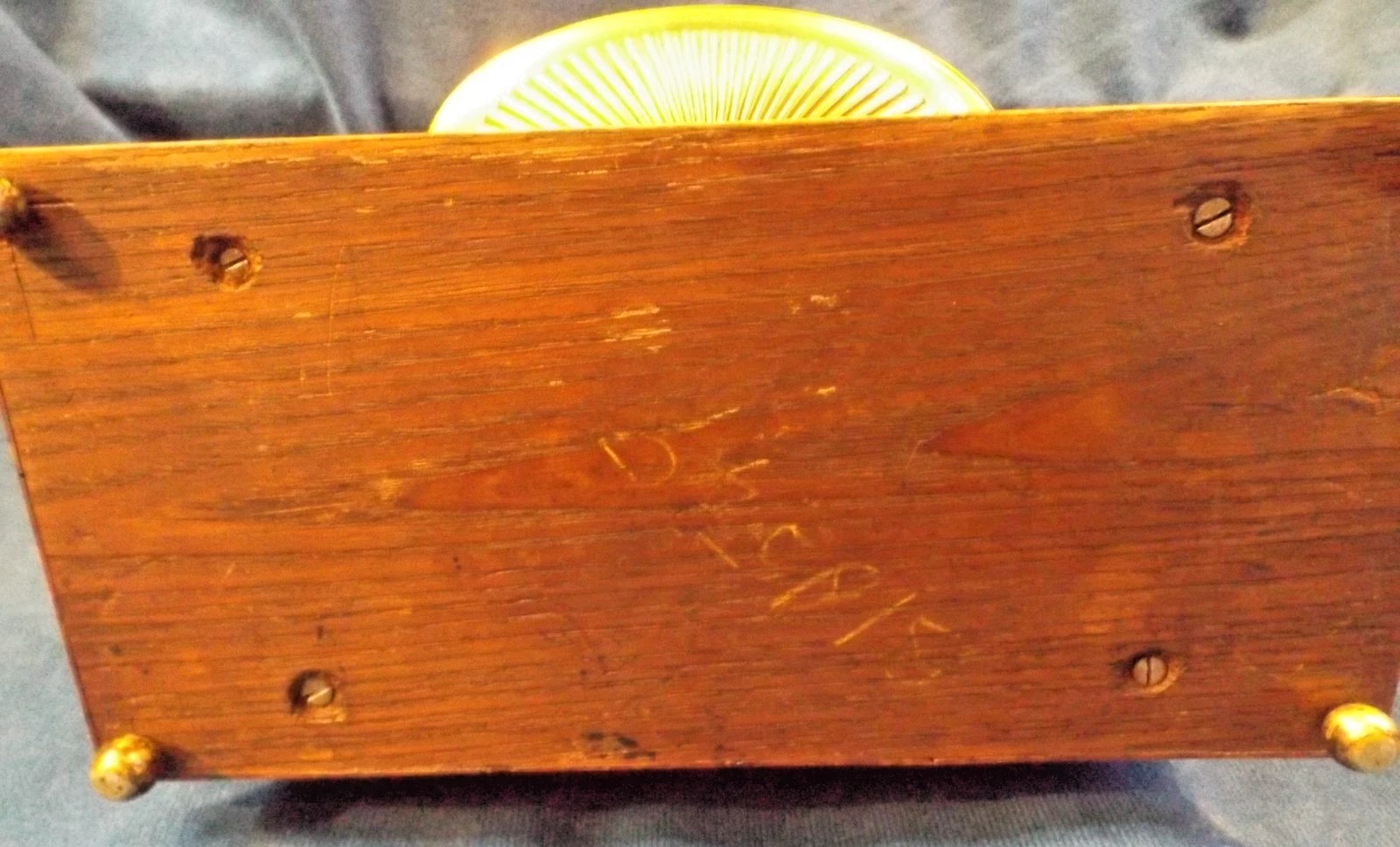
- Foundation: The base is bordered by a black ebonized molding (likely fruitwood stained black rather than enamel) and rests on four substantial gilt bronze ball feet.
Symbolism and Markings
The Dolphins and Tridents Corner Mounts: In the French Empire and English Regency periods, the Dolphin and Trident were potent symbols of maritime power and naval dominance.
- The trident is the traditional attribute of Neptune (Poseidon), the god of the sea.
- Dolphins were seen as “king of the fish” and messengers of the gods.
- Together, they represent a command over the oceans, a very common theme following the significant naval battles of the Napoleonic Wars.
The “D. Paris” Mark The handwritten inscription on the underside (“D. Paris”) is a critical detail. While many Empire pieces are unsigned, this likely refers to a specific Parisian bronzier or a high-end retailer (a marchand-mercier). Paris was the epicenter for this level of ormolu production, and this marking supports a provenance of a top-tier French workshop.
Summary of Refinements
- Material Clarification: The “black molding” is ebonized wood, a common technique to provide a sharp visual contrast to the gold ormolu.
- Style Note: The “two-sided” nature makes this a “Centerpiece Inkstand,” meant to sit in the middle of a large library table or partner’s desk rather than against a wall.
- Gilding: The “mercury gilt” or ormolu finish is what gives the bronze that soft, matte-gold “fire” that does not tarnish like modern plating.
Sold for $800 in April 2026
Content disclaimer. The information posted is the owner’s best knowledge and may not have been vetted by the SOIC. We welcome comments, corrections, and additions, working to make our website information comprehensive and accurate.
Join the Society of Inkwell Collectors (SOIC) – it’s free!
Founded in 1981 as a non-profit organization,
we are documenting inkwells (and accessories).
We’re here to help and inform!