





French Champlevé Enamel Inkstand
| Categories | Enameled Metal |
| Type | Champlevé |
| Material | Enameled Brass/Bronze/Metal |
| Markings | Unmarked |
| Manufacturer | Undetermined |
| Origin | France |
| Date or Era | circa 1890 |
| Measuring | 8 ½” x 5 ¾” x 1 ⅝” high |
- The Technique: Champlevé
- In Champlevé (which means “raised field”), the metal body itself is cast with depressions or carved out to hold the enamel.
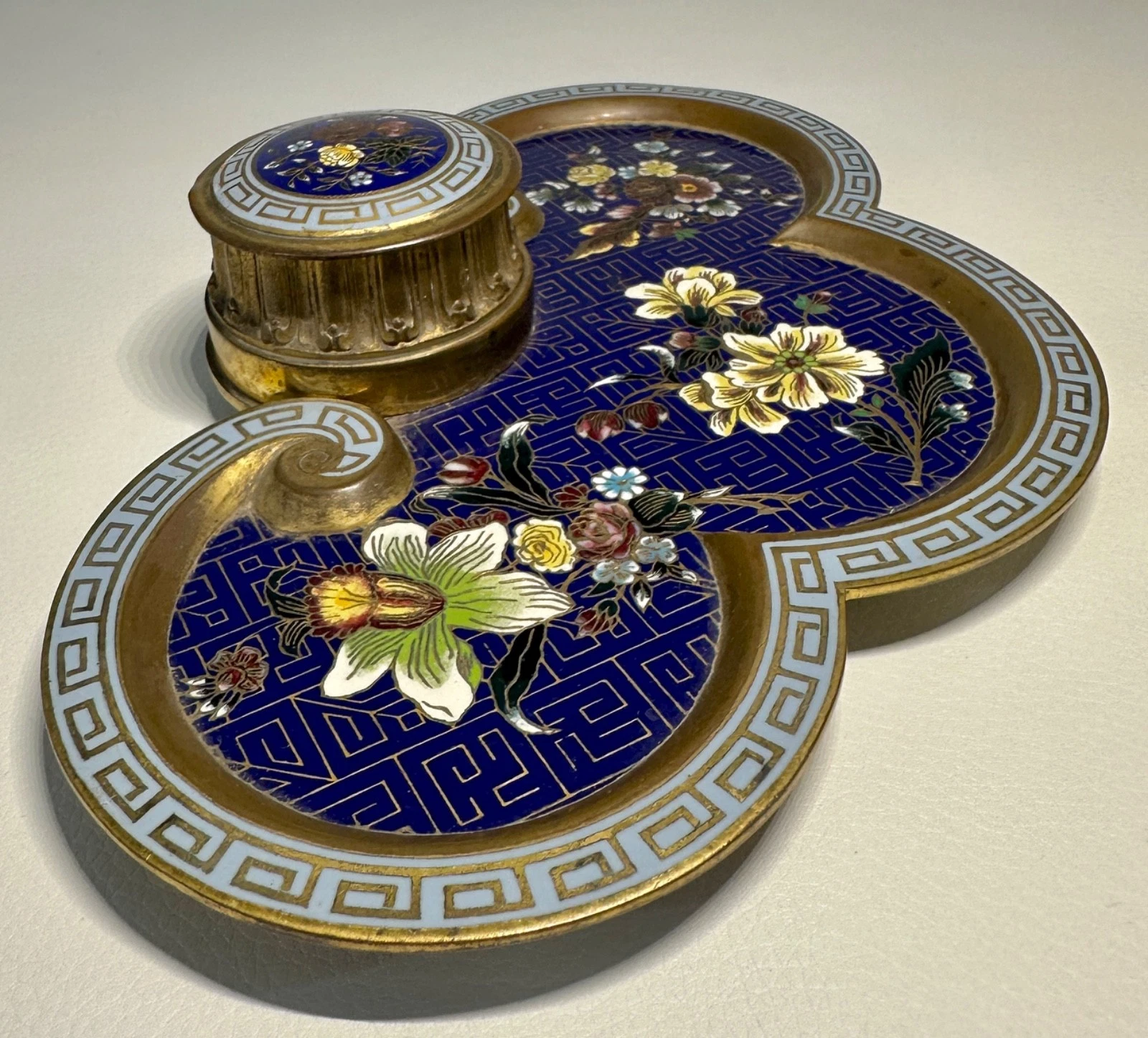
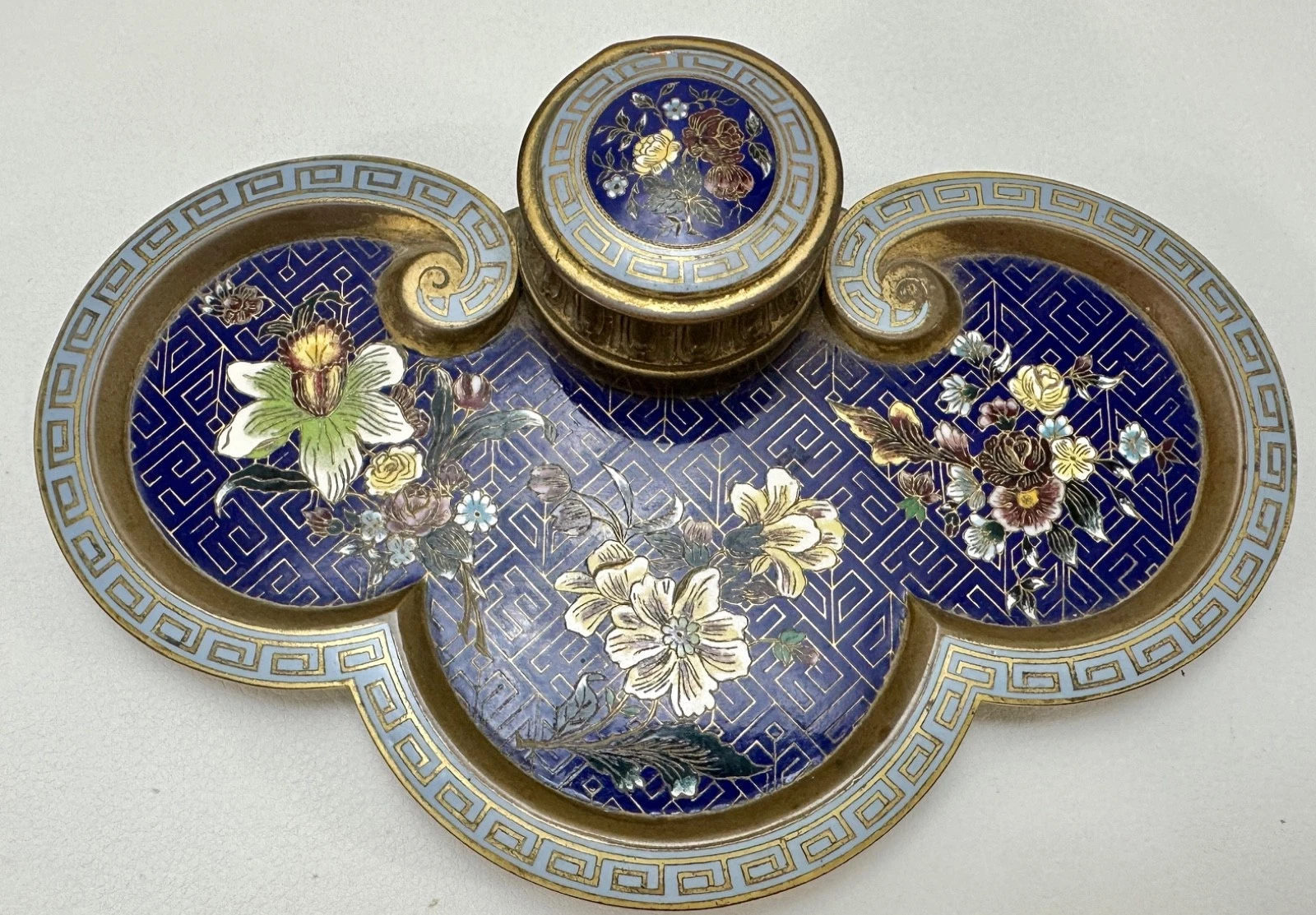
- Evidence on this piece: If you look closely at the deep blue background, you can see that the gold lines forming the geometric “maze” or “fret” pattern are thick, substantial parts of the bronze casting, not thin applied wires. The enamel sits inside these cast recesses.
- Design and Motif
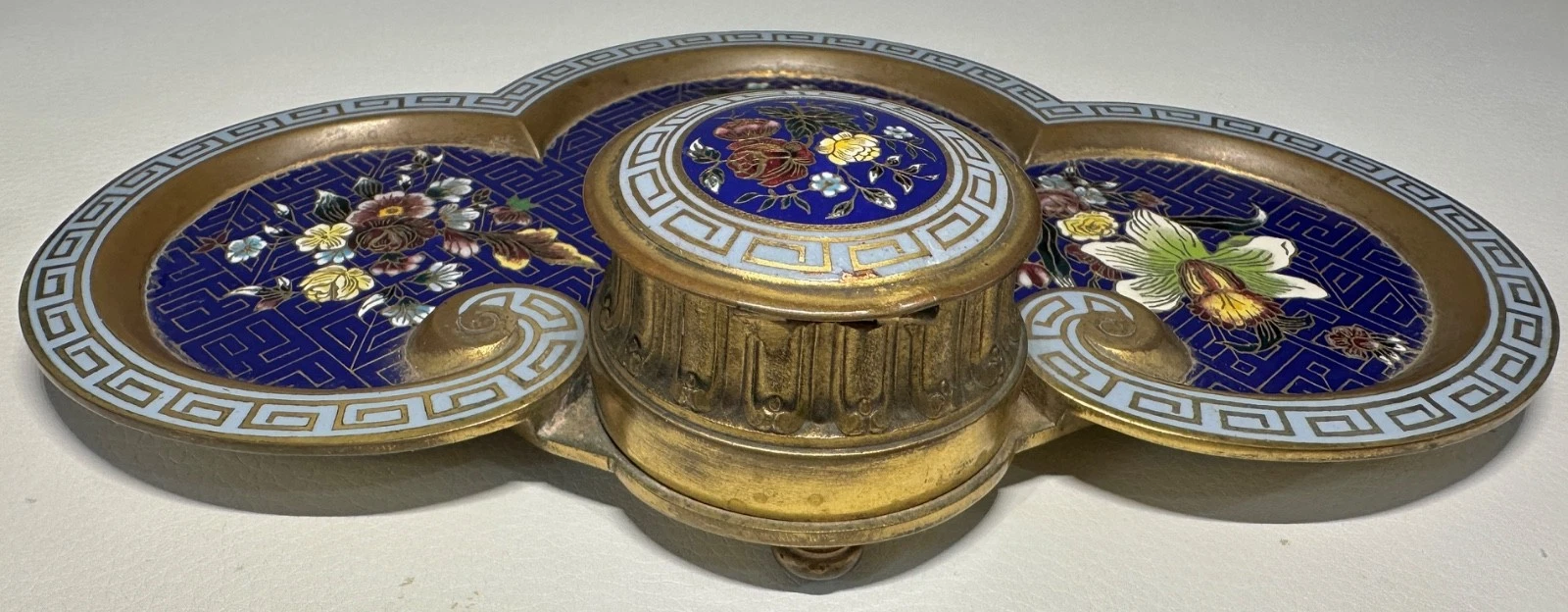
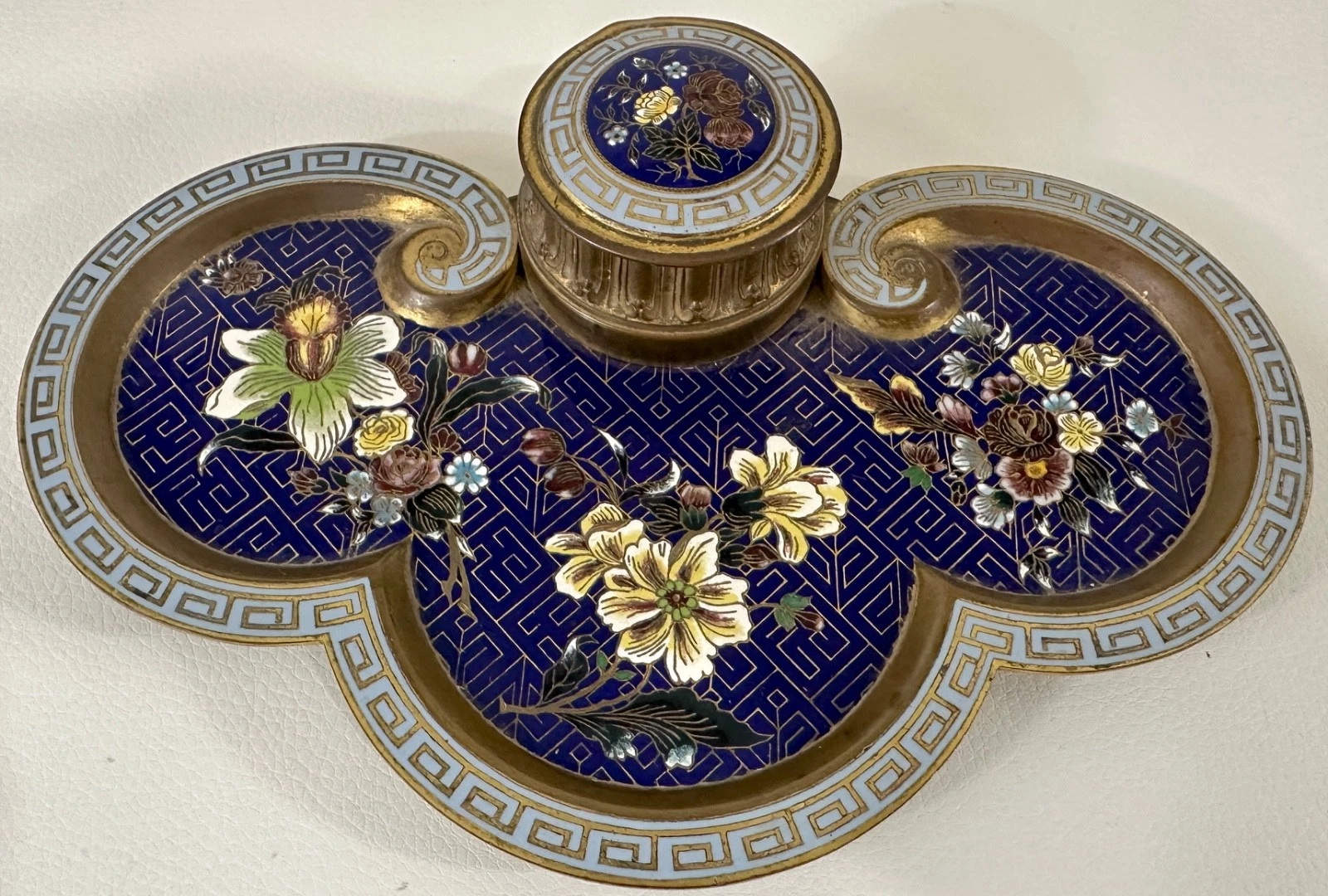
- The Shape: Trefoil design – the tray is shaped like a three-lobed clover, a popular shape in the late 19th century that often referenced Gothic Revival or aesthetic styles.
- The Border: The entire piece is framed by a Greek Key (Meander) border in light blue and white enamel. This classical geometric border contrasts sharply with the organic floral center, a hallmark of the Eclectic period in French decorative arts.
- The Flora: The enamel work features vibrant, naturalistic flowers set against a cobalt blue geometric background:
- Left Lobe: Features a large white Narcissus or Orchid with green foliage.
- Center Lobe: Depicts yellow Primroses or similar five-petaled flowers.
- Right Lobe: Shows a mixed spray of smaller flowers in rust-red, yellow, and white.
- Construction
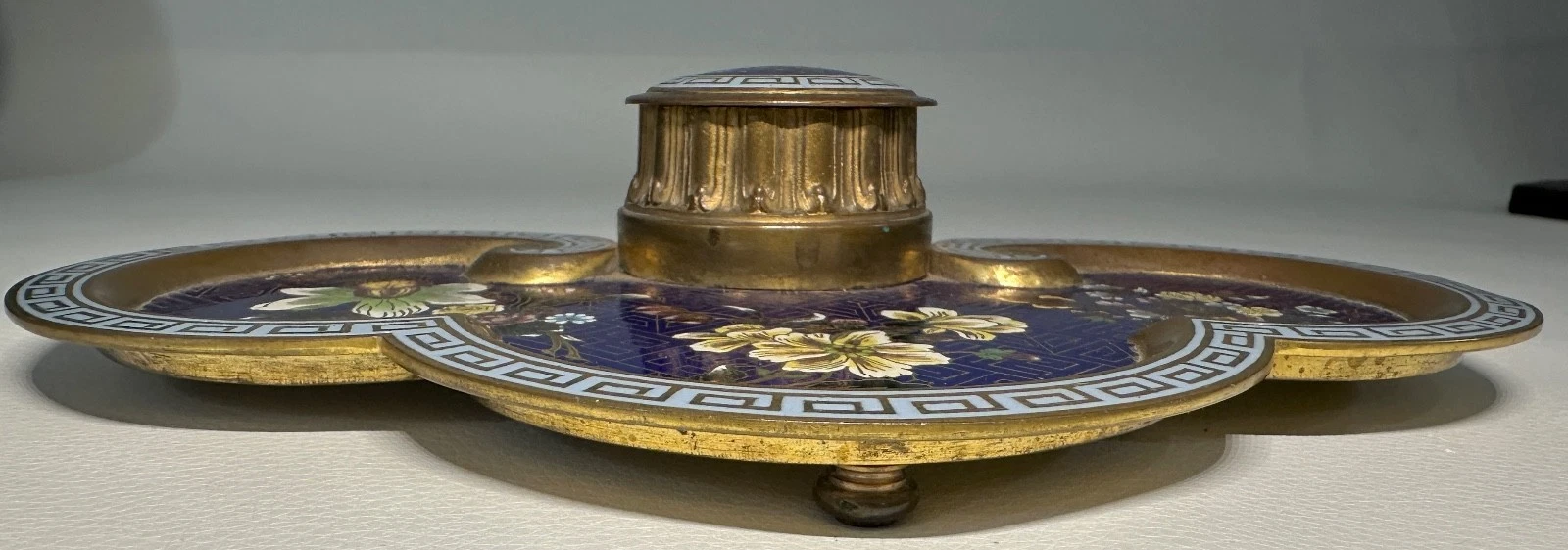
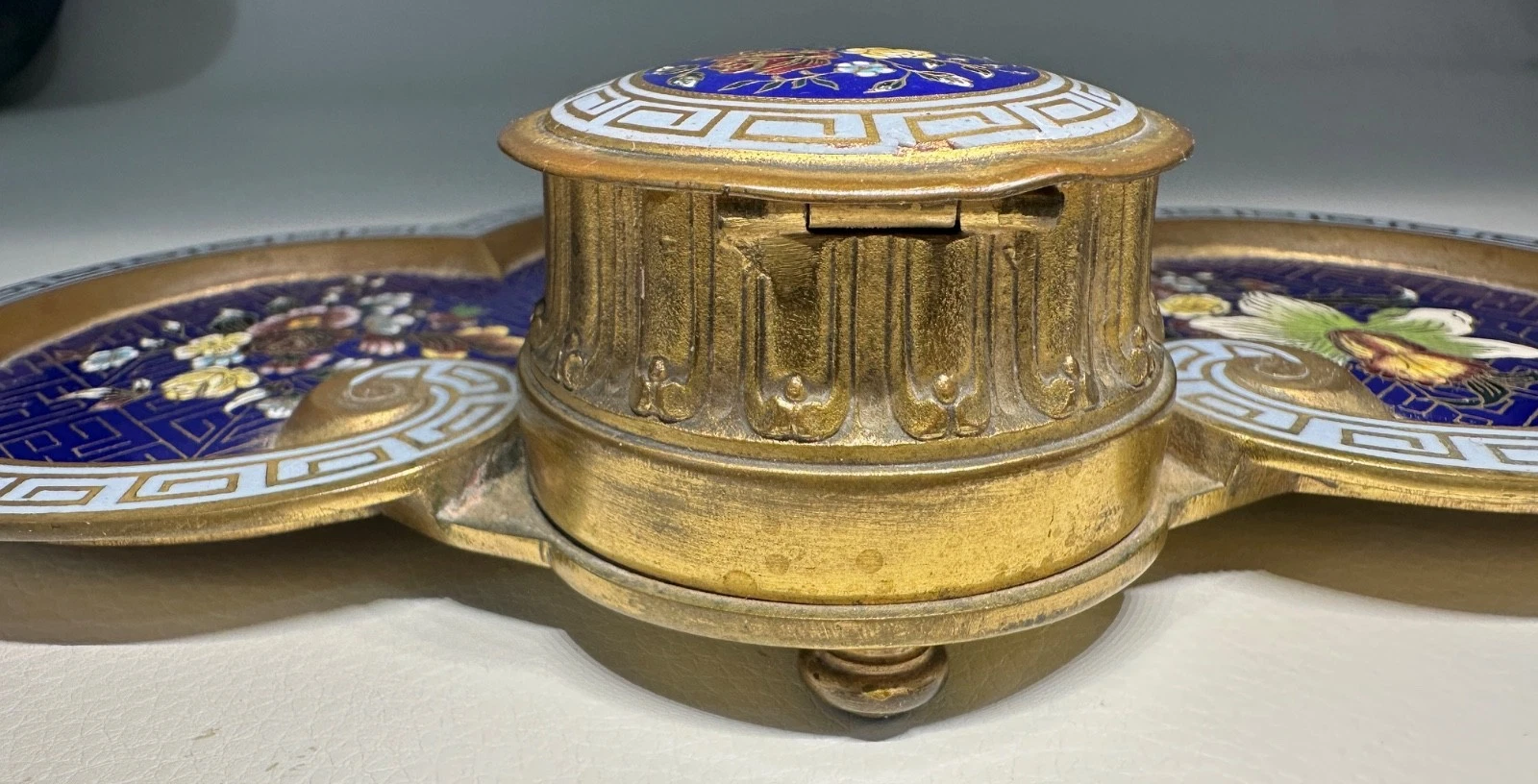
- The Inkwell: The central ink pot is raised on a bronze pedestal with vertical fluting (ribbed details). It features a hinged lid with a matching floral enamel medallion.
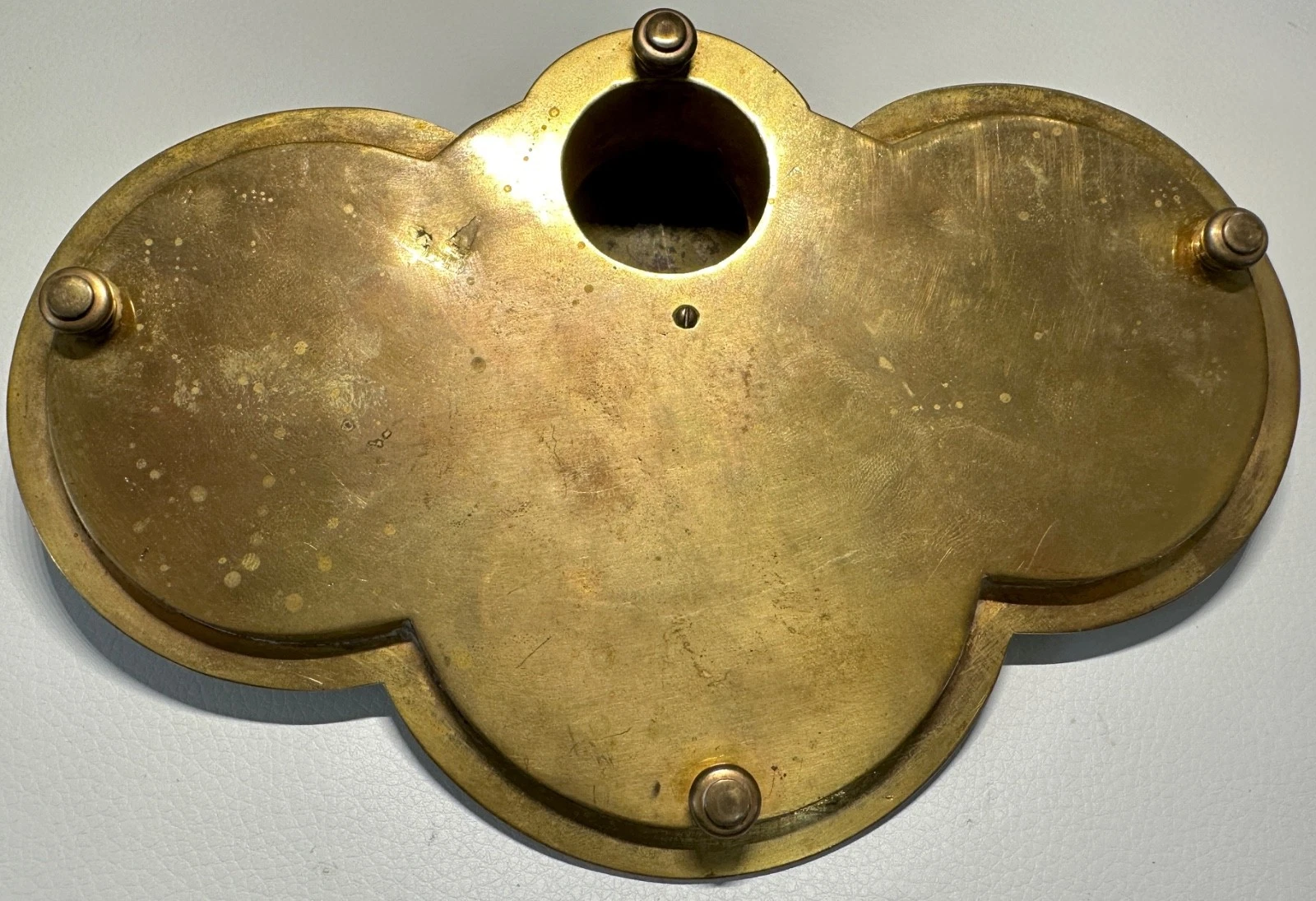
- The Feet: The piece rests on four turned bronze bun feet screwed into the base. The underside reveals the solid brass/bronze construction, confirming the weight and quality of the casting.
- Liner: It is missing a small clear glass insert for holding the ink.
Collector’s Note: This type of bright, polychrome Champlevé on gilt bronze was a specialty of French foundries such as F. Barbedienne or Maison Alphonse Giroux, though many pieces were unsigned. The combination of the “Greek Key” border with the “Japonisme” style flowers places it firmly in the aesthetic movement of the late 1800s (1870 – 1900).
Sold for $156 in November 2025
Content disclaimer. The information posted is the owner’s best knowledge and may not have been vetted by the SOIC. We welcome comments, corrections, and additions, working to make our website information comprehensive and accurate.
Join the Society of Inkwell Collectors (SOIC) – it’s free!
Founded in 1981 as a non-profit organization,
we are documenting inkwells (and accessories).
We’re here to help and inform!