

Inkipedia
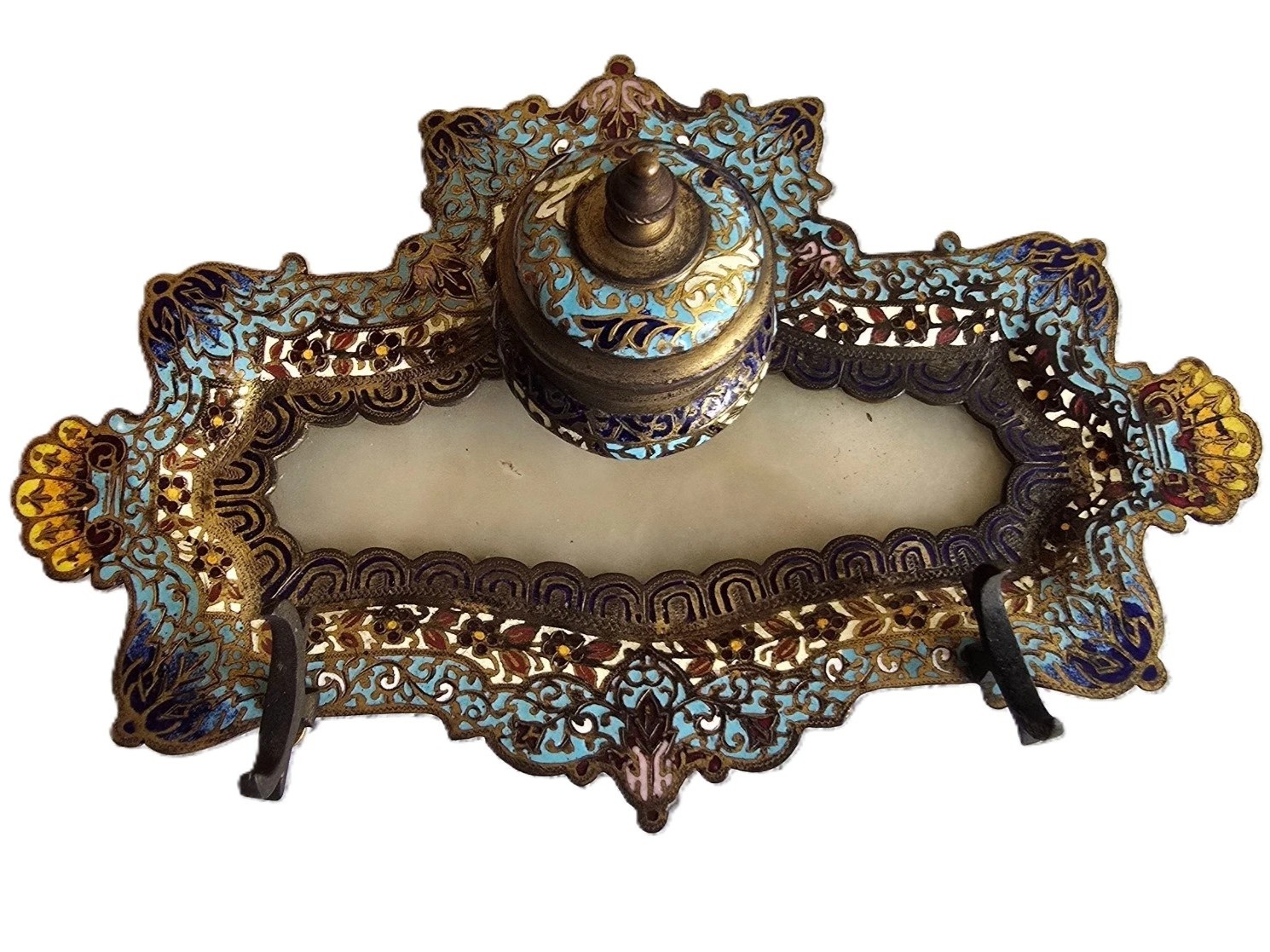
French Champlevé Enamel and Gilt-Brass Inkstand with Pen Holder
| Categories | Enameled Metal |
| Type | Champlevé |
| Material | Enameled Brass/Bronze/Metal |
| Markings | See Narrative |
| Manufacturer | Undetermined |
| Origin | France |
| Date or Era | circa 1880 |
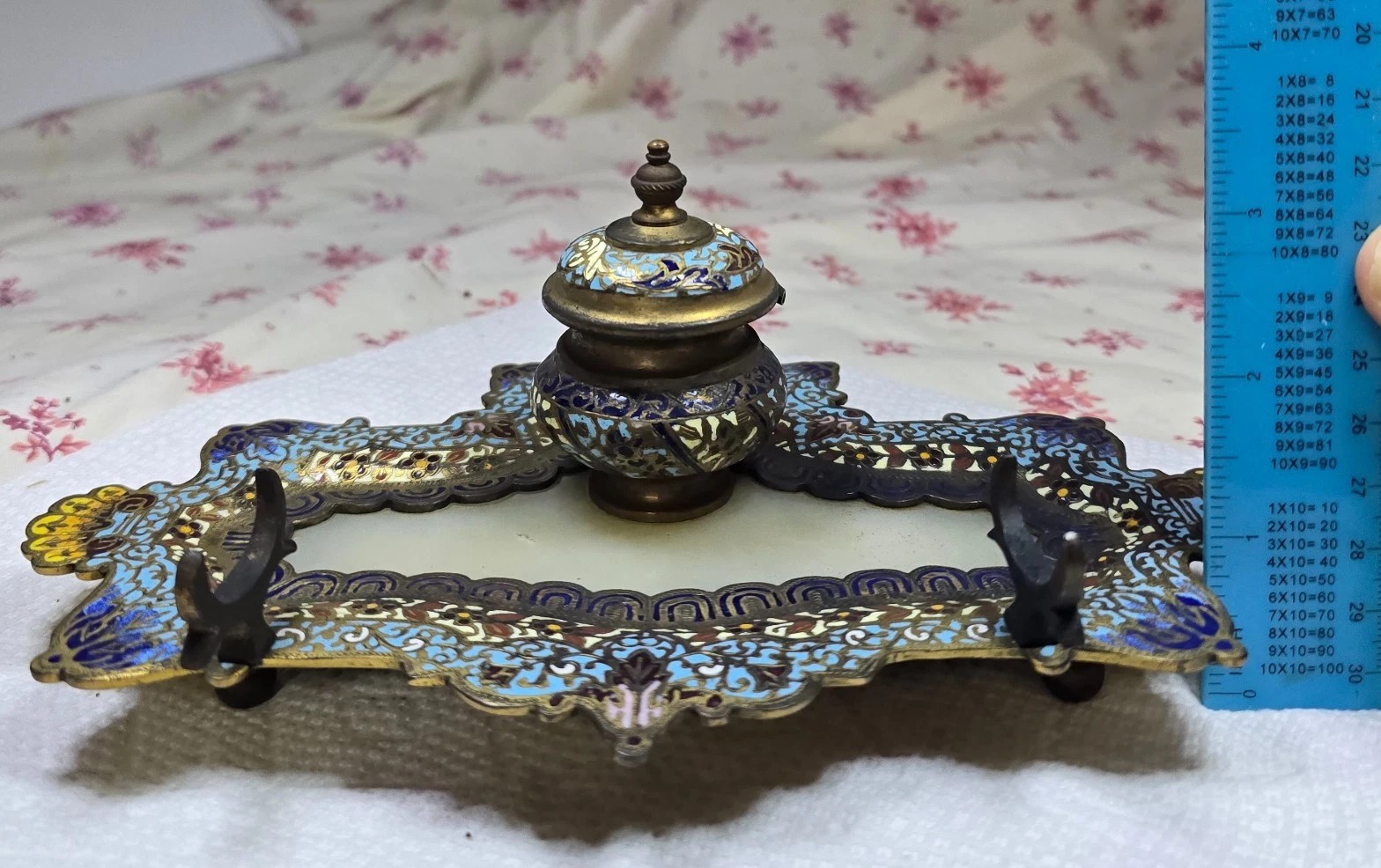
| Measuring | 8 ½” x 5 ¾” x 3” high |
This late 19th-century French inkstand showcases the revival of champlevé enamel work popular during the Second Empire and Third Republic periods.
Description
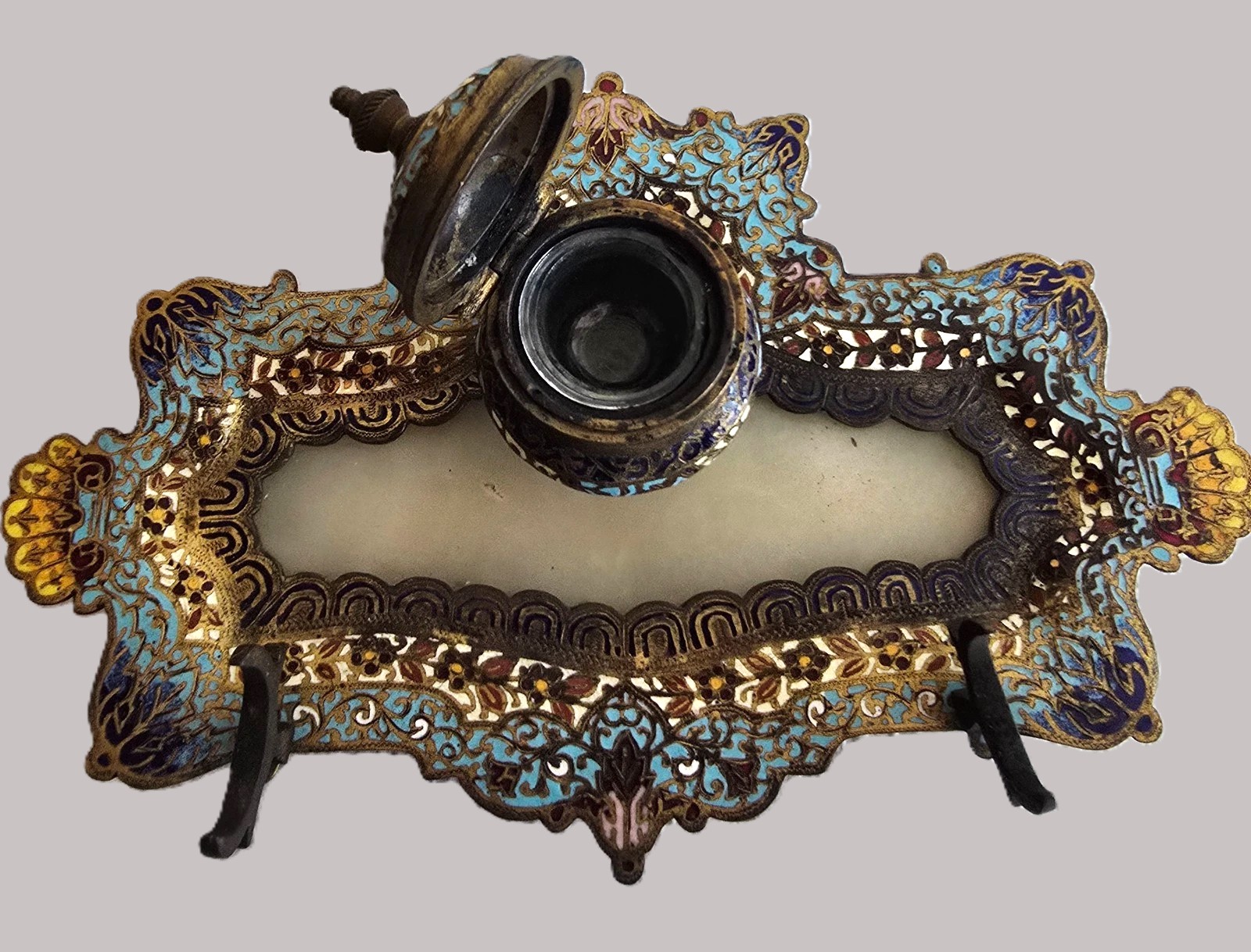
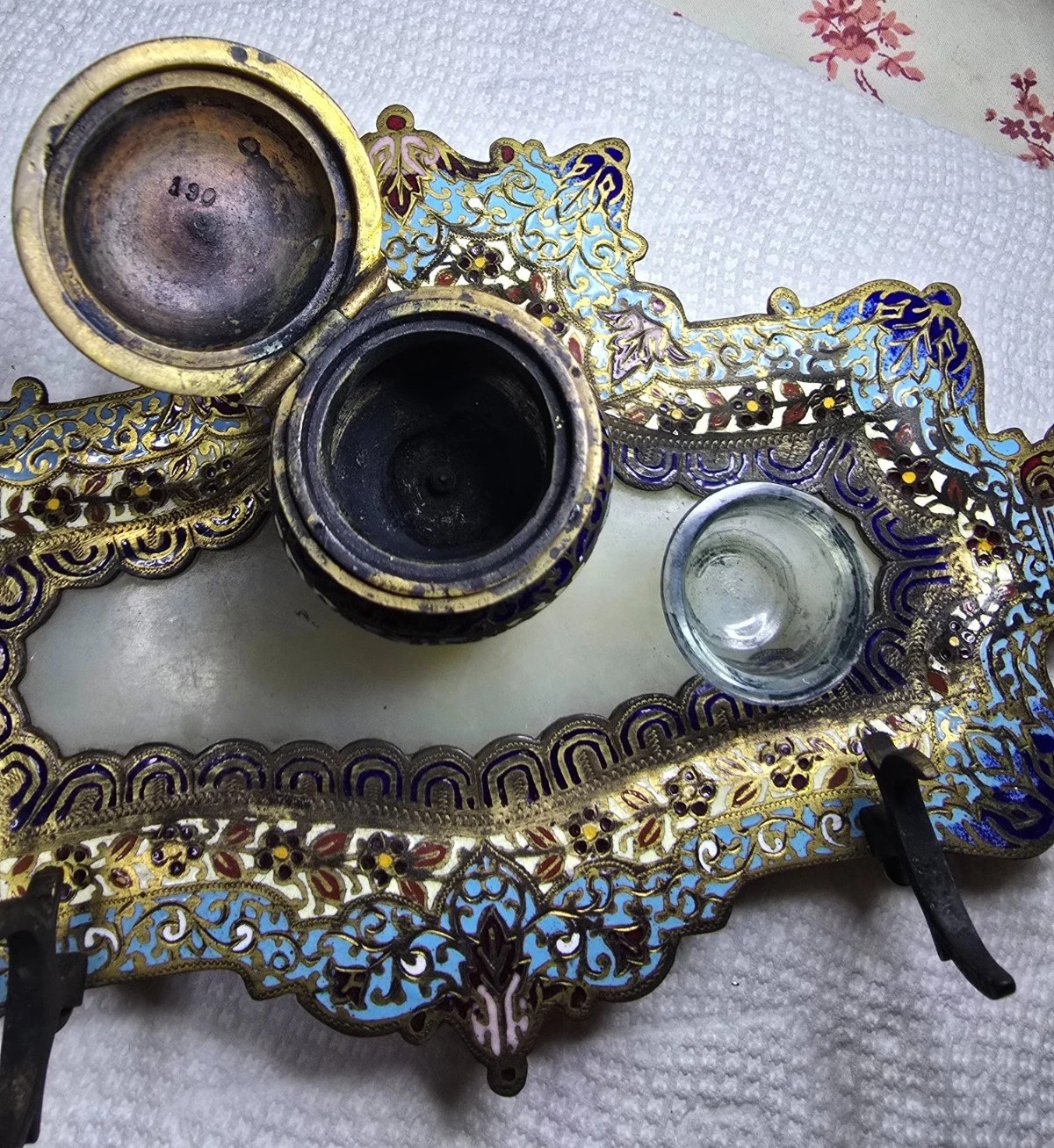
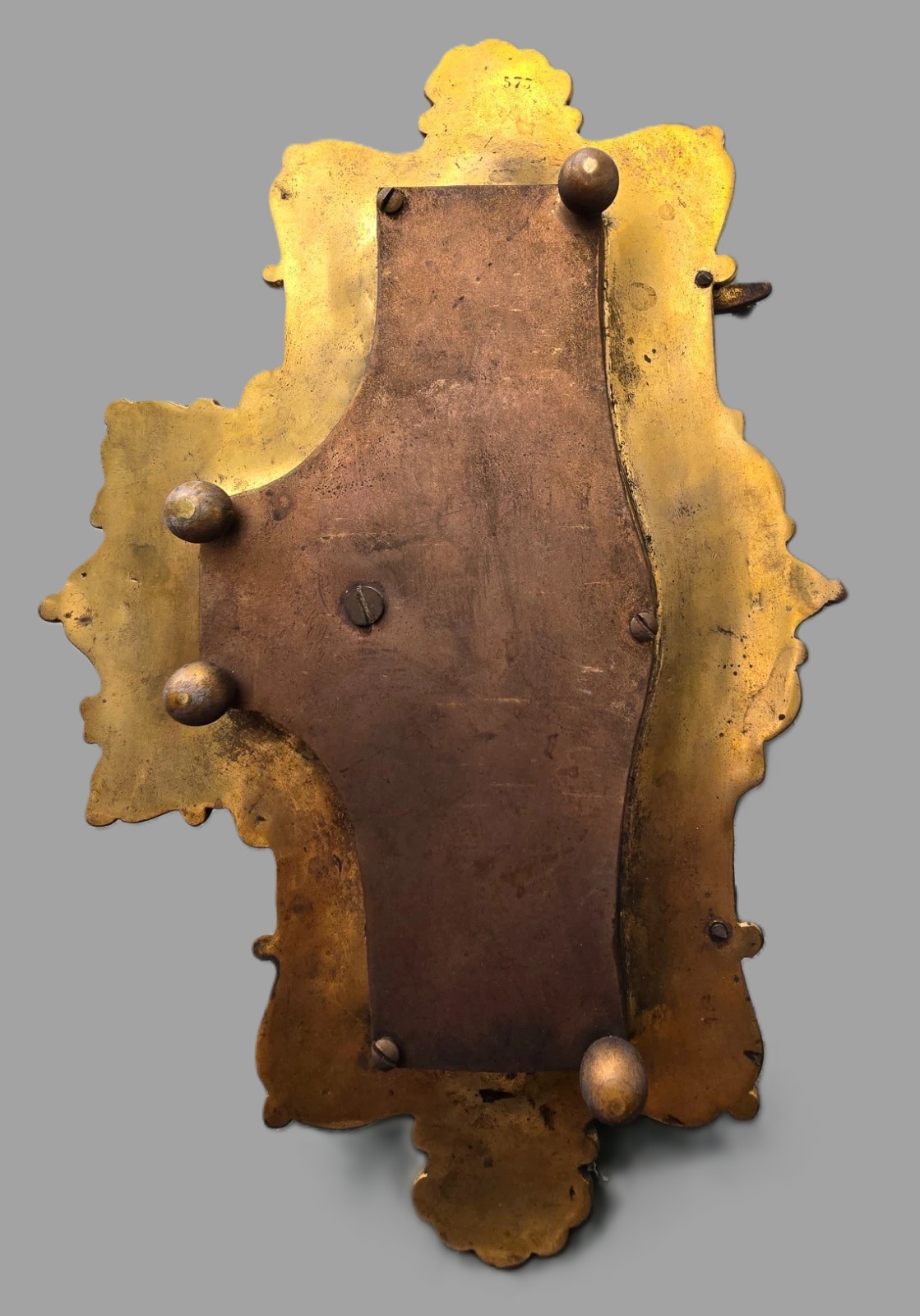
- Materials & Construction: The inkstand features an ornate, shaped gilt brass (or bronze) tray with an inset white onyx plate. It includes two integrated, upward-curving pen rests mounted on the front edge and is supported on the underside by four ball feet attached to a fitted base plate secured with small screws.
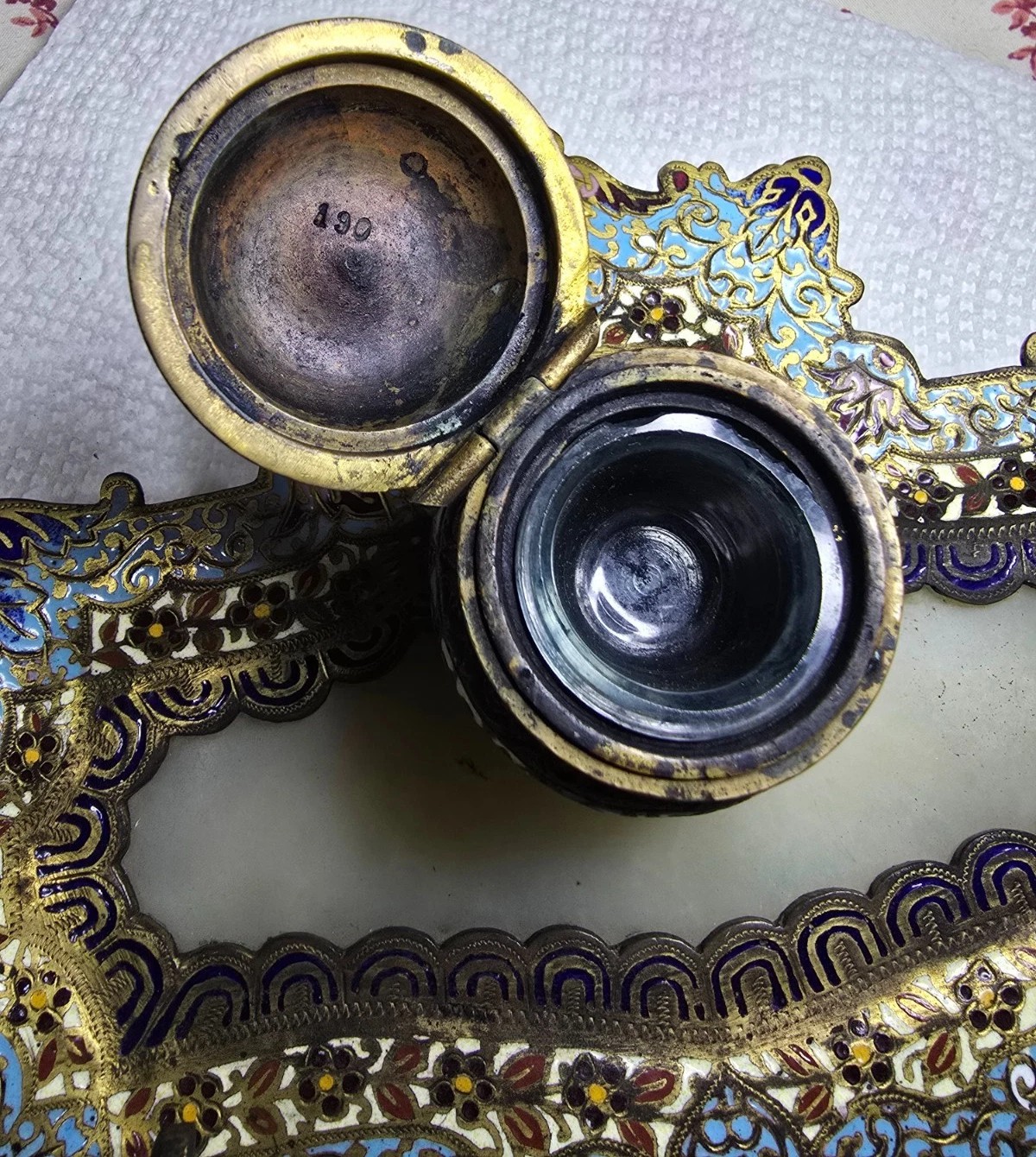
- The Inkwell: Centered on the upper portion of the tray is a globular champlevé inkwell featuring a hinged lid topped with a tiered finial. Inside, it retains its original removable blown-glass insert (liner).
- Enamel Decoration: The piece is richly decorated using the champlevé technique, where troughs are gouged into the metal base and filled with colored glass enamel. It displays a vibrant polychrome palette featuring turquoise blue as the dominant ground, complemented by deep cobalt blue, dark red, cream/white, and touches of yellow floral centers, all set against scrolling foliate and geometric borders with fire-gilt highlights.
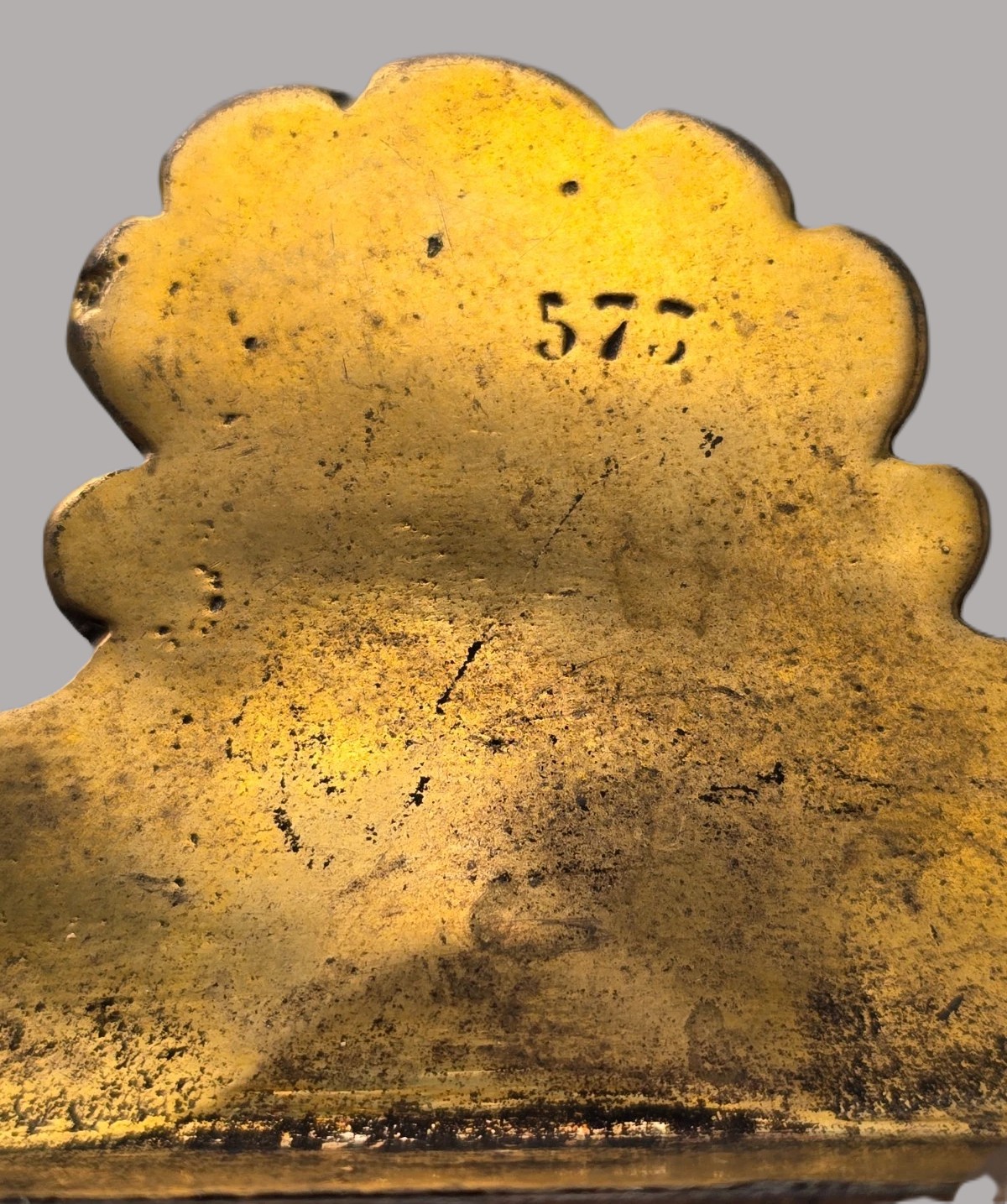
- Markings & Numbers:
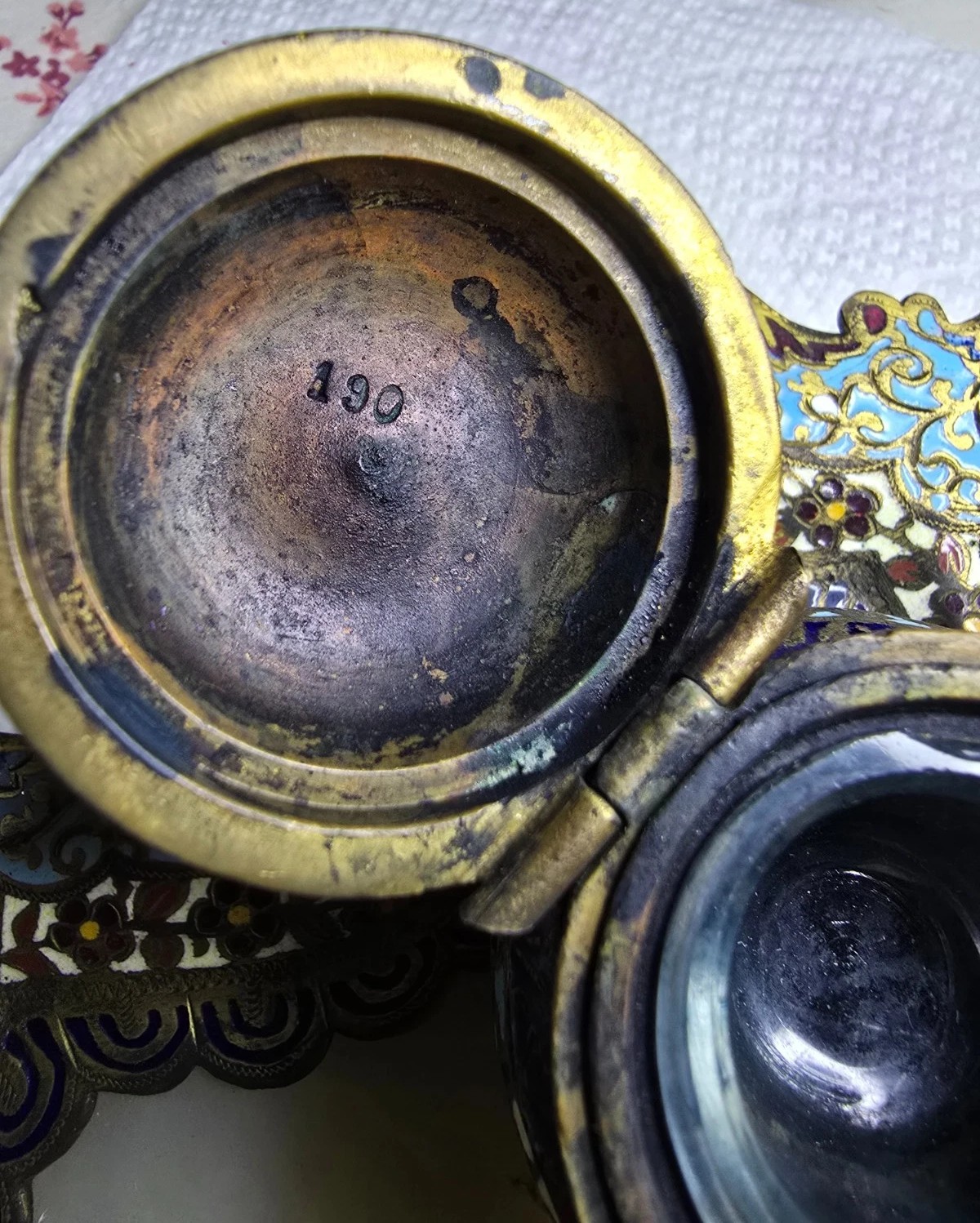
- The interior underside of the hinged inkwell lid is stamped with the assembly or serial number 190.
- The reverse or underside of the top flange is stamped with the number 575, likely indicating a mold, pattern, or batch number used by the workshop to keep matching components together during fabrication.
Manufacturer and Origin
- Origin: France. French manufacturers in Paris and industrial centers like Lyon and Marais dominated the production of high-end champlevé desk sets, opera glasses, and vanity items in the latter half of the 19th century.
- Maker: While specific attribution to a named individual maker (such as Barbedienne or Tahan) is difficult without a maker’s stamp or hallmark—as many high-quality gilt-bronze and enameled goods were retailed through luxury boutiques or produced by specialized anonymous ateliers—pieces with this exact style, palette, and numerical assembly stamping are characteristic of late 19th-century Parisian gilt-bronze and enamel workshops.
Dating
- Period: Late 19th Century (circa 1865–1890).
- Stylistic Context: The taste for brightly colored champlevé enamel mounted on gilt brass draws heavily on 12th- and 13th-century traditions. This revival style reached the height of its popularity in France during the Napoleon III period (Second Empire) and continued strongly through the 1880s into the early Art Nouveau transition, matching the exact manufacturing techniques, screw fittings, and numbering styles seen on luxury desk garnitures of that era.
Sold for $215 in September 2026
Content disclaimer. The information posted is the owner’s best knowledge and may not have been vetted by the SOIC. We welcome comments, corrections, and additions, working to make our website information comprehensive and accurate.
Join the Society of Inkwell Collectors (SOIC) – it’s free!
Founded in 1981 as a non-profit organization,
we are documenting inkwells (and accessories).
We’re here to help and inform!