


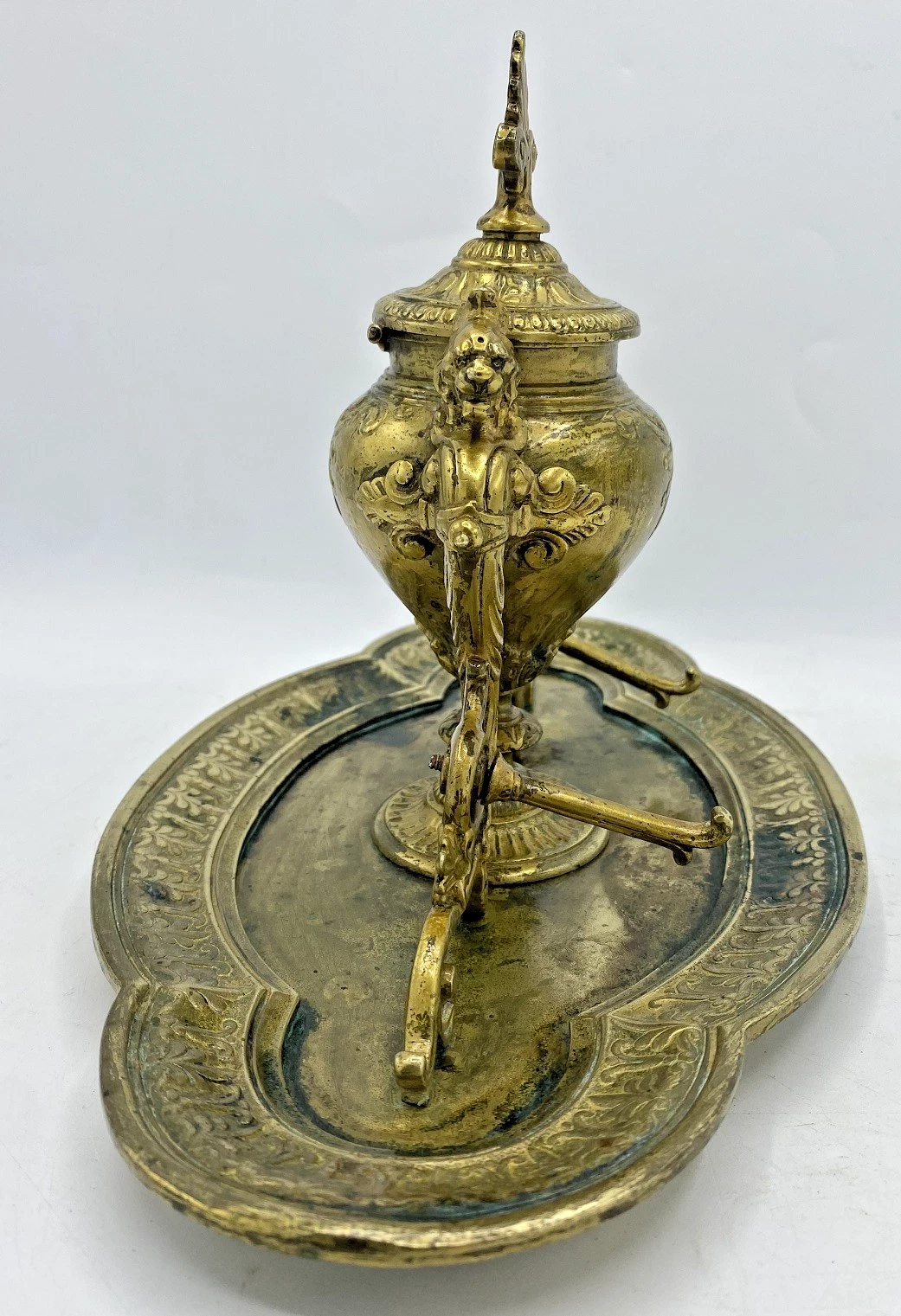
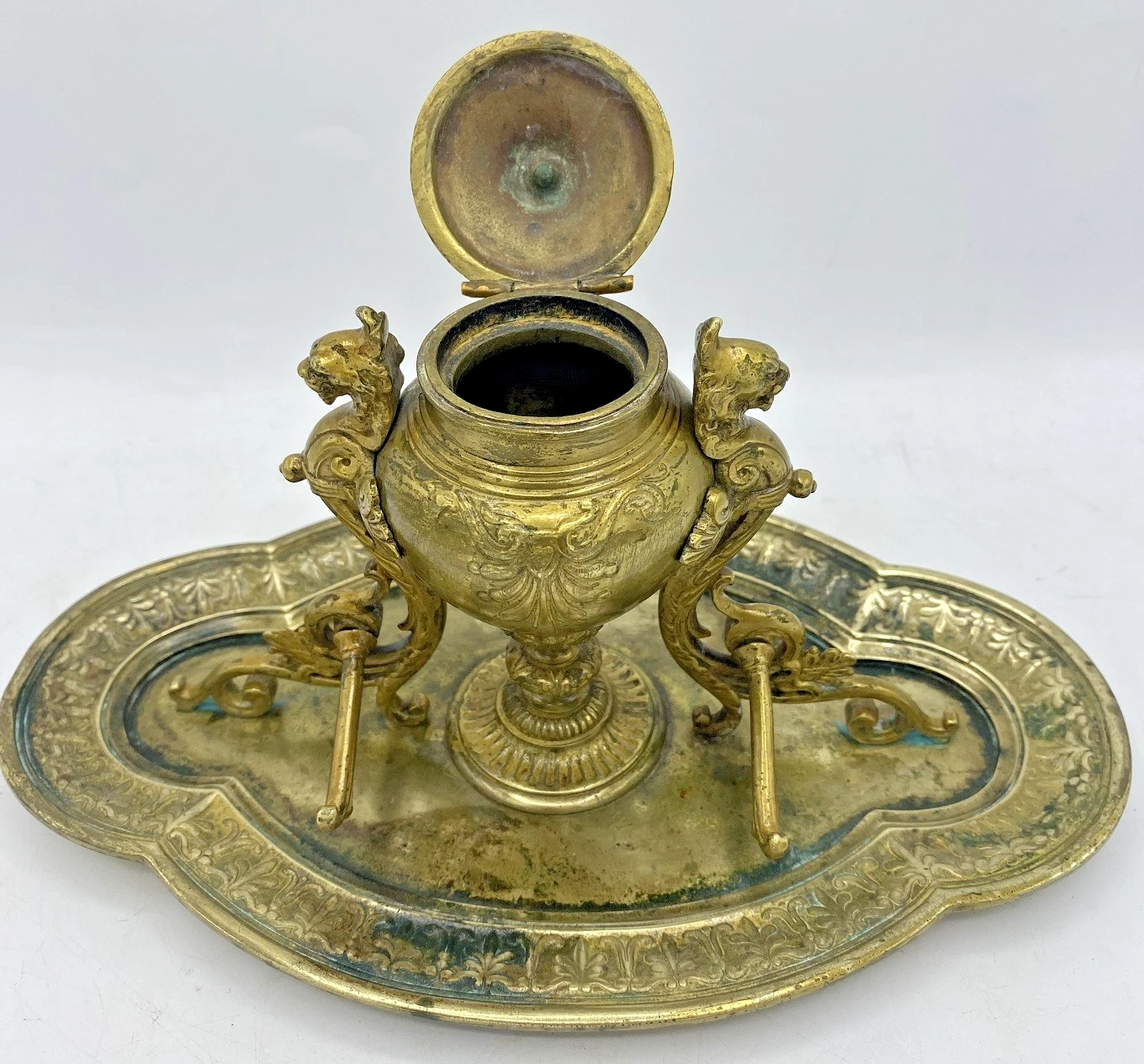
French Brass Inkstand with Griffins
| Categories | Bronze - Brass - Copper |
| Type | Griffin |
| Material | Brass |
| Markings | Unmarked |
| Manufacturer | Undetermined |
| Origin | France |
| Date or Era | circa 1870 |
| Measuring | 10 ½” x 6” x 6 ½” high |
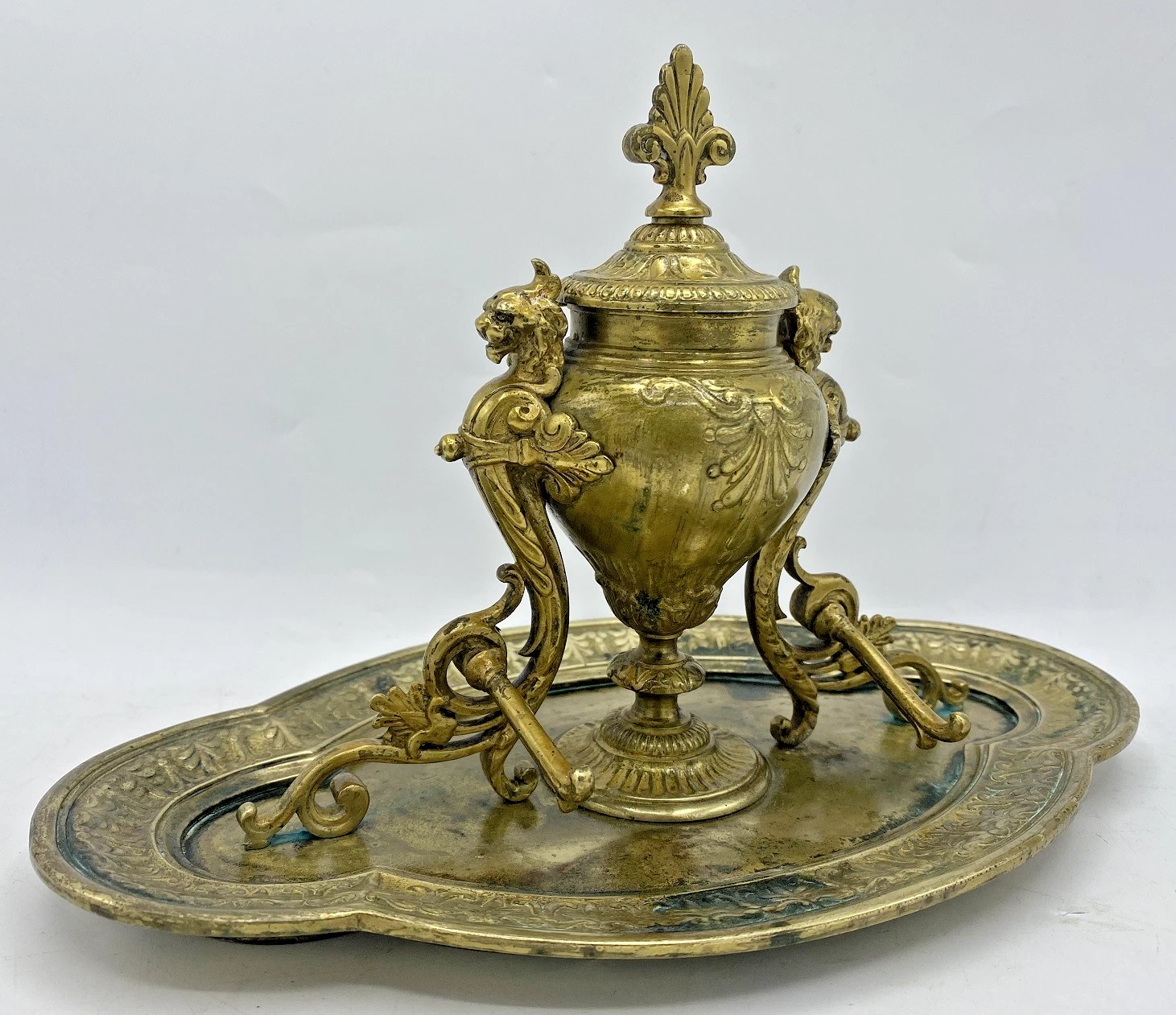
This ornate French Neoclassical (Empire or Louis XVI style) brass inkstand likely dates to the mid-to-late 19th century (c. 1860–1890). It reflects the Victorian era’s “Eclectic” period, where designers blended Renaissance and Classical motifs to create high-drama desk accessories.
Description
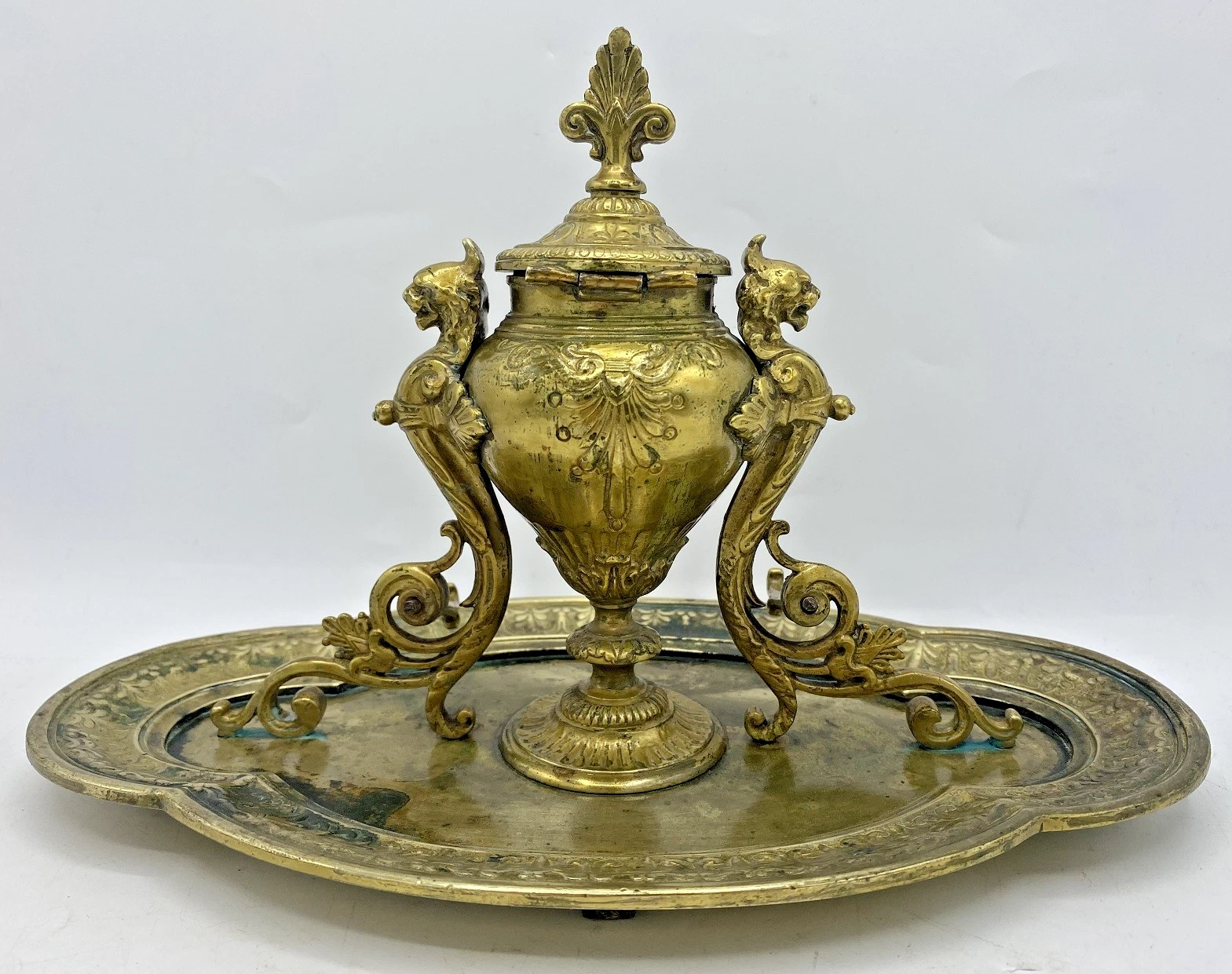
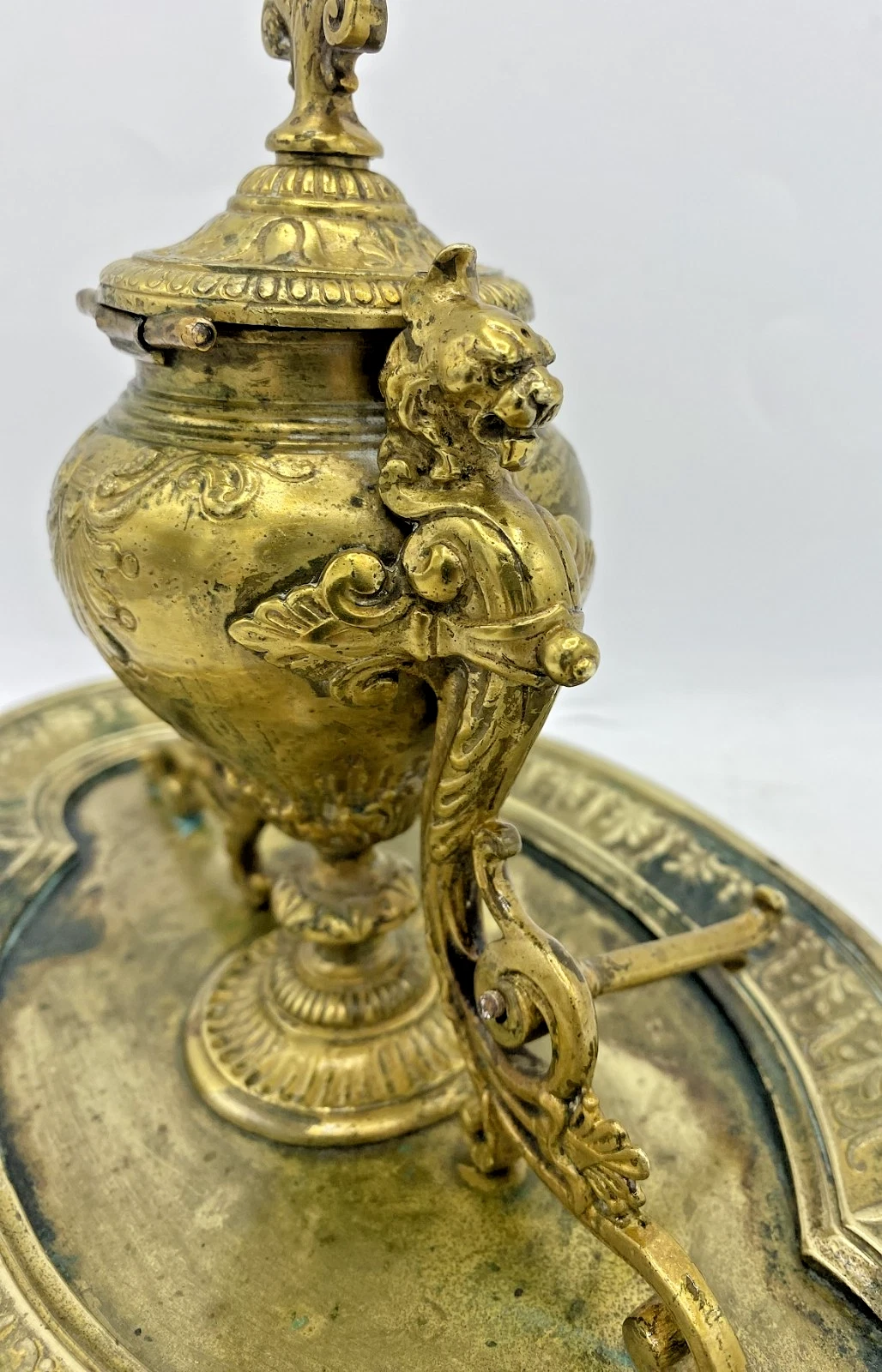
- The Inkwell: The central inkwell is designed as a pedestal urn (or krater). It features a hinged lid topped with a stylized fleur-de-lis finial, a classic symbol of French heritage. The body of the urn is decorated with repoussé or cast palmettes and acanthus leaves, motifs widely used in the Napoleonic Empire style.
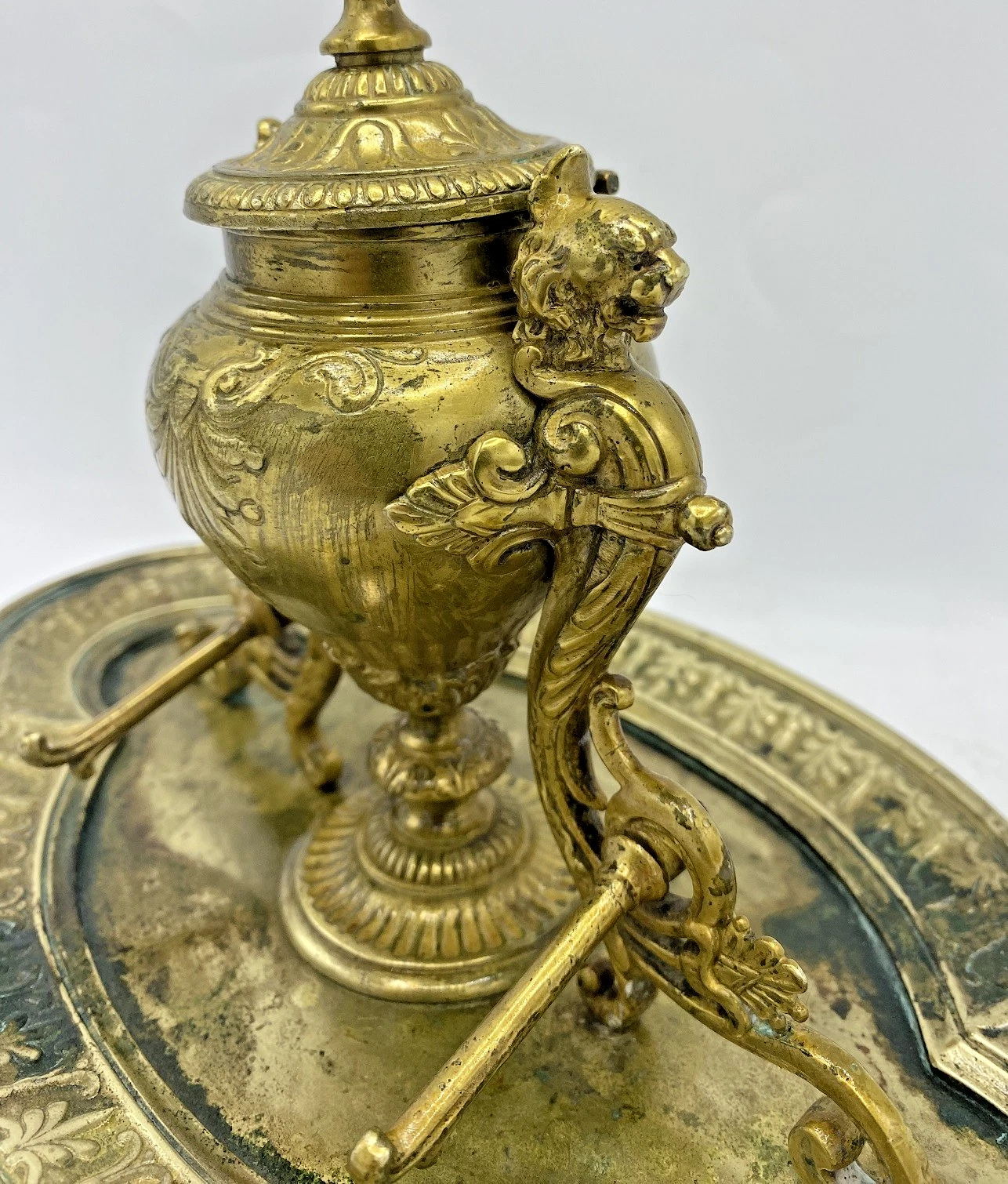
- The Creatures: Flanking the urn are two mythical figures, more accurately described as winged chimeras or griffins.
- Features: They have the heads of lions or predatory beasts, scrolled “beaded” bodies, and floral-embellished wings.
- Pen Rests: Notice the horizontal bars extending from the scrolls of these creatures; these serve as the pen rests, allowing a quill or dip pen to be cradled across the front.
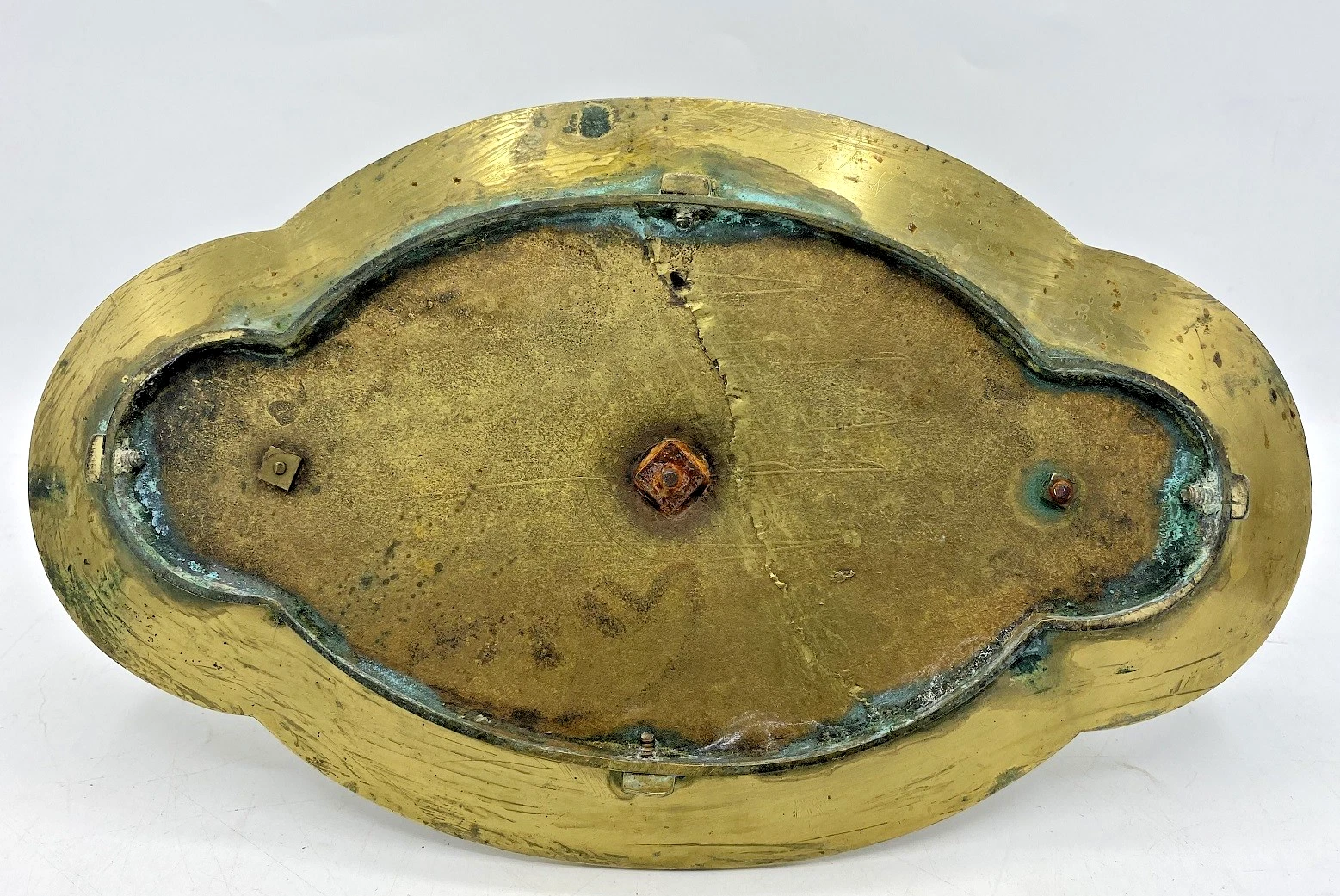
- The Base: The tray is a tri-lobed or “shaped” oval with a wide, decorative border featuring a repeating anthemion (honeysuckle) pattern. The underside shows a rough, sand-cast texture and a central nut-and-bolt assembly typical of 19th-century manufacturing.
The Chimeras: Significance
In the 19th century, the use of chimeras on a desk set wasn’t meant to be “scary” or religious like Gothic gargoyles. Instead, they were used for Symbolic Guardianship. Chimeras and griffins were seen as “protectors of treasures.” In the context of a scholar or businessman’s desk, they symbolically guarded the “treasures” of the mind—the letters, legal documents, and ideas produced at the writing table.
Age
- Estimated Age: Circa 1870. The heavy casting, the specific style of the fleur-de-lis, and the square nut on the bottom are all consistent with late 19th-century French production.
- Missing Insert: The glass or ceramic “well” (the ink pot) is missing. The interior of the urn is quite deep, suggesting it originally held a cylindrical glass insert.
Sold for $399 in February 2026
Content disclaimer. The information posted is the owner’s best knowledge and may not have been vetted by the SOIC. We welcome comments, corrections, and additions, working to make our website information comprehensive and accurate.
Join the Society of Inkwell Collectors (SOIC) – it’s free!
Founded in 1981 as a non-profit organization,
we are documenting inkwells (and accessories).
We’re here to help and inform!