

Four-Piece Art Deco Desk Set
| Categories | Art Deco, Plastic - Bakelite - Gutta Percha |
| Material | Galalith |
| Markings | Unmarked |
| Manufacturer | Undetermined |
| Origin | Undetermined |
| Date or Era | circa 1930 |
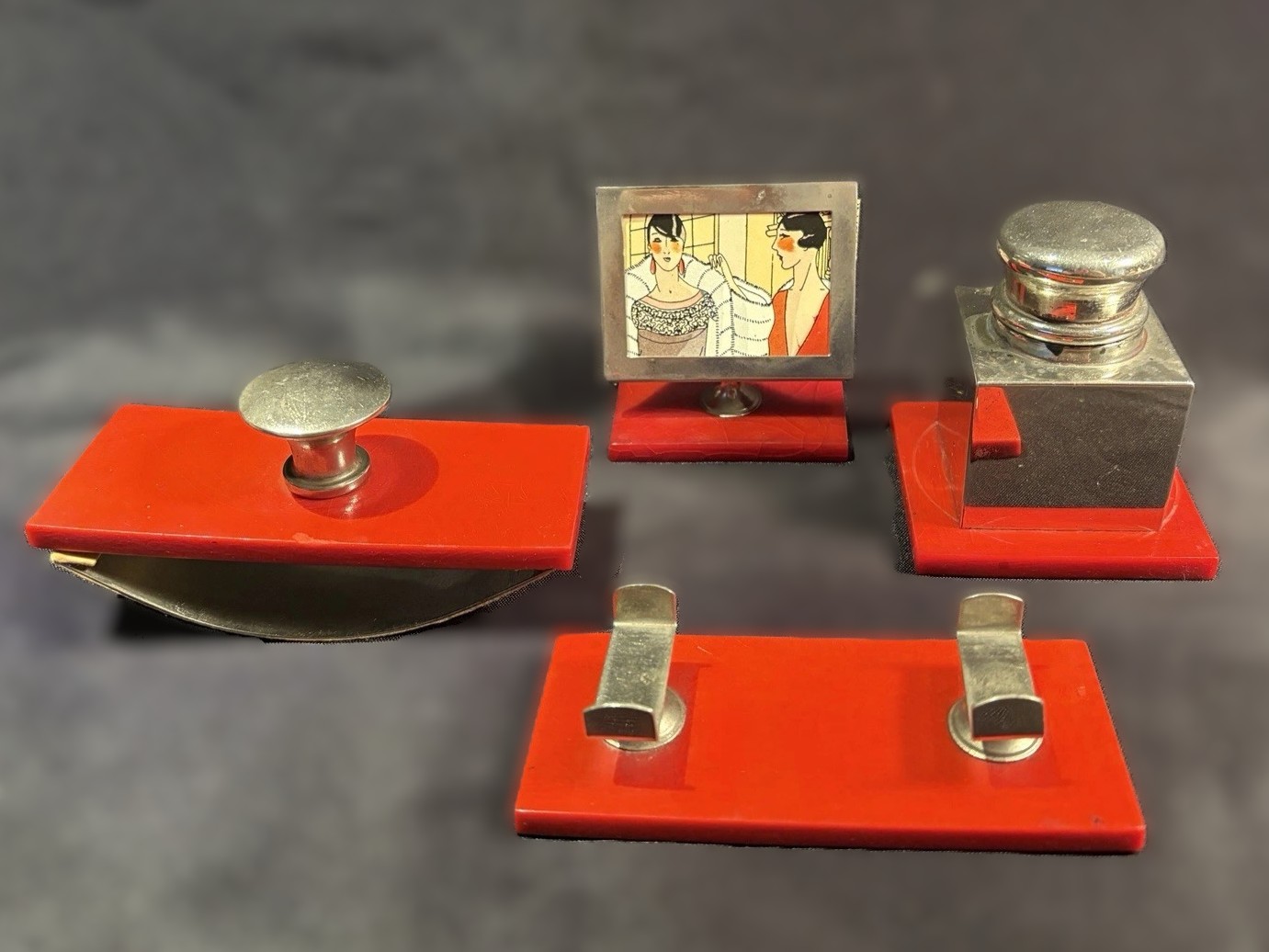
This four-piece Art Deco desk set dates from the 1930s. It captures the streamlined, machine-age aesthetic of the era, contrasting a vibrant cherry red against sleek, reflective chrome.
The Material: Is it Bakelite?
While often casually listed by collectors as Bakelite, this set is made of Galalith (or a similar casein-based plastic) or a high-quality celluloid compound, rather than true phenolic resin (Bakelite/Catalin).
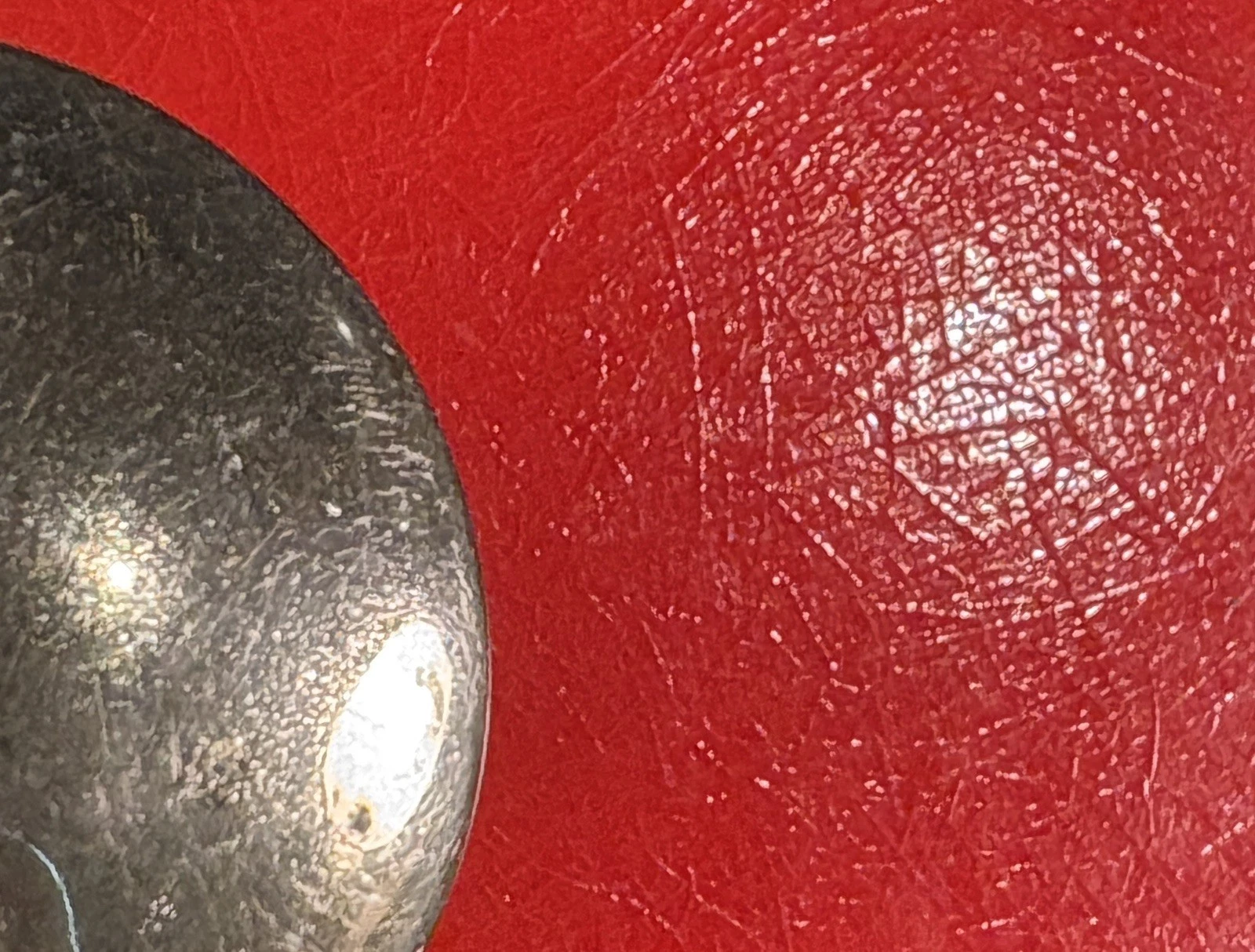
- The Giveaways: The intense “alligator” crazing or micro-cracking visible across the surface is characteristic of aging Galalith or celluloid as it loses moisture over many decades.
- True Bakelite or Catalin tends to oxidize by darkening or turning a yellowish-brown over time (which shifts true reds into deep burgundies or oranges), whereas Galalith holds its vivid, bright red color beautifully but develops this distinct surface crazing.
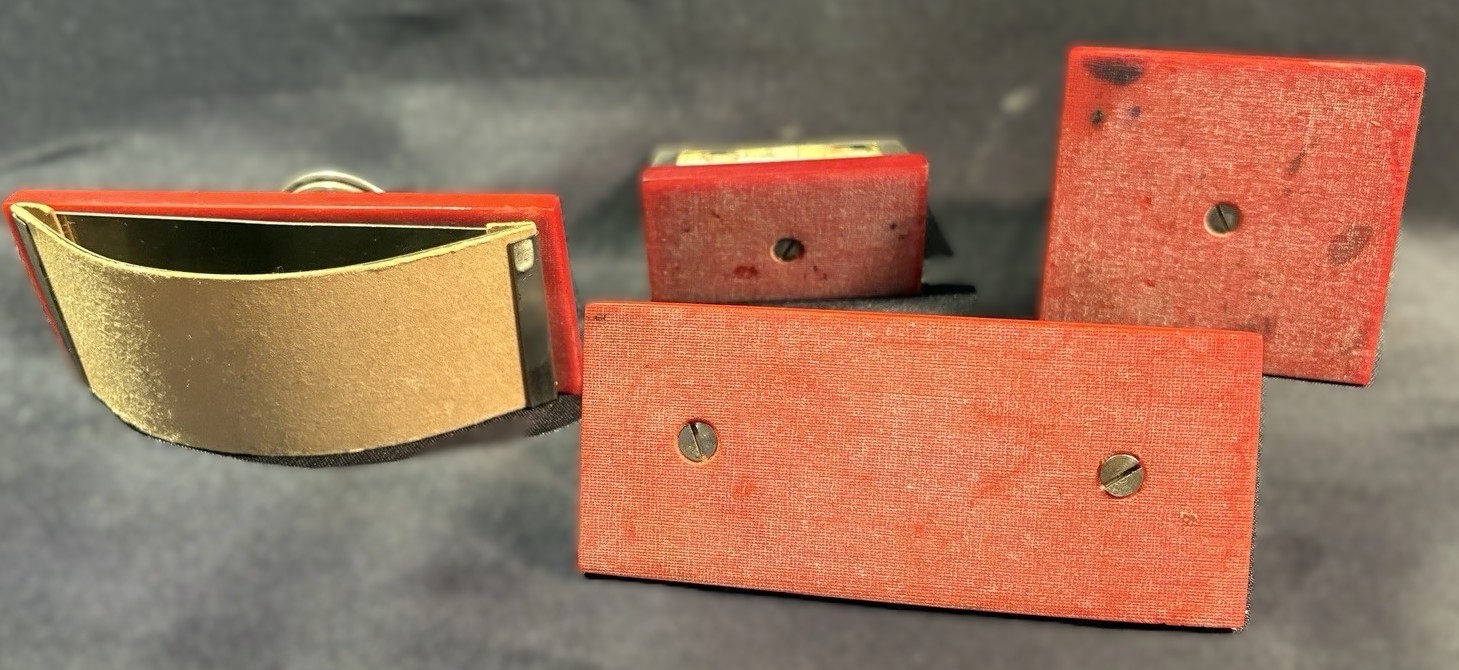
- The textured fabric/canvas backing visible on the undersides is a typical manufacturing detail found on European plastic desk components from this era to prevent slipping and protect desktop wood.
Set Components
The set includes four classic elements of a period writing desk:
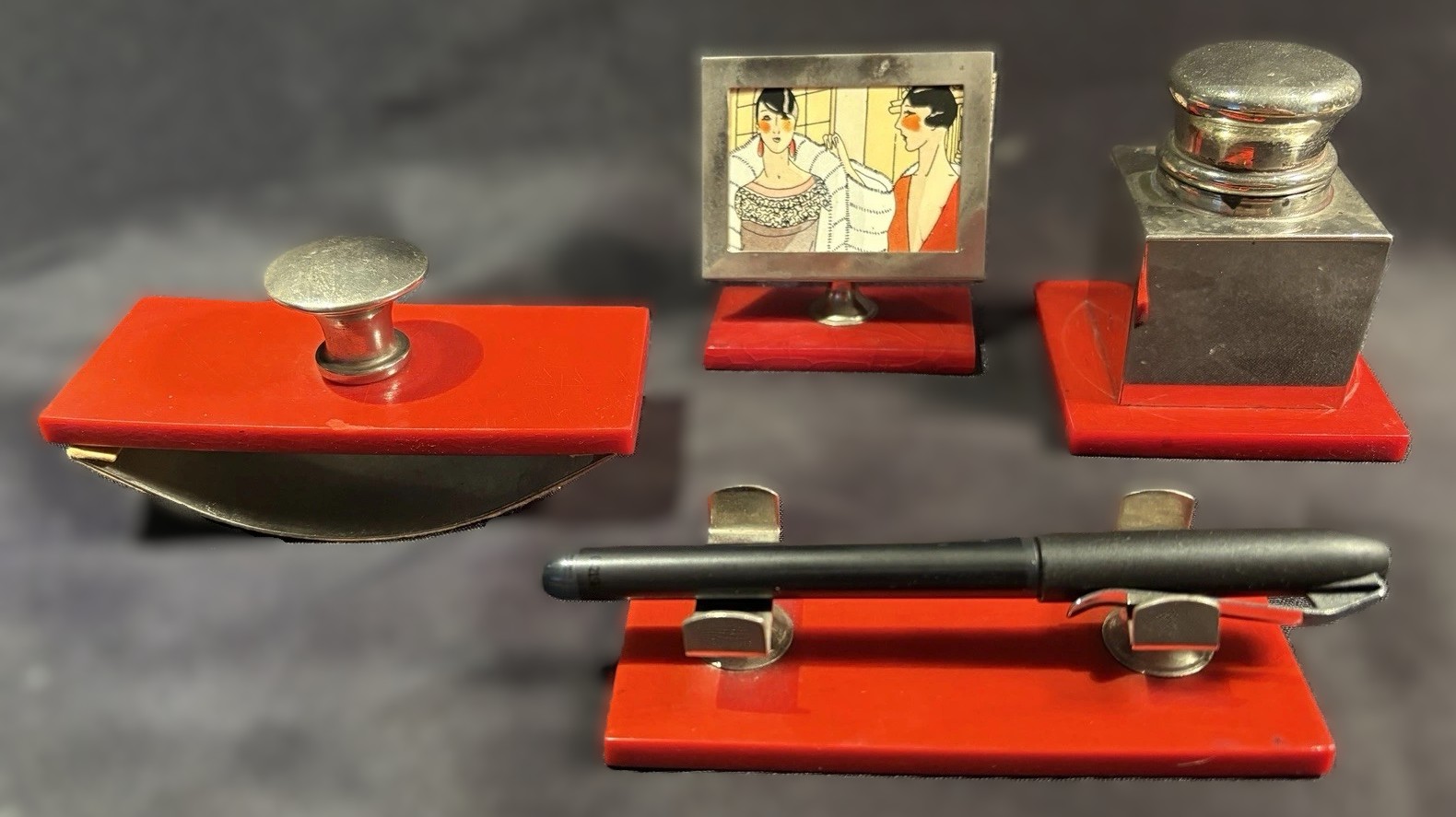
- Inkwell: A cube-shaped chrome ink reservoir with a heavy, stepped circular cap, resting on a square red plastic plinth.
- Rocker Blotter: A curved chrome bottom plate with a rectangular red top plate and a matching classic mushroom-shaped chrome handle.
- Pen Stand / Cradle: A simple rectangular red base fitted with twin chrome brackets designed to hold a fountain pen or desk pen horizontally.
- Picture Frame or Calendar Holder: A small, easel-backed chrome frame possibly held components of a perpetual calendar, or was used as a picture frame.
Age and Origin
- Age: Circa 1930–1935. The use of severe geometric shapes (the strict cubes, circles, and rectangles), combined with bright chrome plating and early plastics, is the textbook definition of the Style Moderne or High Art Deco period.
- Where it was Made: France or Germany. Western Europe—specifically France and Germany—dominated the production of luxury and commercial Galalith and chrome desk accessories during the interwar period. The assembly style (using small, single-slot brass machine screws through the bottom to secure the chrome elements to the plastic bases) is typical of European workshop manufacturing from the 1930s.
Sold for $200 in May 2026
Content disclaimer. The information posted is the owner’s best knowledge and may not have been vetted by the SOIC. We welcome comments, corrections, and additions, working to make our website information comprehensive and accurate.
Join the Society of Inkwell Collectors (SOIC) – it’s free!
Founded in 1981 as a non-profit organization,
we are documenting inkwells (and accessories).
We’re here to help and inform!