

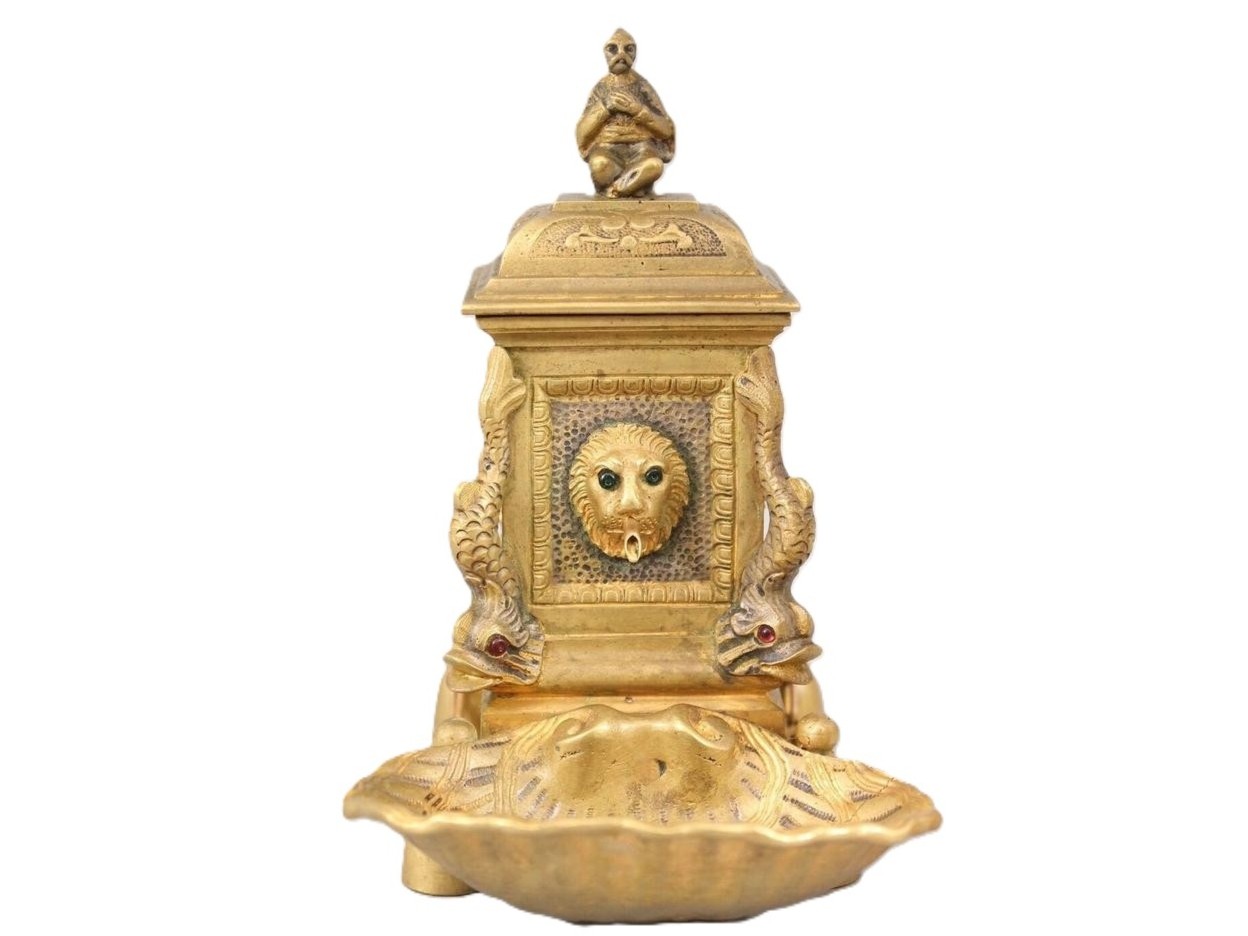
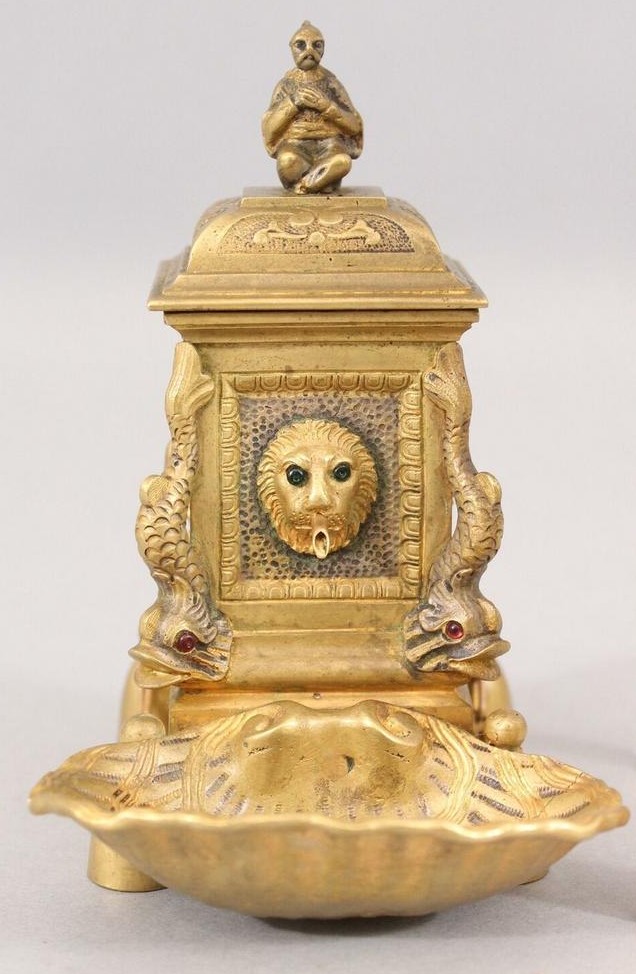
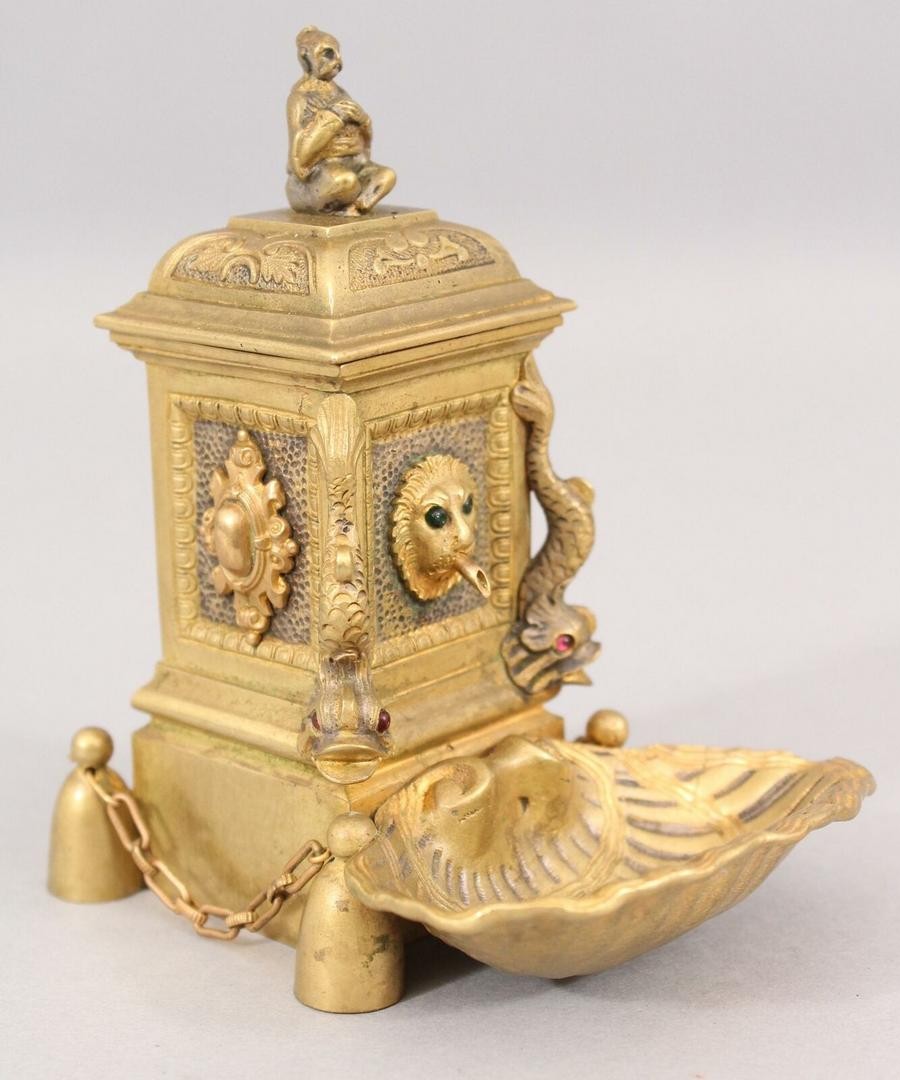
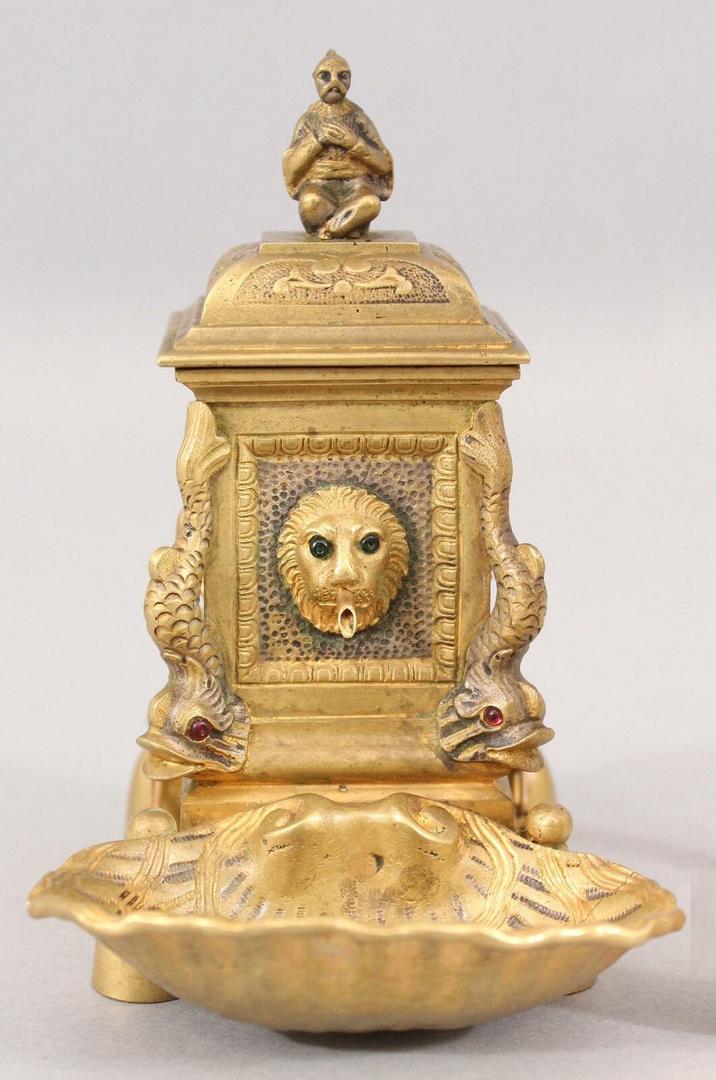
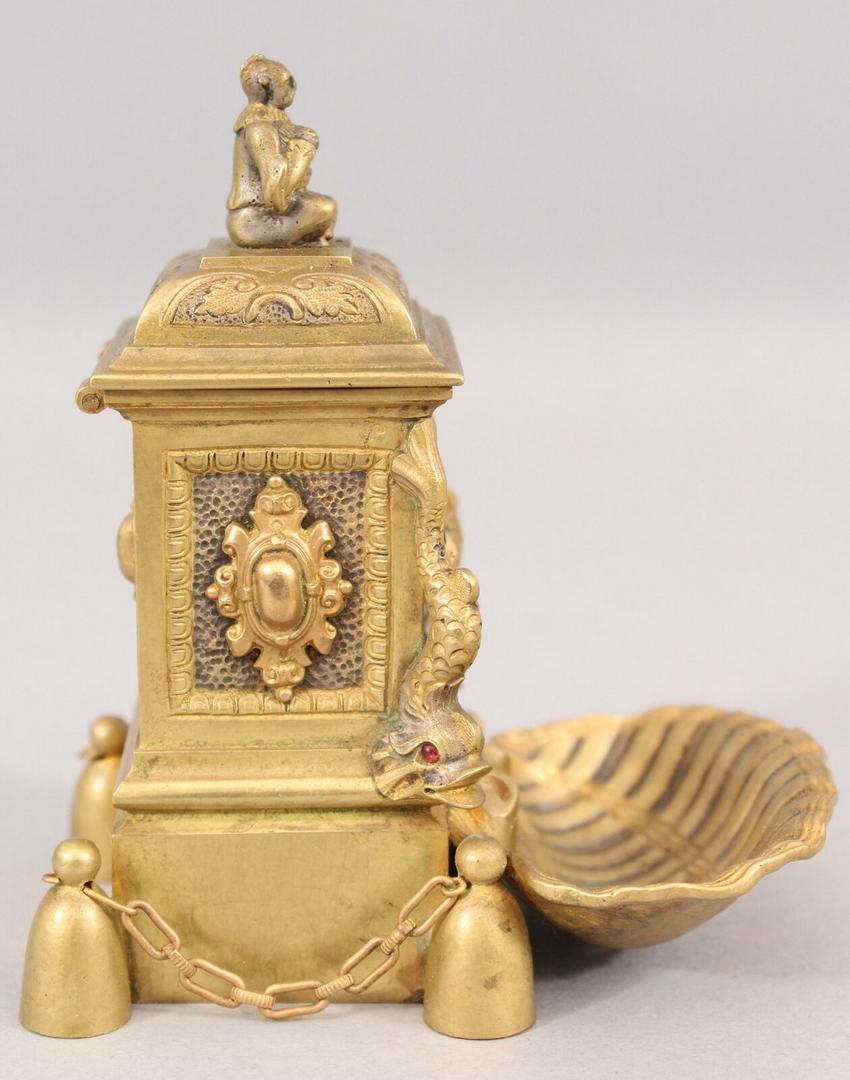
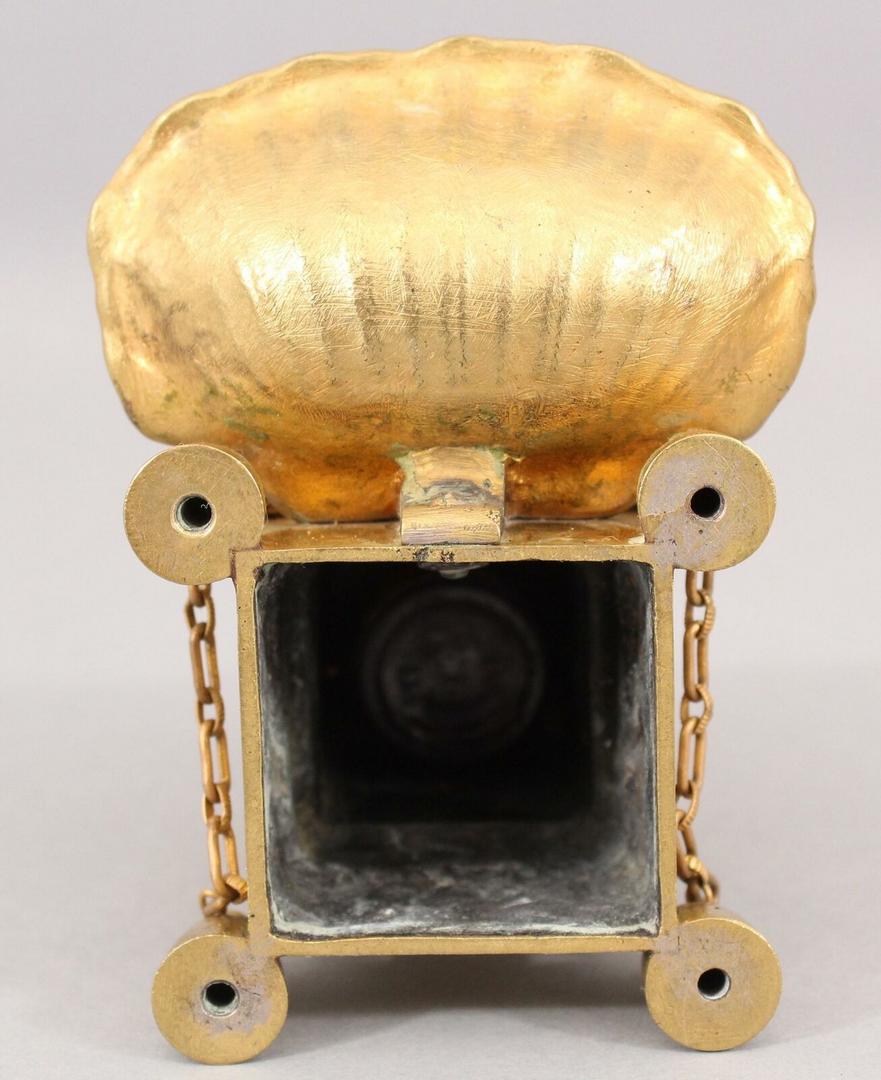
Fountain with Dolphin Supports and Orientalist Finial
| Categories | Figural - Inanimate |
| Material | Gilt Brass |
| Markings | Unmarked |
| Manufacturer | Undetermined |
| Origin | Undetermined |
| Date or Era | circa 1880 |
| Measuring | 3 ¾” x 2 ¾” x 4 ⅝” high |
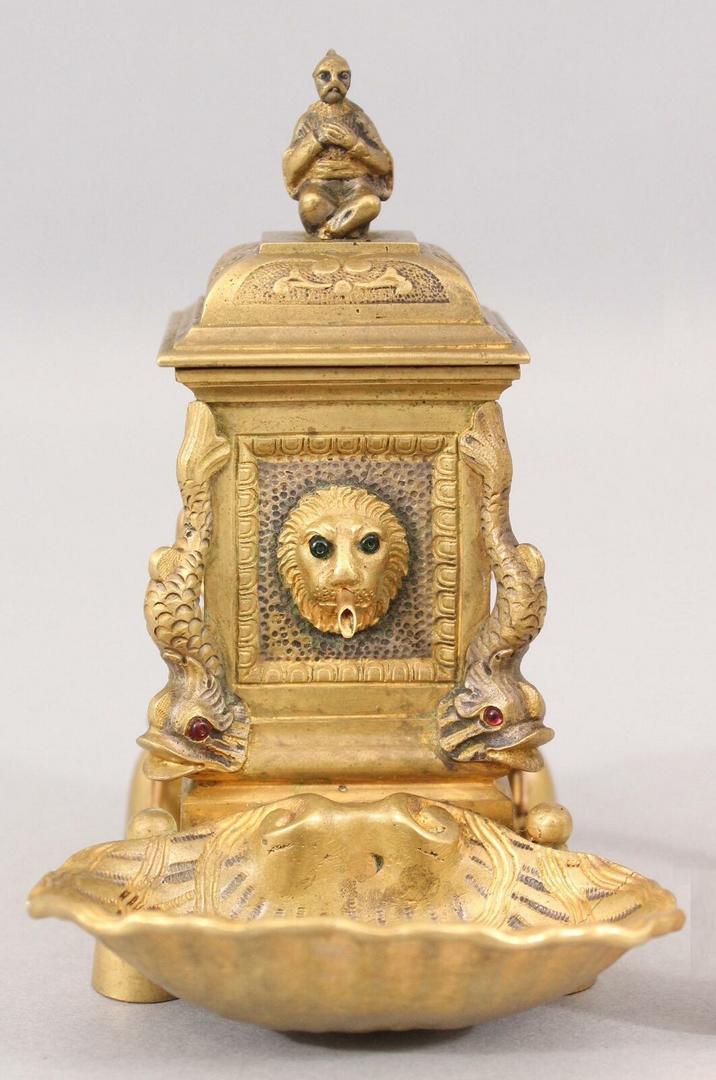
This gilt brass figural inkwell is designed to mimic a columnar fountain.
Description
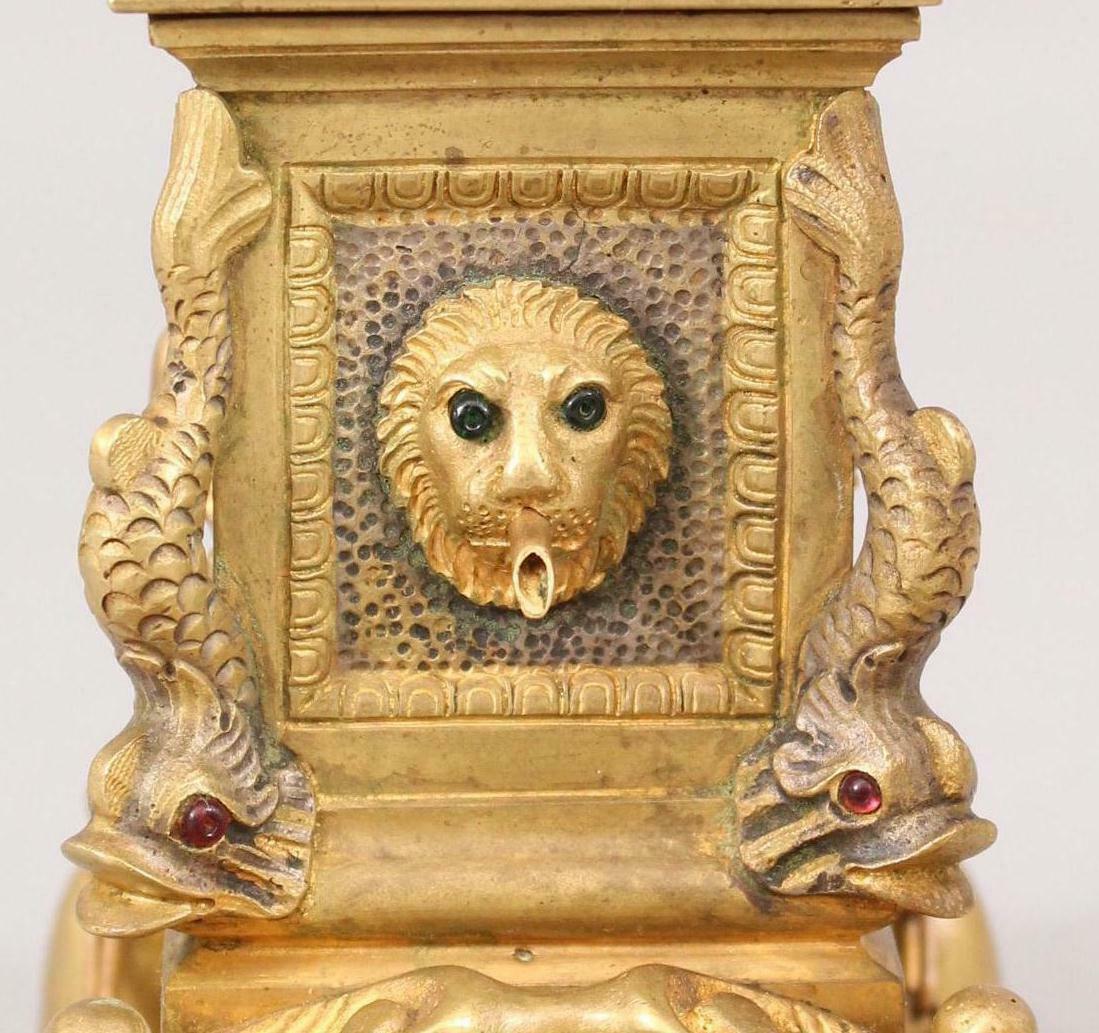
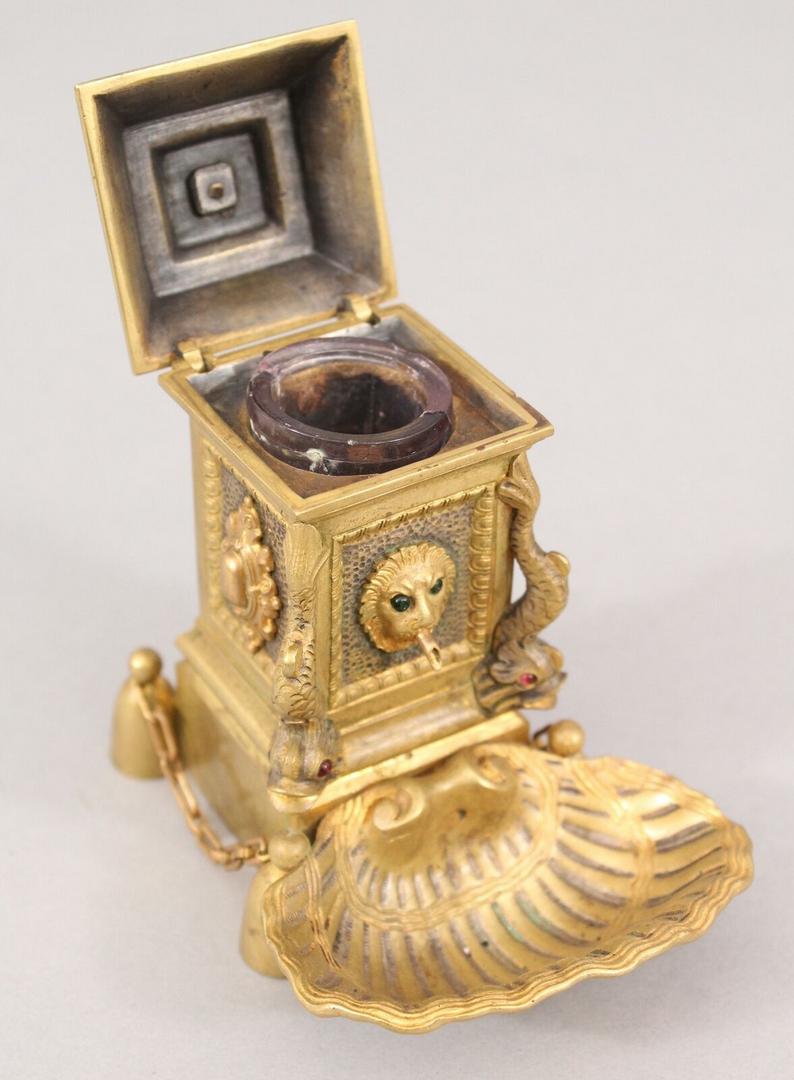
- The Body: Cast as a tapering, columnar fountain tower with textured, stippled masonry panels on the sides. One side features a prominent, fierce lion’s head mask with glass, paste-set eyes, its mouth forming the water spout. Below the spout extends a fluted scallop shell basin meant to catch the water in a real fountain, which serves here as a pen rest or tray.
- The Creatures & Details: Flanking the tower are two stylized dolphins (rendered with fish-like or serpentine scales and ruby-paste eyes). The side panels feature ornamental cartouches, and the base is secured by chains draped between corner feet styled like tassels.
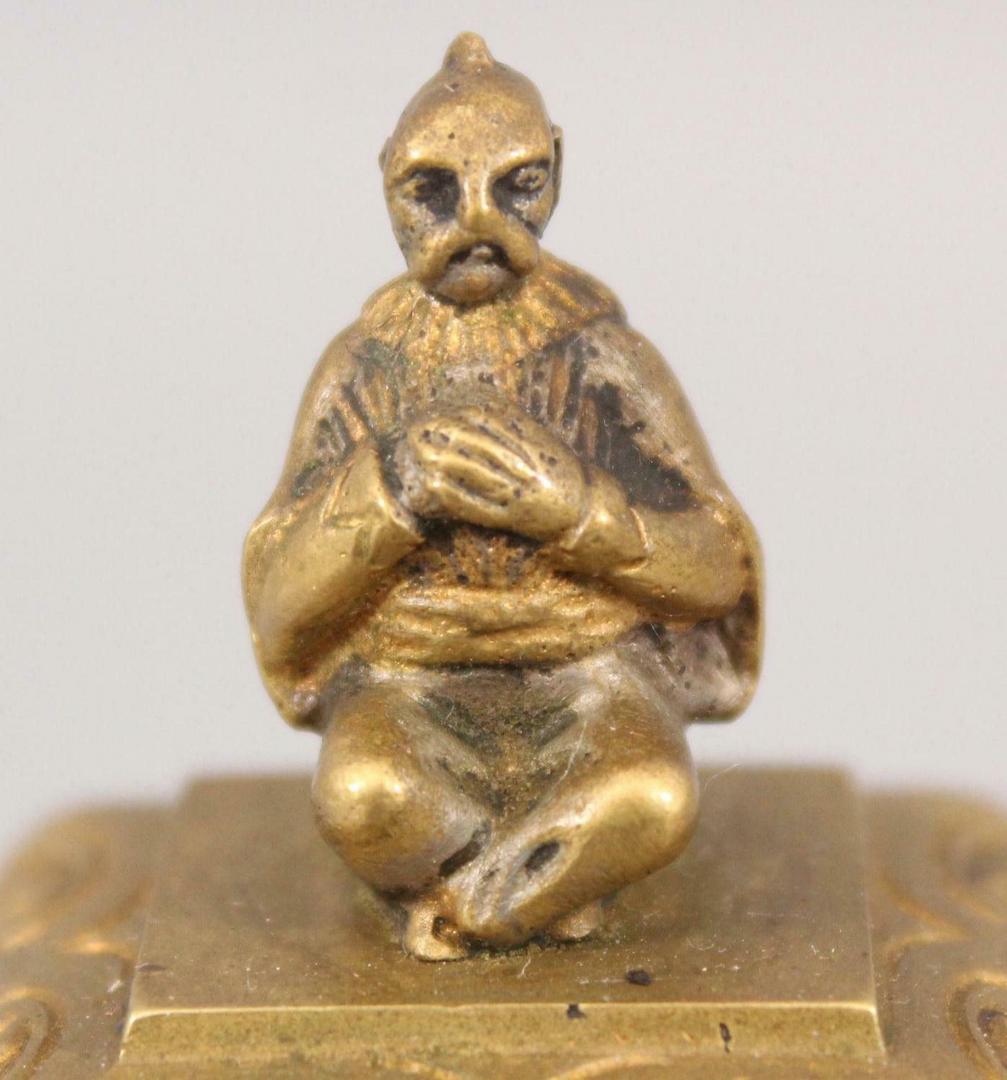
- The Finial: Seated atop the hinged lid is a small, exotic human figure wearing a pointed cap or helmet, seated cross-legged with hands folded over the chest. The figure’s fitted tunic, facial hair, and pointed hat are characteristic of 19th-century European Orientalist or “Turquerie/Chinoiserie” tropes—often meant to represent an Asian or Middle Eastern dignitary, sage, or guard.
What Does It Represent?
During the 19th century, European designers were obsessed with Historicism, Grand Tour souvenirs, and exoticism. This piece is a playful architectural fantasy that merges several distinct themes:
- Classical Renaissance & Baroque Fountains: Grand public fountains in Rome, Florence, or Paris frequently used lion masks (mascarons) and dolphin motifs to spout water into shell basins.
- Marine & Mythological Symbolism: Dolphins and seashells symbolize sea and water, a classic motif borrowed from Neptune’s iconography.
- The “Exotic East” (Orientalism): Victorian and Belle Époque craftsmen loved mixing classical European architectural elements (like lion fountains) with fanciful, non-Western figures (the seated figure on the lid) to evoke the “mystique” of the Orient or the Silk Road.
Where and When Was It Made?
- When: It dates to the late 19th century (circa 1870–1900), during the height of the Historic Revival and Eclectic periods in European decorative arts.
- Where: It was likely made in Europe – possibly France, Austria, or England, which were the primary hubs for high-end, imaginative cast-brass and gilt-bronze desk accessories (bronzes d’art). French and Austrian ateliers excelled at producing chased, jewel-eyed novelty inkwells for the luxury export market.
Sold for $340 in December 2019
Content disclaimer. The information posted is the owner’s best knowledge and may not have been vetted by the SOIC. We welcome comments, corrections, and additions, working to make our website information comprehensive and accurate.
Join the Society of Inkwell Collectors (SOIC) – it’s free!
Founded in 1981 as a non-profit organization,
we are documenting inkwells (and accessories).
We’re here to help and inform!