


Inkipedia
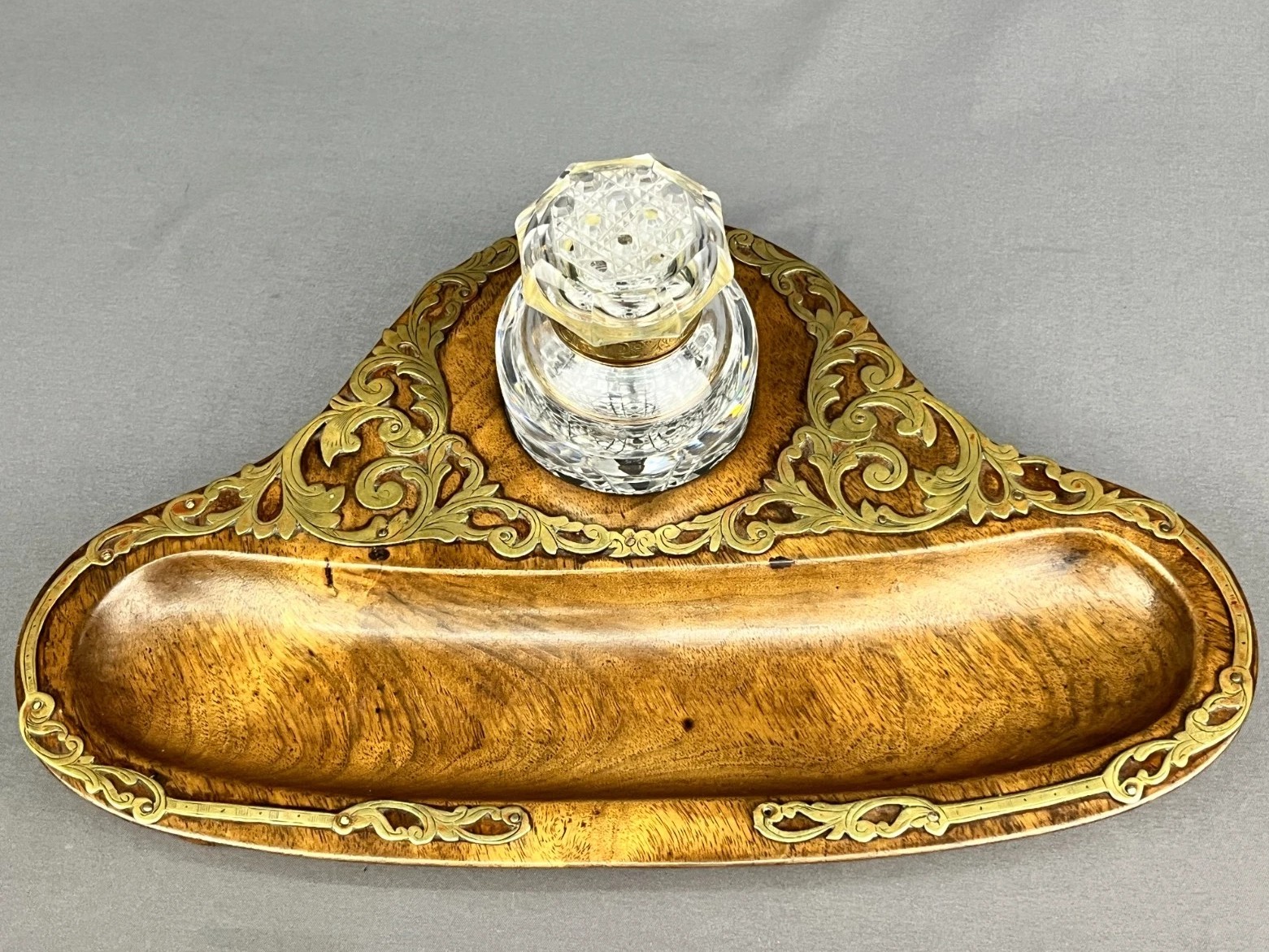
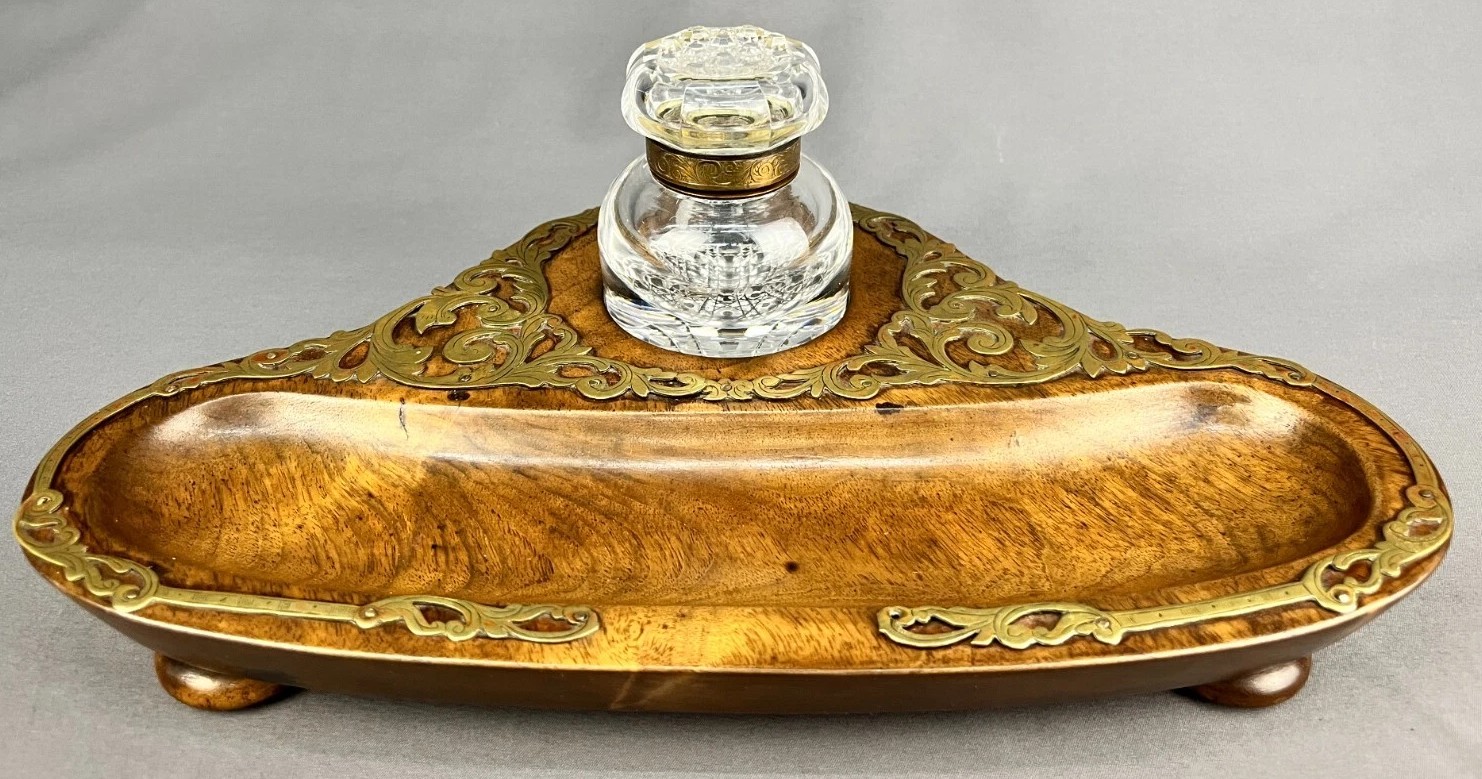
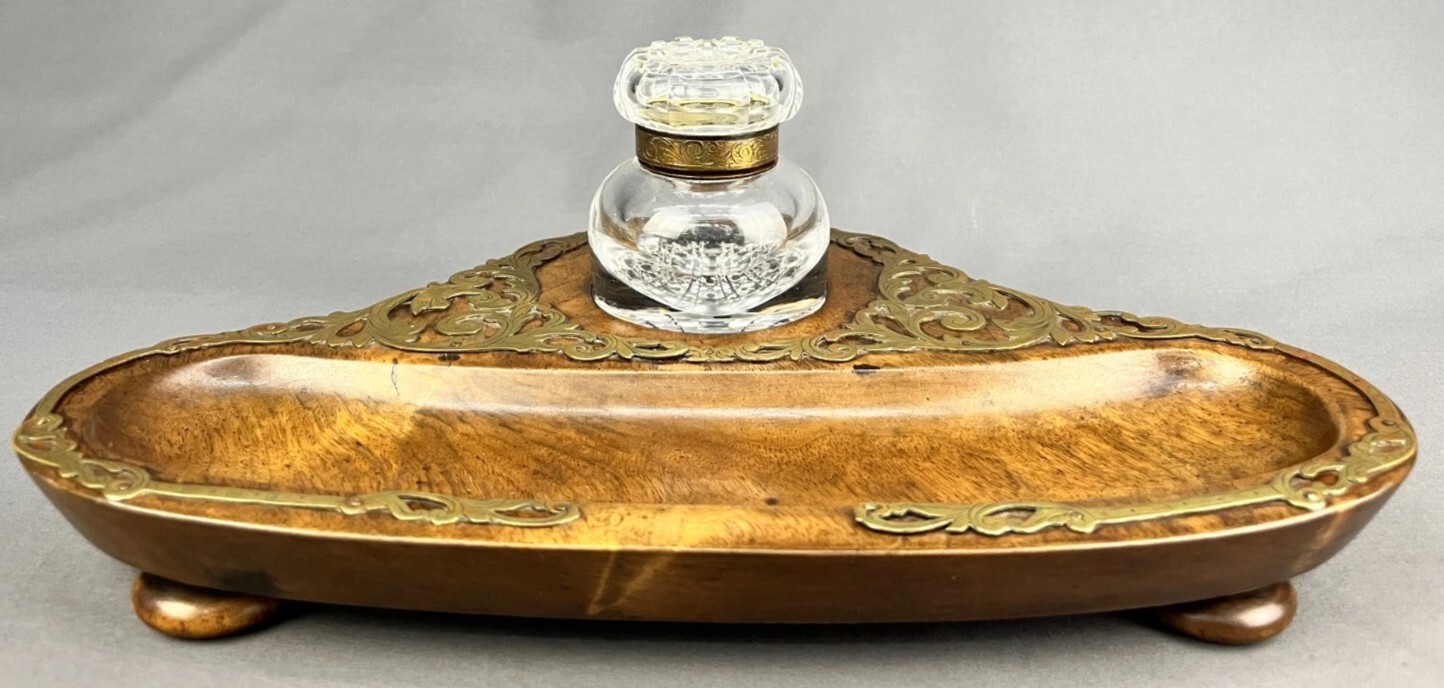


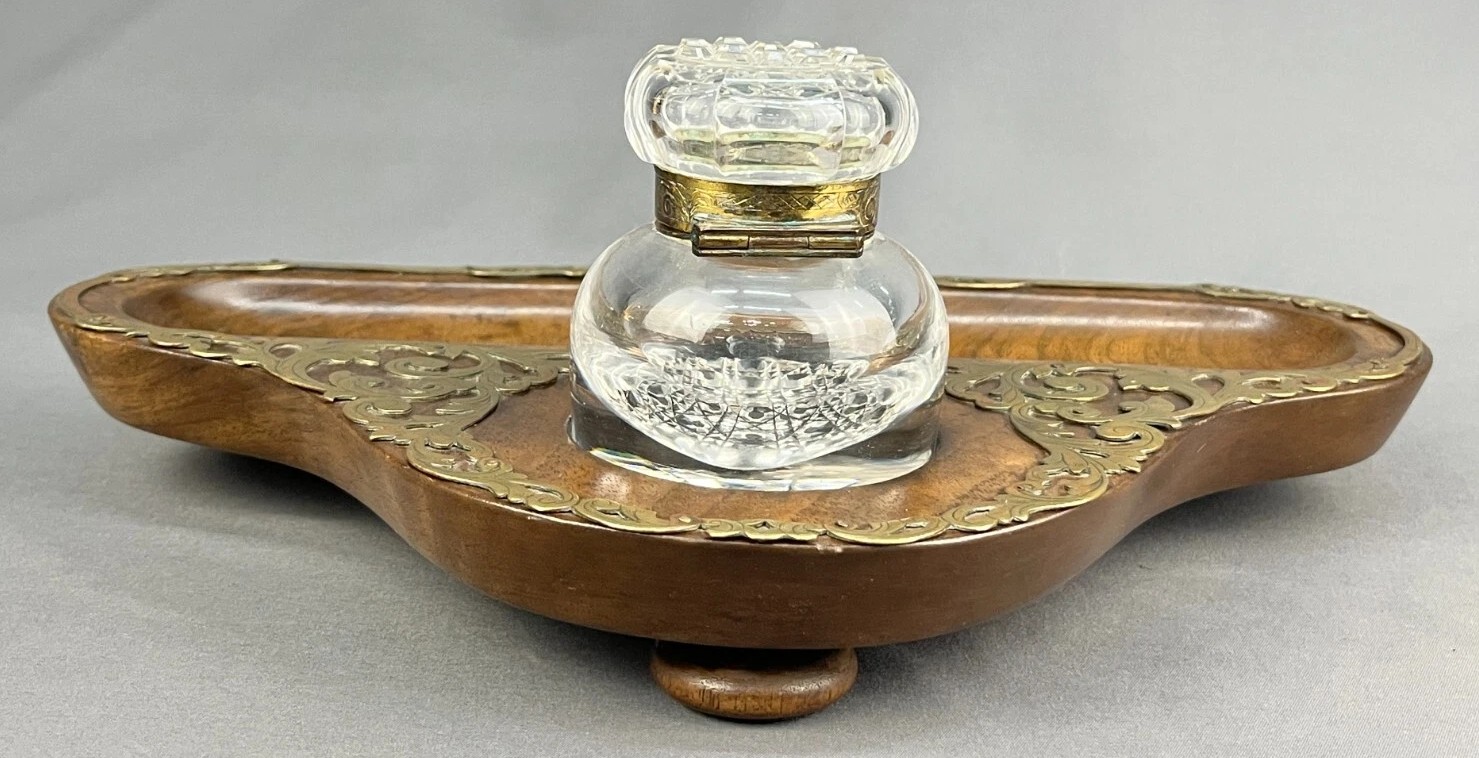




Footed Walnut Inkstand with Cut Glass Inkwell
| Categories | Wood Inkstands |
| Material | Wood |
| Markings | Unmarked |
| Manufacturer | Undetermined |
| Origin | England |
| Date or Era | circa 1870 |
| Measuring | 12 ¾” across; 1 ¾” high |
This is a classic example of a mid-Victorian writing accessory. This style of combining dark wood, polished brass, and cut glass was popular in English desk furniture.
- Overall Form: A triangular inkstand with a cut glass inkwell.
- Base Material: The base is constructed from walnut wood, which has a naturally rich, dark grain and a polished finish.
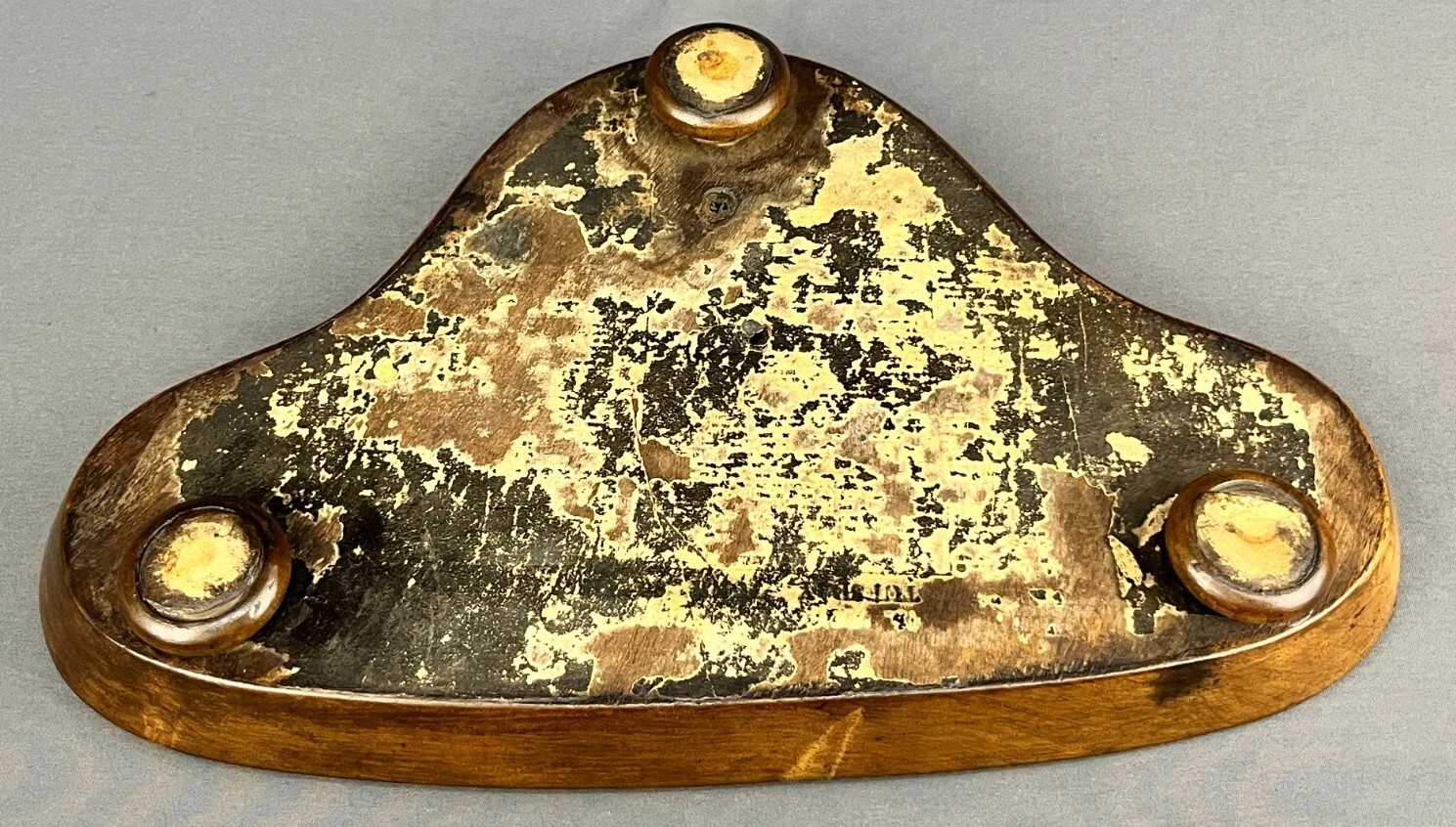
- Feet: The base is supported by three small, turned feet (two at the front, one centered at the back).
- Metal Accents: The ornamental metalwork is made of thin brass, cut and stamped into elaborate scrolled patterns (rinceaux). These brass accents are applied directly to the walnut surface as decoration, a common technique for enhancing woodwork in this period.
- Pen Channel: The large, shallow channel running across the front of the stand is designed to hold multiple dip pens or other writing utensils.
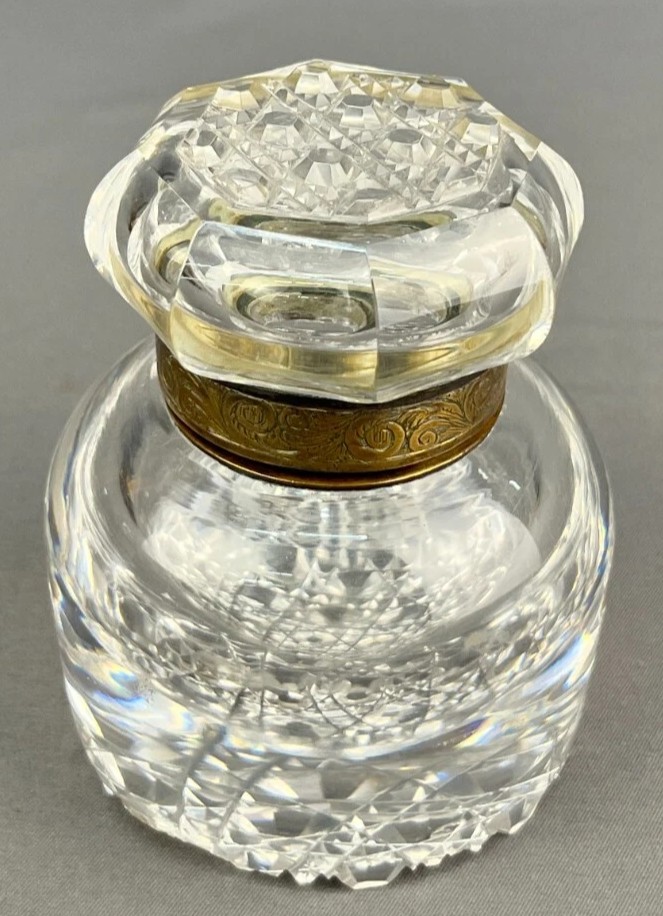
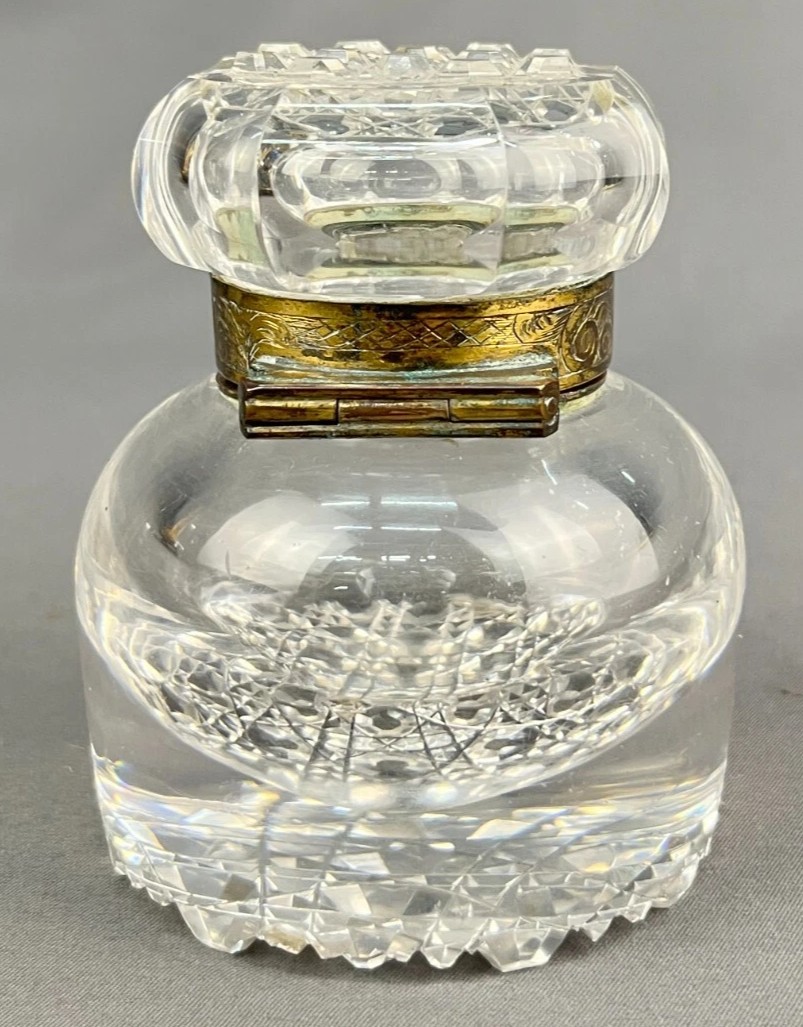
- The Inkwell: The centerpiece is the single inkwell, a fine example of Victorian glasswork:
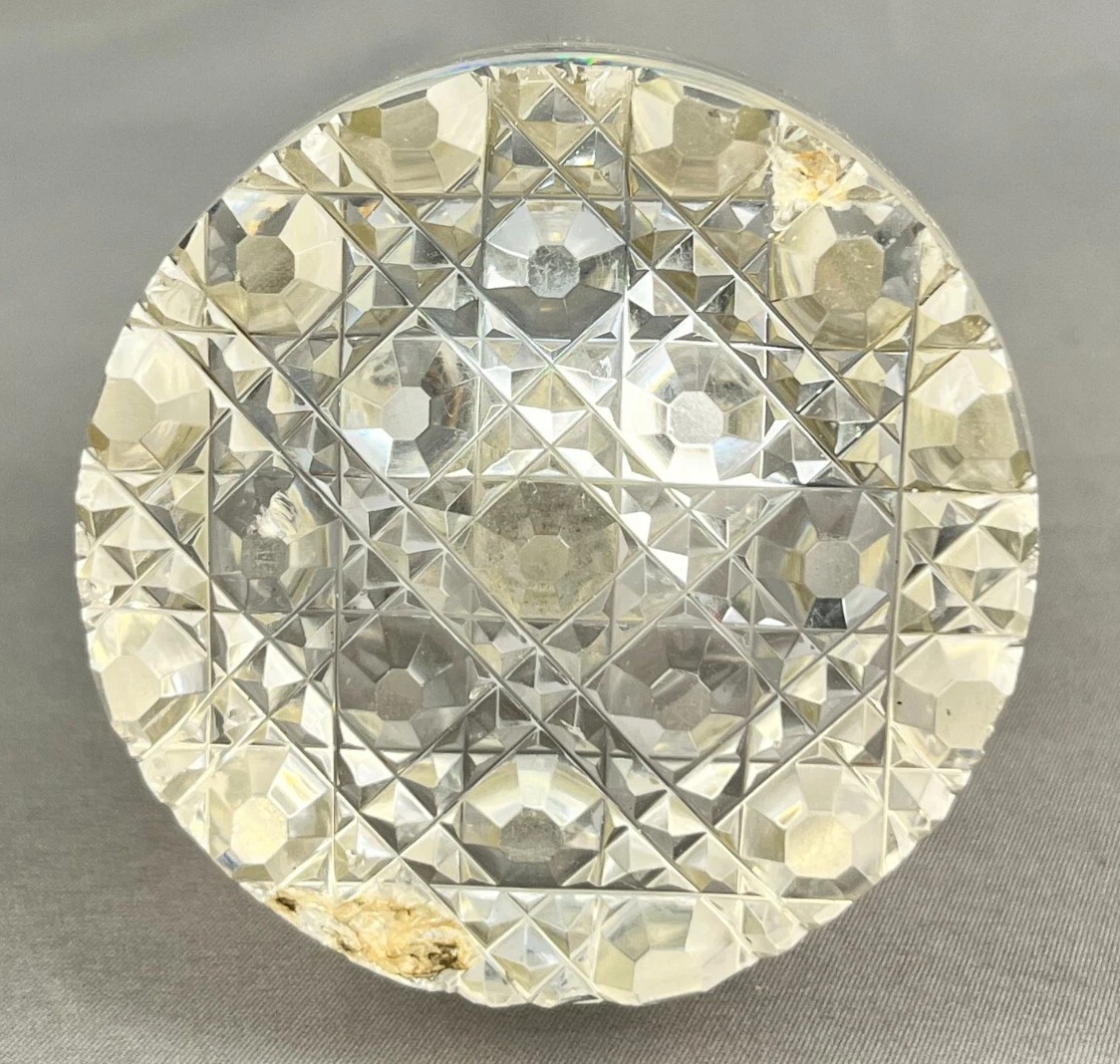
- Glass: The inkwell body is cut glass with a heavy, diamond-patterned texture, or hobnail cut, covering both the base and the square lid. The heavy cutting enhances the brilliance of the glass.
- Lid Assembly: The cut glass lid is connected to the inkwell’s neck by a decorative brass coupling or collar and a hinged mechanism, allowing it to be securely opened and closed.
Style, Origin, and Age
Likely English in origin.
- Materials and Style: The combination of polished walnut (a preferred furniture wood), brass fittings, and heavy cut-glass in the hobnail pattern is strongly indicative of British mid-Victorian manufacturing. Firms in Birmingham and Sheffield were prolific in producing these kinds of brass and plated desk wares.
- Purpose: This style epitomizes the Victorian taste for robust, handsome, and functional objects that clearly communicated the owner’s status and formality in correspondence. The high quality of the cut glass suggests it was intended as a permanent, expensive fixture on a gentleman’s library or office desk.
Age Estimate:
The ornate brass scrollwork and the heavy, early style of the hobnail cutting on the glass suggest the heart of the Victorian era. circa 1850 – 1880 (Mid-Victorian Era)
Sold for $225 in October 2025
Content disclaimer. The information posted is the owner’s best knowledge and may not have been vetted by the SOIC. We welcome comments, corrections, and additions, working to make our website information comprehensive and accurate.
Join the Society of Inkwell Collectors (SOIC) – it’s free!
Founded in 1981 as a non-profit organization,
we are documenting inkwells (and accessories).
We’re here to help and inform!