






Figural Glass Cat Inkwell
| Categories | Glass - Figural |
| Type | Cat |
| Material | Glass |
| Markings | See narrative |
| Manufacturer | Undetermined |
| Origin | England |
| Date or Era | circa 1886 |
| Measuring | 4” long |
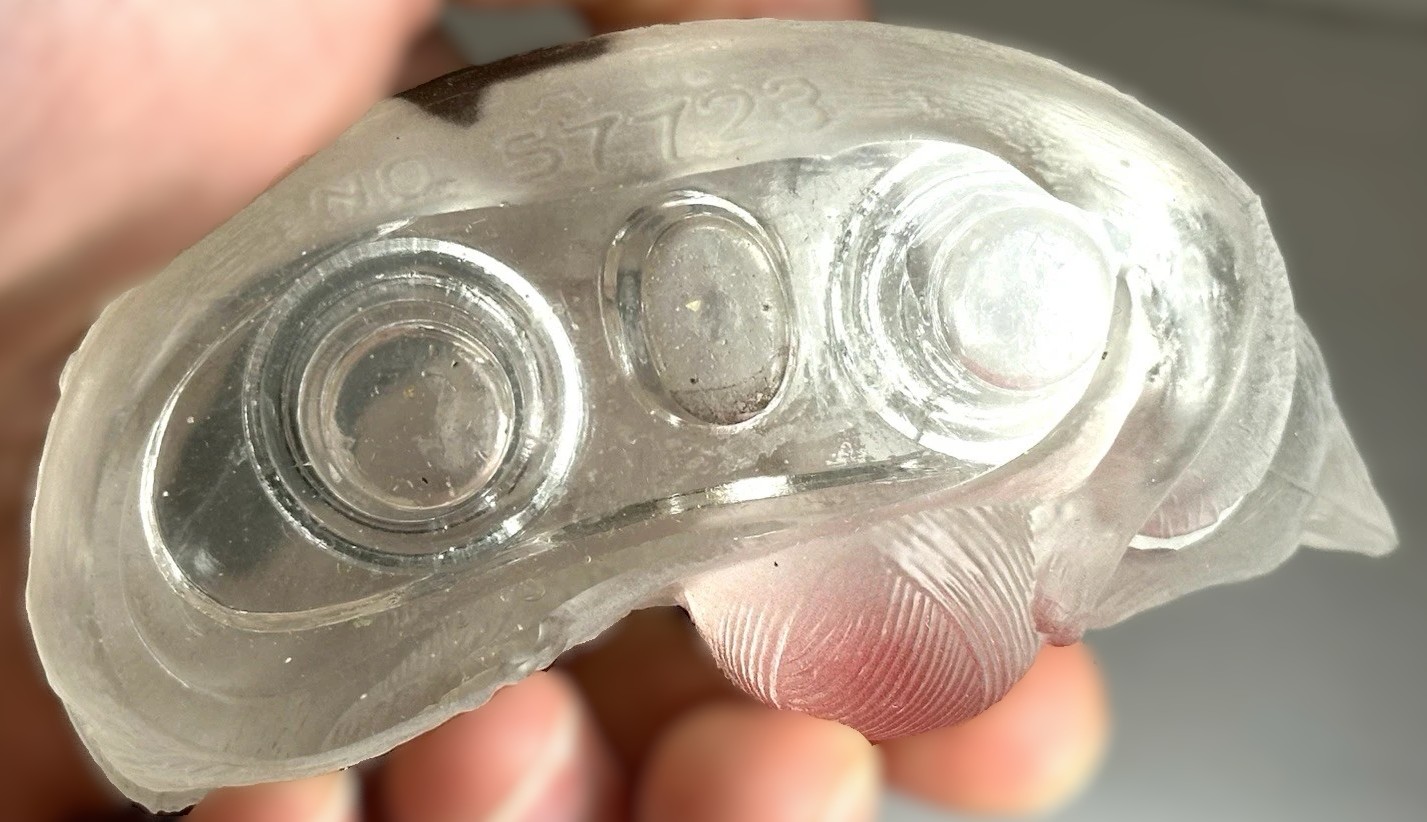
| Patent | NO. 57723 (English) |
Description
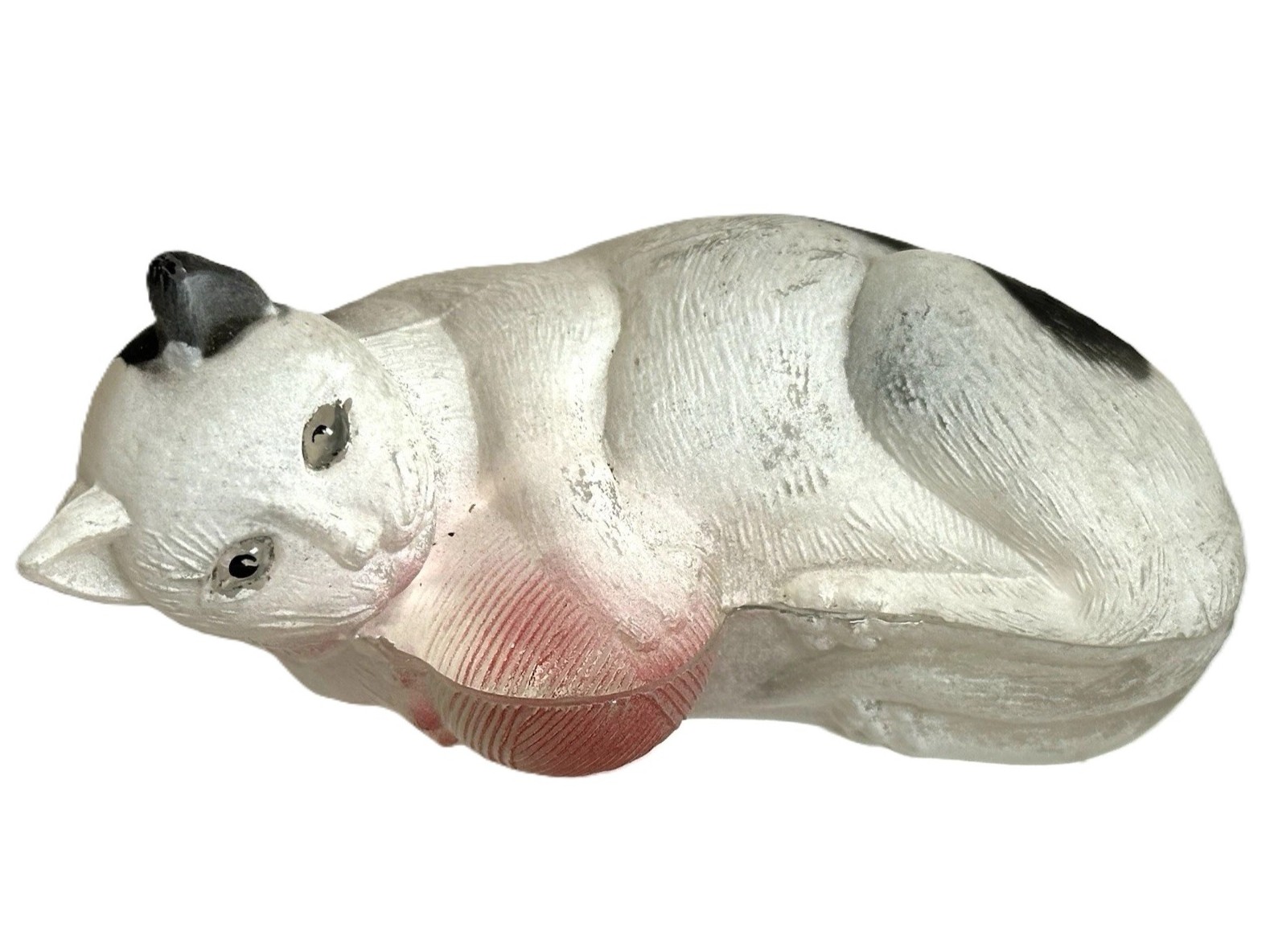
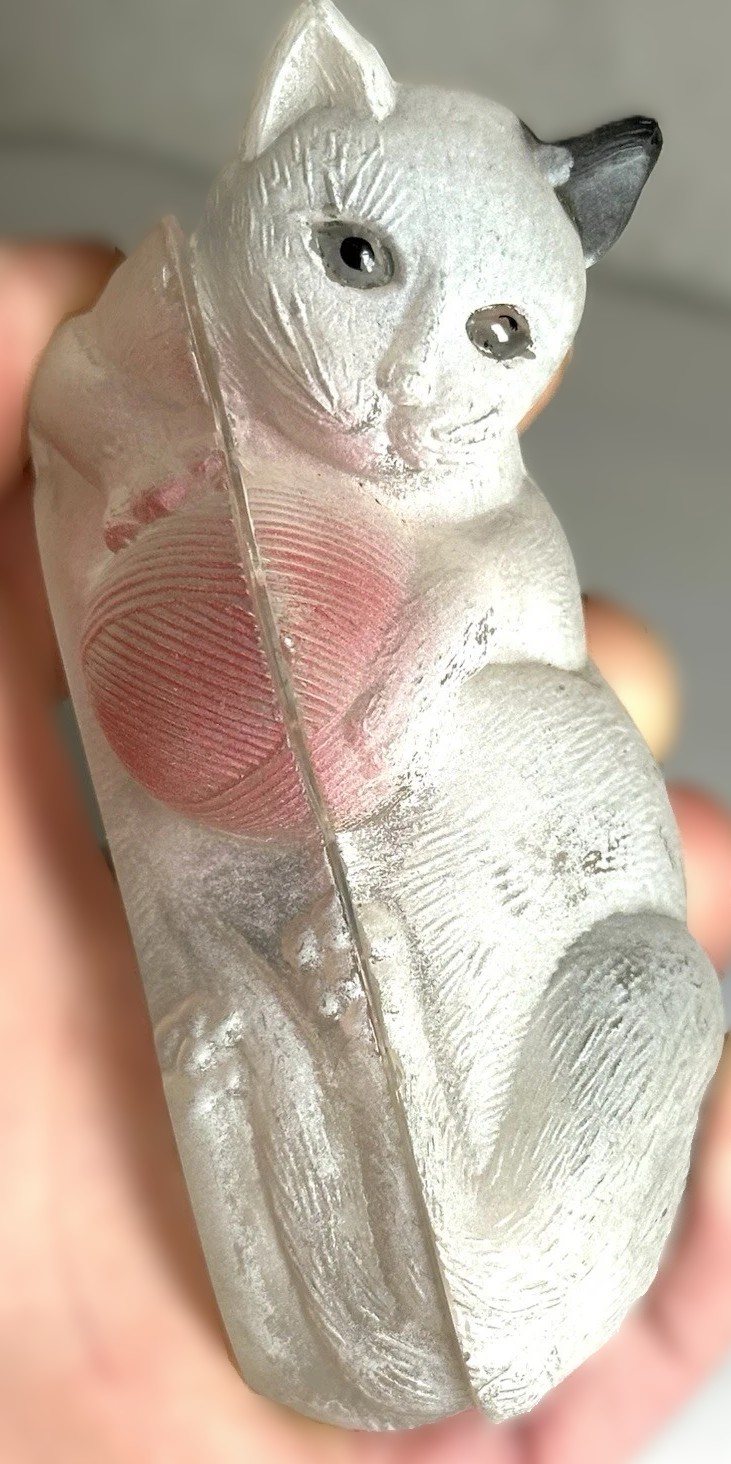
- Form & Style: This is a two-piece, figural pressed-glass novelty inkwell and desk accessory. It is sculpted in the form of a reclining cat cradling a large, textured ball of yarn between its front paws.
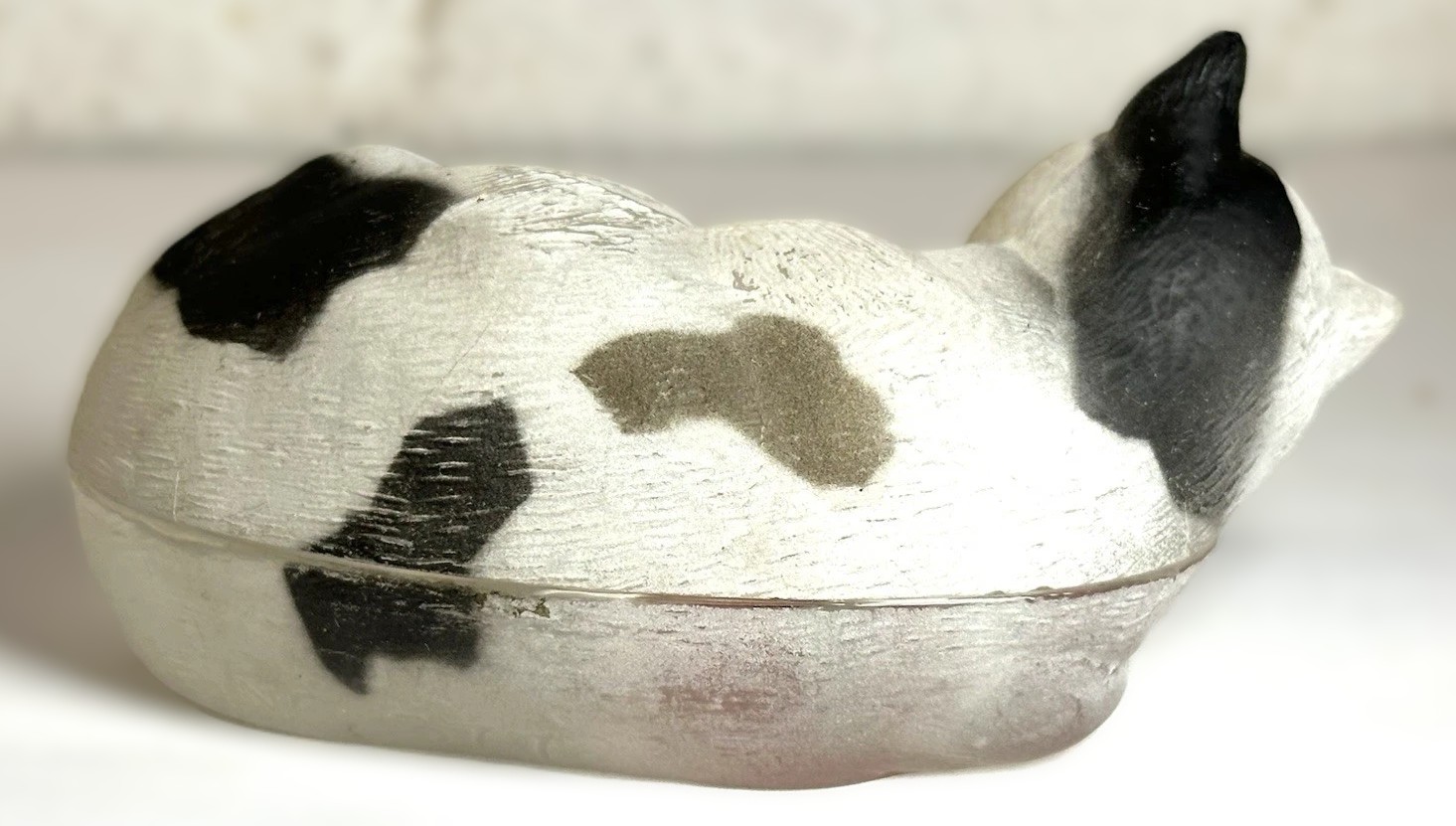
- Material & Finish: The piece is made of clear glass with a frosted (satin) finish across the cat’s body to simulate fur texture. It features cold-painted details, including black patches on the ears, back, and tail, detailed black-and-white painted eyes, and a soft pink/red wash over the ball of yarn.
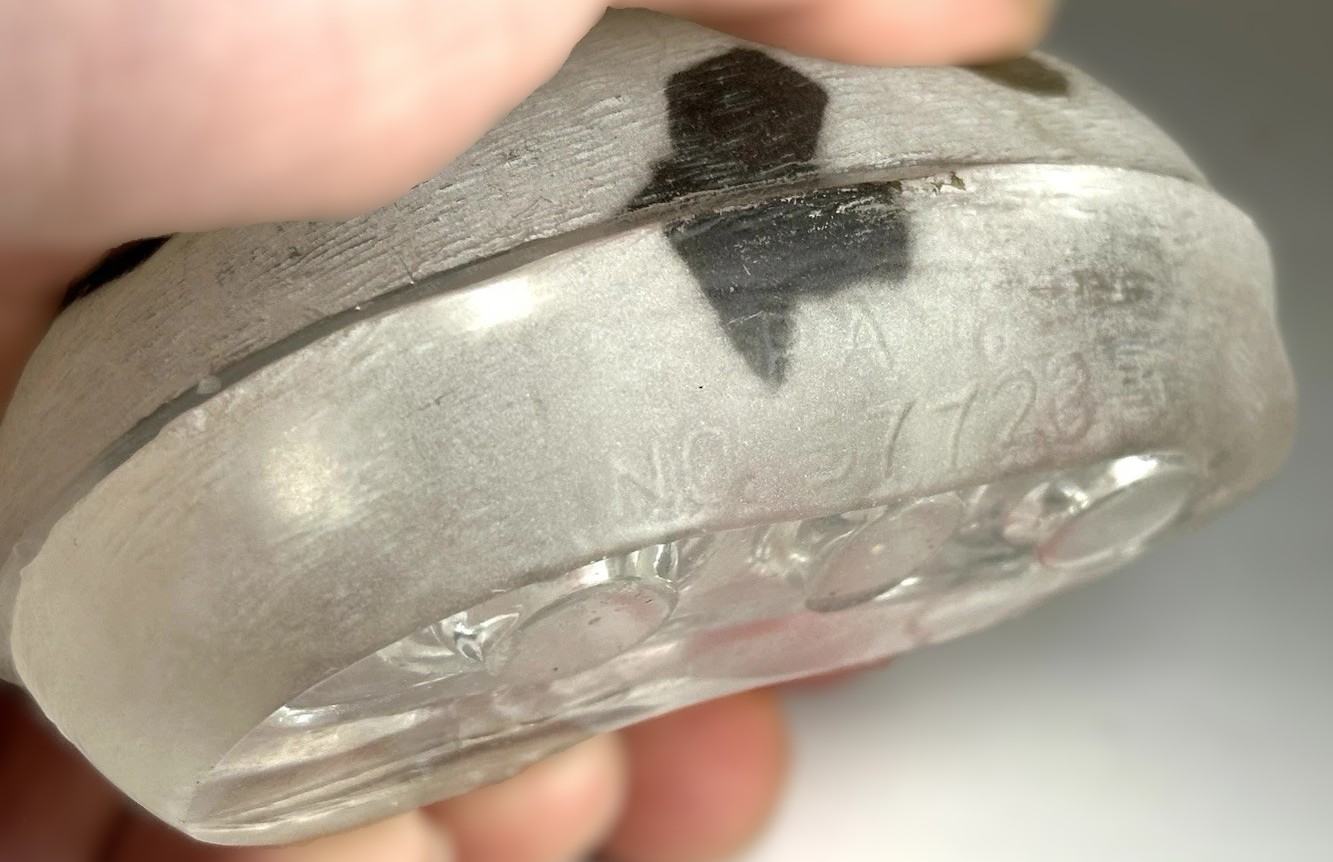
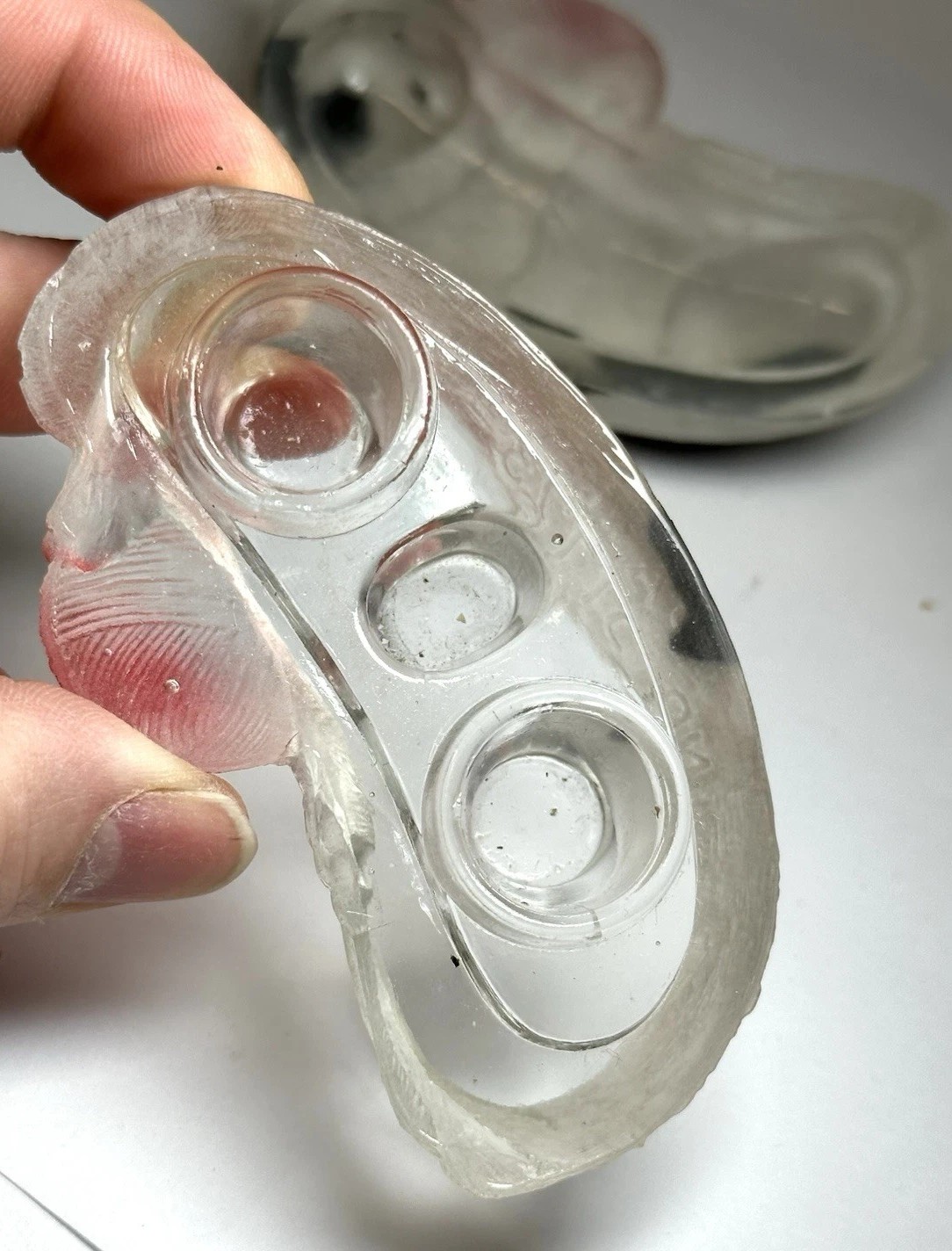
- Internal Structure: The piece is divided horizontally into a lid (the upper body of the cat) and a reservoir base. The interior of the bottom half features three integrated, molded clear glass wells: two outer circular compartments (intended to hold ink) and a central oval compartment (for paperclips, stamps, or pen nibs).
- Markings: Molded directly into the glass rim of the base is an embossed alphanumeric code: NO. 57723 (preceded by a partial prefix, likely PAT.).
The Victorian Novelty Press-Glass Desk Accessory
During the late Victorian period, British and Continental European glassworks experienced a massive boom in the production of “pressed glass novelties.” These affordable, decorative, and highly functional items were mass-produced using metal molds. Animal themes—particularly cats, dogs, and owls—were popular for desk sets, inkwells, and match holders.
To protect their proprietary shapes from being immediately copied by competing glasshouses (especially rivals in Birmingham, Stourbridge, or the Northeast of England like George Davidson or Greener & Co.), manufacturers would register the decorative shape with the British Board of Trade (Design Registry Office).
Why No. 57723 Points Directly to 1886
The United Kingdom completely overhauled its design registration system on January 1, 1884. Starting on that day, the registry abandoned the old diamond-shaped registration marks and introduced a simple, sequential numbering system starting at No. 1.
- By the end of 1884, numbers had reached nearly 20,000.
- By the end of 1885, they reached roughly 40,000.
- Registration Number 57723 was officially assigned and approved in mid-1886.
The Wording Used in British Registered Designs
Unlike a standard utility patent, which includes pages of dense text detailing a mechanism’s technical operations, a British Registered Design focused strictly on the aesthetic shape and configuration of an object.
When a glass manufacturer submitted this cat inkwell to the Comptroller of the Patent Office in London in 1886, the official documentation did not feature extensive descriptions. Instead, it relied on a strict, boilerplate legal framework accompanied by a drawing or photo.
The standard formal wording used on the official certificate and entry ledger for a Class III (Glass) registration at that time read as follows:
Patents, Designs, and Trade Marks Act, 1884
CERTIFICATE OF REGISTRATION OF DESIGN
Design Number: 57723
Date of Registration: [Day/Month], 1886
Proprietor: [Name of Glassworks/Manufacturer, e.g., George Davidson & Co. or Henry Greener, Newcastle-on-Tyne]
Class 3 — Articles composed wholly or partly of Glass.
Statement of Nature of Design:
“The Design is for the Pattern, Shape, and Configuration of an article of Glass in Class 3, representing a Figural Cat and Ball, applicable as an Inkstand or Desk Vessel.”
COPYRIGHT: Protection is granted for a period of five years from the date of registration, during which the proprietor has the exclusive right to apply the design to any article in the class in which the design is registered.
Decoding the Text:
- “Pattern, Shape, and Configuration”: This exact phrase was the legal bedrock of British design copyright. It meant they were protecting the specific visual combination of the cat’s resting pose, the textures of the fur, and the shape of the yarn.
- “Class 3”: The British registry categorized submissions into 14 distinct material classes. Class 3 was strictly reserved for glass items.
- The “NO.” prefix on this piece: The font style of the NO. 57723 on this item is characteristic of 1880s British metal molds. Glass blowers would engrave the number directly into the iron mold so it would press cleanly into the glass base, serving as a warning to competitors that the design was legally protected under Crown copyright.
Sold for $183 in May 2026
Content disclaimer. The information posted is the owner’s best knowledge and may not have been vetted by the SOIC. We welcome comments, corrections, and additions, working to make our website information comprehensive and accurate.
Join the Society of Inkwell Collectors (SOIC) – it’s free!
Founded in 1981 as a non-profit organization,
we are documenting inkwells (and accessories).
We’re here to help and inform!