






Farm Boy at the Well – Two Versions
| Categories | Figural - Persons |
| Type | Barnyard, Child |
| Material | Bronze finish |
| Markings | Unmarked |
| Manufacturer | Bossu |
| Origin | France |
| Date or Era | circa 1900 |
| Measuring | 9 ¼” x 6 ¾” x 8 ¼” high |
Version #1: The Farm Boy at the Well
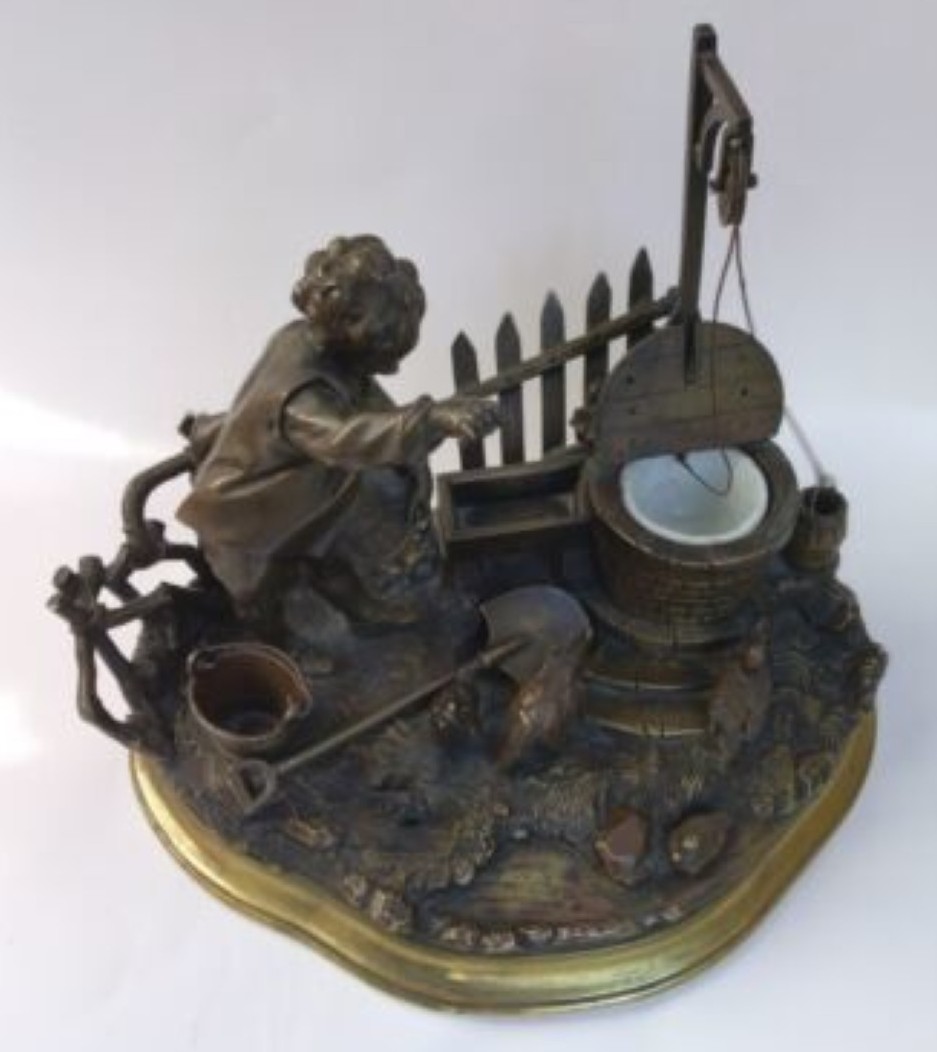
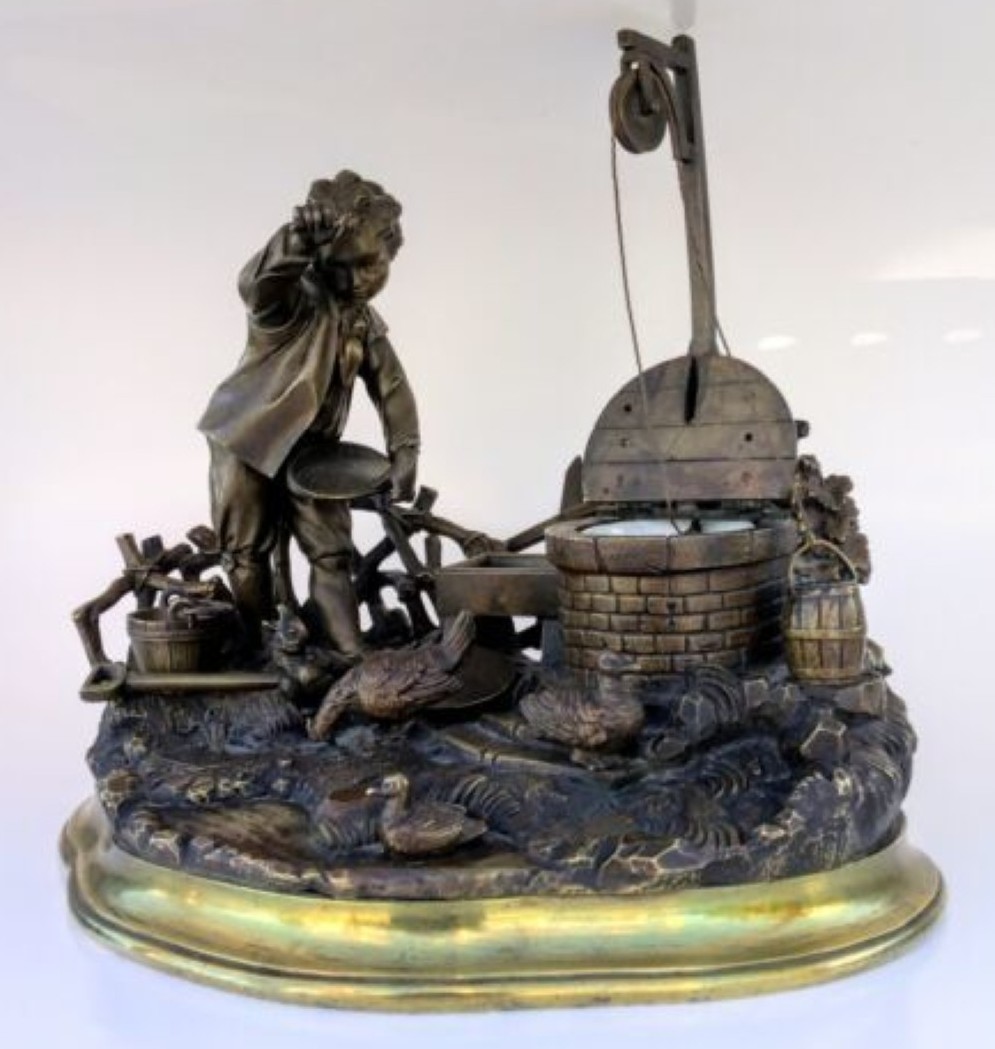
This is a charming French Figural Inkstand dating to the late 19th or early 20th century (c. 1890–1910). It is a classic example of the Rustic or Pastoral themes that were popular at this time in decorative arts.
- The Scene
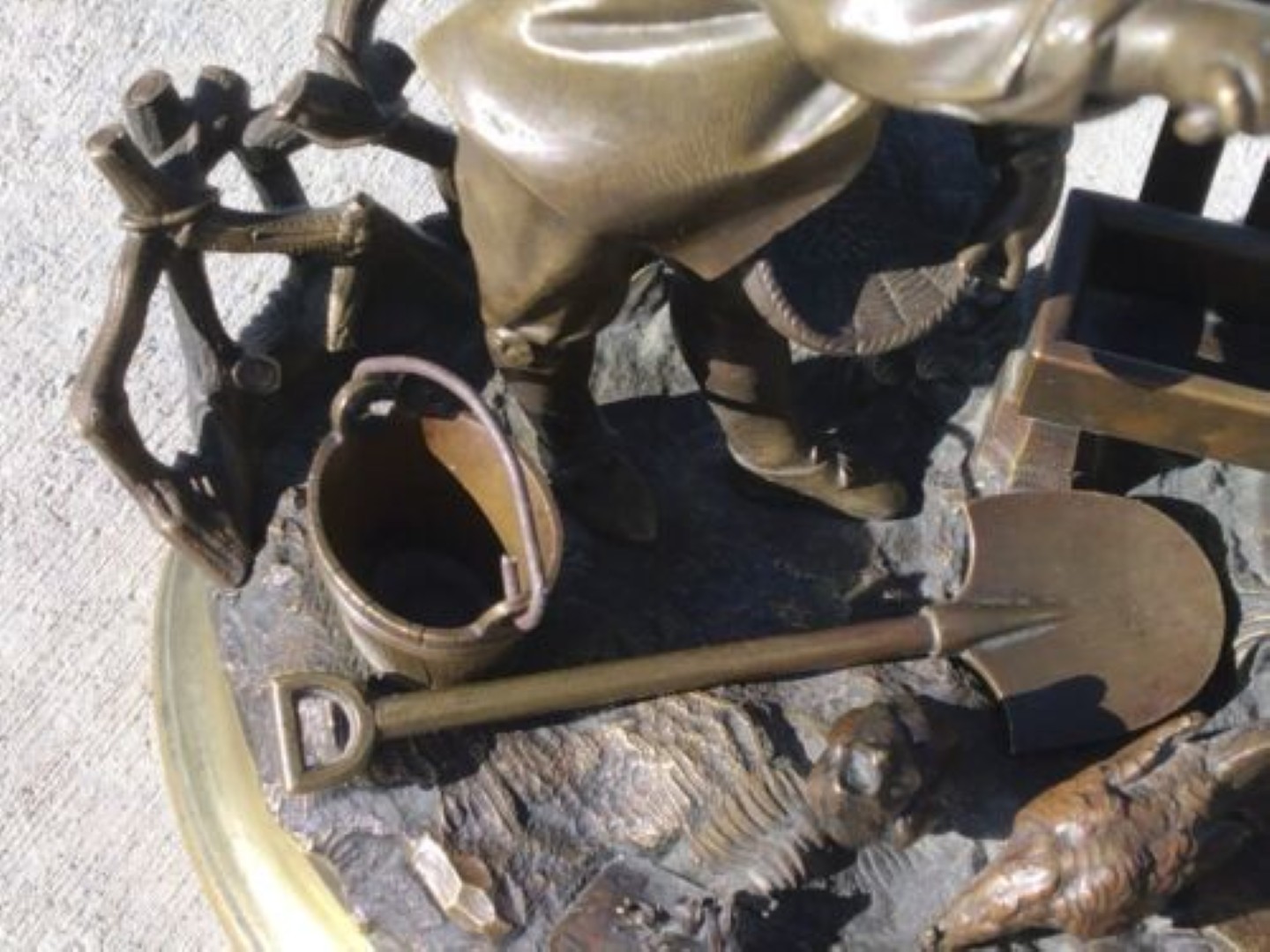
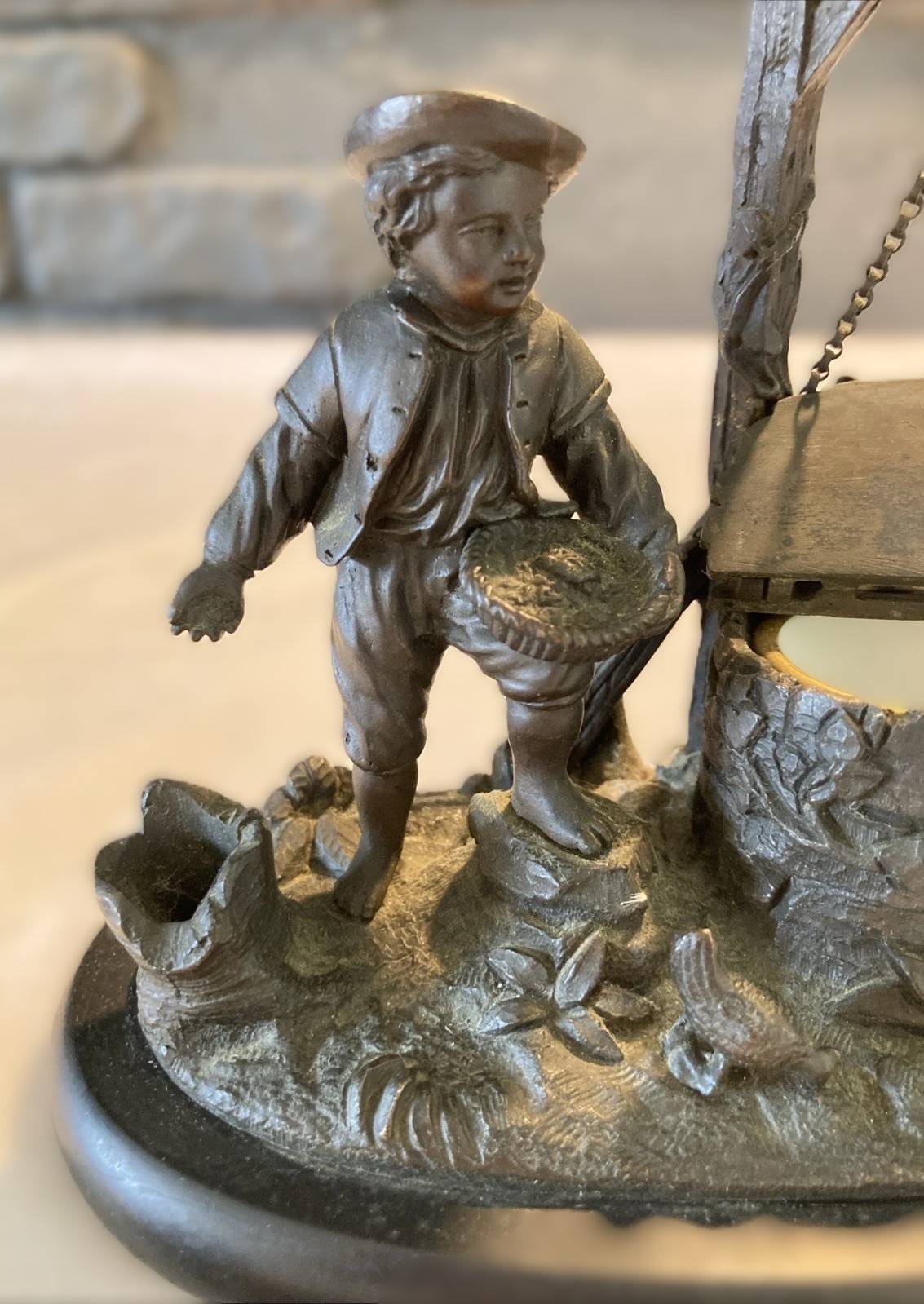
- The Figure: A young peasant boy stands by a fence, captured in motion as he scatters feed from a sieve or bowl held in his left hand. He wears typical rural attire: a cap, jacket, knee breeches, and sabots (wooden clogs).
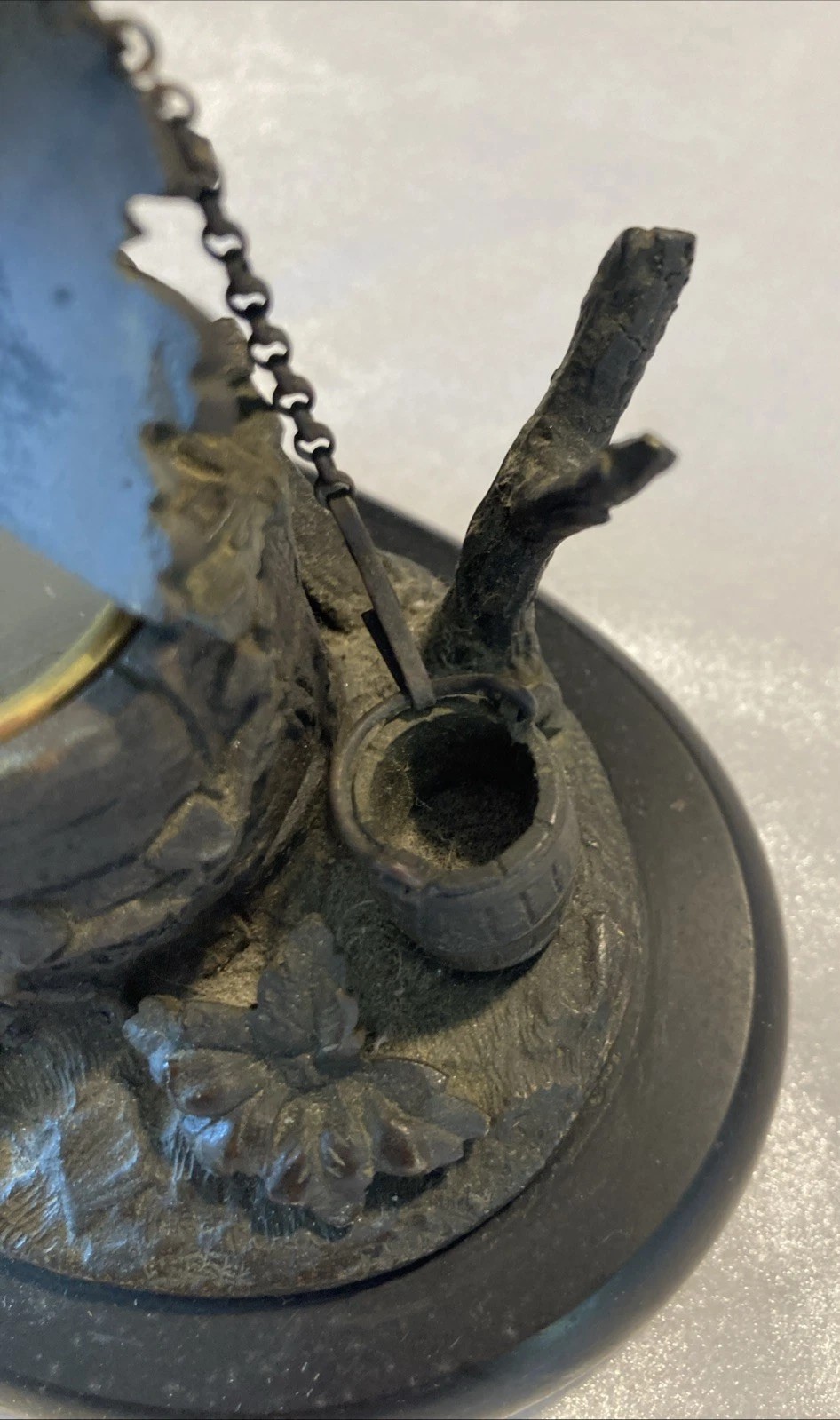
- The Animals: At his feet, two ducks (or possibly geese) are eagerly waiting for the food. A shovel and a wooden bucket sit nearby, adding to the farmyard atmosphere.
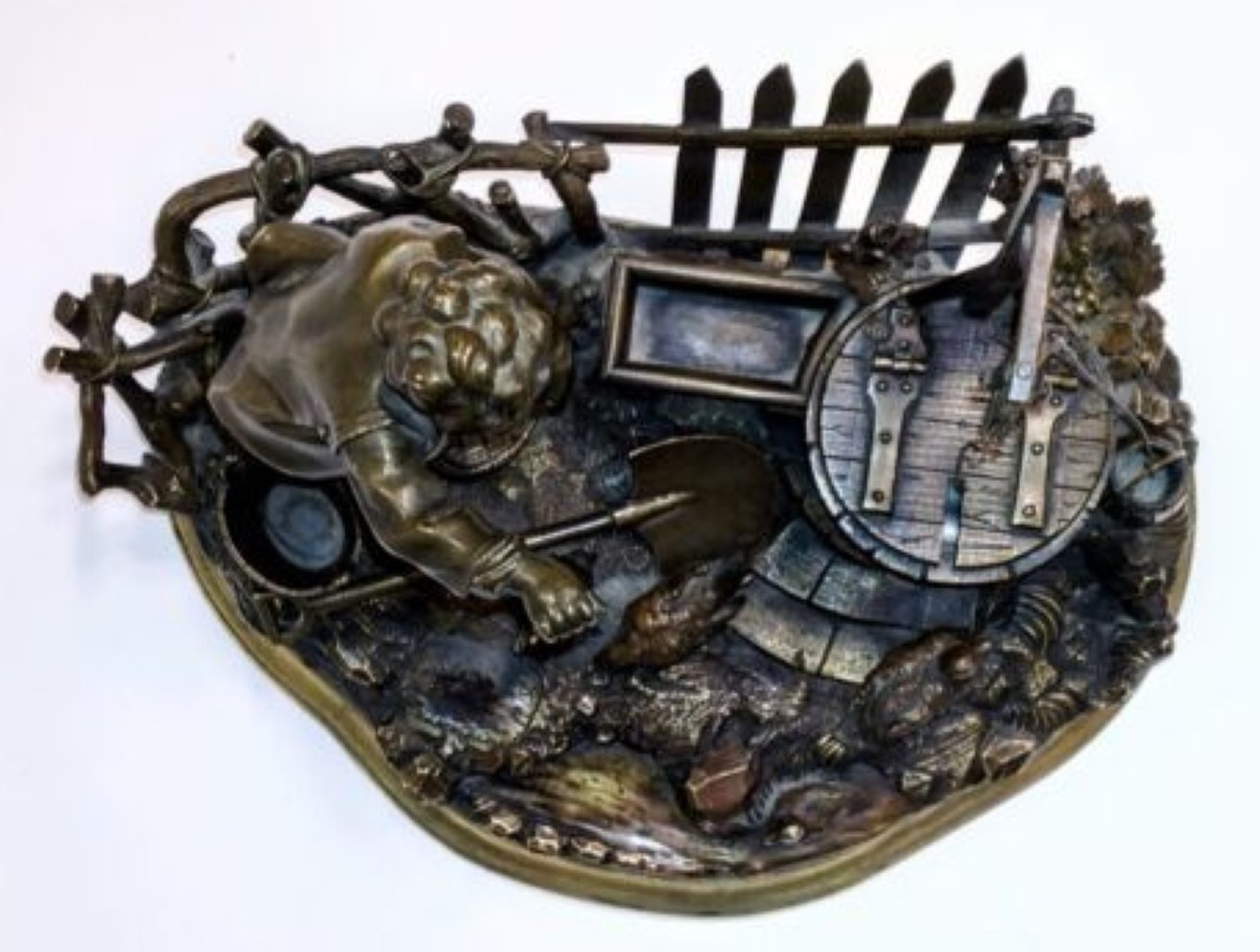
- The Setting: The scene is set on a textured base modeled to look like uneven ground, backed by a rustic wooden fence.
- The Mechanical Inkwell (The Well)
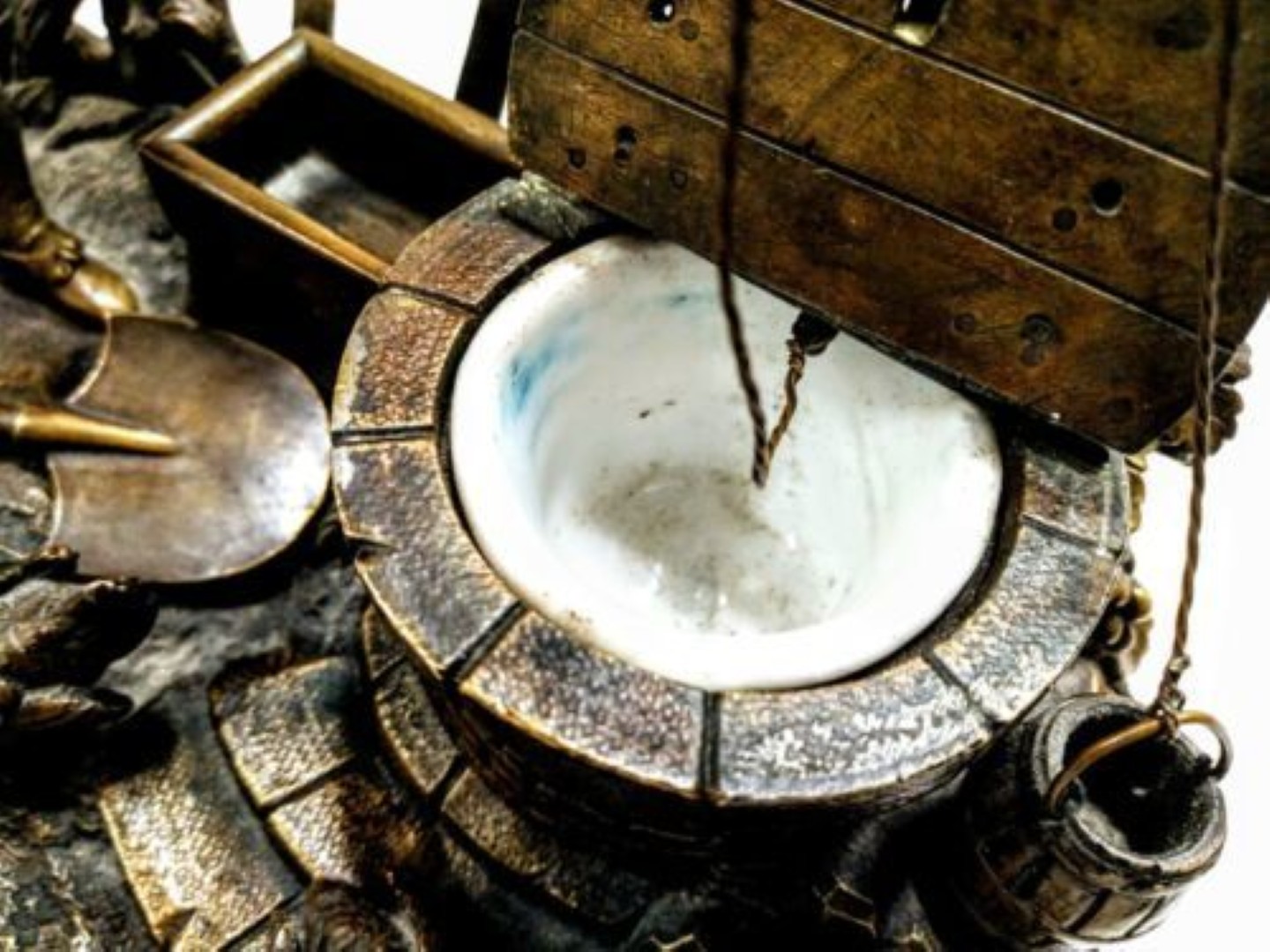
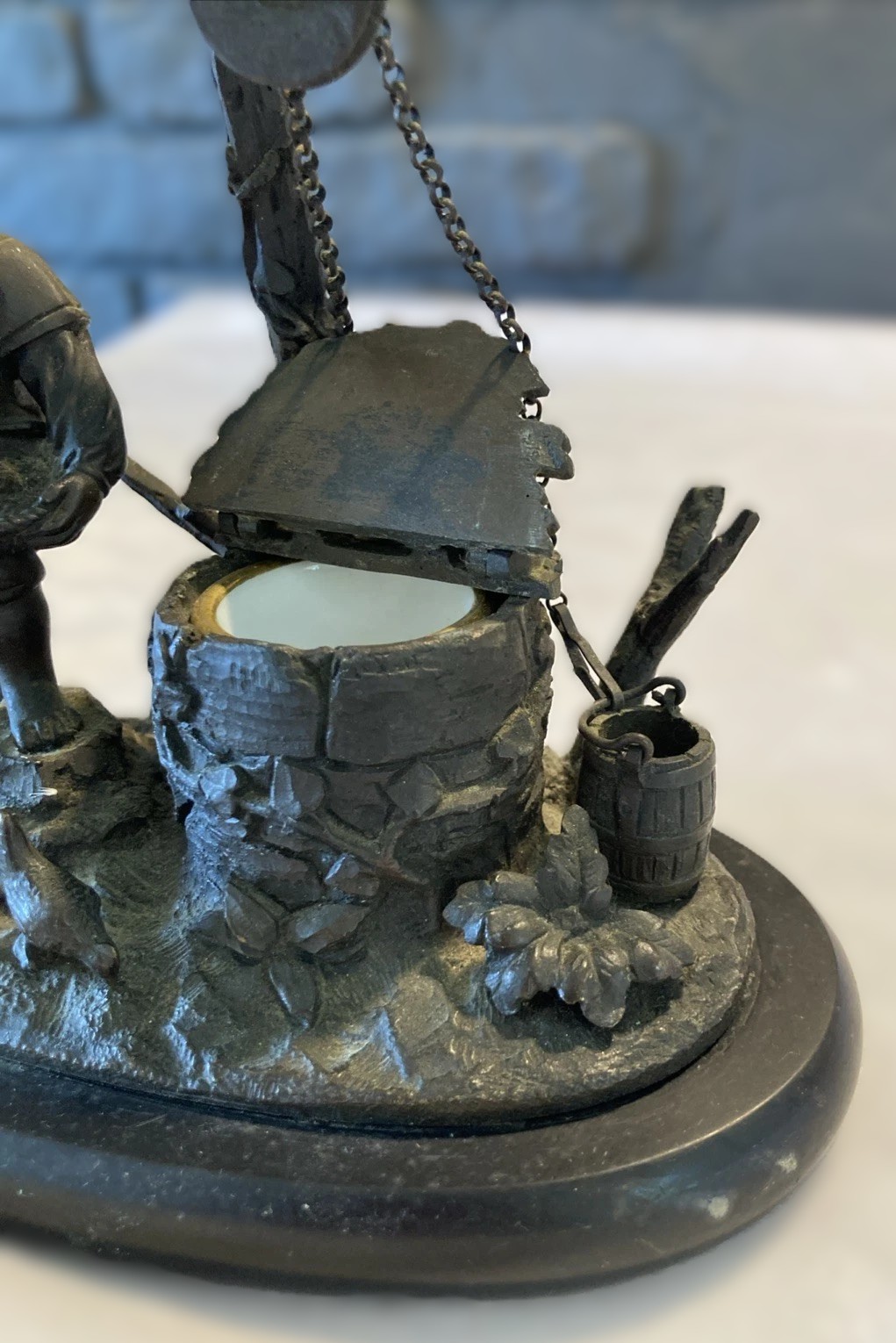
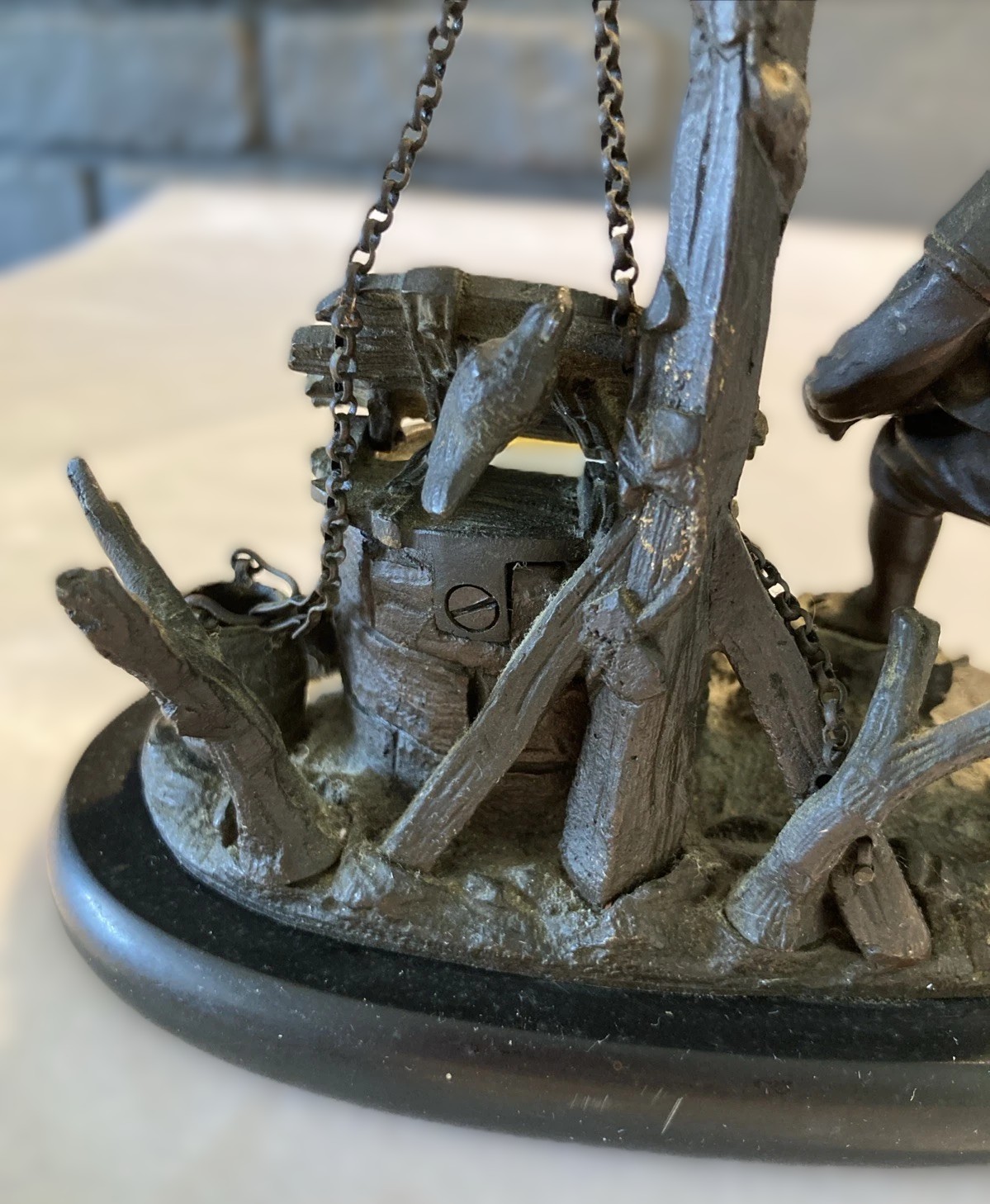
- Design: The inkwell is cleverly disguised as a brick water well.
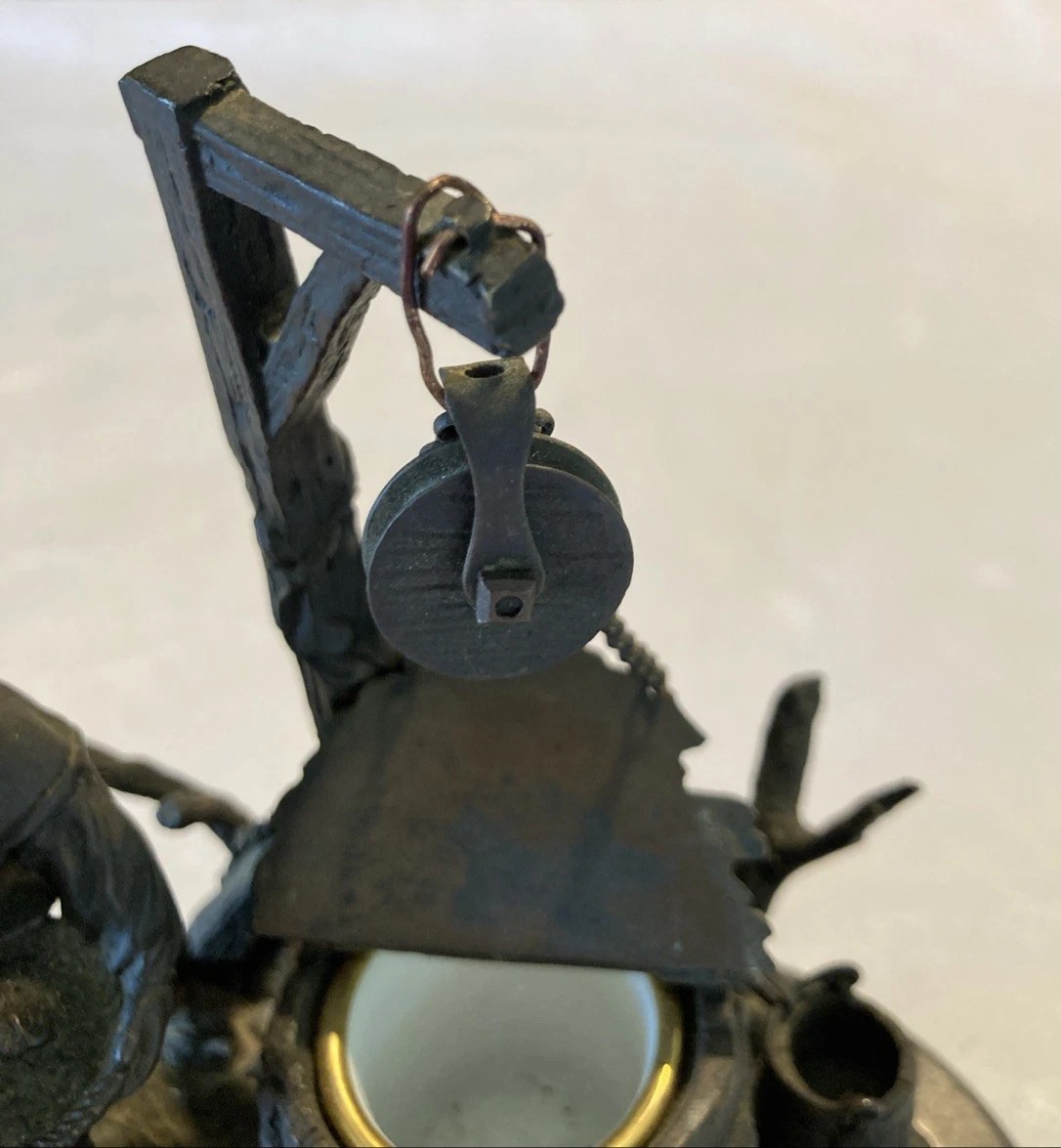
- The Mechanism: The lid of the well (which looks like a wooden cover) is attached to a wire that runs up through the pulley block on the post above.
- To open the inkwell, you would normally lift the lid, and the pulley serves as a decorative (and perhaps partially functional) guide for the cord.
- Interior: Inside the “brick” well is a white porcelain insert to hold the ink.
- Material and Construction
- Material: The piece is made of Spelter (a zinc alloy known as Régule in France), which has been given a bronze patina.
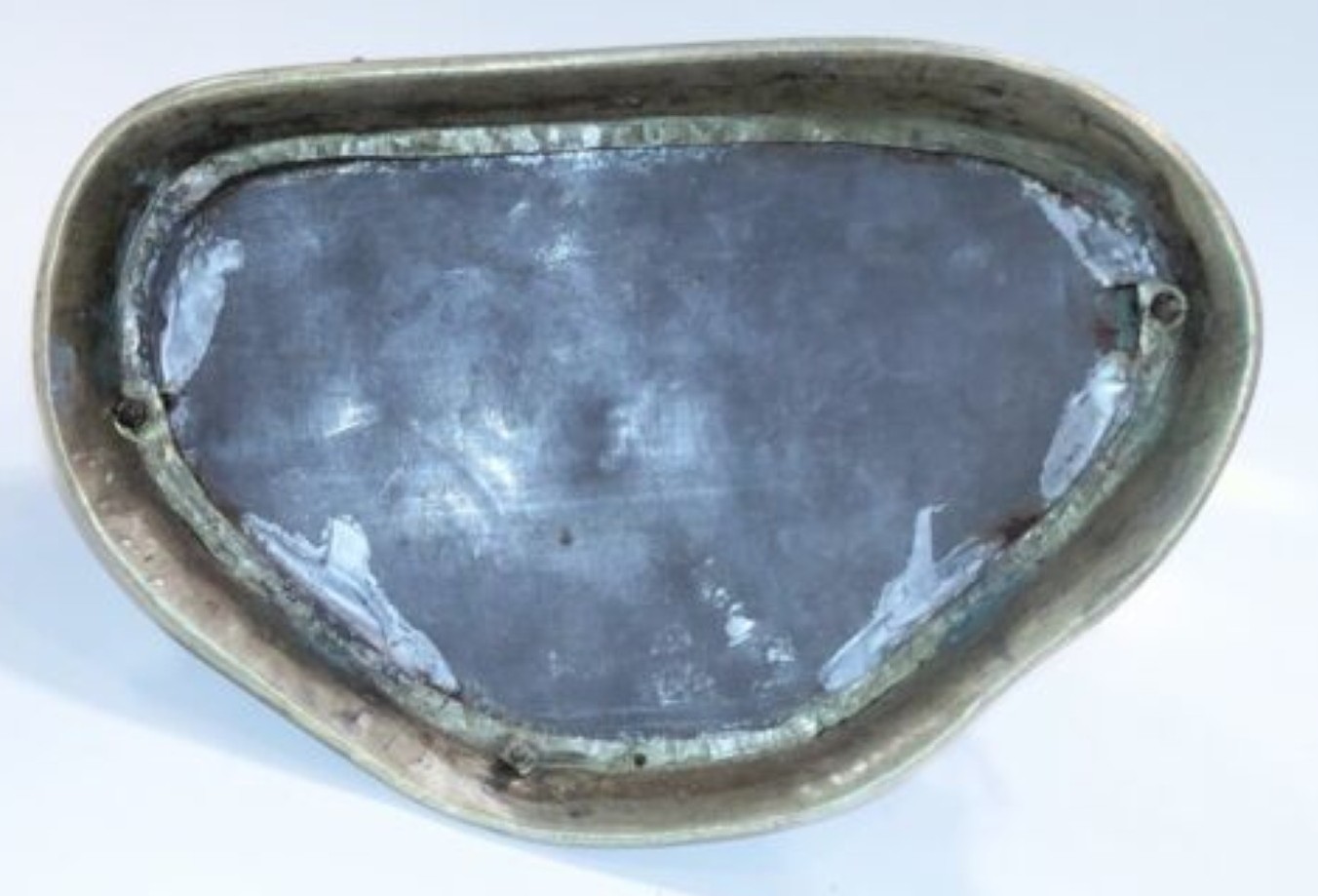
- Evidence: The underside reveals the greyish color of the base metal and the hollow casting filled with a stabilizing material (plaster or resin). This confirms it is not solid bronze, but a more affordable period alternative intended for the middle-class market.
- Finish: The patina combines dark bronze tones with lighter brass/gold highlights on the base and fence to accentuate the details.
Version #2 (Black Base)
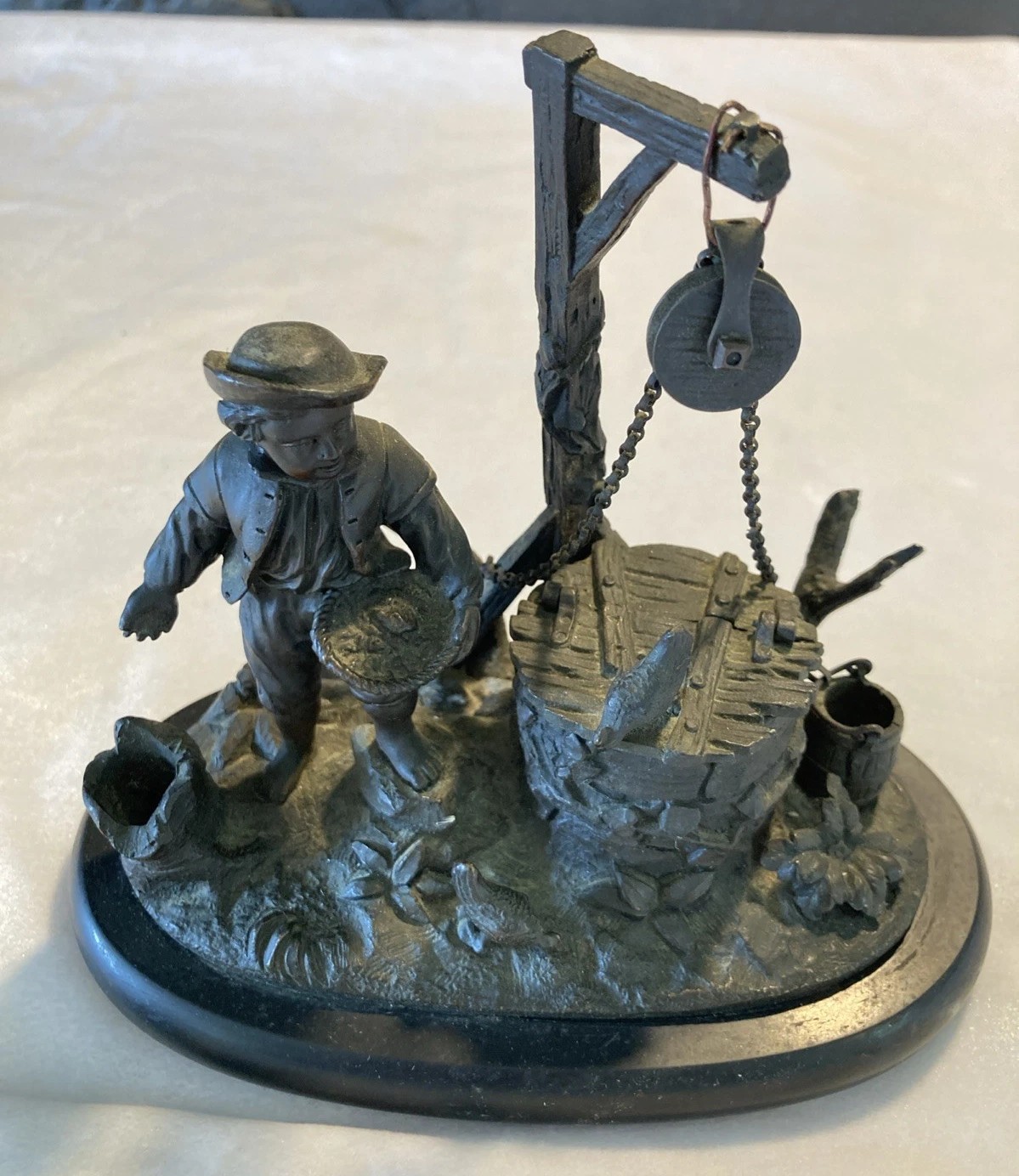
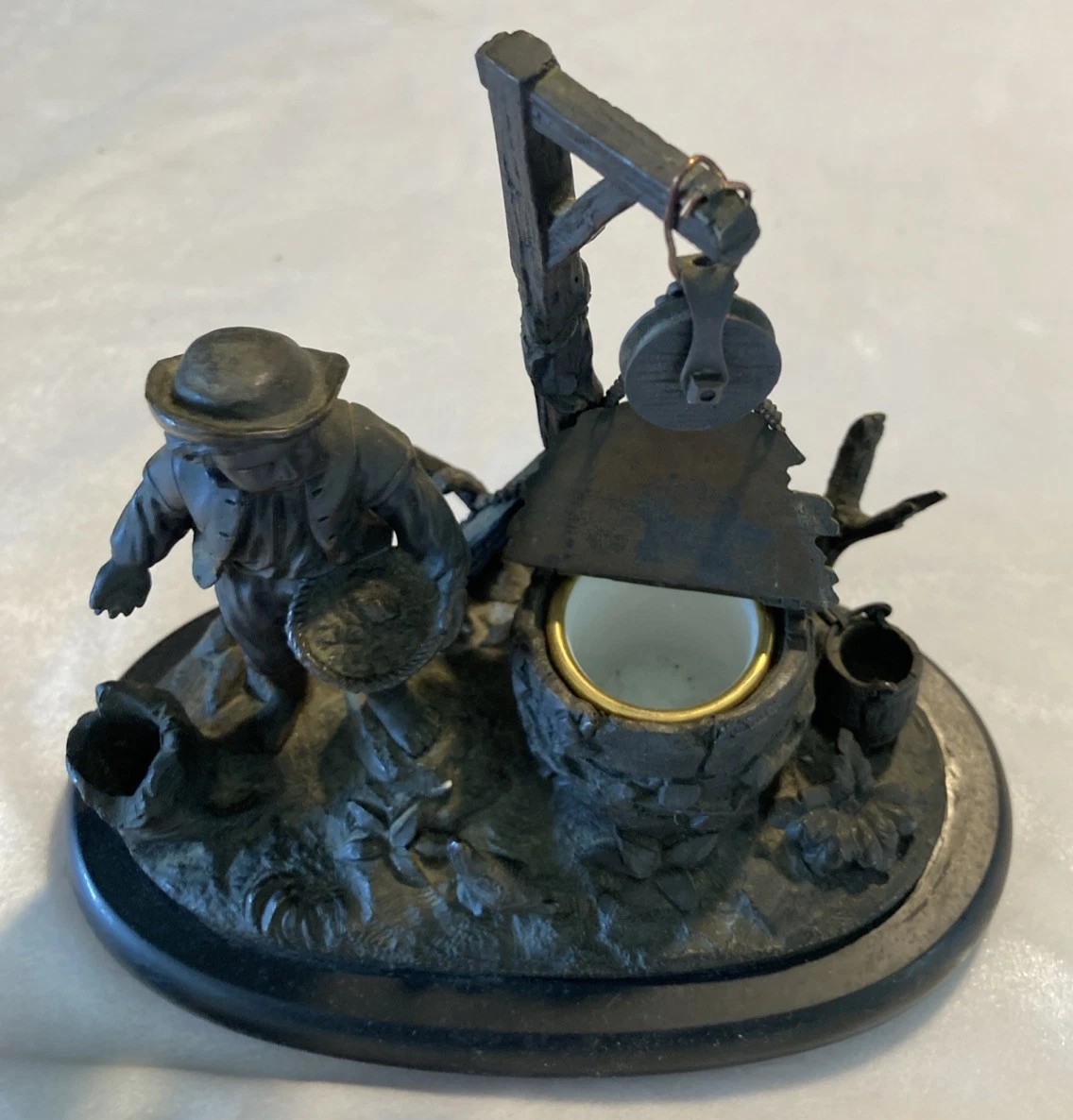
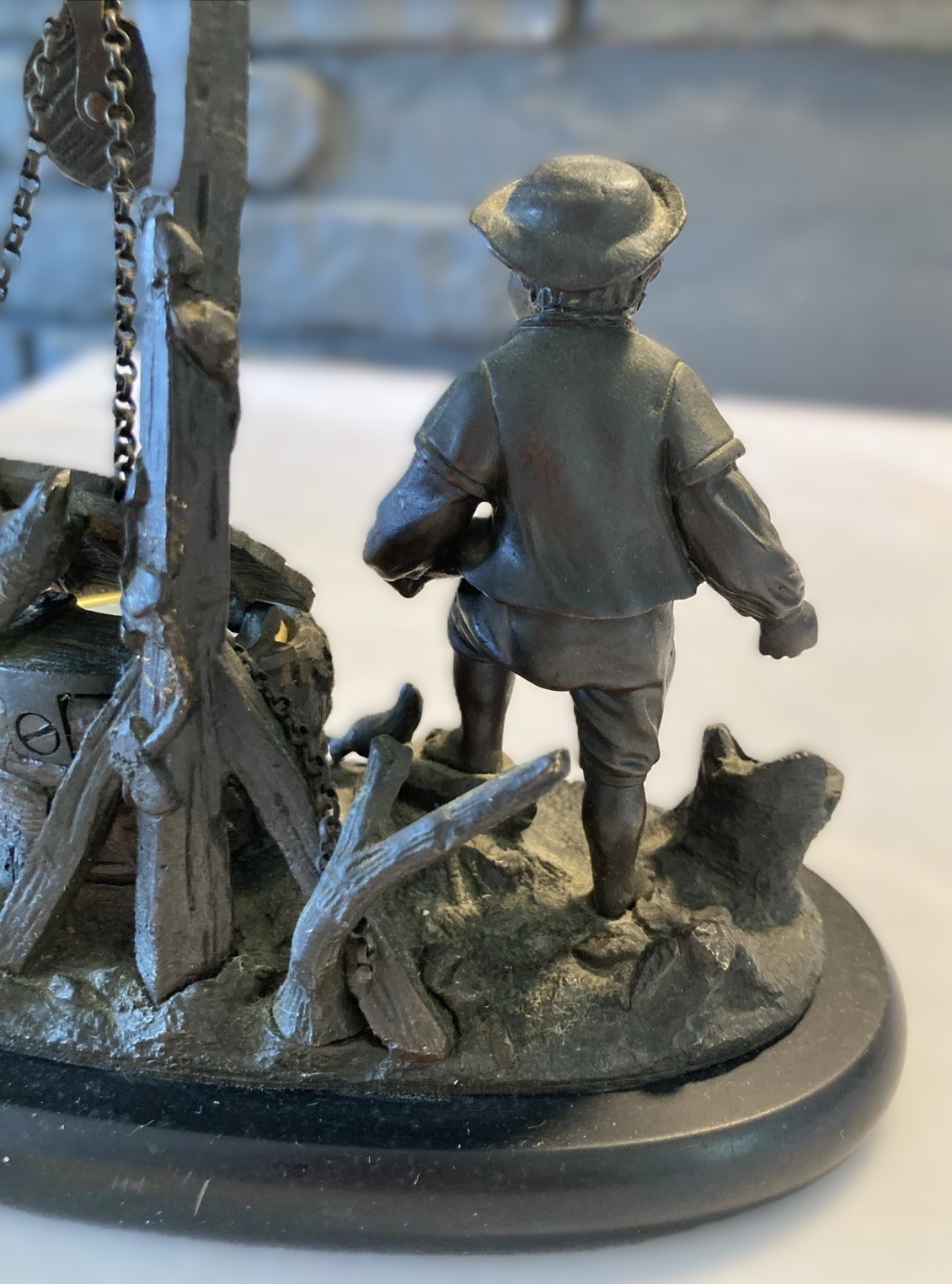
- The Figure & Action: The boy is cast from a smilar mold as the boy in the first inkstand. He is holding a basket in his left hand and is in the act of scattering feed to the ducks at his feet.
- The Setting (No Fence): unlike the first inkstand, this version does not have the picket fence background. Instead, it features a simpler, more open composition with just the central post holding the pulley mechanism.
- The Base: This version is mounted on a heavy, oval base of slate rather than the elaborate Rococo metal base of the first one. The metal “ground” works are minimized here, focusing all attention on the figure and the well.
Comparison & History
- Are they by the same maker? Yes
- The Evidence: The figure of the boy, the ducks, and the brick well are almost identical castings. This confirms they were produced by the same French foundry.
- The Maker: They are both attributed to A. Bossu (active late 19th/early 20th century). It was common practice for foundries to offer the same popular figure (the “Feeding Boy”) in different price ranges or styles:
- Model A (The First One): A deluxe “all-metal” version with a large, decorative Rococo base and extra background elements (the fence) to make it look grander.
- Model B (The Second One): A more modern/streamlined version mounted on stone, which was very fashionable in the 1900s.
- Where and When?
- Where: France. Both are made of French Spelter (Régule) with a bronze-like patina.
- When: Circa 1895–1910.
- The first one (Rococo base) reflects the Art Nouveau love for swirling metal lines.
- The second one (Black Marble base) reflects the transition toward the cleaner lines of the Edwardian era.
Summary: These are two variations of the same popular sculpture. The foundry utilized the same central mold (the boy and well) but created two distinct products by changing the base and background accessories.
Version #1 sold for $135 in December 2022
Version #2 sold for $233 in November 2025
Content disclaimer. The information posted is the owner’s best knowledge and may not have been vetted by the SOIC. We welcome comments, corrections, and additions, working to make our website information comprehensive and accurate.
Join the Society of Inkwell Collectors (SOIC) – it’s free!
Founded in 1981 as a non-profit organization,
we are documenting inkwells (and accessories).
We’re here to help and inform!