

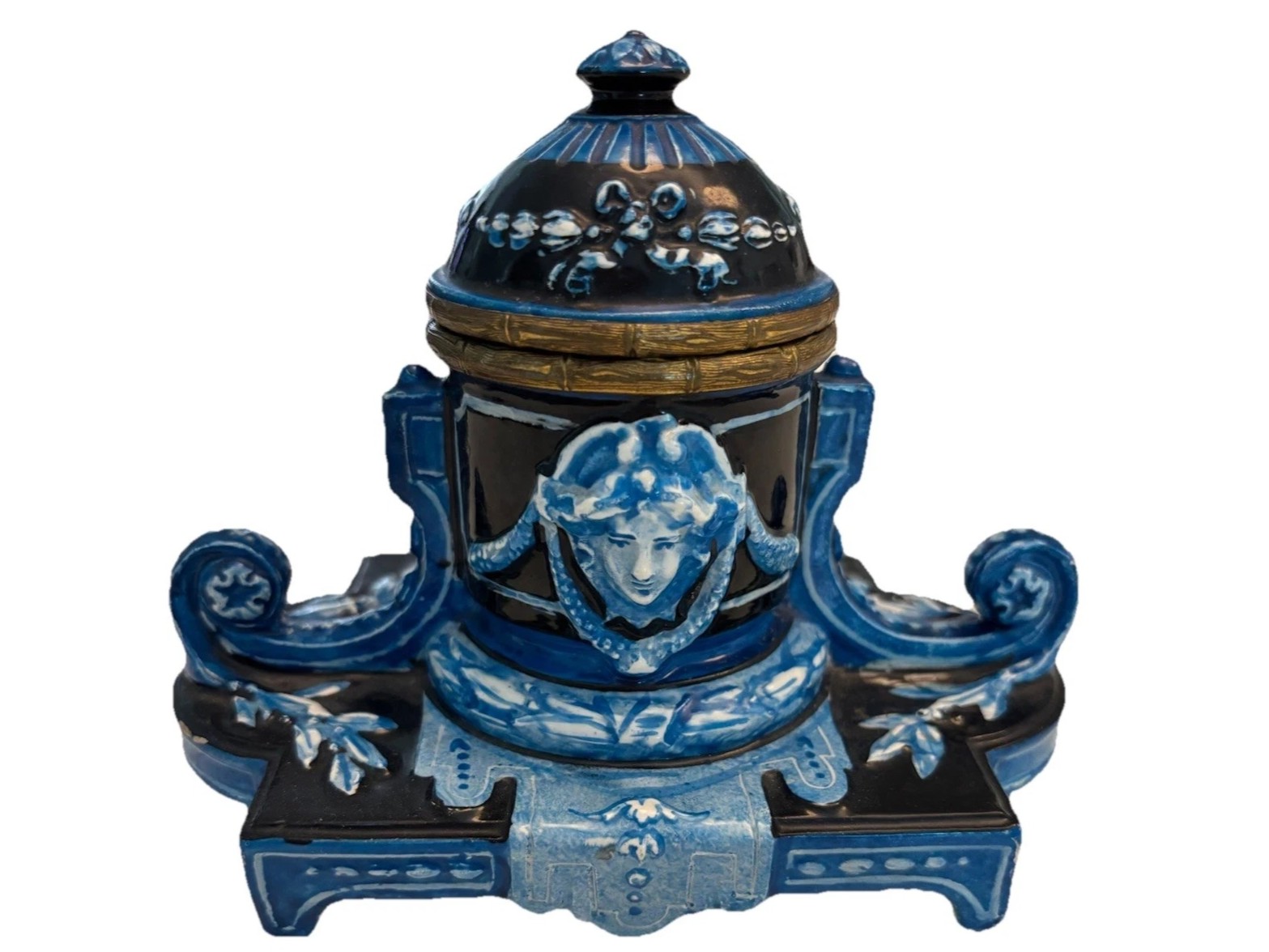



Faience Inkwell with Classical Mask
| Categories | Ceramics/Porcelain non-Figural |
| Material | Faience Pottery |
| Markings | See Narrative |
| Manufacturer | Undetermined |
| Origin | Undetermined |
| Date or Era | circa 1890 |
| Measuring | 5 ½” x 4” x 5 ¼” high |
Description
This is an ornate ceramic inkstand designed in a Neo-Renaissance style.
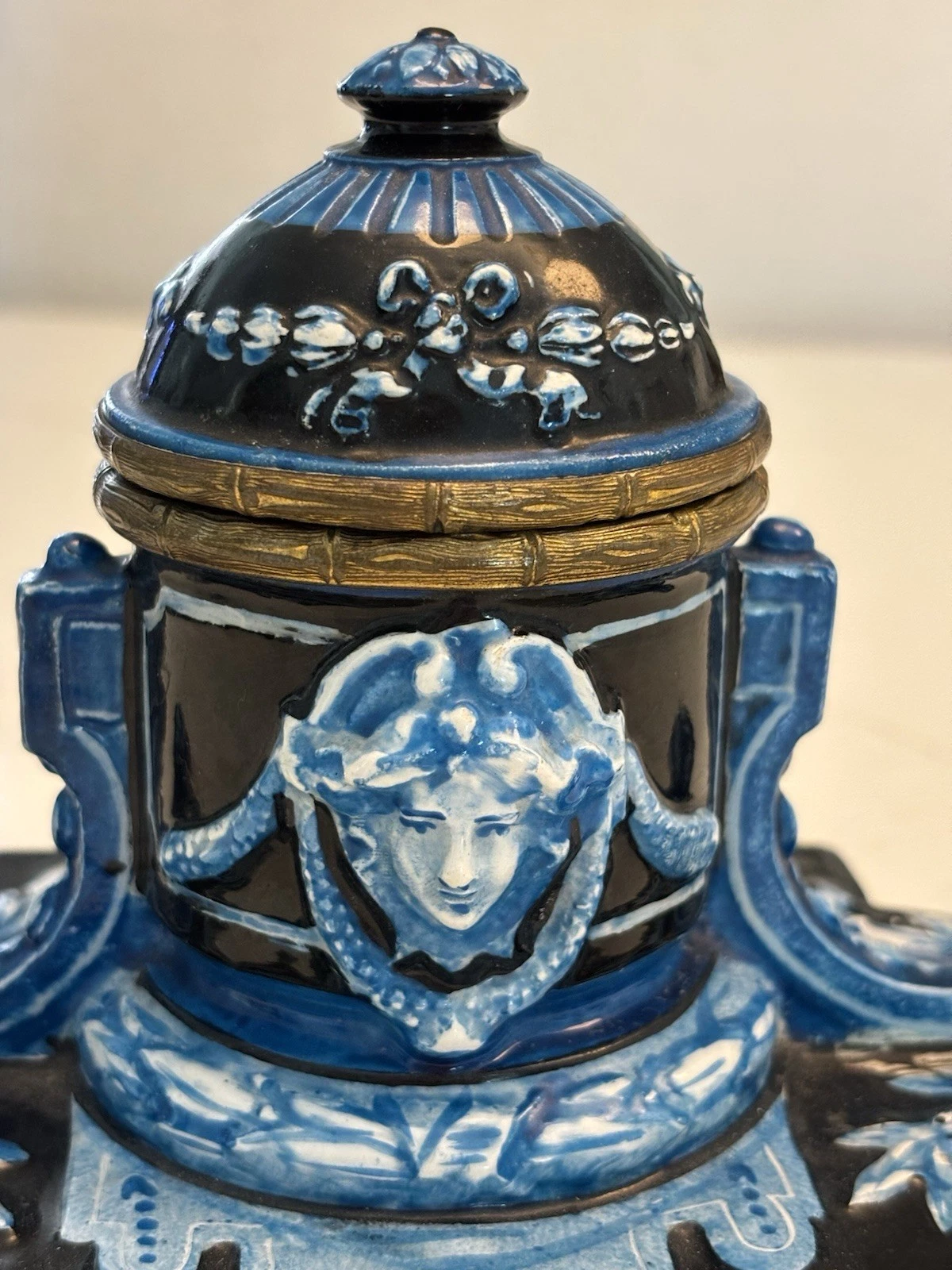
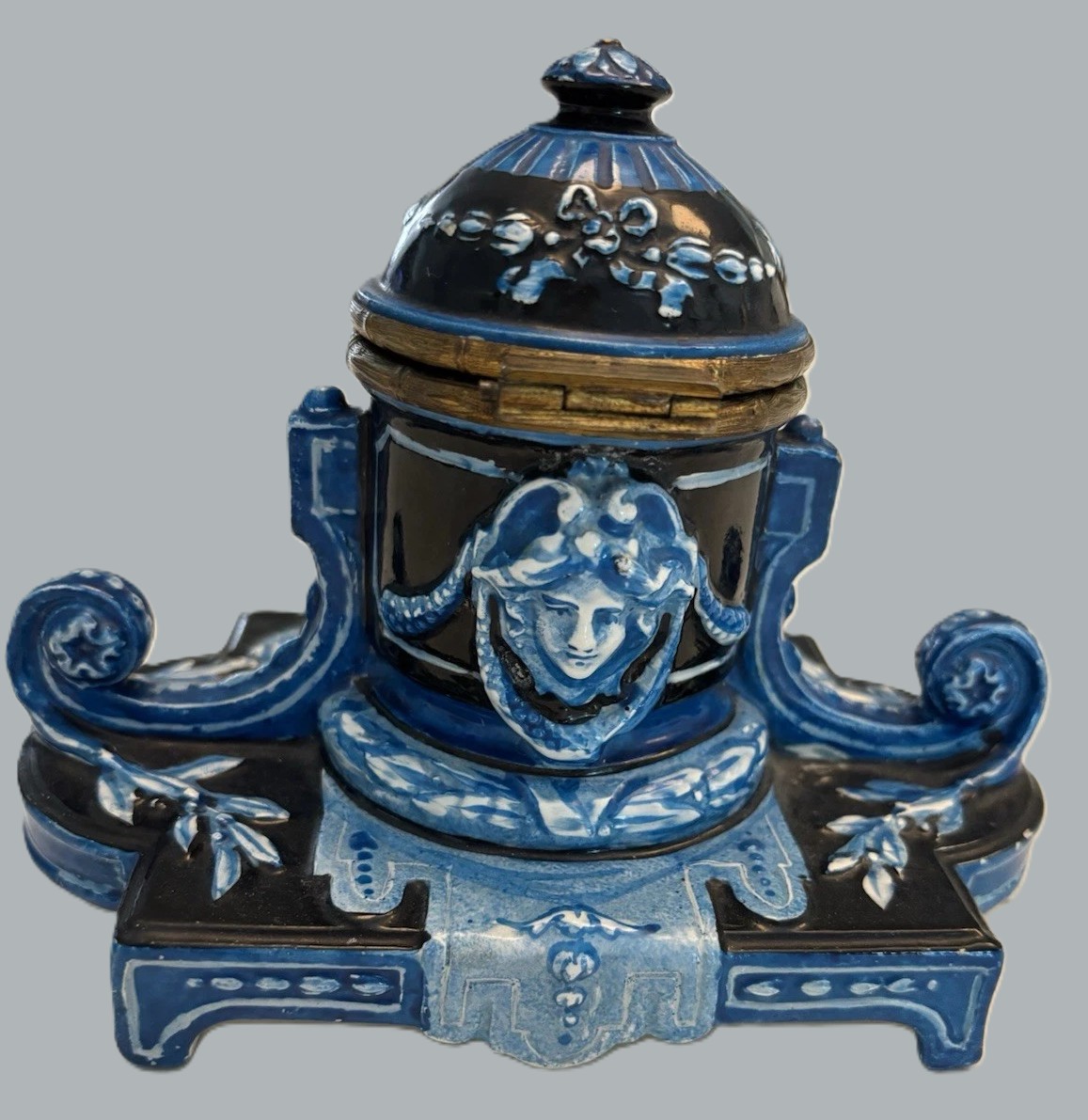
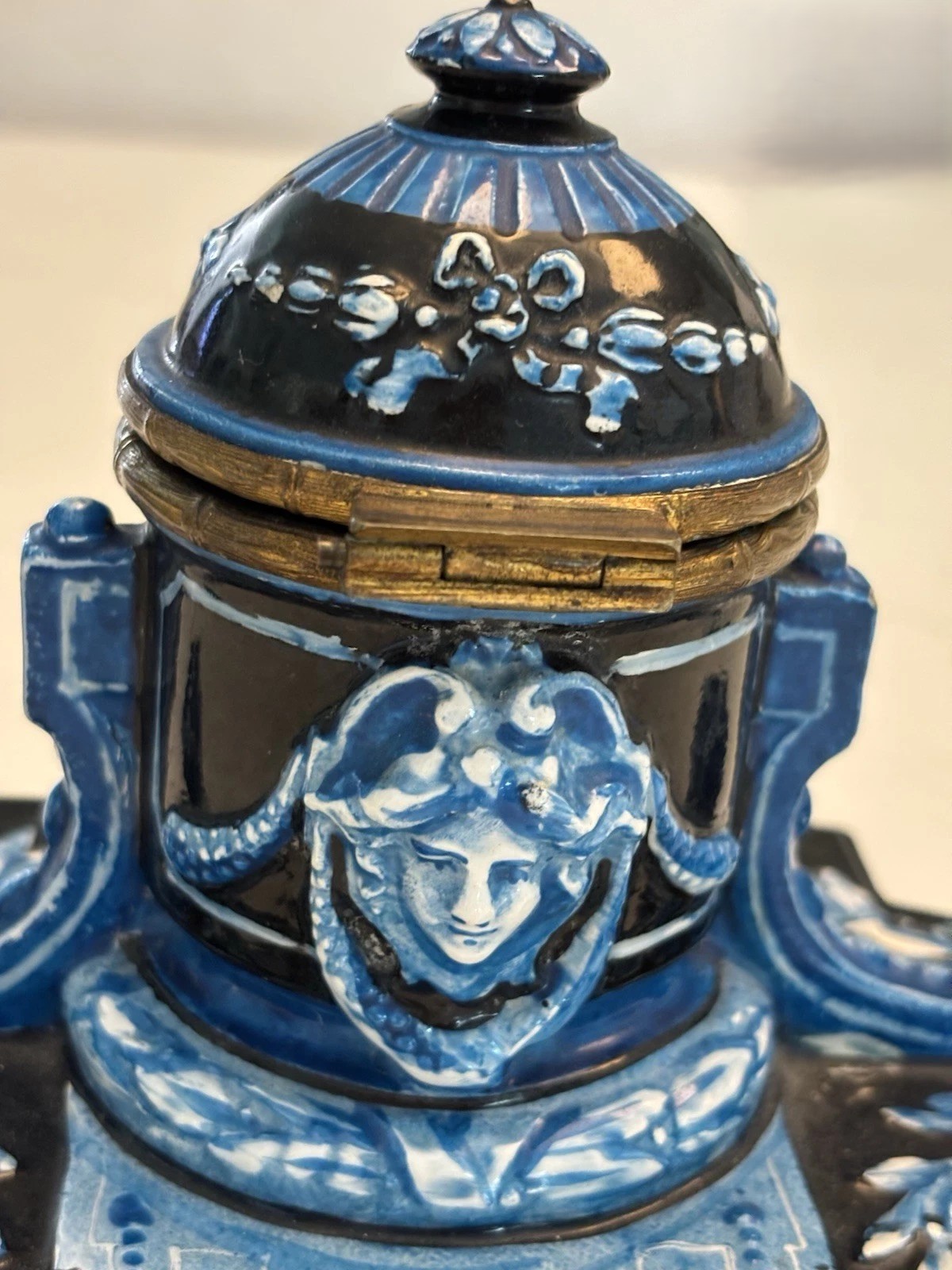
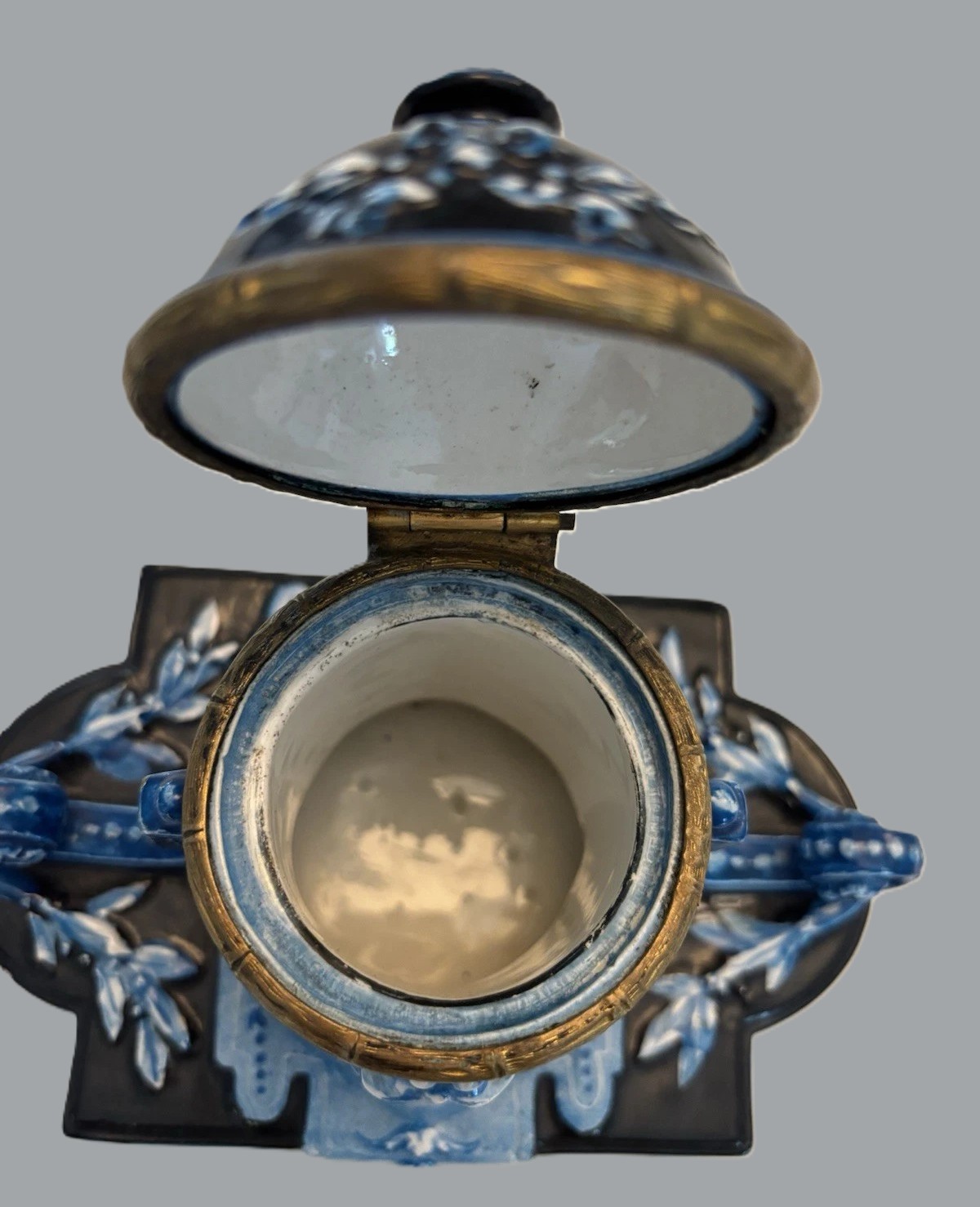
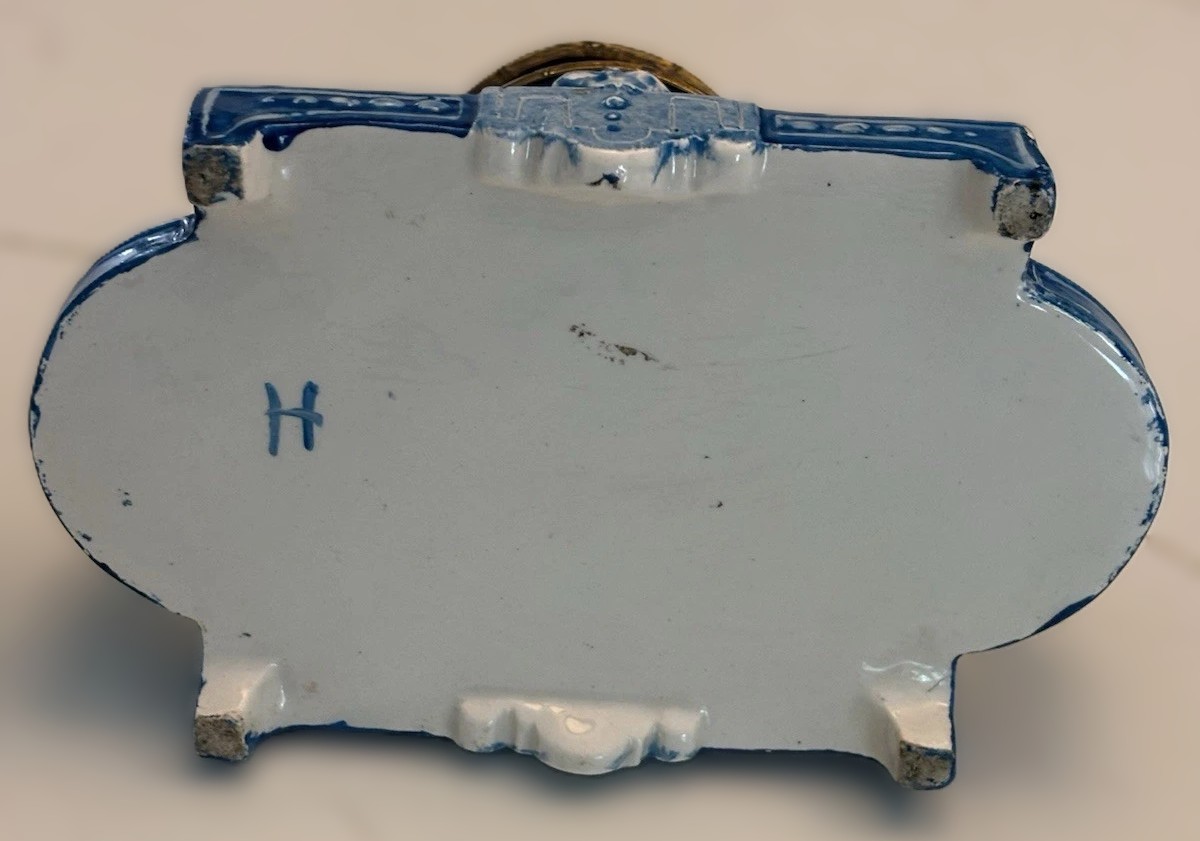
- Design & Form: The central well features a prominent, high-relief molded classical female mask (reminiscent of a goddess or Medusa) draped with decorative swags and bead garlands. It is flanked by two stylized, scrolled side wings that merge into an architectural, footed base resting on bracket feet.
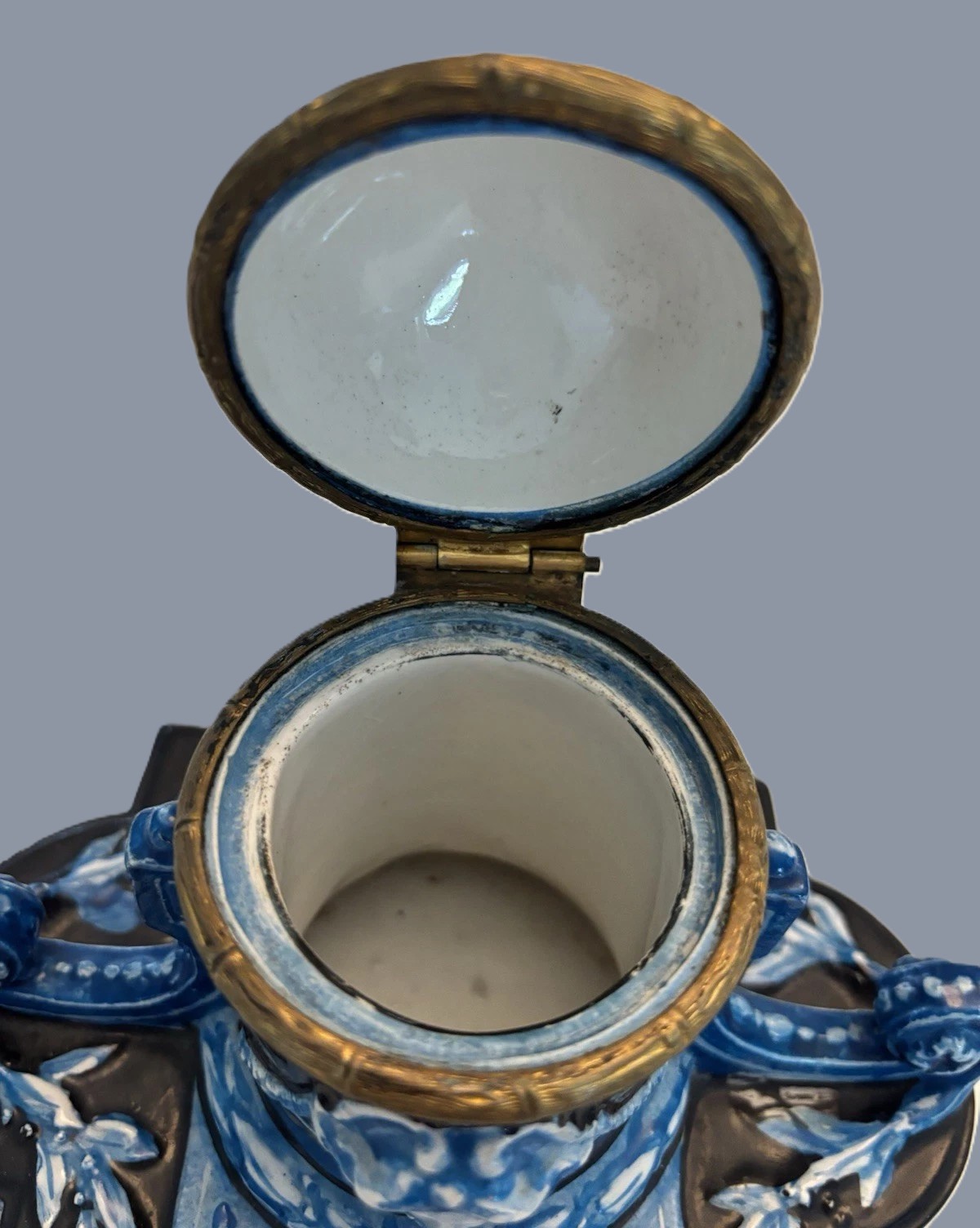
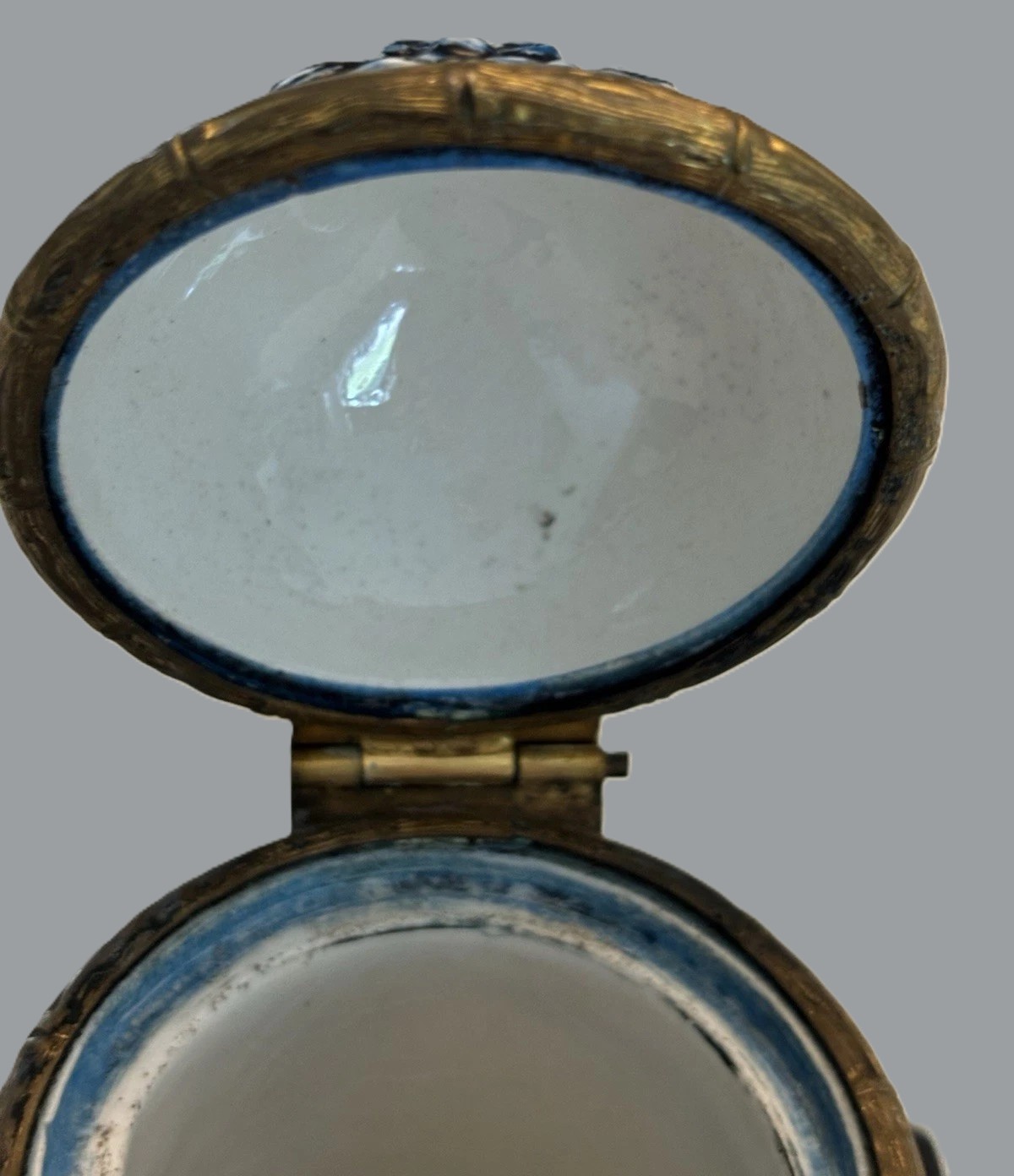
- Color & Glaze: It is decorated with a striking palette of rich high-gloss black glaze contrasted with bold cobalt blue and white slip accents. The interior reveals a clean white tin glaze.
- Hardware: The domed lid, which features embossed bow and garland motifs, is attached with a bronze hinged collar fitting.
- Material: The visible wear and small chips on the unglazed sections of the feet reveal a light-colored, buff earthenware ceramic body typical of European faience or majolica.
Origin and Maker Mark
The Mark
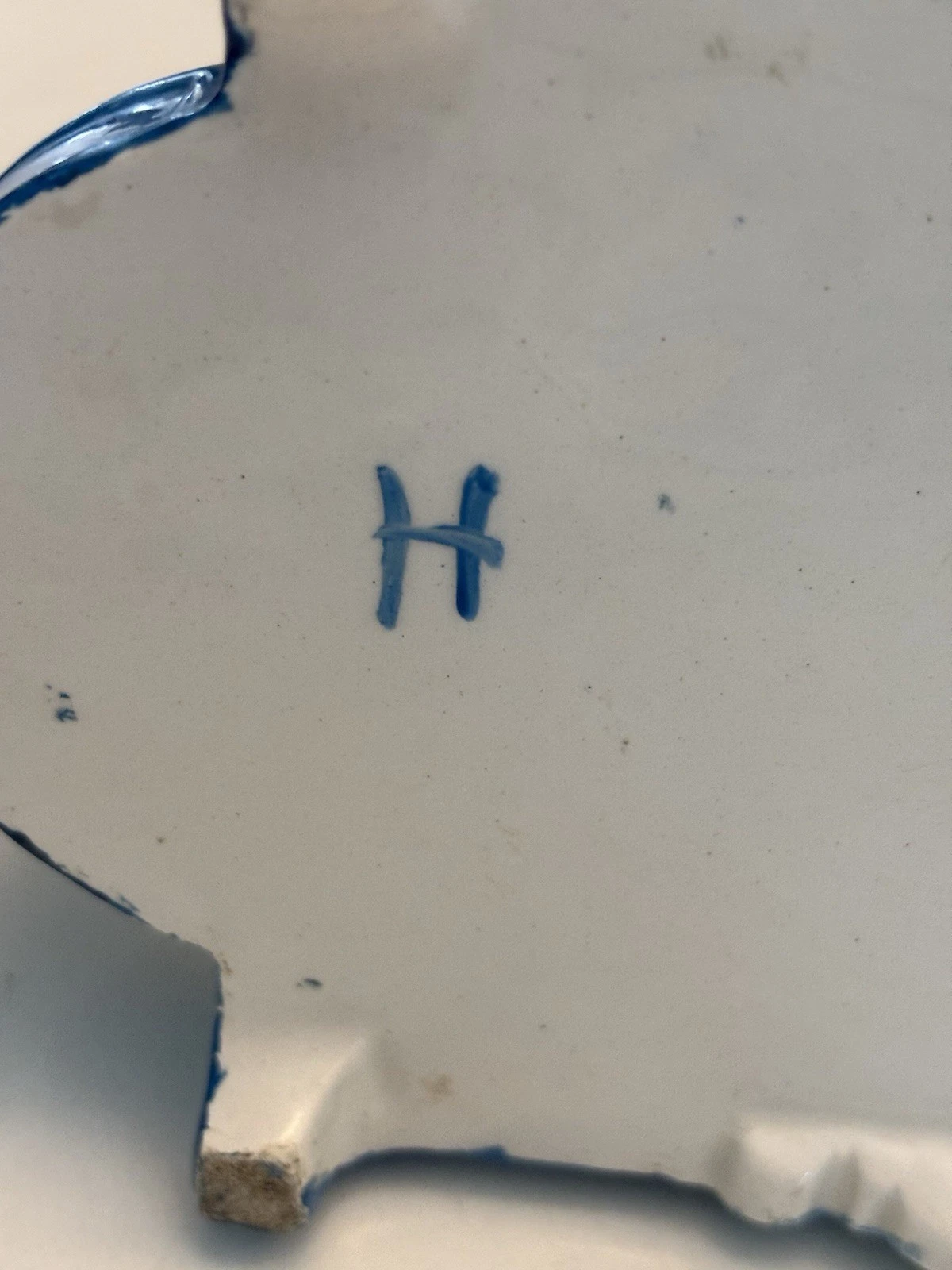
The underside features a hand-painted, underglaze blue letter “H”.
Who Made It & Where?
In the realm of late 19th-century European ceramics, a single hand-written letter mark like an “H” typically represents a decorator’s initial, a factory workshop mark, or an individual painter’s signature rather than an absolute corporate stamp.
Because of the specific high-relief molding technique, color choice, and body type, this piece originates from a Western or Central European pottery center specializing in artistic historicist revivals:
- France (Regional Faienceries): Many French regional factories (such as those in Desvres, Choisy-le-Roi, or Nevers) produced Neo-Renaissance style inkstands using underglaze workshop letters to keep track of individual decorators or piecework.
- Central Europe / Germany: Historicist high-relief majolica and faience featuring this stark color scheme were also highly popular among German and Austro-Hungarian/Bohemian manufacturers during this era.
Date of Manufacture
- When It Was Made: Circa 1880–1910 (Late 19th to Early 20th Century).
- Context: The combination of classical relief elements, heavy architectural symmetry, and the specific hinged metal hardware mounts match the production techniques and high-end desk set fashions of this time period.
Sold for $150 in June 2026
Content disclaimer. The information posted is the owner’s best knowledge and may not have been vetted by the SOIC. We welcome comments, corrections, and additions, working to make our website information comprehensive and accurate.
Join the Society of Inkwell Collectors (SOIC) – it’s free!
Founded in 1981 as a non-profit organization,
we are documenting inkwells (and accessories).
We’re here to help and inform!