

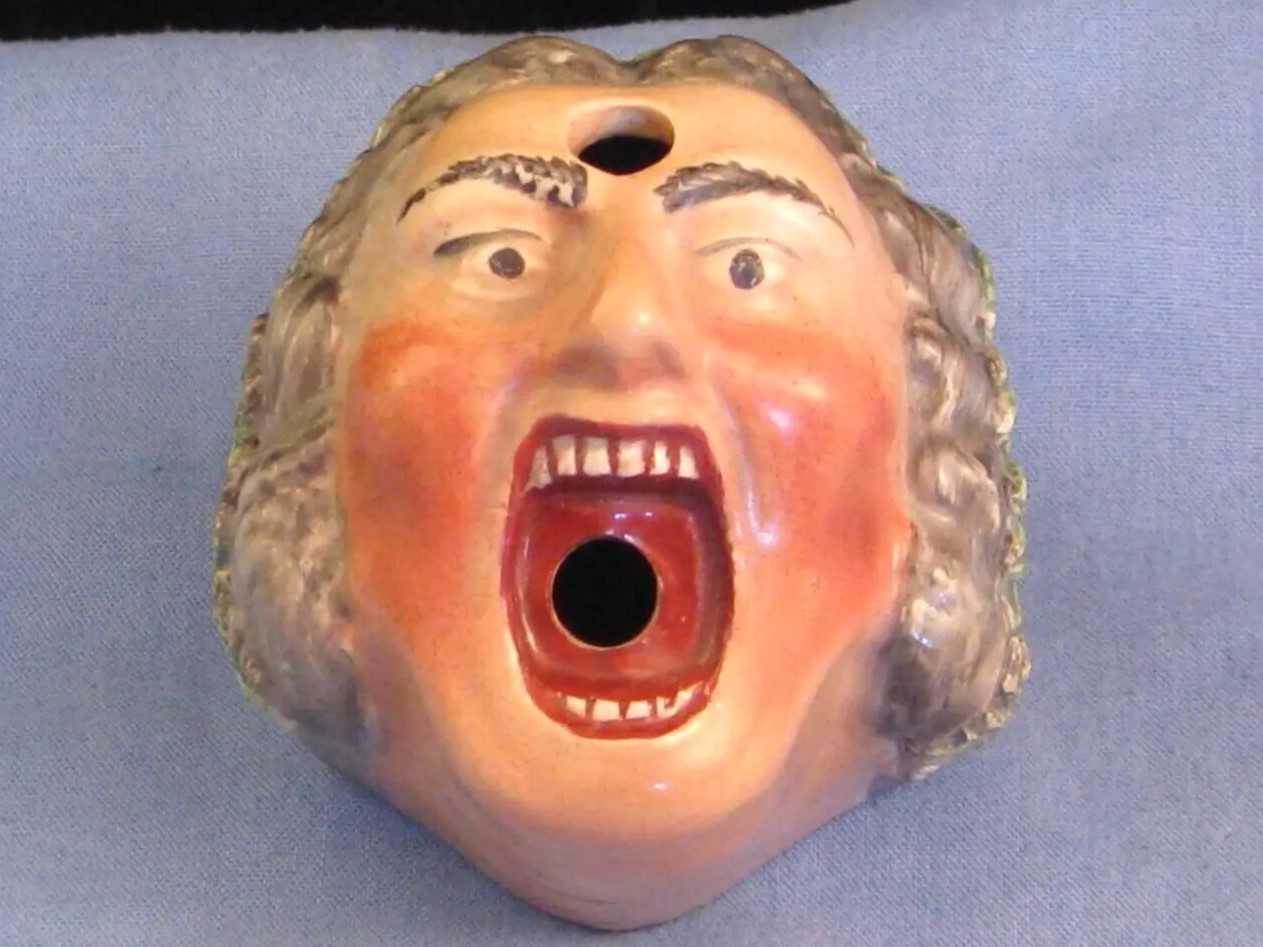
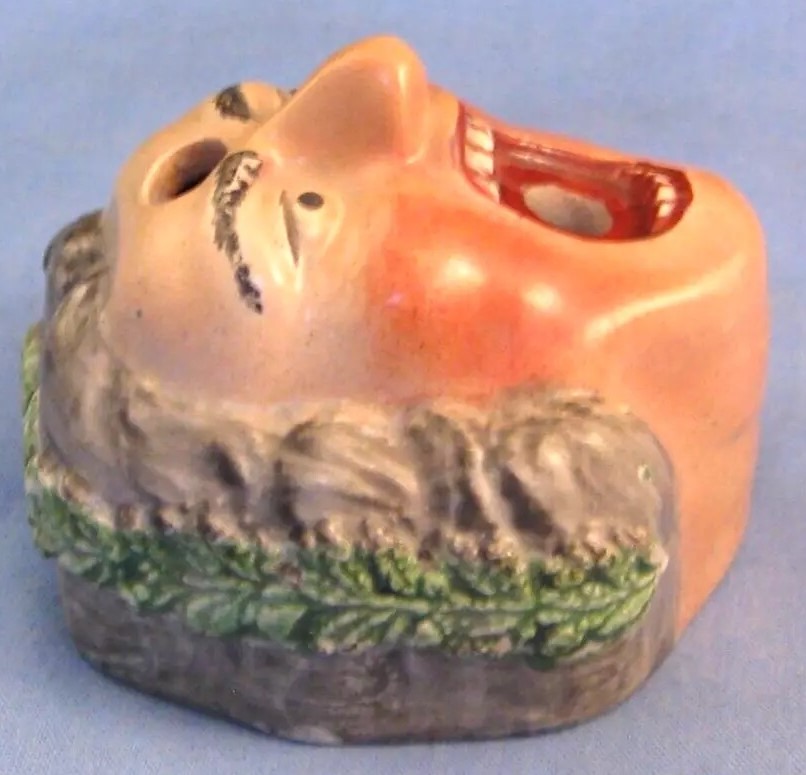
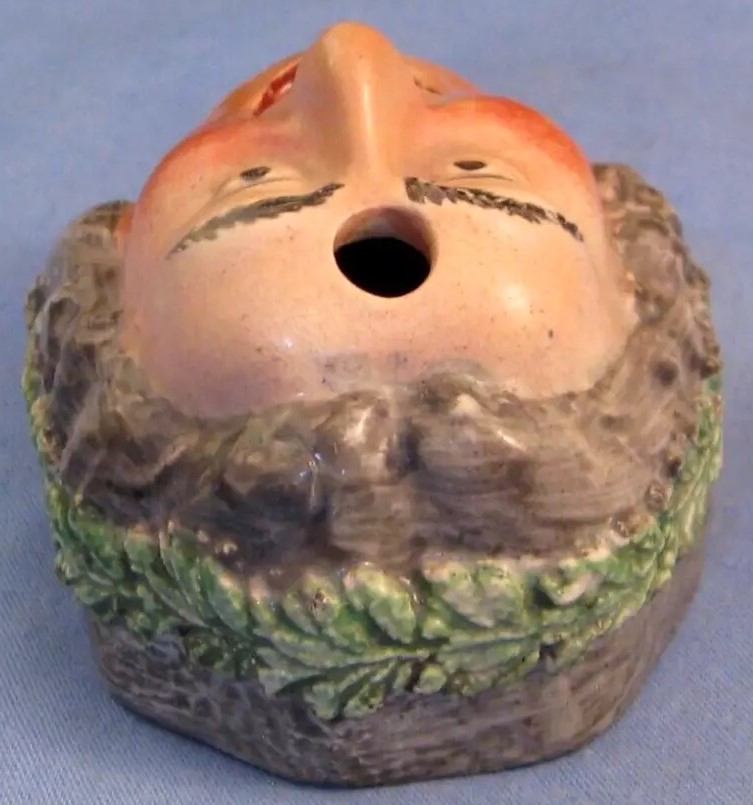
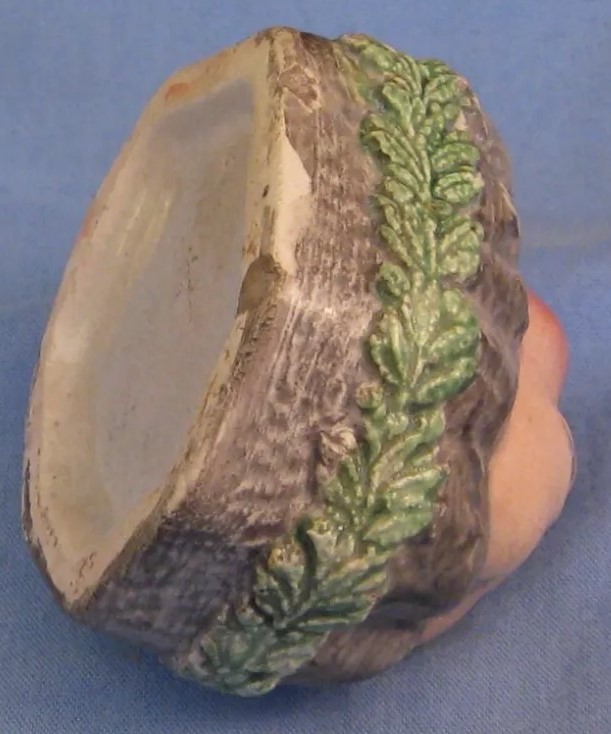
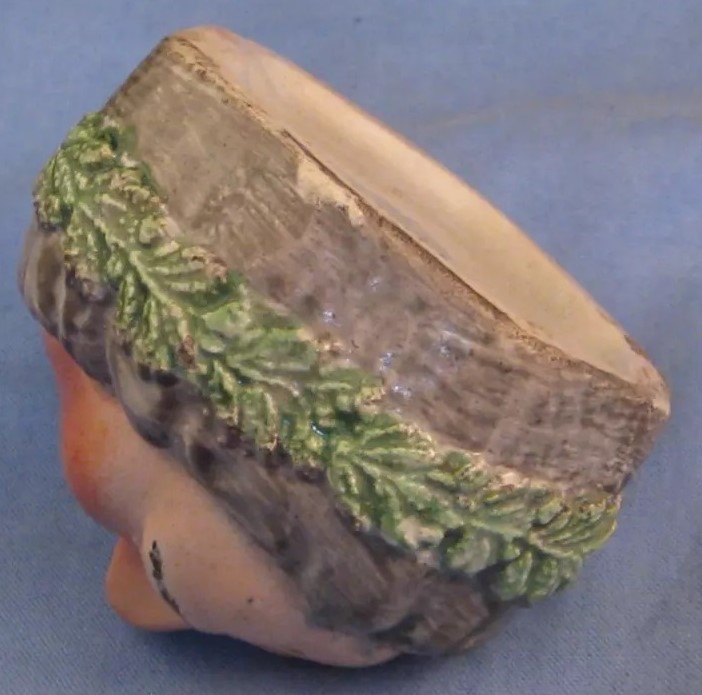
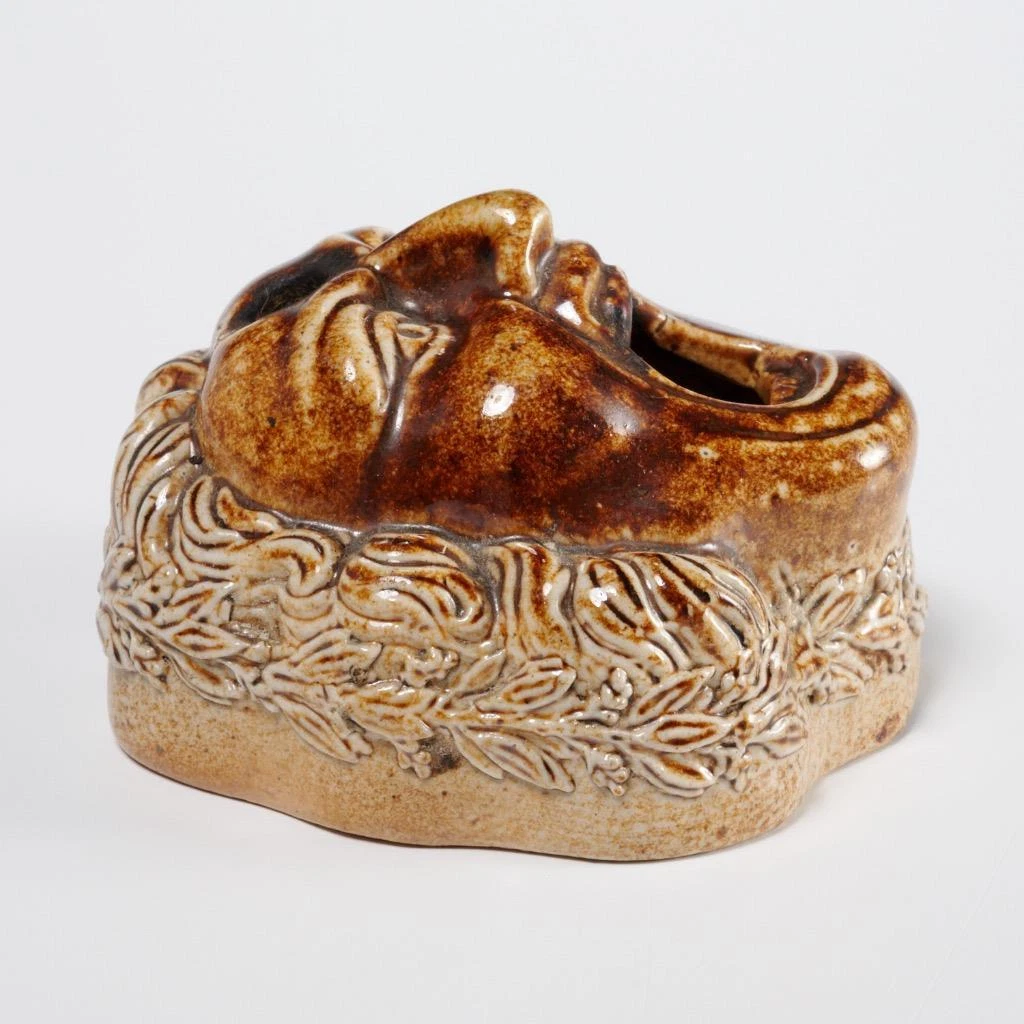
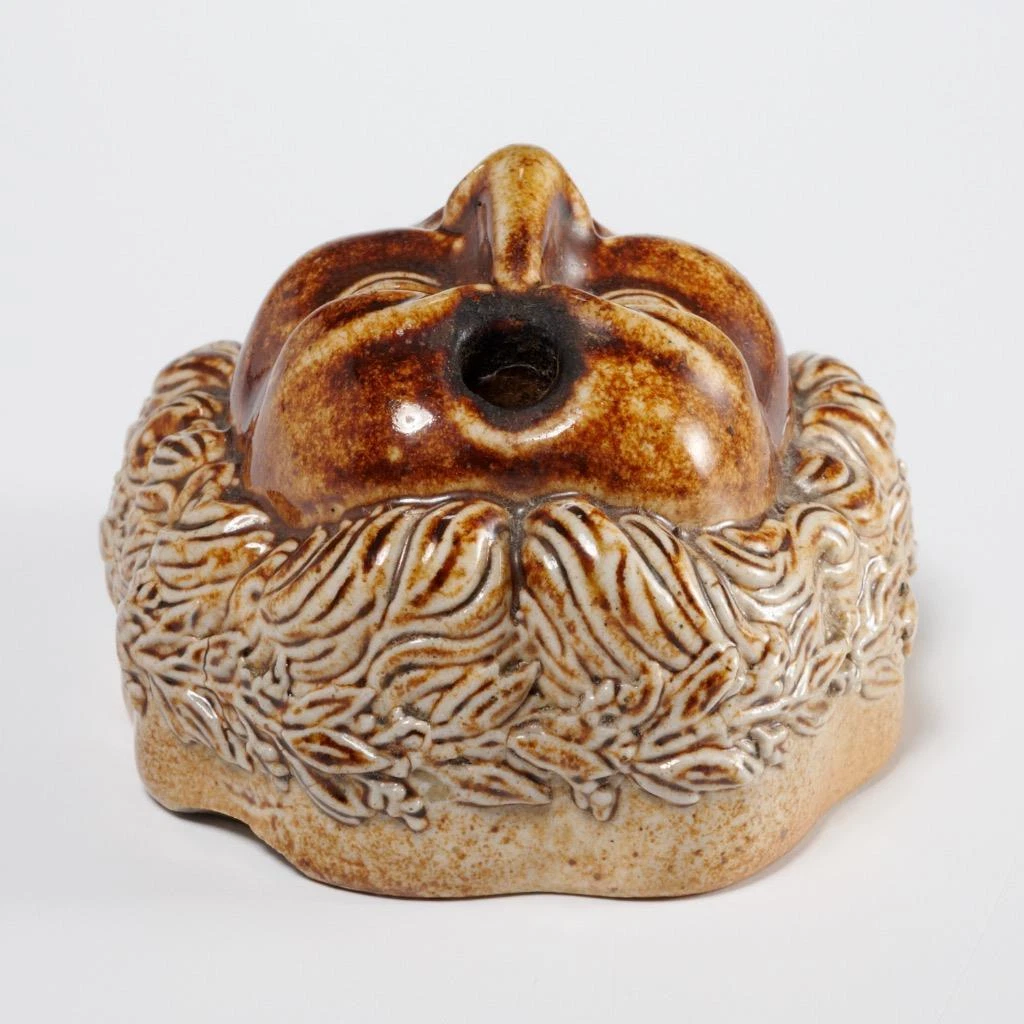
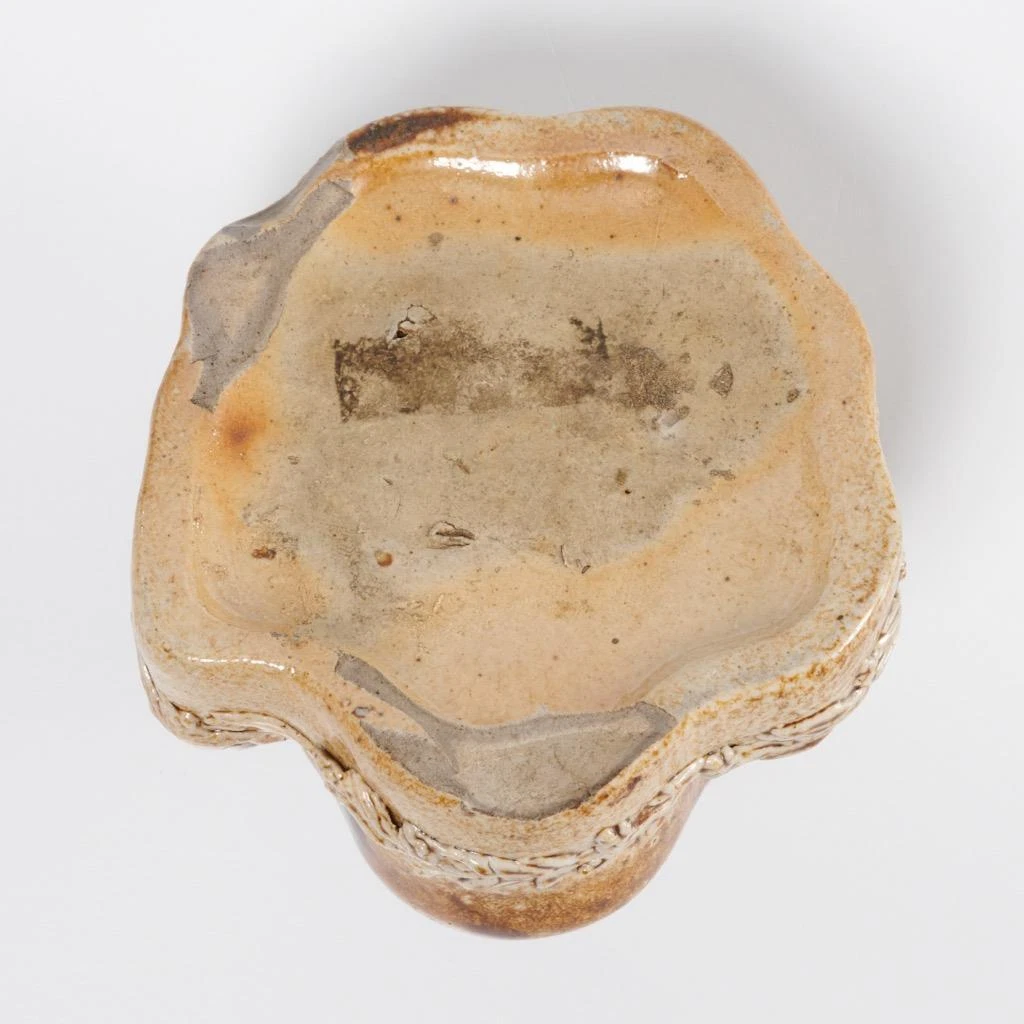
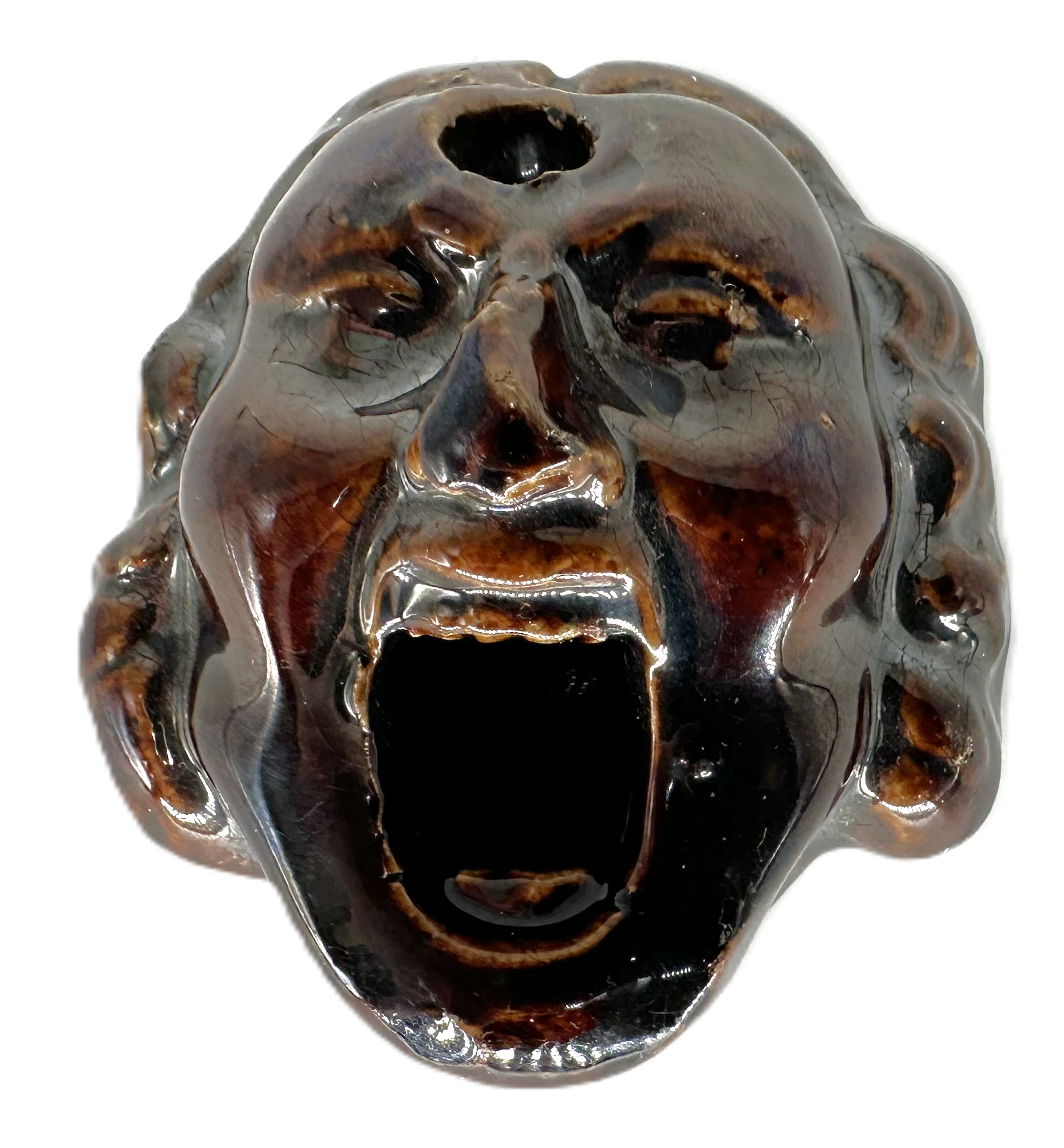
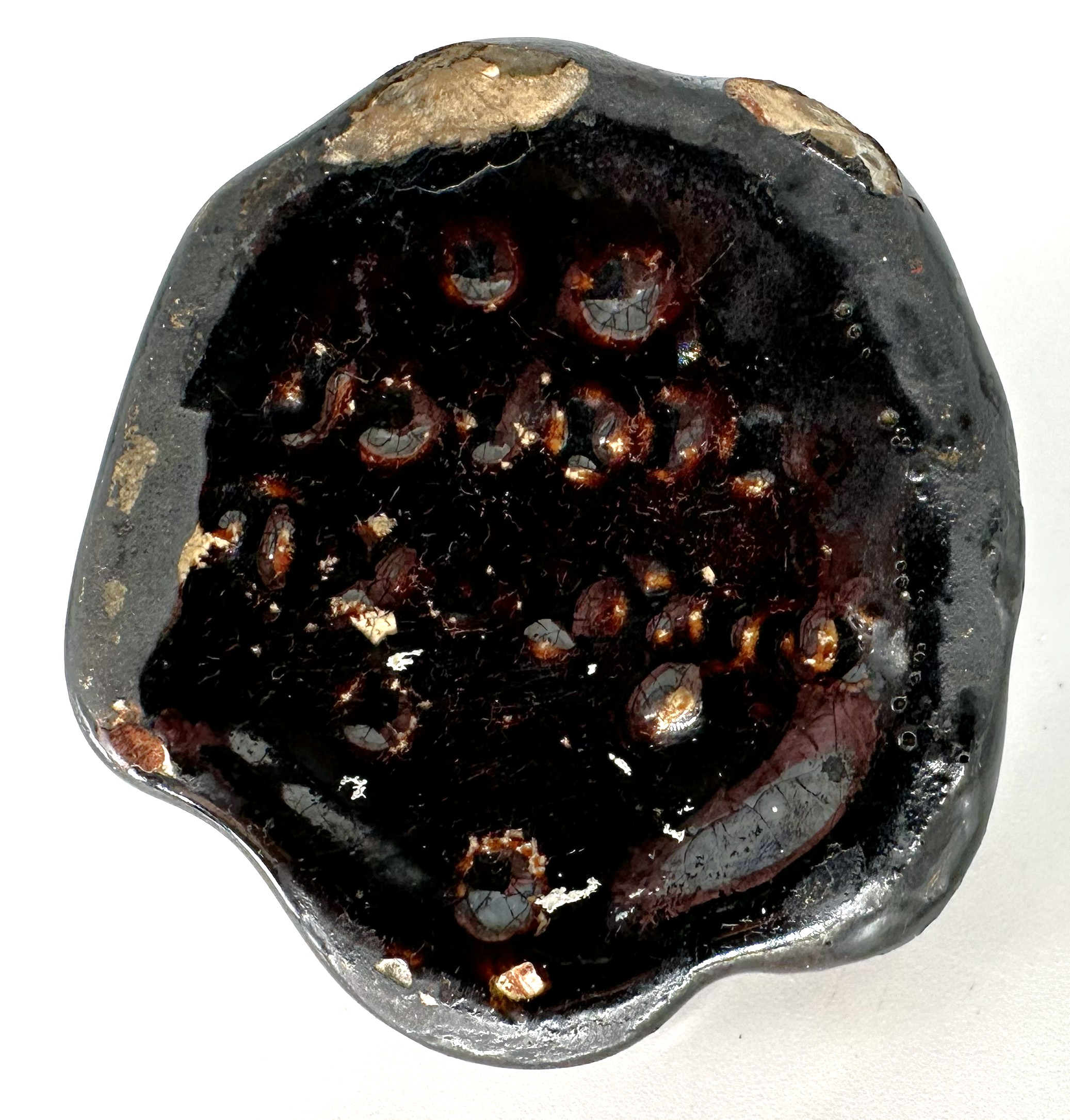
Face of Robert Walpole
| Categories | Ceramics/Porcelain Figural |
| Material | Pottery |
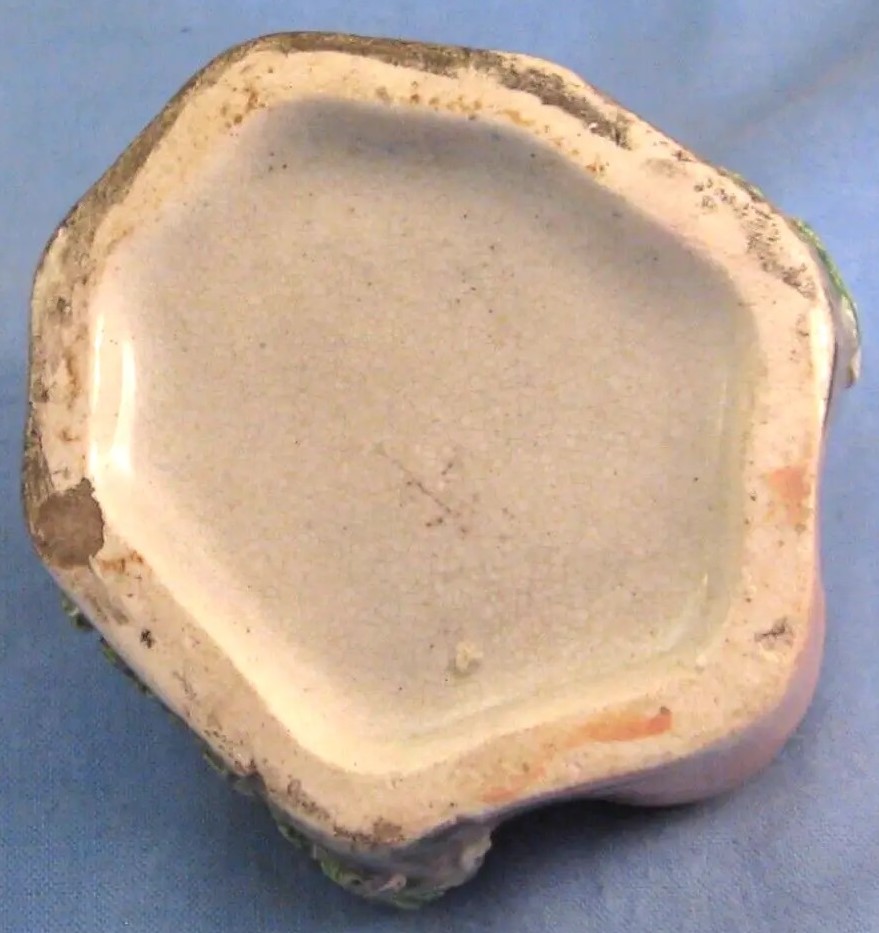
| Markings | Unmarked |
| Manufacturer | Undetermined |
| Origin | England |
| Date or Era | circa 1830 |
| Measuring | Base is 2 ½”; 2” high. |
It is believed this inkwell is based on a caricature drawing of Robert Walpole (1676-1745) the Whig Politician who is regarded as the first Prime Minister of Great Britain staying in post for over 20 years. Apparently, Walpole was a master at getting his own way through prevarication wearing down the opposition. It worked. He was in the post for 20 years.
For information about Robert Walpole: Robert Walpole – Wikipedia
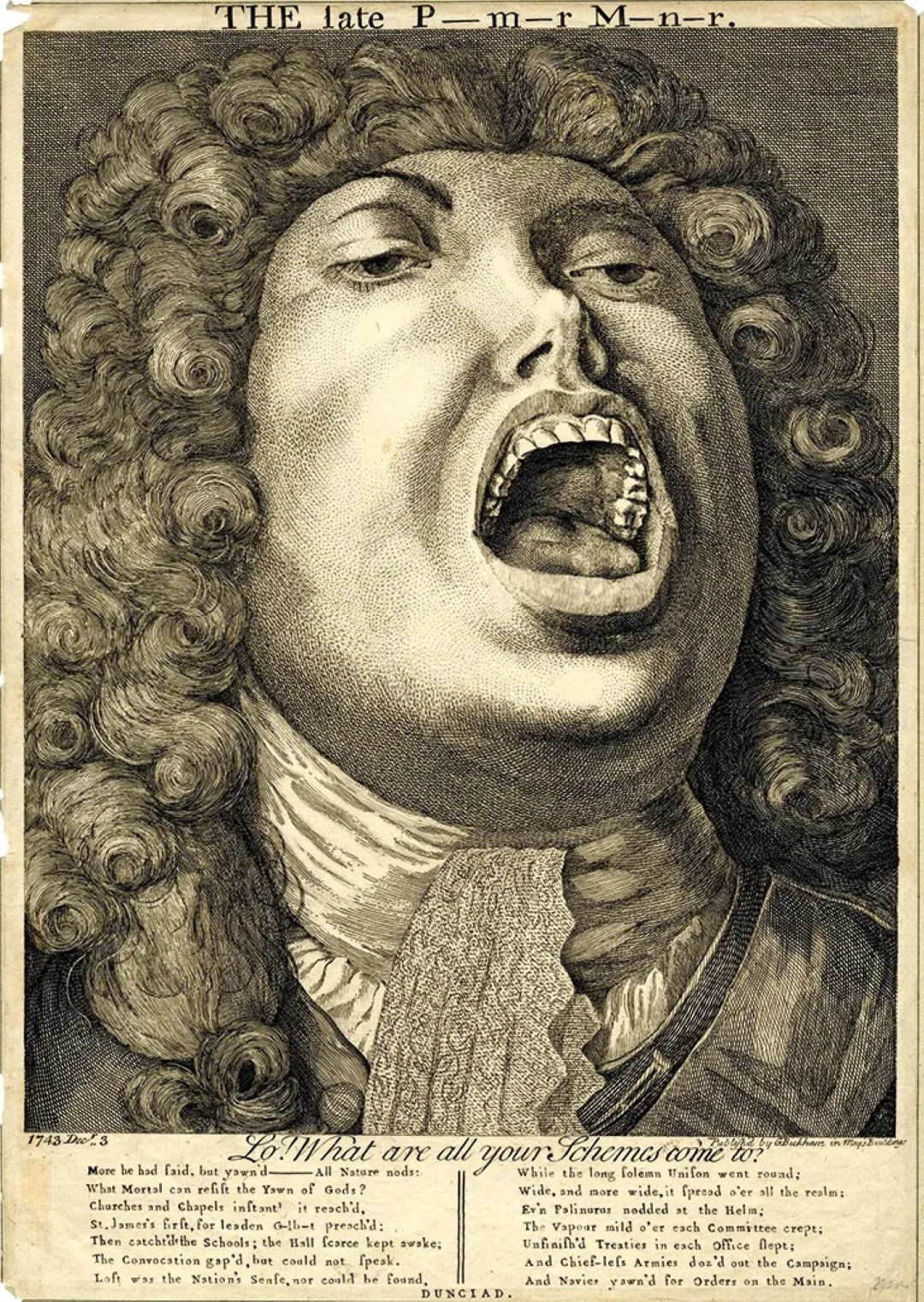
This inkwell is based on a caricature drawing by George Bickham the Younger dated 1743. Walpole is pictured yawning but in an even more grotesque manner than seen in this inkwell. Walpole’s mouth is wide open almost in the shape of a fish and with severe looking teeth jutting out from it. George Bickham the Younger (c. 1706–1771) was an English etcher, engraver, and one of the first English caricaturists. He produced didactic publications, political caricatures, and pornographic prints.
For information about George Bickham and his satire: Ridiculing Robert Walpole | Apollo Magazine (apollo-magazine.com)
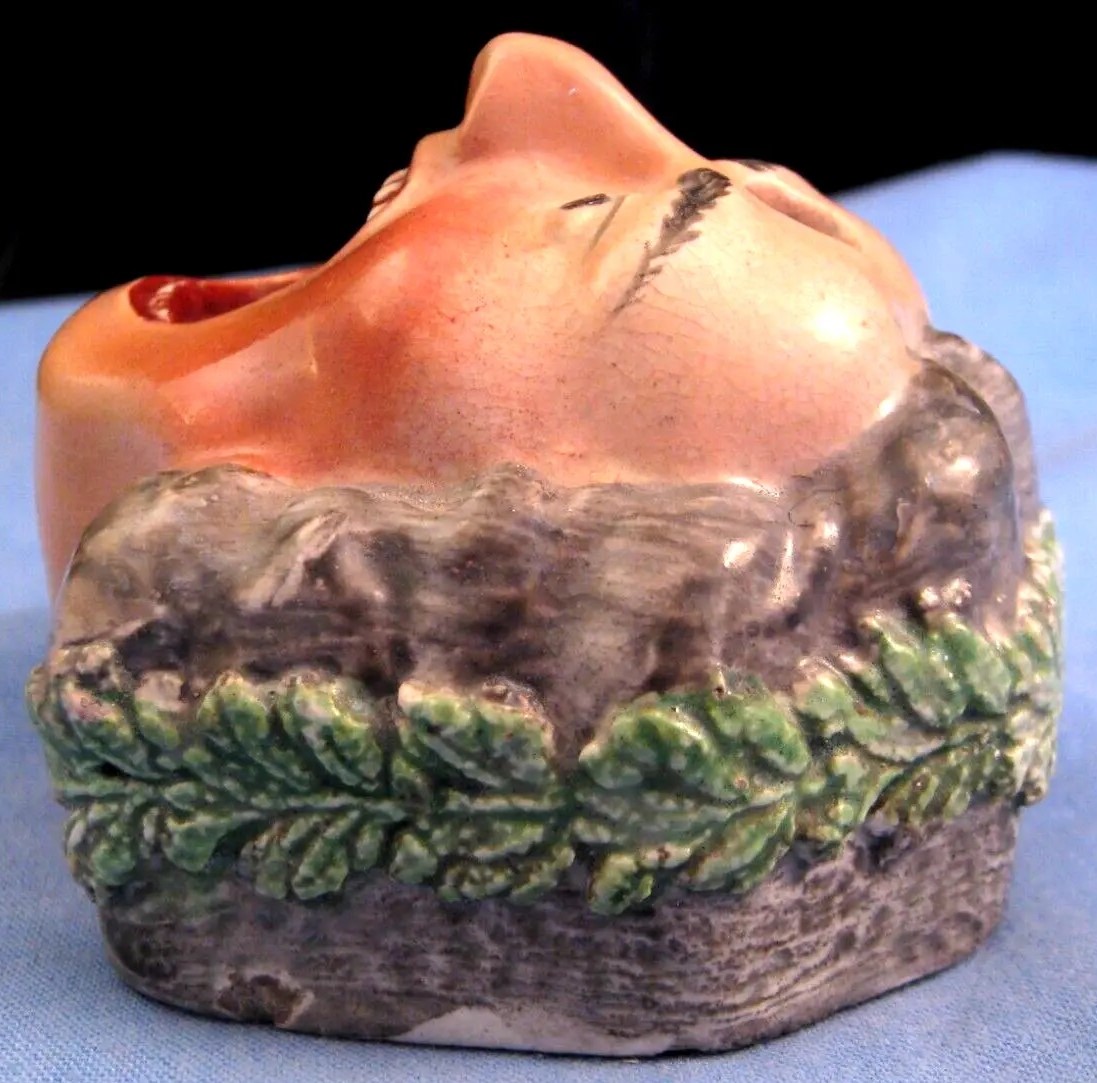
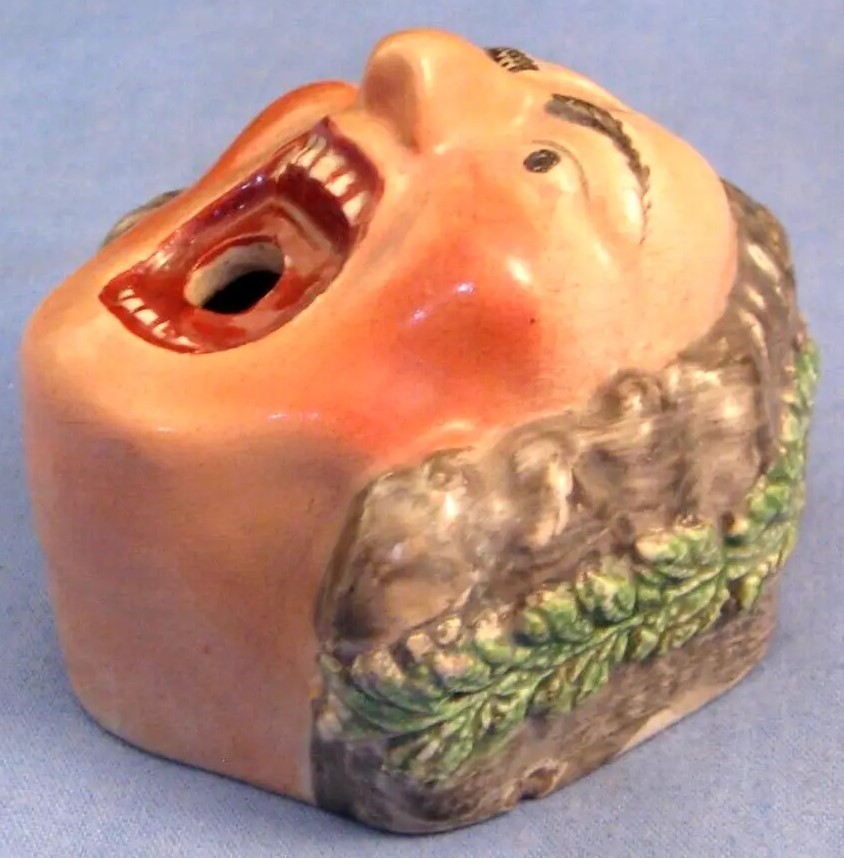
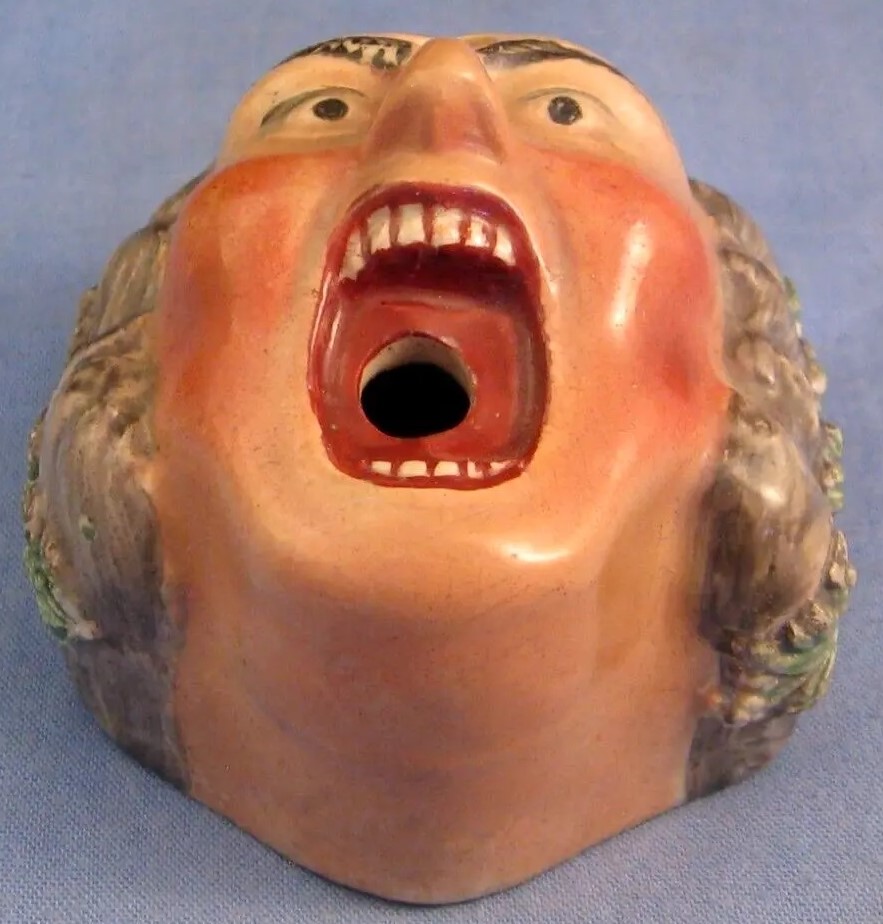
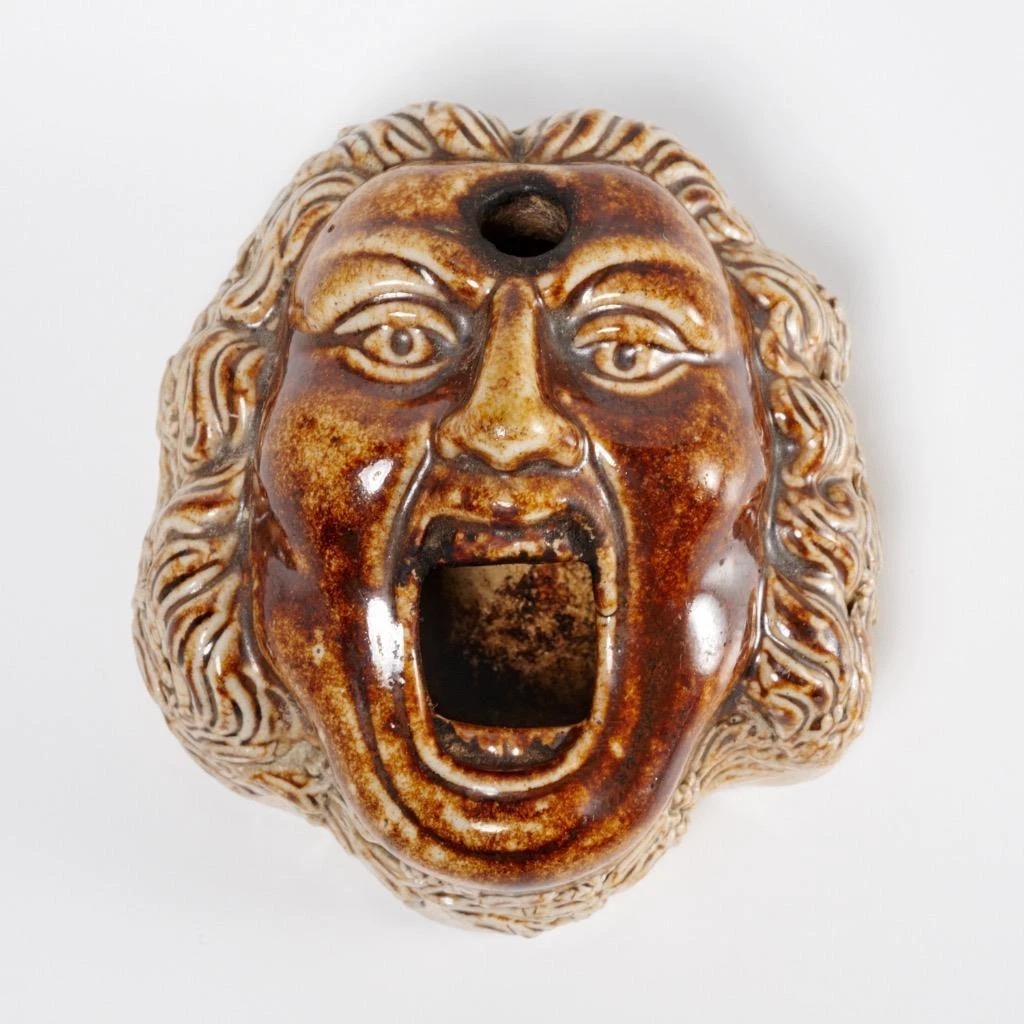
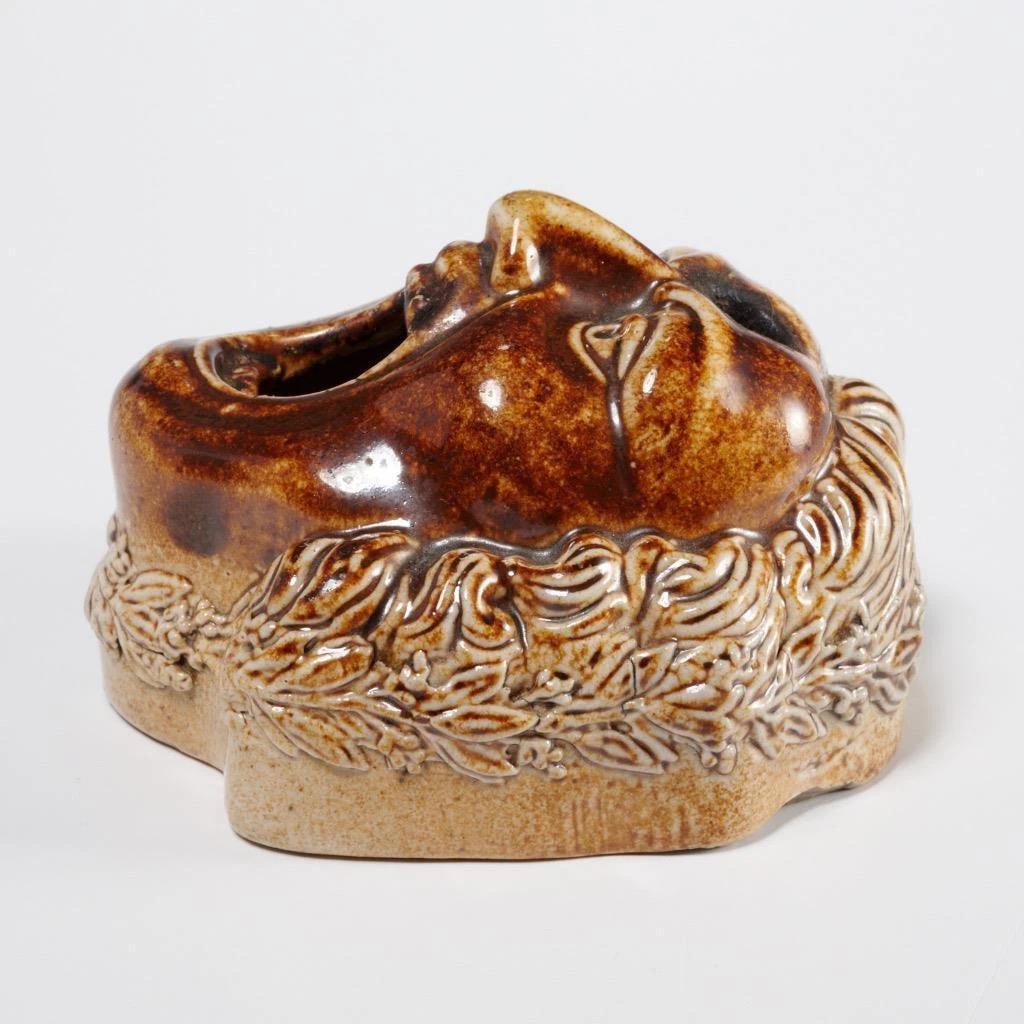
This ceramic inkwell is nicely detailed with Walpole’s grey hair and with a band of mistletoe around the sides. His mouth is wide open with a hole for dipping the pen and another hole on his forehead for resting the pen.
This inkwell, in some parts, has acquired the nickname of “The Scream”. The dramatic, wide-open mouth does appear to be “screaming”, but it is a grotesque exaggeration of Walpole yawning. This image symbolized the political weariness or “yawning” of the public, or Walpole’s own long, wearying, and often corrupt tenure in power. The widely open mouth is the functional inkwell reservoir, a witty or insulting adaptation of the original print.
Salt Glazed Stoneware Version
Another version, more commonly seen, is a stoneware version.
- Medium and Technique: The inkwell is made from stoneware and finished with a salt glaze. The salt glaze process, achieved by throwing salt into the kiln, creates the characteristic mottled, semi-glossy, “orange-peel” texture seen on the surface.
- Color and Appearance: This piece features the traditional coloring of English stoneware, with a base of a rich, mottled brown/tan color, often enhanced by darker manganese washes that emphasize the deep recesses of the face (eyes, hair, brows).
- Period and Origin: While the original caricature dates to 1743, the ceramic inkwell itself was likely produced much later, generally placed in the 19th century (c. 1830s–1880s), possibly by a Staffordshire pottery factory.
Third Example – Marked “Joseph Thompson”
- The Inscription and Identity: Joseph Thompson
- Reading the Inscription: the impressed lettering reads “Joseph Thompson”. It is a stamp pressed into the soft clay before firing.
- Who was Joseph Thompson?
- Joseph Thompson was an earthenware and pot-ware manufacturer operating in the Hartshorne Potteries area of Derbyshire, England, during the first half of the 19th century (specifically known to be active around the 1830s to 1850s).
- Hartshorne Connection: Thompson is a key name associated with this pottery works, known for producing utilitarian and whimsical earthenware, including Toby jugs, figures, and novelty items like this inkwell. The style and material of this inkwell are consistent with Hartshorne production.
- Conclusion on Origin: Based on the material, style, and mark, the inkwell was made by Joseph Thompson at Hartshorne Potteries, Derbyshire, England, around 1830–1850.
The Identity of the Figure: Robert Walpole
The theory that this figure is a caricature of Robert Walpole is valid, though the subject matter likely was repurposed over time.
- Pottery’s Role: It was common for 18th-century potters to adapt popular satirical prints and political cartoons into three-dimensional forms (like Toby Jugs or these inkwells). However, by the time Joseph Thompson was making this inkwell in the 1830s, the political target was likely forgotten, and the figure became merely a grotesque novelty item—a popular form in 19th-century folk pottery.
| Feature | Assessment |
| Origin/Maker | Joseph Thompson at Hartshorne Potteries, Derbyshire, England. |
| Age | Mid-19th Century (c. 1830–1850). |
| Figure Identity | Based on an 18th-century print (George Bickham), likely originally intended as a satire of Robert Walpole, but sold in the 19th century as a popular grotesque novelty. |
| Marking | Consistent with the impressed “J. THOMPSON” mark. |
Sold for $214 in March 2024
A stoneware version sold for $250 in October 2025.
Salt glazed stoneware (like example #2) sold for $213 in April 2026; Similar sold for $163 in June 2026
Content disclaimer. The information posted is the owner’s best knowledge and may not have been vetted by the SOIC. We welcome comments, corrections, and additions, working to make our website information comprehensive and accurate.
Join the Society of Inkwell Collectors (SOIC) – it’s free!
Founded in 1981 as a non-profit organization,
we are documenting inkwells (and accessories).
We’re here to help and inform!