

Inkipedia
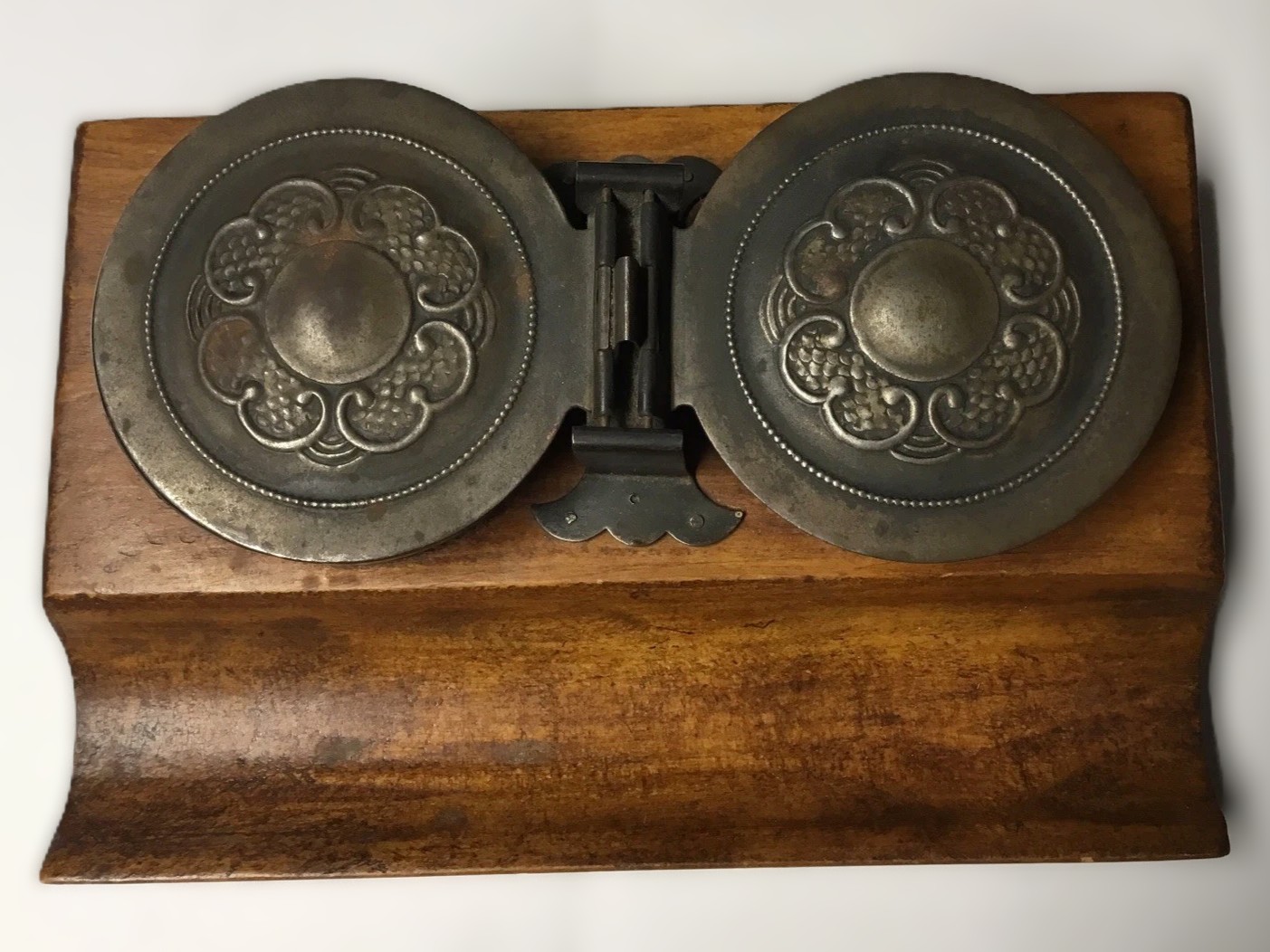
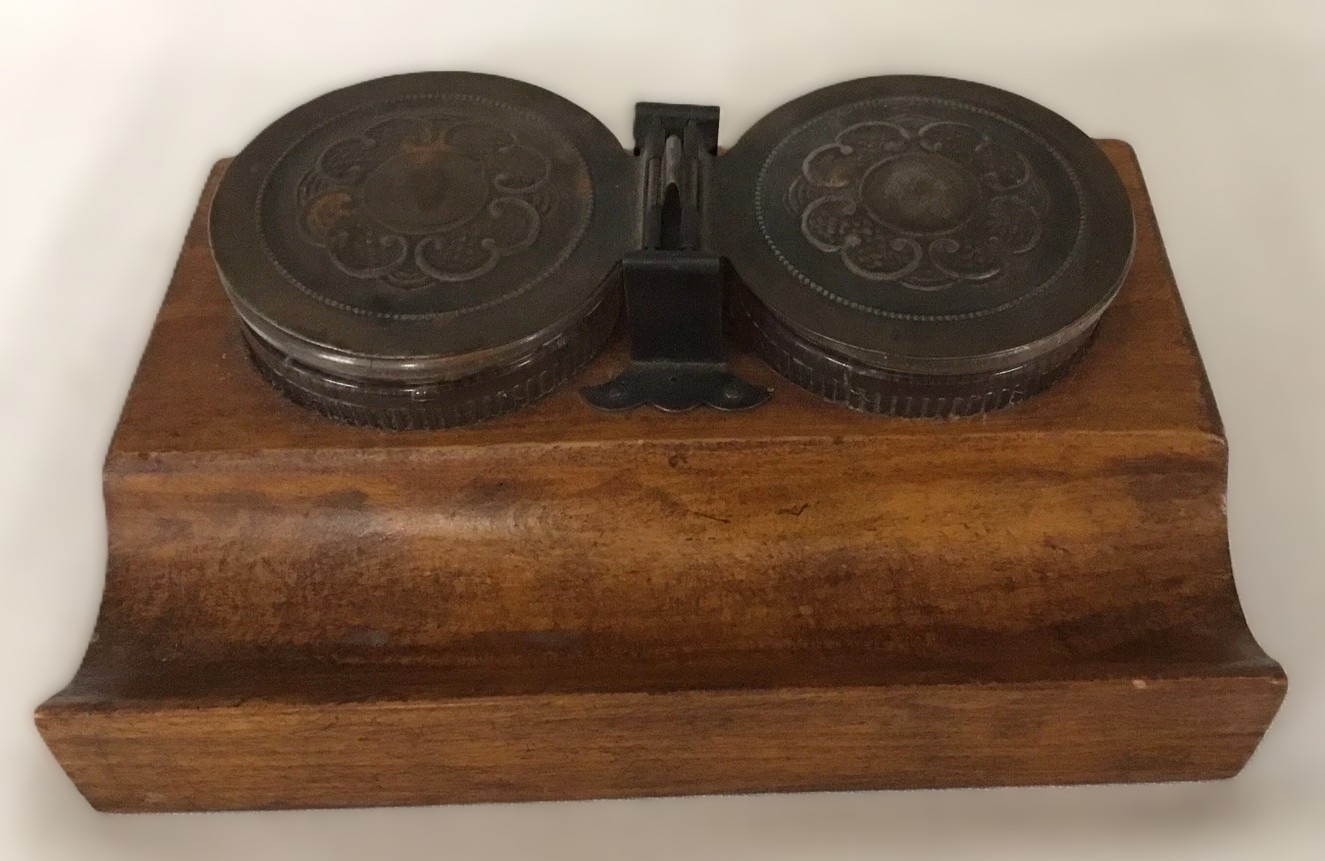
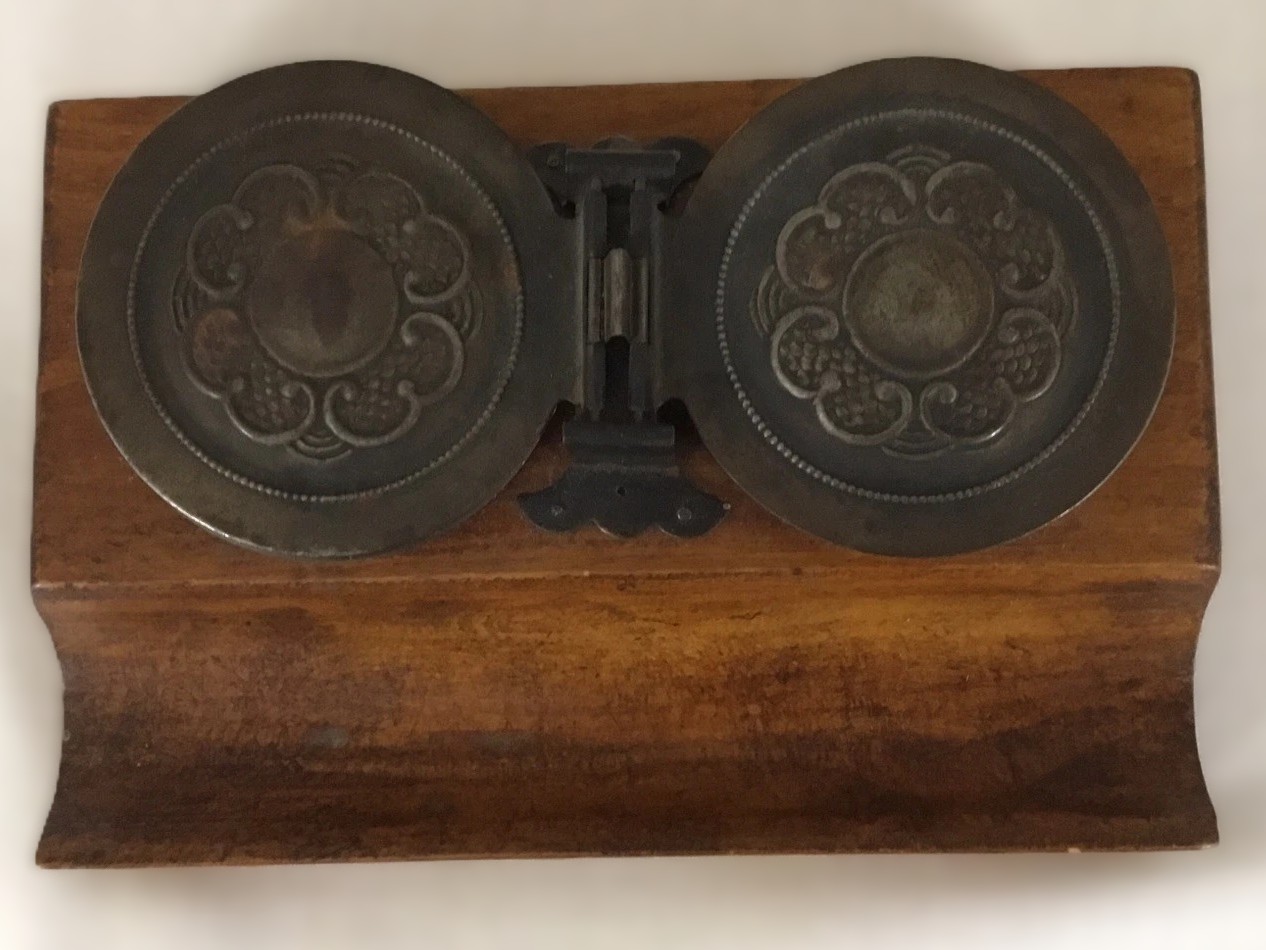
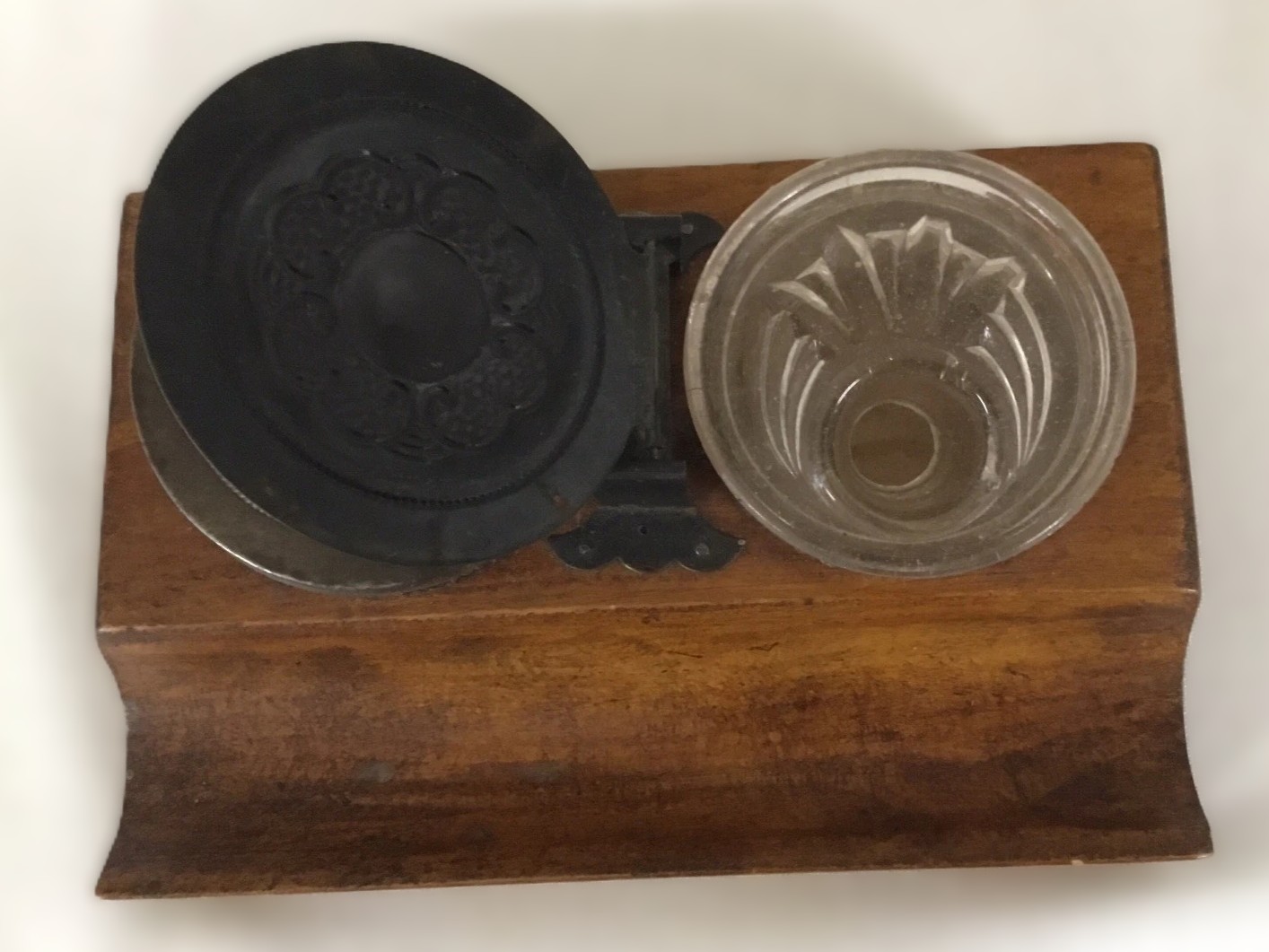
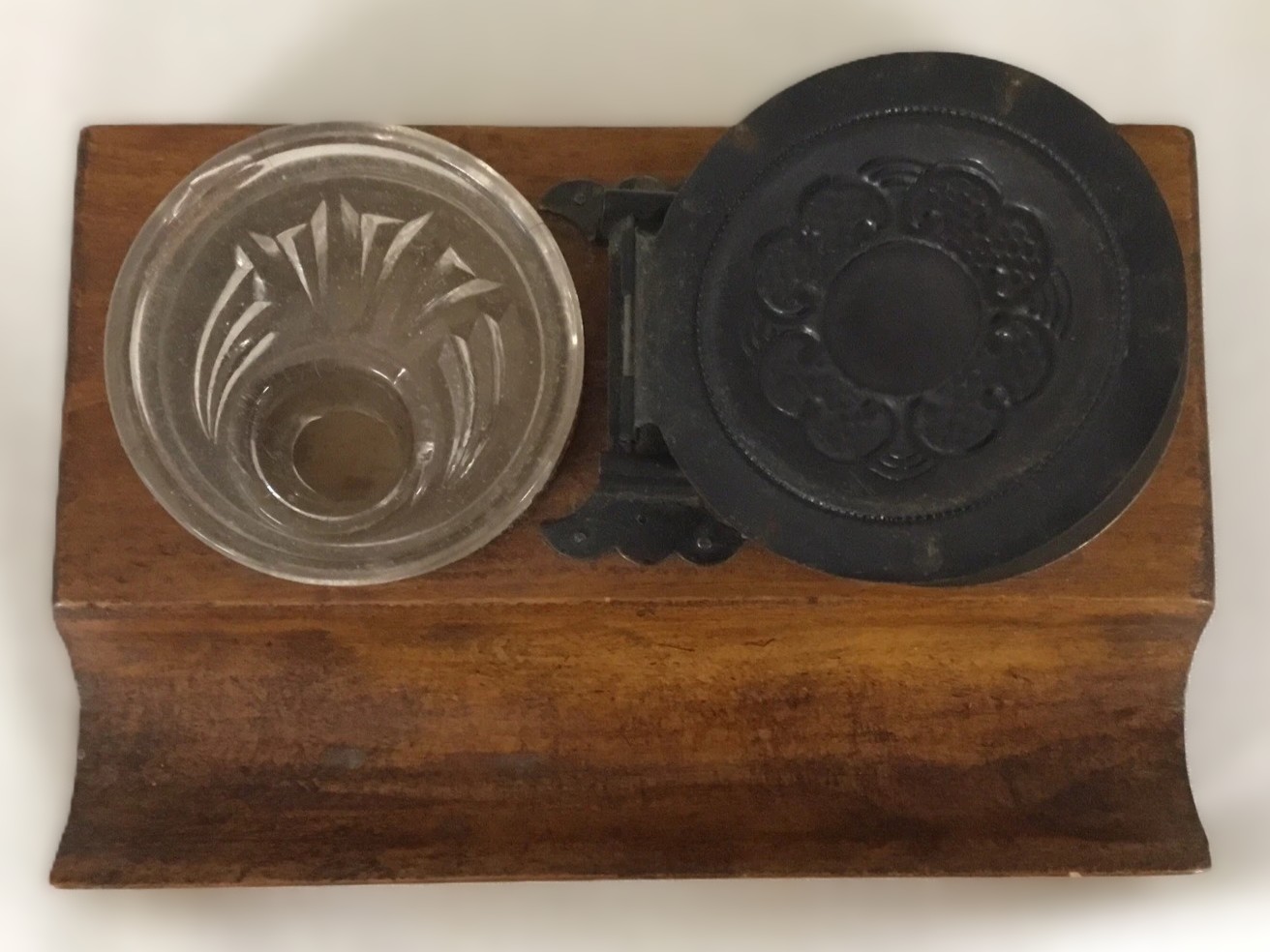
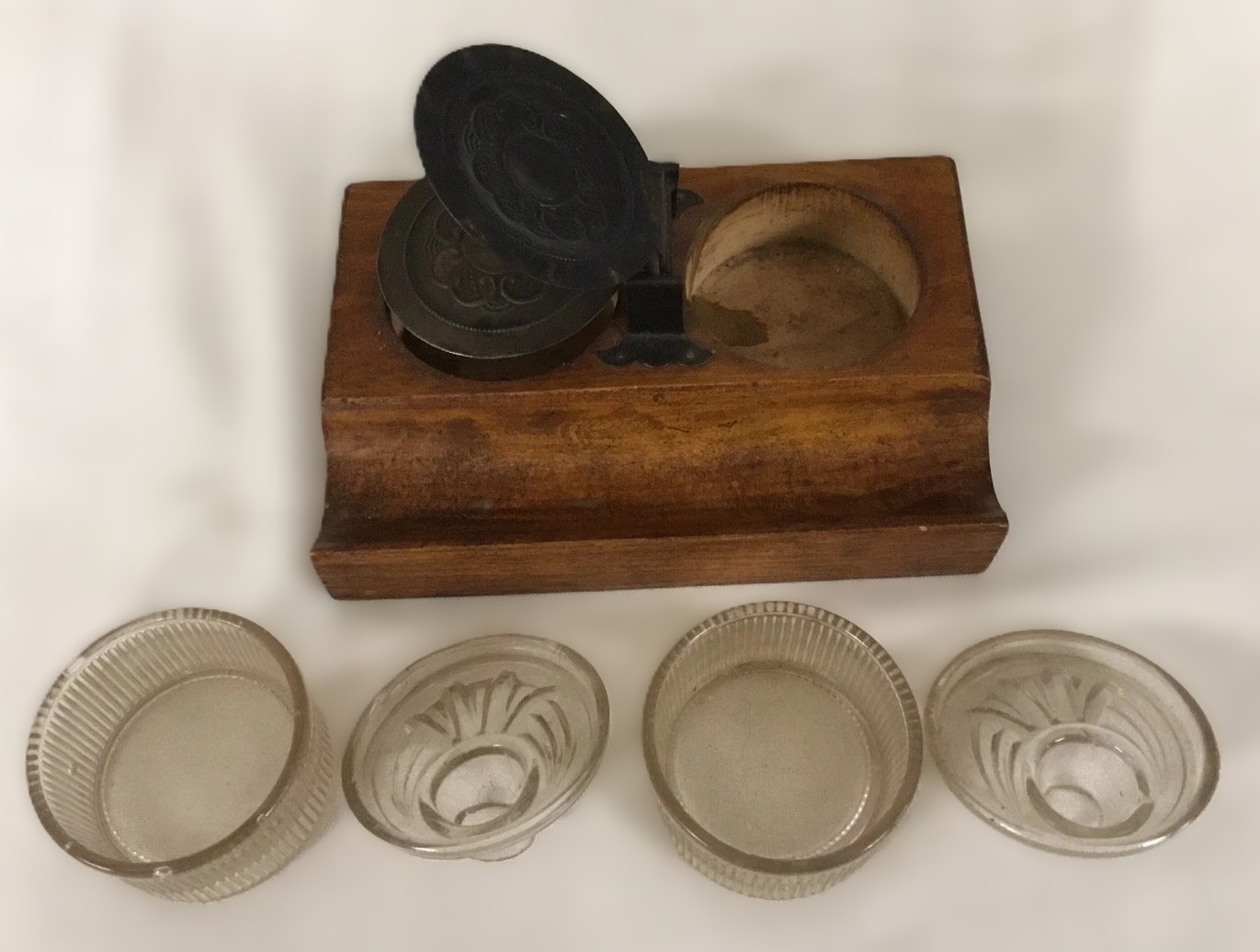
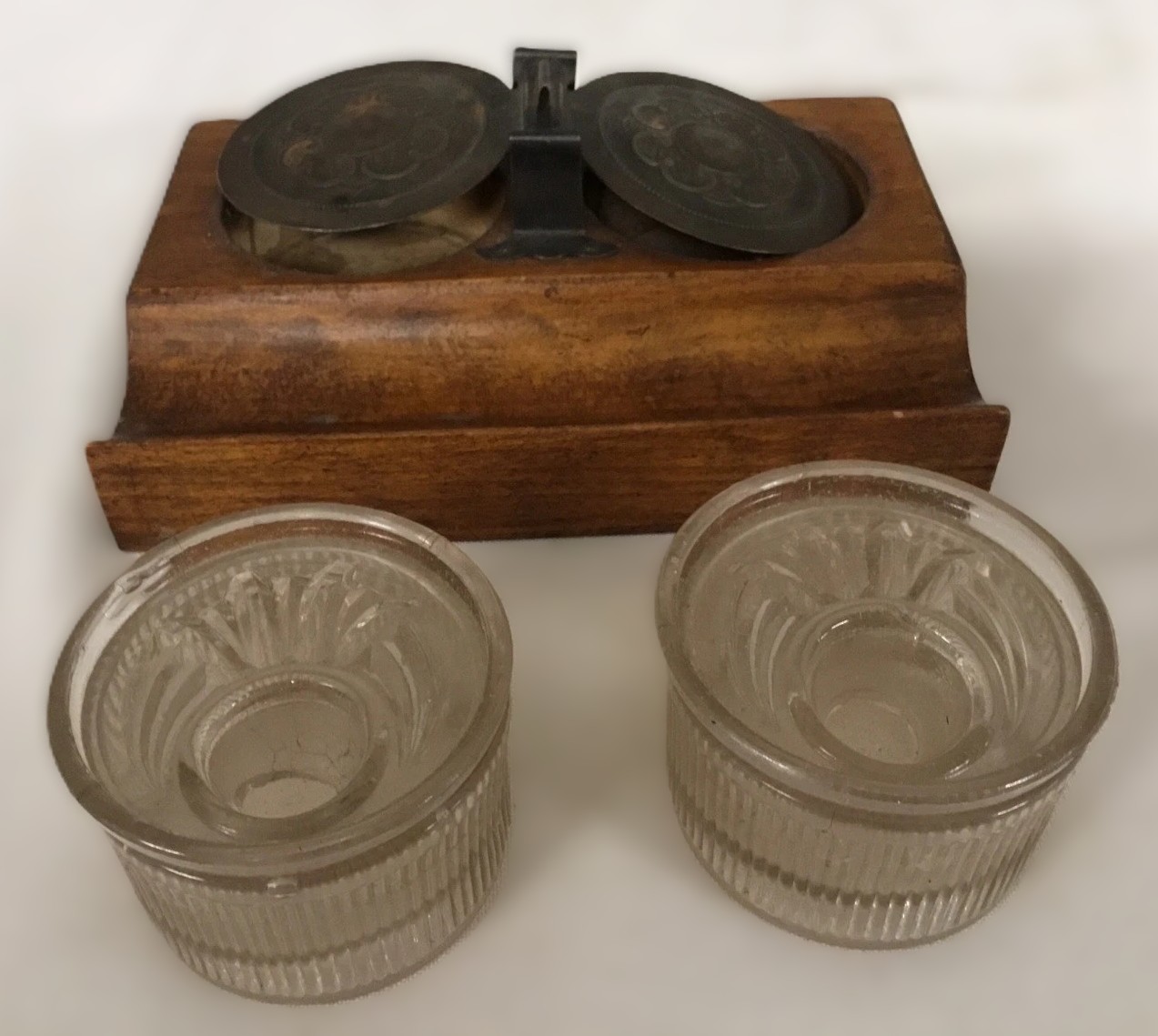
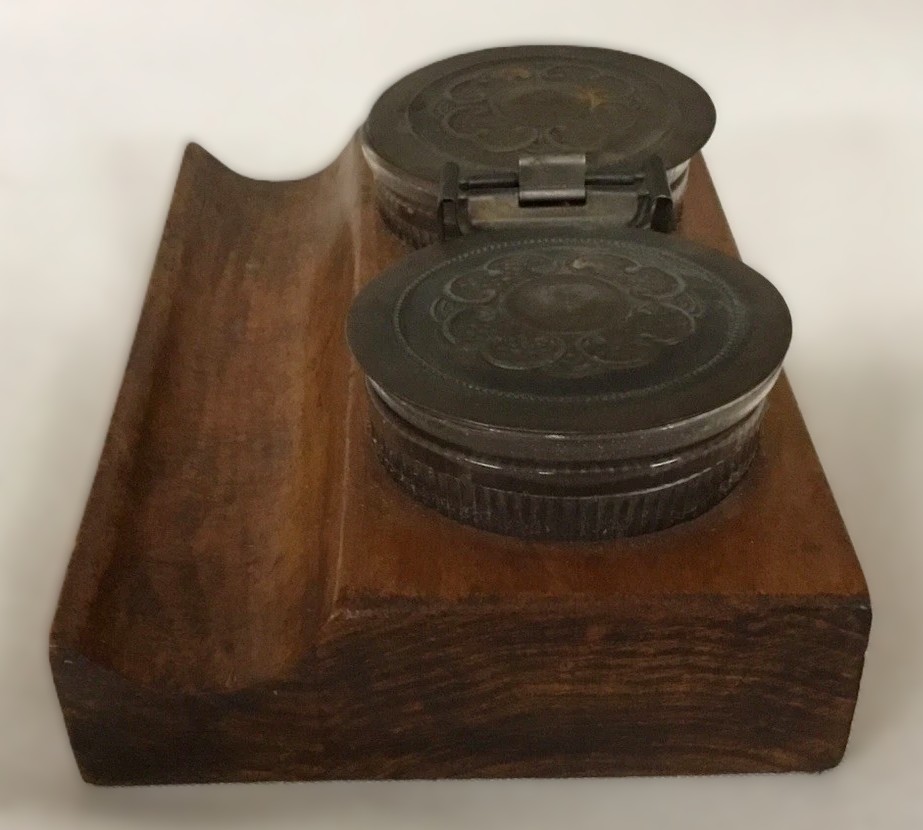
F. Soennecken Double Inkstand
| Categories | Wood Inkstands |
| Material | Metal, Wood |
| Markings | Unmarked |
| Manufacturer | F. Soennecken |
| Origin | Germany |
| Date or Era | circa 1900 |
| Measuring | 7 ½” x 5 ⅜” x 2 ¾” high |
Description
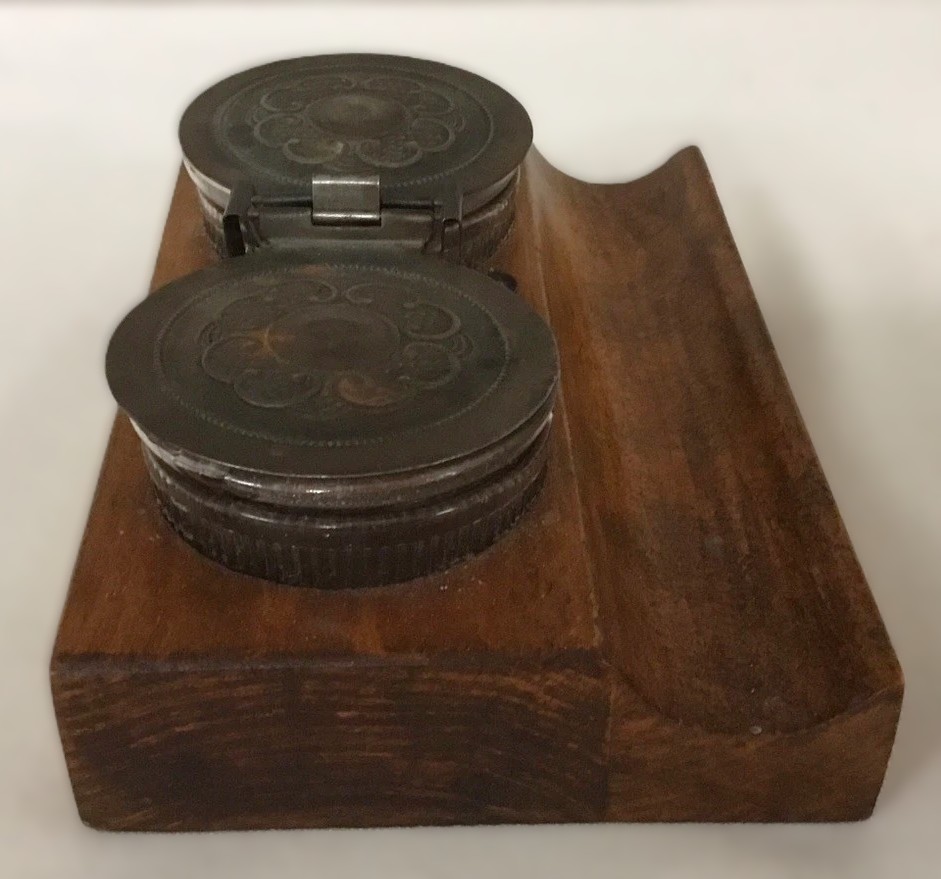
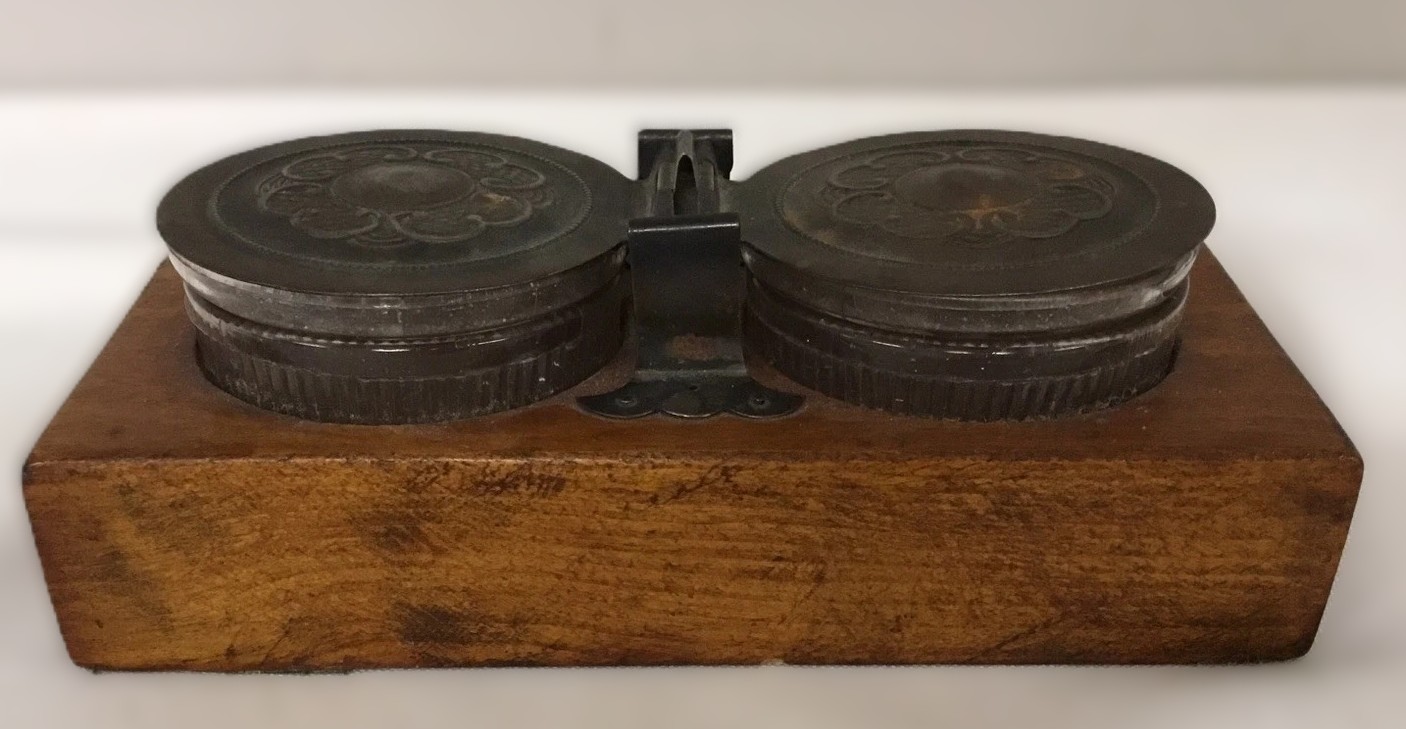
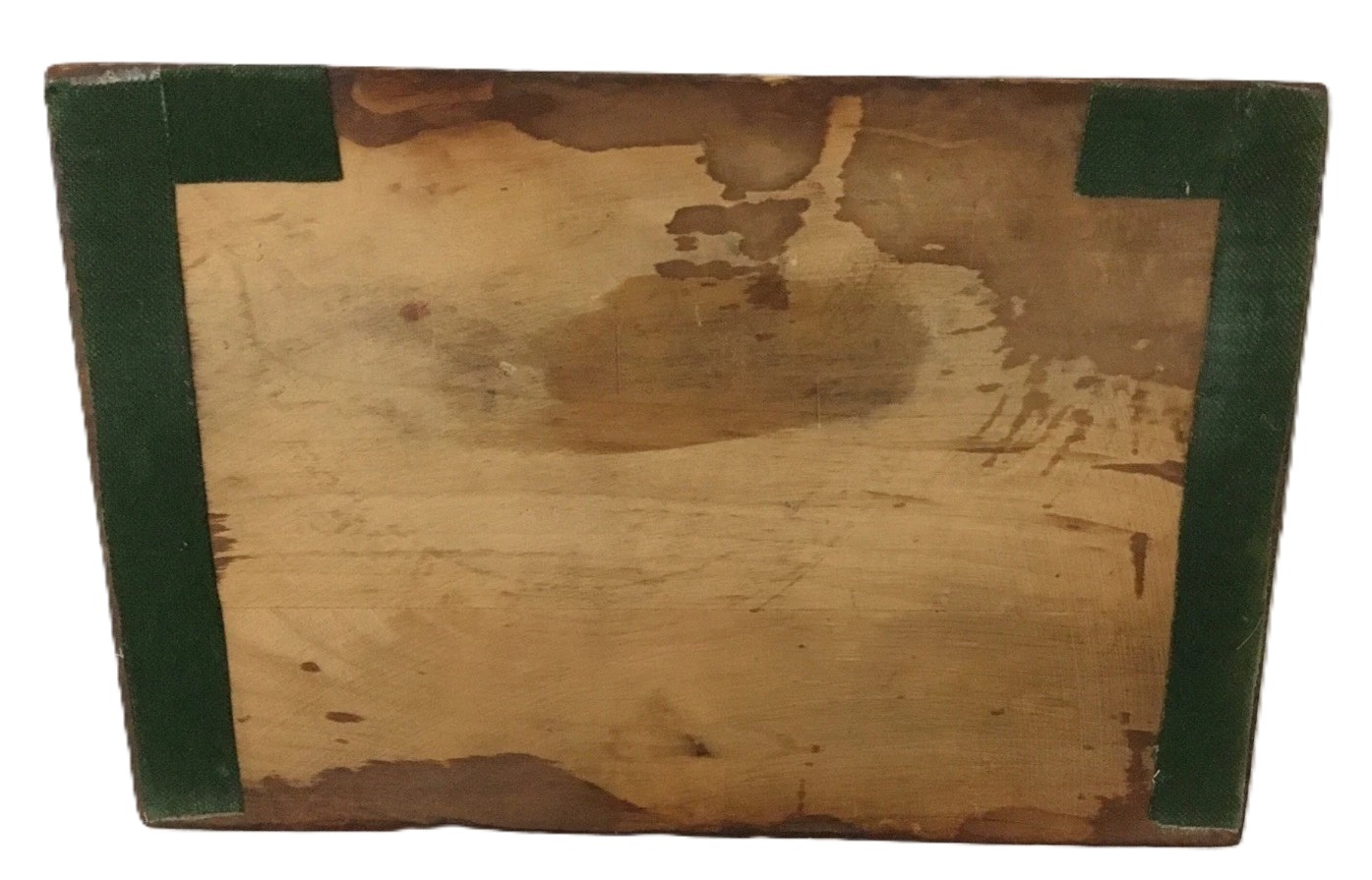
- Wood Stand: Made from a solid block of stained hardwood (likely beech or walnut) with a deep, full-width dished pen trough along the front and two circular bored wells at the rear.
- Hinged Cover Mechanism: A dual-lidded stamped brass or patinated iron/white metal assembly anchored to the center bridge. Each lid is decorated with a stamped central boss framed by stylized floral/cloud rosettes, beaded borders, and scrolled leaf lugs at the mounting plate.
- Glass Wells & Inserts:
- Each well holds a two-part pressed clear glass reservoir system.
- The outer reservoirs feature vertically fluted/ribbed exterior sidewalls.
- Nestled inside are molded inner funnel/dipping wells (funnel inserts) designed to regulate ink depth, catch stray drips, prevent nib damage, and minimize evaporation when the heavy lids are closed.
Company History: F. Soennecken
- Founding: Founded in 1875 by Friedrich Soennecken (1848–1919) in Remscheid, Germany, quickly relocating its headquarters and main factory to Bonn.
- Calligraphy & Nib Innovation: Soennecken began as an educator and stationer famous for inventing and popularizing Rundschrift (Round Script), a standardized German commercial calligraphy, alongside broad-edged steel pen nibs designed specifically for it.
- Office Equipment Pioneer: Soennecken was a prolific inventor who revolutionized modern clerical work. In 1886, he patented both the two-hole paper punch (Papierlocher) and the standardized two-ring binder (Briefordner / ring binder), creating the modern office filing system.
- Early Focus on Ink Wells: Legend has it that Soennecken’s very first apprentice invention was an anti-spill wooden block designed to steady precarious ink bottles after an accidental spill ruined an account book. Throughout the late 19th and early 20th centuries, the company produced an extensive line of desk stands, inkwells (Tintenfässer), school supplies, and later high-end fountain pens.
Manufacturing Date
- Circa 1890–1910 (Wilhelmine Imperial Germany).
- The transitional blend of late Victorian floral stamping on the metalwork, combined with the heavy, utilitarian commercial woodworking and pressed-fluted glass inserts, places this piece squarely in Soennecken’s peak stationery production period around the turn of the 20th century.
Sold for $76 in August 2026
Content disclaimer. The information posted is the owner’s best knowledge and may not have been vetted by the SOIC. We welcome comments, corrections, and additions, working to make our website information comprehensive and accurate.
Join the Society of Inkwell Collectors (SOIC) – it’s free!
Founded in 1981 as a non-profit organization,
we are documenting inkwells (and accessories).
We’re here to help and inform!