

Inkipedia
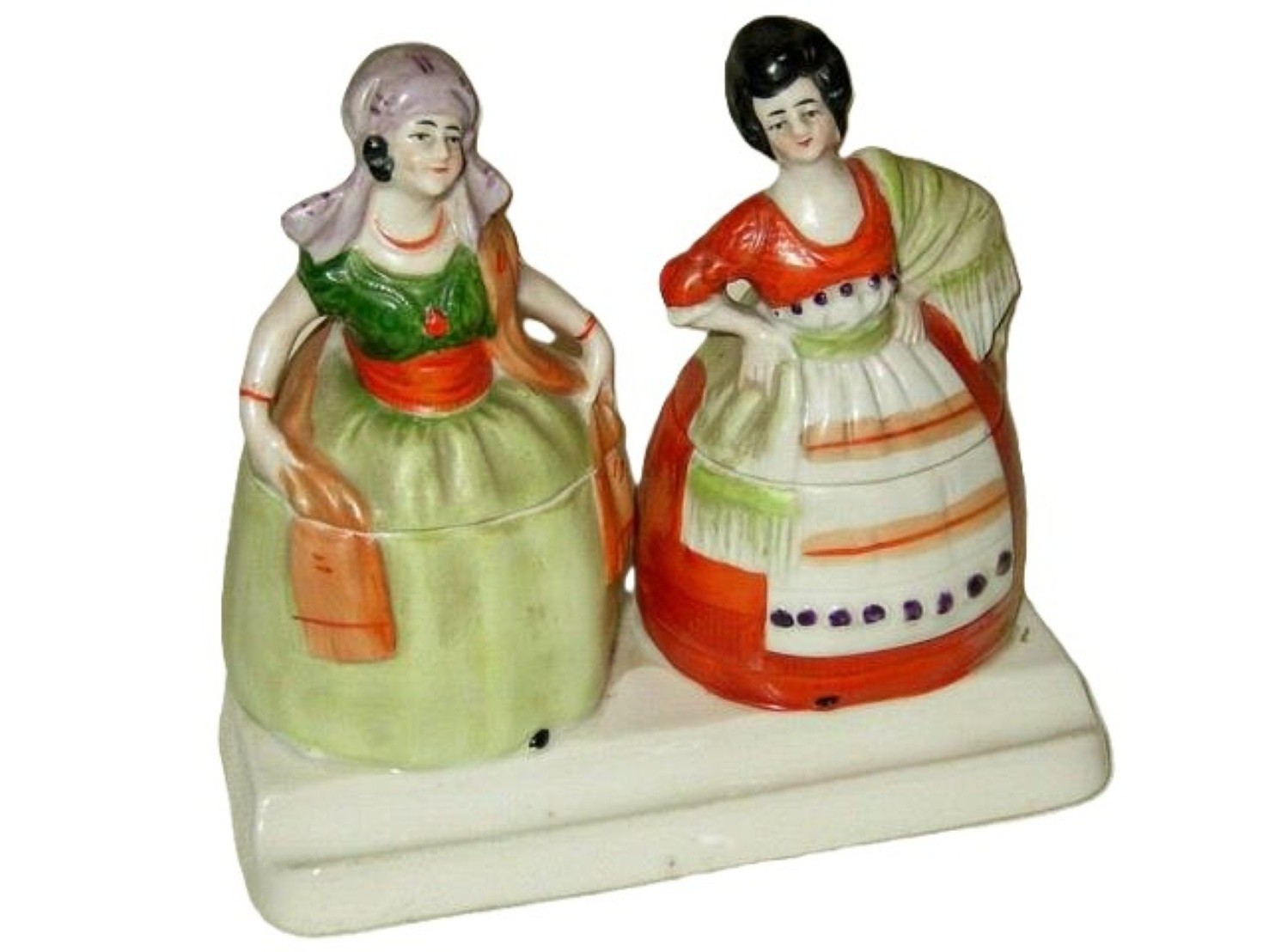
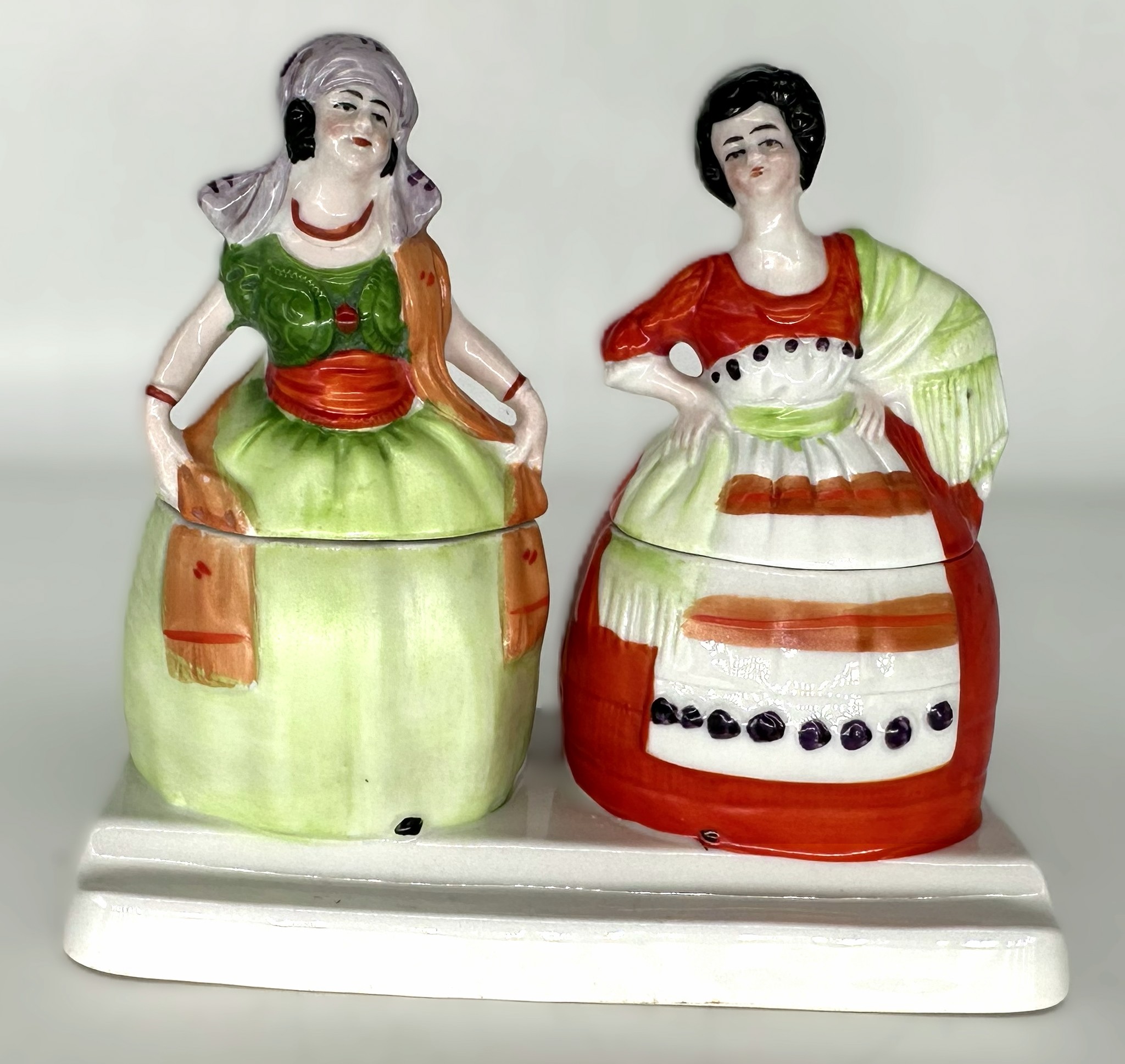
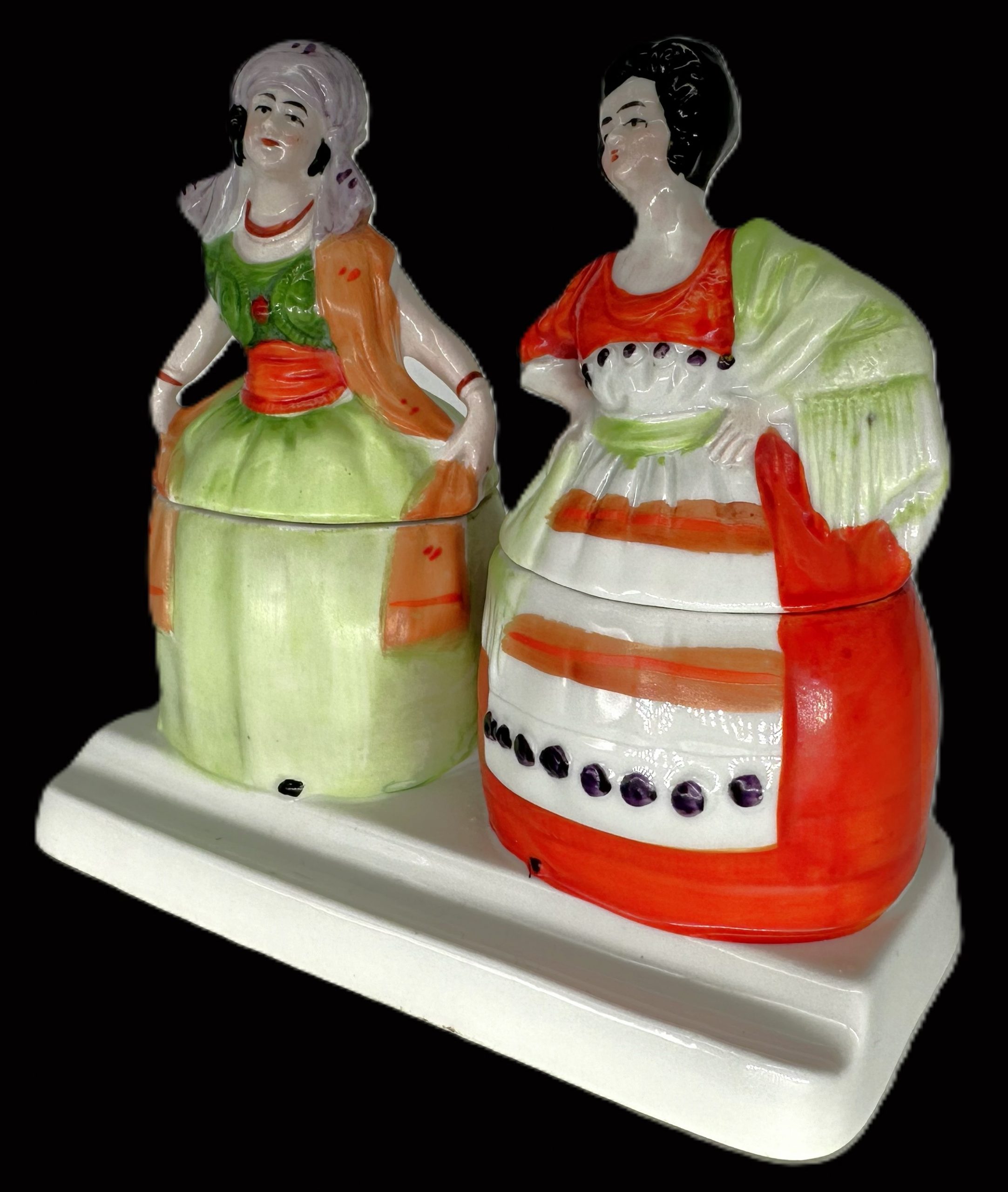
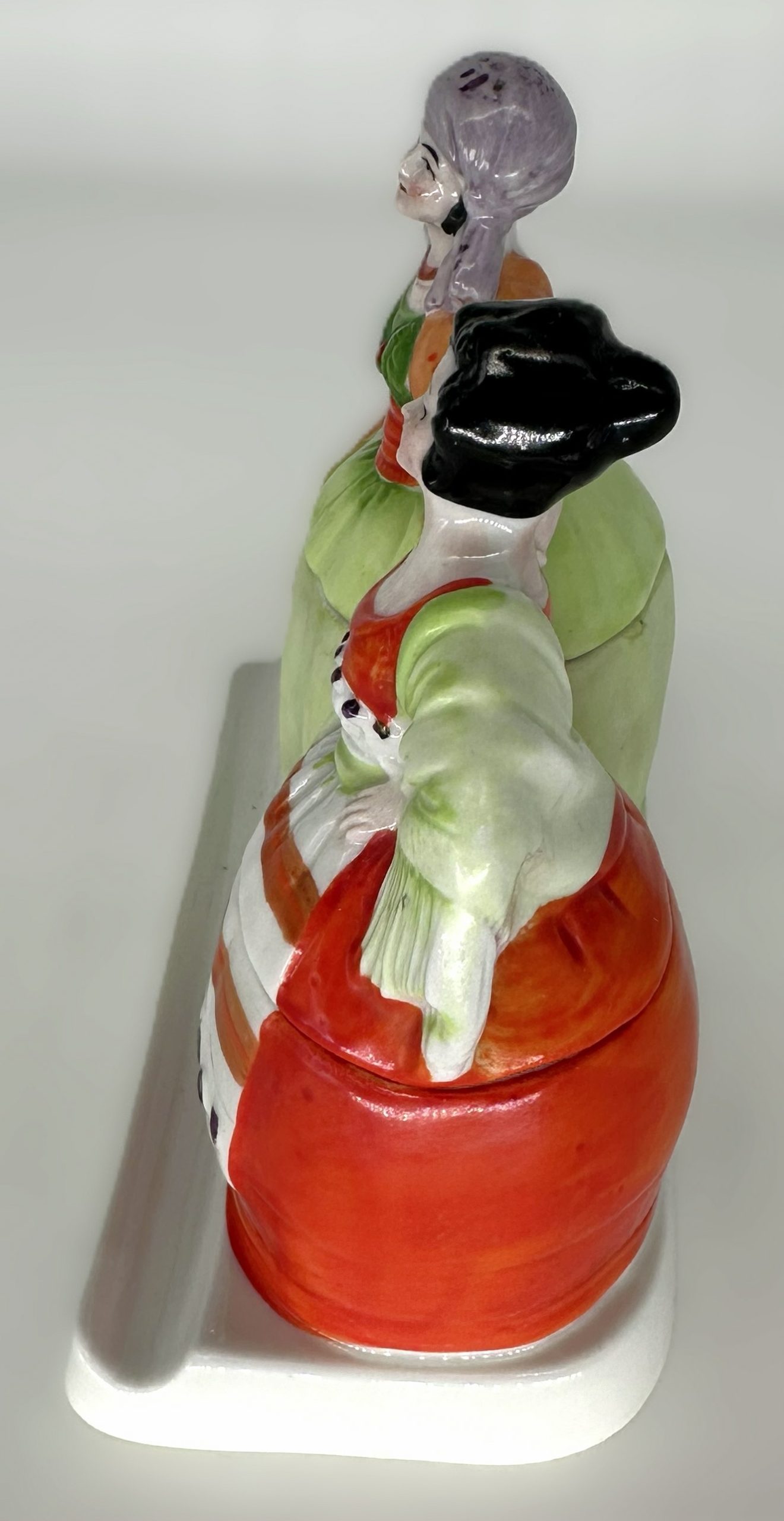
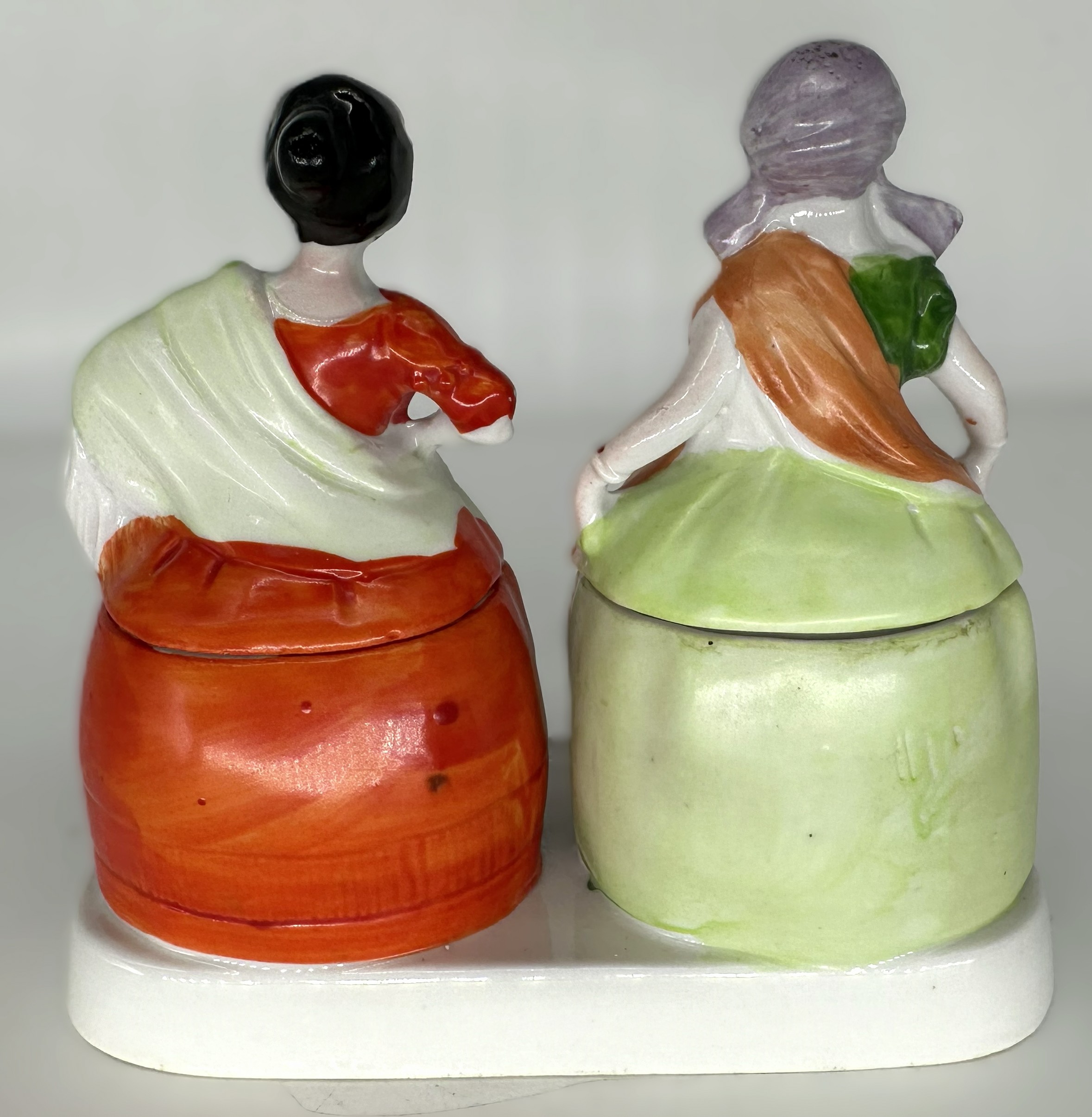
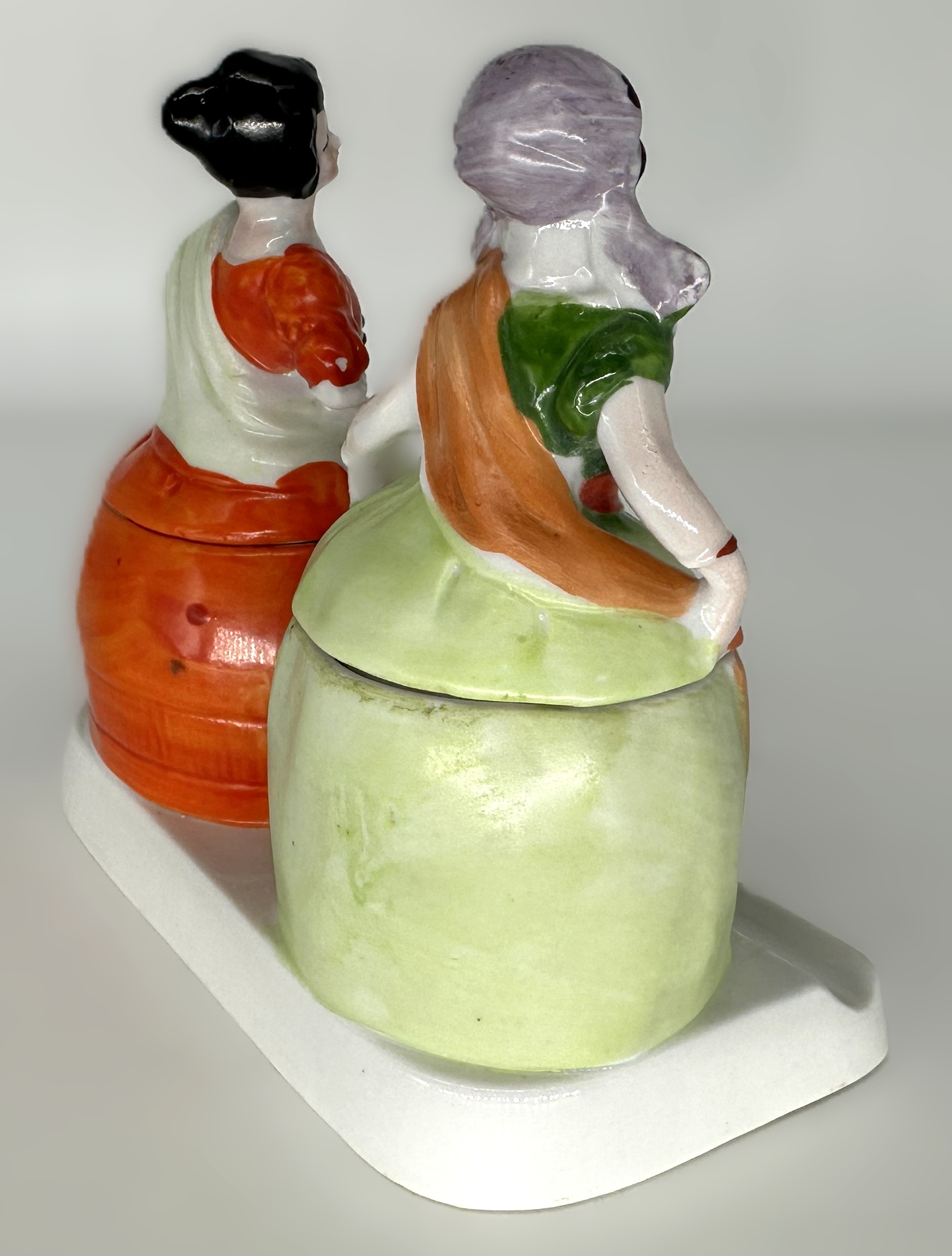
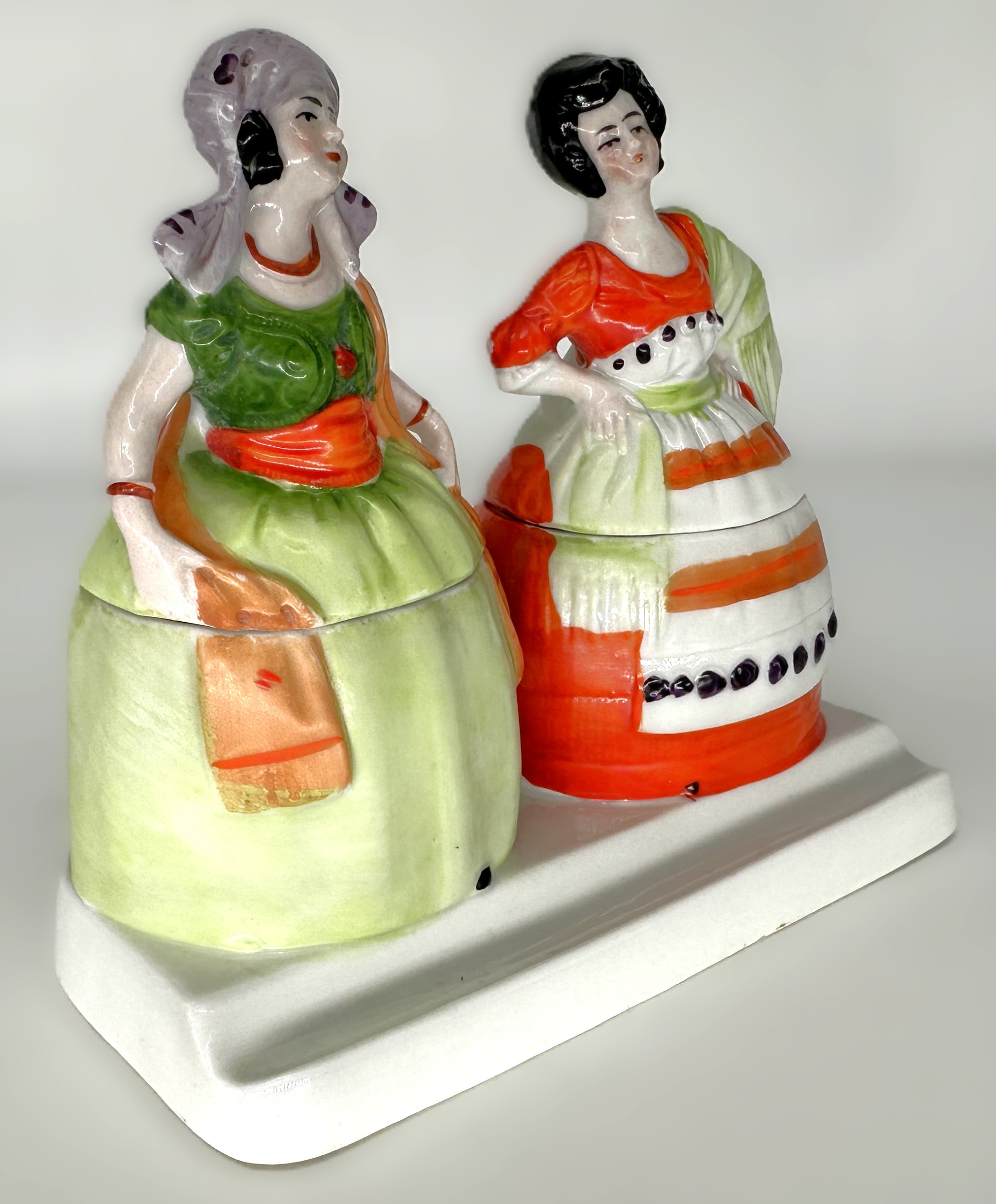
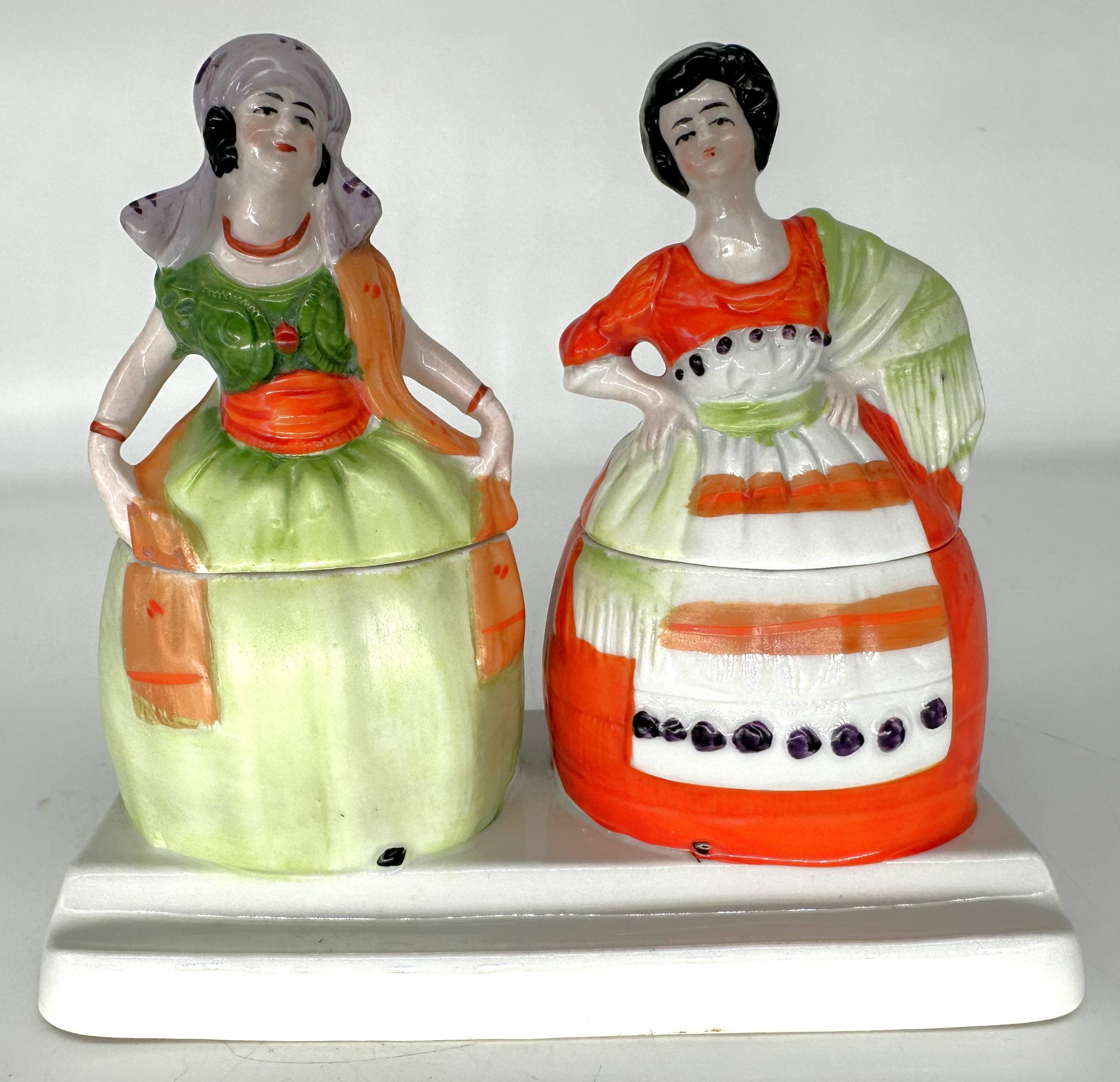
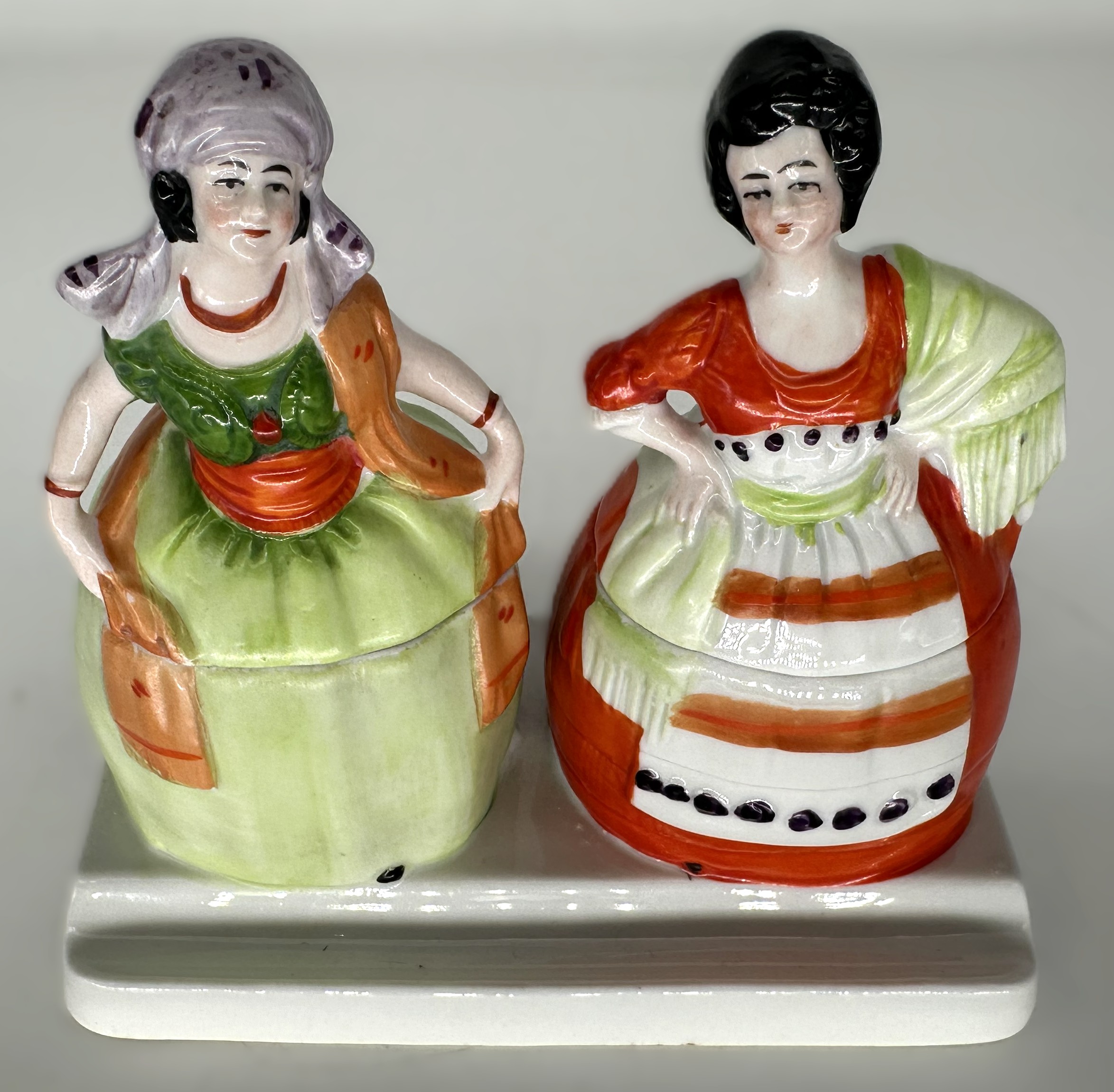
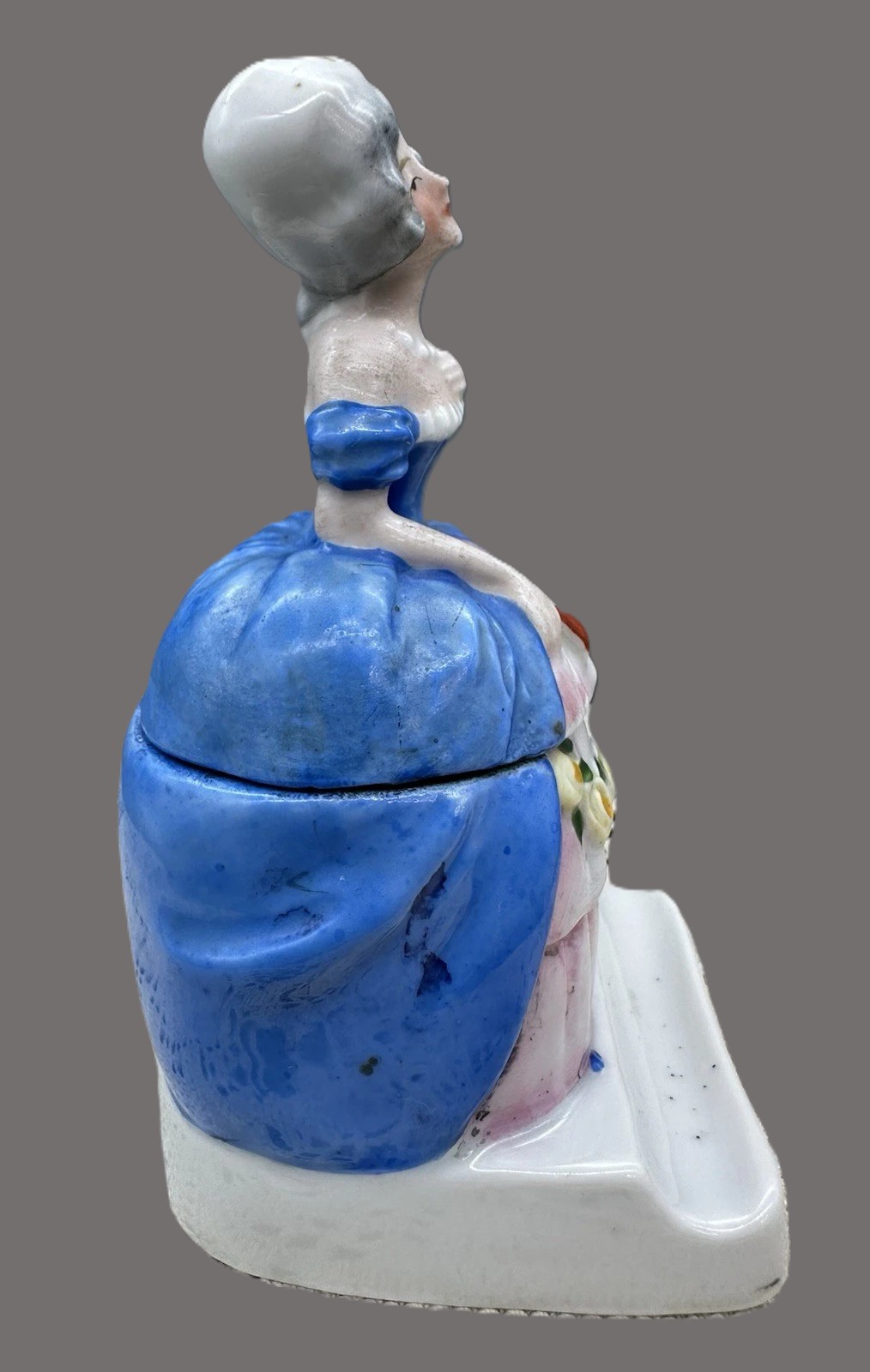
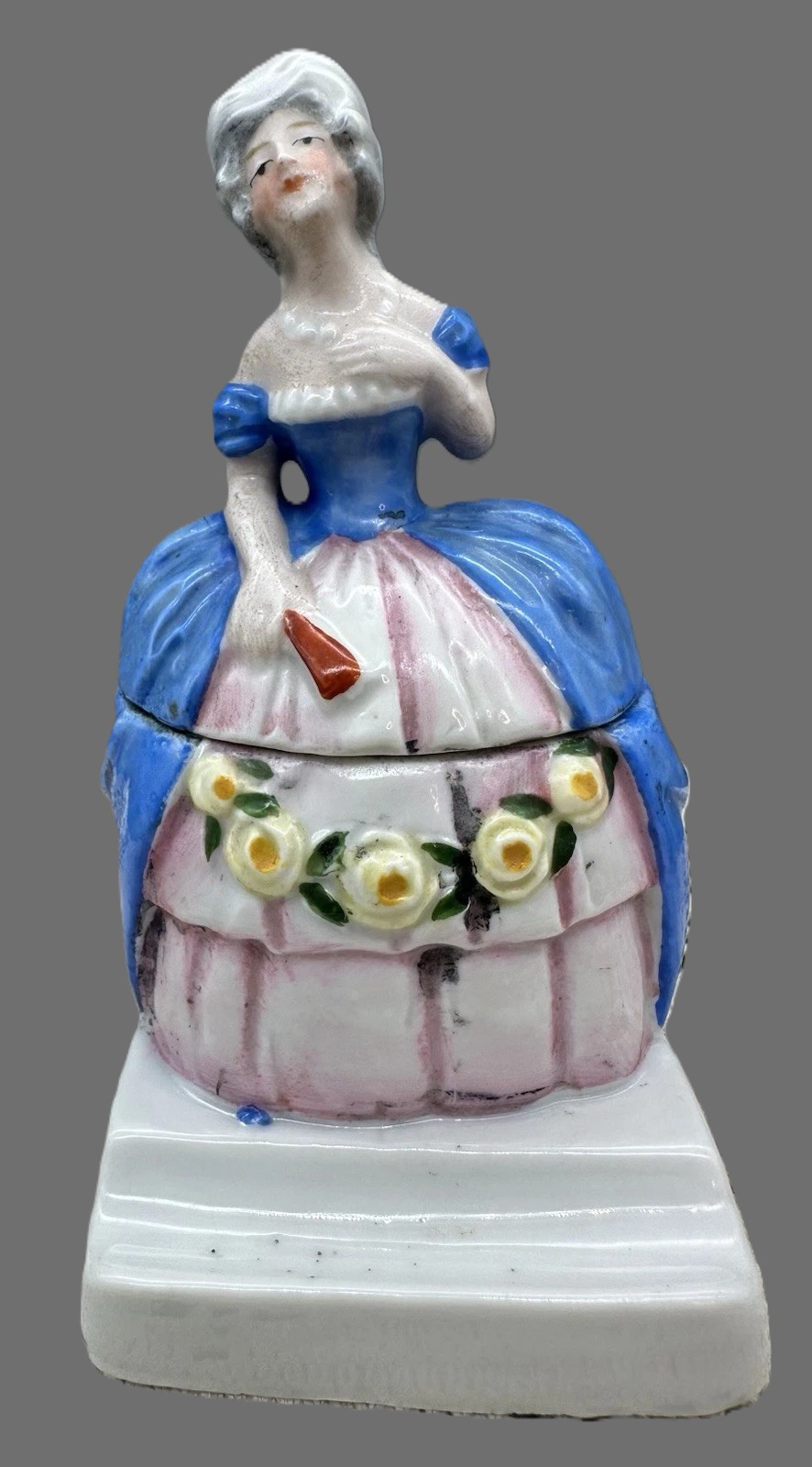
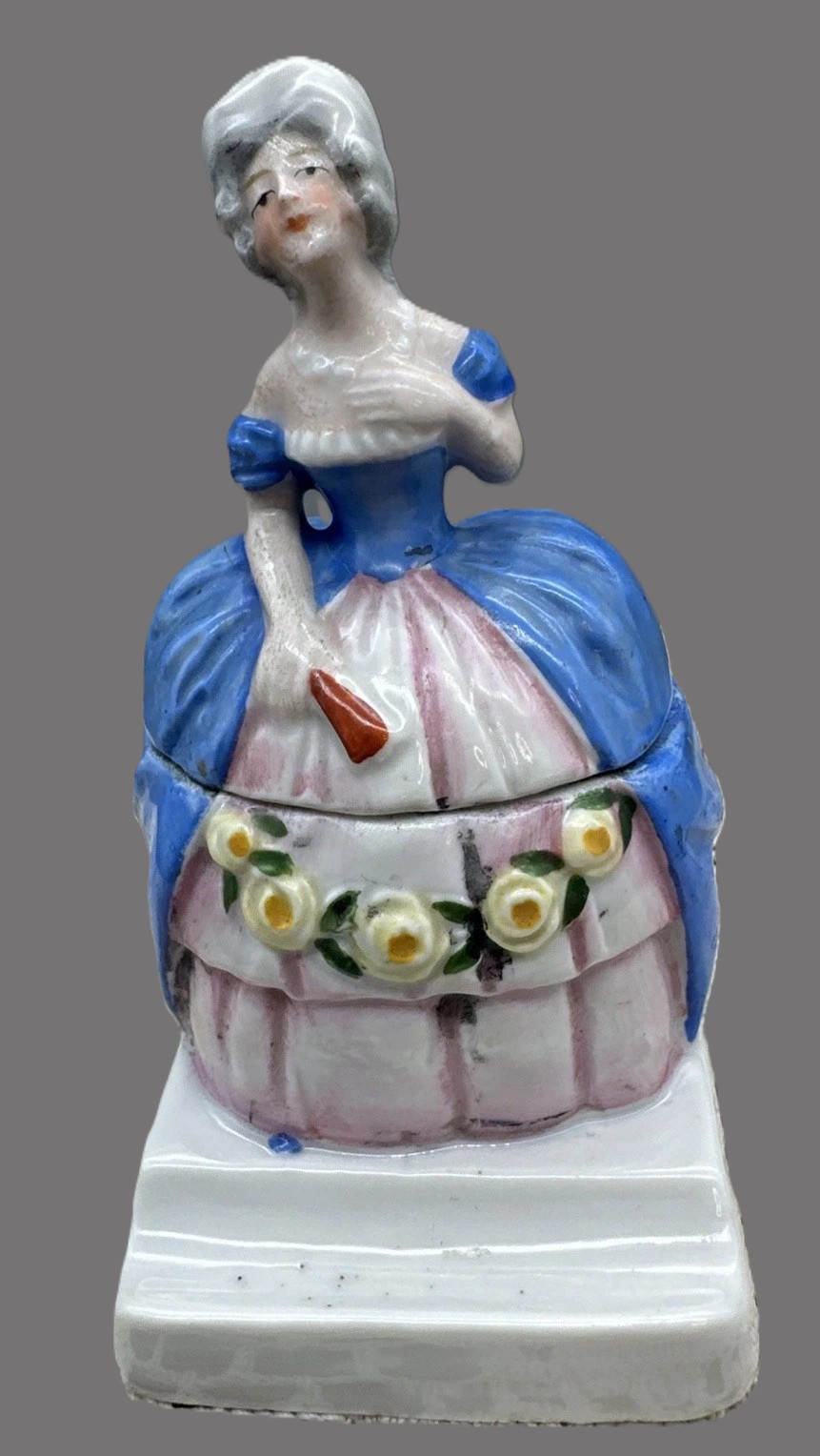
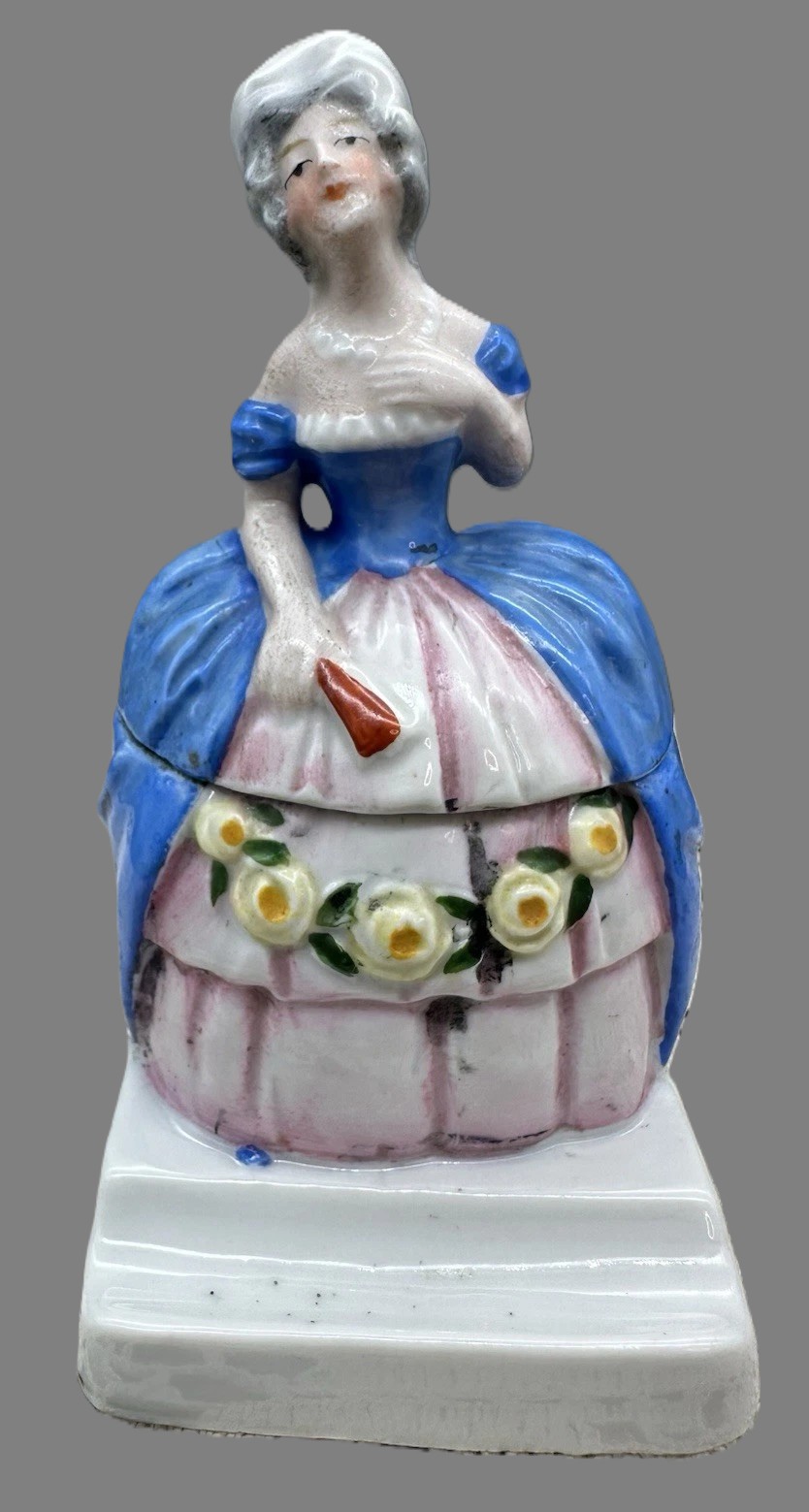
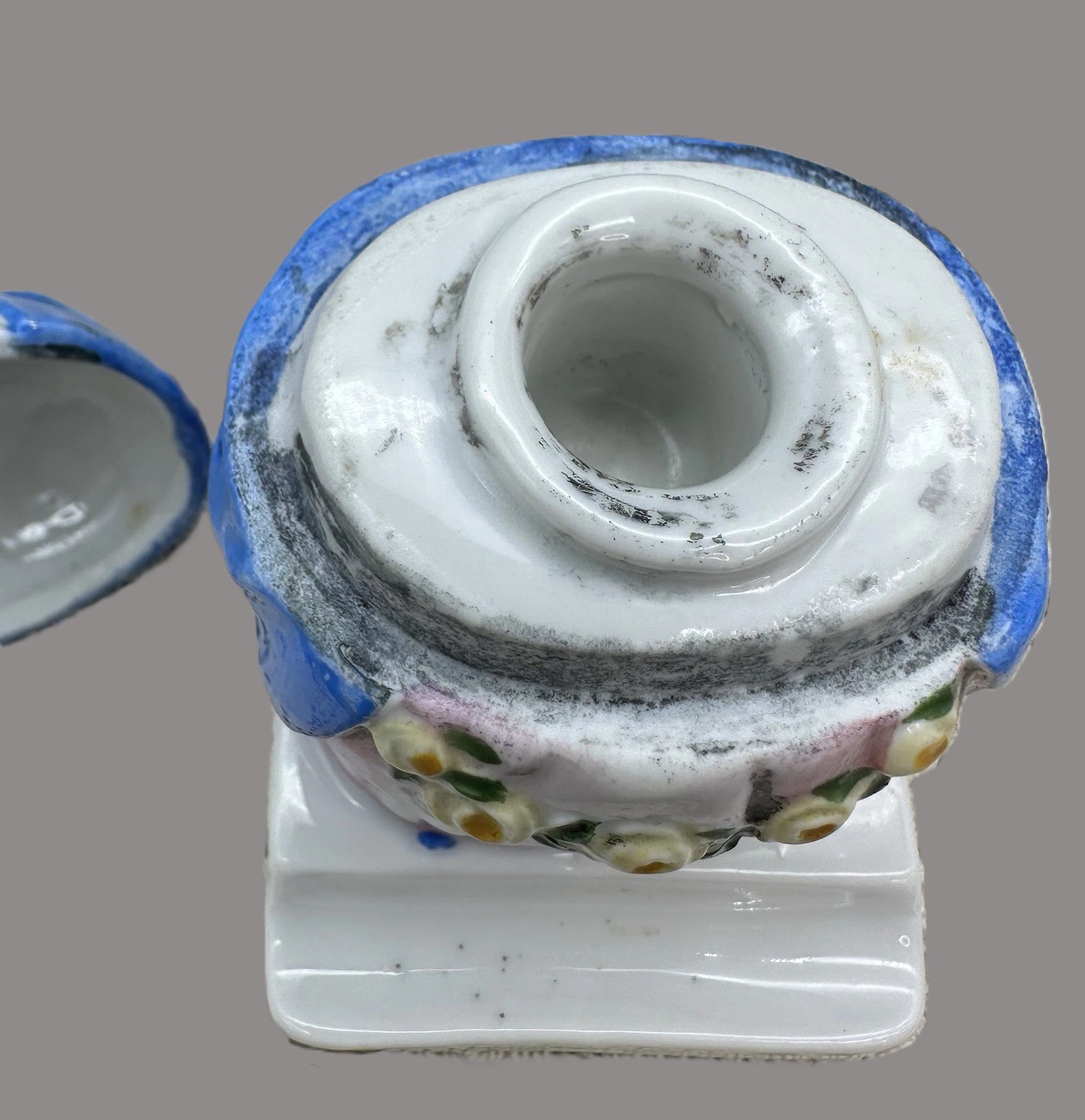
Erphila Ink Girls
| Categories | Ceramics/Porcelain Figural |
| Material | Porcelain |
| Markings | See Narrative |
| Manufacturer | Undetermined |
| Origin | Germany |
| Date or Era | circa 1920 |
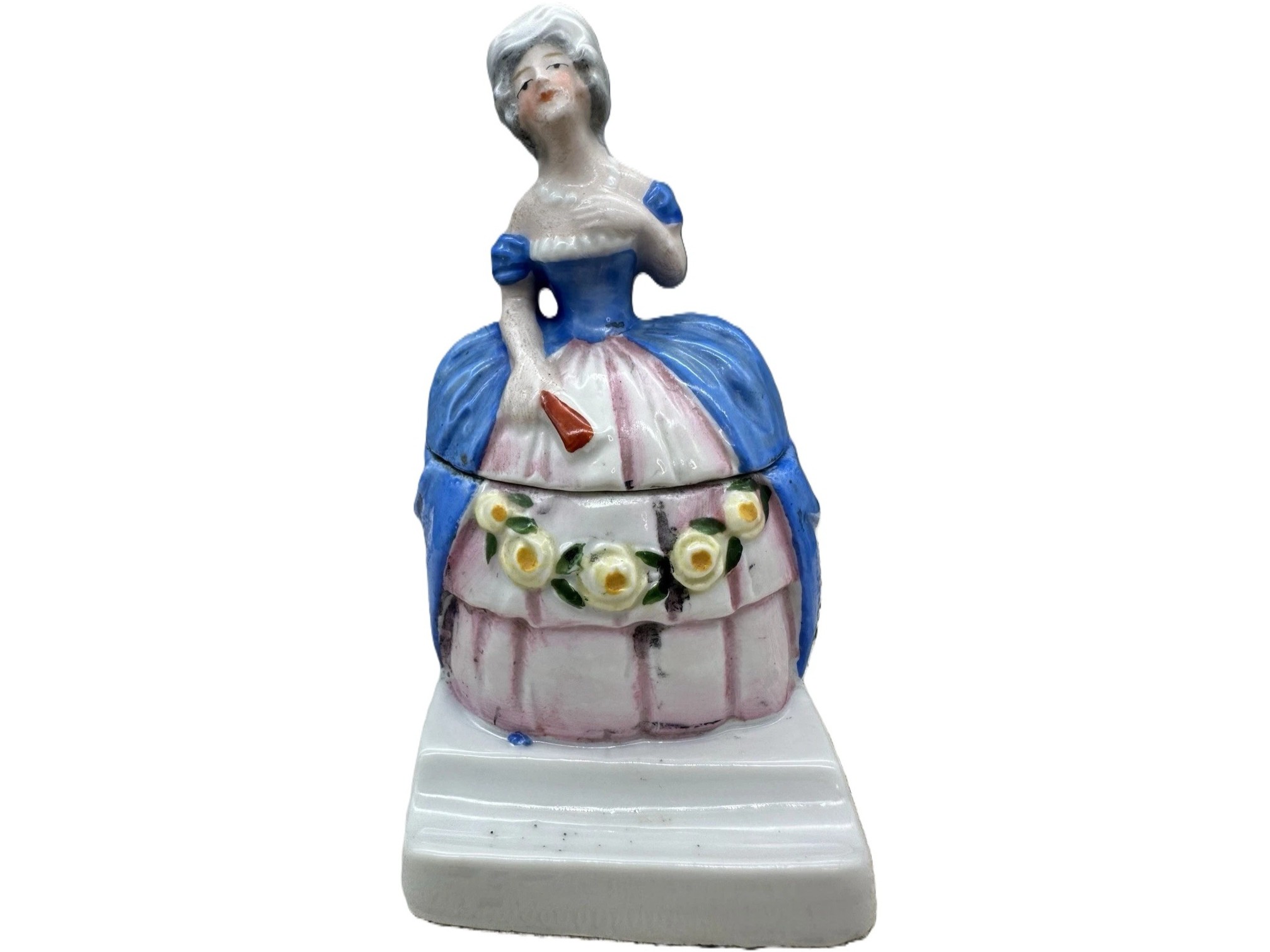
| Measuring | 5 ⅛” x 2 ¾” x 4 ¼” high (Double); 2 ¼” x 2 ¼” x 4 ¼” high (Single) |
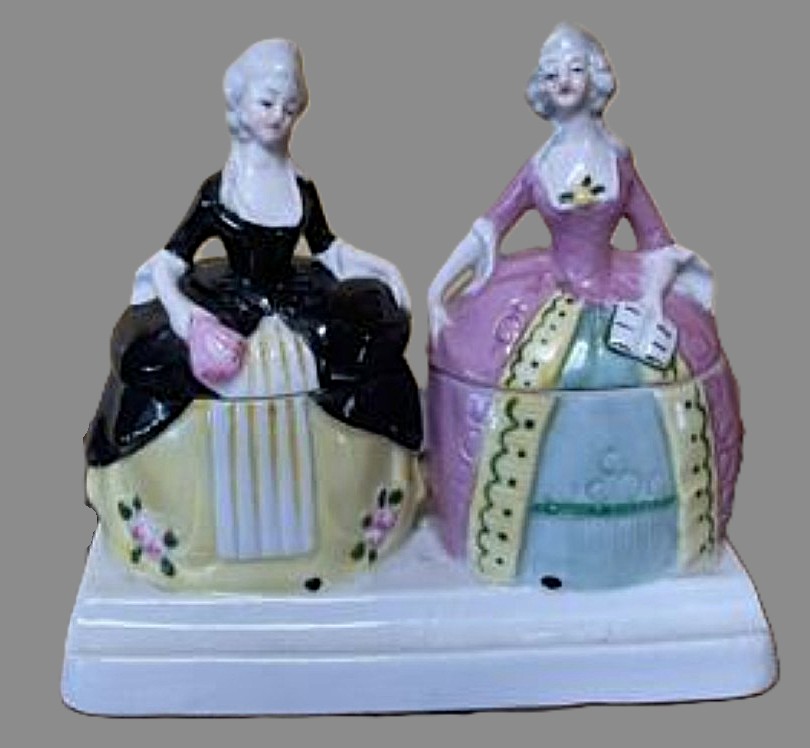
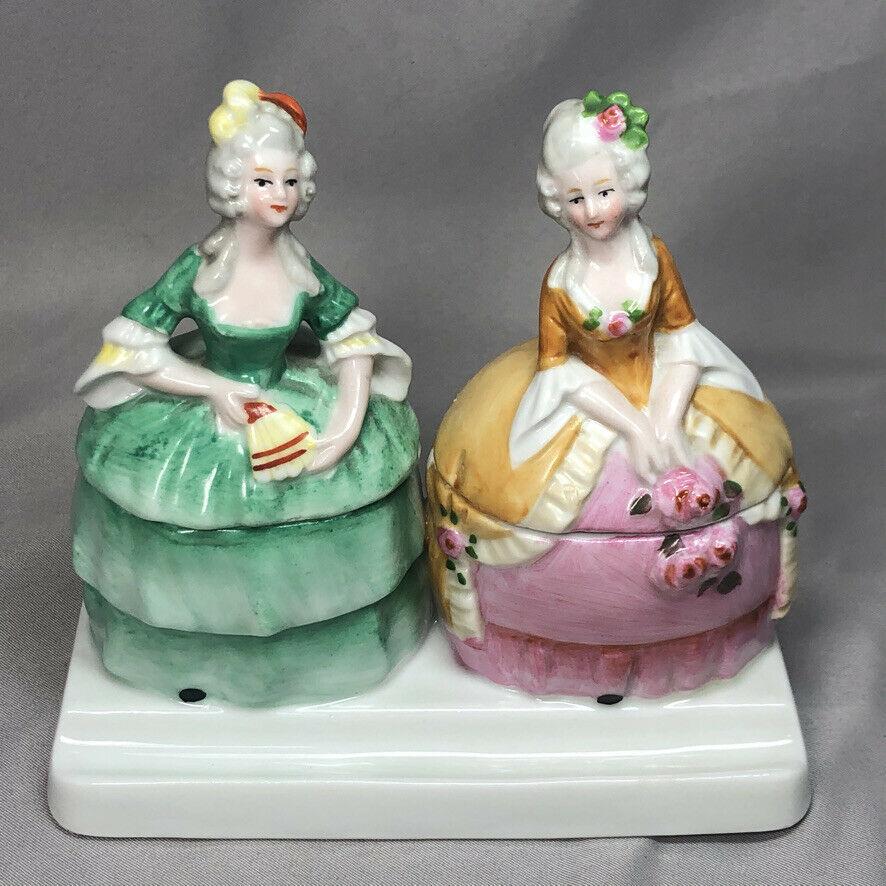
These figural inkstands feature colorfully attired women, dating to the 1920s to 1930s.
- Description of the Double Inkstand
- The Design: The inkstand is mounted on a long, rectangular white porcelain base. Molded into the front edge is a horizontal trough or channel designed to hold dipping pens when not in use.
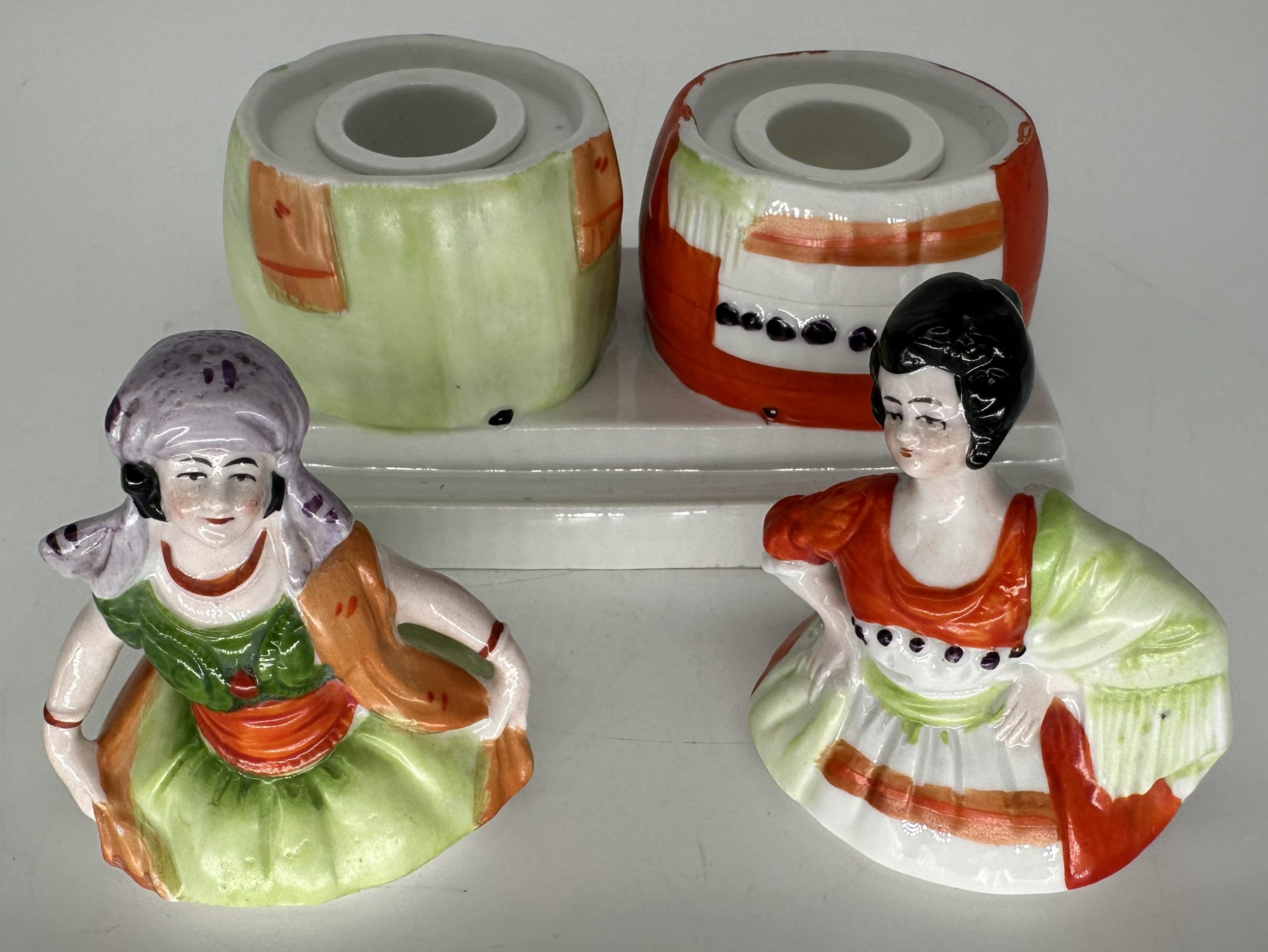
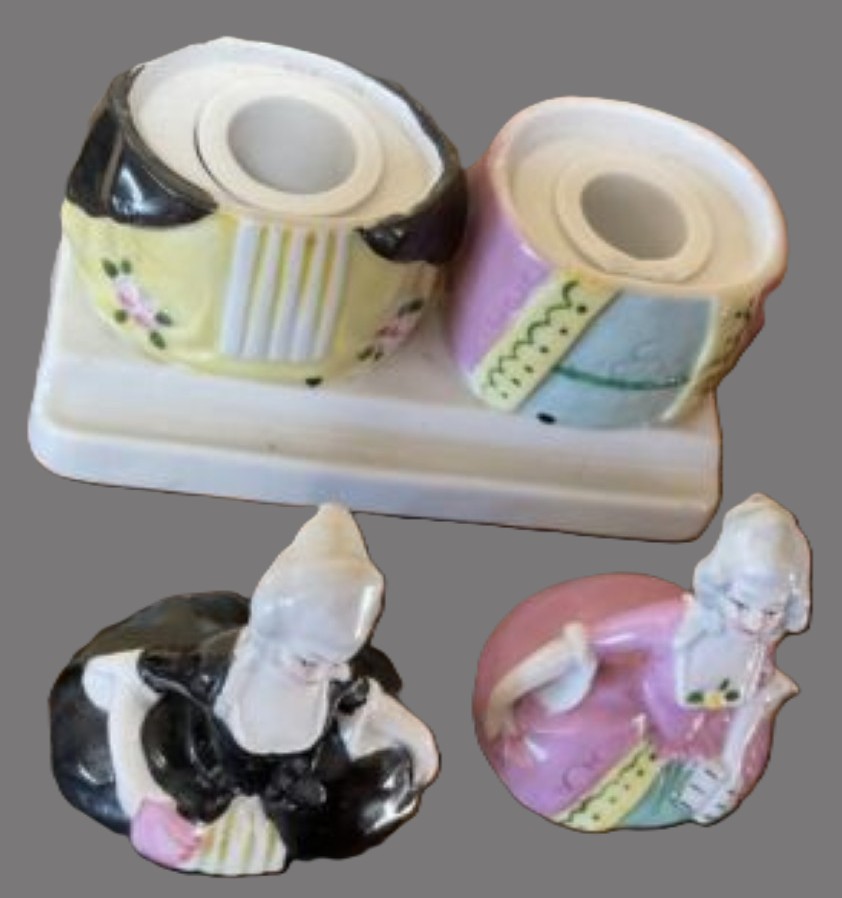
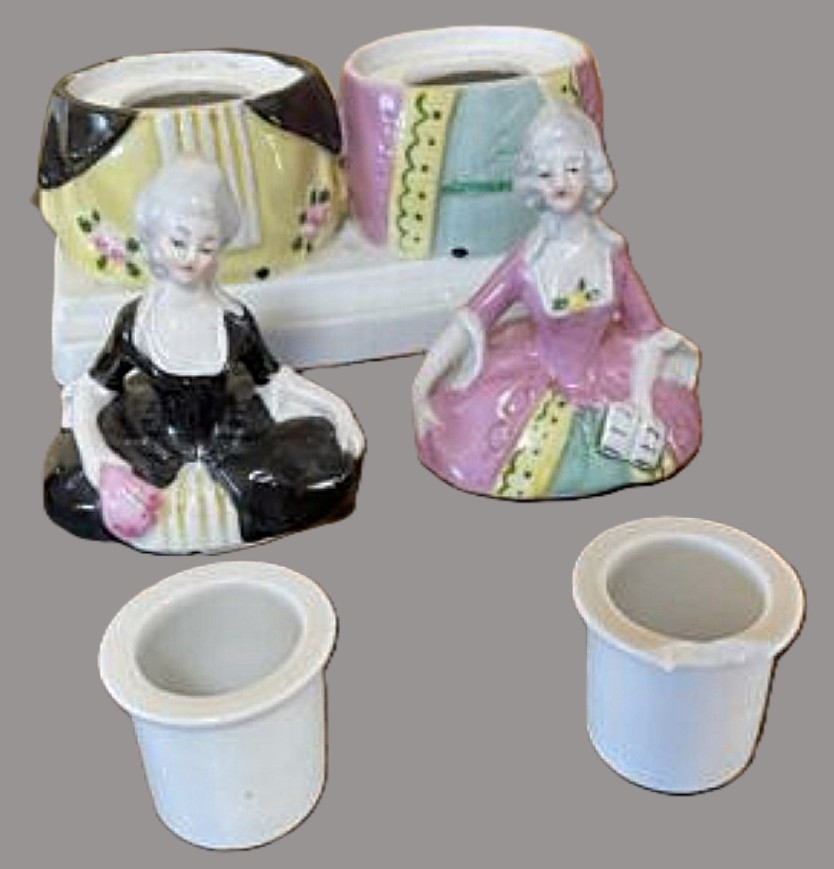
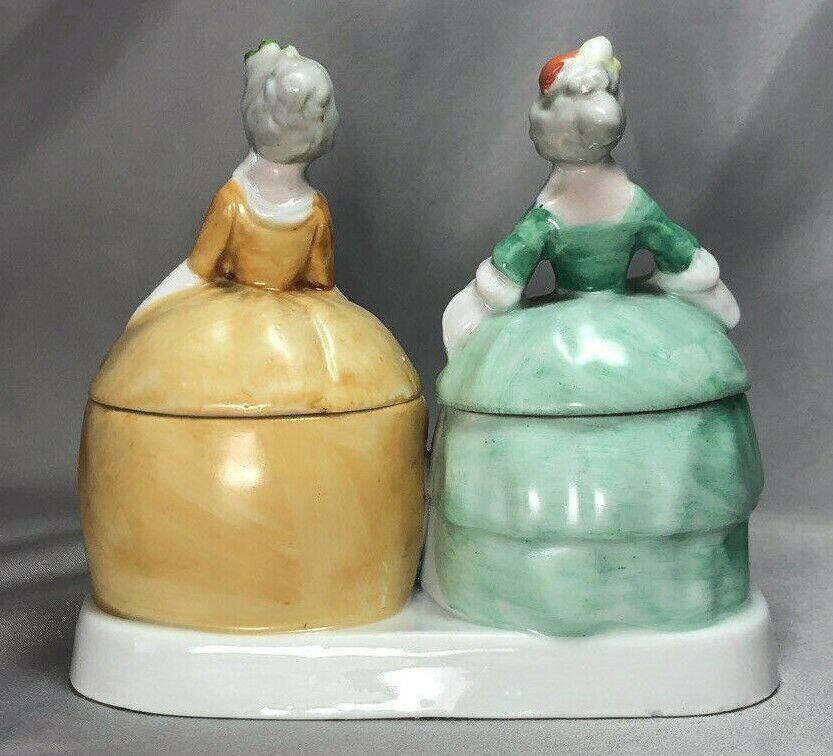
- The Figures & Inkwells: Two hand-painted porcelain female figurines stand side-by-side on the base. Their wide, bulbous, hoop-skirt-like dresses serve as the removable lids and outer housings for the inkwells.
- The figure on the left wears a green bodice, an orange sash, and a purple-tinted head wrap/scarf.
- The figure on the right has black hair styled in a classic 1920s-30s coiffure, wearing a vibrant orange-red blouse and a green-fringed shawl over a patterned apron skirt.
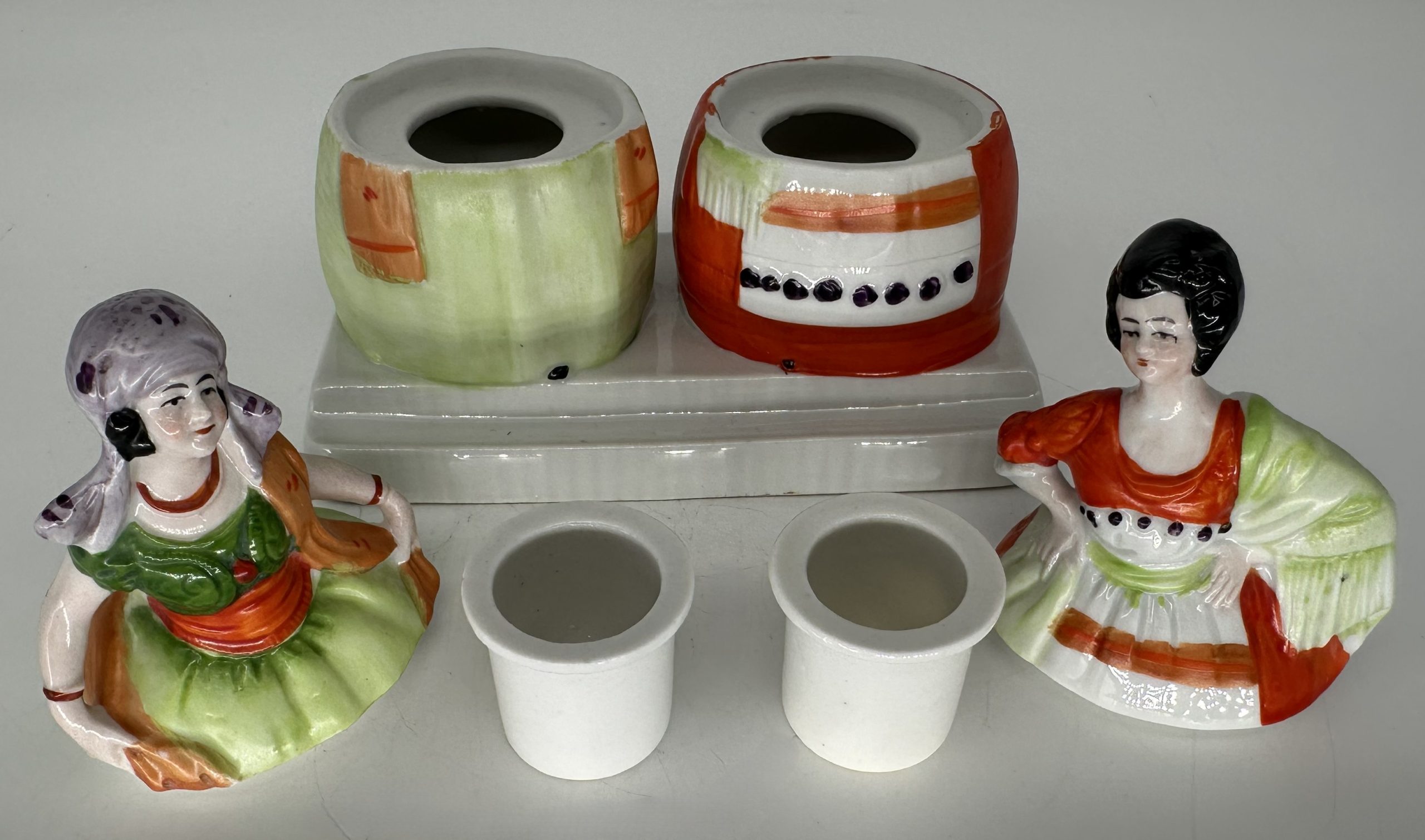
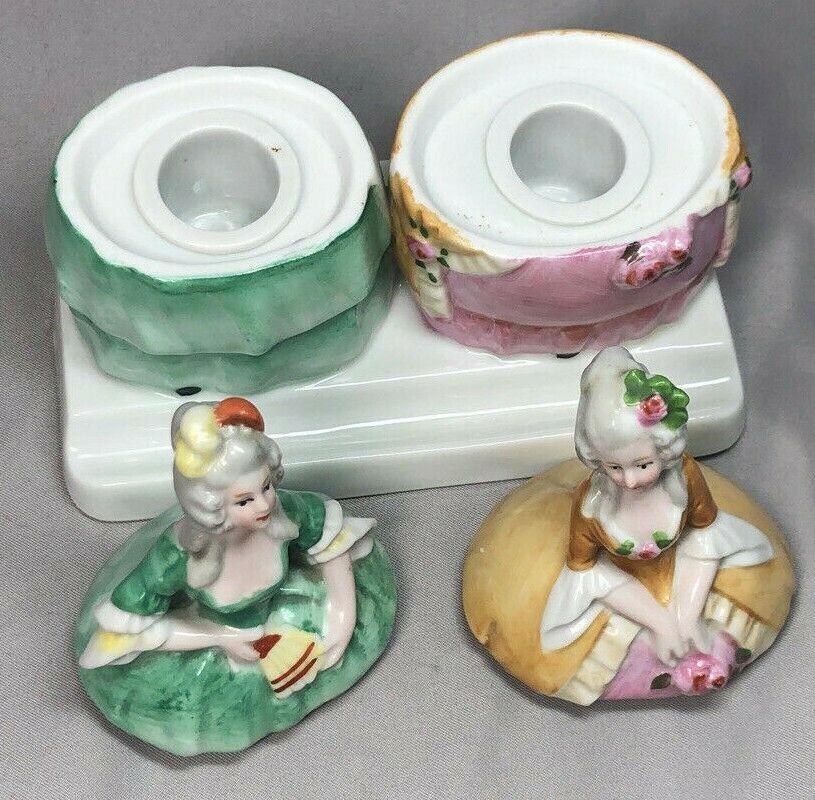
- The Interior: Lifting the figural upper bodies (the lids) reveals dual compartments designed to hold the cylindrical white porcelain ink inserts (wells).
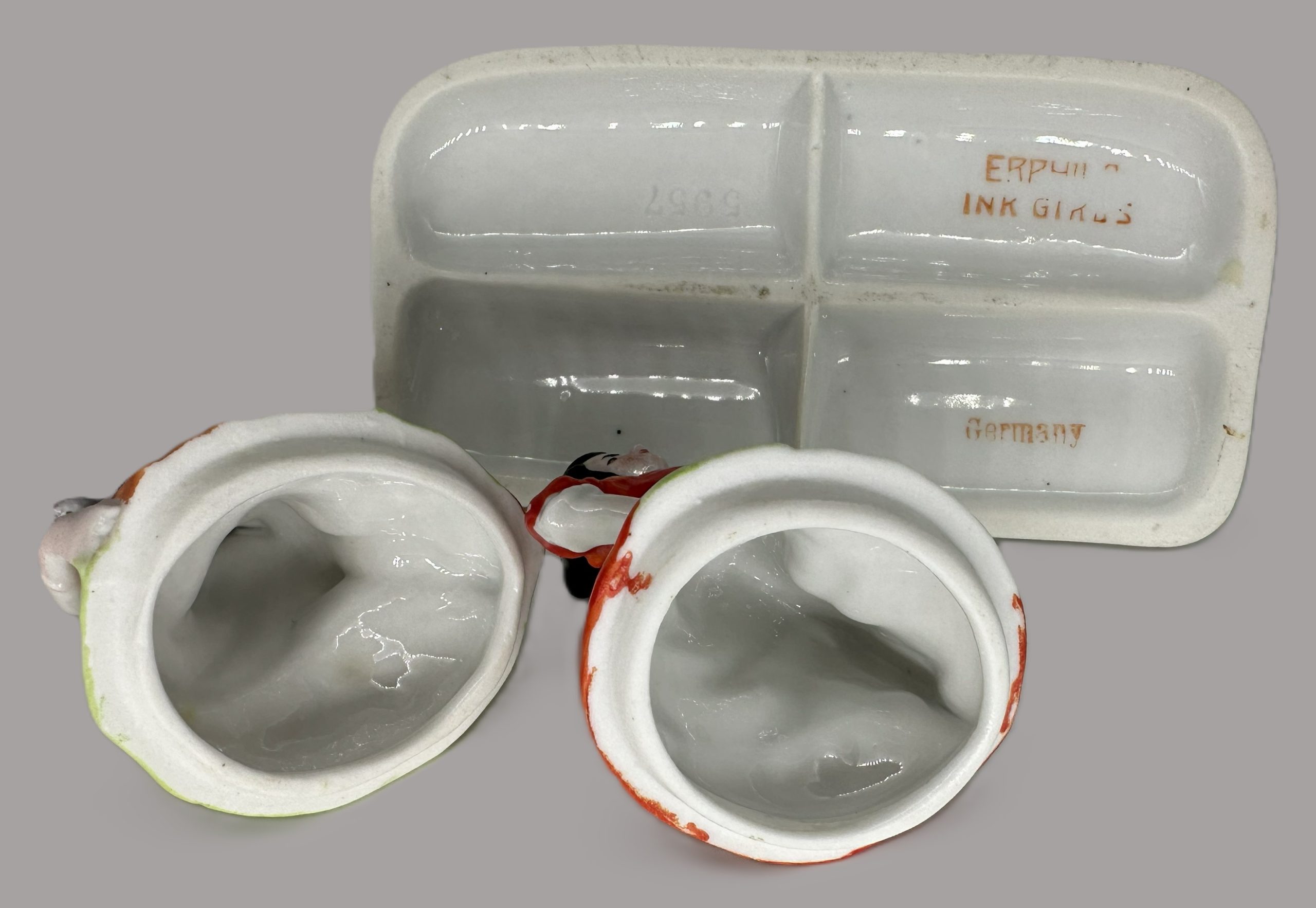
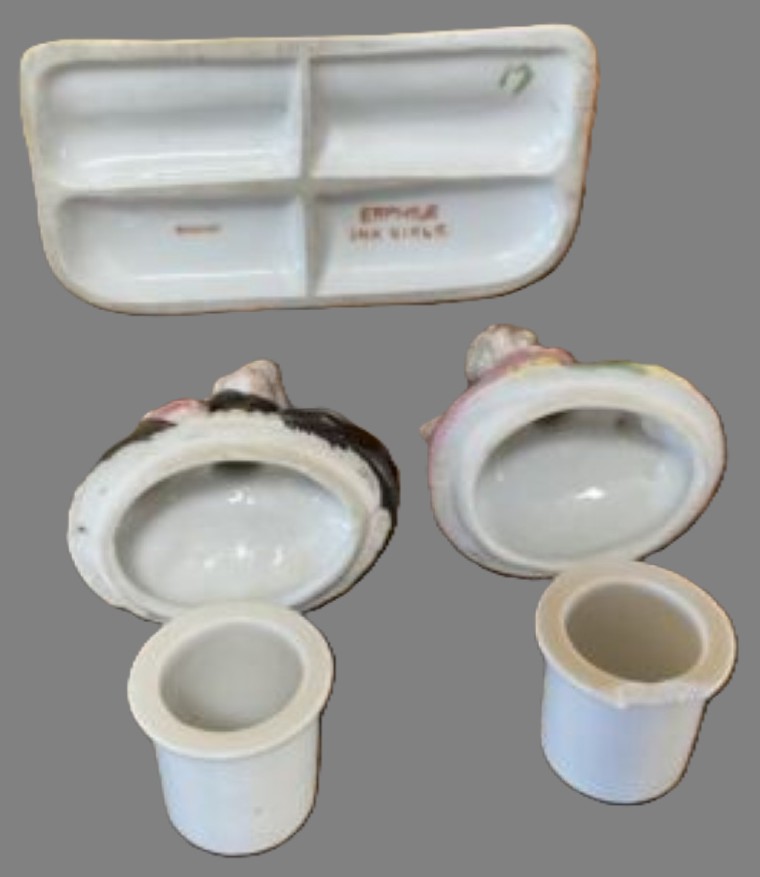
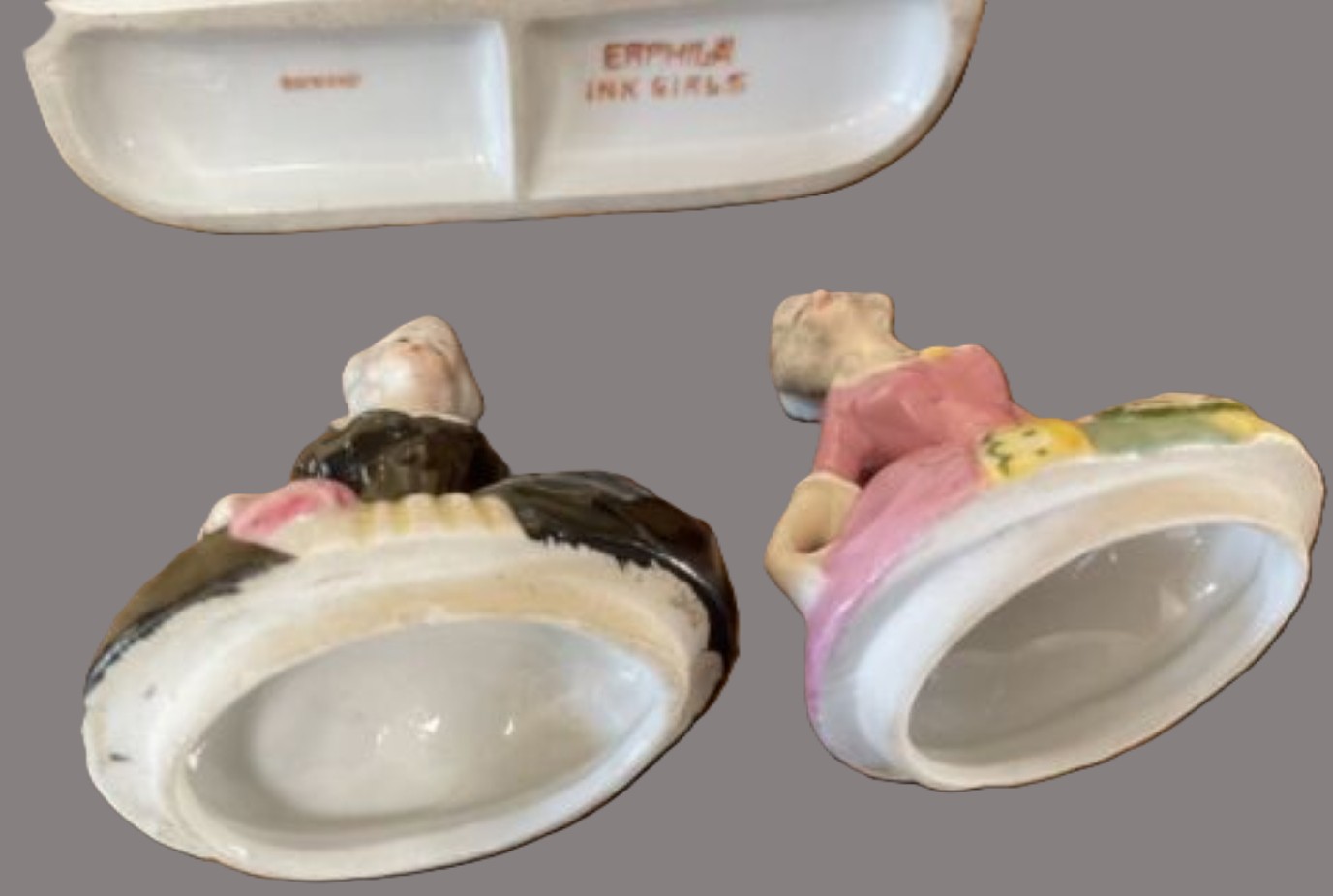
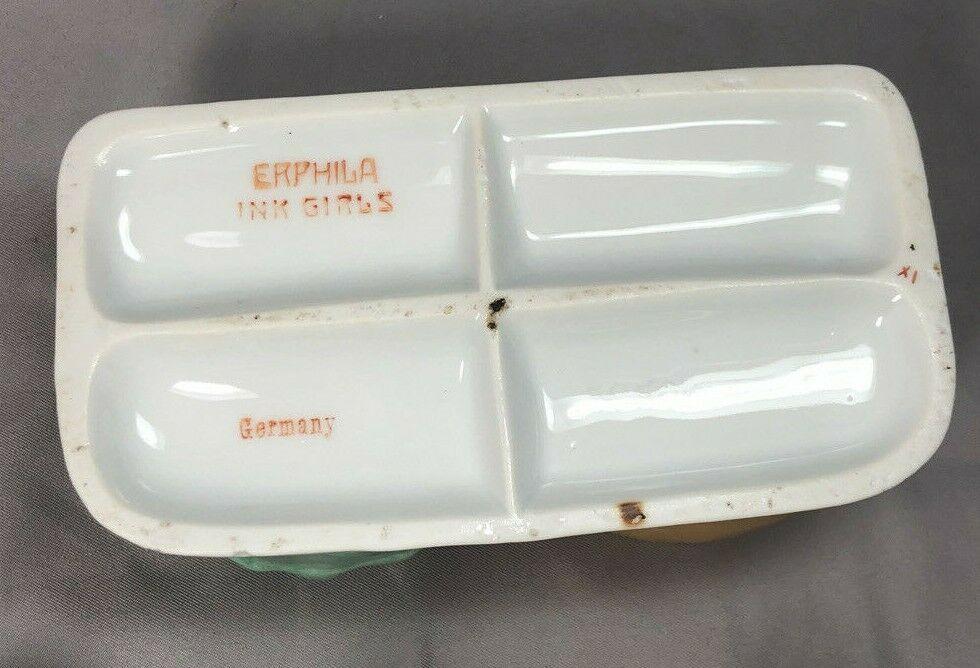
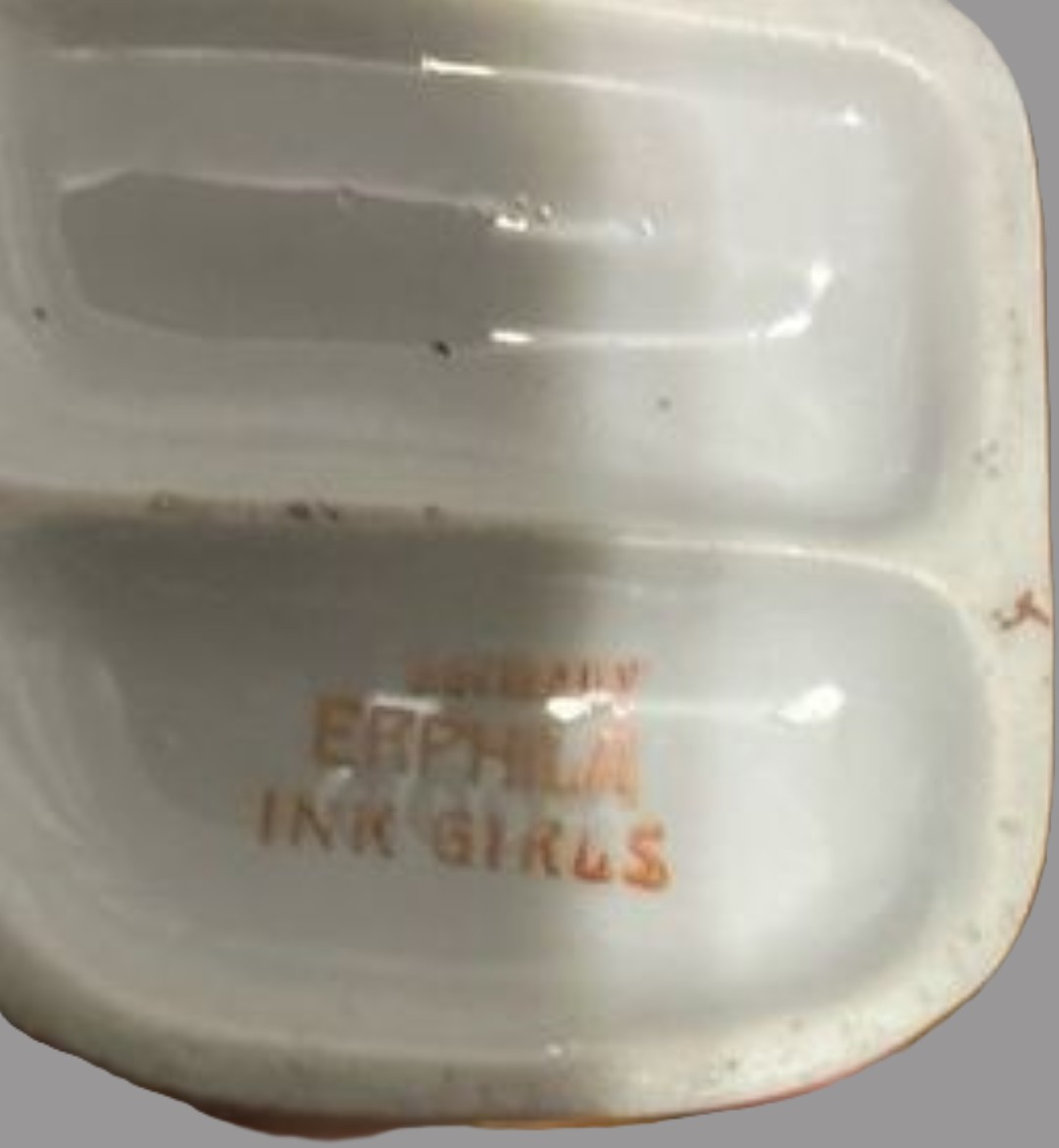
- Markings: The underside is stamped in red or gold lettering with “ERPHILA / INK GIRLS” alongside the country of origin “Germany” and the decorator’s or mold pattern number “5957”.
- Identifying the Maker and the Meaning of “Erphila”
- Is Erphila the manufacturer? Not quite! A common misconception is that Erphila was a European pottery factory. In reality, Erphila was an American importing company based in the United States (specifically Philadelphia, Pennsylvania).
- Origin of the Name: The name “Erphila” is an acronym derived from the names of its founders and the city of its headquarters: Eberling and Reuss Philadelphia (E-R-Phil-A).
- History of the Company: The firm was originally established in the late 19th century (around 1886) by partners including Theodore Eberling and Frederick Reuss, operating as an importer of fine European ceramics, glass, and decorative household goods. Rather than manufacturing pieces themselves, they contracted with prominent and skilled porcelain factories in Germany (such as Goebel, Carl Schumann, and other Bavarian or Thuringian potteries) to create whimsical, high-fashion, or novelty ceramics exclusively for the American market. Under U.S. tariff laws of the era, imported goods were required to clearly stamp their country of origin, which accounts for the “Germany” mark.
- Age and History of the Piece
- Date: These figural desk sets were produced during the interwar period (the 1920s through the 1930s), a golden age for novelty porcelain vanity and desk accessories.
- Cultural Context: During the early 20th century, decorative writing desks (secrétaires) were still commonplace in middle- and upper-class homes, sparking a demand for charming, decorative stationery items. Figural inkstands shaped like people, animals, or storybook characters were popular novelty items. The “Ink Girls” motif captures the vibrant, stylized folk-art and romanticized peasant-dress aesthetics that frequently surfaced in European porcelain design during this period.
Key Common Traits of the Erphila “Ink Girls” Series
- Base & Functionality: Every set features a rectangular, glazed white porcelain base with a built-in horizontal trough or channel along the front edge to rest dipping pens.
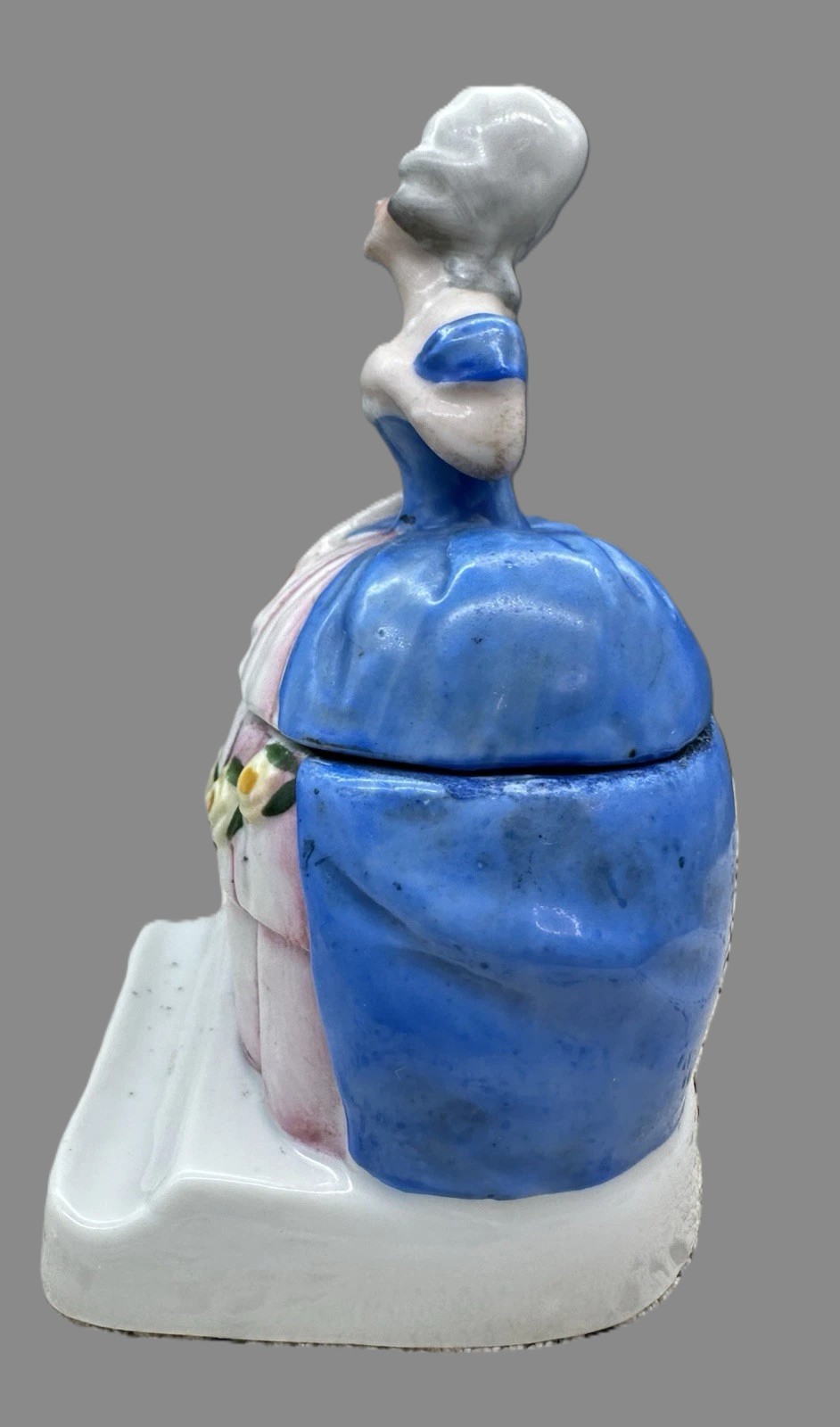
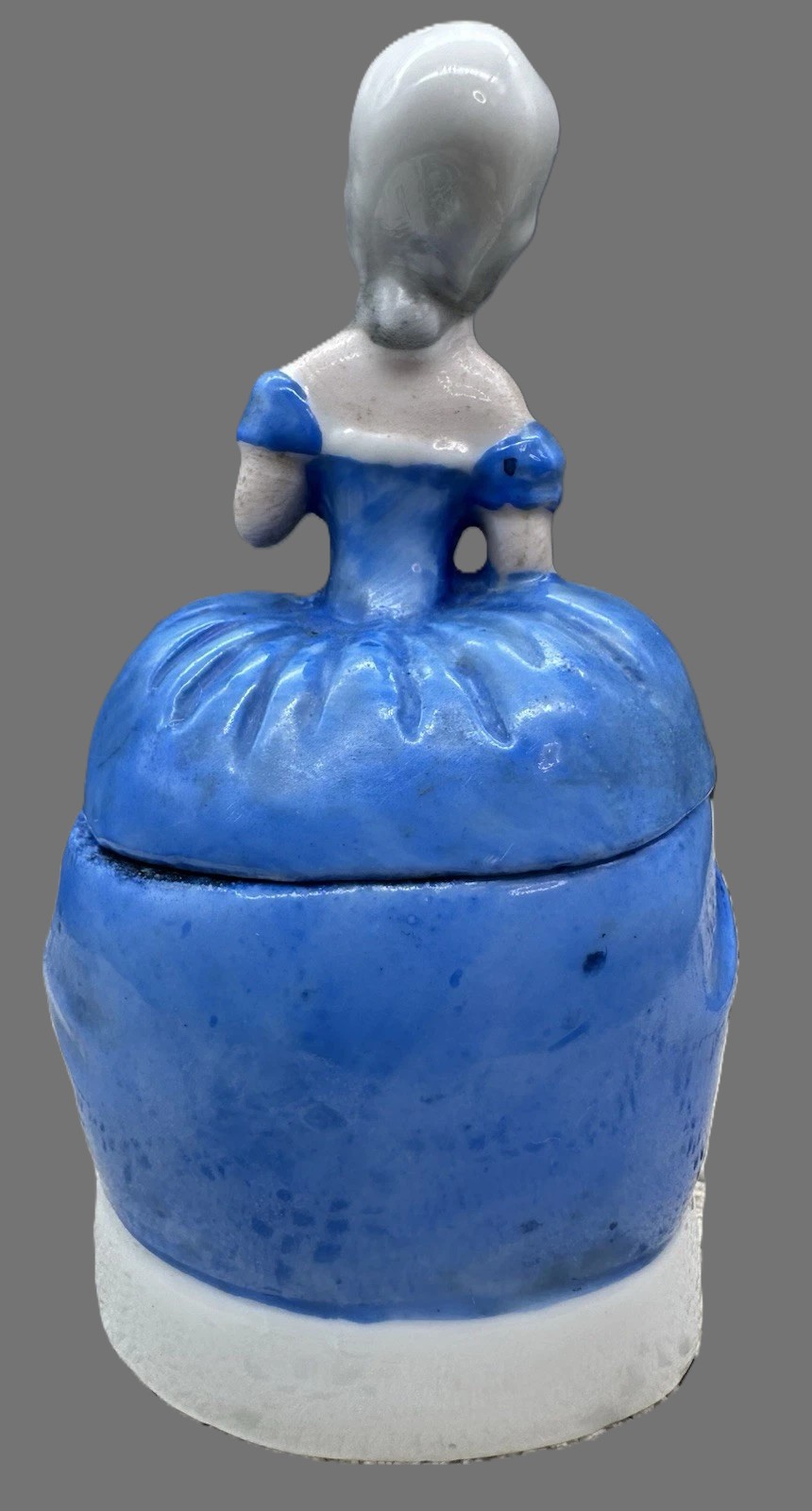
- The “Skirts-as-Inkwells” Mechanism: The lower bulbous skirts of the female figures act as the stationary housings, while their upper bodies, arms, and heads function as removable lids.
- Internal Inserts: Each set accommodates two removable, cylindrical white porcelain ink inserts (pots) with flared rims that sit inside the hollow skirt bases.
- Maker & Origin Markings: The undersides are stamped in characteristic red or gold lettering with “ERPHILA / INK GIRLS” and “Germany”, denoting their status as interwar (1920s–1930s) porcelain imports distributed by Ebeling & Reuss.
Comparison of the Variants
| Variant / Theme | Figure Style & Attire | Color Palettes | Distinguishing Accessories |
| Folk / Gypsy Style (First Set) | Peasant or folk-costumed figures with bobbed hair or headwraps. | Vibrant greens, oranges, purples, and patterned apron skirts. | Traditional regional or gypsy-inspired attire; hoop skirts. |
| Court Lady Style (Set A) (Blue & Pink) | 18th-century Rococo / French court ladies with powdered wigs and pannier skirts. | Brilliant blue, dusty pink, and white. | Holding a miniature handheld fan; skirt adorned with a garland of raised yellow porcelain roses. |
| Court Lady Style (Set B) (Black/Yellow & Pink/Blue) | 18th-century court ladies with elaborate coiffures and pannier gowns. | Contrasting black/yellow bodice and pink/pale blue-green gown. | One figure holds a folded fan; the other is depicted holding a small book or letter. |
| Court Lady Style (Set C) (Green & Amber/Rose) | 18th-century court ladies in tiered, ruffled gowns with powdered wigs. | Sage green paired with rich amber-gold and dusty rose. | Detailed ruffled cuffs and a cascade of raised pink porcelain roses on the skirt. |
Estimated value: $50 for a single; $100 for a double inkstand
Content disclaimer. The information posted is the owner’s best knowledge and may not have been vetted by the SOIC. We welcome comments, corrections, and additions, working to make our website information comprehensive and accurate.
Join the Society of Inkwell Collectors (SOIC) – it’s free!
Founded in 1981 as a non-profit organization,
we are documenting inkwells (and accessories).
We’re here to help and inform!