



English Pewter Standish
| Categories | Pewter / Tin |
| Material | Pewter |
| Markings | See Narrative |
| Manufacturer | Townsend & Compton |
| Origin | England |
| Date or Era | circa 1780 |
| Measuring | 7 ⅞” across; 5 ¾” high |
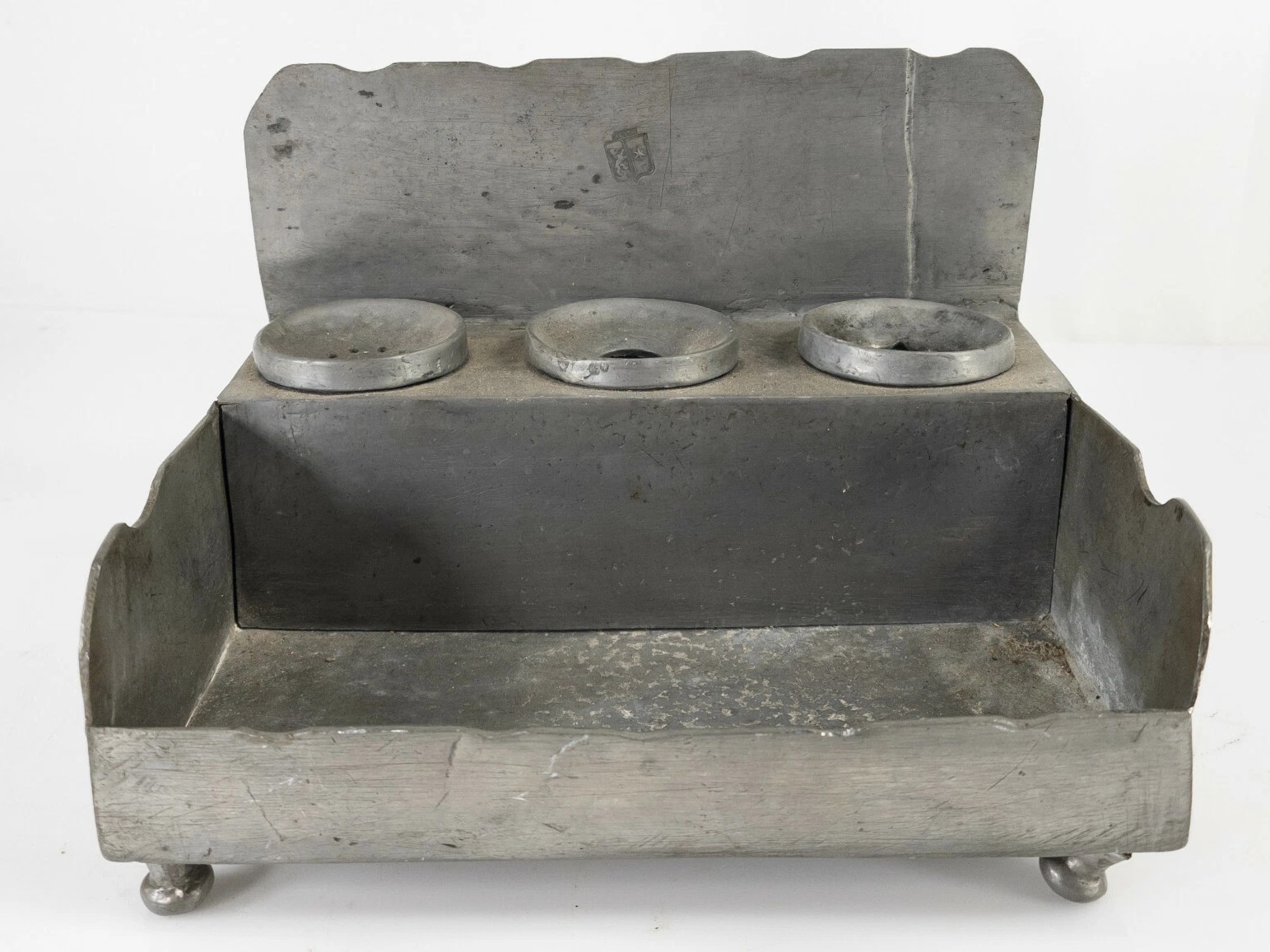
This is a classic English pewter standish, likely dating from the late 18th century (circa 1770–1800).
Identification of the Three Pieces
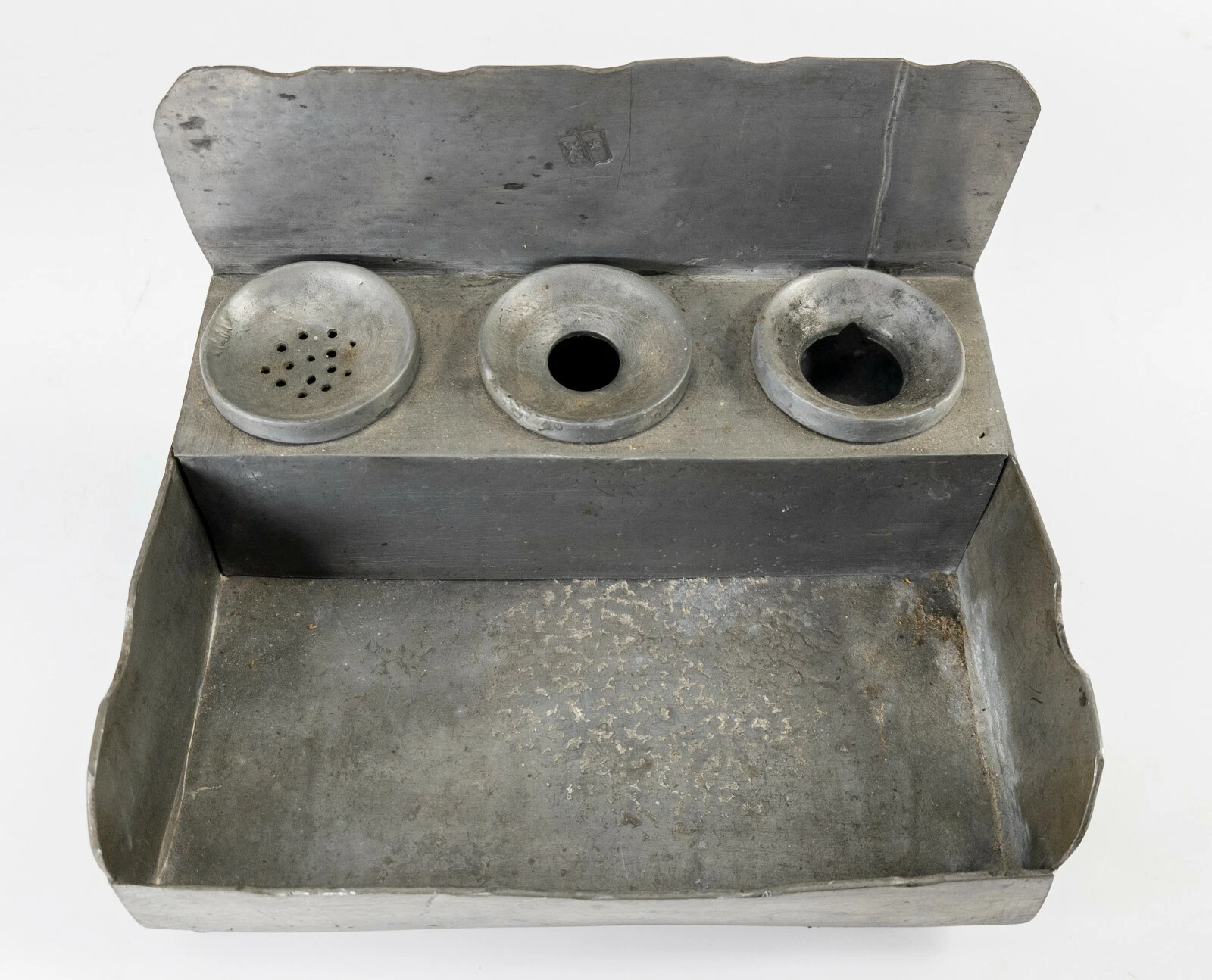
The three circular vessels that sit on the “bench” at the back of the standish are:
- Sander (or Pounce Pot): The piece on the left with many small holes. It was used to sprinkle fine sand or pounce (crushed cuttlefish bone) onto wet ink to dry it quickly.
- Inkwell: The central piece with a single smaller hole.
- Quill Holder
The Hallmark & Maker
The hallmark on the back is a Touchmark or Pseudo-hallmark used to denote the origin and quality of the pewter.
- The Mark: The rectangular label at the top reads “LOND” (a shorthand for London). The shield below is divided vertically (per pale): the left side features a lion rampant and the right side features a six-pointed star (known in heraldry as a mullet).
- Who Made It: This specific combination of the “LOND” label and the lion/star shield is the mark of the prominent London pewterer Susanna Townsend (who worked from roughly 1738 to 1763) or her successors, the firm of Townsend & Compton (Thomas and Richard Compton, active c. 1784–1802).
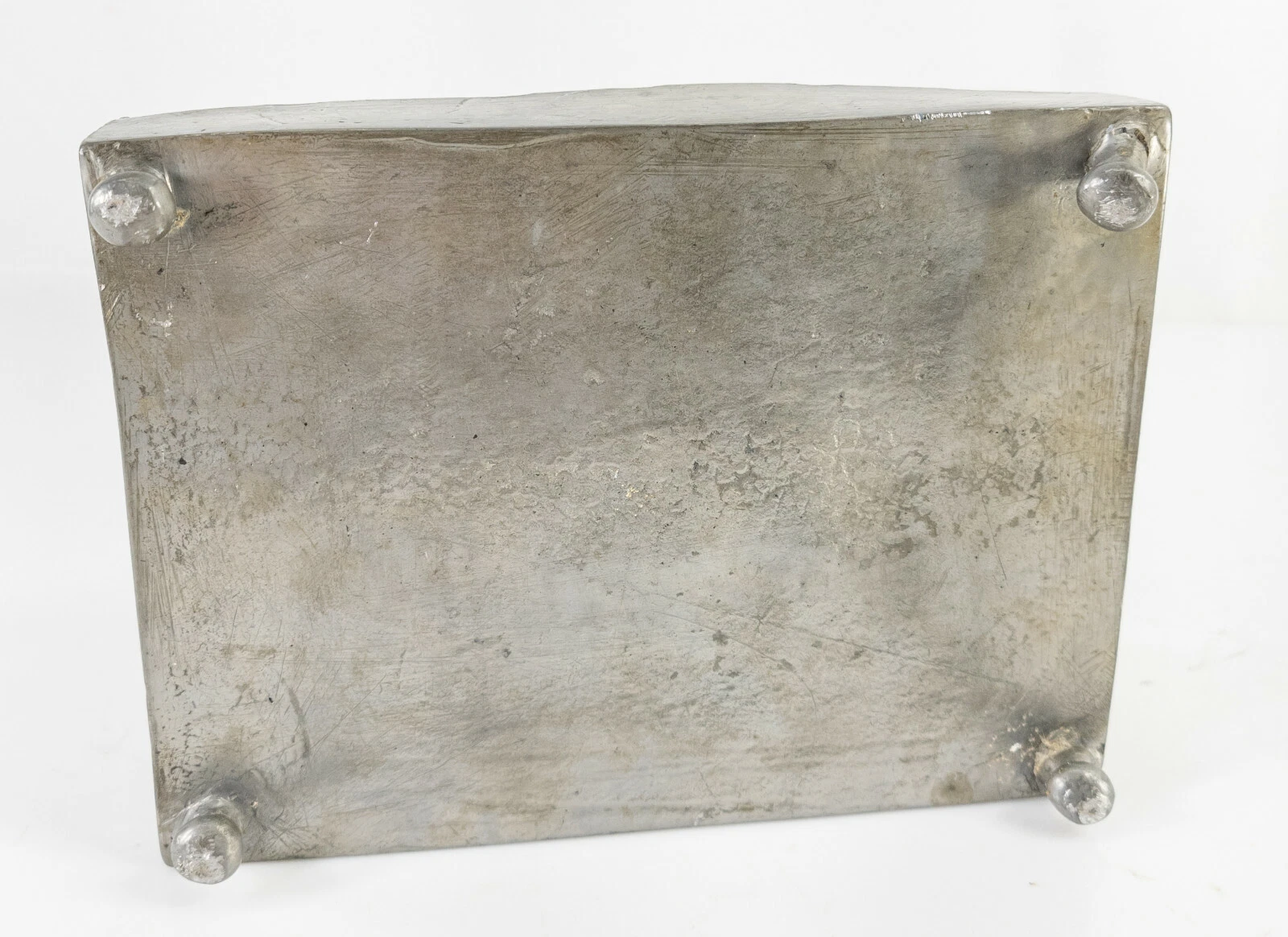
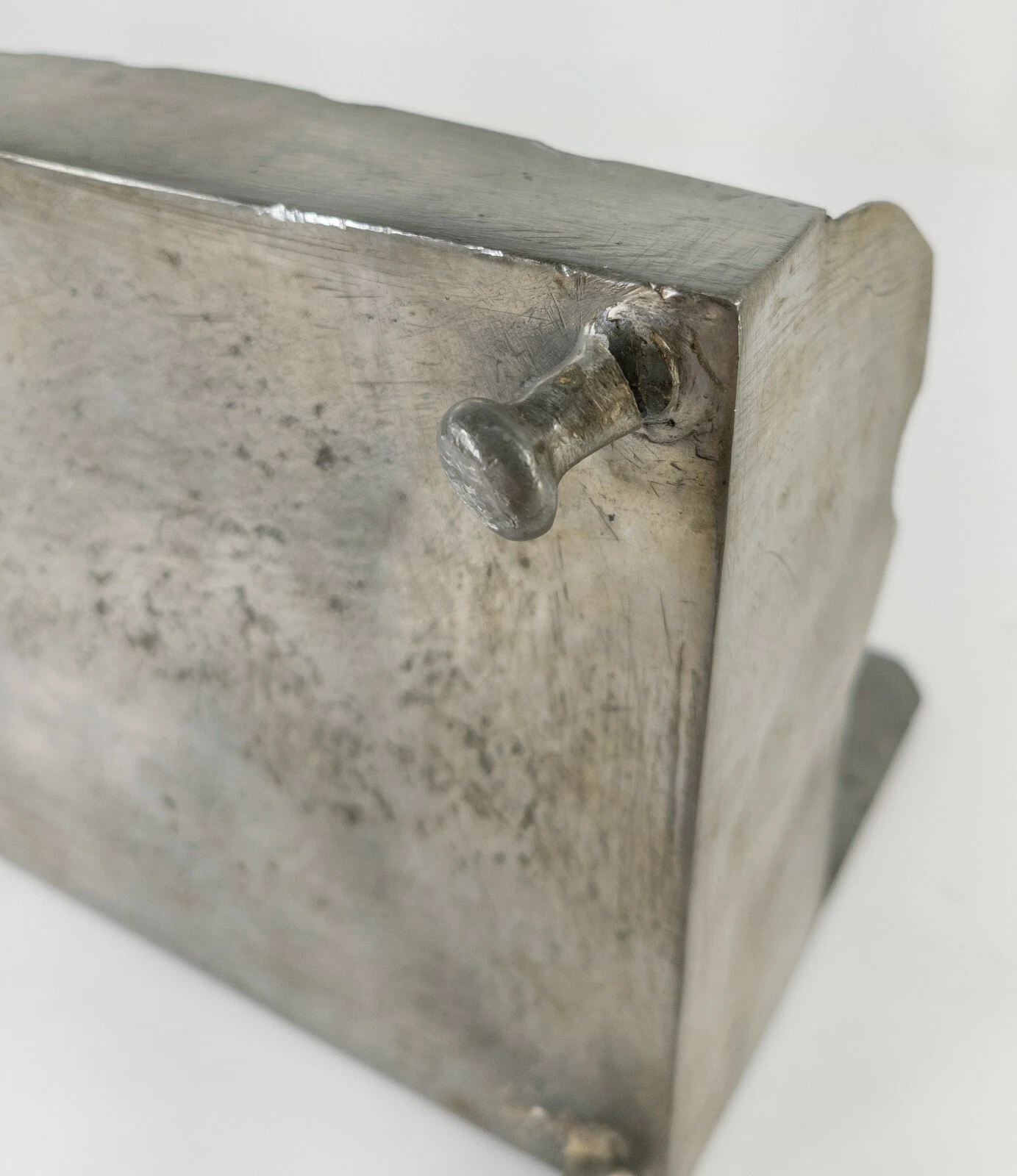
- Where & When: It was made in London, England, most likely between 1770 and 1800. This “bench” style standish with a high, scalloped backplate and bun feet was a popular design produced by the Townsend and Compton workshops for both domestic use and export.
Antique Georgian English Pewter Standish
- Style: “Bench” or “Grating” style with a high scalloped backplate, rectangular pen tray, and four ball or bun feet.
- Components: Set of three matching pots comprising an inkwell, a sander (pounce pot), and a quill holder.
- Maker: Attributed to Townsend & Compton (London).
- Hallmark: “LOND” label over a shield containing a lion rampant and a six-pointed star.
- Period: Circa 1780.
Sold for $190 in January 2026
Content disclaimer. The information posted is the owner’s best knowledge and may not have been vetted by the SOIC. We welcome comments, corrections, and additions, working to make our website information comprehensive and accurate.
Join the Society of Inkwell Collectors (SOIC) – it’s free!
Founded in 1981 as a non-profit organization,
we are documenting inkwells (and accessories).
We’re here to help and inform!