

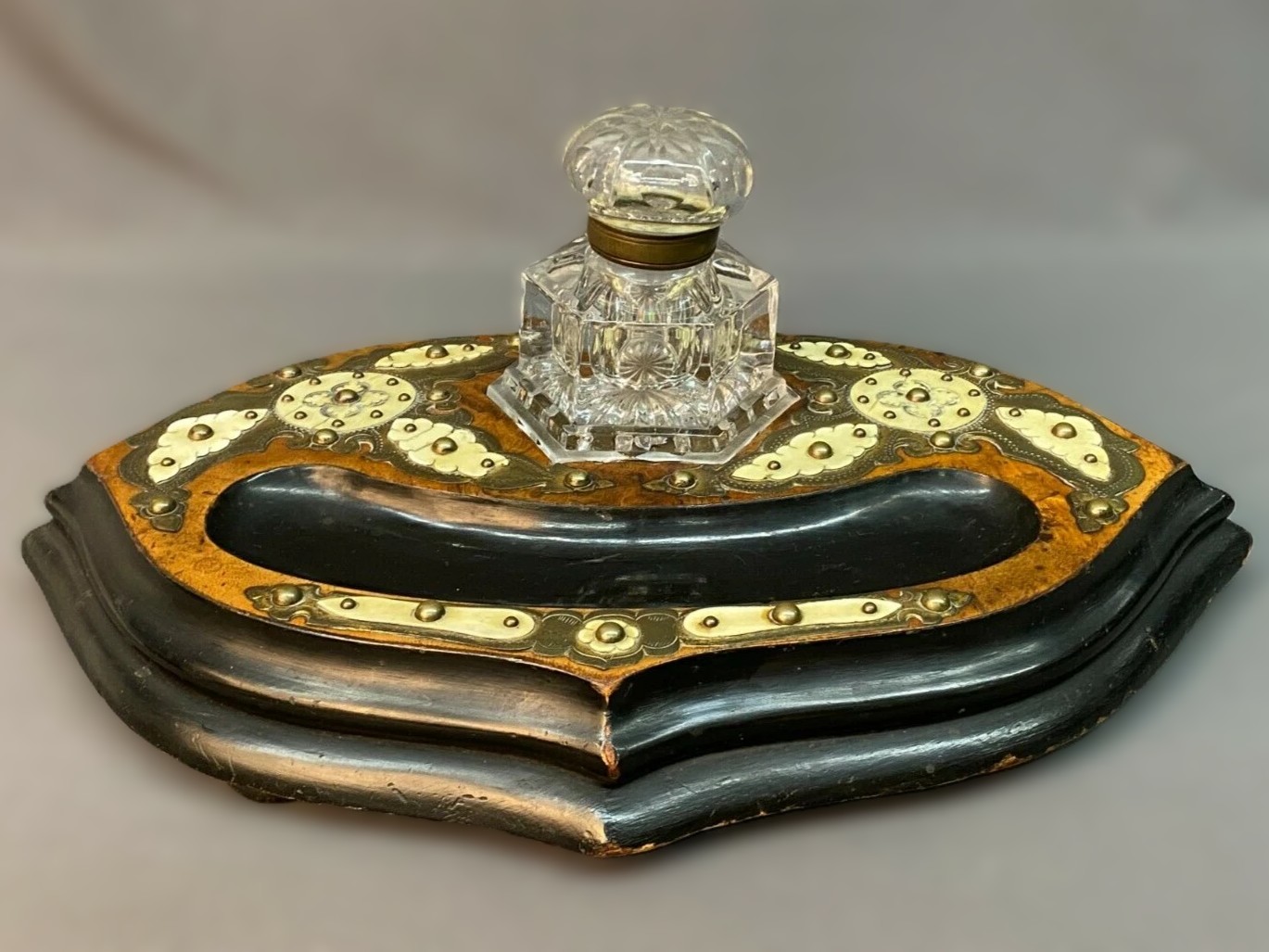



English Brass Strapwork Overlay Inkstand
| Categories | Wood Inkstands |
| Material | Brass, Horn/Bone/Tusk, Wood |
| Markings | Unmarked |
| Manufacturer | Undetermined |
| Origin | England |
| Date or Era | circa 1870 |
| Measuring | 15 ½” x 10 ¾” |
Description
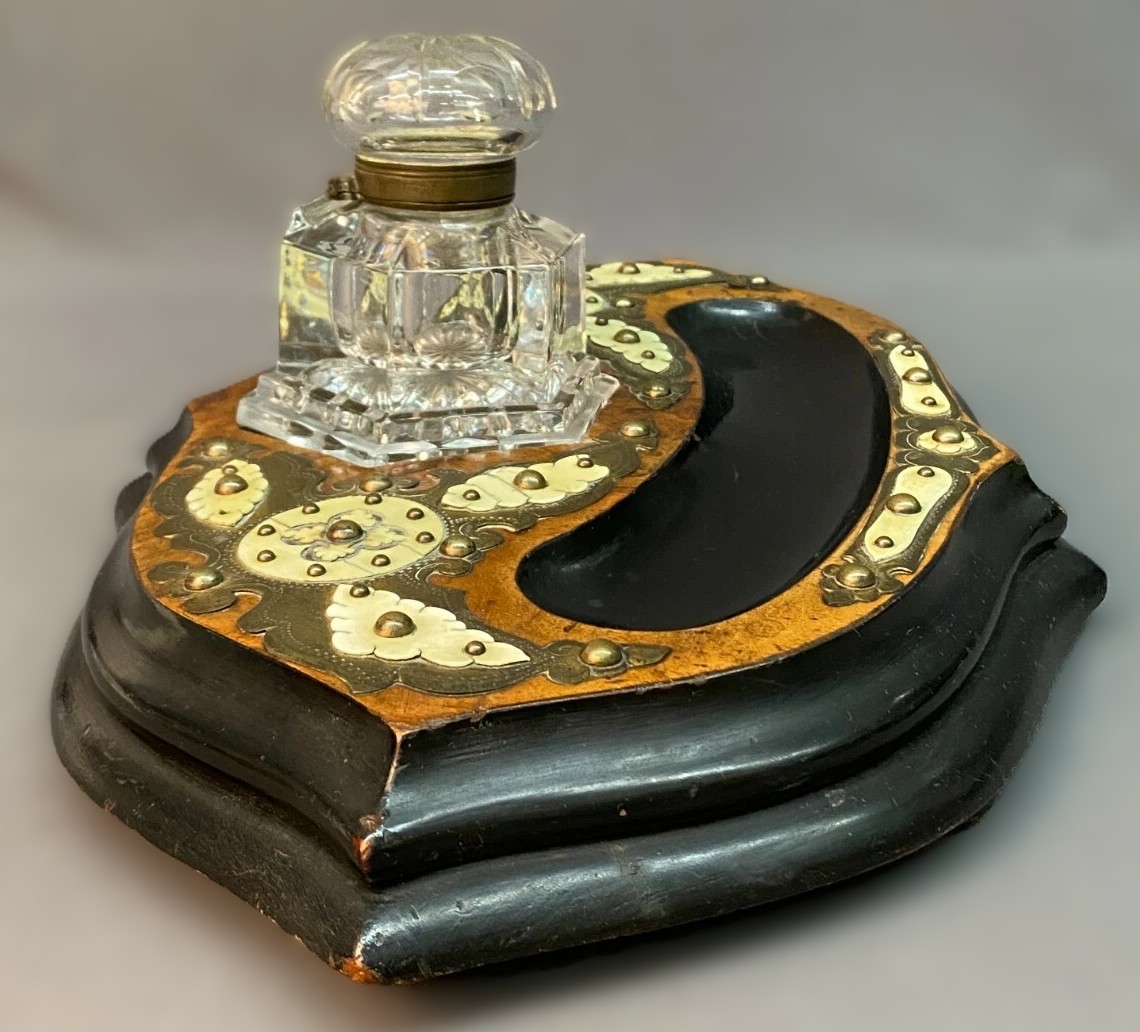
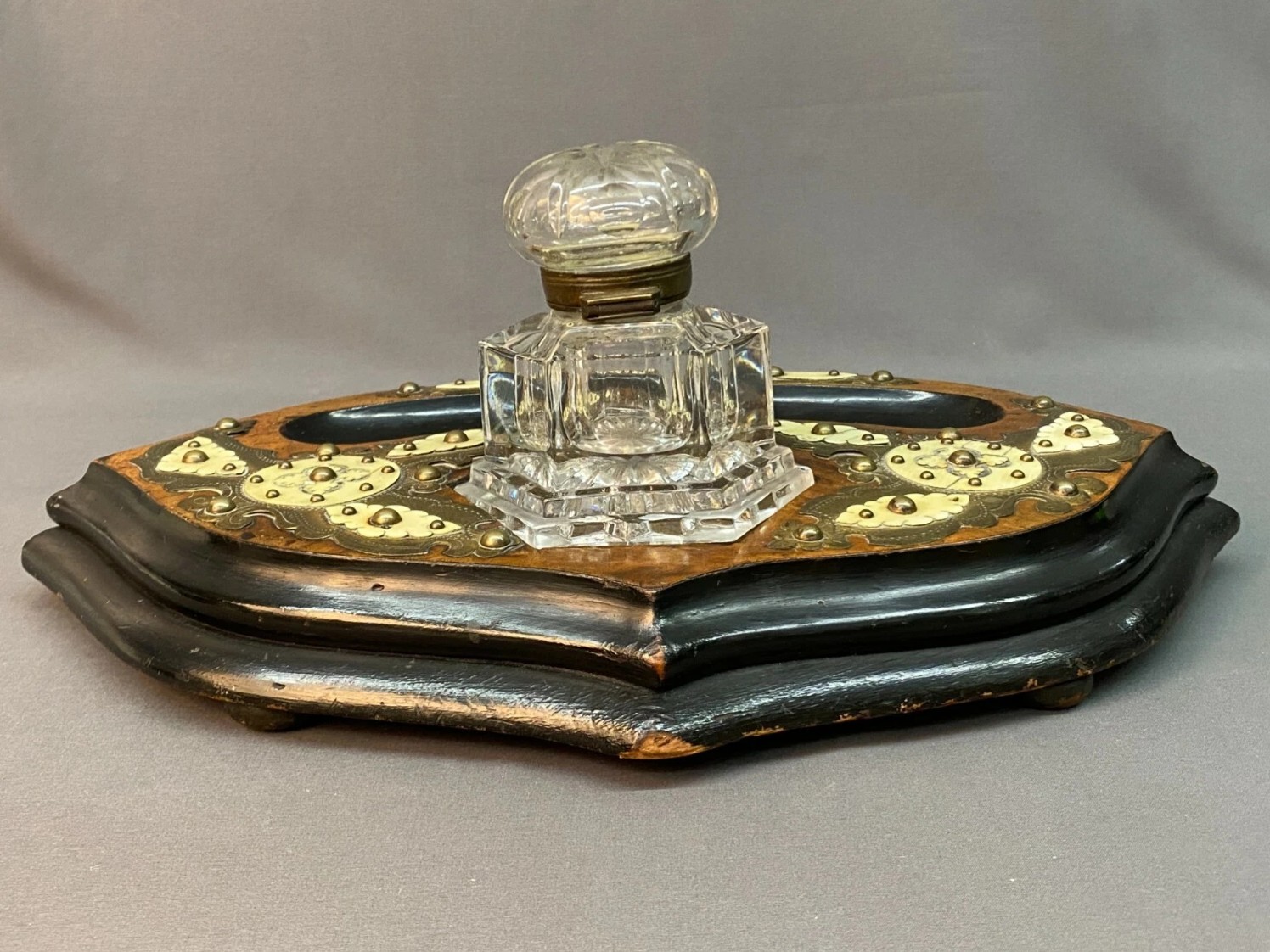
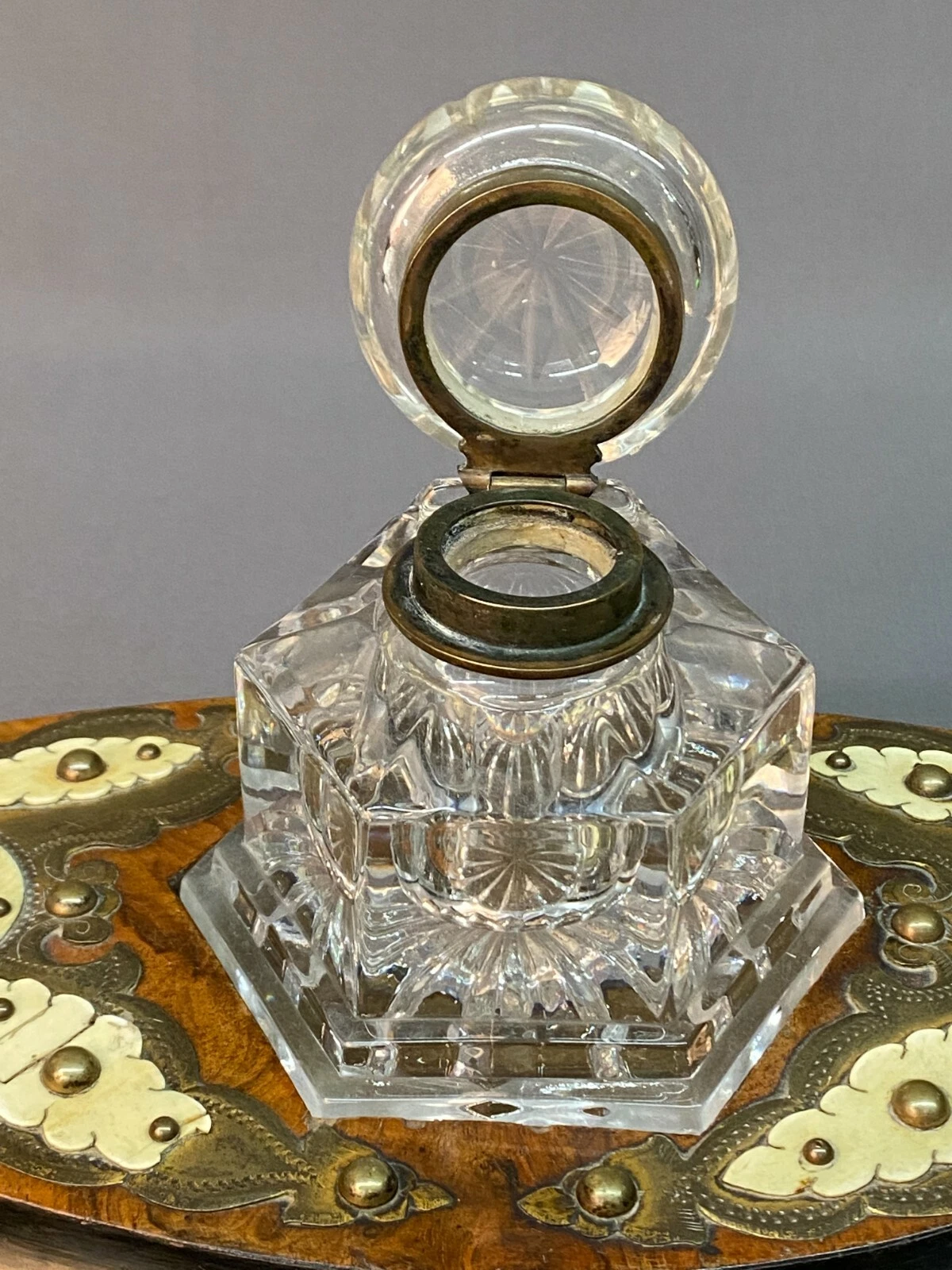
- The Base: The inkstand features an elegant, multi-tiered scalloped oval shape. The outer molded perimeter is ebonized (stained pitch black to mimic exotic ebony), providing a sharp, dramatic contrast to the warm, highly figured burl walnut veneer face on top. A curved pen trough is carved directly into the front portion of the ebonized frame.
- The Inkwell: The center holds a massive, heavy cut crystal hexagonal inkwell. The bottom of the glass features a classic starburst (radiating) cut pattern, while the upper body is designed with bold, faceted panels. It is fitted with a hinged, heavy brass collar and a domed cut-glass lid.
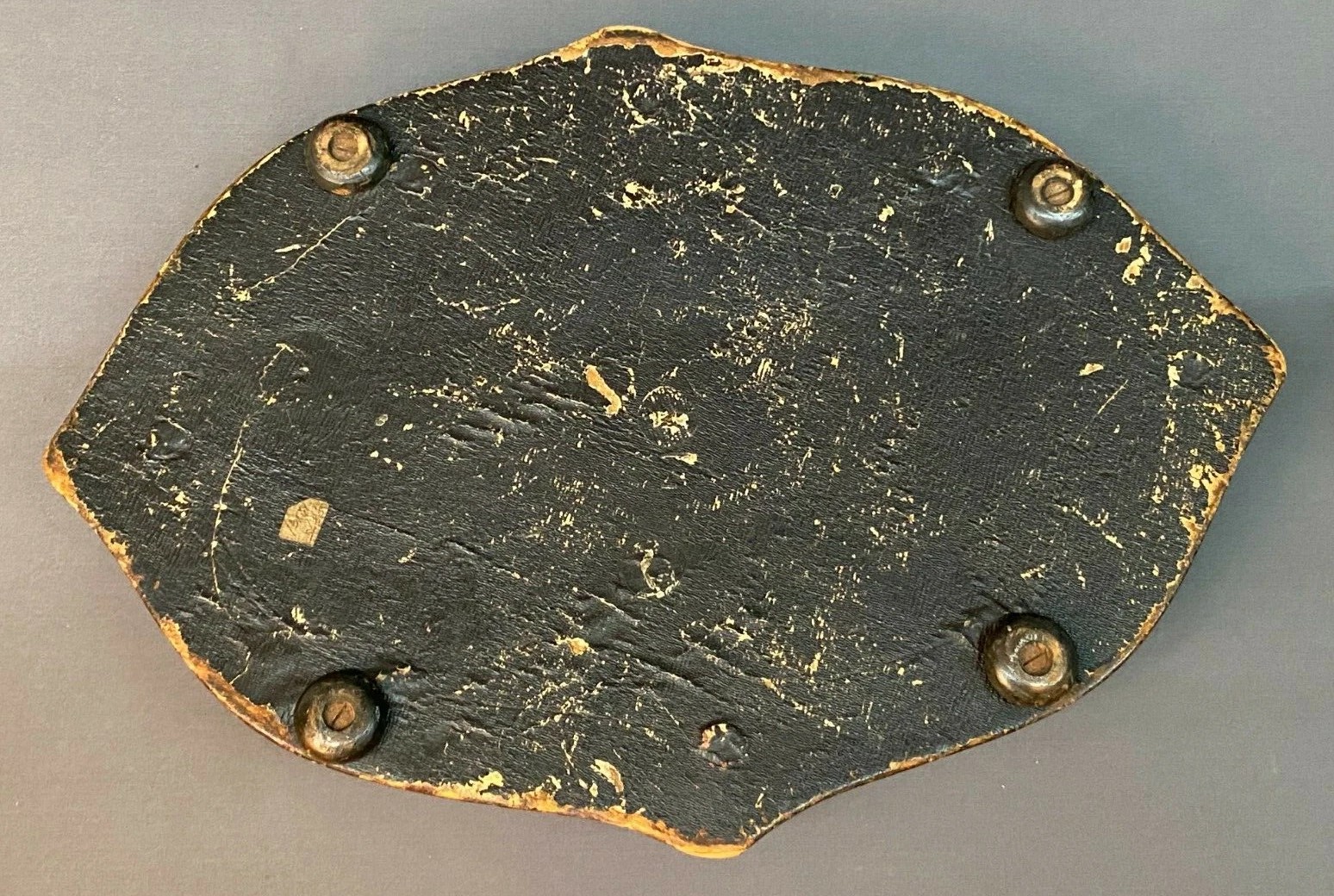
- The Underside: The bottom reveals its authentic period construction, finished in a dark wash with age-appropriate surface wear, minor paint loss, and four original, turned bun feet secured by large historical slotted screws.
The White Decoration: Bone or Ivory?
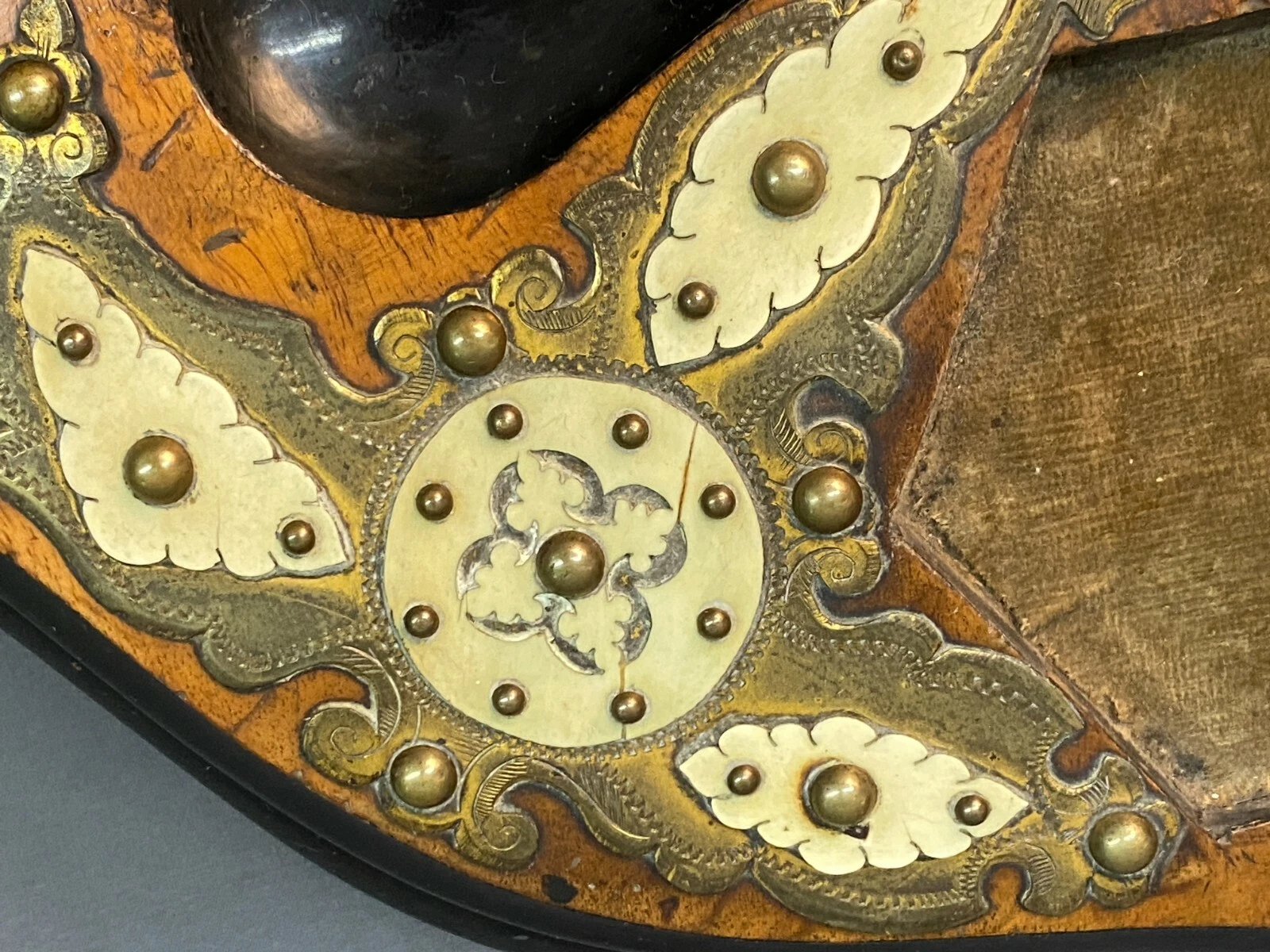
The intricate white panels inlaid directly into the engraved brass strapwork are made from carved bovine bone.
One can see fine, natural hairline aging splits and a subtle grain structure without the highly distinctive, engine-turned cross-hatching pattern (Schreger lines) indicative of genuine elephant ivory. During the Victorian era, dense animal bone was expertly boiled, bleached, flattened, and carved into ornamental shapes for desktop pieces because it was durable and offered an identical luxury aesthetic to ivory at a more accessible production cost.
Date & Manufacturer
- When was it made? Circa 1870–1880. This specific combination of ebonized wood, rich burr veneers, and neo-Gothic or Renaissance Revival brass overlays peaked in popularity during the mid-to-late Victorian era.
- Who made it? The piece is unmarked, which is common for Victorian luxury desk wares of this type. However, high-quality “fancy goods” like this were predominantly manufactured by prominent London and Birmingham workshops—such as George Betjemann & Sons or Howell, James & Co.—and sold through high-end stationers and retailers.
Historical Context & Style
This type of desk accessory belongs to the Victorian Gothic Revival / Eclectic movement.
About Victorian Desk Standishes: In the 19th century, a magnificent inkstand (or “standish”) served as a major status symbol displayed prominently on a library table or desk.
The technique seen here—where highly ornate, hand-fretted, and engraved brass plates enclose contrasting white panels—is often referred to as brass strapwork overlay. This style heavily drew inspiration from medieval architectural motifs and French Boulle marquetry, updating it with sturdy domestic woods and bright brass nail heads to suit the robust, opulent tastes of wealthy Victorian households.
Sold for $500 in May 2026
Content disclaimer. The information posted is the owner’s best knowledge and may not have been vetted by the SOIC. We welcome comments, corrections, and additions, working to make our website information comprehensive and accurate.
Join the Society of Inkwell Collectors (SOIC) – it’s free!
Founded in 1981 as a non-profit organization,
we are documenting inkwells (and accessories).
We’re here to help and inform!