




Emerald Green Crystal Inkwell
| Categories | Glass - Non-figural |
| Material | Glass, Ormolu |
| Markings | Unmarked |
| Manufacturer | Undetermined |
| Origin | France |
| Date or Era | circa 1880 |
| Measuring | 2 ¾” diameter; 3 ½” high |
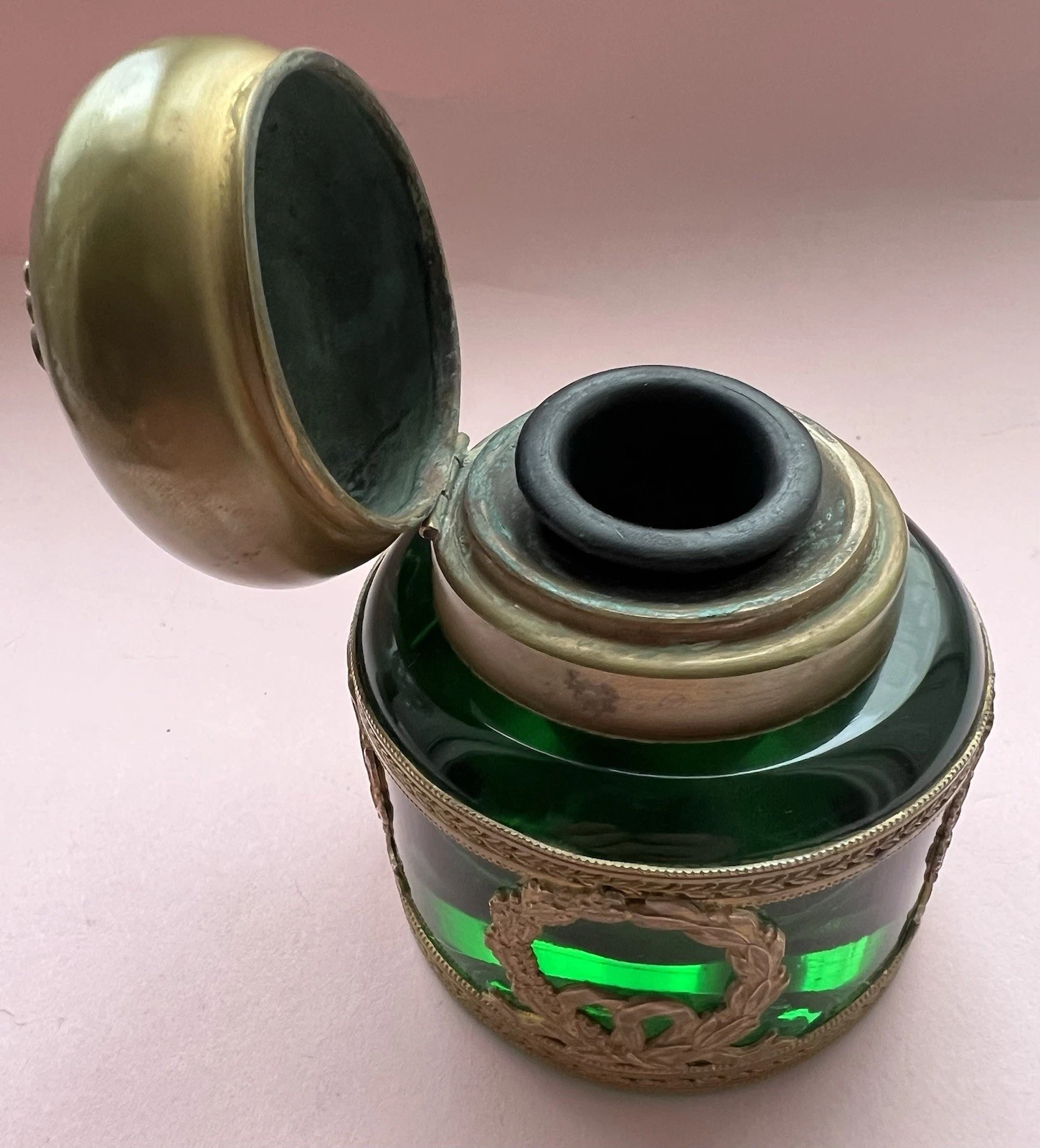
This inkwell, with its combination of deep green glass and high-quality gilt metalwork, was intended for a sophisticated interior, likely dating to the Napoleon III (Second Empire) or Belle Époque period (circa 1870–1890).
Glass
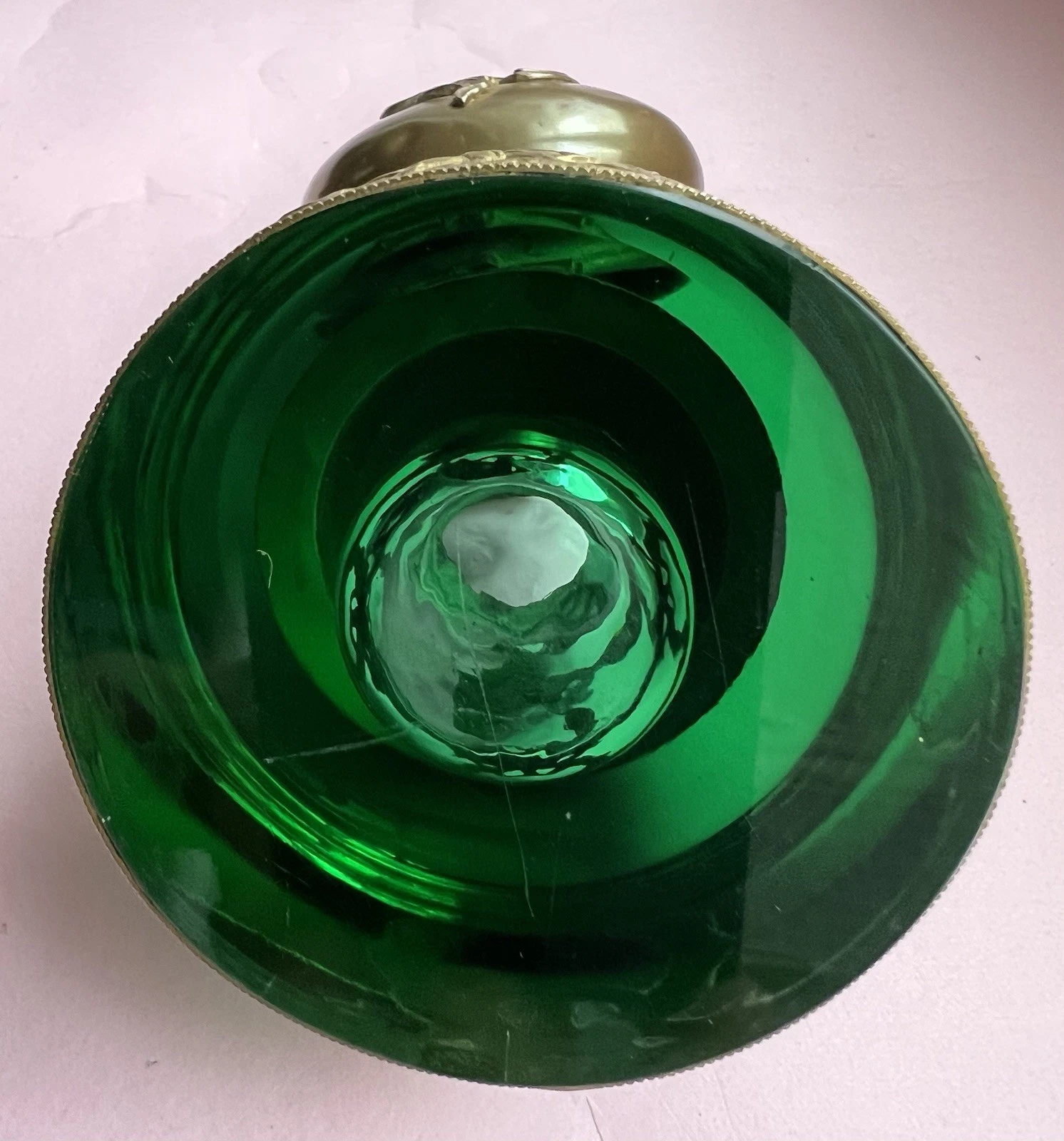
The glass is a rich emerald green, often referred to in antique circles as “Empire Green.” Given the clarity, the deep saturation of color, and the weight suggested by the polished pontil mark on the base, this is crystal.
French glassworks like Baccarat or Saint-Louis were famous for this specific “Malachite” or emerald hue.
The Gilt Bronze (Ormolu) Appointments
The Lid and Figure
The lid features a high-relief appliqué of a winged figure, likely a Psyche or a Cupid/Eros.
- The Figure: The figure is depicted in a graceful, contorted pose, seated upon a stylised shell or foliate base. The flowing fabric and feathered wings are characteristic of the Neoclassical revival style popular in France.
- Significance: In the 19th century, such figures often symbolized “Inspiration” or “The Soul” (the Greek meaning of Psyche). For an inkwell, this represents the creative spirit required for writing.
The Laurel Wreaths
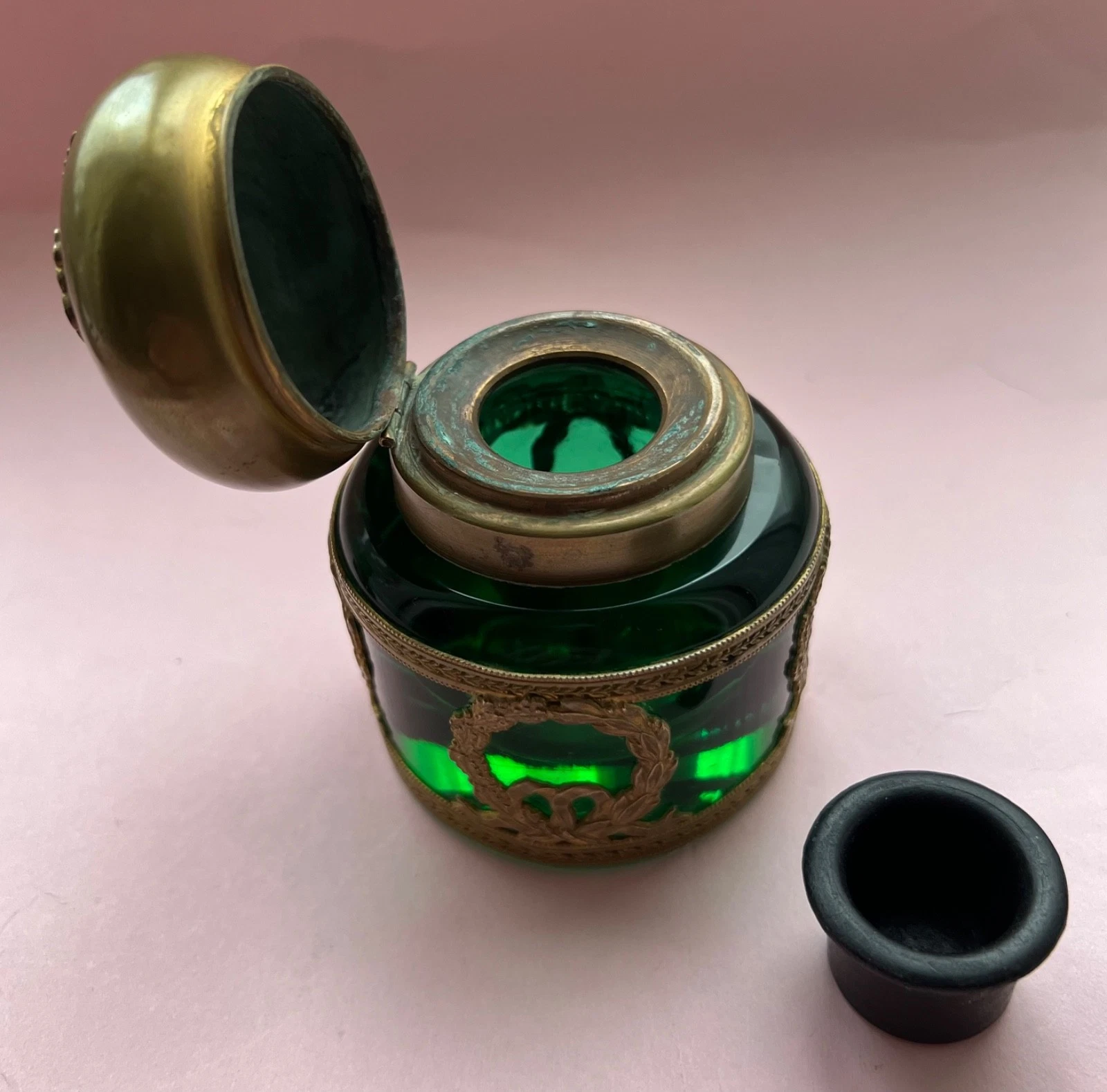
The body of the glass is encased in a gilt bronze framework featuring laurel wreaths tied with ribbons.
- Symbolism: The laurel wreath is a classic Napoleonic and Roman symbol of victory, honor, and academic achievement.
- Craftsmanship: The “chasing” (the fine detail carved into the metal) is crisp, indicating a high-level foundry. The decorative banding at the top and bottom uses a “beaded” or “egg-and-dart” motif, further cementing its Neoclassical roots.
Identification and Origin
This comes from France.
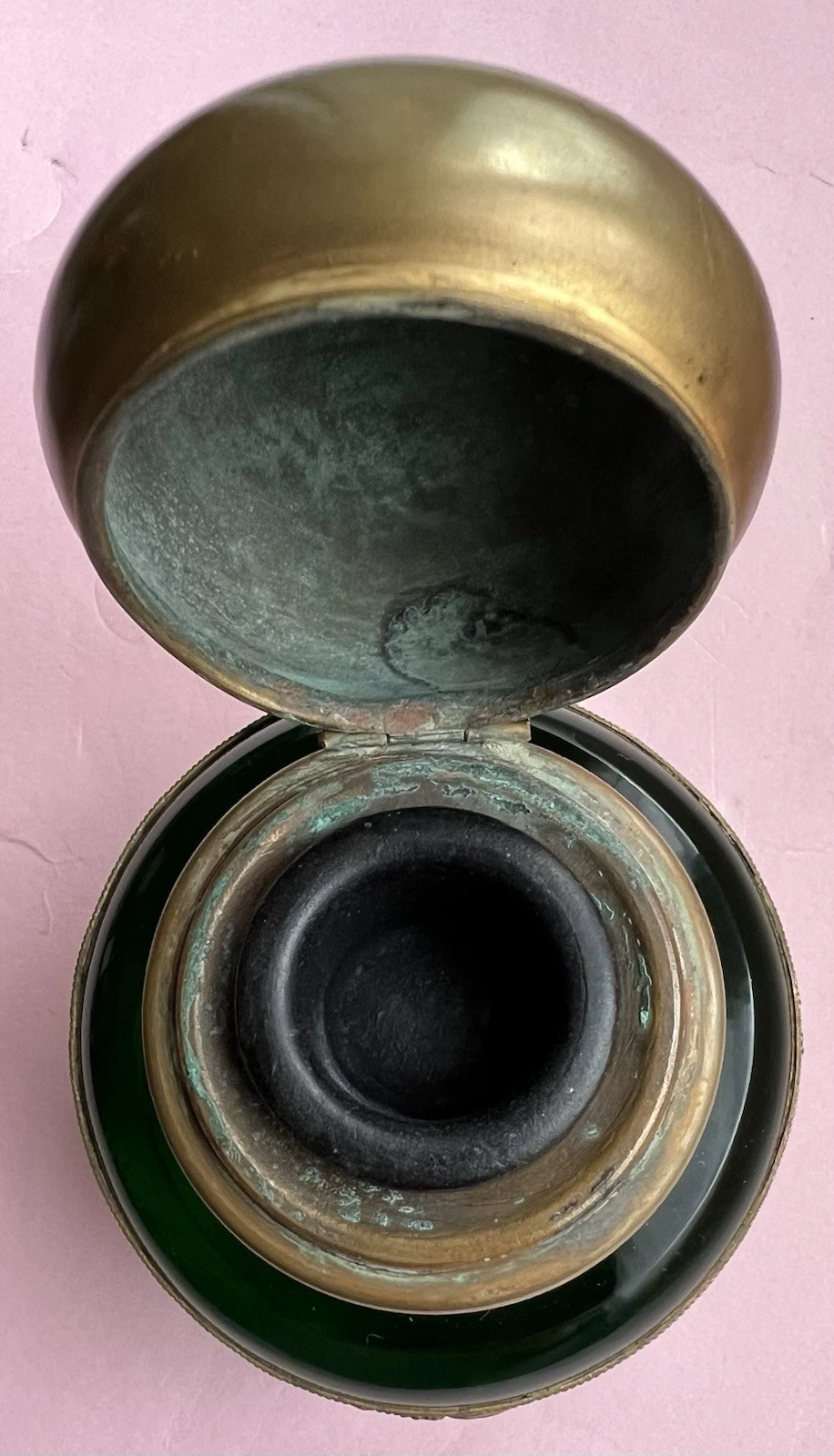
- The Maker: While there is no visible foundry mark on the bronze, the numbering “650” on the bottom of the black ceramic/composition ink liner is a production or mold number. These were common in larger French workshops.
- The Glass: The quality and style strongly point toward Baccarat. Baccarat frequently collaborated with bronze foundries to create “mounted” pieces.
- Age: Based on the hinge style and the Neoclassical “Louis XVI Revival” aesthetics, it dates to approximately 1880.
Summary
Antique French Neoclassical Emerald Green Crystal Inkwell Circa 1880
A fine Napoleon III period inkwell featuring a heavy, emerald-green crystal body and a polished pontil base. The vessel is elegantly mounted with gilt bronze (ormolu) decorative elements, including a continuous frieze of laurel wreaths tied with ribbons. The domed gilt bronze lid is surmounted by a finely chased high-relief figure of a winged Psyche in a Neoclassical pose. The interior retains its original removable liner marked “650.” An exceptional example of French desk furniture showcasing the marriage of fine crystal and expert metalwork.
Sold for $173 in April 2026
Content disclaimer. The information posted is the owner’s best knowledge and may not have been vetted by the SOIC. We welcome comments, corrections, and additions, working to make our website information comprehensive and accurate.
Join the Society of Inkwell Collectors (SOIC) – it’s free!
Founded in 1981 as a non-profit organization,
we are documenting inkwells (and accessories).
We’re here to help and inform!