

Egyptian Revival Cast Iron Inkstand
| Categories | Figural - Mythology; Literature; Religion; Fictional |
| Type | Egyptian Revival |
| Material | Cast iron, Glass |
| Markings | See Narrative |
| Manufacturer | Nicholas Muller & Sons |
| Origin | United States |
| Date or Era | circa 1880 |
| Measuring | 6” x 5 ¼” x 3 ½” high |
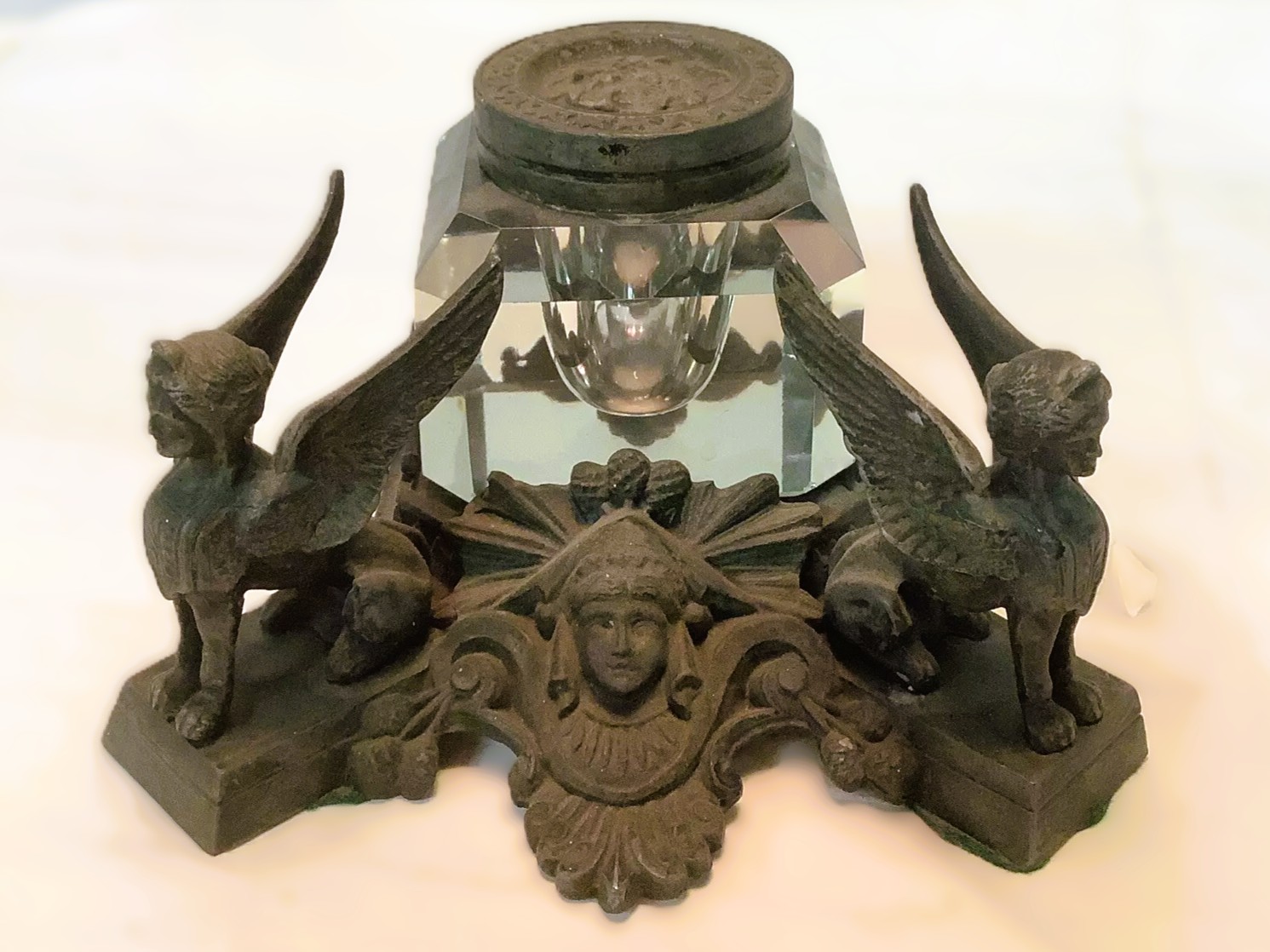
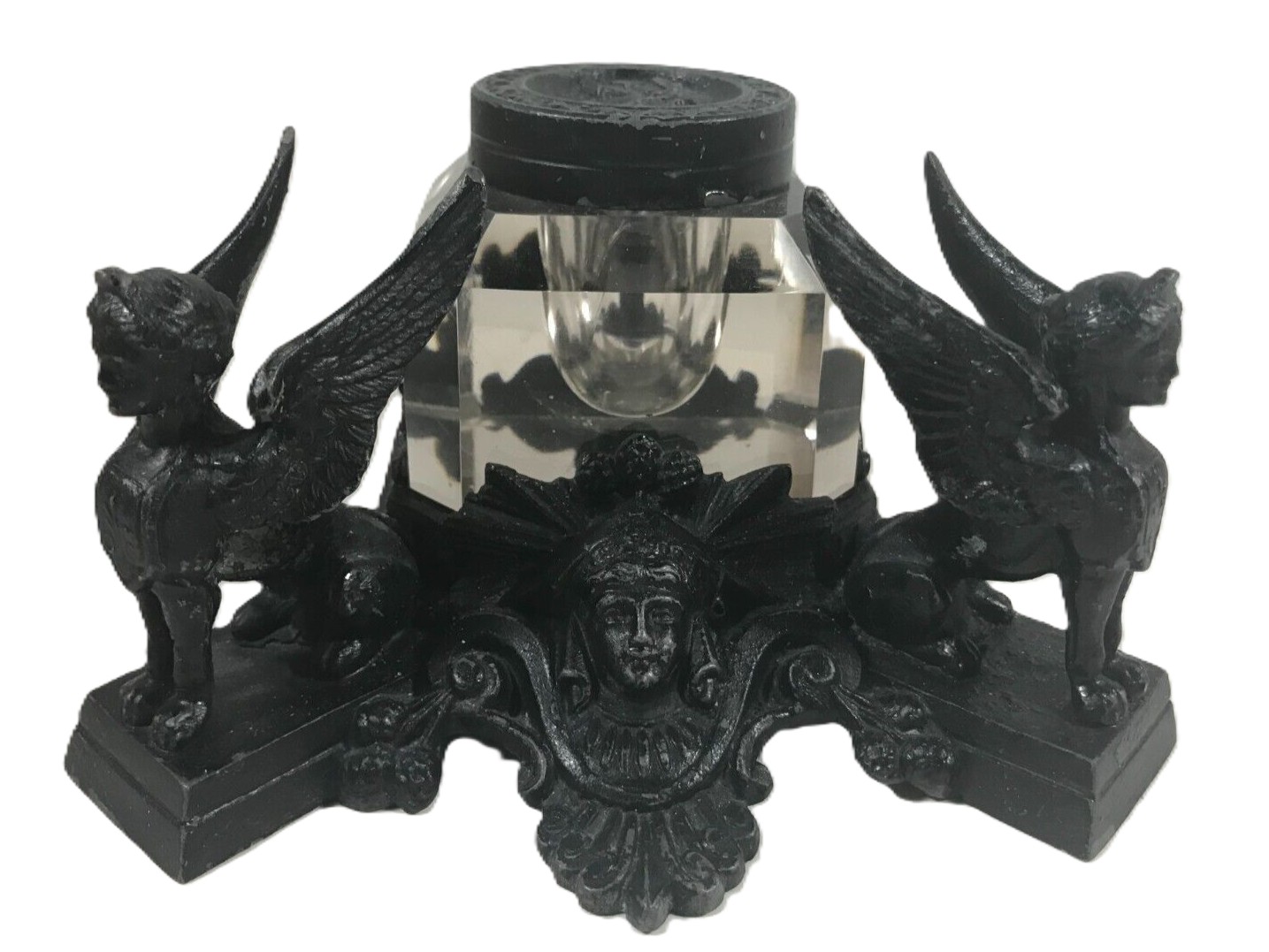
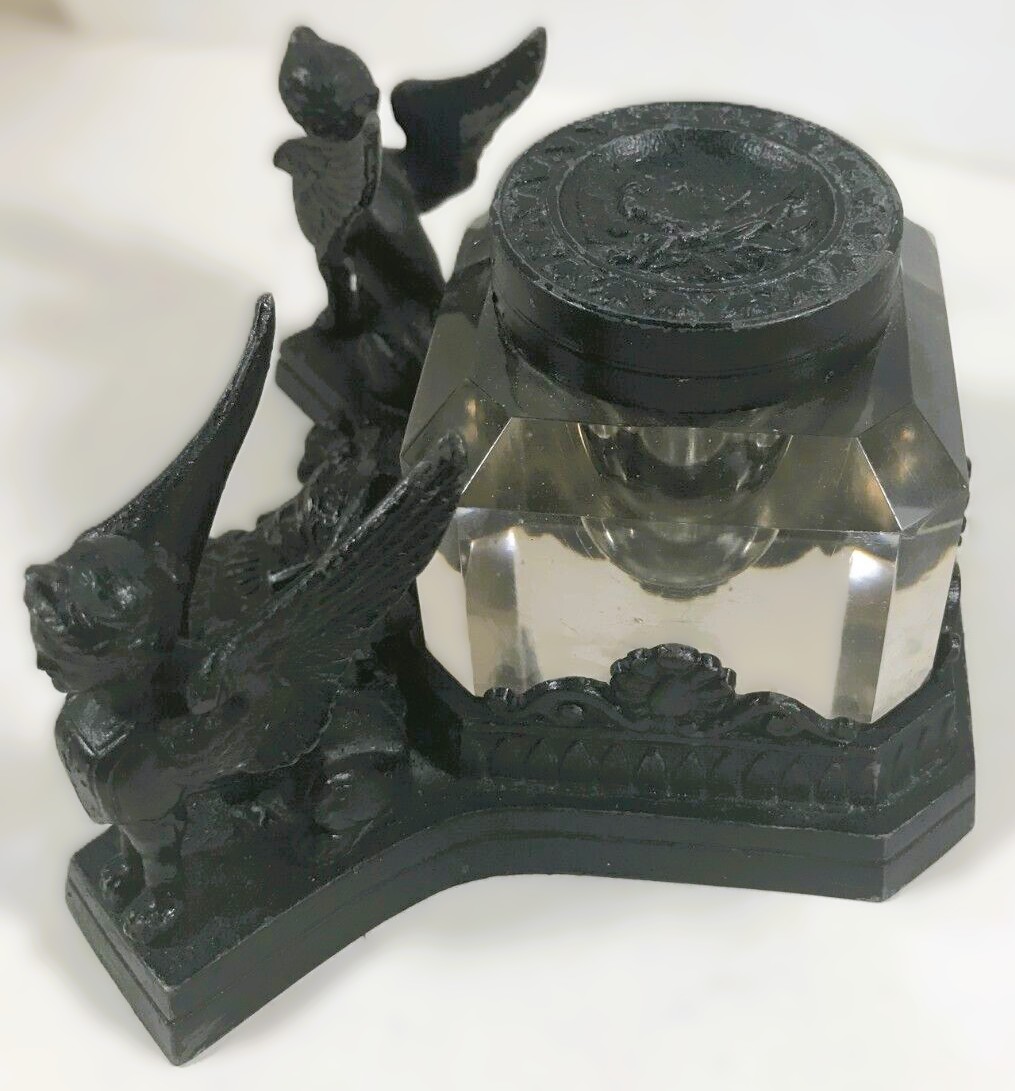
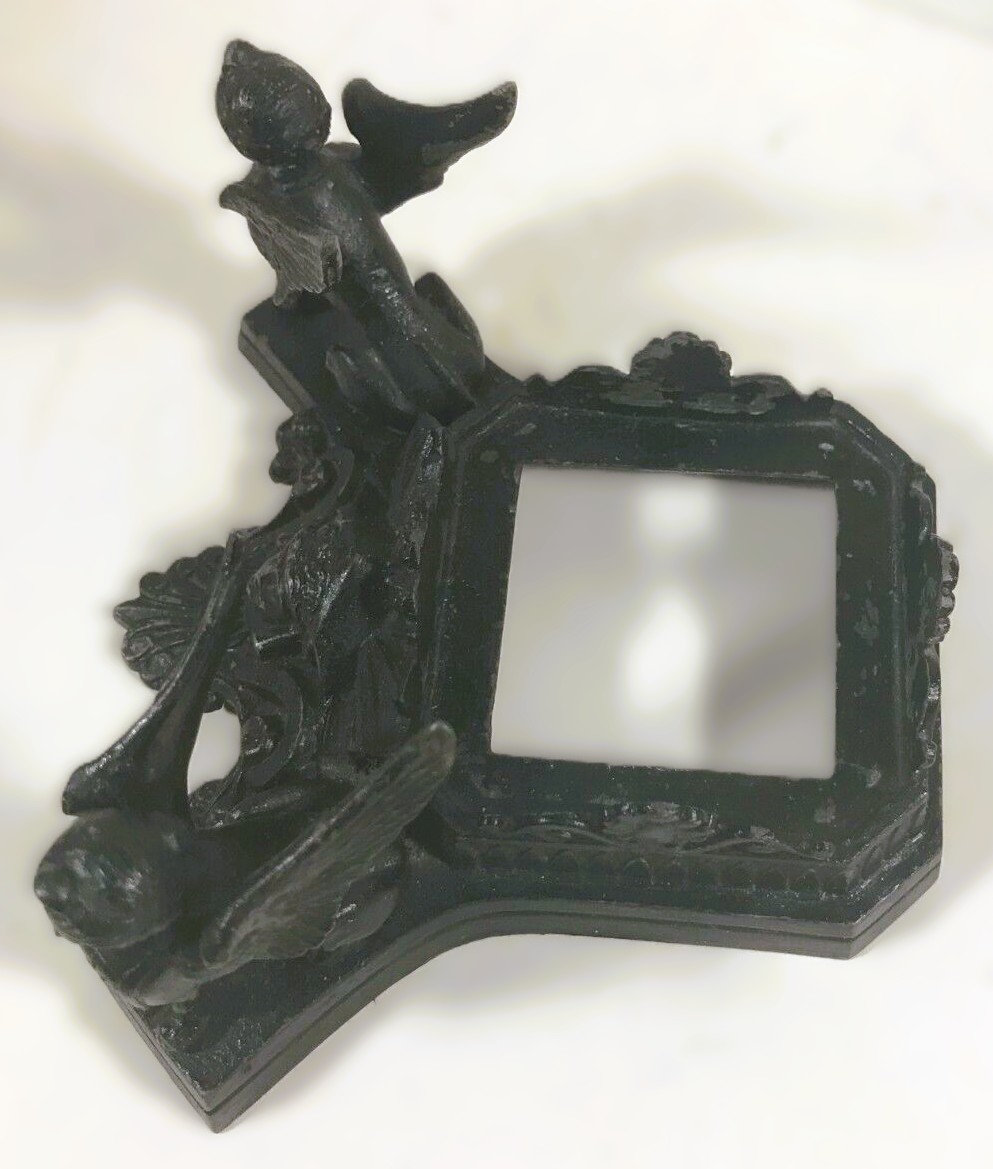
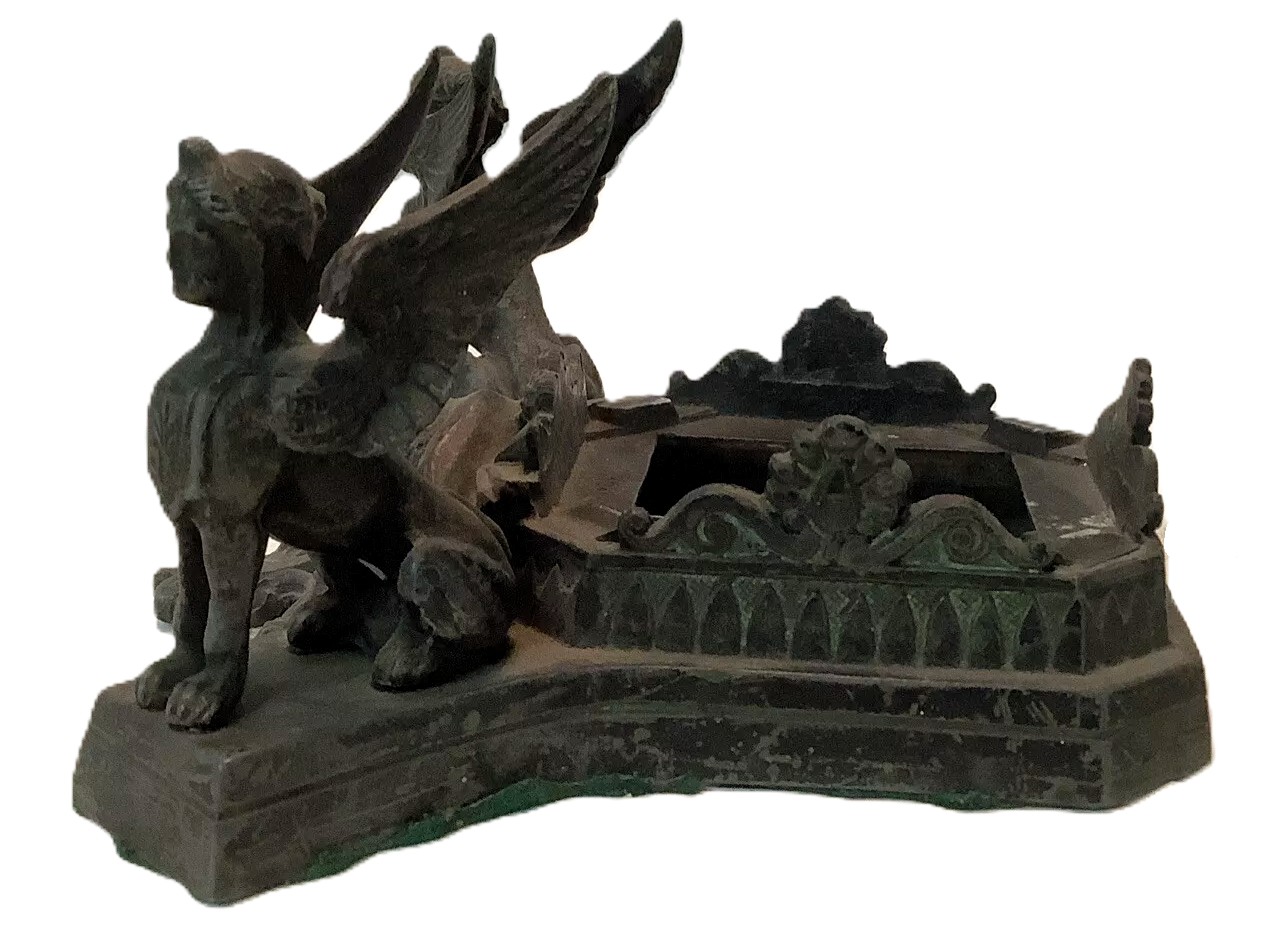
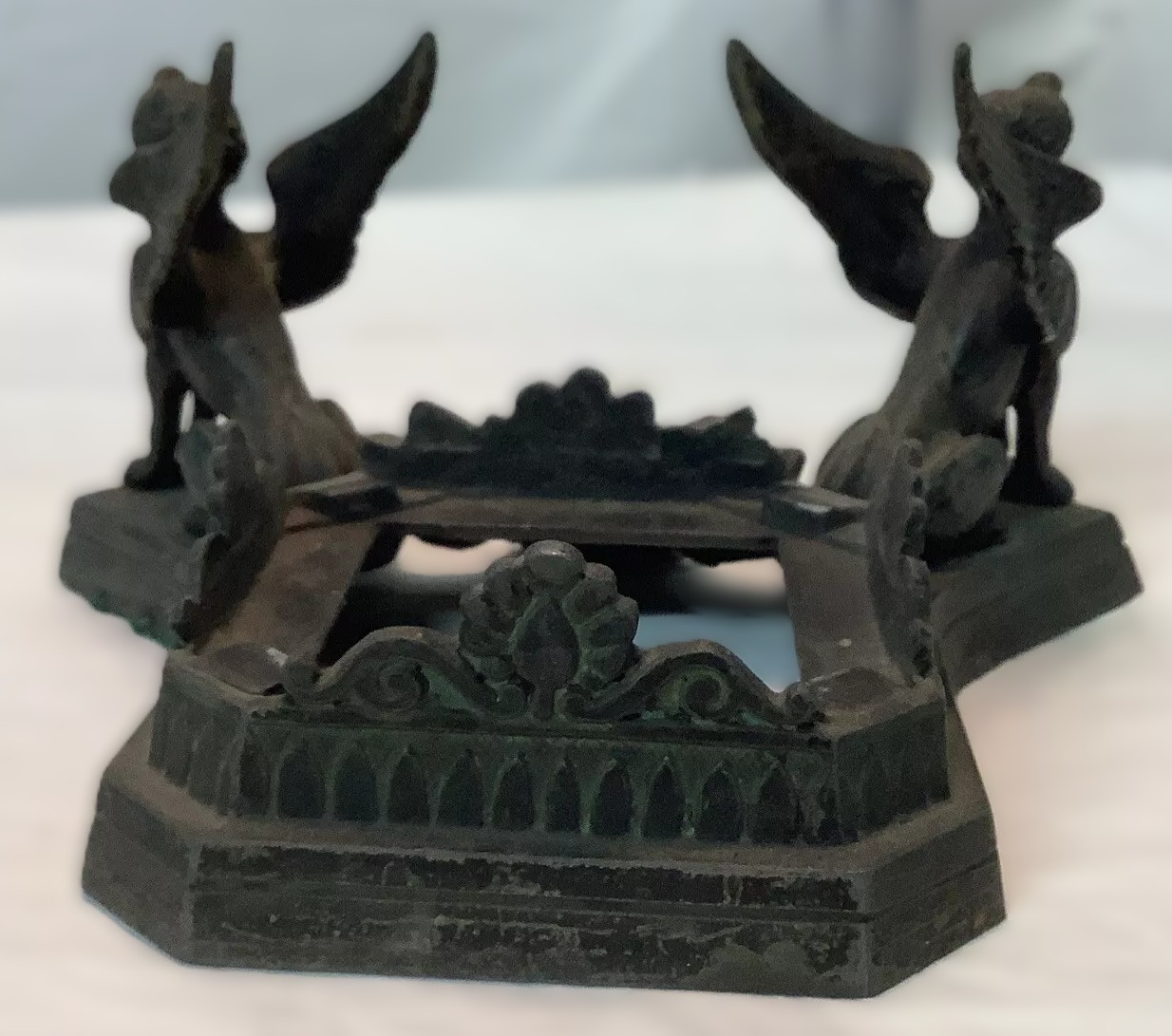
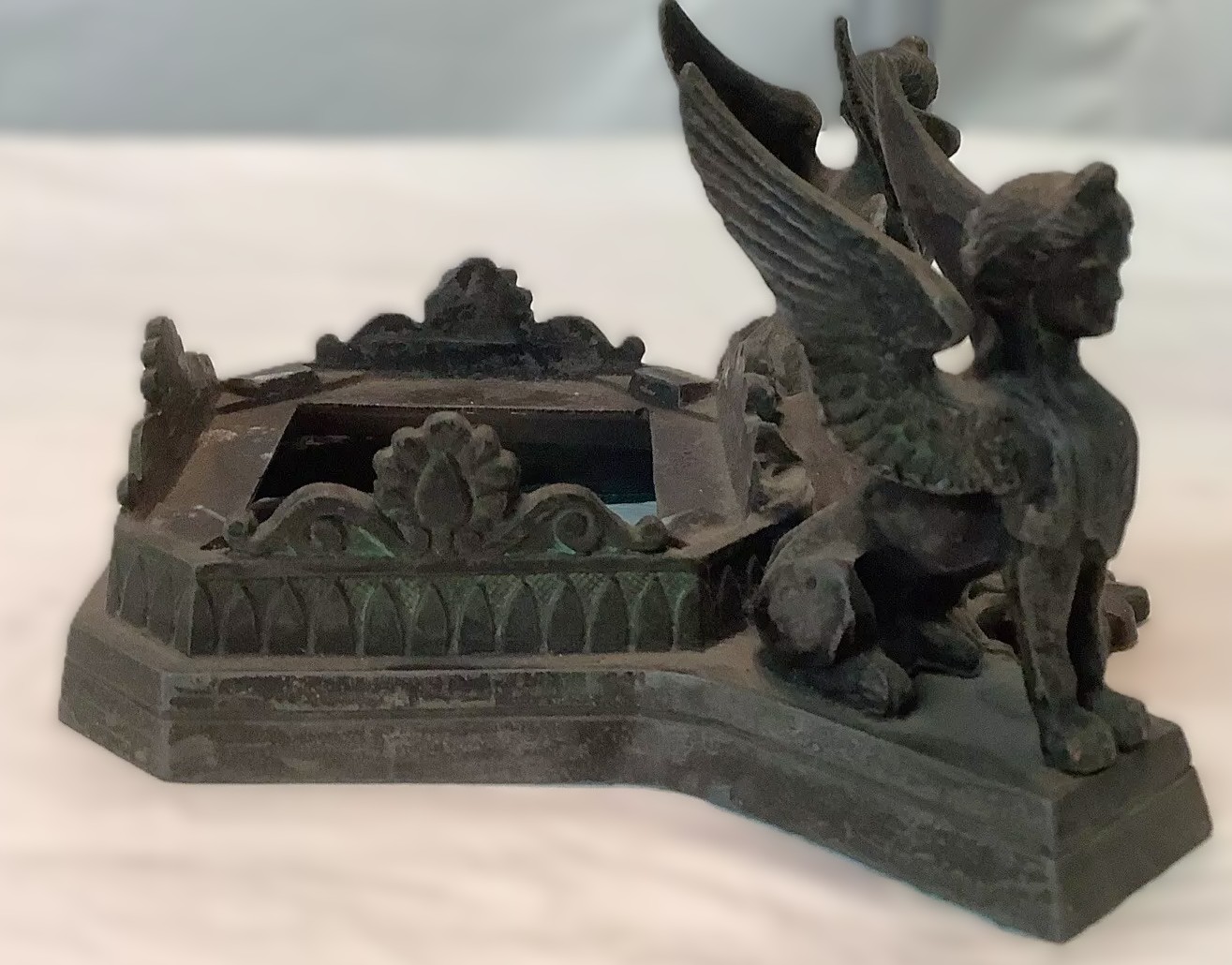
This cast iron inkstand features a central inkwell flanked by two stylized winged creatures, all set on an ornate base, drawing heavily from ancient Egyptian motifs interpreted through a Victorian lens.
Description of the Inkstand:
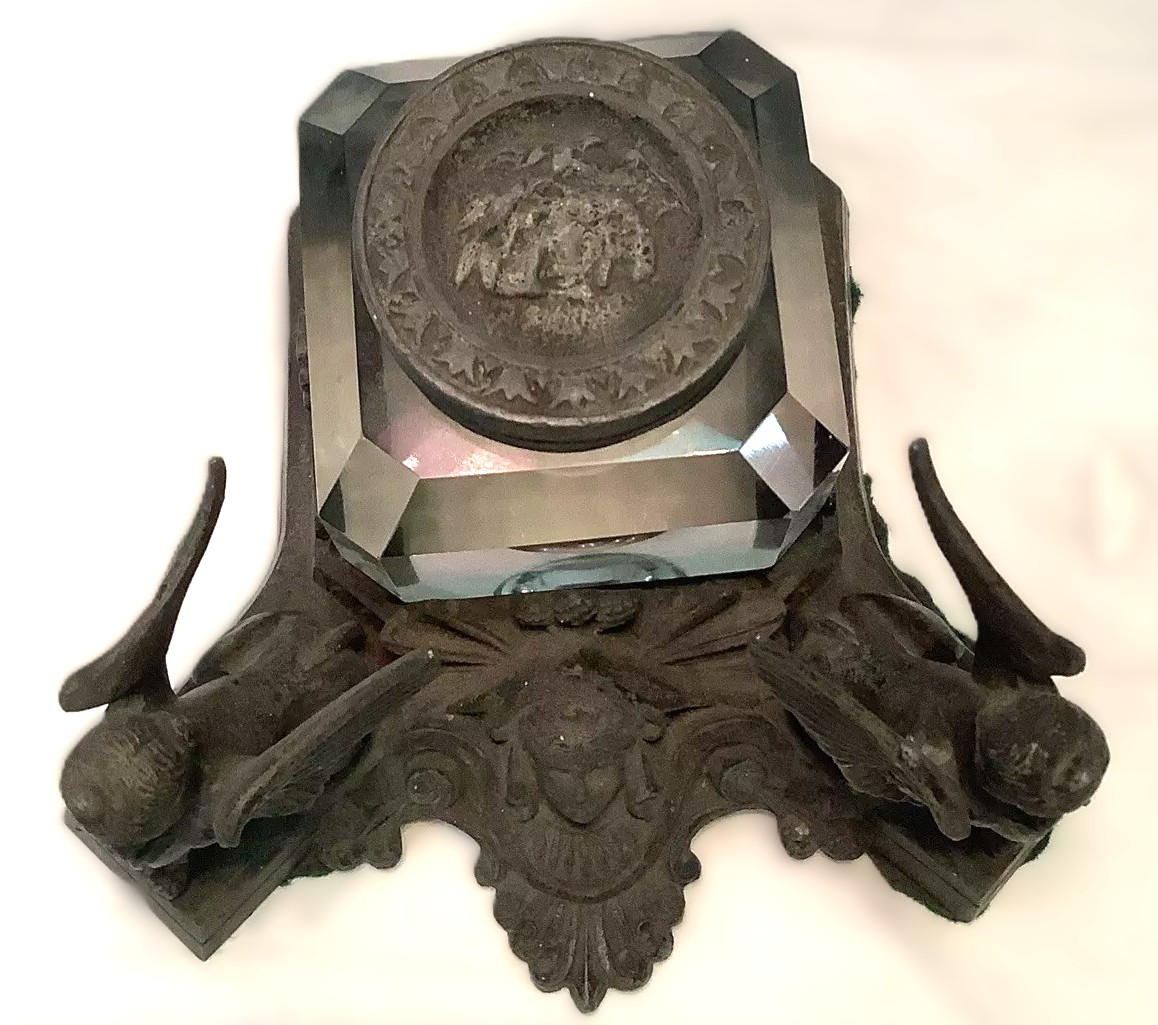
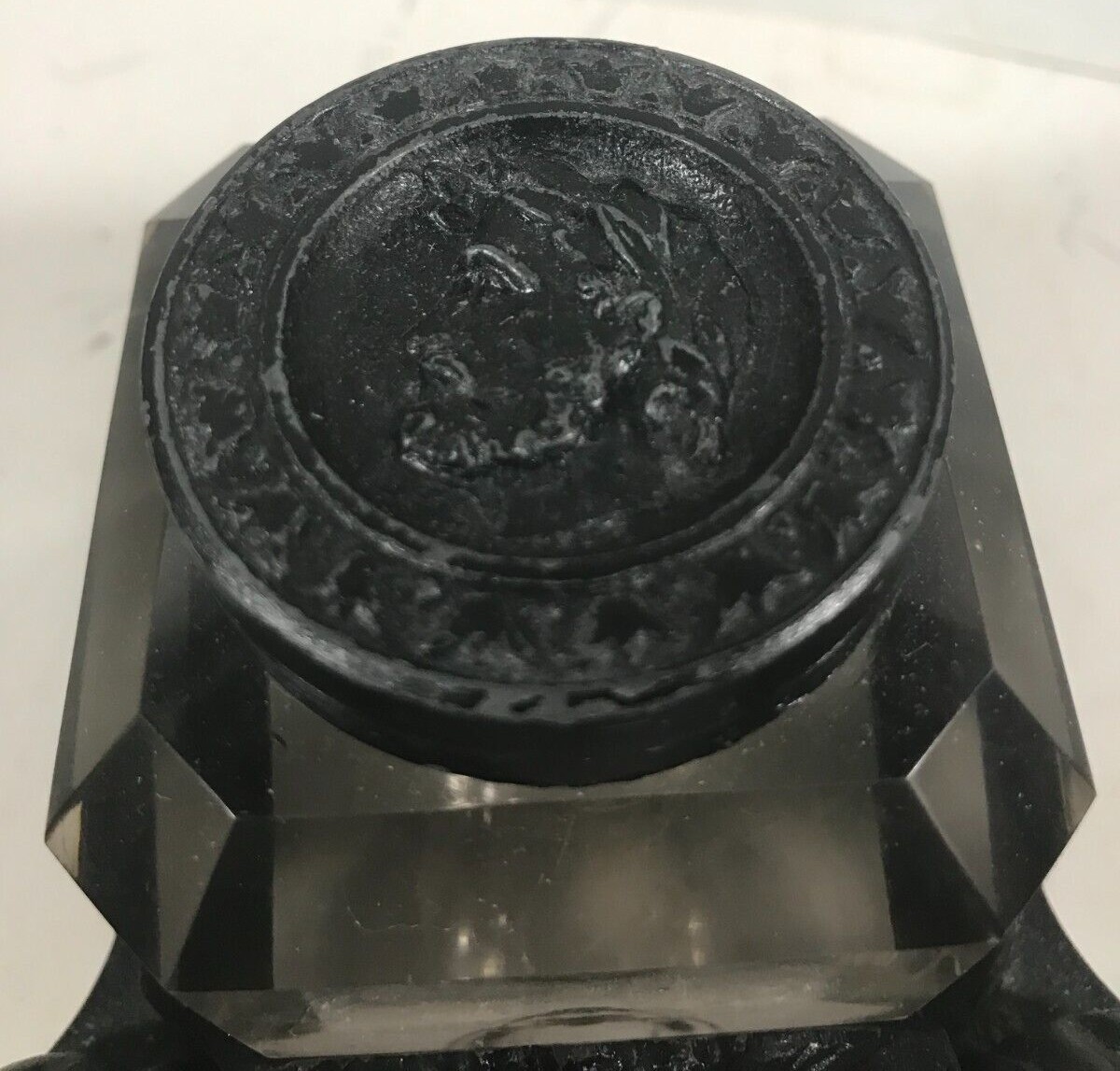
- Material: The entire body of the inkstand, including the base, the figures, and the inkwell housing, is crafted from cast iron. A pressed glass inkwell rests within the cast iron base. The inkwell is covered by a separate, unattached metal lid. The top of this lid features a profiled head of a classical man adorned with a laurel wreath. This classical Roman/Greek motif often coexisted with Egyptian elements in Victorian eclecticism, showing a broad fascination with antiquity.
- Winged Creatures – Sphinxes: Flanking the central inkwell are two prominent, symmetrical winged creatures. These figures are best identified as stylized Sphinxes. They possess powerful, recumbent bodies (possibly leonine), with large, prominent wings intricately detailed with feathers, curving upwards and outwards. Their heads are somewhat stylized, embodying a watchful or guardian pose.
In Egyptian mythology, the Sphinx is a mythical creature with the body of a lion and the head of a human (typically a pharaoh), symbolizing power and protection. The inclusion of wings, while less common in pure Egyptian art, was often added in later Greek and Roman interpretations of Sphinxes, or in Western revival styles, to enhance their mythical presence.
- Ornate Base: The substantial base forms an integrated platform for the inkwell and figures. It features molded scrollwork, borders, and geometric details. A mascaron (decorative face) is centrally placed on the inkstand’s front. This masculine face has a fierce look. Below the face is a multi-layered neck and chest ornamentation, resembling the broad collars worn by ancient Egyptian pharaohs and deities.
Markings and Manufacturer:
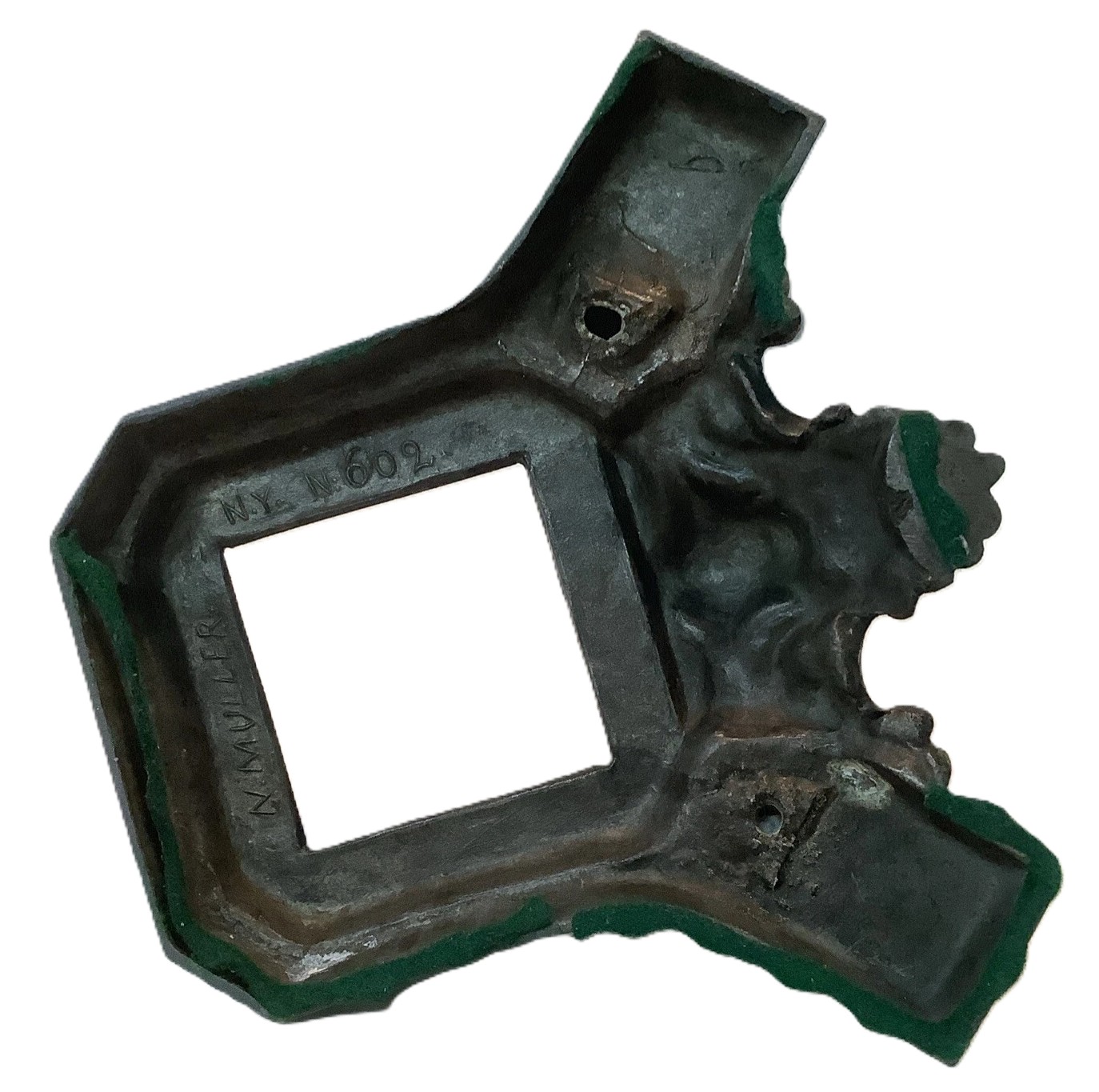
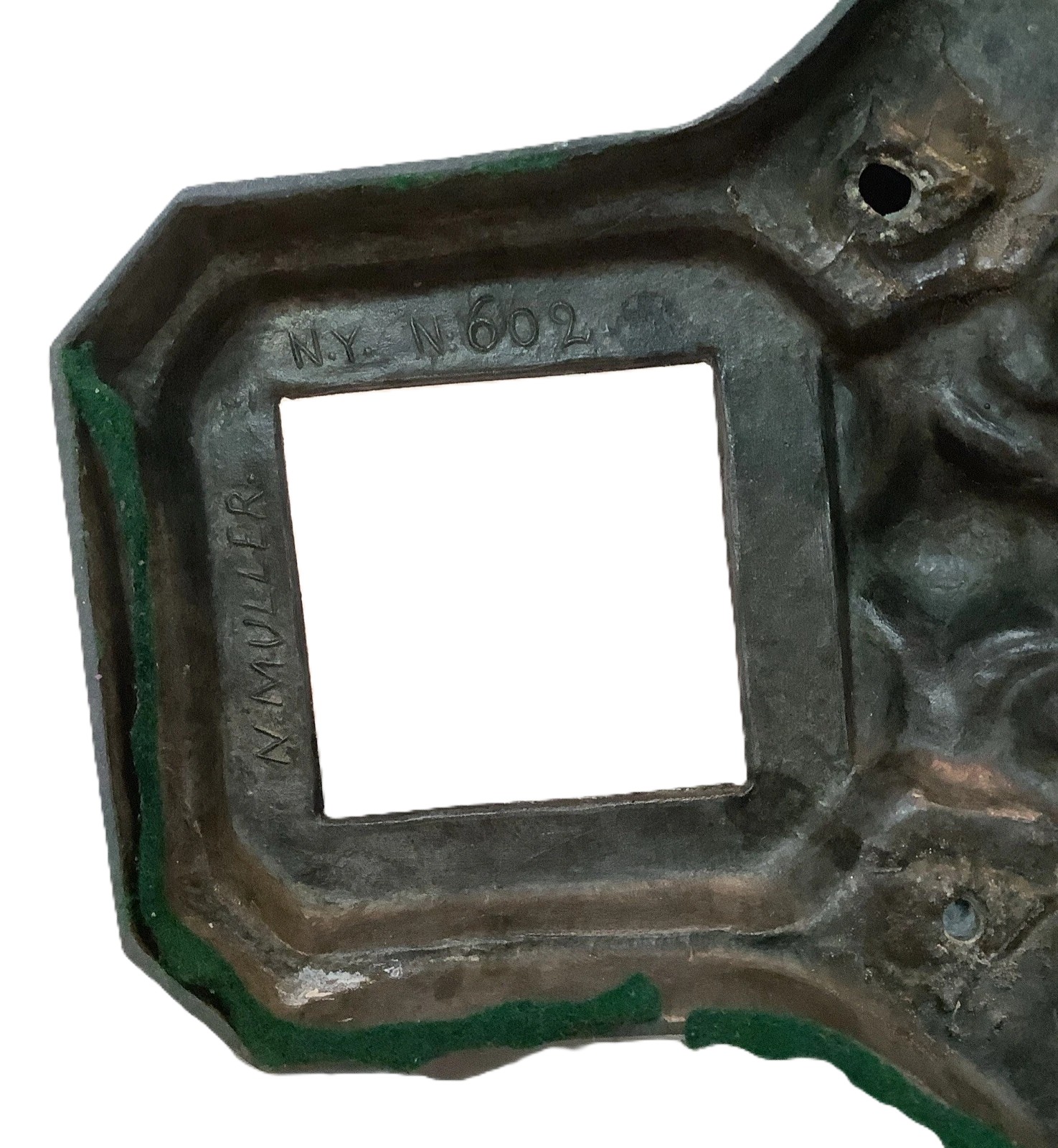
- The bottom of the inkstand is marked “N. MULLER N.Y.” and the number “N. 602”.
Nicholas Muller and Age:
- Nicholas Muller (c. 1818 – 1893) was a significant German-American metalware manufacturer based in New York City, active primarily from the 1860s through the 1890s. His company, Nicholas Muller’s Sons, was renowned for producing high-quality cast metal decorative objects, including inkstands, which frequently incorporated eclectic historical and mythological themes. The “N. 602” is a pattern or model number for this specific design.
- Given Muller’s active period and the prevalence of Egyptian Revival in the Victorian era (especially after the opening of the Suez Canal in 1869 and further archaeological discoveries), this inkstand likely dates to the late 19th century, roughly between 1870 and 1890.
Sold for $261 in June 2025
Content disclaimer. The information posted is the owner’s best knowledge and may not have been vetted by the SOIC. We welcome comments, corrections, and additions, working to make our website information comprehensive and accurate.
Join the Society of Inkwell Collectors (SOIC) – it’s free!
Founded in 1981 as a non-profit organization,
we are documenting inkwells (and accessories).
We’re here to help and inform!