




Egyptian Pharaoh Inkwell
| Categories | Middle East / Africa |
| Type | Egyptian Revival |
| Material | Bronze |
| Markings | Unmarked |
| Manufacturer | Undetermined |
| Origin | Undetermined |
| Date or Era | circa 1890 |
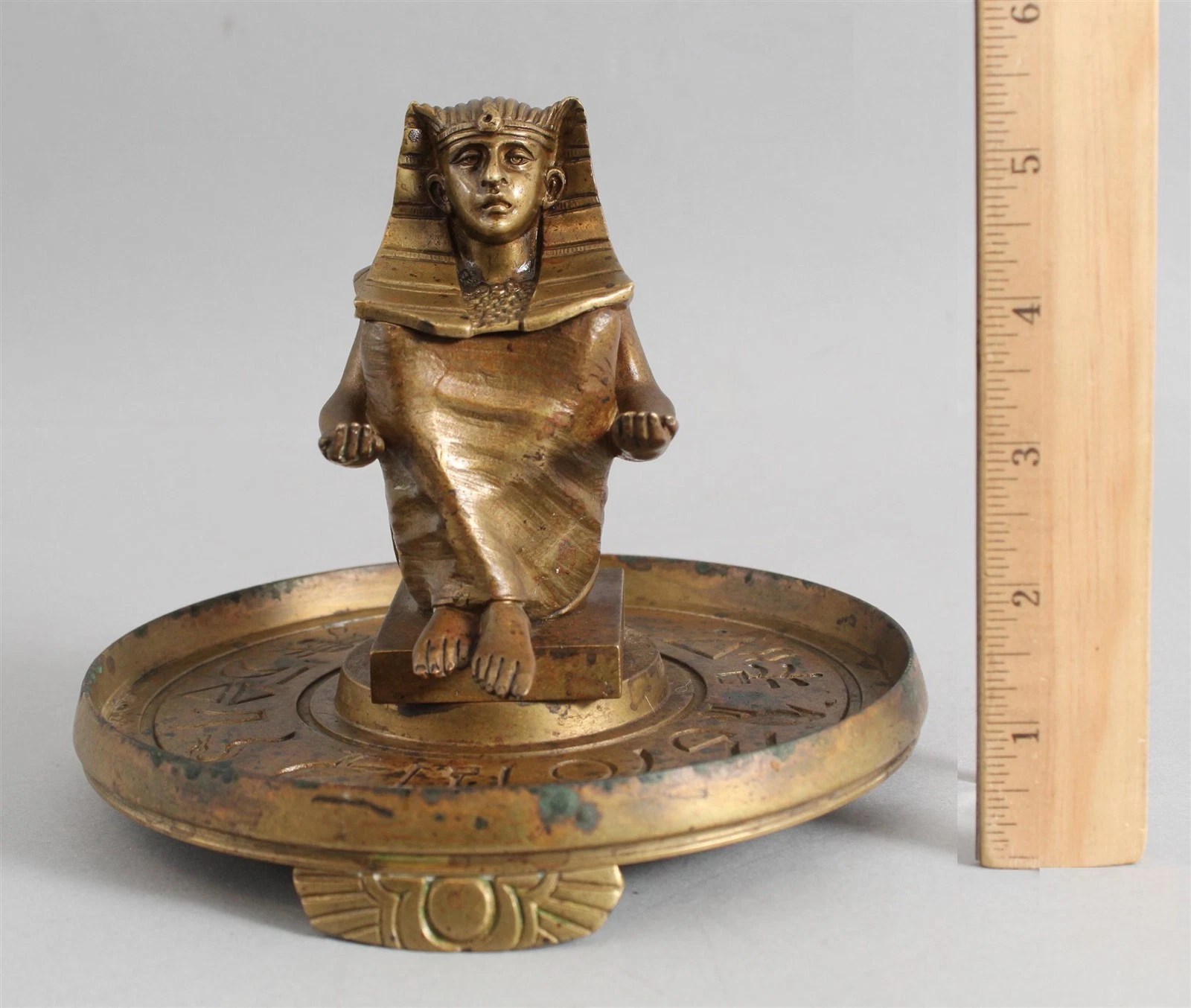
| Measuring | 2 ¾” x 2 ¾” x 4 ¾” high (central figure alone); 7” diameter; 5 ¾” high (with circular base) |
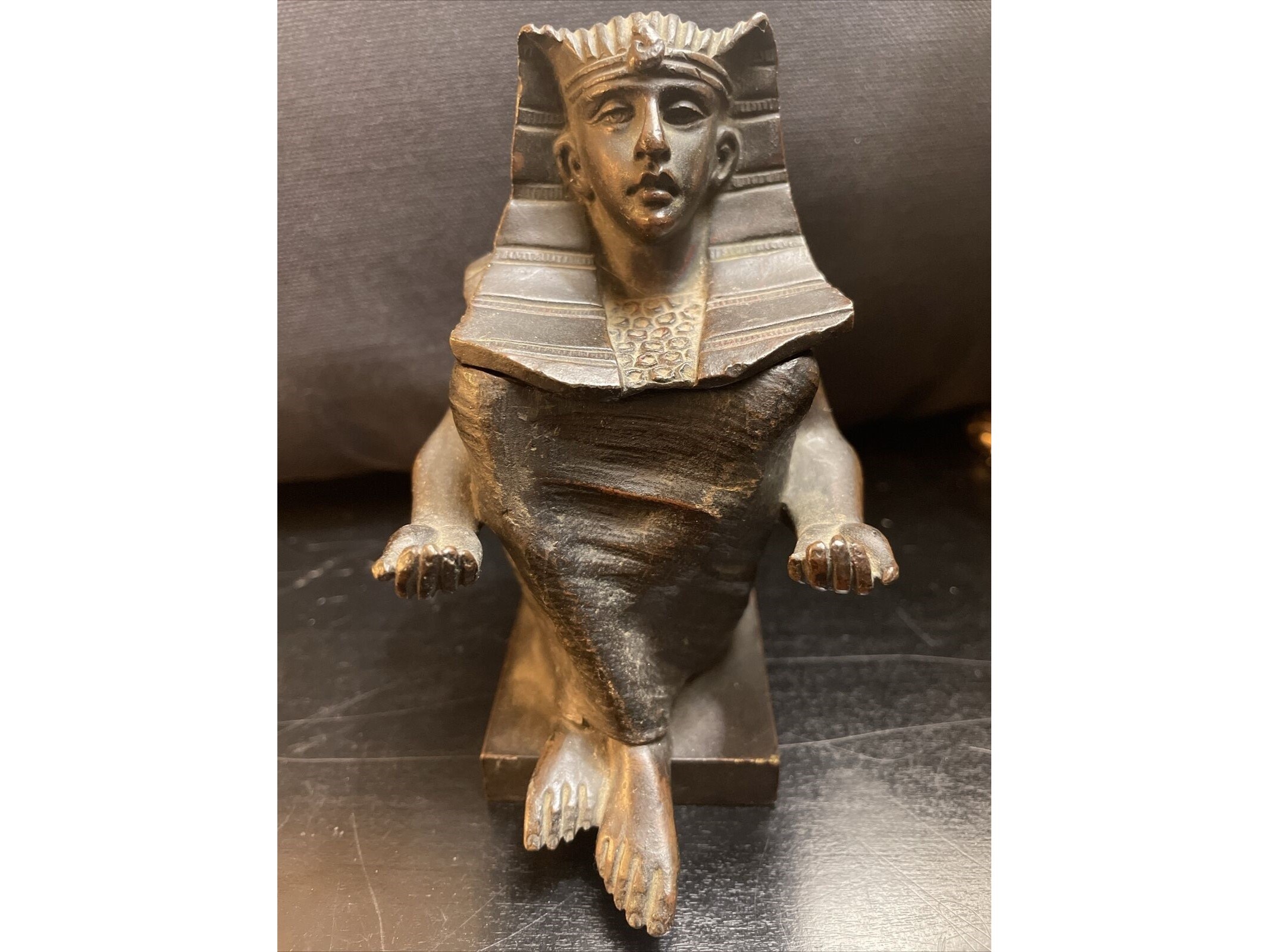
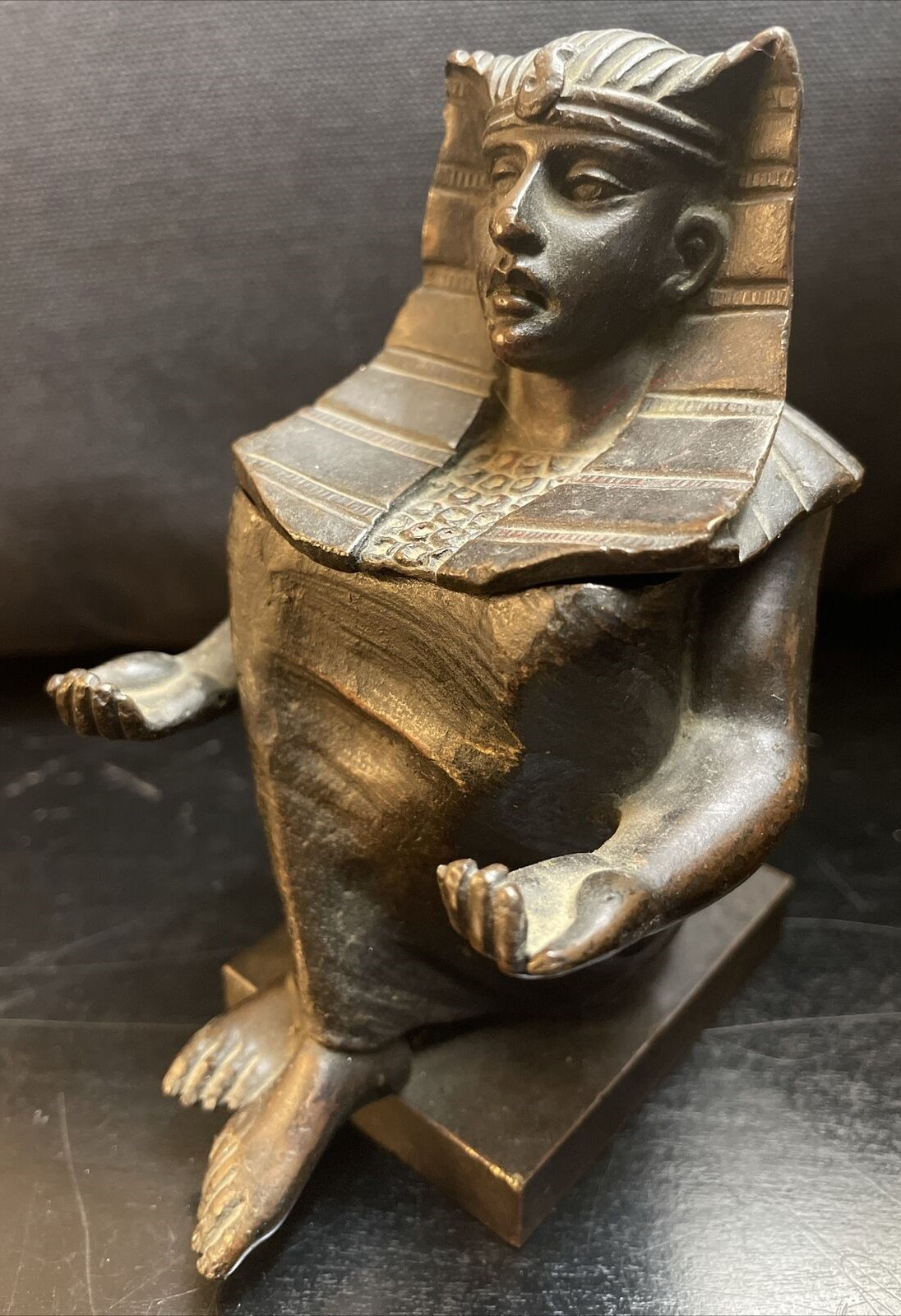
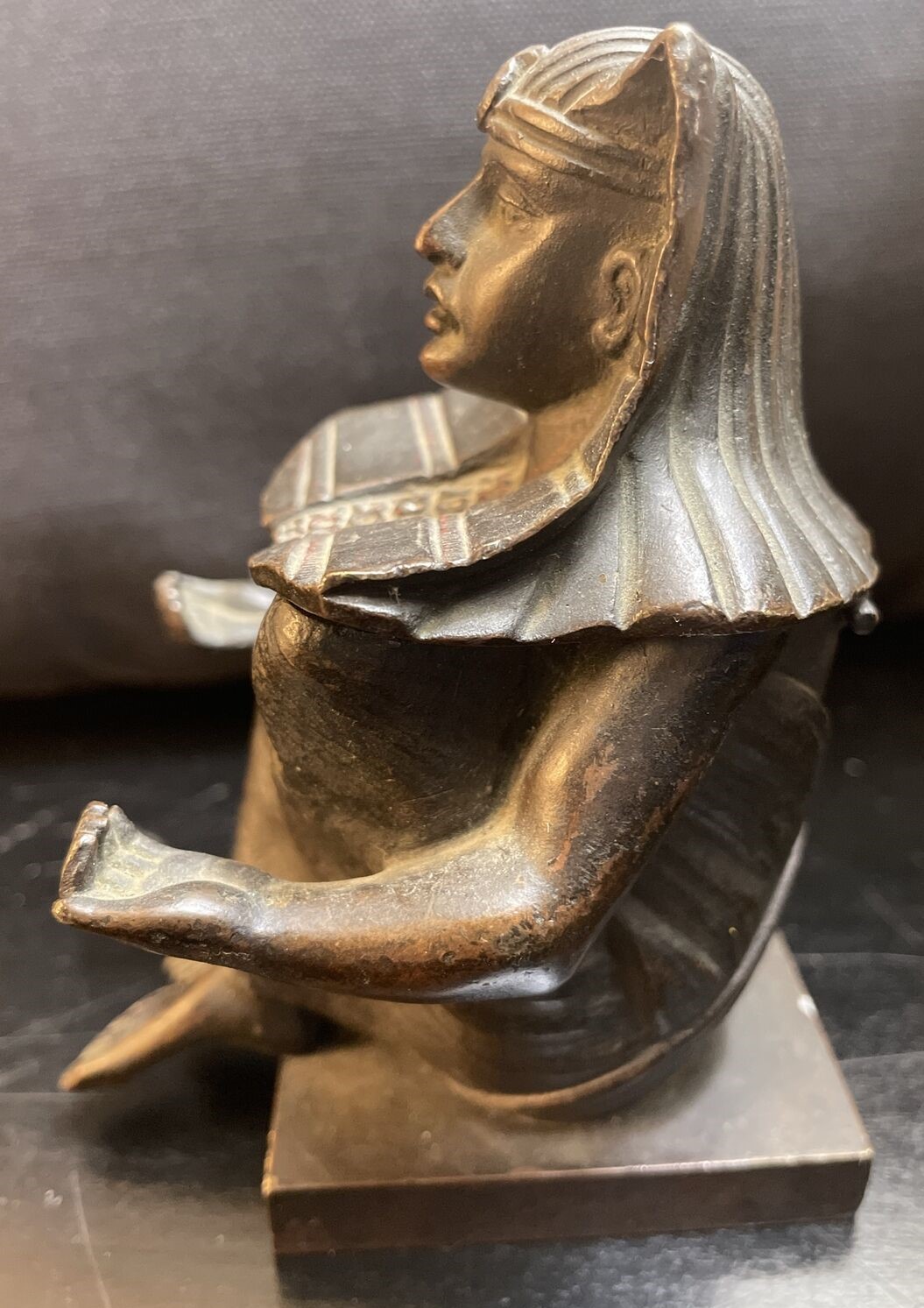
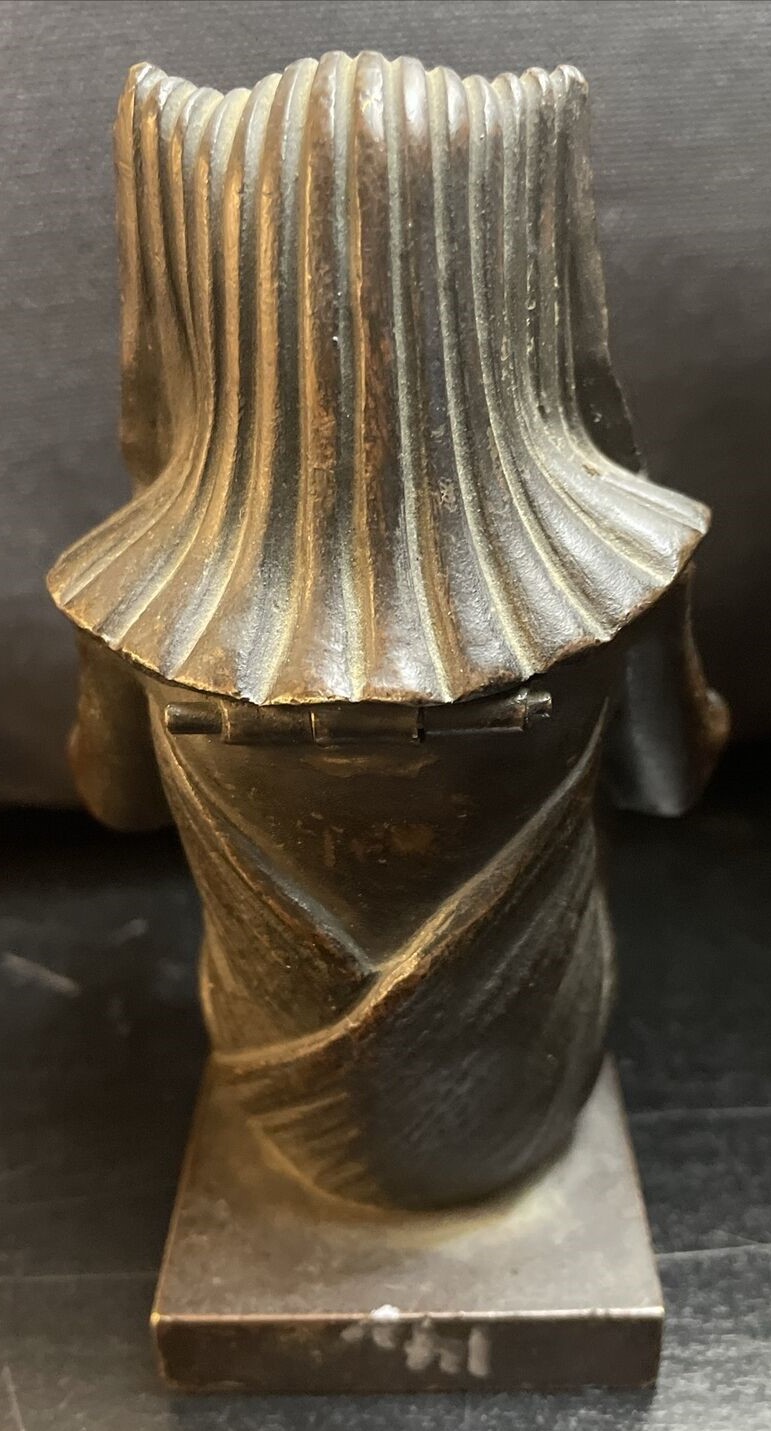
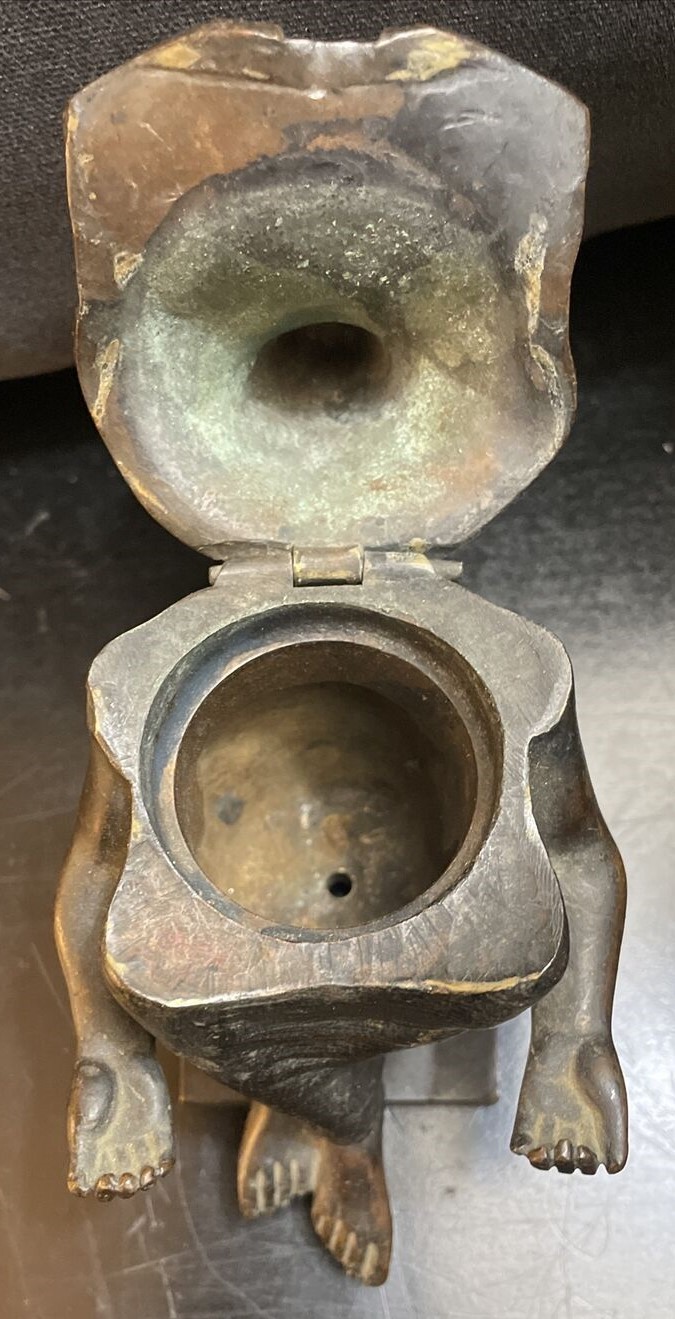
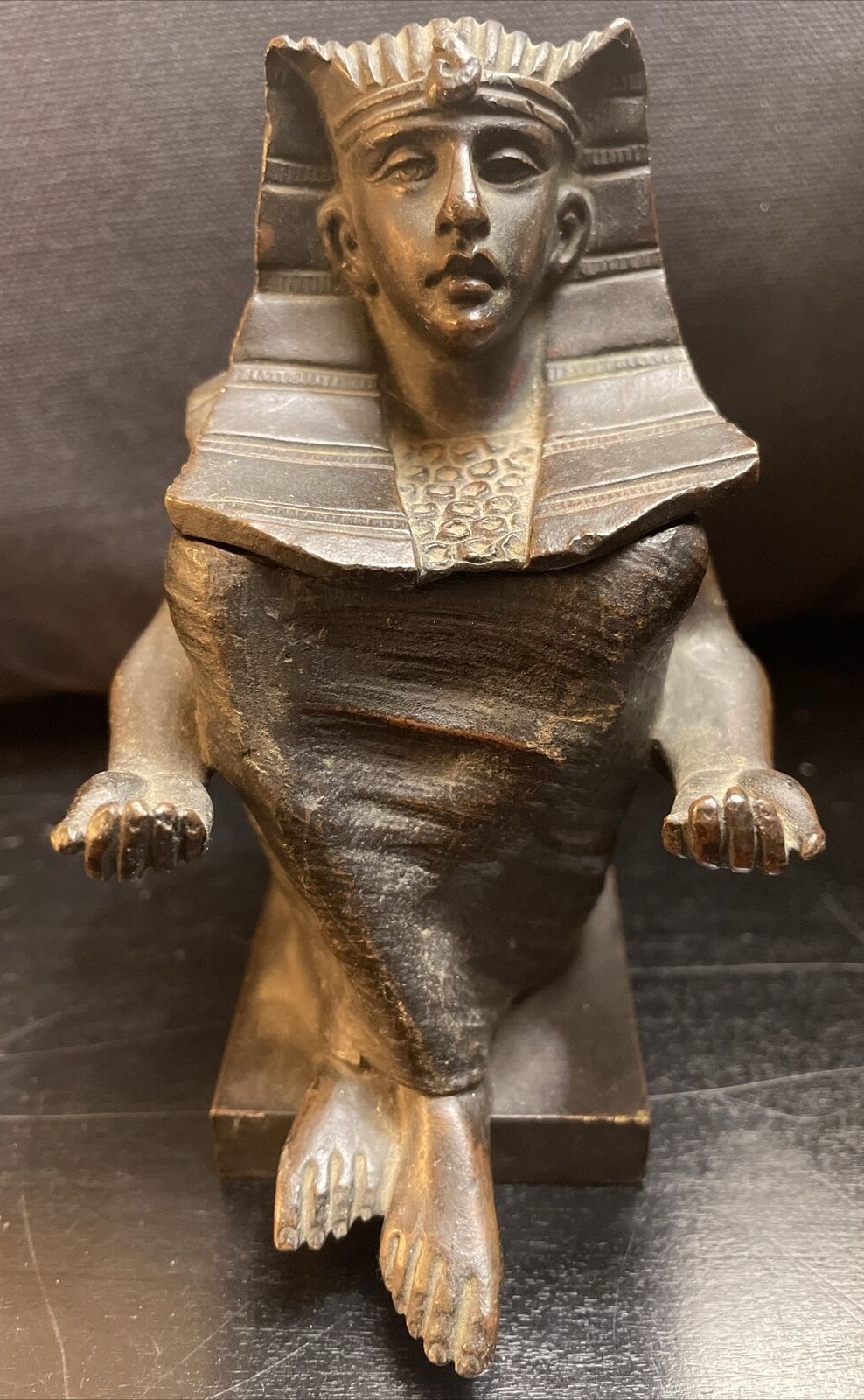
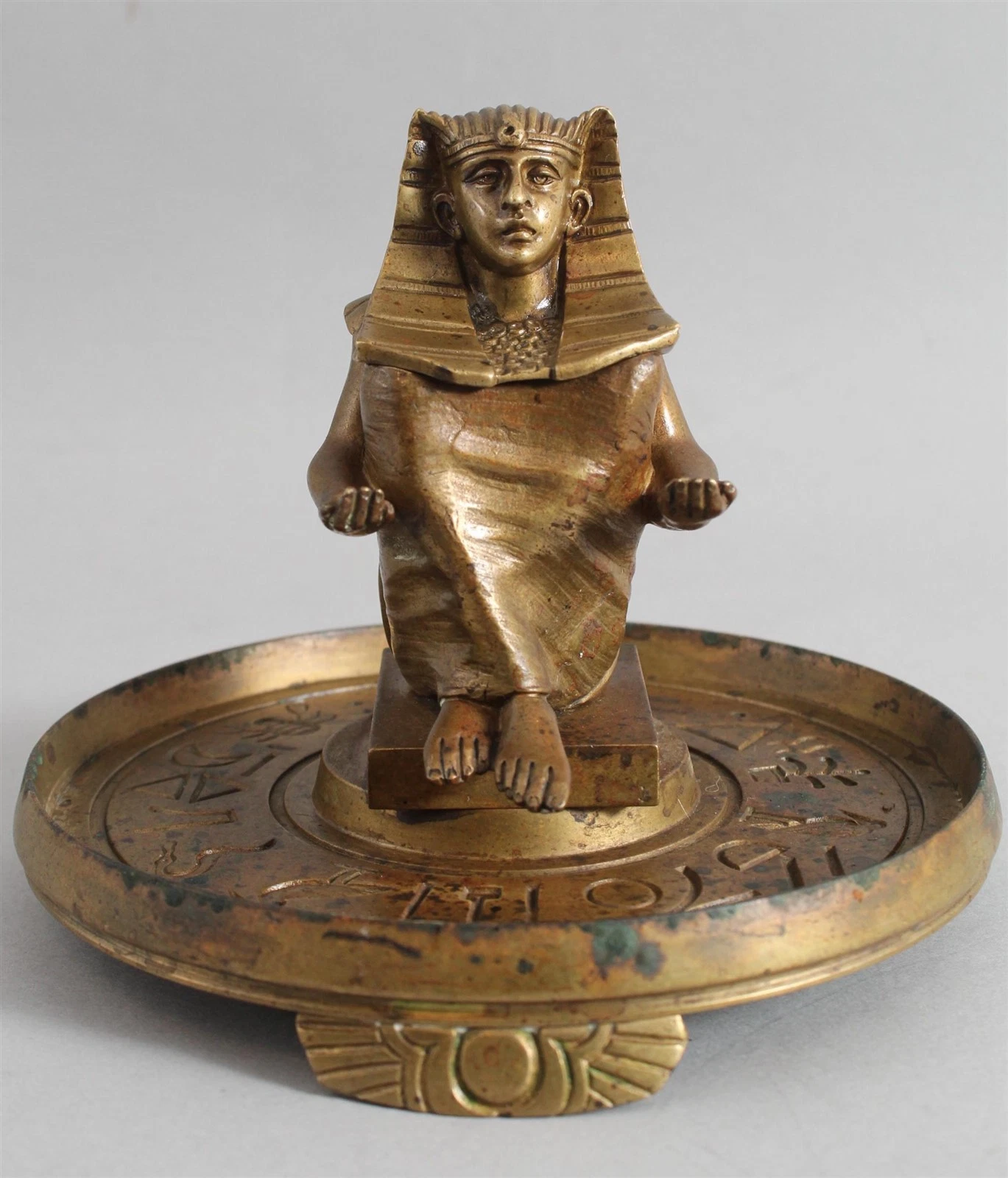
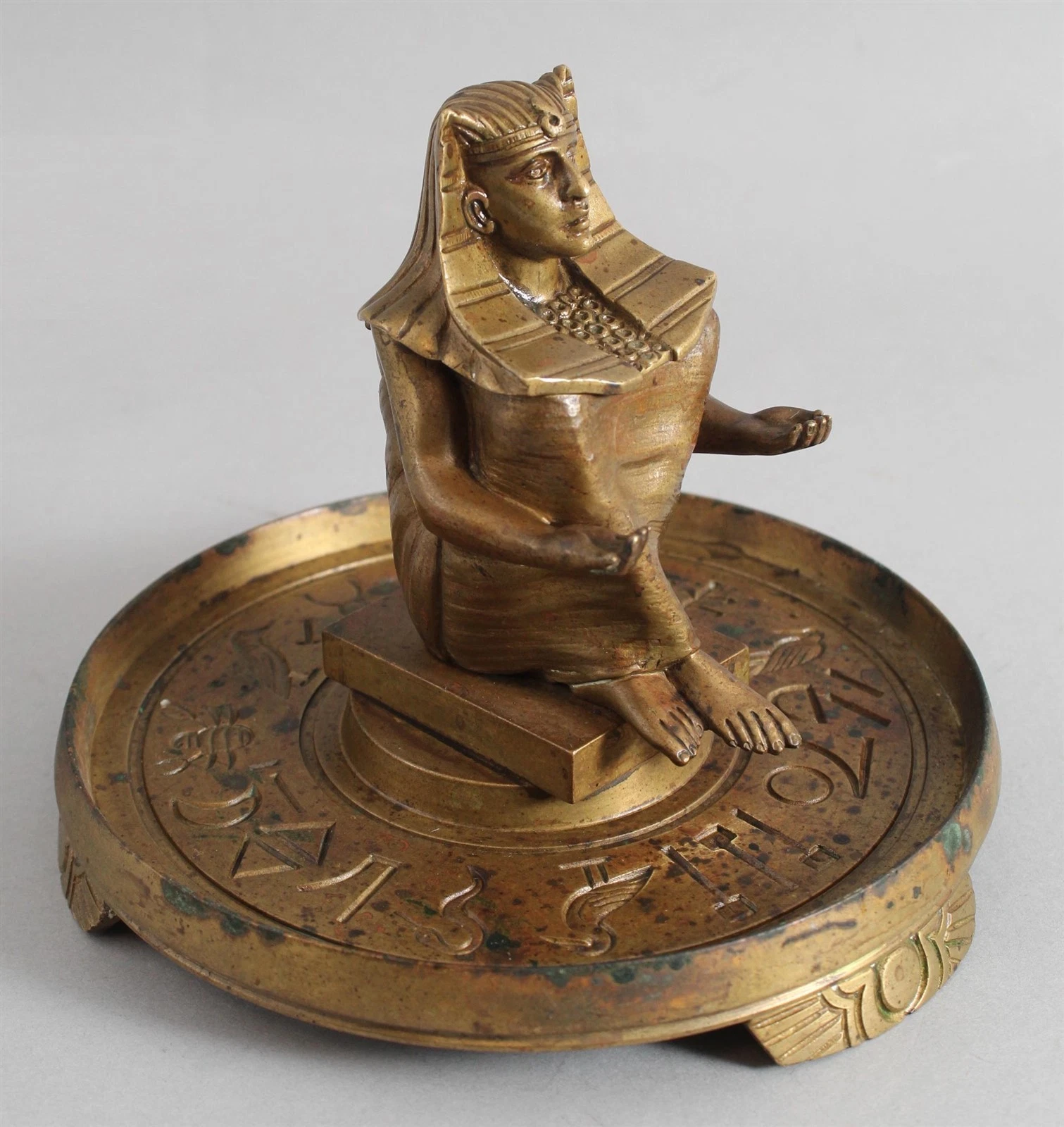
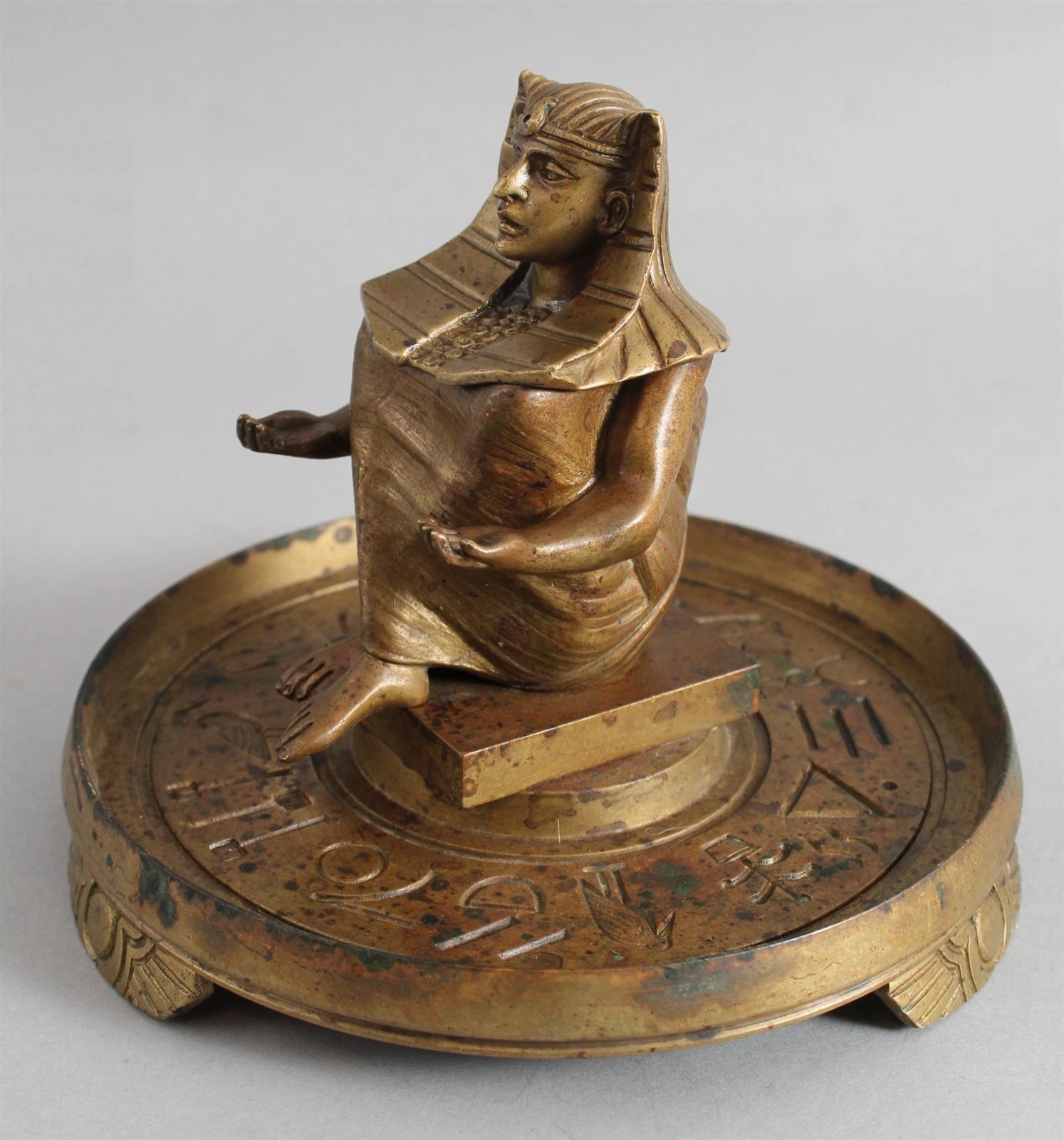
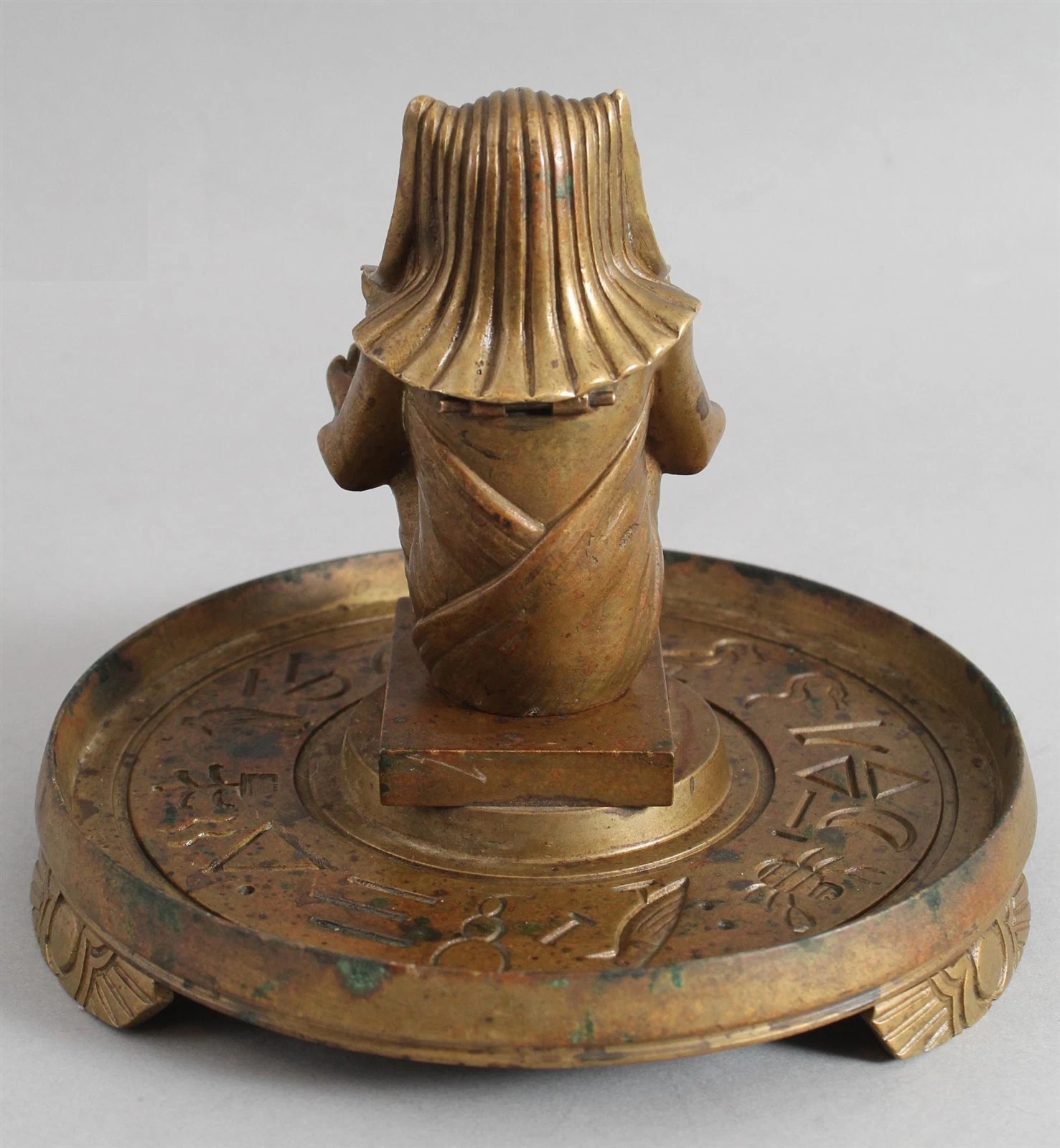
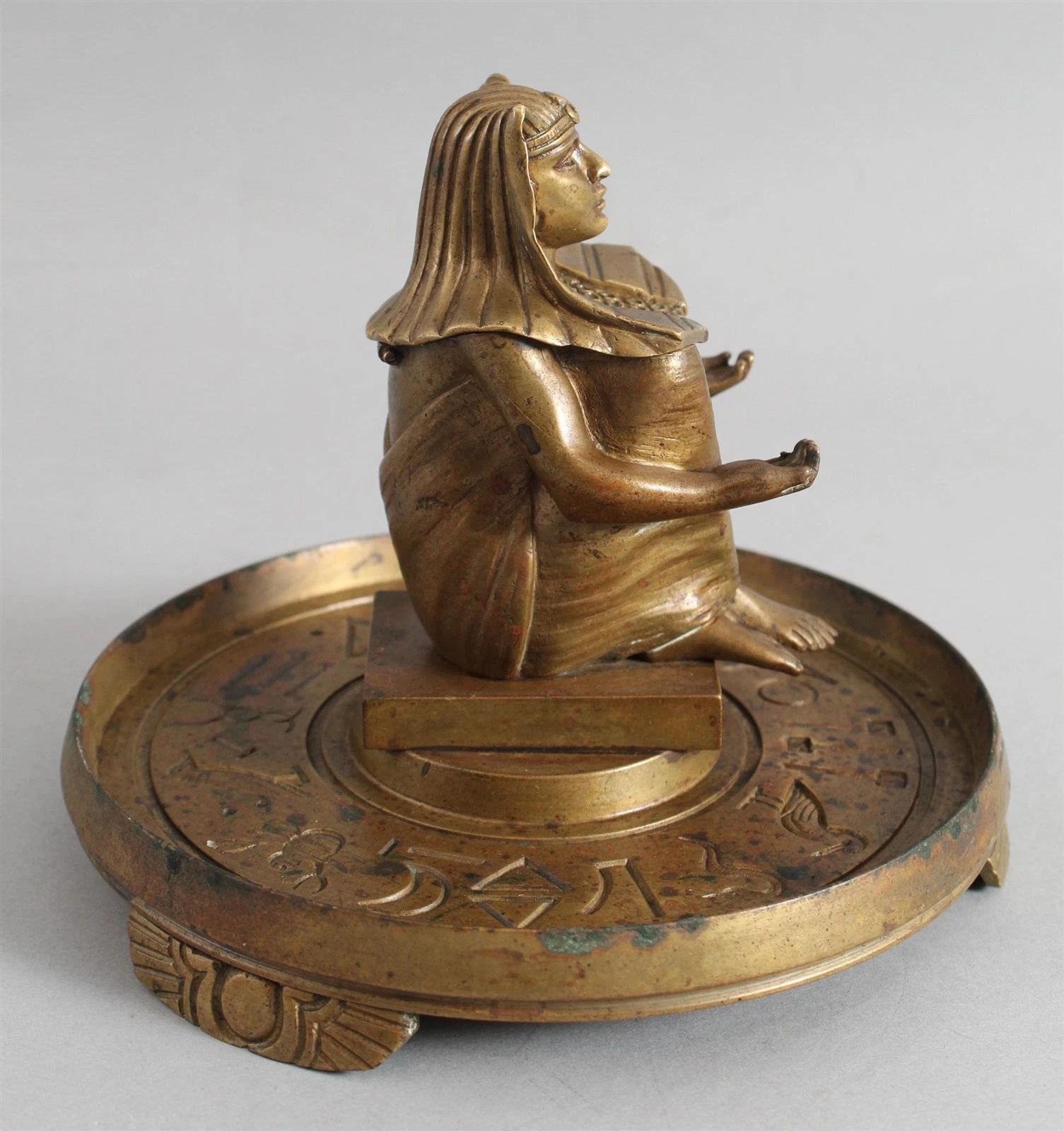
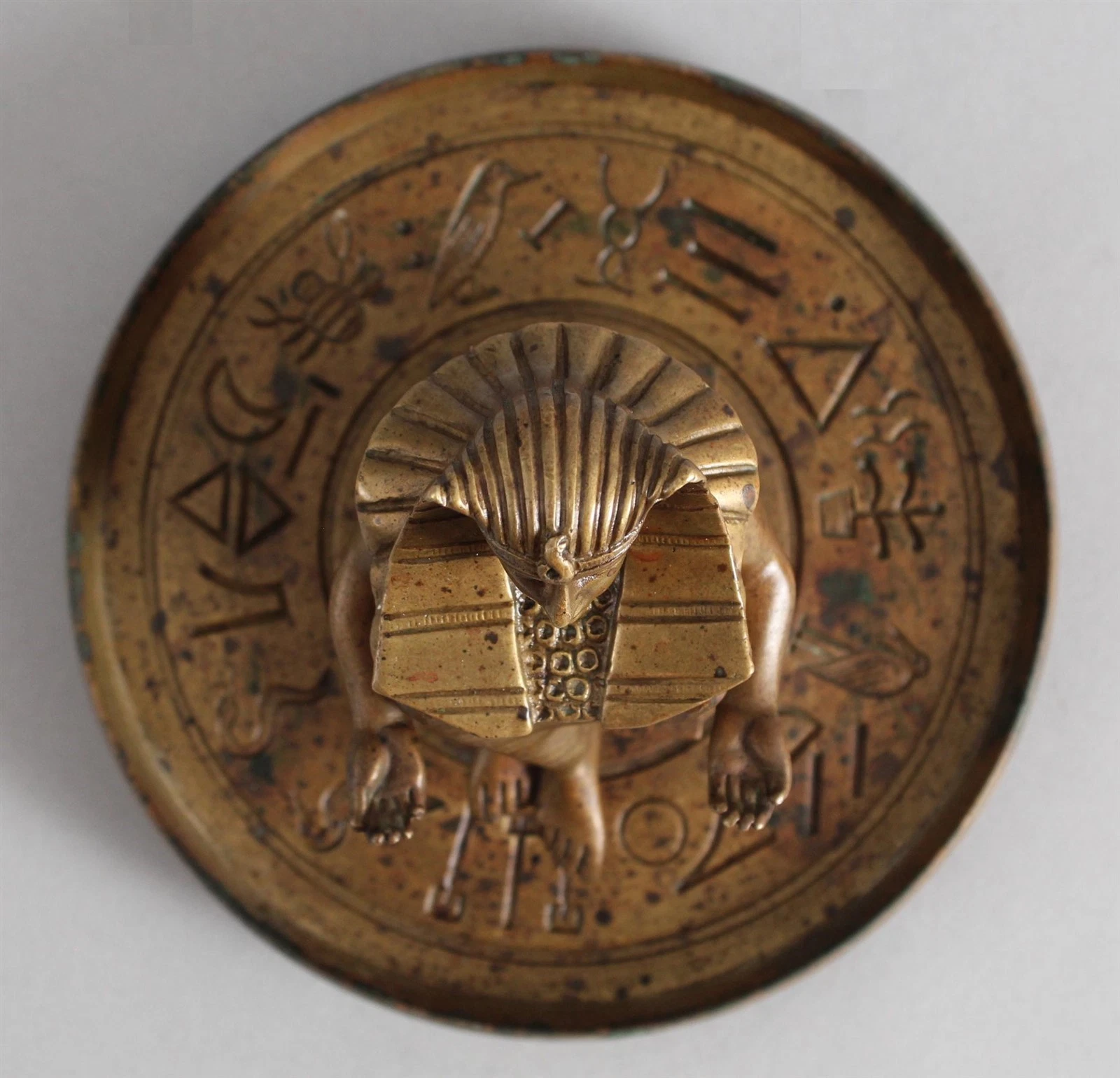
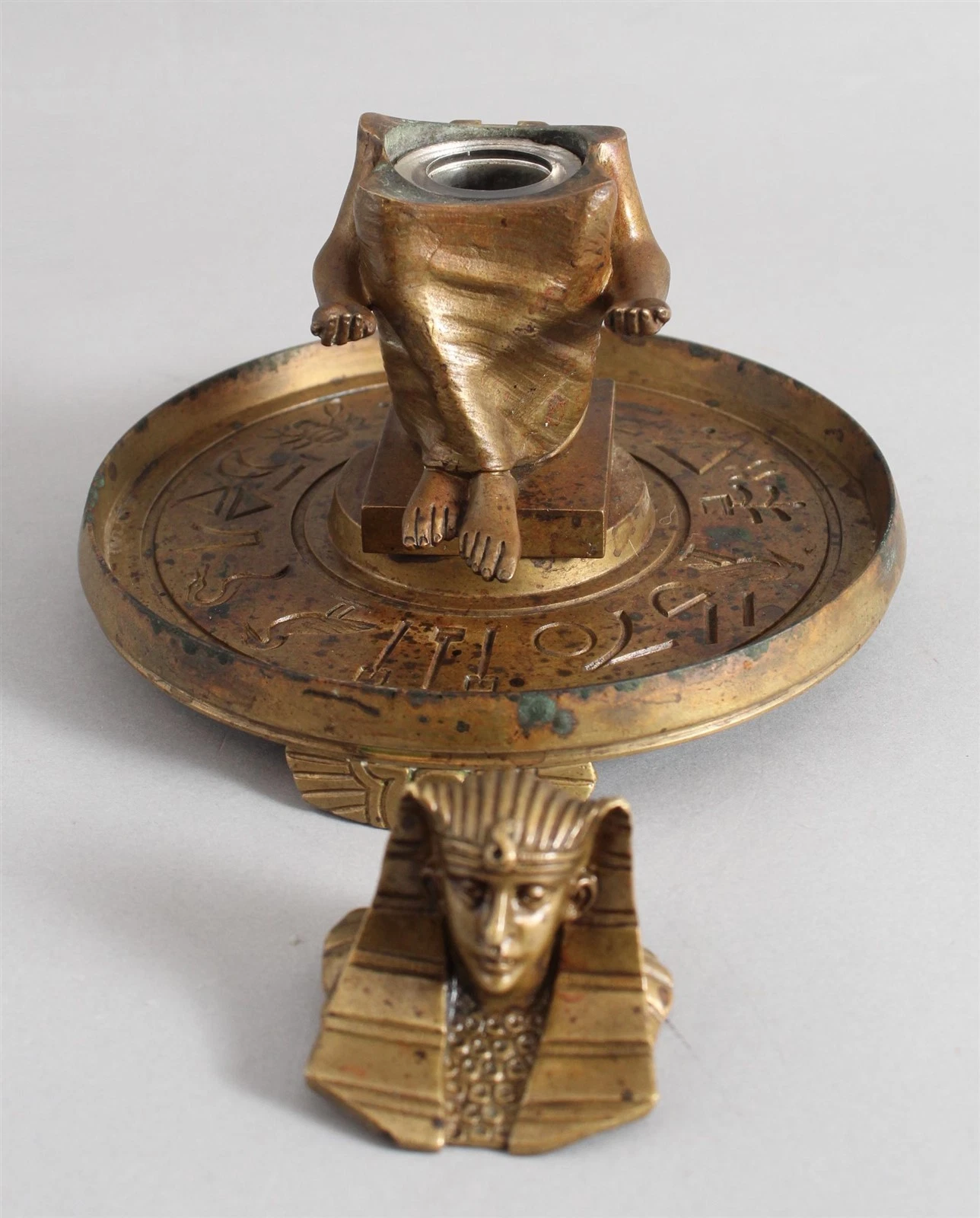
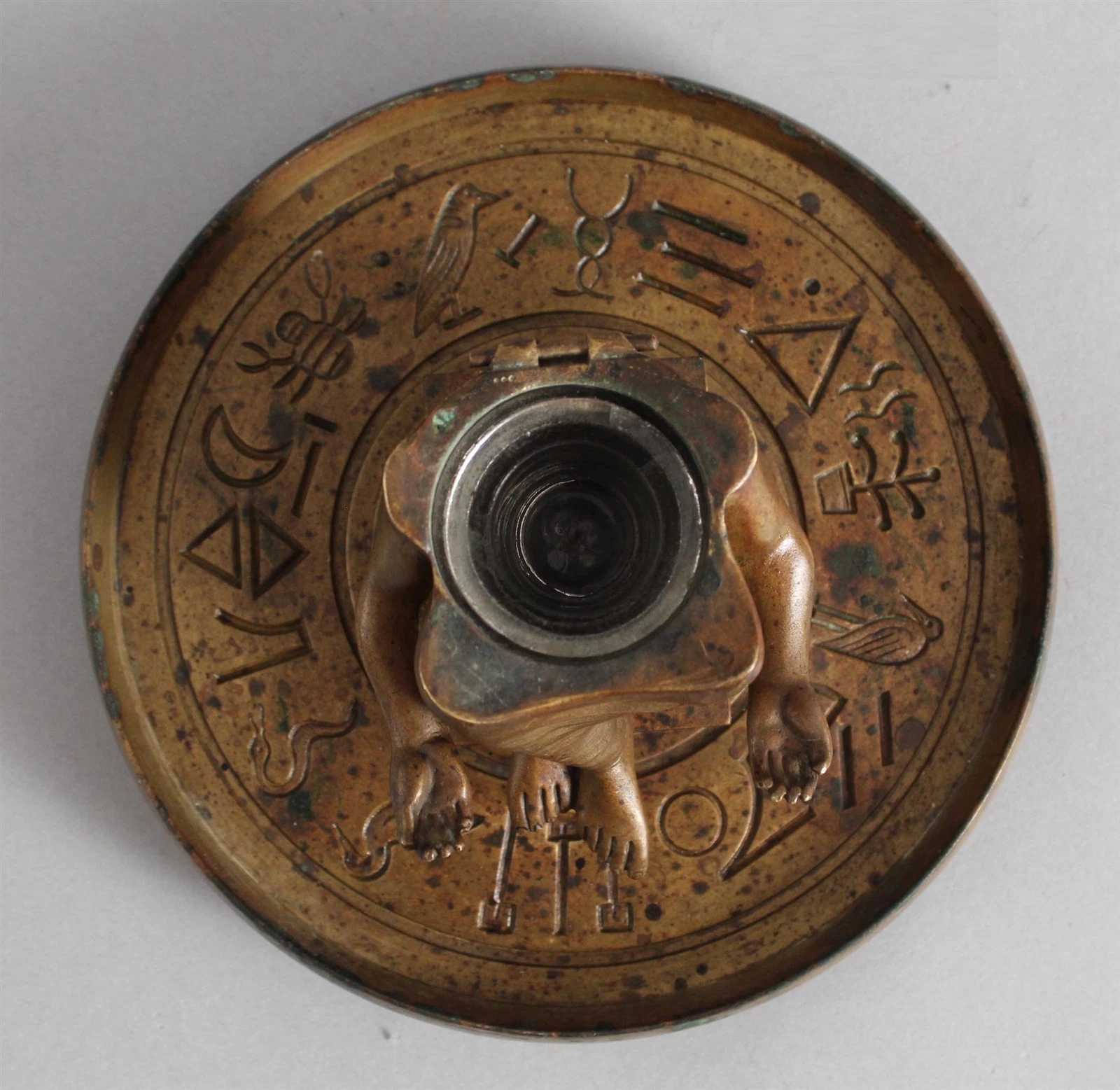
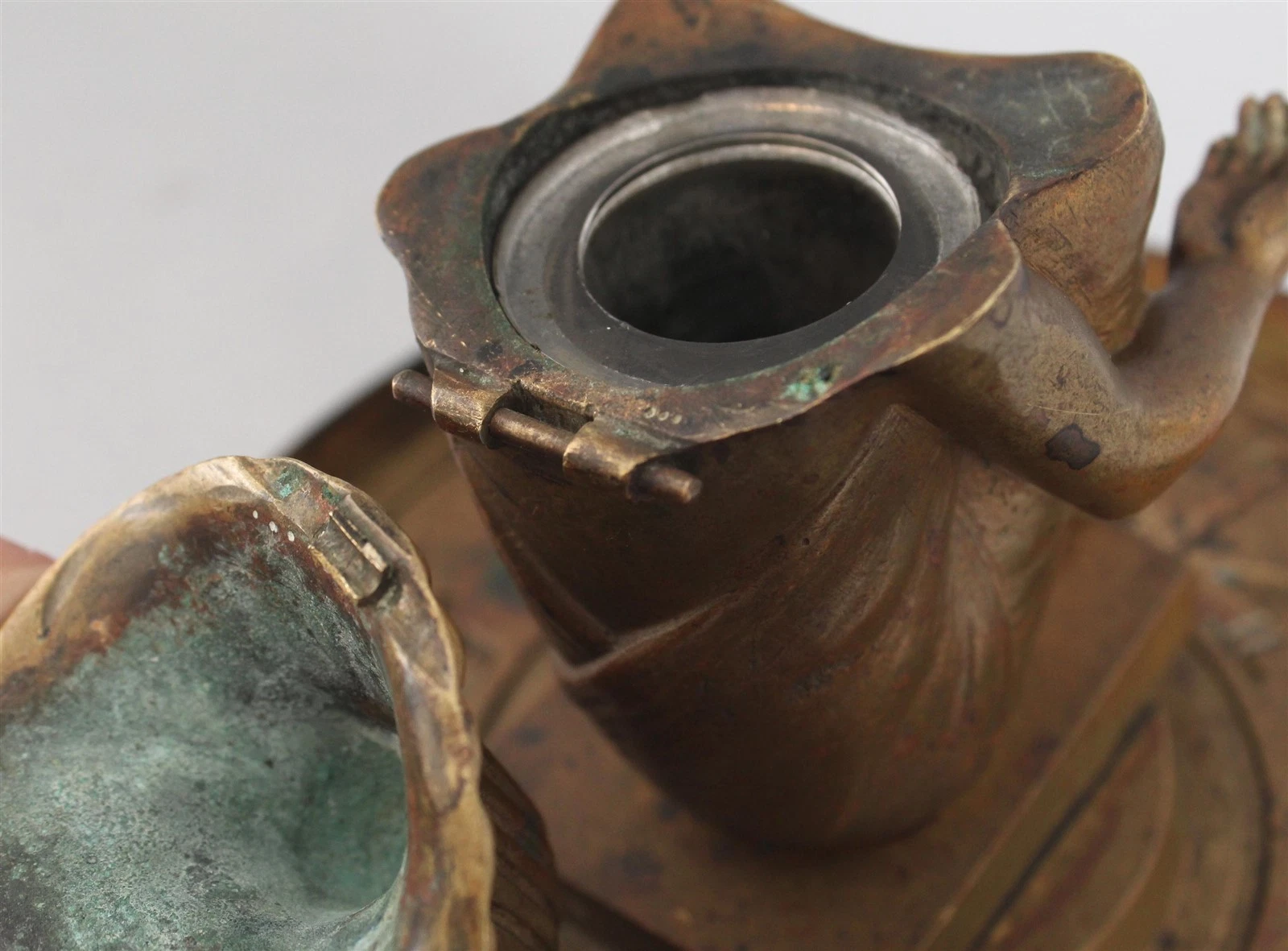
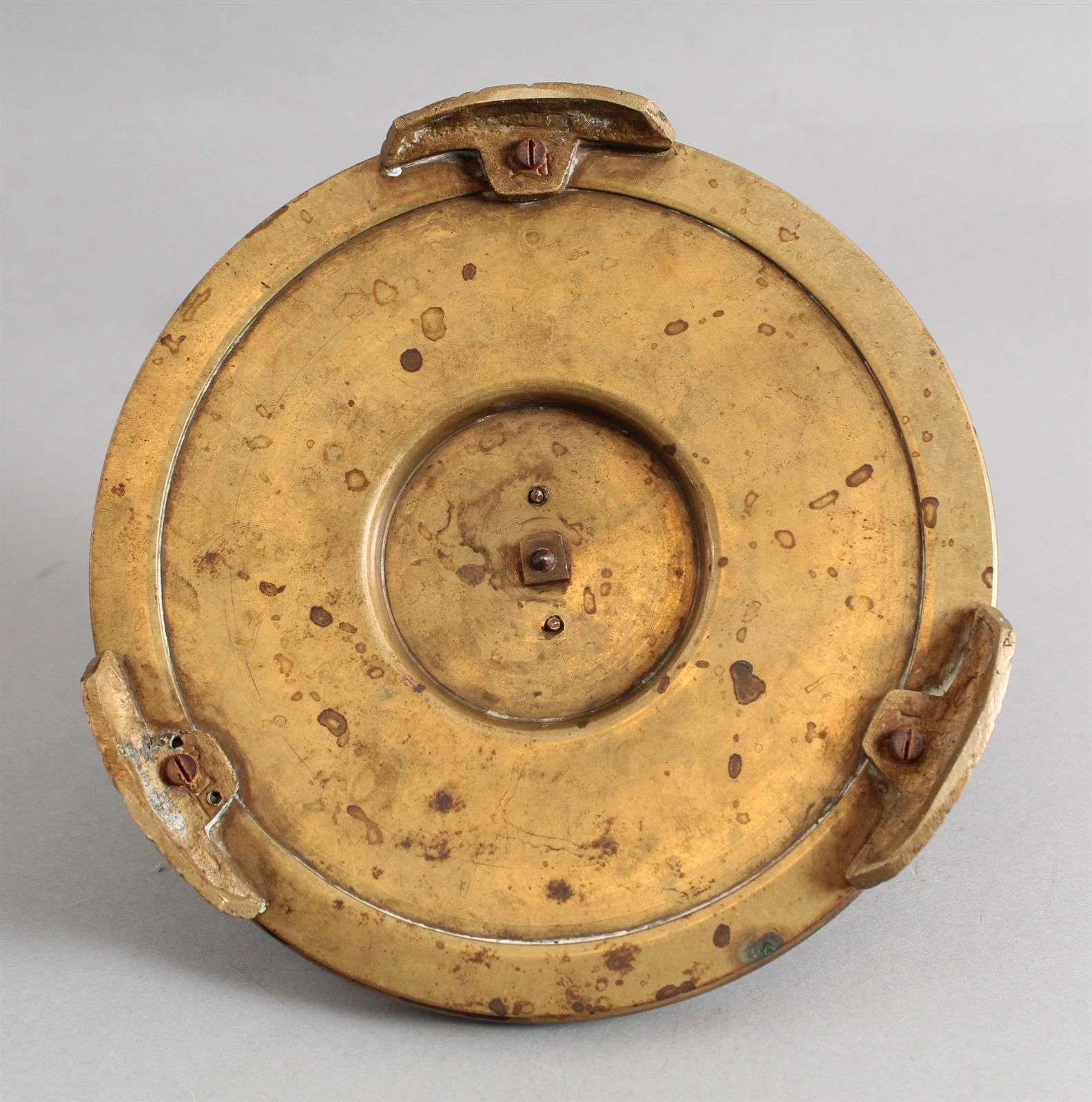
This Egyptian Revival bronze figural inkstand dates from the late 19th-century (circa 1880–1900), likely French or British in origin. Two examples are pictured. The first example is missing the round base and glass insert. The second example has a broken hinge.
The Central Figure & Pen Rest
- Figure & Headdress: The figure wears a stylized Nemes headdress complete with the royal cobra (Uraeus) on the brow and a beaded/segmented wesekh (broad collar) around the neck. While it borrows the regal regalia of a Pharaoh, the seated posture with knees drawn up and wrapped in a draped mantle deliberately invokes ancient Egyptian block statues or seated scribes.
- Outstretched Hands: The hands are cast cupped and outstretched specifically to serve as a cradle/pen rest for a dip pen. When resting across both palms, the pen sits horizontally directly in front of the figure.
- The Inkwell: The hinged head/shoulders portion forms the lid covering the well, which retains its original removable glass cup insert.
The Hieroglyphs: Real or Pseudoglyphs?
The symbols arranged around the dish rim are decorative “pseudoglyphs” rather than a grammatically legible Ancient Egyptian sentence.
During the Victorian Egyptian Revival movements—spurred by events like the opening of the Suez Canal (1869) and the transport of “Cleopatra’s Needles” to London and New York (late 1870s/early 1880s)—European foundries freely borrowed recognizable Egyptian signs from museum collections and pattern books without concern for authentic syntax:
- Recognizable Signs Borrowed: You can spot distinct, faithful glyphic shapes, including the bee (bjt, a classic symbol of Lower Egypt/royalty), water ripples/snakes, an ibis or falcon perched on an arm, the crescent moon, braided wicks, and triangular/wedge markers.
- The Feet: The tray itself rests on cast feet modeled after the Winged Solar Disk (Behedeti), a symbol of divinity and royal protection.
Date, Maker, and Origin
- Era / Date: Circa 1880–1900 (Late 19th-century Egyptian Revival).
- Origin: Most likely France or the United Kingdom. French foundries in Paris led the market for decorative cast bronze and brass desk accessories (bronzes d’art) in Egyptian Revival and Grand Tour tastes, though English metalware makers in Birmingham produced very similar stamped and cast brass pieces.
Sold for $167 in April 2024 (Central figure only)
Example with circular base (broken hinge): Sold for $129 in August 2026
Content disclaimer. The information posted is the owner’s best knowledge and may not have been vetted by the SOIC. We welcome comments, corrections, and additions, working to make our website information comprehensive and accurate.
Join the Society of Inkwell Collectors (SOIC) – it’s free!
Founded in 1981 as a non-profit organization,
we are documenting inkwells (and accessories).
We’re here to help and inform!