


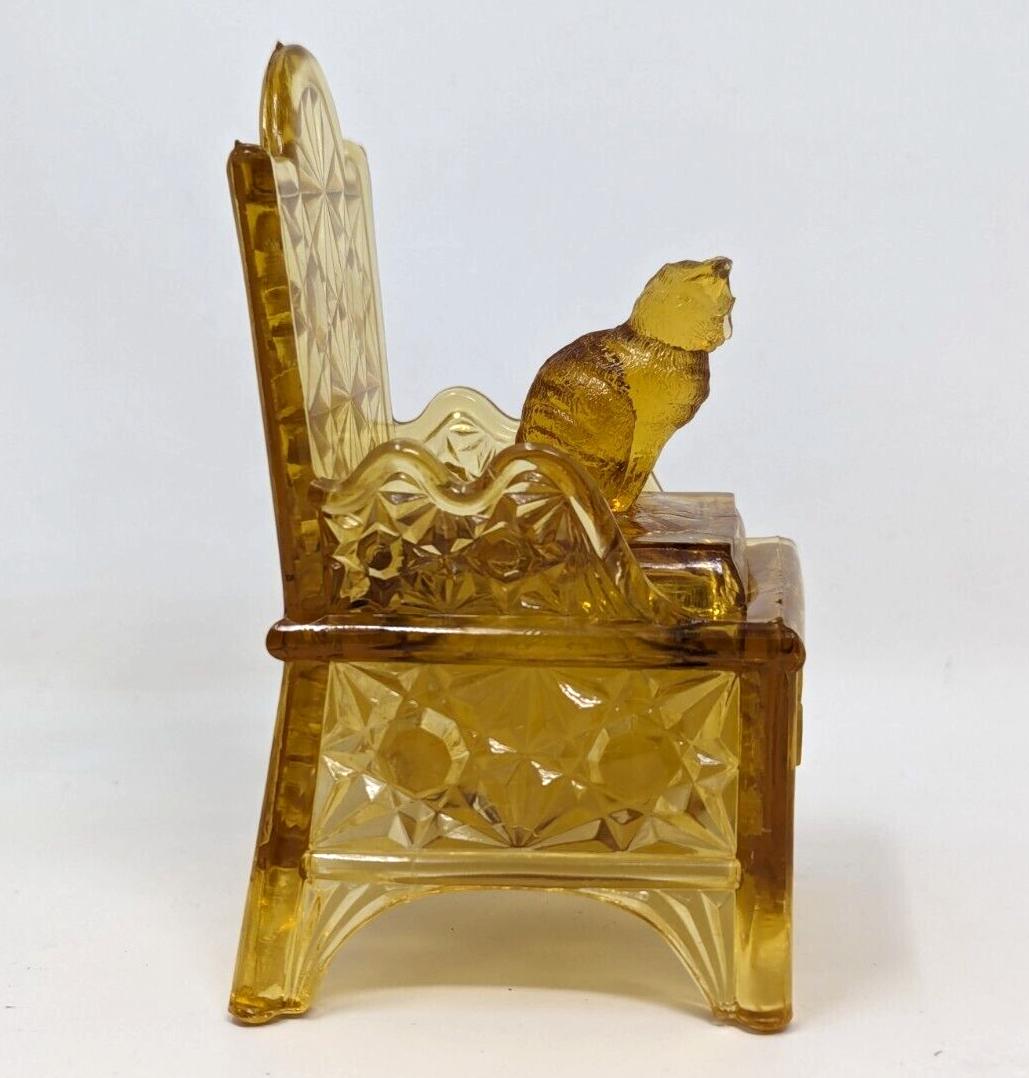

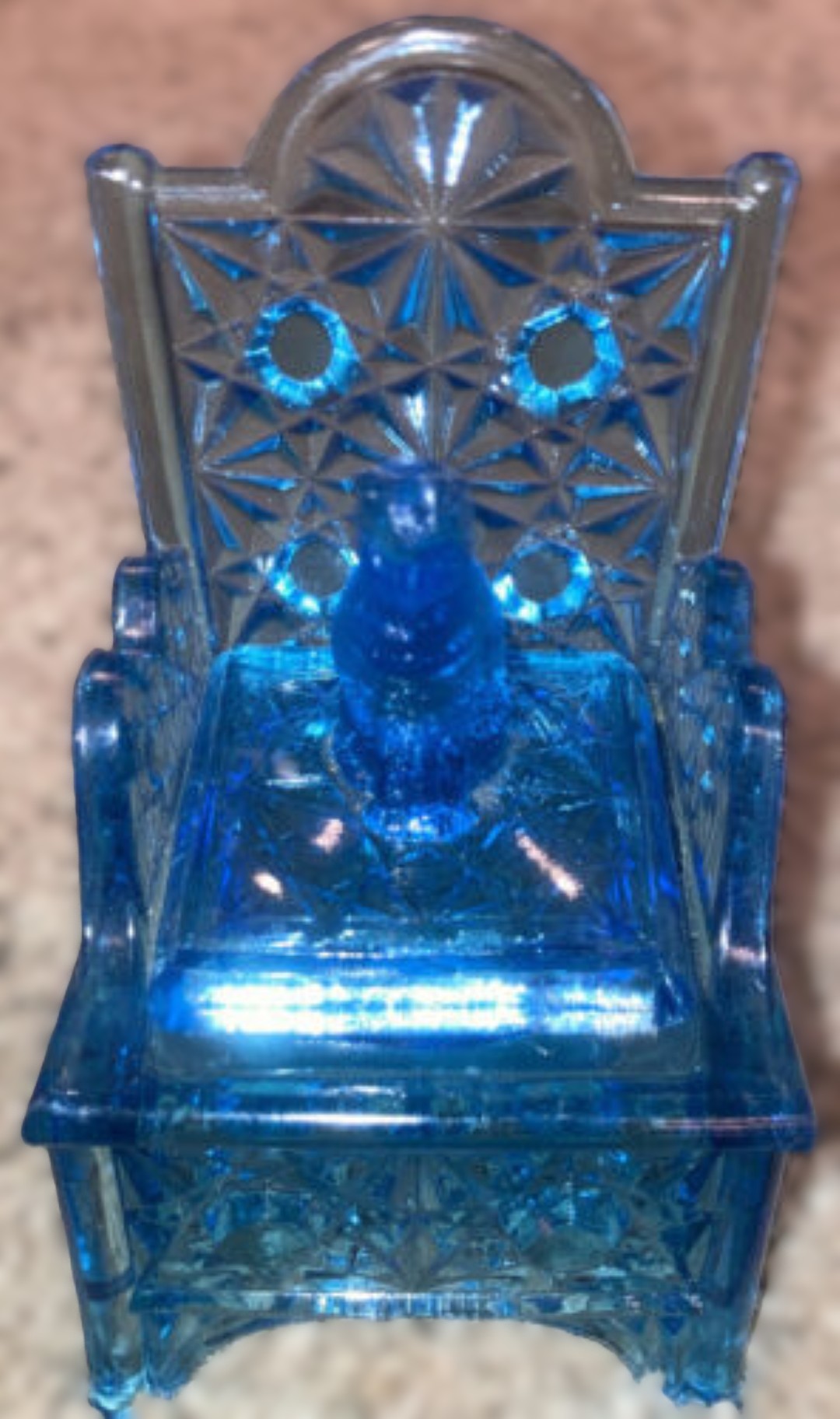
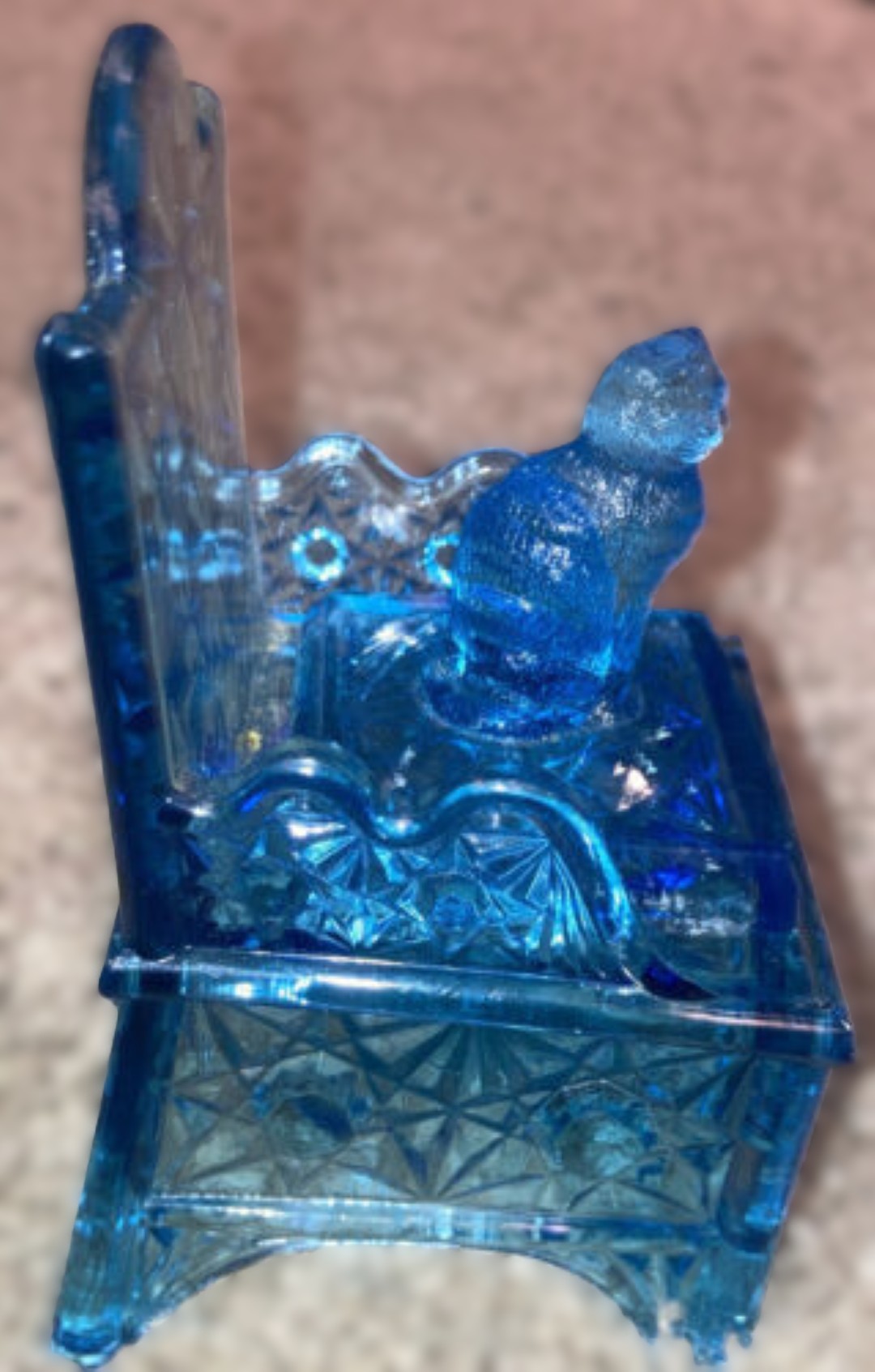

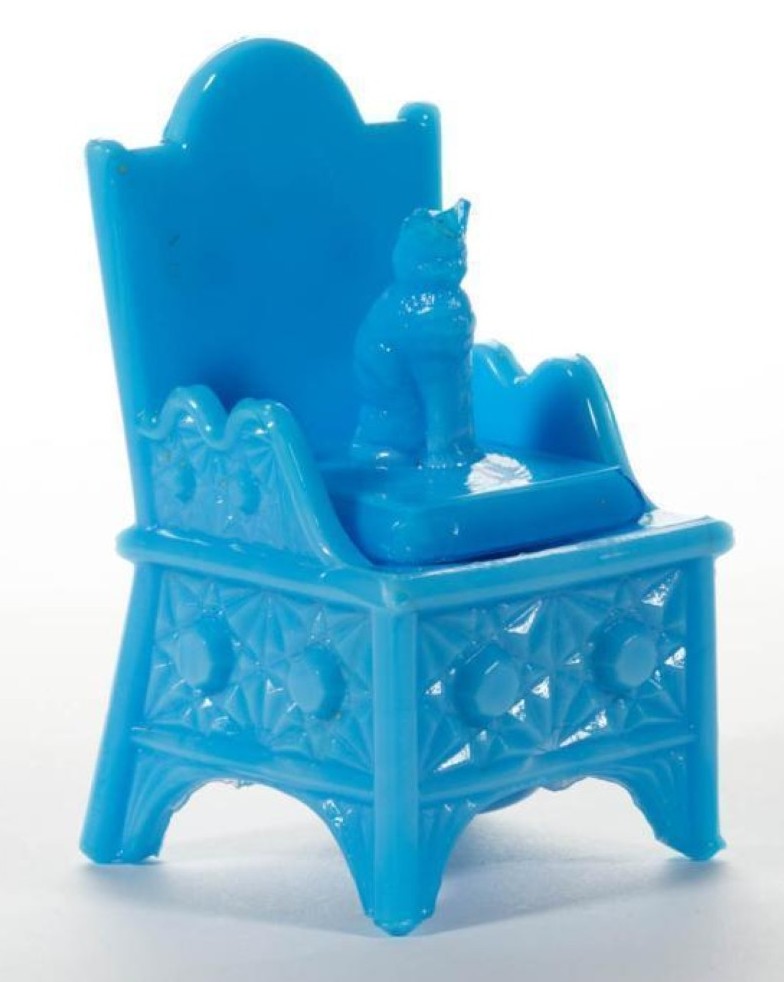
EAPG Glass – Cat on a Chair
| Categories | Glass - Figural |
| Type | Cat |
| Material | Glass |
| Markings | Unmarked |
| Manufacturer | Canton Glass Co. |
| Origin | United States |
| Date or Era | circa 1890 |
| Measuring | 2 ¾” x 2 ⅝” x 4 ½” high |
These are classic examples of Early American Pattern Glass (EAPG).
- Identification:
- The Maker: These are attributed to the Canton Glass Company.
- History: Established in 1883 in Canton, Ohio. They later moved to Marion, Indiana, in the 1890s. They were famous for their novelty items and “pressed” glass designs.
- The Pattern: “Daisy & Button.”
- This was one of the most popular patterns of the 1880s, characterized by the geometric grid of raised buttons and starburst “daisies” that imitated expensive cut glass.
- Specific Model: In collector catalogs, this piece is often titled “Cat on Chair” or “Pussycat on Chair.”
- Description and Function
- Form: The inkwell is whimsical, modeled as a high-backed parlor chair. The “upholstery” on the chair back and sides features the Daisy & Button texture.
- The Mechanism: It is a three-part mold design:
- The Base: The body of the chair forms the main reservoir.
- The Lid: The seat of the chair serves as the lid, featuring a seated cat acting as the finial/handle.
- The Insert: There is a small removable glass cup inside that held the ink.
- Age and Colors
- Age: These were manufactured circa 1885–1895.
- Colors: Canton produced these in several colors.
- Clear (Crystal):
- Amber (Golden Brown):
- Sapphire Blue:
- Opaque Blue
- They were also originally made in Canary (Vaseline glass/Yellow), which would glow under blacklight, and occasionally in Apple Green.
Note: These “Cat on Chair” inkwells have been reproduced in the mid-20th century (specifically by companies like L.G. Wright and Mosser). In evaluating for originals, look for crispness of the mold details – particularly the texture of the cat’s fur and the sharpness of the “buttons” on the chair back. The presence of the original fitted glass insert is another strong indicator of authenticity, as reproduction inserts often fit poorly or are plastic.
Blue sold for $94 in November 2025.
Amber sold for $200 in January 2024; Amber sold for $171 in July 2026
Clear sold for $111 in October 2022
Opaque Blue sold for $275 in September 2017
Content disclaimer. The information posted is the owner’s best knowledge and may not have been vetted by the SOIC. We welcome comments, corrections, and additions, working to make our website information comprehensive and accurate.
Join the Society of Inkwell Collectors (SOIC) – it’s free!
Founded in 1981 as a non-profit organization,
we are documenting inkwells (and accessories).
We’re here to help and inform!