

Double Inkstand with Seated Boy
| Categories | Figural - Persons |
| Type | Boy |
| Material | Silverplate |
| Markings | See Narrative |
| Manufacturer | Undetermined |
| Origin | Undetermined |
| Date or Era | circa 1900 |
| Measuring | 8” across; 5” high |
Description
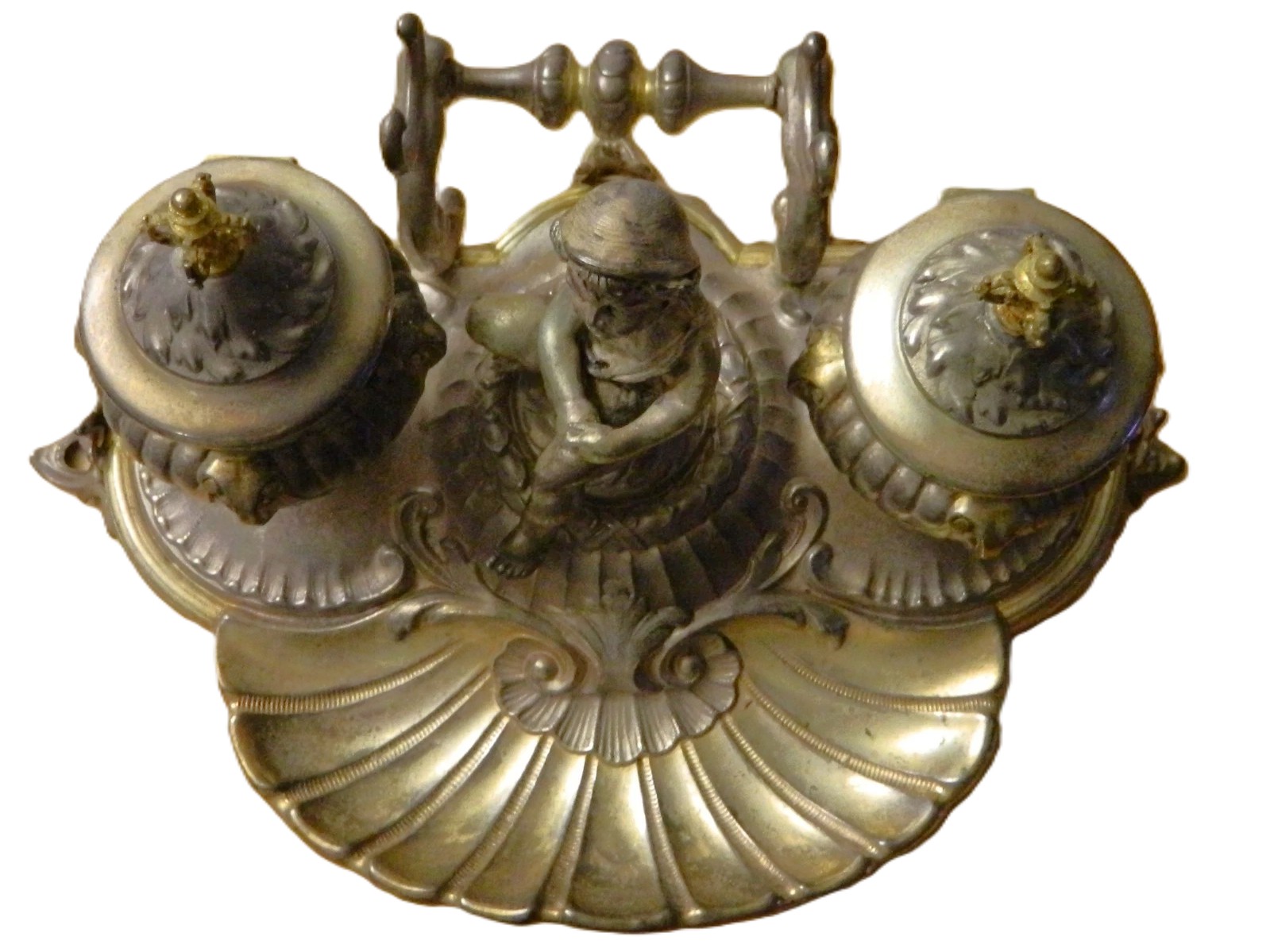
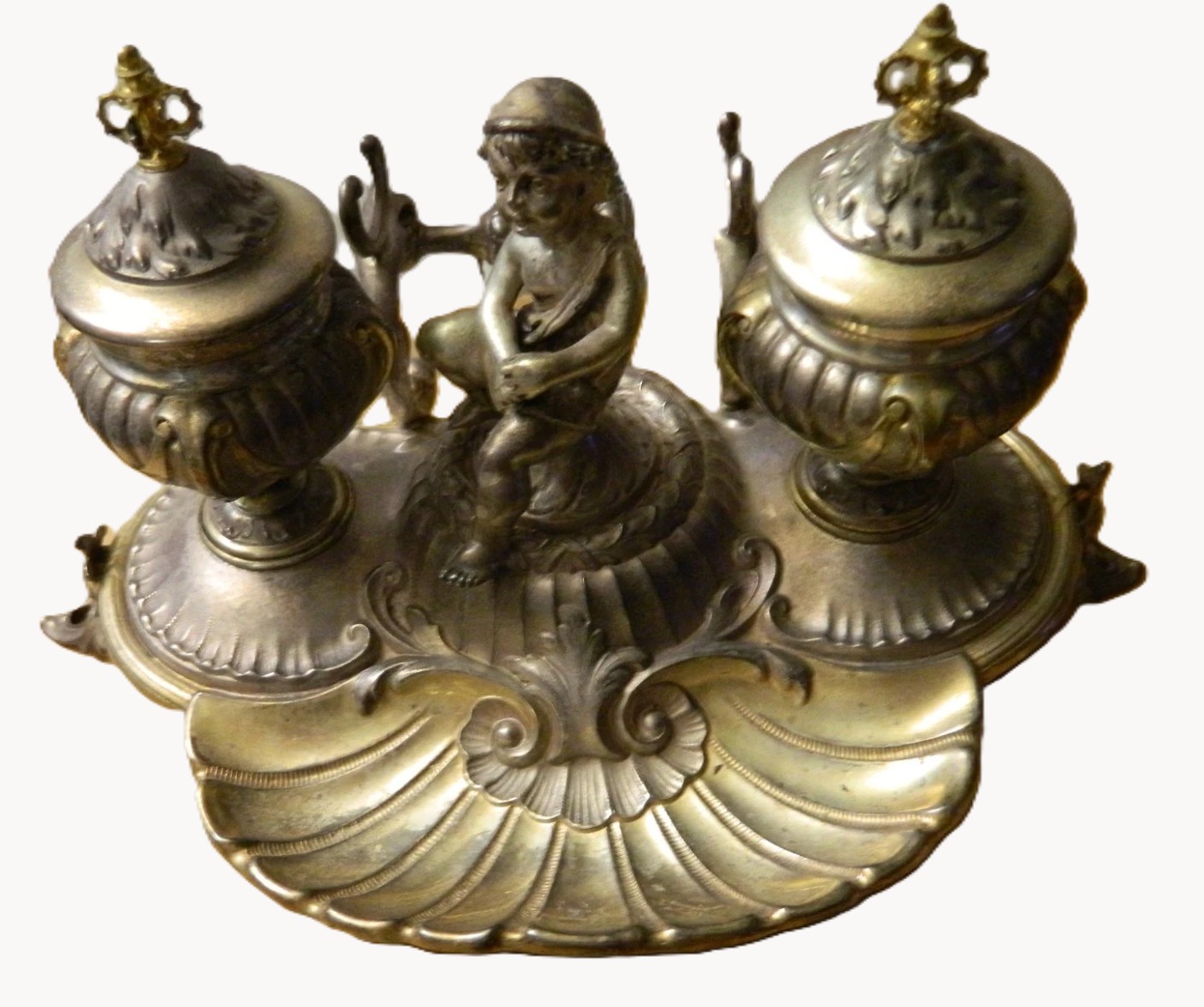
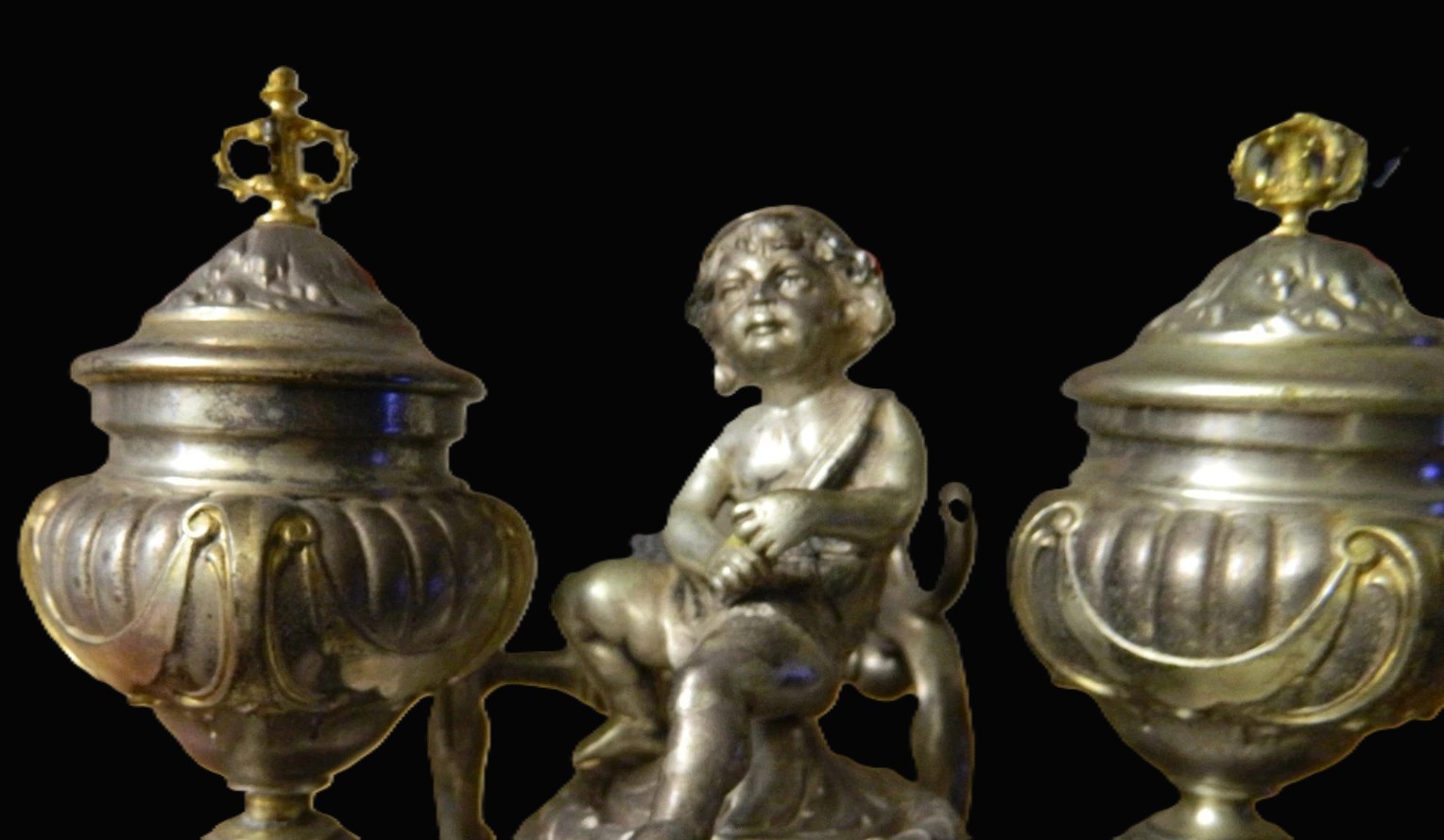
- Central Figure: The centerpiece features a detailed sculptural figure of a young boy seated on a raised, decorative mound.
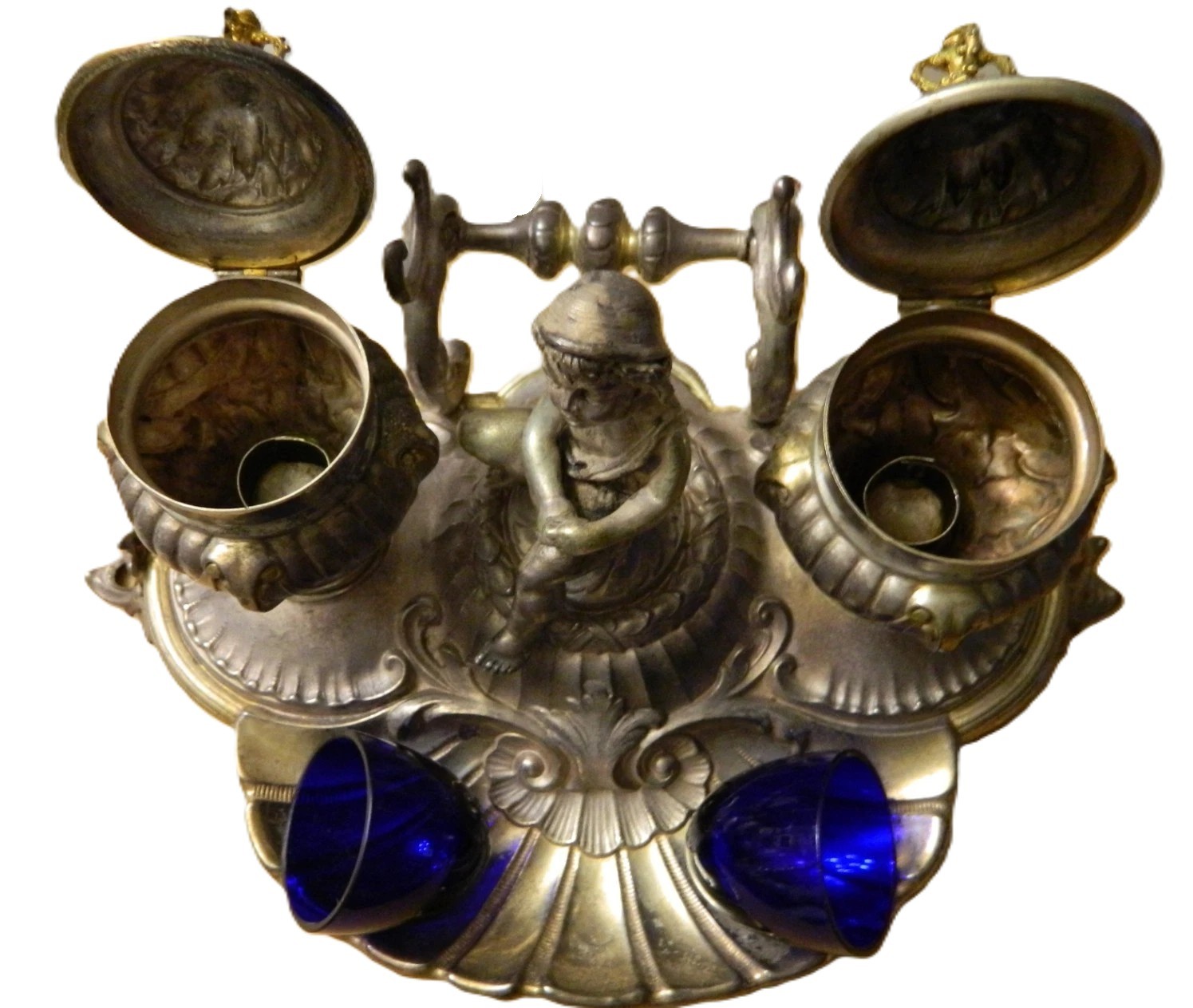
- Inkwells: Flanking the boy are two urn-shaped inkwells with decorative, gadrooned bodies and hinged lids surmounted by cast finials. When open, they reveal small interior collars meant to hold cobalt blue glass inserts.
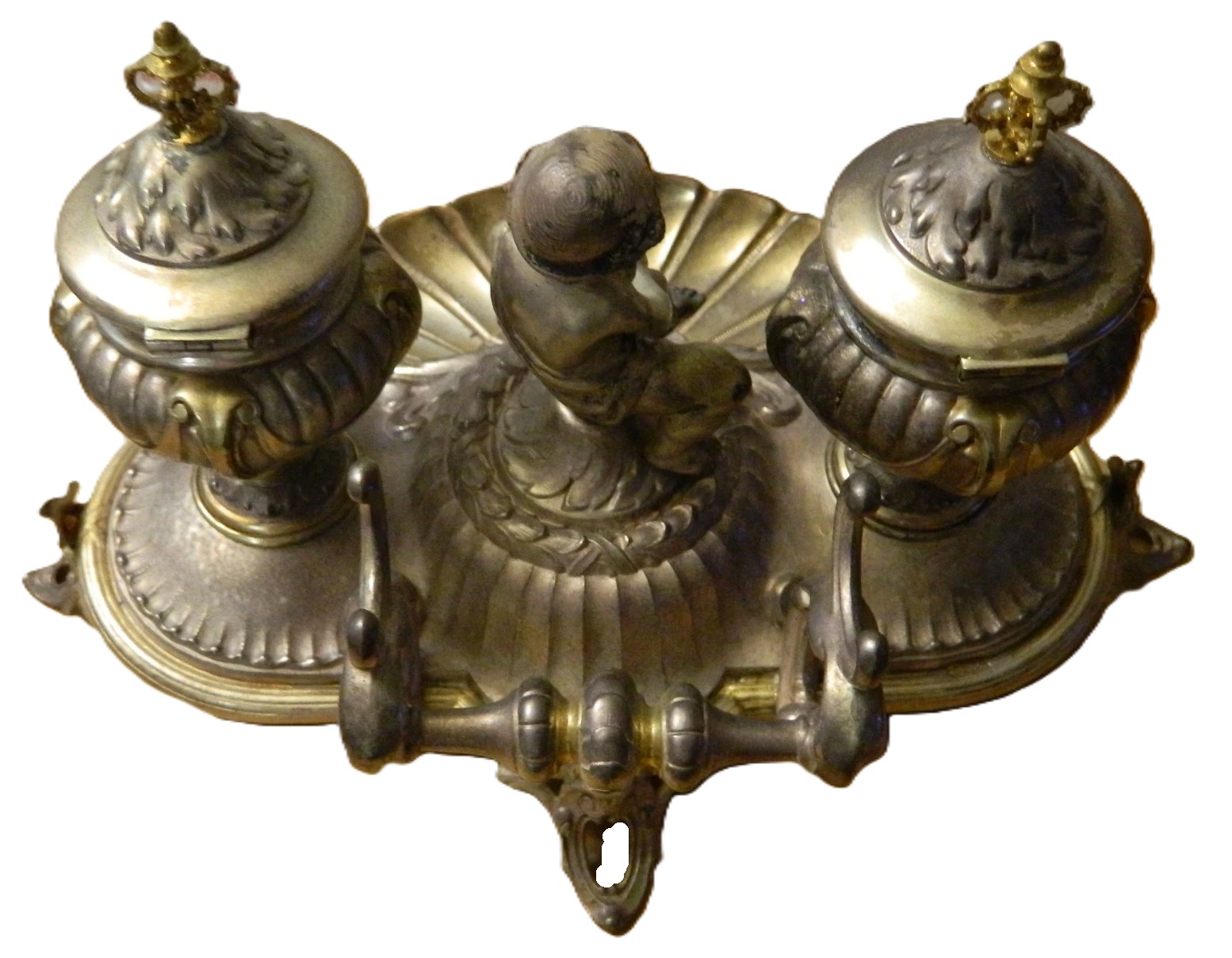
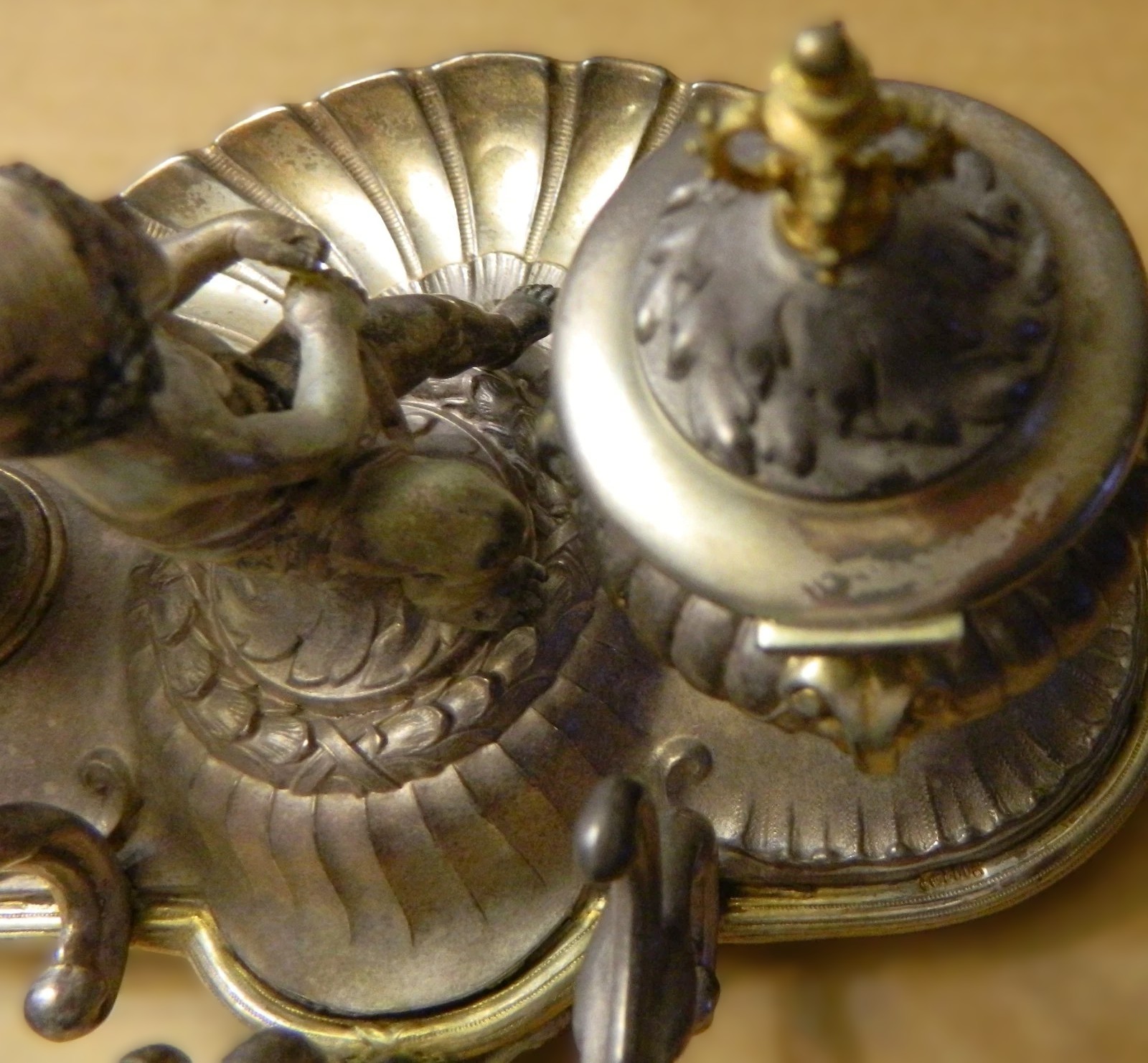
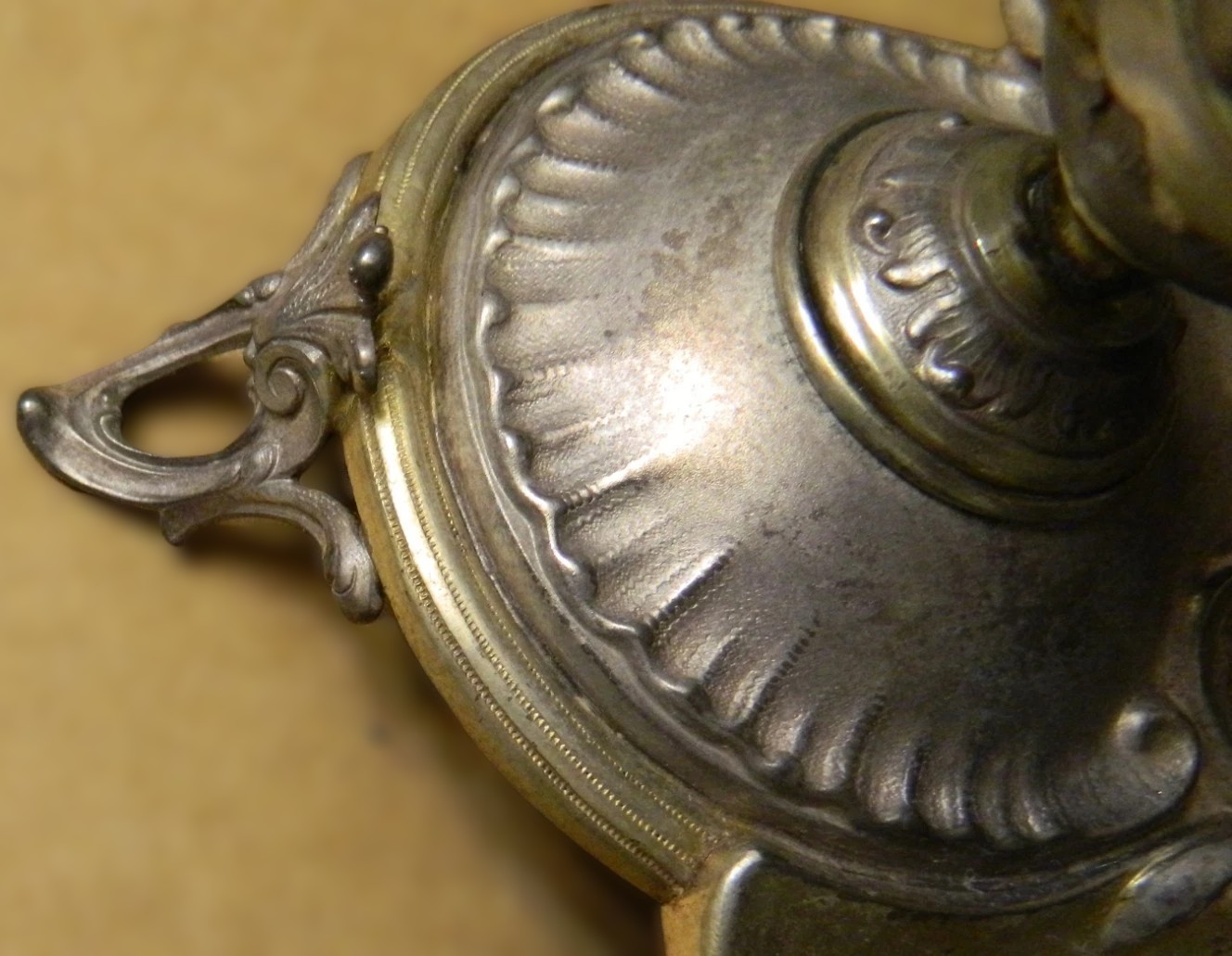
- Base: The front of the base is formed into a wide, fan-like scallop shell design that functions as a pen tray. The two upward-curving hooks on either side in the rear are designed to support a dip pen horizontally behind the central figure.
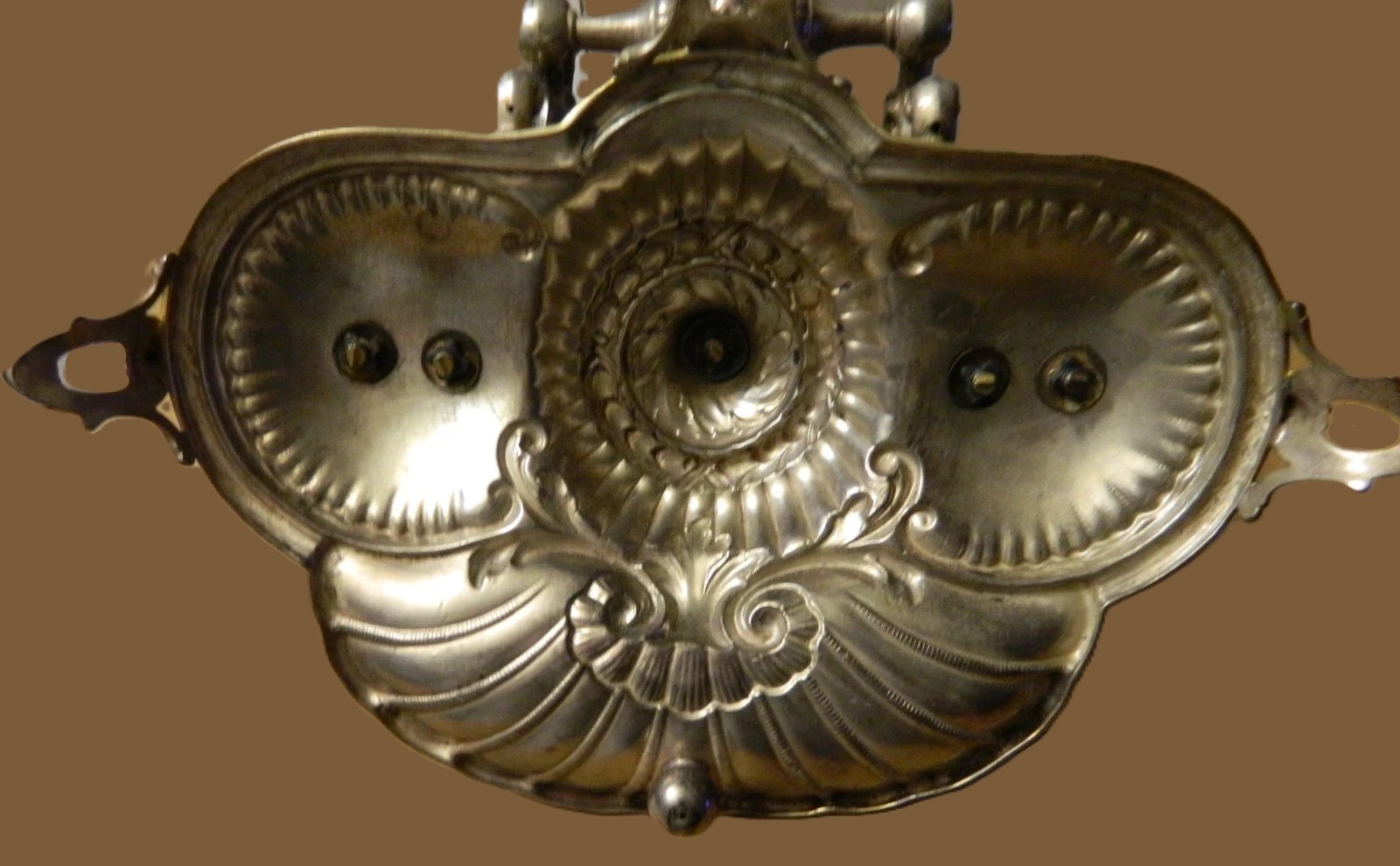
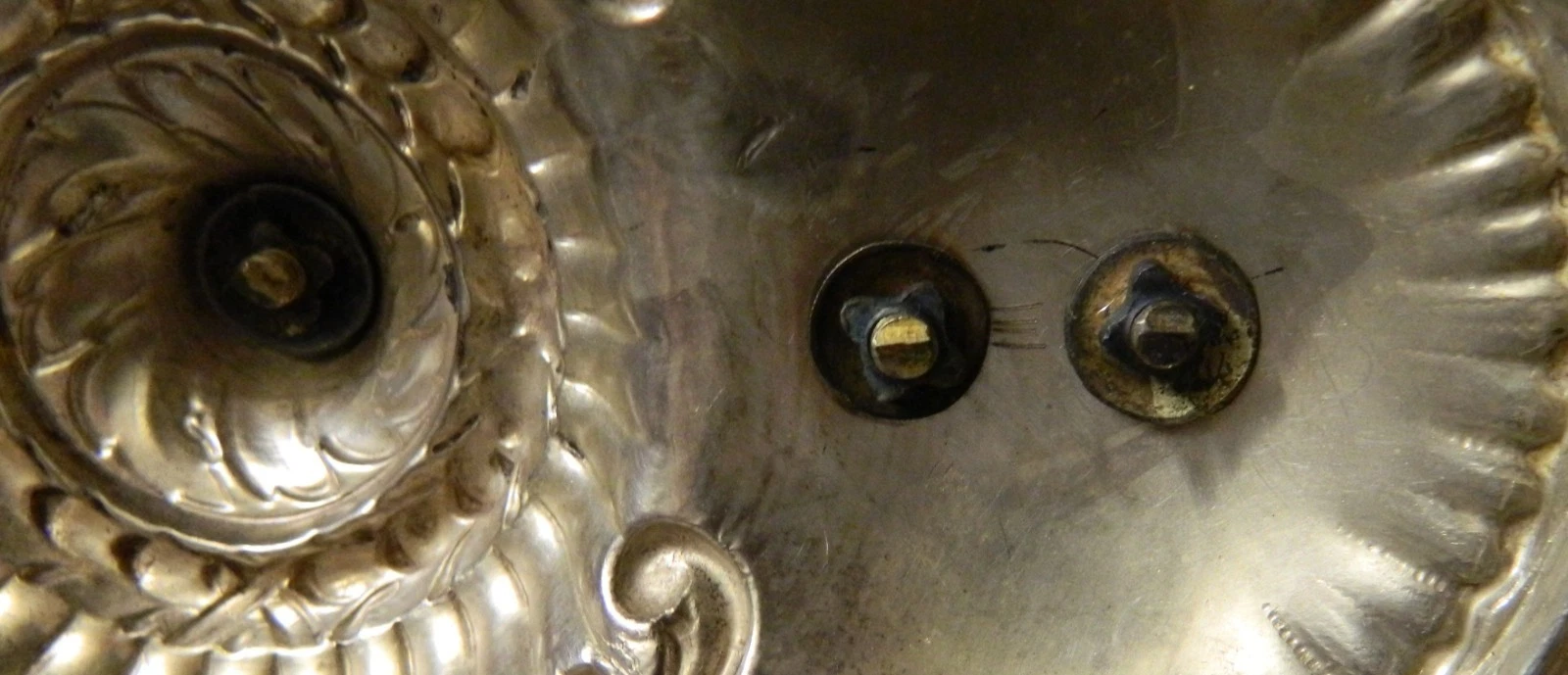
- Construction: The underside shows that the components (the inkwells and central figure) are modular, secured to the main tray using traditional threaded posts and winged or square-headed metal nuts.
Maker and Origin
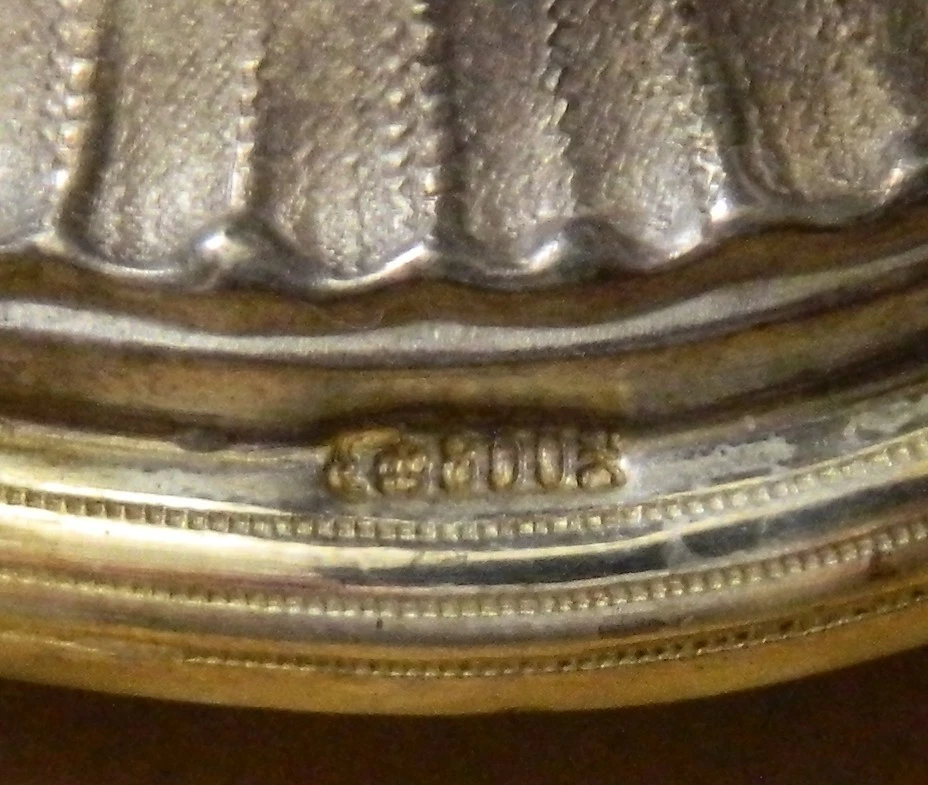
The edge of the base features a stamped row of small, stamped marks in separate cartouches.
These are pseudo-hallmarks (or electroplate duty marks), which were commonly used by British and American silver-plating manufacturers in the late 19th and early 20th centuries to mimic official sterling silver hallmarks. While the specific manufacturer’s symbol at the beginning is somewhat worn, the sequence typically concludes with standard trade designations for high-quality plated ware manufactured in major metalworking hubs of the era (such as Sheffield or Birmingham, England, or the Northeastern United States).
Date of Manufacture
The inkstand can be dated to the late Victorian or Edwardian era, circa 1880–1910. This period matches both the elaborate Rococo Revival aesthetic and the industrial manufacturing style of the underside, where the cast pieces are fastened together by standard period machine threading and nuts.
Metal Composition
The inkstand is made of silver-plated base metal (most likely EPNS—Electroplated Nickel Silver—or silver plate over brass).
This is visible where decades of use and polishing have resulted in “bleeding.” The thin layer of silver plating has worn away on the high-relief details, edges, and finials, exposing the warm, yellowish-gold color of the underlying copper-alloy base metal beneath.
Sold for $410 in May 2026
Content disclaimer. The information posted is the owner’s best knowledge and may not have been vetted by the SOIC. We welcome comments, corrections, and additions, working to make our website information comprehensive and accurate.
Join the Society of Inkwell Collectors (SOIC) – it’s free!
Founded in 1981 as a non-profit organization,
we are documenting inkwells (and accessories).
We’re here to help and inform!