

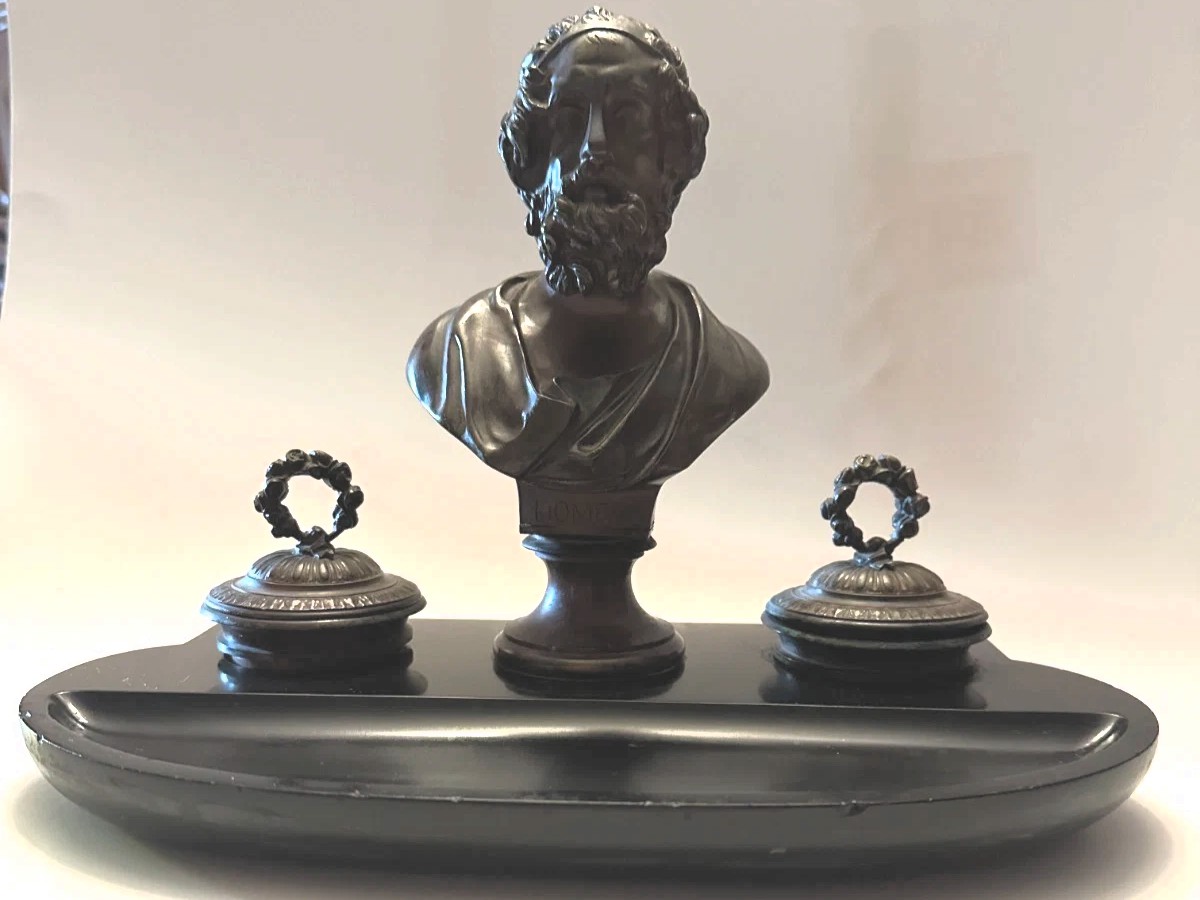
Double Inkstand with Homer
| Categories | Figural - Mythology; Literature; Religion; Fictional |
| Type | Literature |
| Material | Bronze, Marble |
| Markings | Unmarked |
| Manufacturer | Undetermined |
| Origin | Undetermined |
| Date or Era | circa 1890 |
| Measuring | 12 ¼” x 6 ¾” x 8 ½” high |
This inkstand features the Greek poet, Homer.
- Materials:
- Base: Constructed from polished black marble (likely Belgian Black, Portoro, or similar).
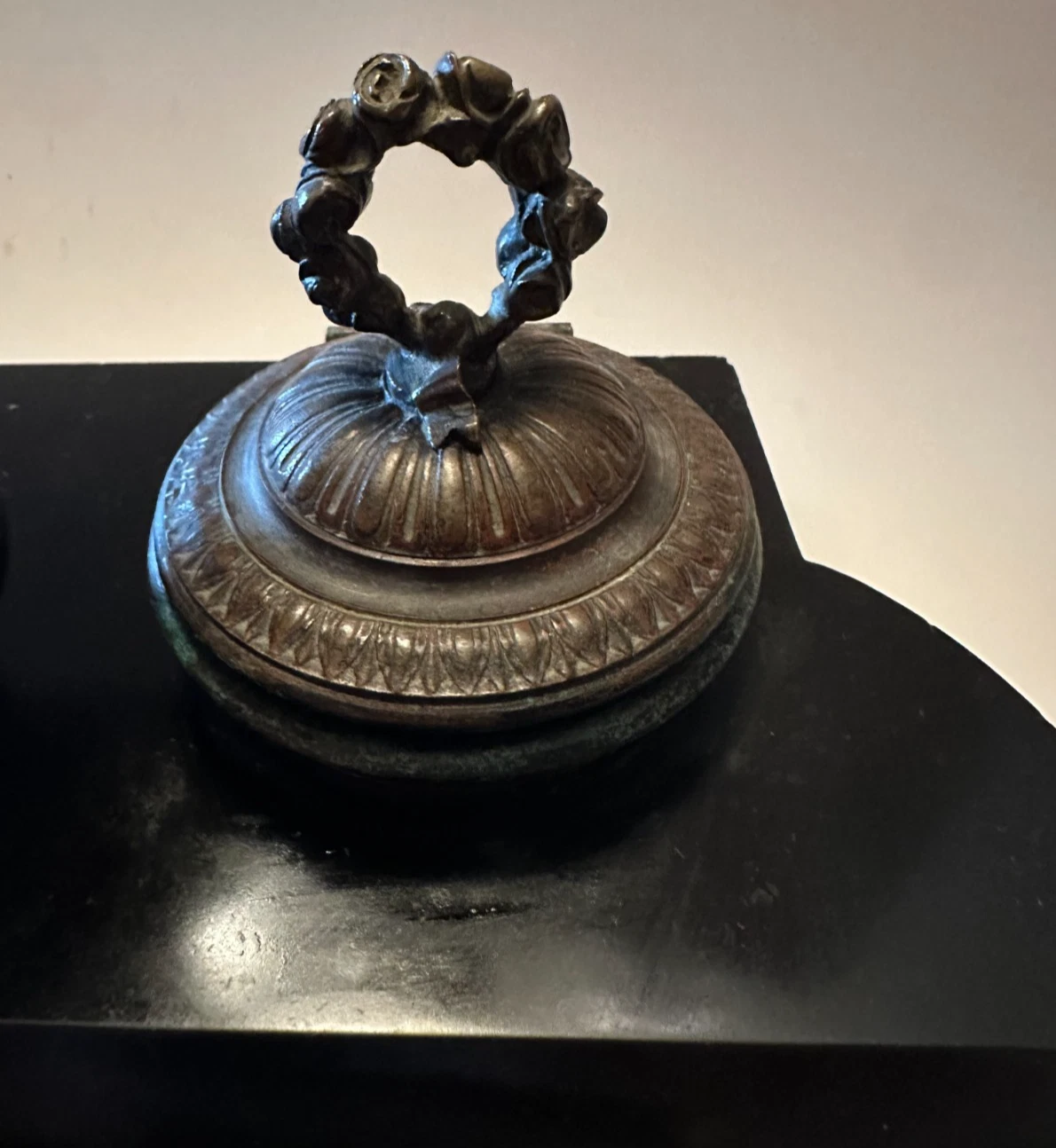
- Sculpture & Fittings: The central bust and inkwell fittings are made of bronze.
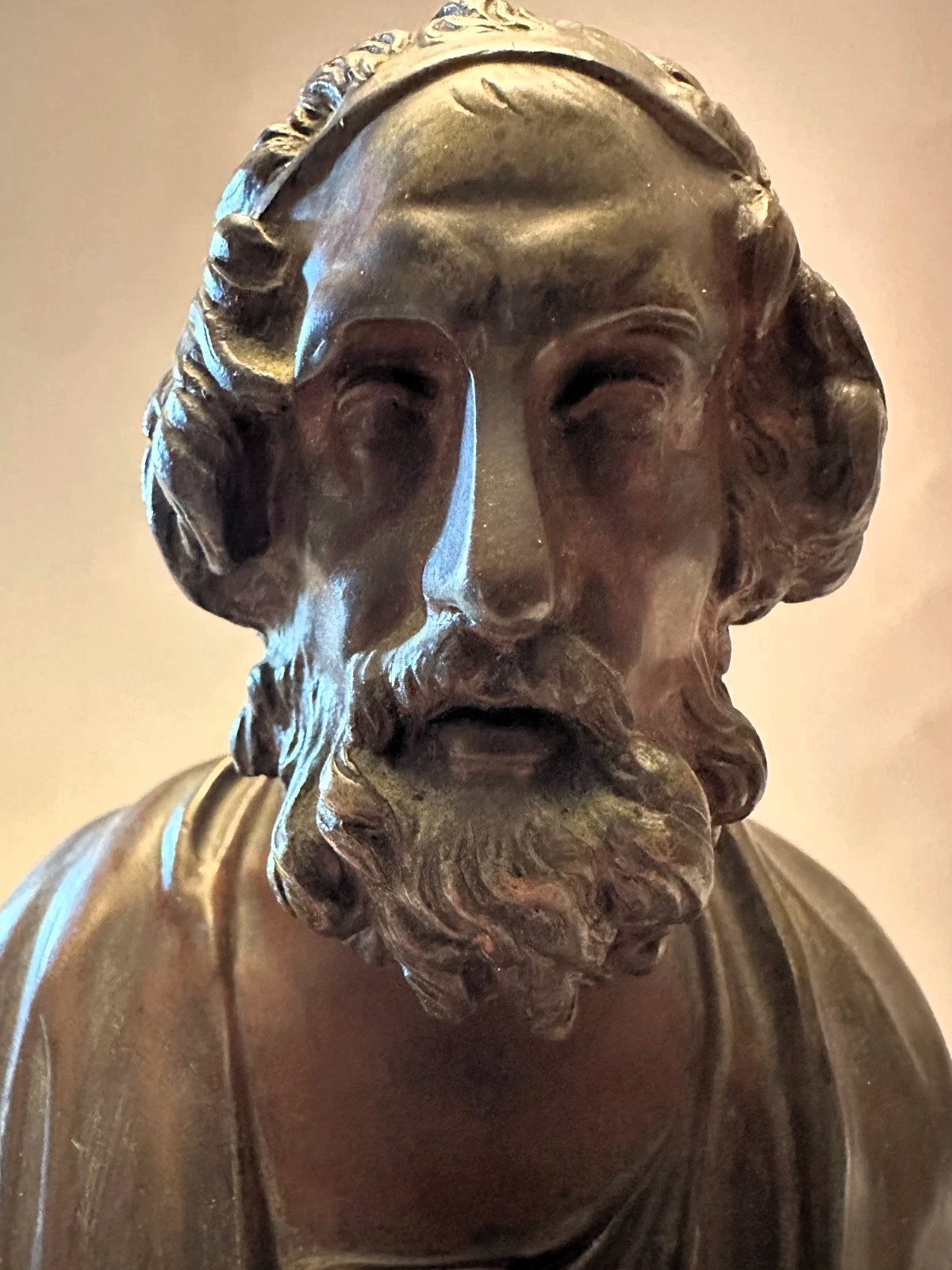
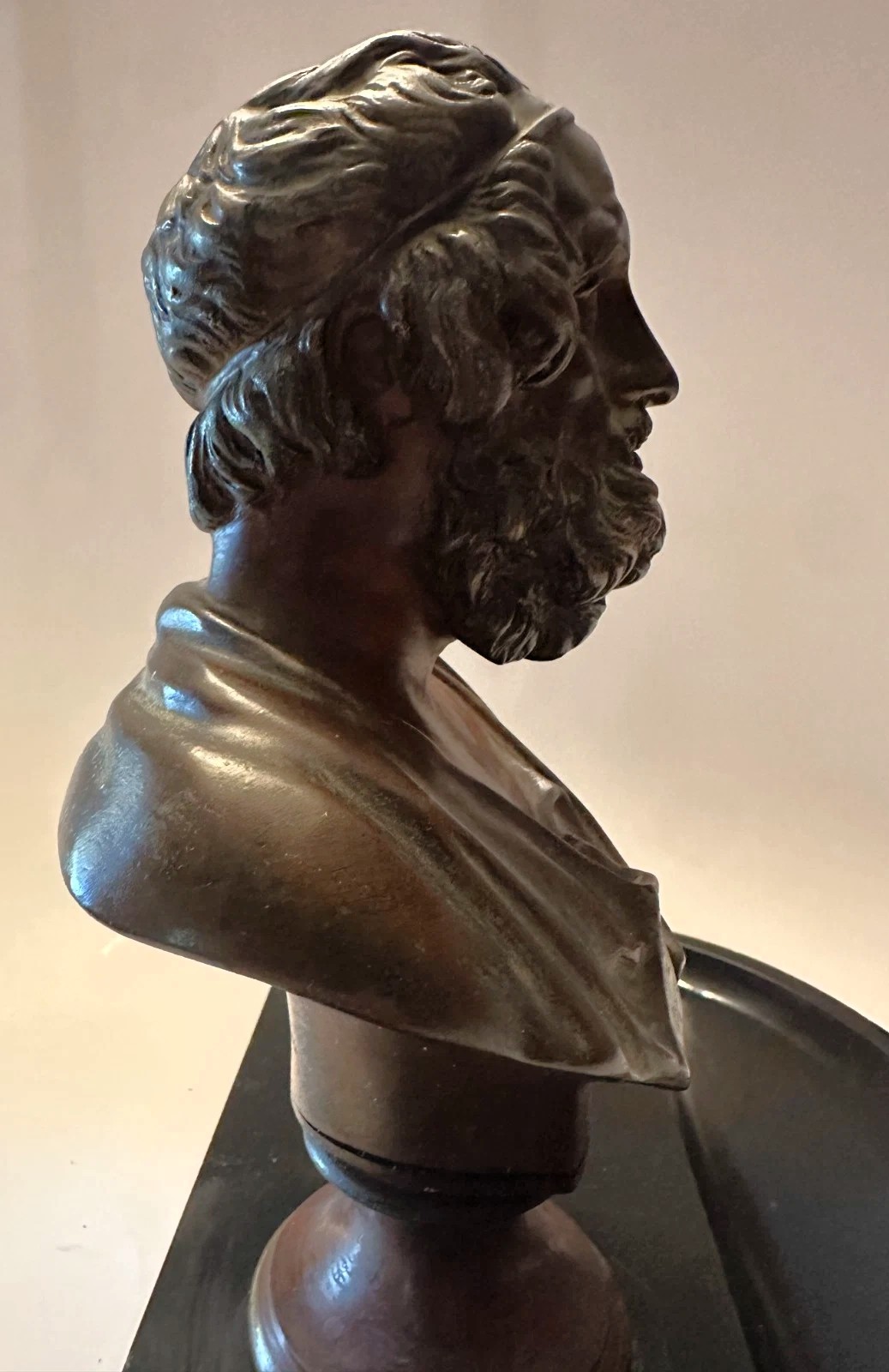
- Central Feature (Bust): A detailed bust of the Greek poet Homer is mounted prominently in the center of the base.
- The bust is rendered in the traditional Hellenistic style, depicting Homer as an elderly, bearded man with flowing hair. His eyes are characteristically shown as sightless, referencing the tradition that Homer was blind.
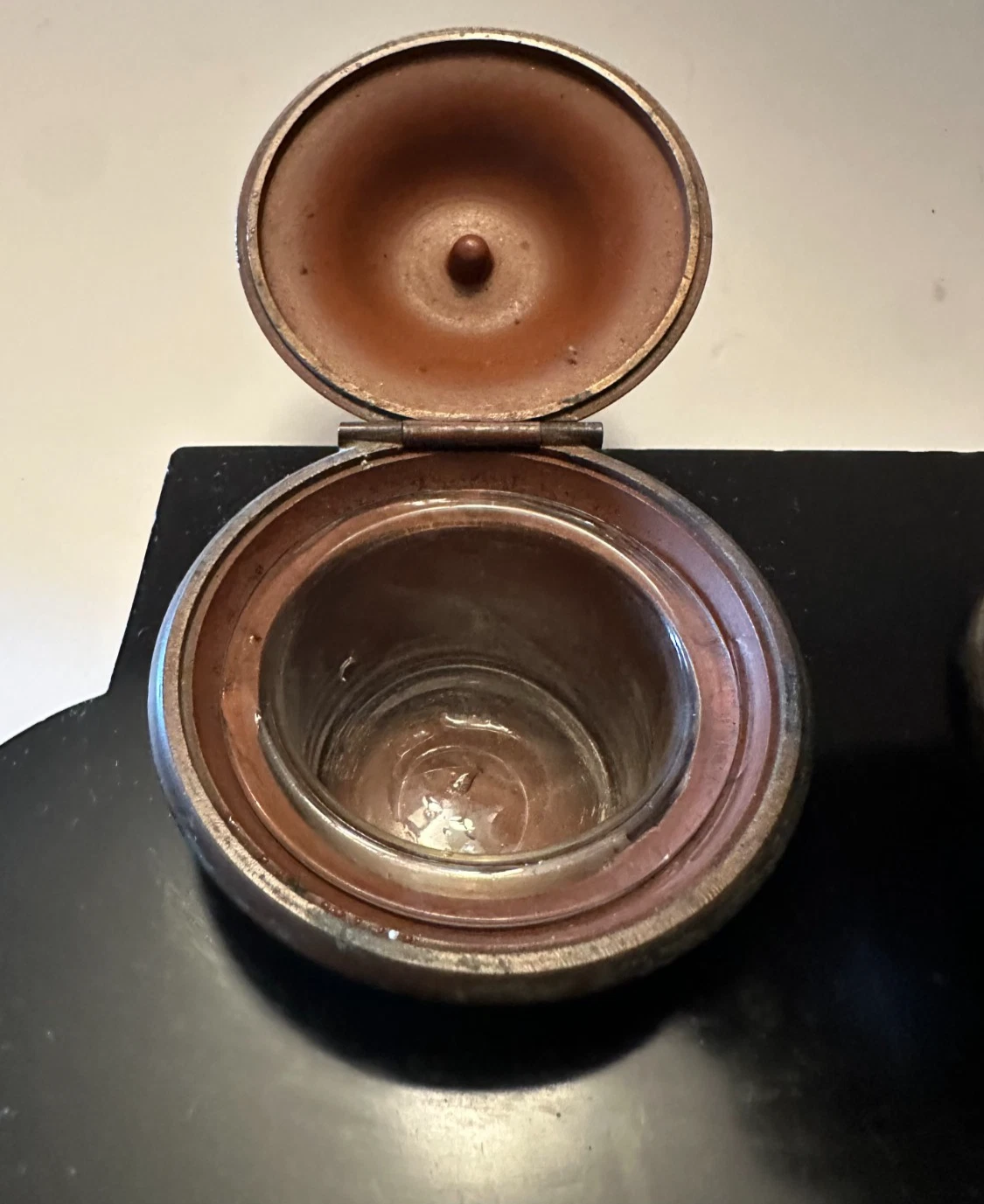
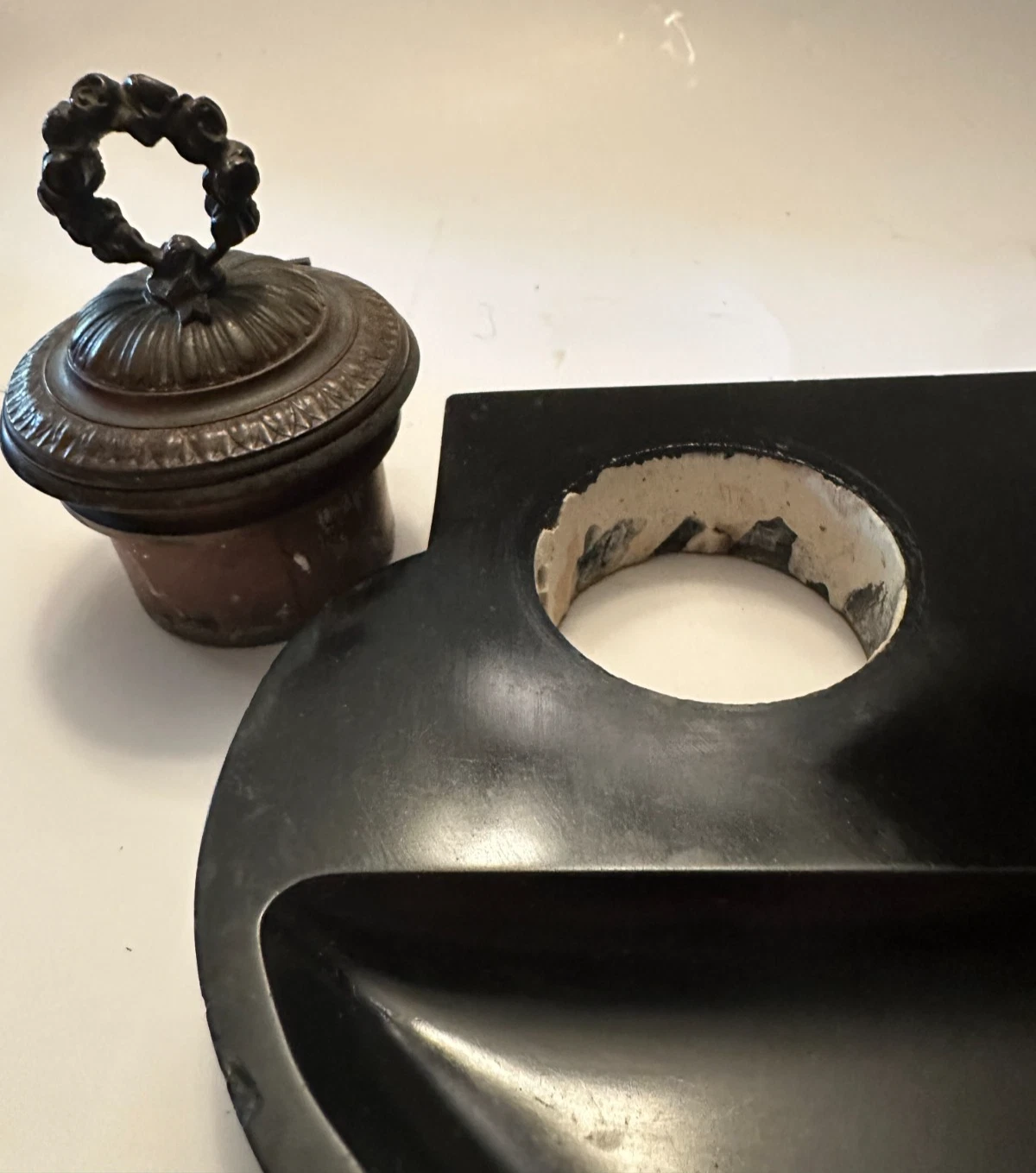
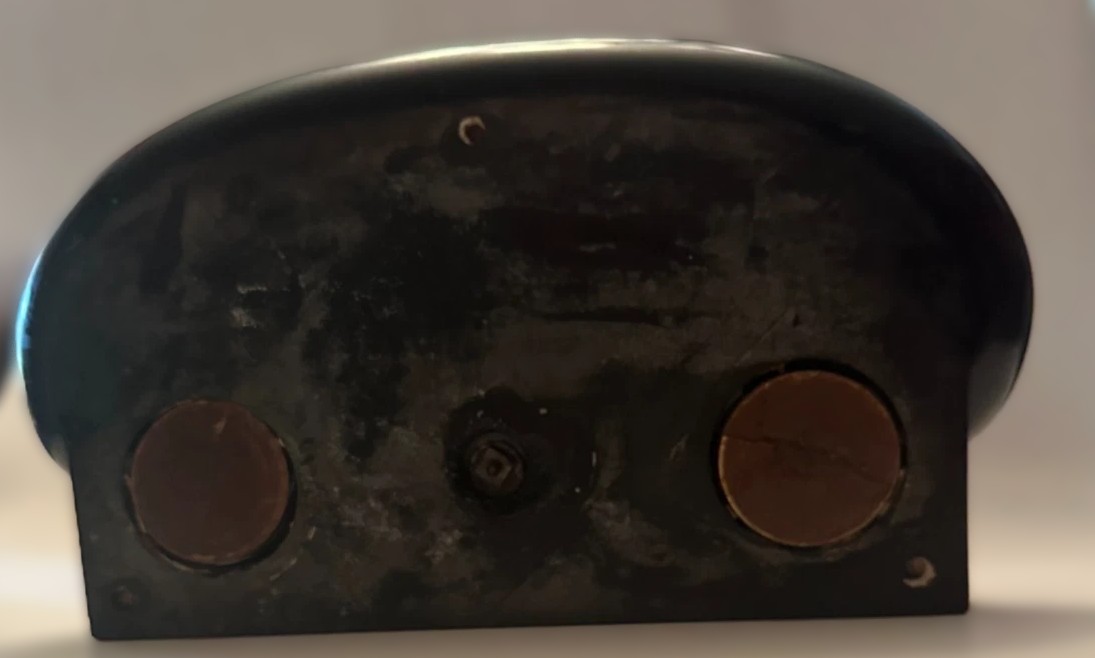
- Inkwells: The base holds two circular inkwells with glass inserts recessed into the marble. The wells are topped with bronze hinged lids.
- Base Details: The front of the marble base features a shallow channel designed to hold pens and other writing instruments.
The combination of dark marble and bronze, coupled with the classical subject, places this inkstand in the mid-19th to early 20th century, a period when classical learning and decor were highly valued.
Background on Homer
The bust of Homer was frequently used in desk accessories, libraries, and studies during the 19th century because he represents the fundamental origins of Western literature and poetry.
| Why Homer? | Explanation |
| Father of Western Literature | Homer is credited with composing the two most important epic poems of Greek antiquity: the Iliad and the Odyssey. These works established narrative structures, character archetypes, and literary themes that underpin much of Western culture and literature that followed. |
| Symbol of Authorship | Placing Homer on an inkstand is a direct homage to the craft of writing and poetry. He symbolizes genius, narrative mastery, and enduring literary fame. For a 19th-century writer or scholar, this bust served as an aspirational symbol. |
| Neoclassical Ideal | The Neoclassical Revival movement of the 18th and 19th centuries celebrated the art and culture of ancient Greece and Rome. Homer, being the supreme poet of antiquity, was a popular subject for sculptures, which were thought to lend an air of scholarship, taste, and high culture to any interior. |
| The Blind Seer | His traditional depiction as a blind poet (the “blind seer”) suggests that true vision comes not from sight, but from inner inspiration and spiritual wisdom. This made him a powerful symbol of deep, divinely inspired poetic truth. |
Sold for $139 in October 2025
Content disclaimer. The information posted is the owner’s best knowledge and may not have been vetted by the SOIC. We welcome comments, corrections, and additions, working to make our website information comprehensive and accurate.
Join the Society of Inkwell Collectors (SOIC) – it’s free!
Founded in 1981 as a non-profit organization,
we are documenting inkwells (and accessories).
We’re here to help and inform!