

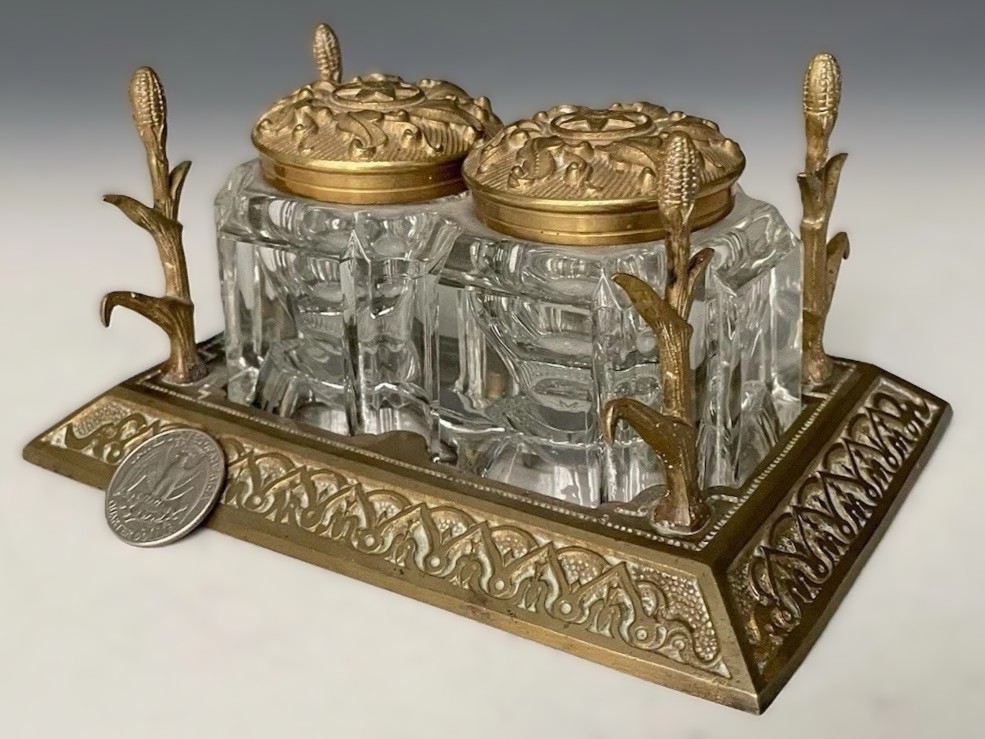
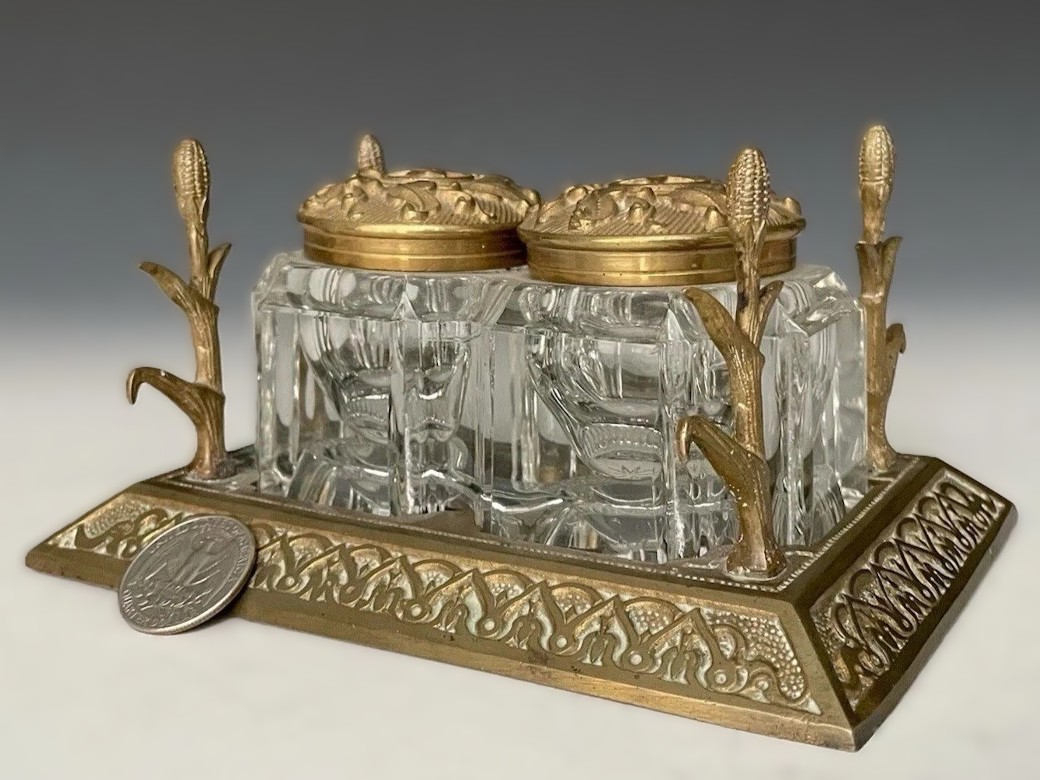
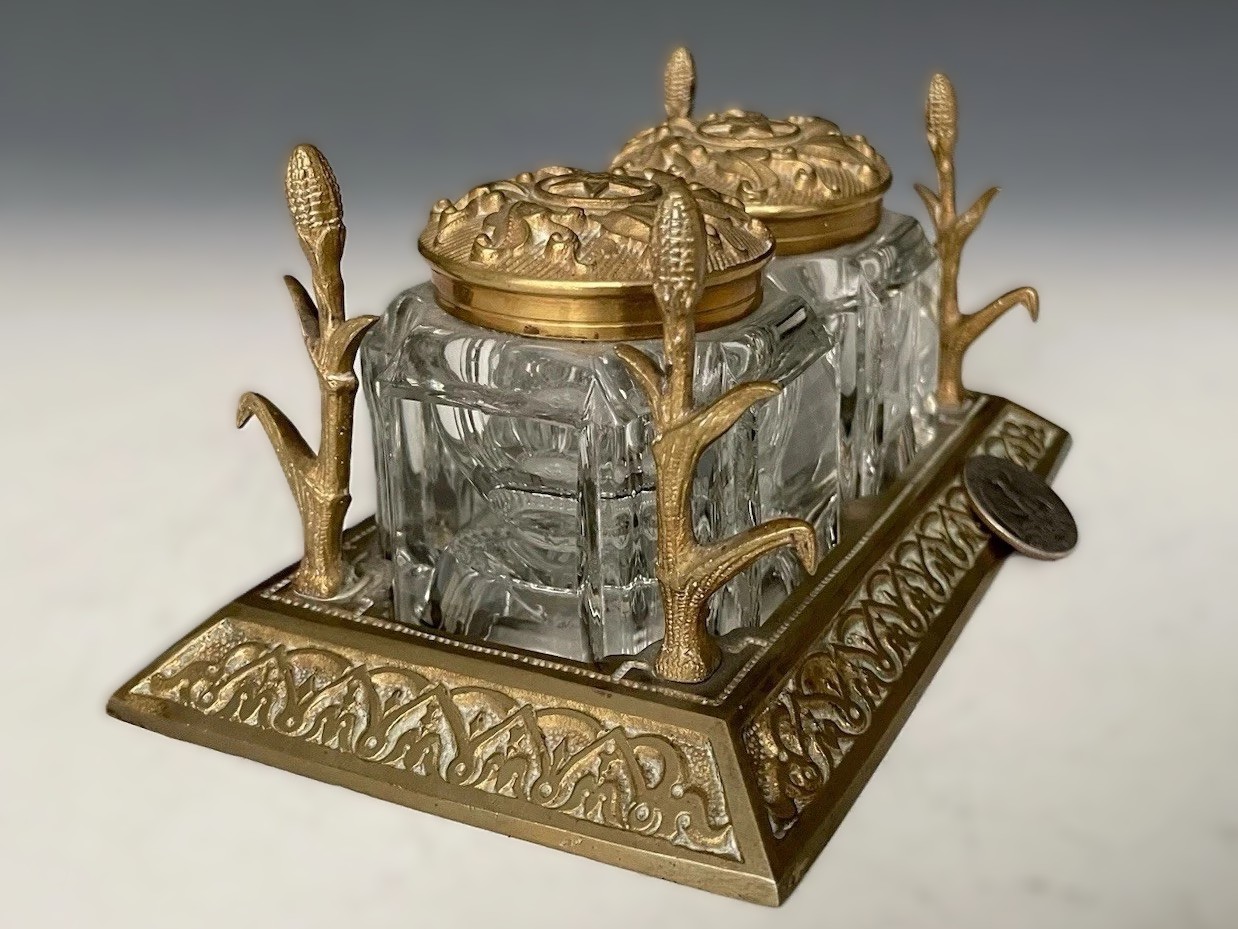
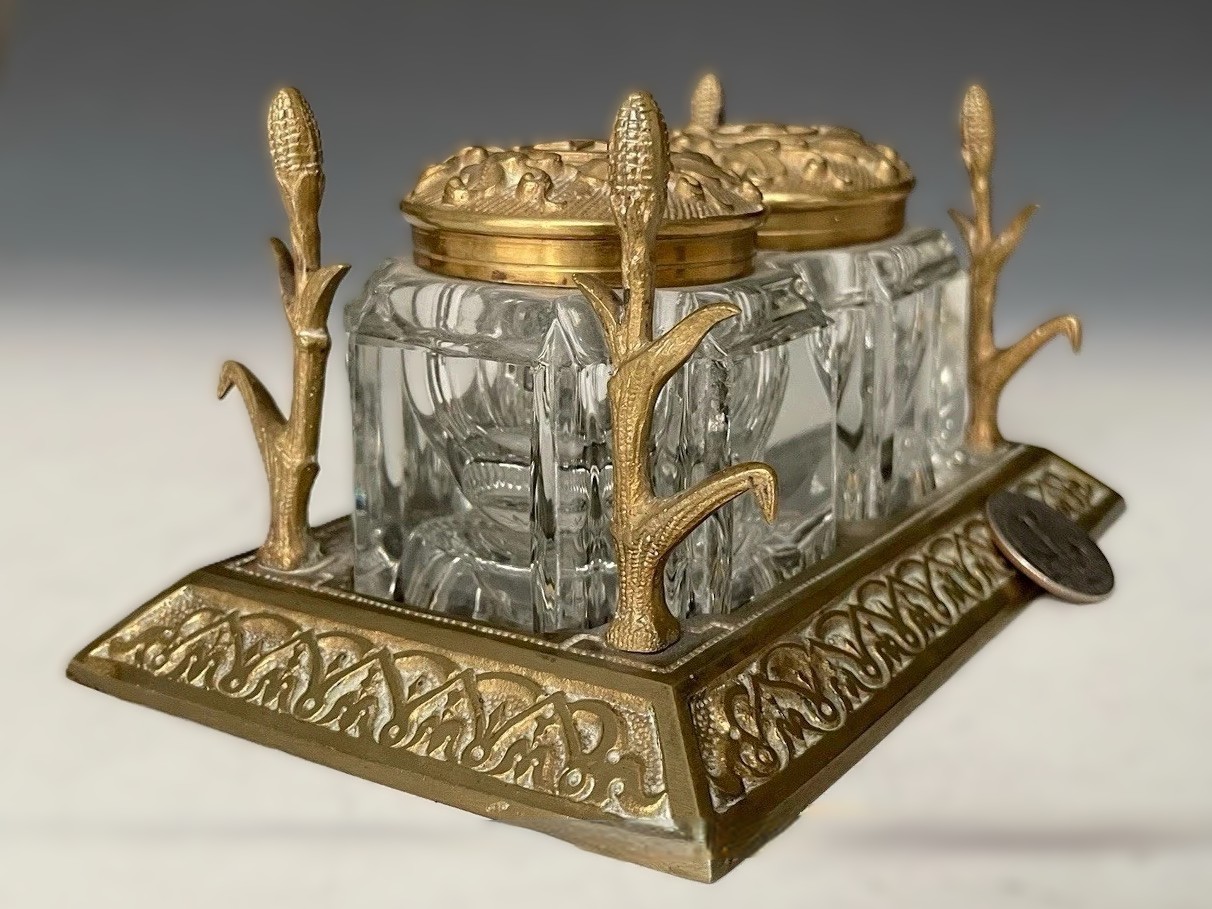

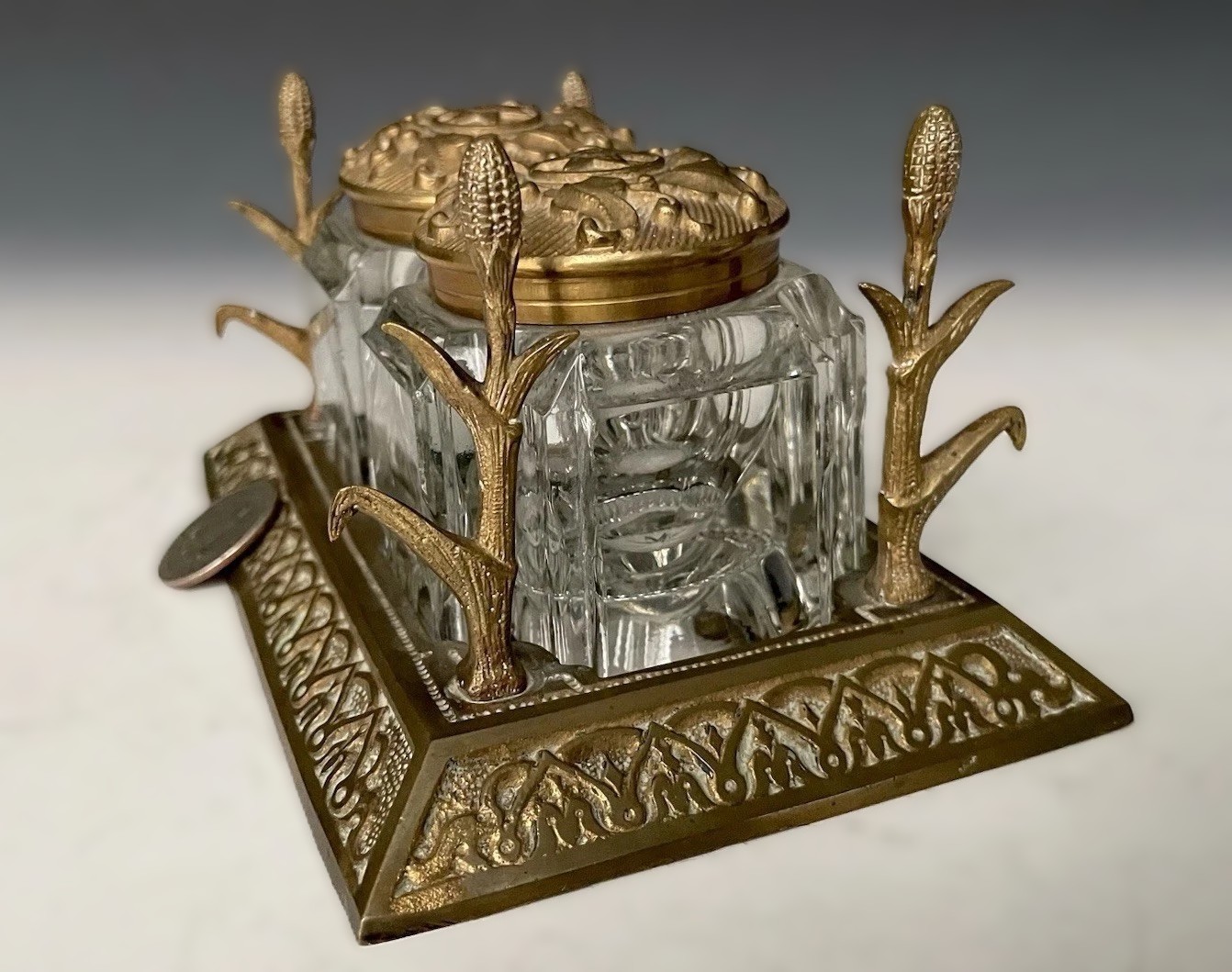

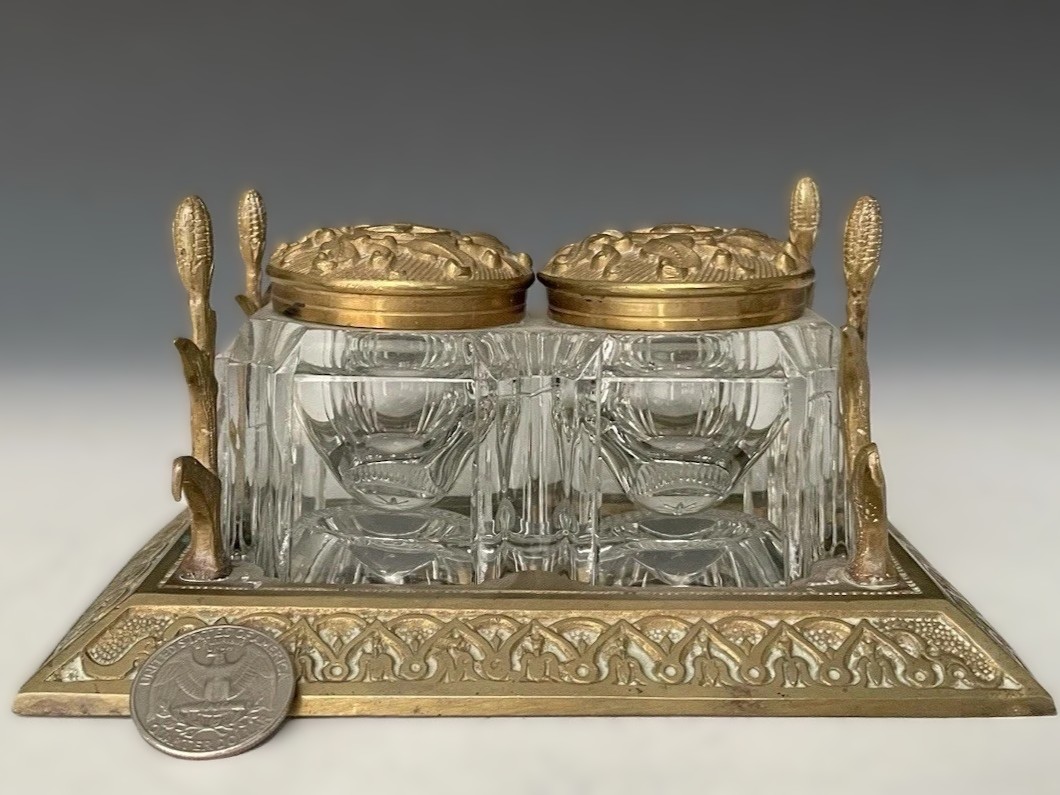

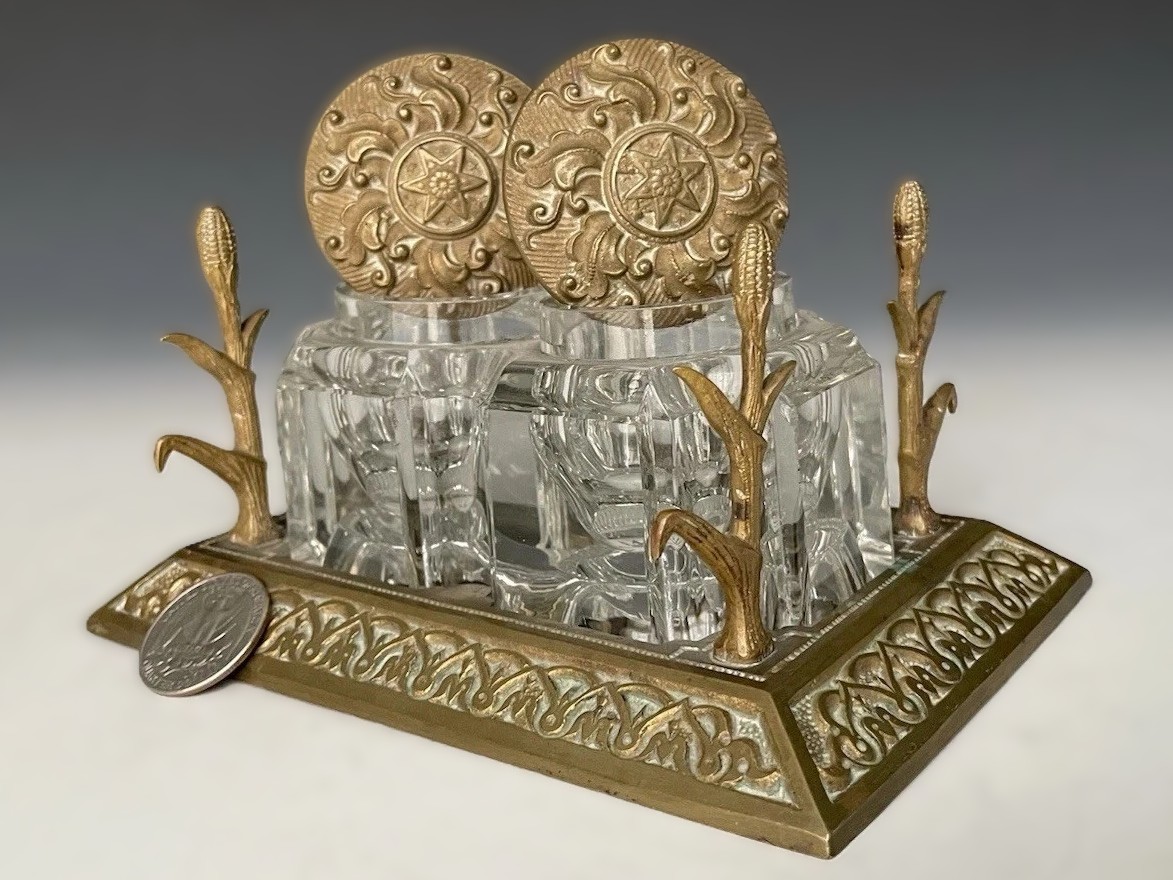
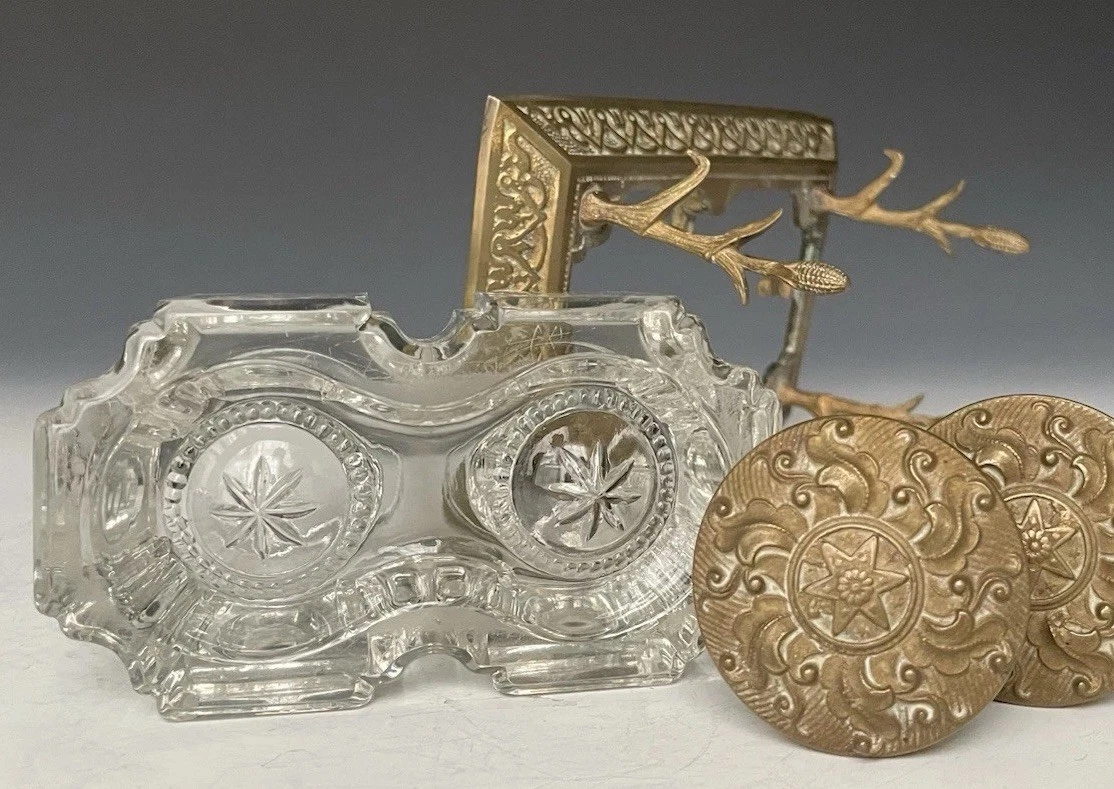
Double Inkstand with Cornstalk Pen Holders
| Categories | Cast Iron |
| Material | Cast iron, Glass |
| Markings | Unmarked |
| Manufacturer | Undetermined |
| Origin | United States |
| Date or Era | circa 1890 |
| Measuring | 6” x 4” x 3” high |
Description & Design Elements
- The Base & Frame: The rectangular stand is made from cast iron with an aged brass finish. The sloped perimeter features an ornate, running geometric border accented by a stippled (textured) background.
- The Unified Glass Block: The heavy clear glass is molded as a single, solid piece containing two distinct cylindrical wells. This unified design was practical—it prevented individual inkwells from rattling, sliding, or getting lost, while the notched, faceted corners added a brilliant aesthetic.
- The Lift-Off Lids: The unattached lids feature an elaborate, swirling scrollwork design centering around a prominent multi-pointed star or rosette emblem, matching the under-glass motifs.
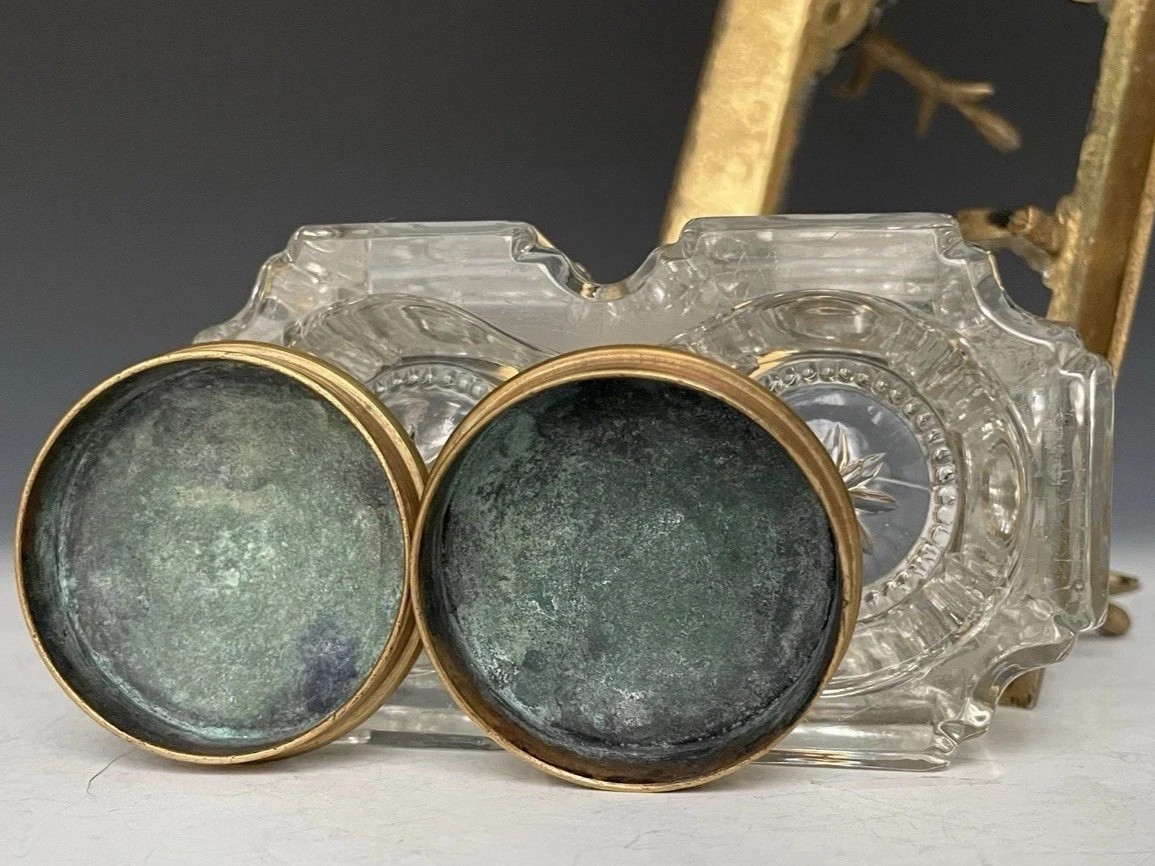
The Unusual Underside Embossing
Looking at the underside of the glass block, each well features a crisp, molded 8-pointed starburst (or rosette) enclosed within a concentric beaded ring. The starburst on the bottom mirrors the star design on the top of the brass lids.
Finding the Maker and Date: The Clues
While many Victorian inkstands feature twigs, grapevines, or scrollwork, the use of figural cornstalks as pen holders is unusual and points to a specific era.
- The Era (Circa 1880–1900): The combination of cast iron with a brass wash, heavy molded glass, and unattached drop-on lids is classic late 19th century desktop design.
- The Cornstalk Motif: Corn is a quintessential American agricultural symbol. During the late 19th century—particularly surrounding major events like the 1876 Philadelphia Centennial International Exhibition and regional harvest festivals—American foundries heavily embraced patriotic and naturalistic themes.
- Potential Manufacturers: Foundries known for high-quality decorative cast-iron desk assets with thematic pen rests included Bradley & Hubbard Manufacturing Co. (Meriden, CT) and Judd Manufacturing Co. However, regional Midwestern foundries (across Ohio, Pennsylvania, and Illinois) frequently produced specialized agricultural-themed castings for local markets. The cornstalks feature realistic texturing on the husks and leaves all requiring a high-quality master mold.
Summary
Because the glass block is an exact factory match to the cast-iron frame size, this was sold as a complete, premium set. While it does not bear a prominent maker’s mark or patent date on the underside, its stylistic footprint places it firmly in the American historic market between 1880 and 1900.
Sold for $97 in May 2026
Content disclaimer. The information posted is the owner’s best knowledge and may not have been vetted by the SOIC. We welcome comments, corrections, and additions, working to make our website information comprehensive and accurate.
Join the Society of Inkwell Collectors (SOIC) – it’s free!
Founded in 1981 as a non-profit organization,
we are documenting inkwells (and accessories).
We’re here to help and inform!