

Dirk Van Erp Inkwell
| Categories | Arts & Crafts |
| Material | Brass, Coppered metal, Glass |
| Markings | See Narrative |
| Manufacturer | Dirk Van Erp |
| Origin | United States |
| Date or Era | circa 1914 |
| Measuring | 4” x 4” x 2 ¼” high |
Description
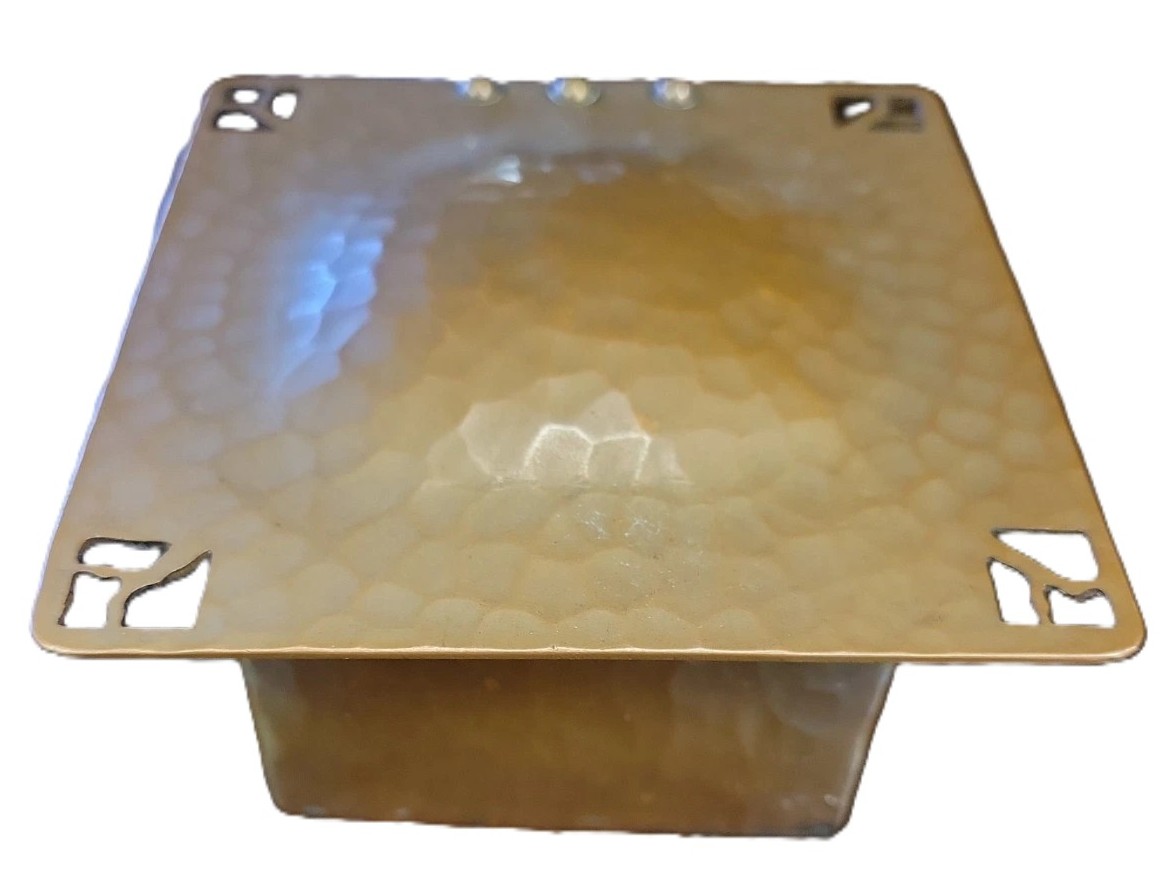
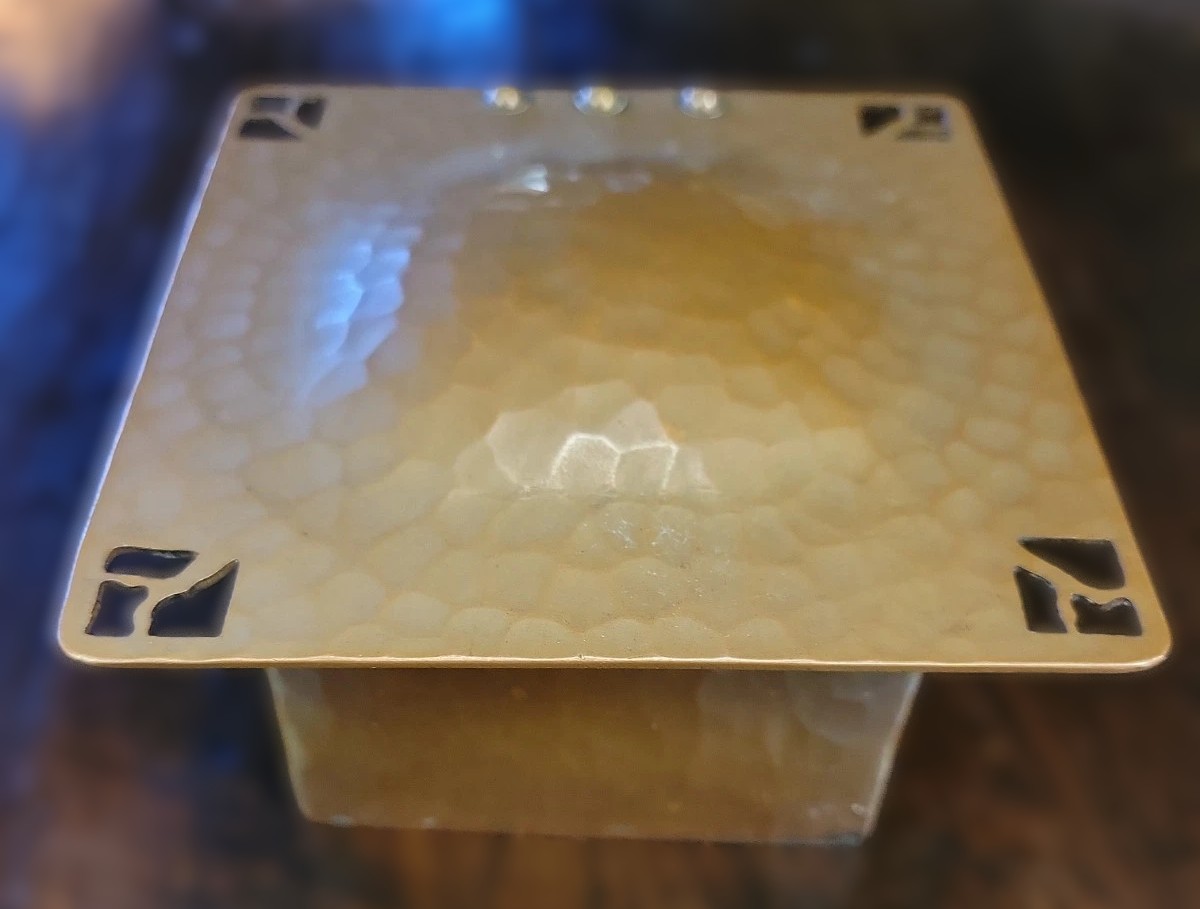
This Arts & Crafts piece features Dirk van Erp’s signature hand-hammered texture:
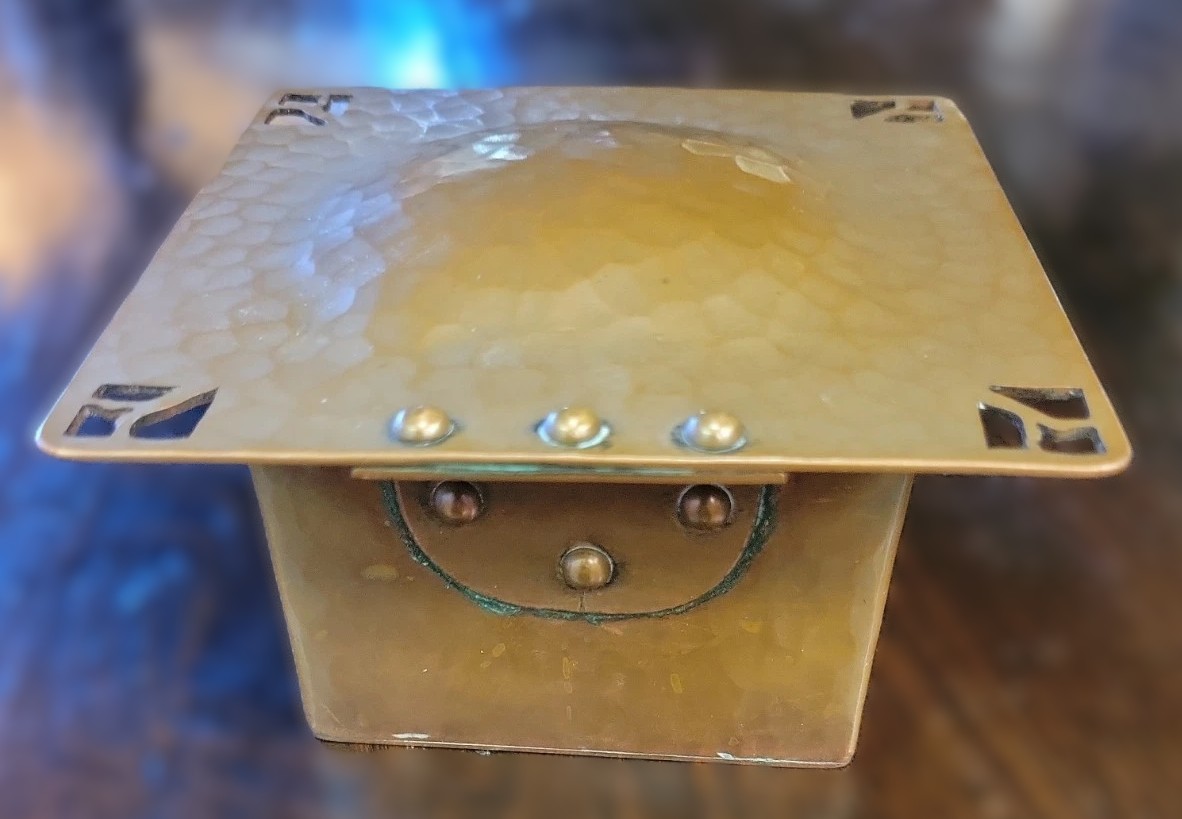
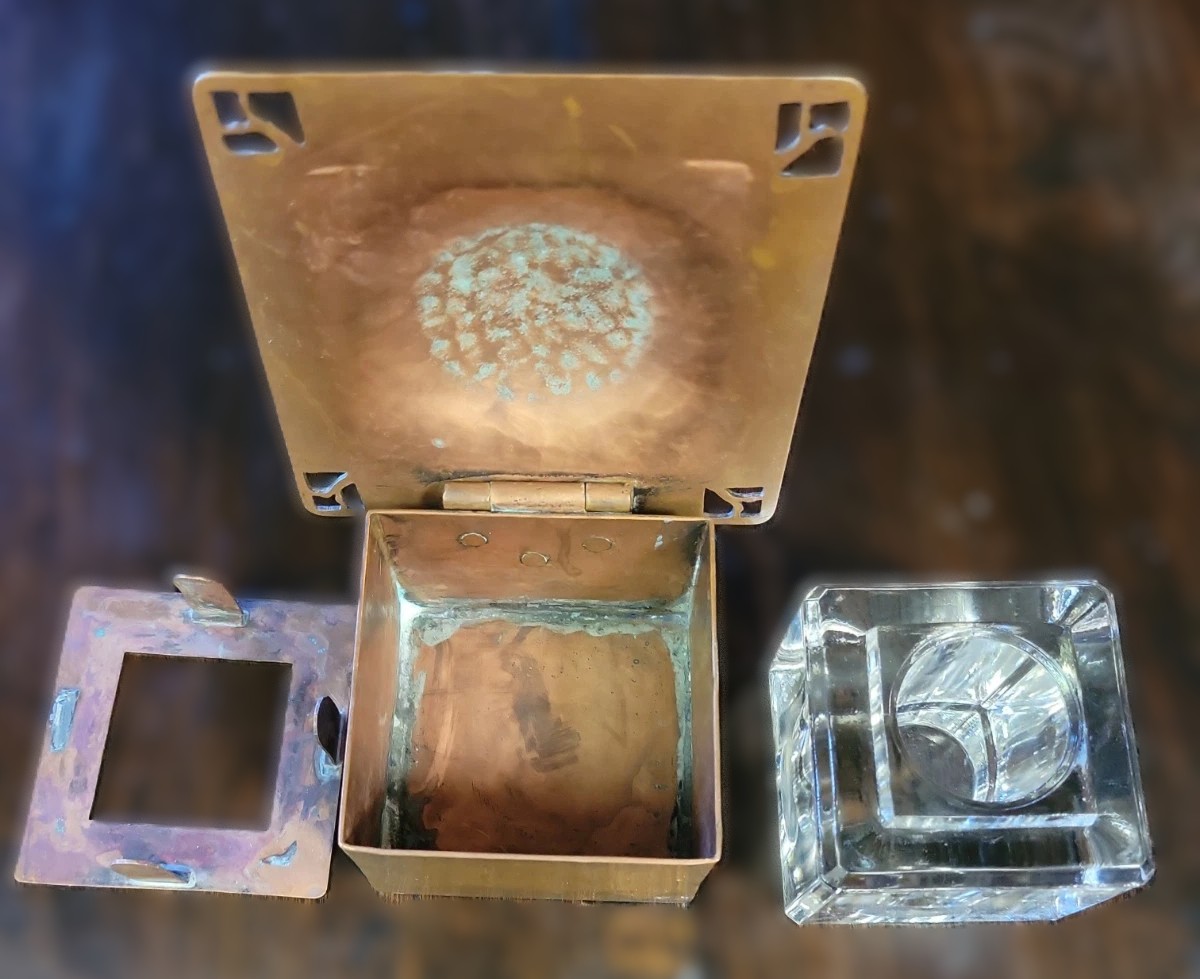
- Lid & Exterior: A square hinged lid with a subtle center dome, pronounced hammer-planished facets, and decorative cutout geometric motifs at each of the four corners.
- Hinge Detail: The back features a heavy-duty continuous hinge reinforced with a rounded apron-like tab secured by rivets.
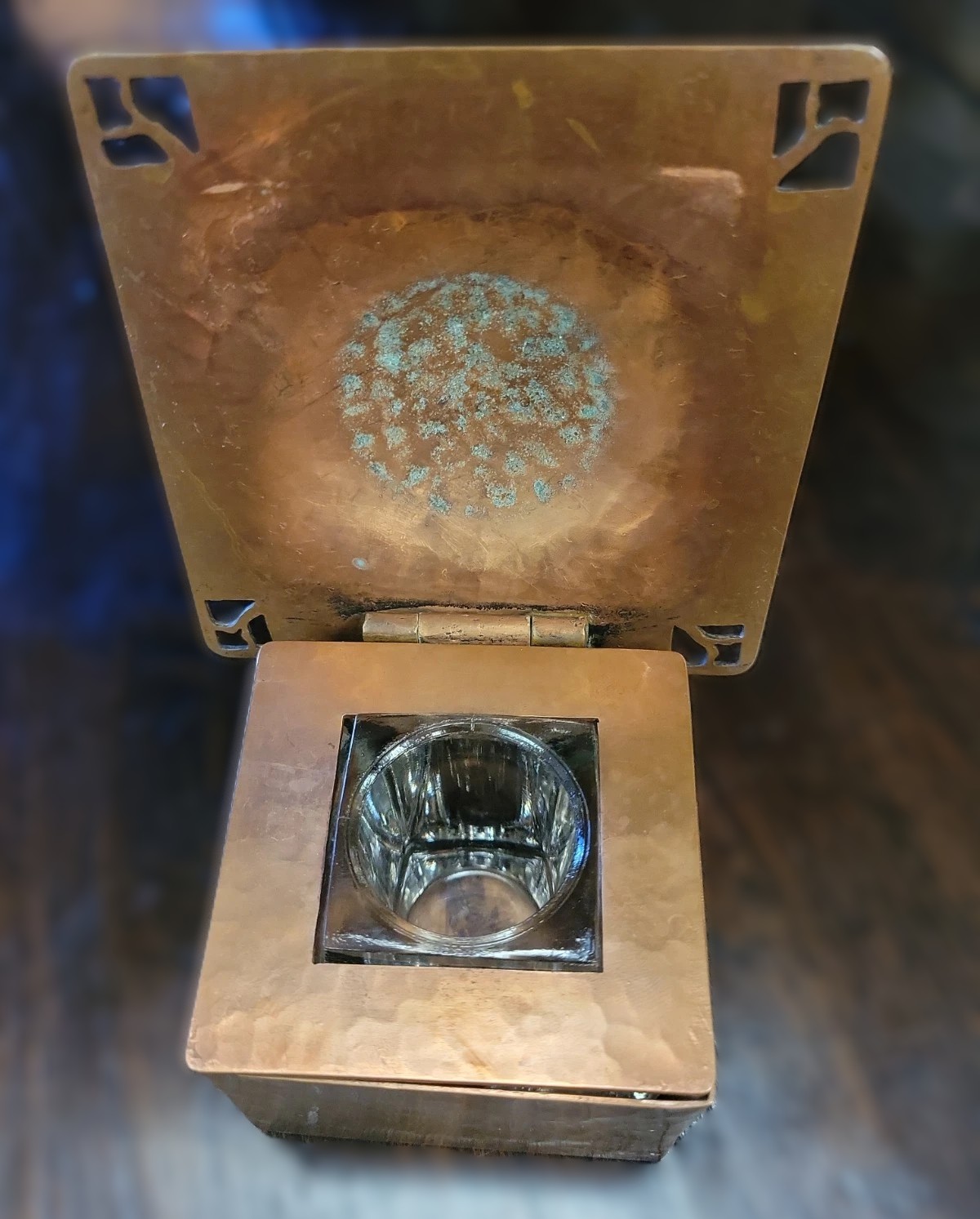
- Interior Construction: Opening the lid reveals an inner brass or copper collar frame covering a removable, heavy clear-cut glass inkwell.
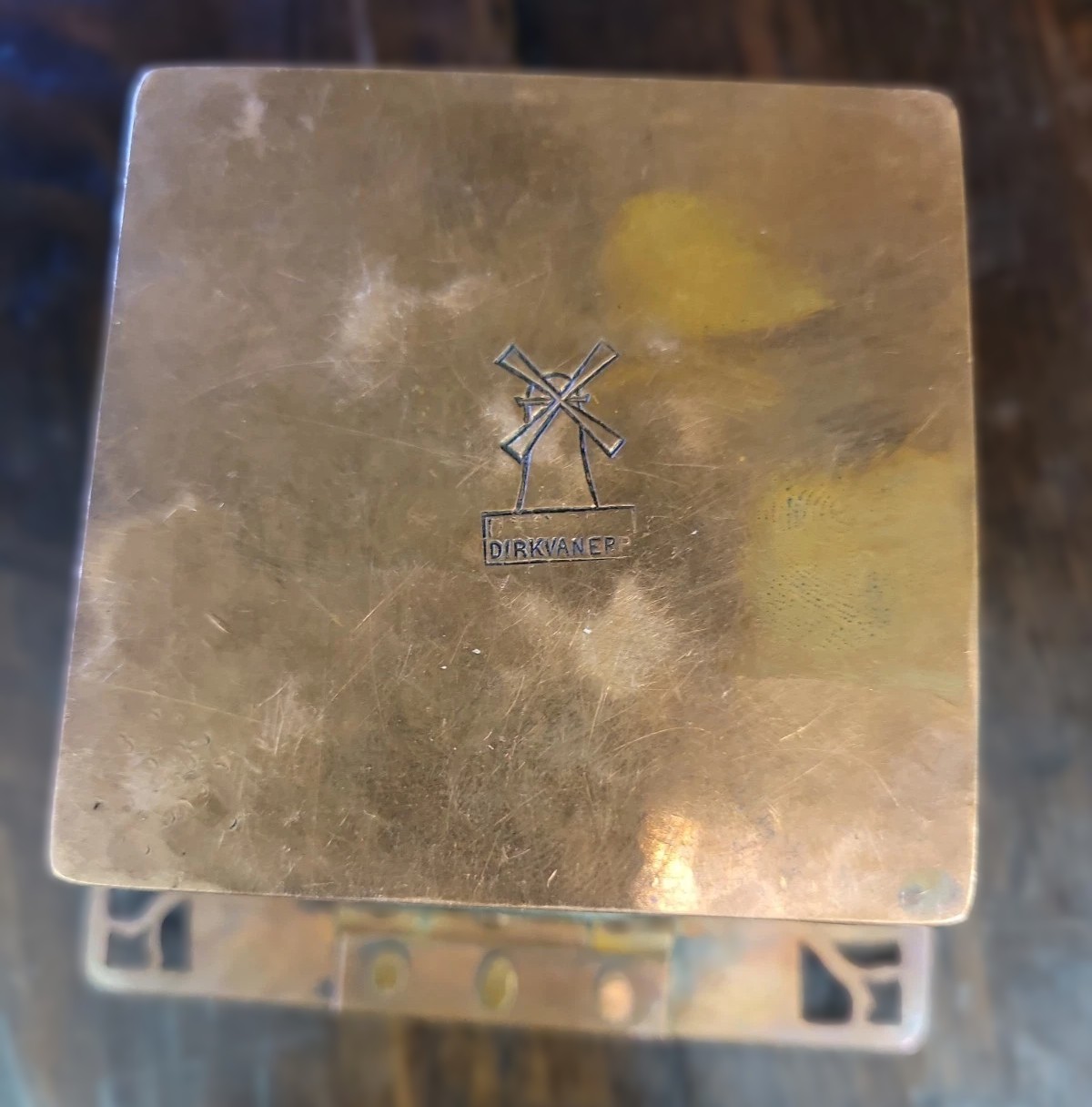
- Maker’s Mark: The bottom is stamped with van Erp’s Windmill Mark, showing a windmill outline above a boxed stamp reading DIRK VAN ERP.
Materials & Date Range
- Materials: Hand-hammered solid copper, brass riveting/hinge elements, and a clear molded/cut glass inkwell.
- Date: Circa 1913–1915. The specific mark on the base (the “open-box” windmill mark where “San Francisco” is missing/open or formatted prior to the late post-1915 box stamp) places this piece in the mid-1910s Arts & Crafts period.
History of Dirk van Erp
- Origins: Born in the Netherlands in 1860/1862 into a family of coppersmiths, Dirk van Erp immigrated to the United States in 1890.
- Early Work: While working at the Mare Island Naval Shipyard in Vallejo, California, he began hammering discarded brass shell casings into decorative vases in his spare time.
- The Studio: In 1908, he opened his first copper shop in Oakland before moving to San Francisco in 1910. He briefly partnered with designer Elizabeth Eleanor D’Arcy Gaw (1909–1911). When their partnership ended, he struck out her name from the stamp, continuing with his iconic windmill device.
Legacy: Van Erp became one of the defining figures of the American Arts & Crafts movement, renowned for his hammered copper table lamps with mica shades, bowls, vases, and desk accessories. After his death in 1933, his family continued operating the workshop for decades.
Sold for $353 in June 2026
Content disclaimer. The information posted is the owner’s best knowledge and may not have been vetted by the SOIC. We welcome comments, corrections, and additions, working to make our website information comprehensive and accurate.
Join the Society of Inkwell Collectors (SOIC) – it’s free!
Founded in 1981 as a non-profit organization,
we are documenting inkwells (and accessories).
We’re here to help and inform!