

Inkipedia
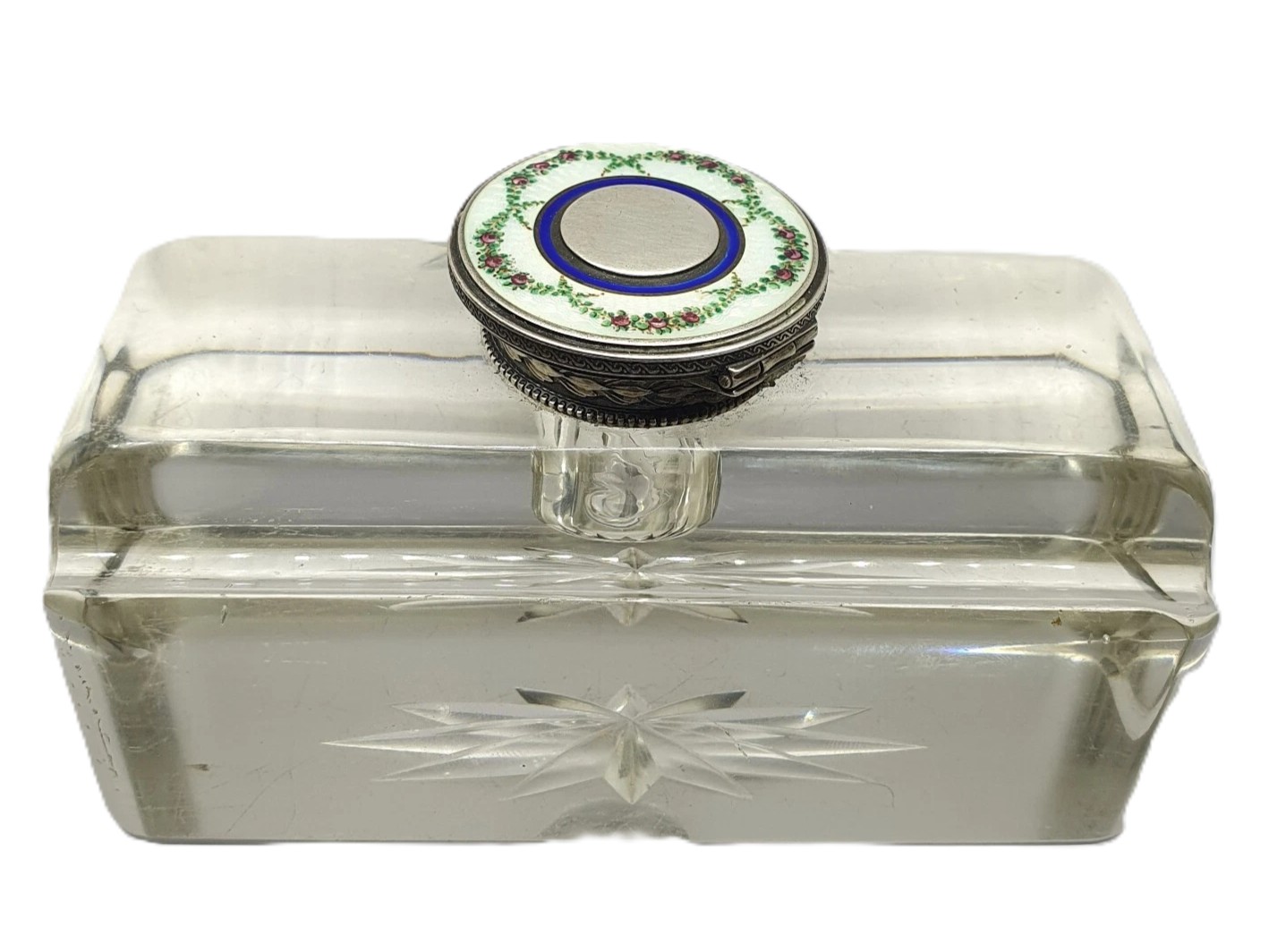


Cut Glass Inkwell with Enameled Sterling Silver Lid
| Categories | Enameled Metal, Glass - Non-figural |
| Material | Enamel, Glass, Silver |
| Markings | Unmarked |
| Manufacturer | Undetermined |
| Origin | England |
| Date or Era | circa 1910 |
| Measuring | 4 ¾” x 2 ⅜” x 2 ⅜” high |
This high-quality piece combines the brilliance of cut glass with the artistry of enameled sterling silver—a classic pairing seen in luxury desk ware.
- Overall Form: A single, substantial inkwell. Its body is made of thick, heavy glass that is expertly cut (not pressed/molded).
- Inkwell Body (Glass):
- Shape: The body is rectangular with softened corners.
- Cutting Pattern: The base and sides are covered in deep, precise cuts in starburst patterns.
- Integrated Pen Rest: The glass body itself features a cut channel on the front edge, serving as the integrated pen rest.
- Lid and Mount (Metal):
- Material: The lid is mounted on a sterling silver collar that fits around the glass opening.
- Hinge: The lid is hinged and opens to reveal the ink reservoir.
- Enameling: The top of the sterling silver lid is decorated with a vibrant Guilloché Enamel overlay. The enamel is applied over an engine-turned (engraved) pattern on the silver, giving the surface a shimmering, moiré effect visible through the translucent enamel color. The enamel is bordered by the exposed sterling silver rim.
Age and Origin Assessment
The combination of the glass cutting style and the sterling silver enameling is indicative of a specific era and geographic location.
- Enameling Style: Guilloché enamel on sterling silver lids was popular for luxury vanity and desk items during the Edwardian and Art Nouveau transition periods.
- Glass Cutting Style: The deep, geometric, “starburst” style is typical of the Brilliant Cut Glass era, which was most prolific from roughly 1880 to 1915.
- Origin:
- England/UK: This style of silver and glass pairing, particularly with meticulous enameling, was a specialty of British silversmiths and luxury goods retailers.
- Age Estimate: circa 1900 – 1920
Sold for $250 in October 2025
Content disclaimer. The information posted is the owner’s best knowledge and may not have been vetted by the SOIC. We welcome comments, corrections, and additions, working to make our website information comprehensive and accurate.
Join the Society of Inkwell Collectors (SOIC) – it’s free!
Founded in 1981 as a non-profit organization,
we are documenting inkwells (and accessories).
We’re here to help and inform!