

Inkipedia
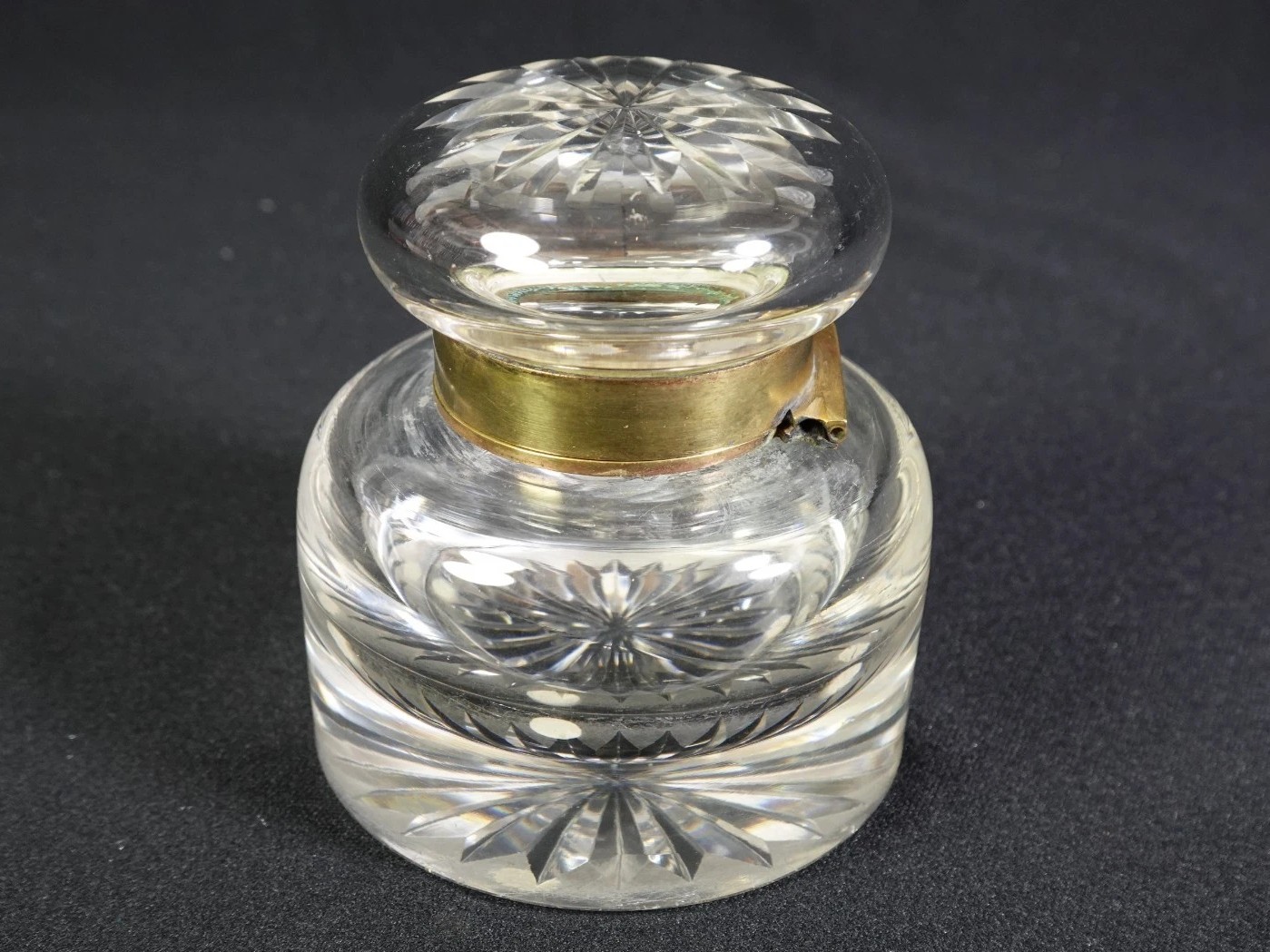
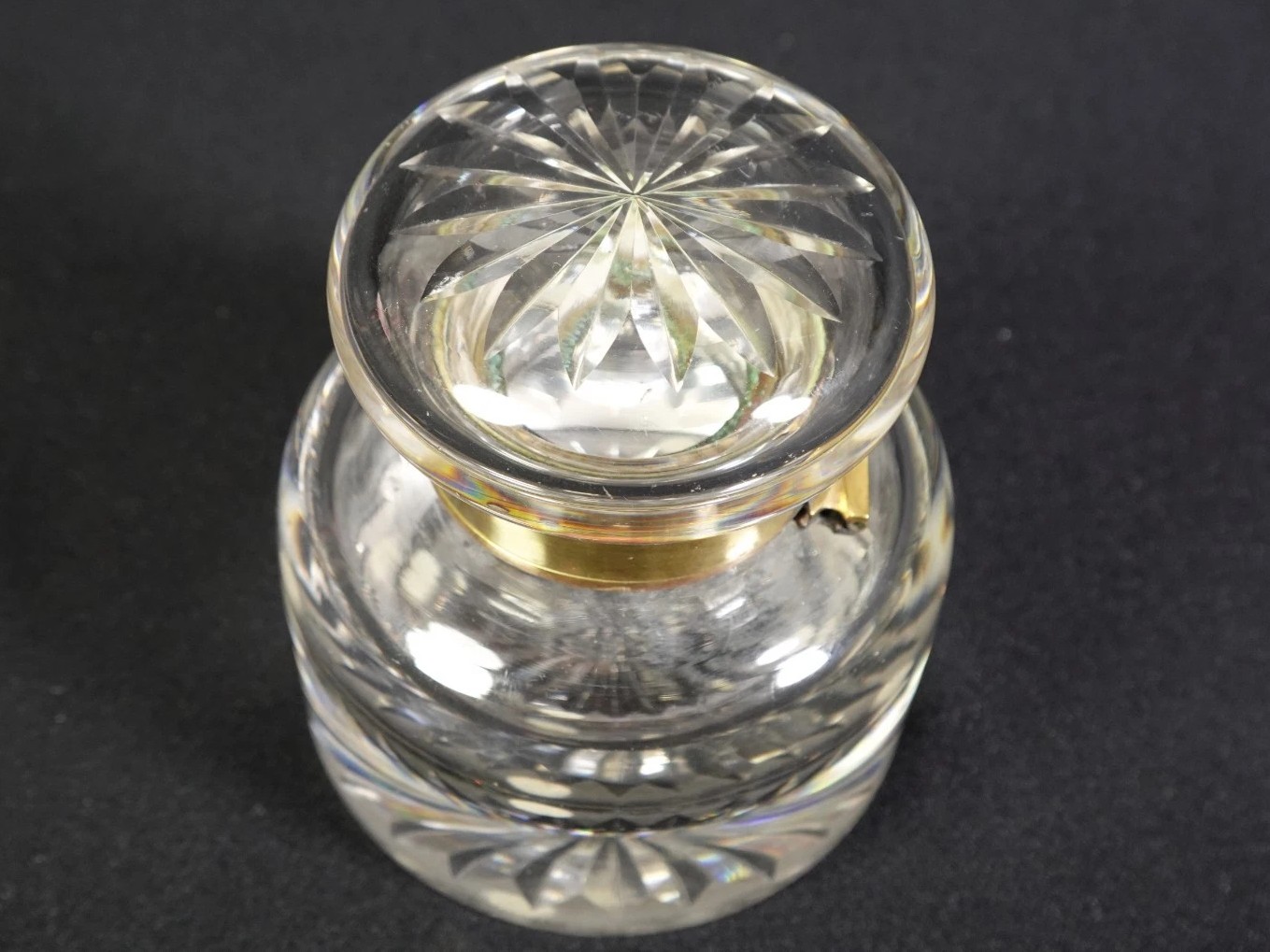
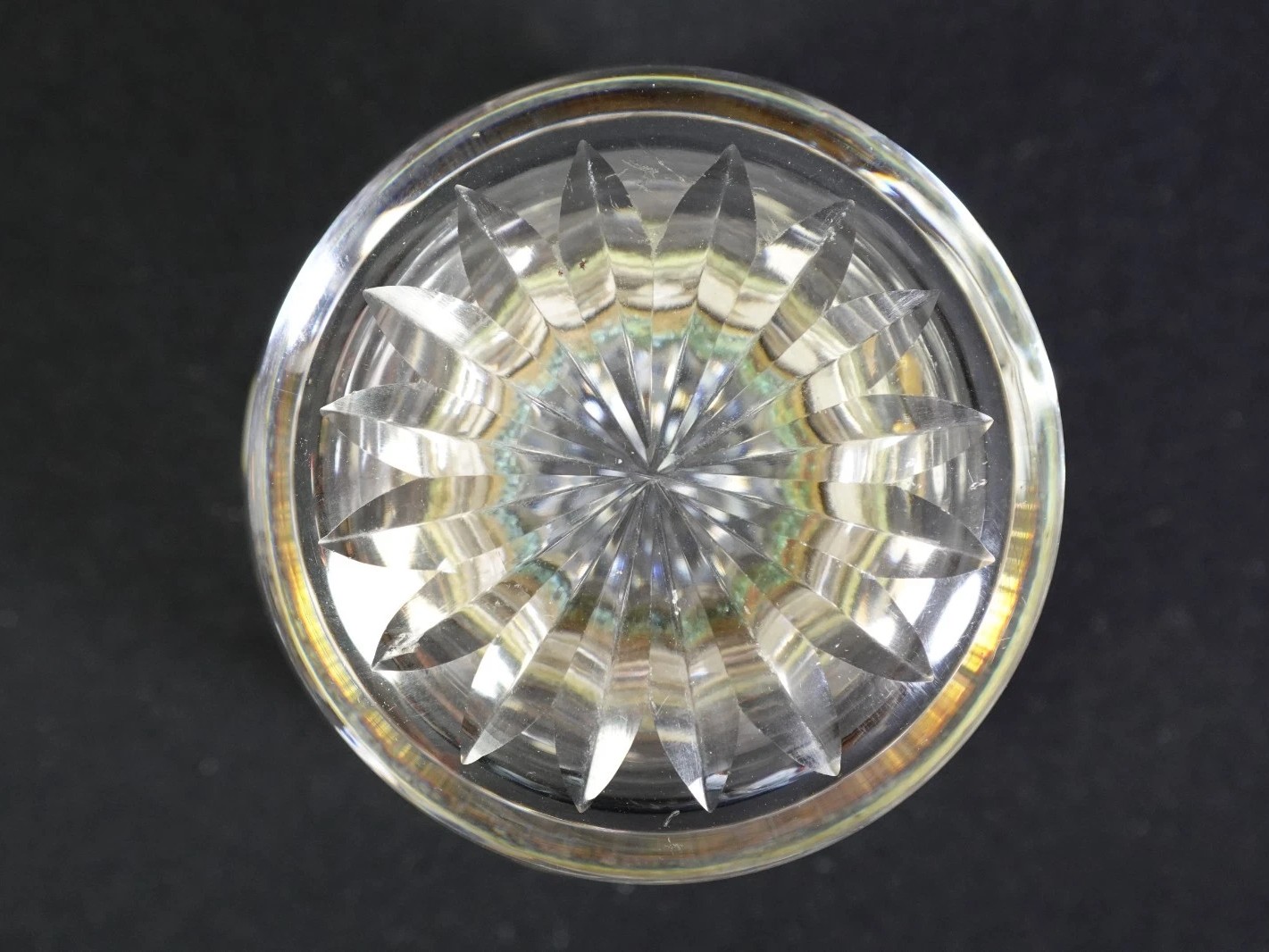
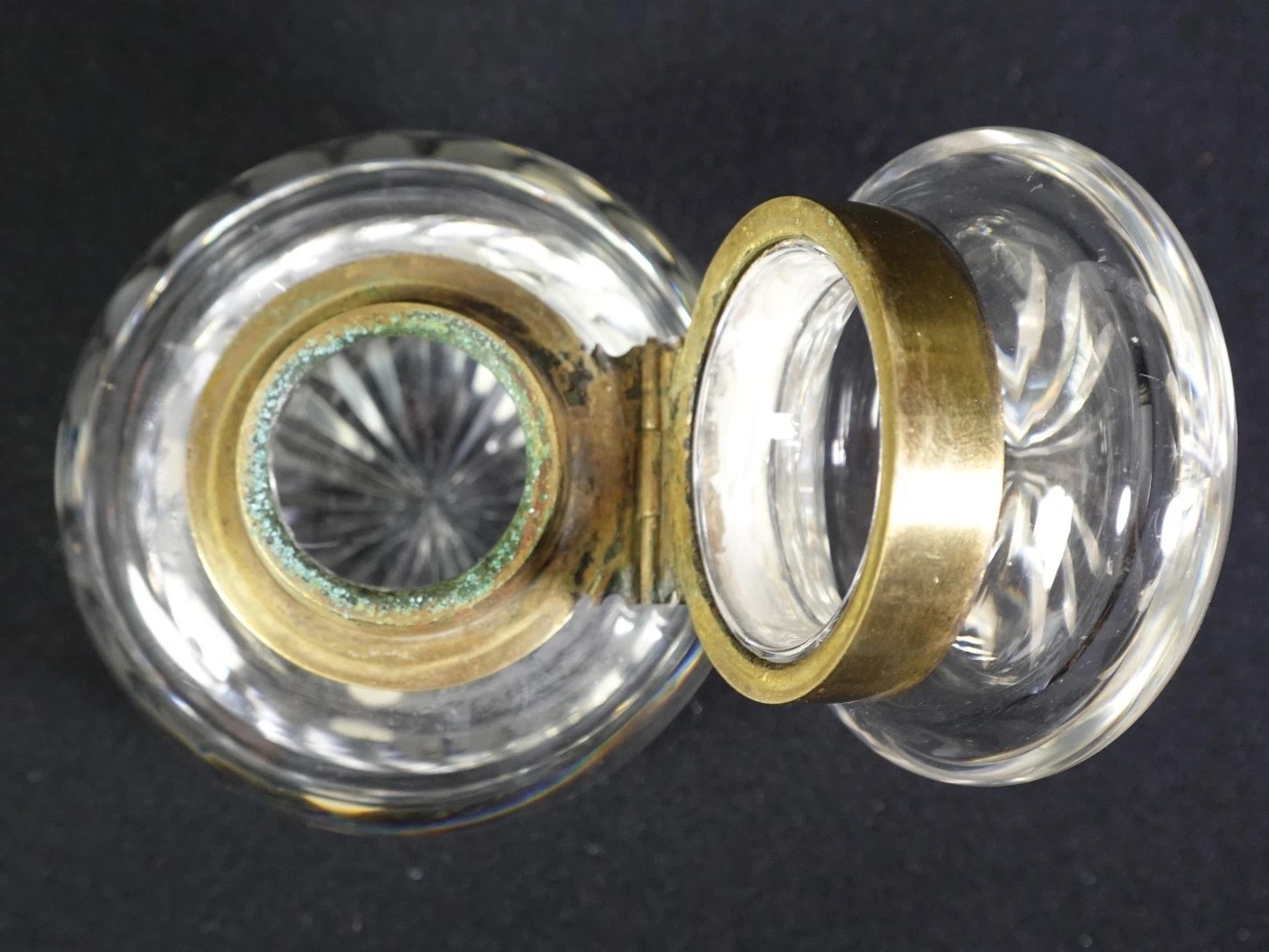

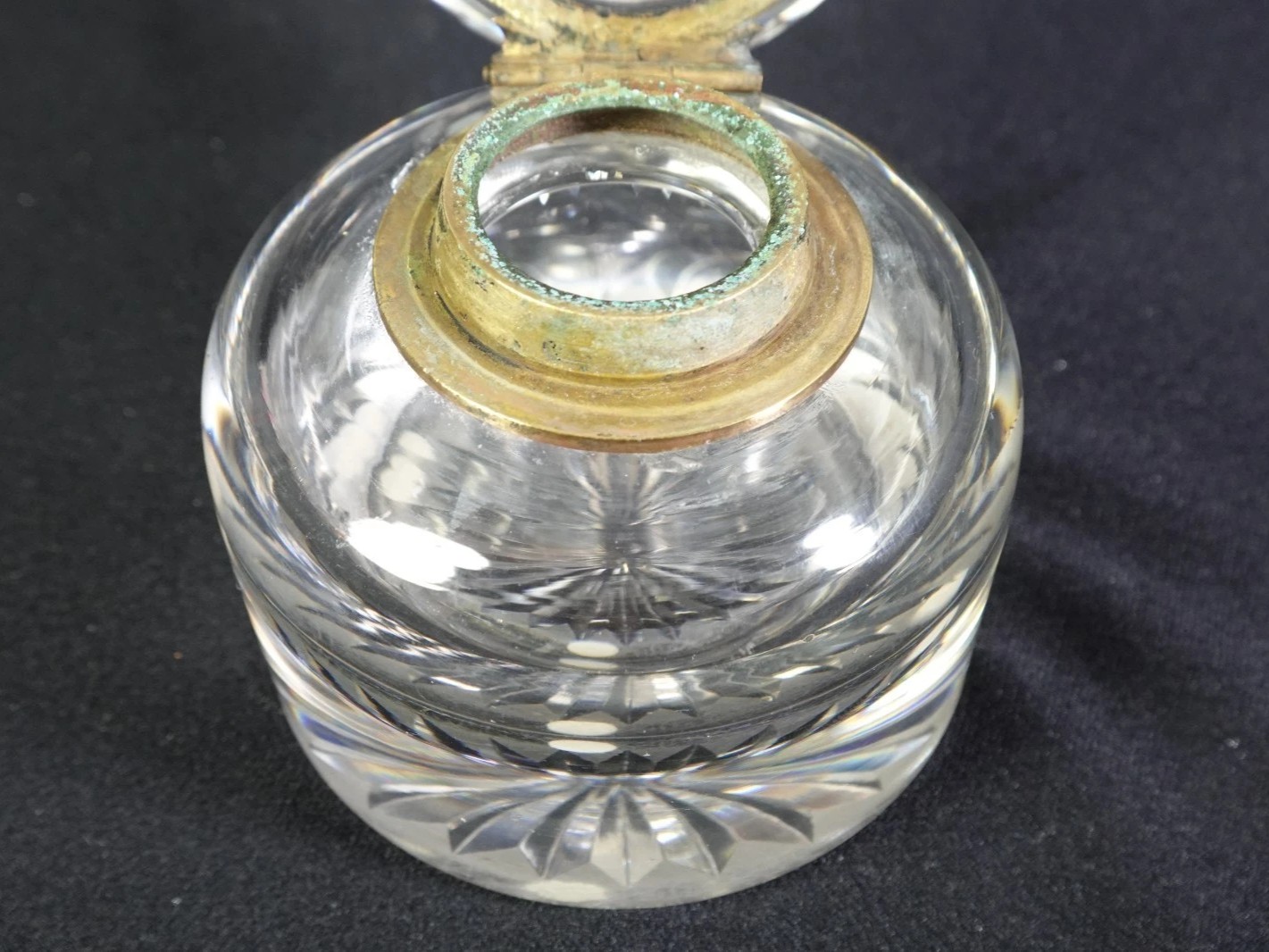


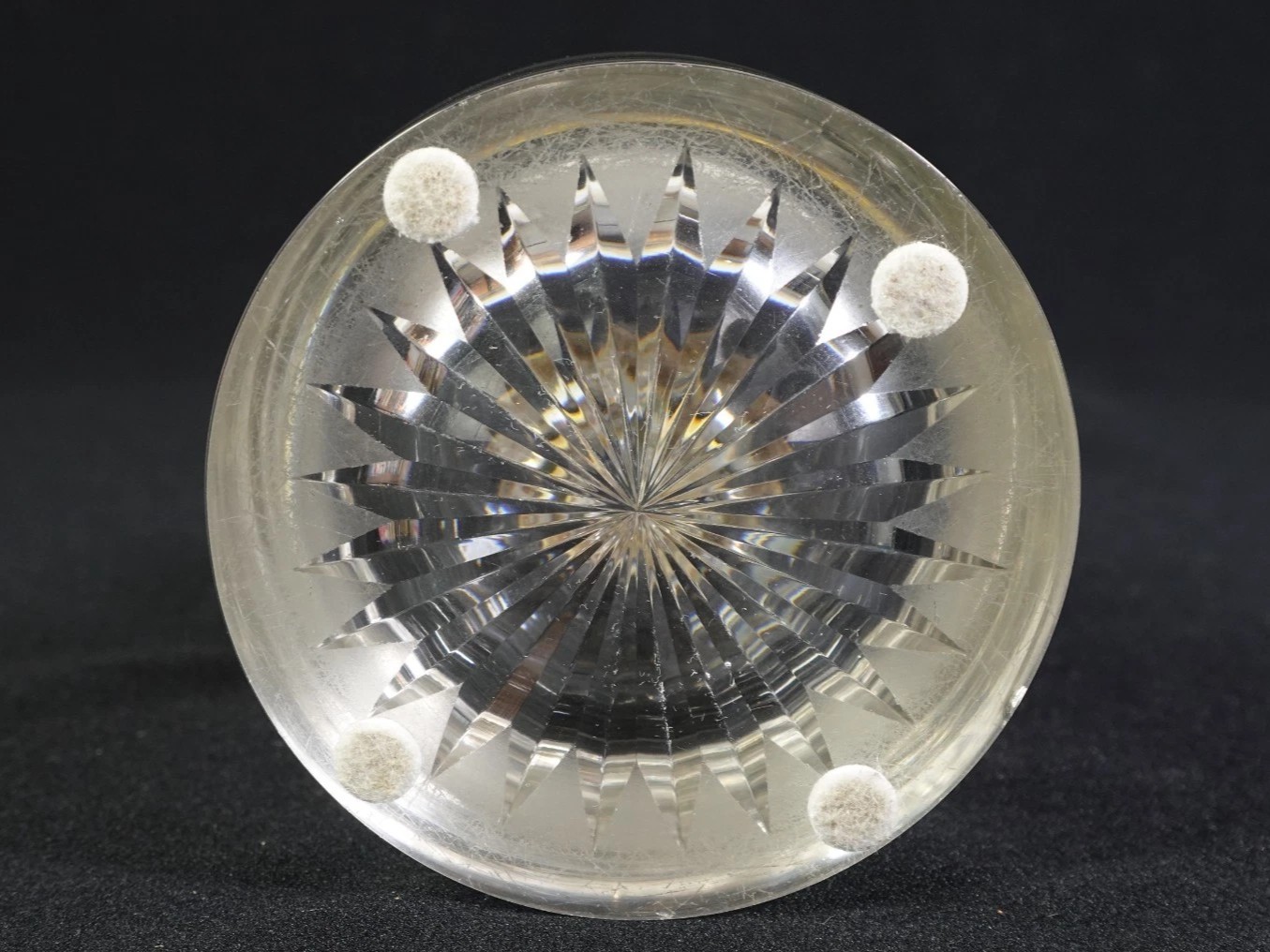
Cut Crystal Inkwell
| Categories | Glass - Non-figural |
| Material | Glass |
| Markings | Unmarked |
| Manufacturer | Undetermined |
| Origin | England |
| Date or Era | circa 1900 |
Description
- The Crystal Body: The inkwell is made from heavy, high-lead crystal, featuring a thick-walled circular base with deep, vertical miter cuts around the sides.
- Top and Base Faceting: Both the hinged lid and the underside of the base feature a deeply cut radial starburst (or sunburst) pattern. This design serves a dual purpose: it creates a brilliant play of light through the glass and provides a stable, non-slip surface for the heavy vessel.
- The Fittings: The inkwell is fitted with a simple brass collar and a pinned hinge. The interior of the collar shows a noticeable green verdigris patina, which is a natural oxidation process that occurs in brass and copper when exposed to the acidic components of traditional iron-gall inks over many decades.
Manufacturing and Origin
Determining the exact origin of unmarked glass from this period is challenging, but the technical details offer strong clues:
- Likely Origin: Great Britain The heavy lead content and the specific “Strawberry Diamond” style of radial cutting were specialties of English glasshouses in Stourbridge.
- Assembly: It is likely the glass “blank” was produced in Europe and then fitted with its brass hardware by a specialized stationer in either London or the United Kingdom.
Estimated Age
- Circa 1880–1910.
- The simplicity of the brass hinge, combined with the starburst cutting patterns, is most characteristic of the Late Victorian or Edwardian eras. During this period, these heavy crystal wells were standard in professional offices and upper-class libraries before the widespread adoption of the fountain pen.
Sold for $100 in December 2025
Content disclaimer. The information posted is the owner’s best knowledge and may not have been vetted by the SOIC. We welcome comments, corrections, and additions, working to make our website information comprehensive and accurate.
Join the Society of Inkwell Collectors (SOIC) – it’s free!
Founded in 1981 as a non-profit organization,
we are documenting inkwells (and accessories).
We’re here to help and inform!