





Crossed-Legged Barefoot Monk
| Categories | Figural - Mythology; Literature; Religion; Fictional |
| Type | Monk |
| Material | Spelter, Brass |
| Markings | Unmarked |
| Manufacturer | Undetermined |
| Origin | Undetermined |
| Date or Era | circa 1890 |
| Measuring | 4 ½” diameter (widest part); 4 ¾” high |
Description
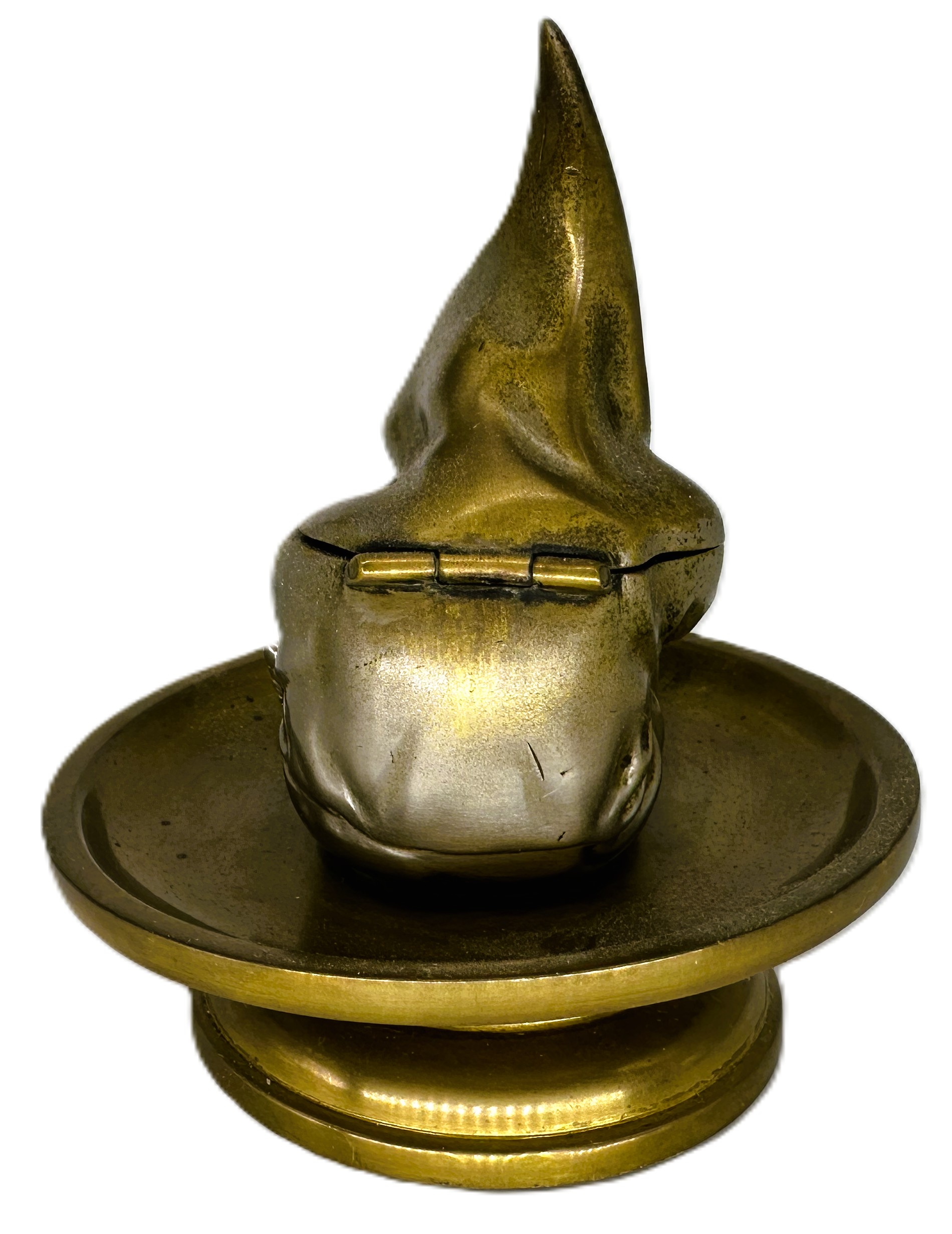
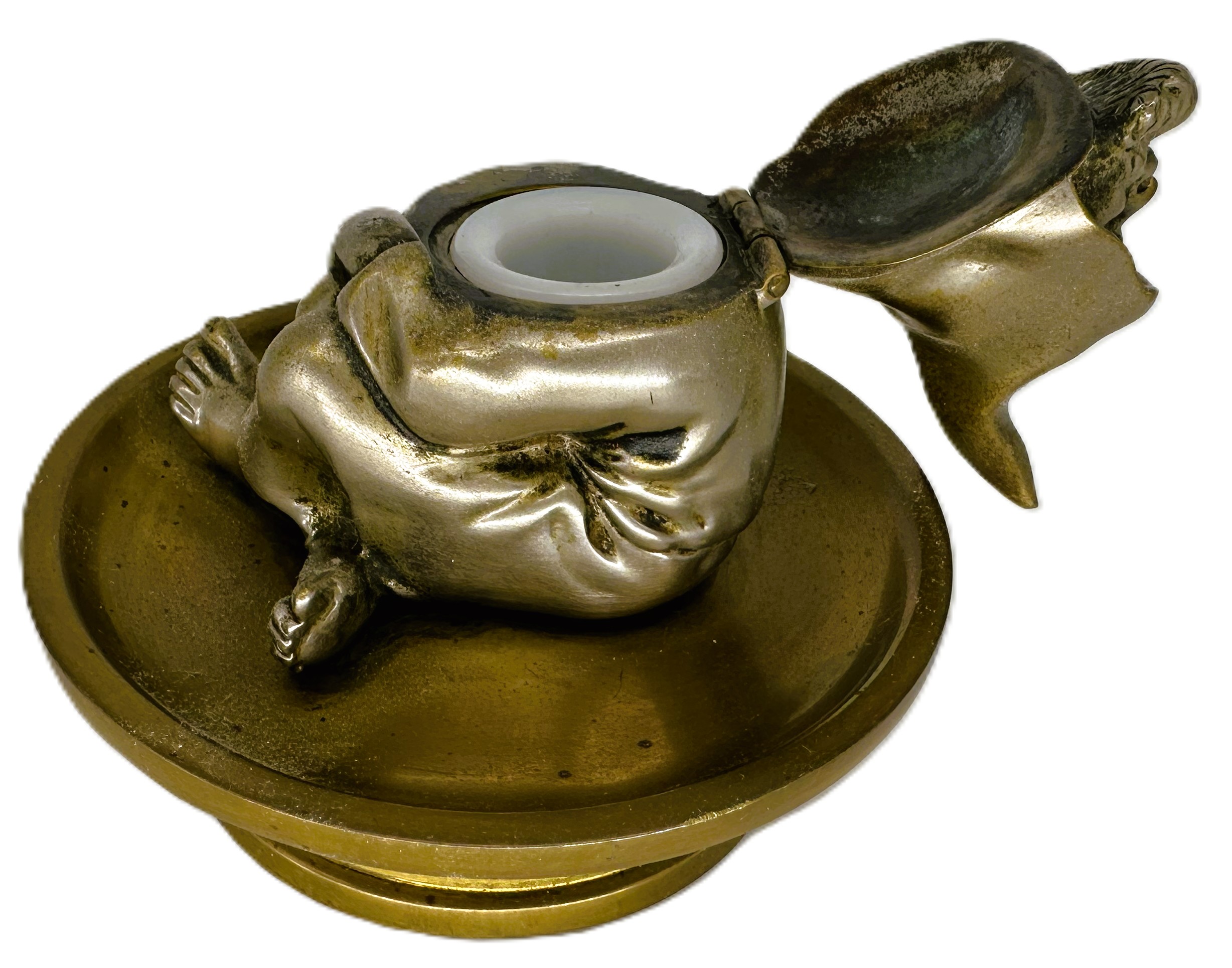
- The Figure: It depicts a bearded, contemplative monk or hermit seated in a cross-legged position. He is dressed in a heavy, flowing robe with a remarkably tall, pointed hood (cowl). His bare feet are a central feature, symbolizing a life of poverty and asceticism.
- The Mechanism: The hood is hinged at the back; when lifted, it reveals a small ink reservoir.
- The Base: The figure is mounted on a shallow circular brass dish. In the context of a 19th-century desk, this dish likely served as a pen rest (to catch drips).
- Materials: The figure appears to be made of spelter (a zinc-based alloy popular for fine-detail casting) with a brass finish, while the base is solid brass.
Historical Context & Origin
Pieces like this were most commonly produced in France (Paris), Germany, or Austria. The intricate, almost “grotesque” or highly characterful facial features are particularly characteristic of Vienna Bronzes or German metalwork from the late 19th century, where manufacturers specialized in whimsical, “eccentric” figural desk accessories.
Is this a historical figure?
While it is likely a generic representation of a monastic scholar, the specific imagery (bare feet, pointed hood, contemplative pose) strongly evokes Saint Anthony the Great (St. Anthony Abbott), the legendary desert hermit. However, it also draws on the 18th and 19th-century fascination with the “Ornamental Hermit” – the idea of a wise, solitary figure who has retreated from the world to focus on thought and prayer.
The choice of a monk for an inkwell was both symbolic and aesthetic:
- The Scholarly Ideal: For a writer, the monk represented the ultimate life of the mind and the tradition of the medieval scribe. Having such a figure on a desk served as an inspiration for quiet study and intellectual depth.
- Romantic Medievalism: The 19th century saw a massive revival of interest in the Middle Ages. Figures of hermits and monks were considered “picturesque” and reflected the era’s fondness for “pleasing melancholy”—the romanticized beauty found in solitude and old-world spirituality.
- Whimsy: These “novelty” inkwells were the high-end conversation pieces of their day. They were meant to be charming, slightly mysterious, and tactile objects that brought personality to a formal library or study.
Estimated value: $125
Content disclaimer. The information posted is the owner’s best knowledge and may not have been vetted by the SOIC. We welcome comments, corrections, and additions, working to make our website information comprehensive and accurate.
Join the Society of Inkwell Collectors (SOIC) – it’s free!
Founded in 1981 as a non-profit organization,
we are documenting inkwells (and accessories).
We’re here to help and inform!