

Inkipedia
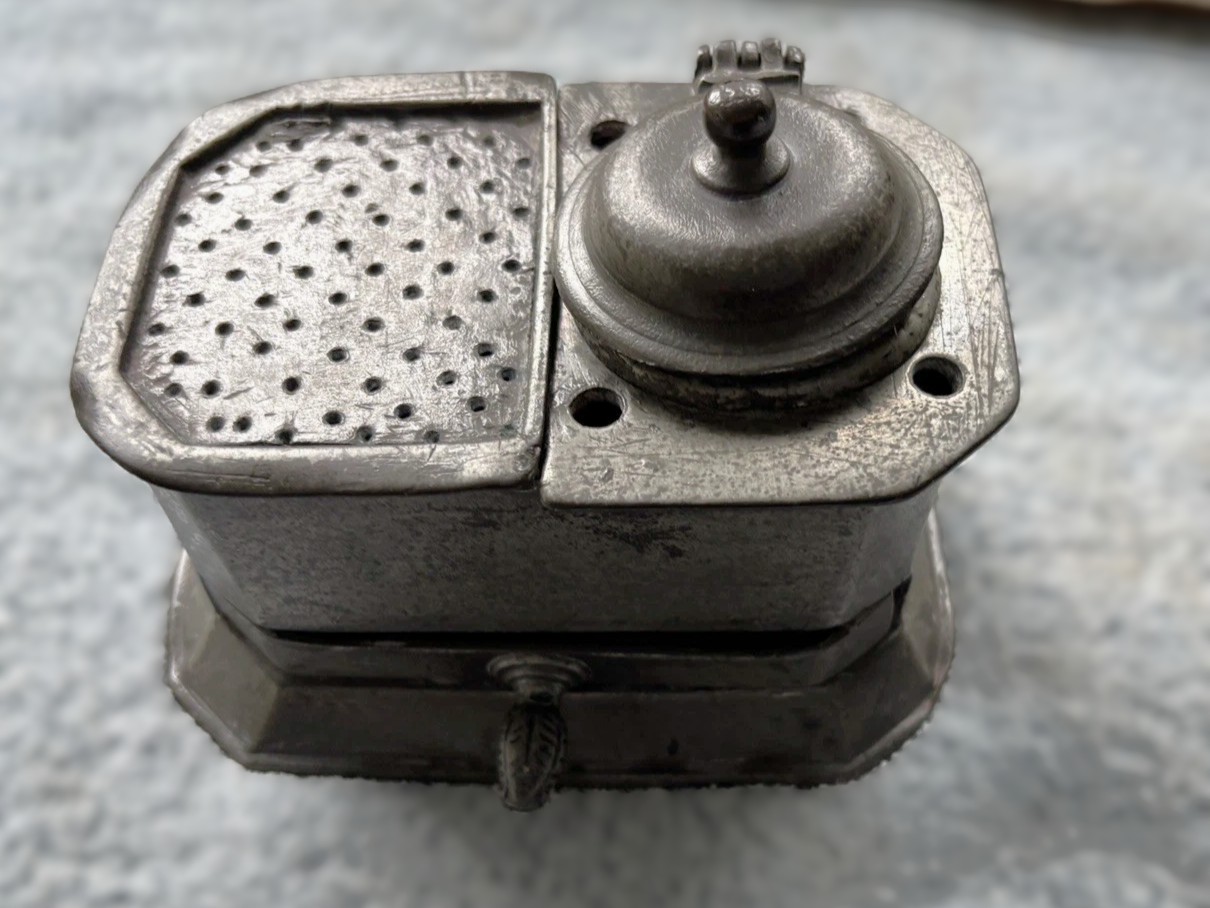
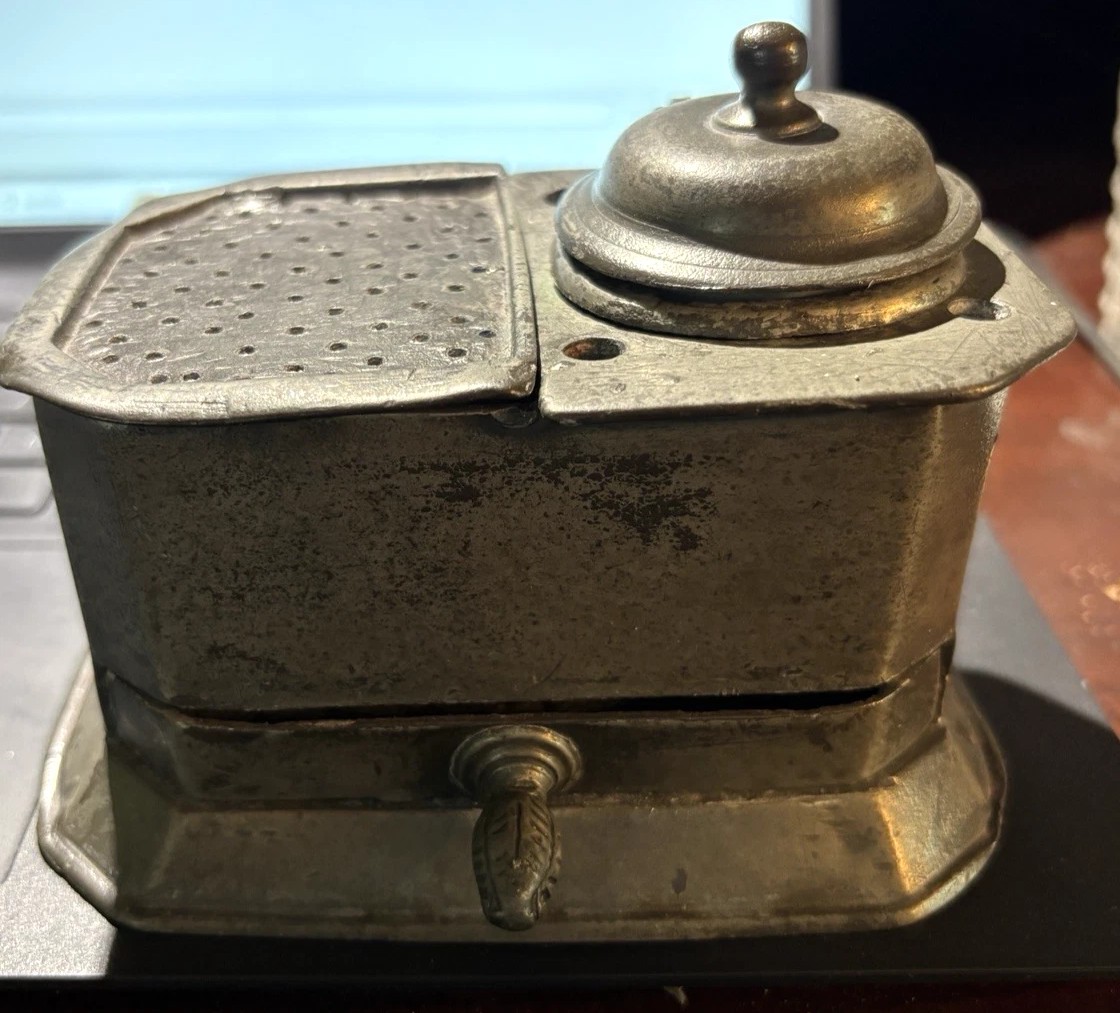
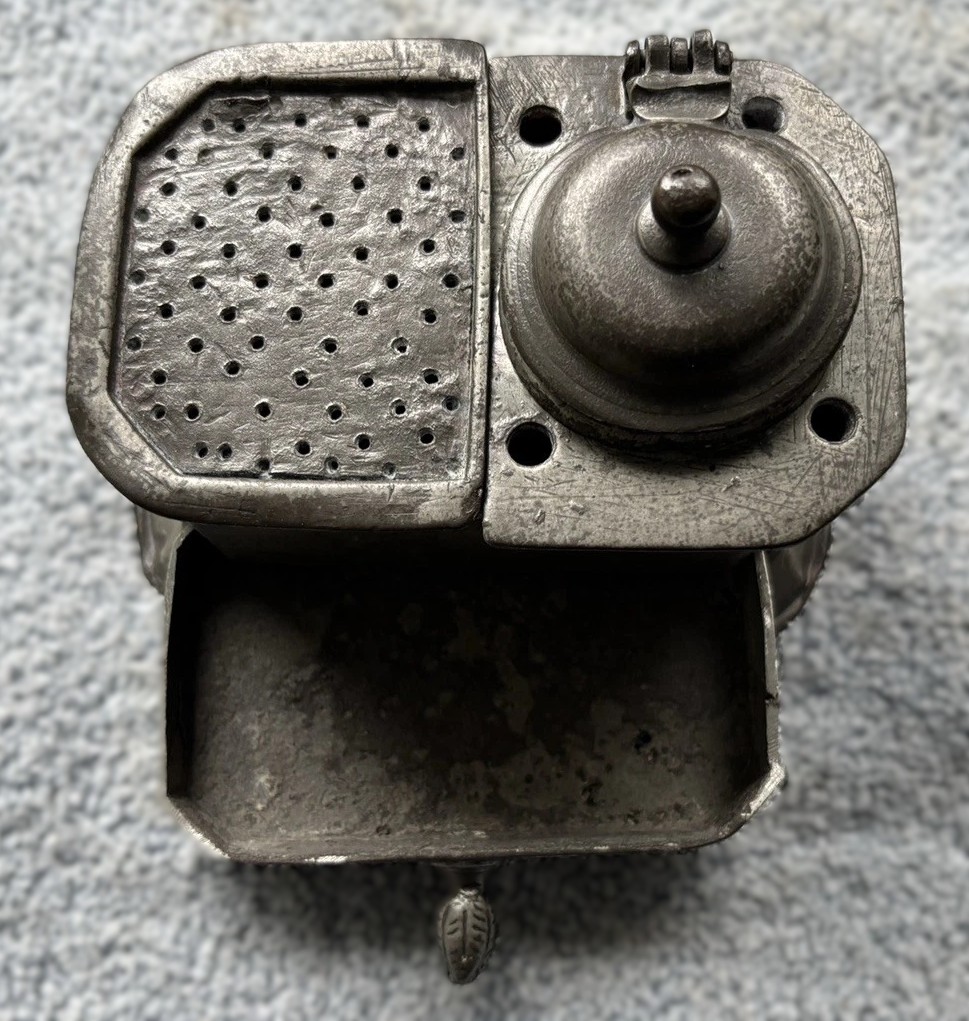
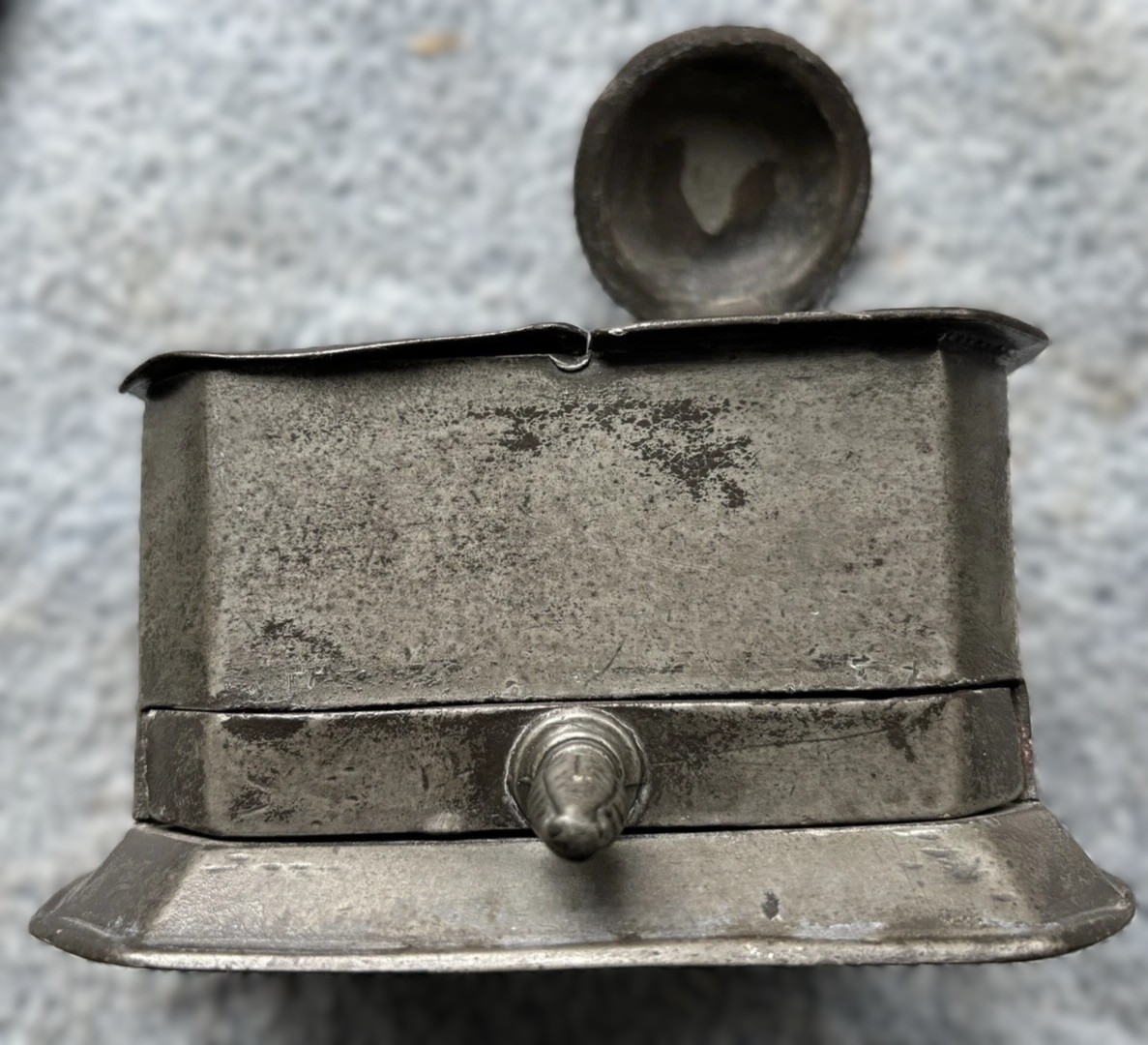
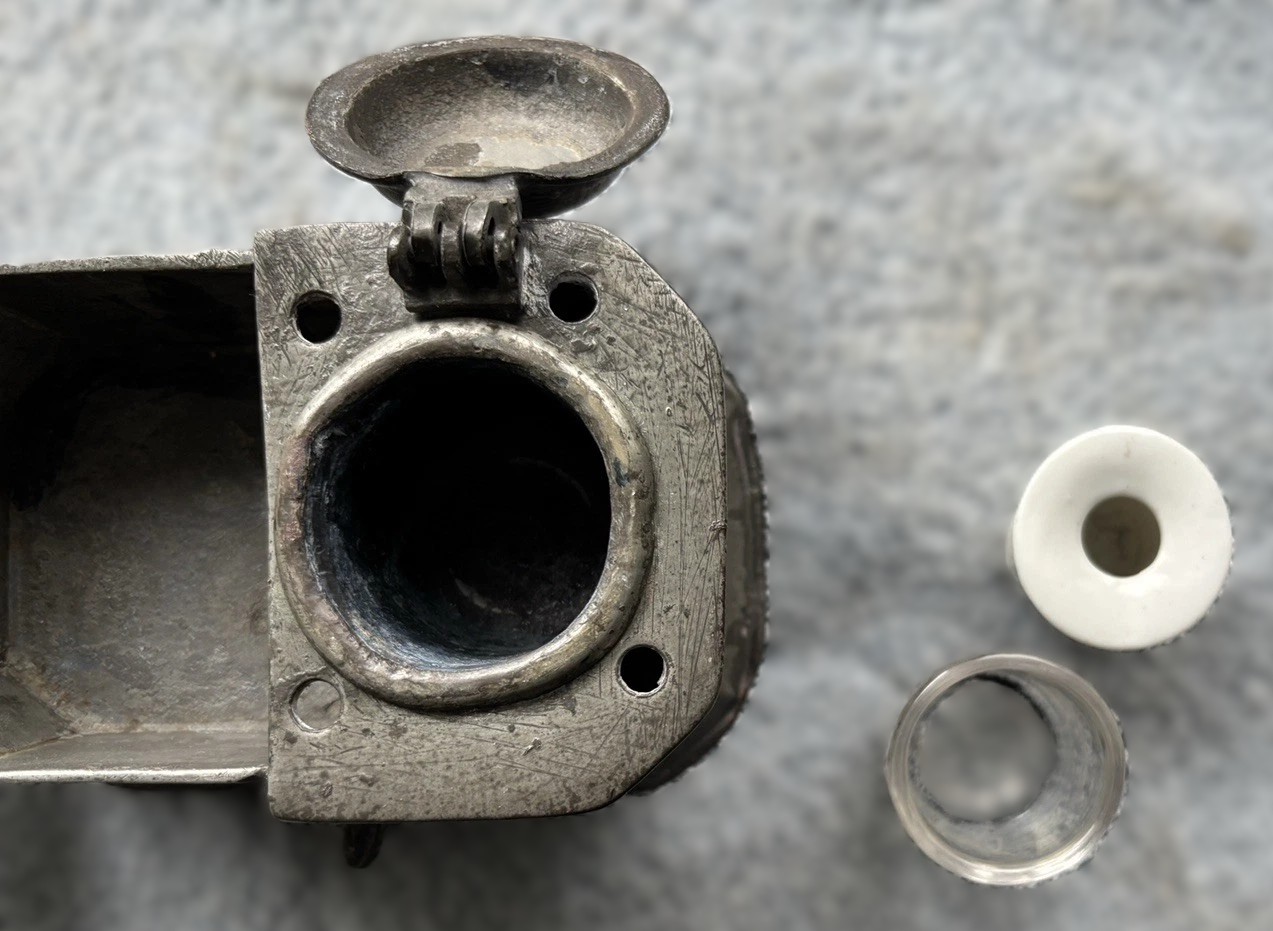
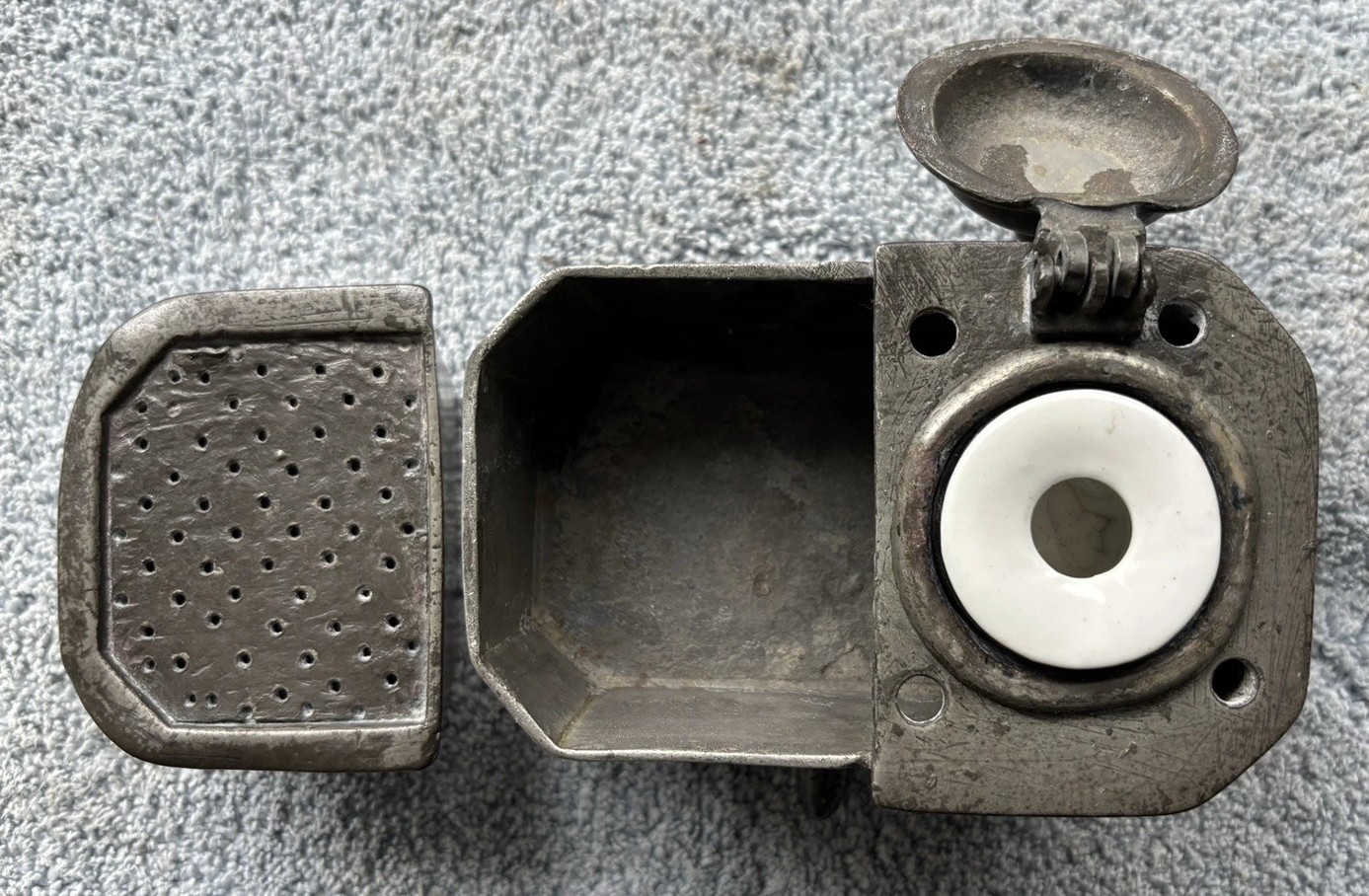
Continental Pewter Combination Inkstand & Sander
| Categories | Early - Primitive, Pewter / Tin |
| Material | Pewter |
| Markings | Unmarked |
| Manufacturer | Undetermined |
| Origin | Undetermined |
| Date or Era | circa 1800 |
| Measuring | 5” x 4” |
This is a late 18th-to-early 19th-century Continental (likely French, Dutch, or German) pewter combination desk set.
Description
- Upper Structure & Layout: The piece features a rectangular pewter body with canted corners, resting on a molded, flared pewter base. The top surface is divided into two primary functional sections:
- Sander (Pounce Pot): On the left side, a removable container perforated with numerous small holes served as a sander (or pounce pot), used to sprinkle fine sand or pounce powder over handwritten pages to absorb wet ink before blotting paper came into wide use.
- Inkwell Compartment: On the right side, a fixed top surface houses a round opening topped by a dome-shaped, hinged pewter lid with a small turned finial.
- Pen Holes: Surrounding the inkwell opening on the top plate are four small circular holes designed to hold quills or pens upright while writing.
- Lower Drawer: The front of the base features a pull-out drawer designed to store extra nibs, sealing wax, or small desk accessories. It is fitted with a turned drop-pull knob decorated with stylized leaf ornamentation.
- Inserts:
- The white ceramic insert is a later porcelain liner.
- The clear glass insert is a 19th-century replacement ink pot. Neither insert appears to be original to the piece, as original inserts in early pewter inkstands were usually blown glass or pewter wells fitted precisely to the interior cast flange.
Origin & Age
- Origin: Continental Europe—most likely France, Germany, or the Low Countries (Holland). The combination of a top-loading sander box alongside a quilled inkwell with an integrated bottom drawer is a signature form of 18th-century European pewter production.
- Age: Circa 1780–1820 (Late 18th to Early 19th Century). The heavy cast pewter construction, Five-knuckle hinge design on the ink lid, hand-pulp/cast drawer design, and integrated quill-holder configuration are all classic characteristics of late Georgian and Continental Neoclassical period writing gear.
Sold for $175 in July 2026
Content disclaimer. The information posted is the owner’s best knowledge and may not have been vetted by the SOIC. We welcome comments, corrections, and additions, working to make our website information comprehensive and accurate.
Join the Society of Inkwell Collectors (SOIC) – it’s free!
Founded in 1981 as a non-profit organization,
we are documenting inkwells (and accessories).
We’re here to help and inform!