

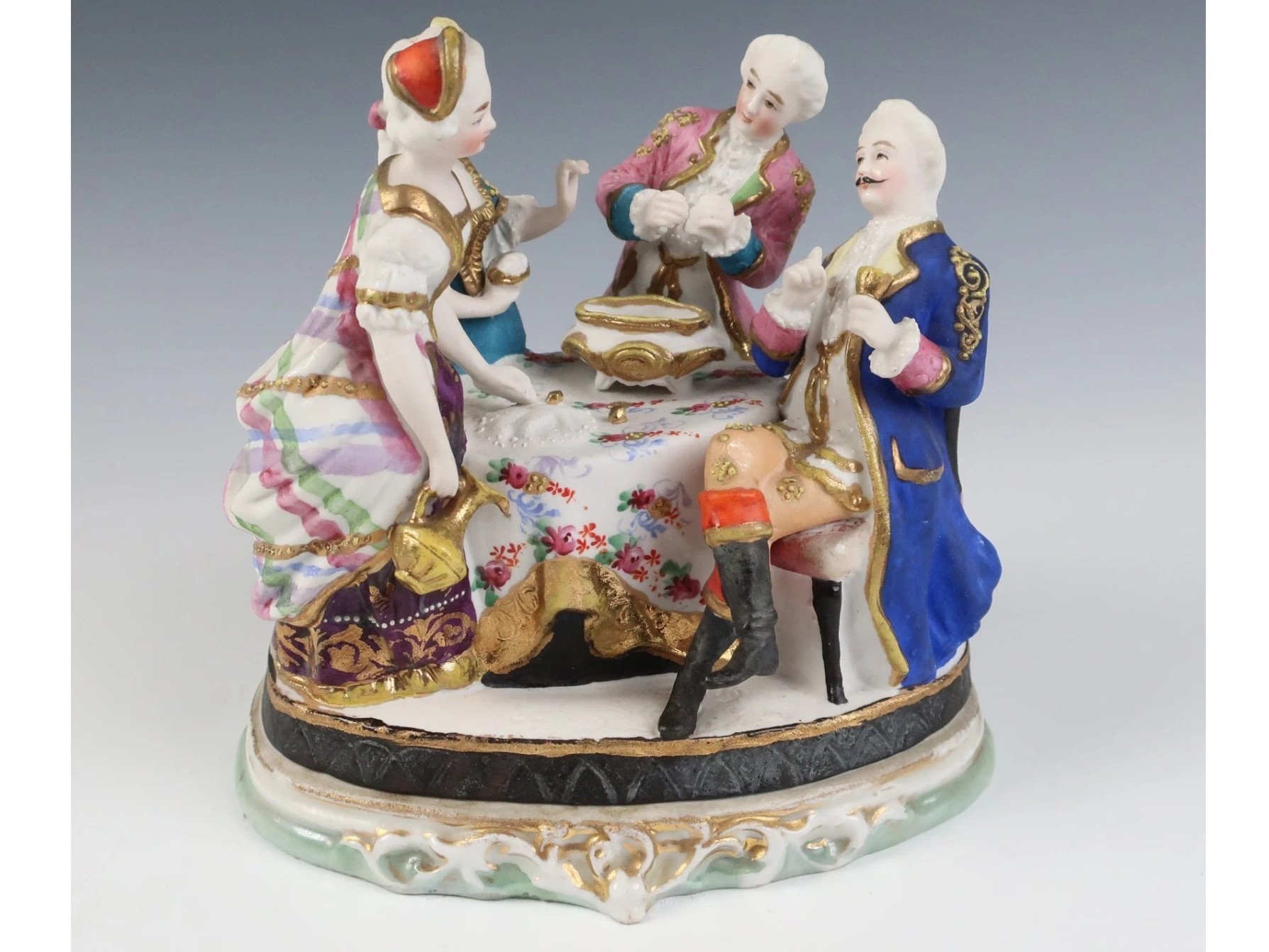
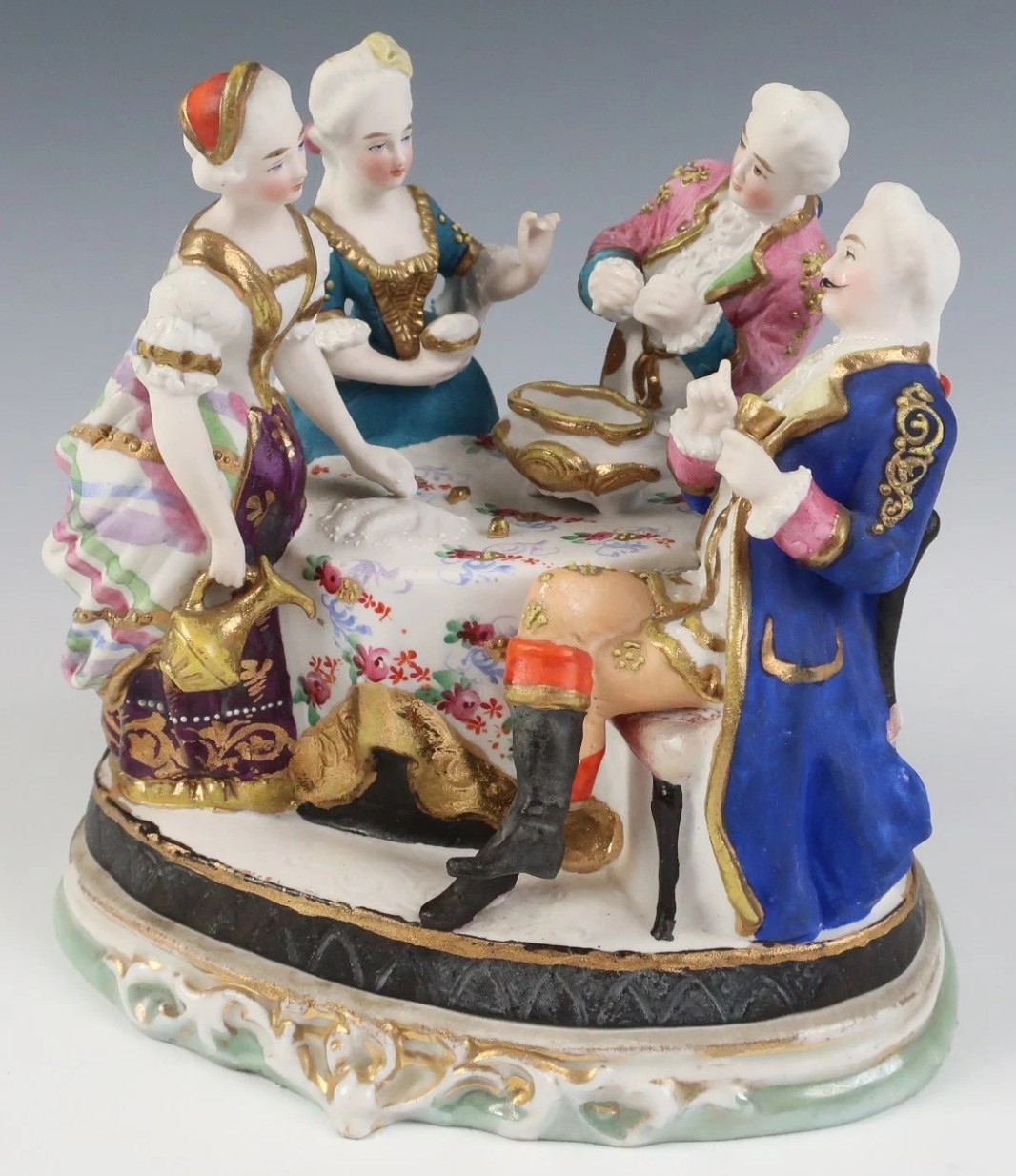
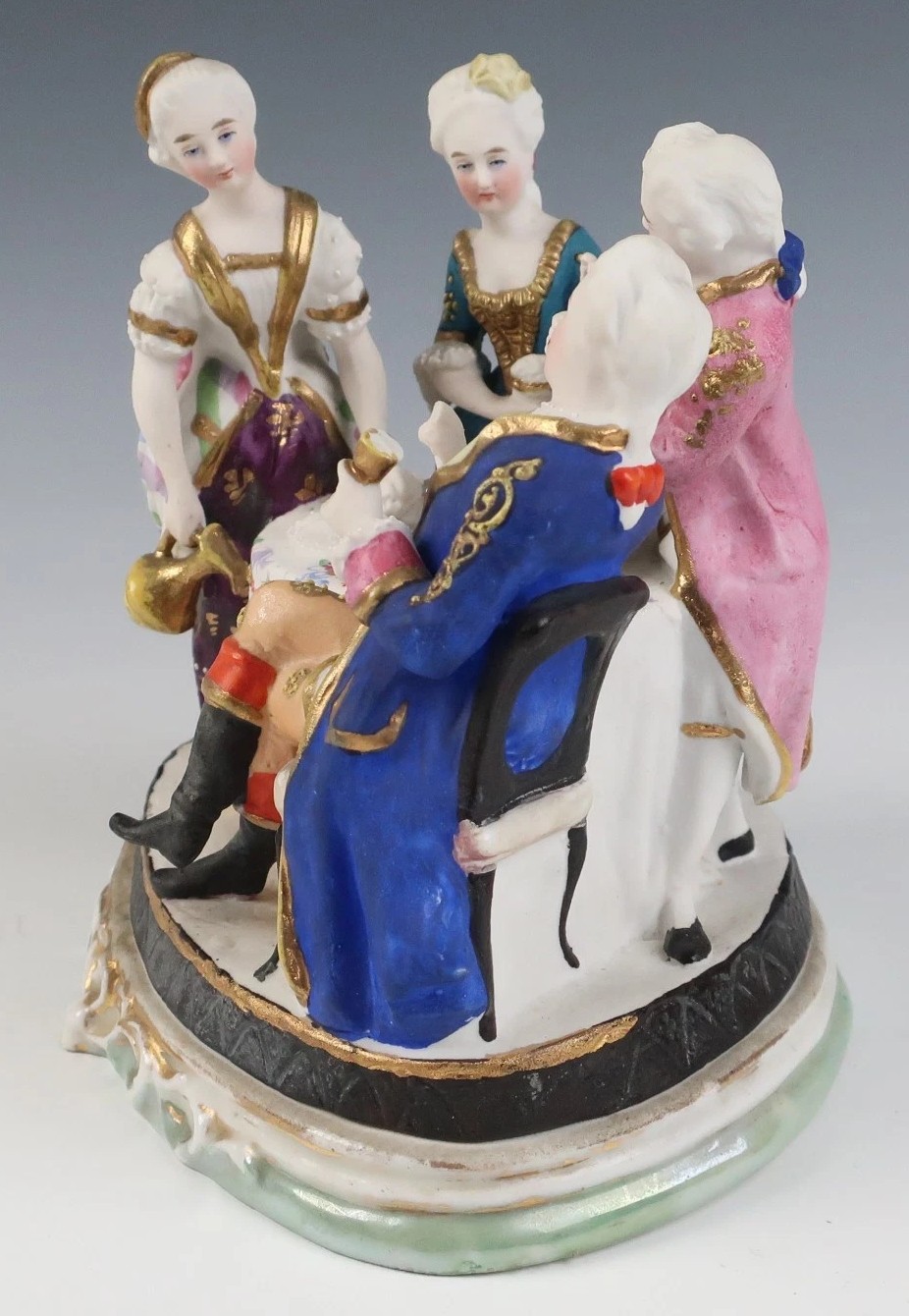
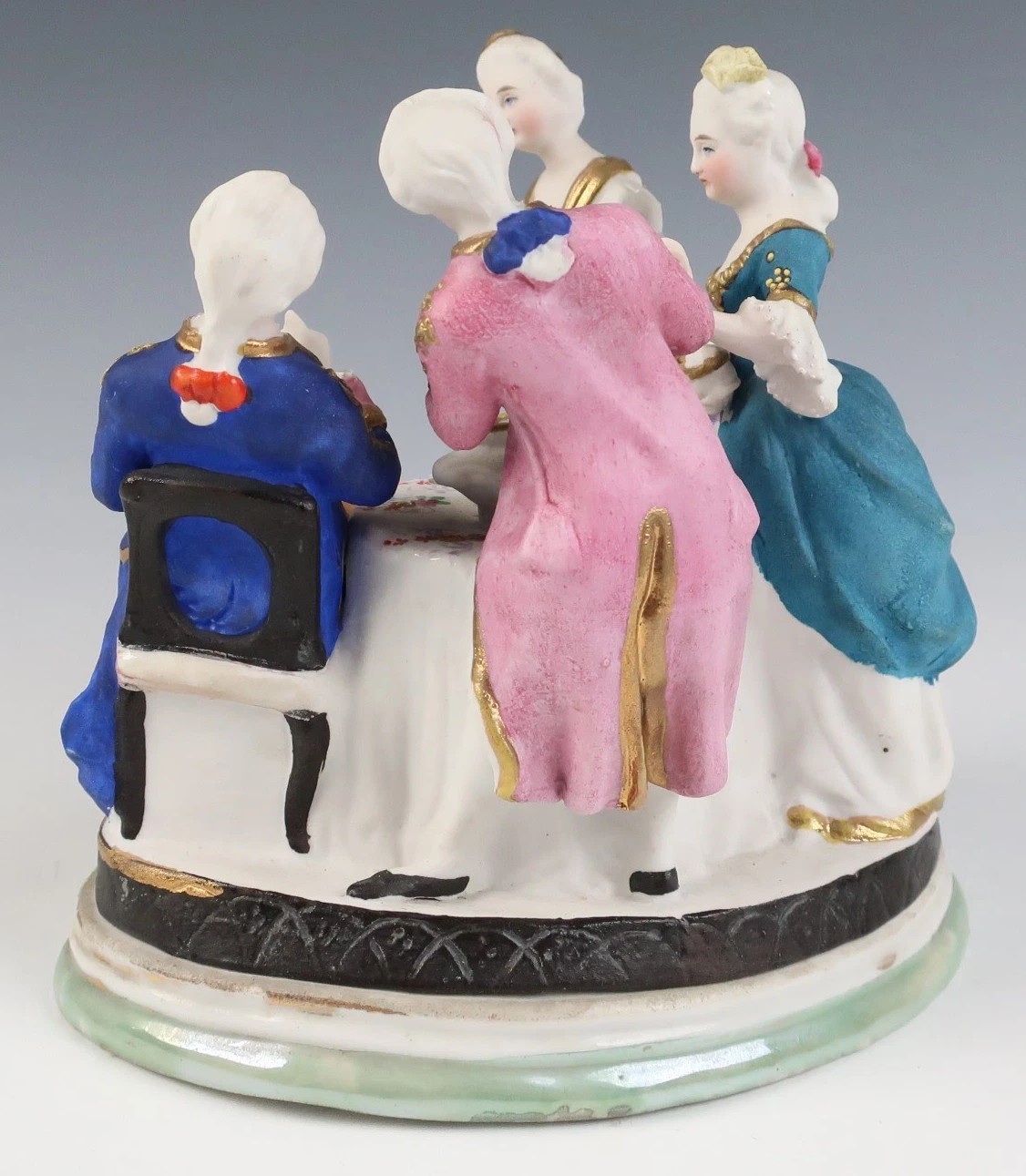
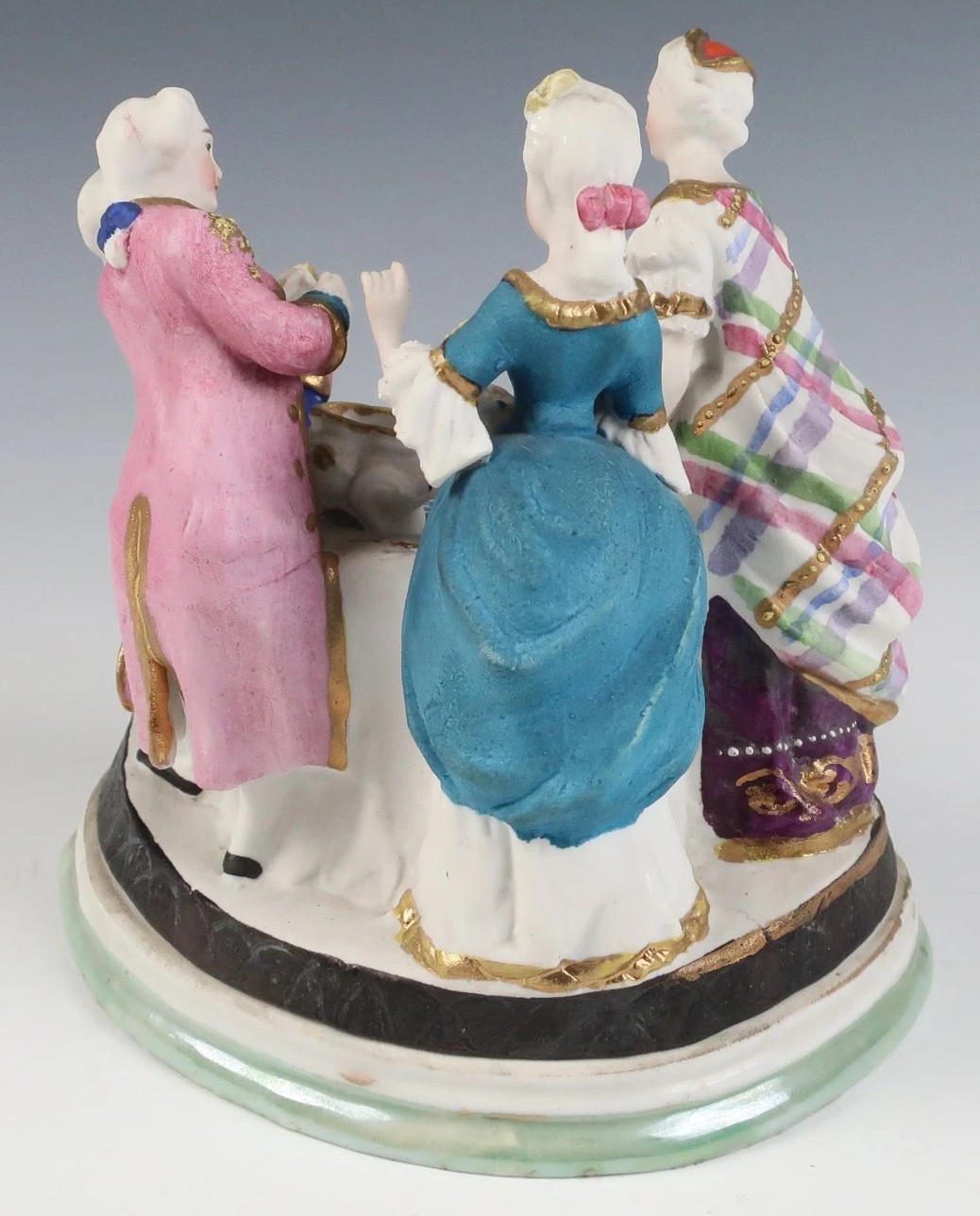
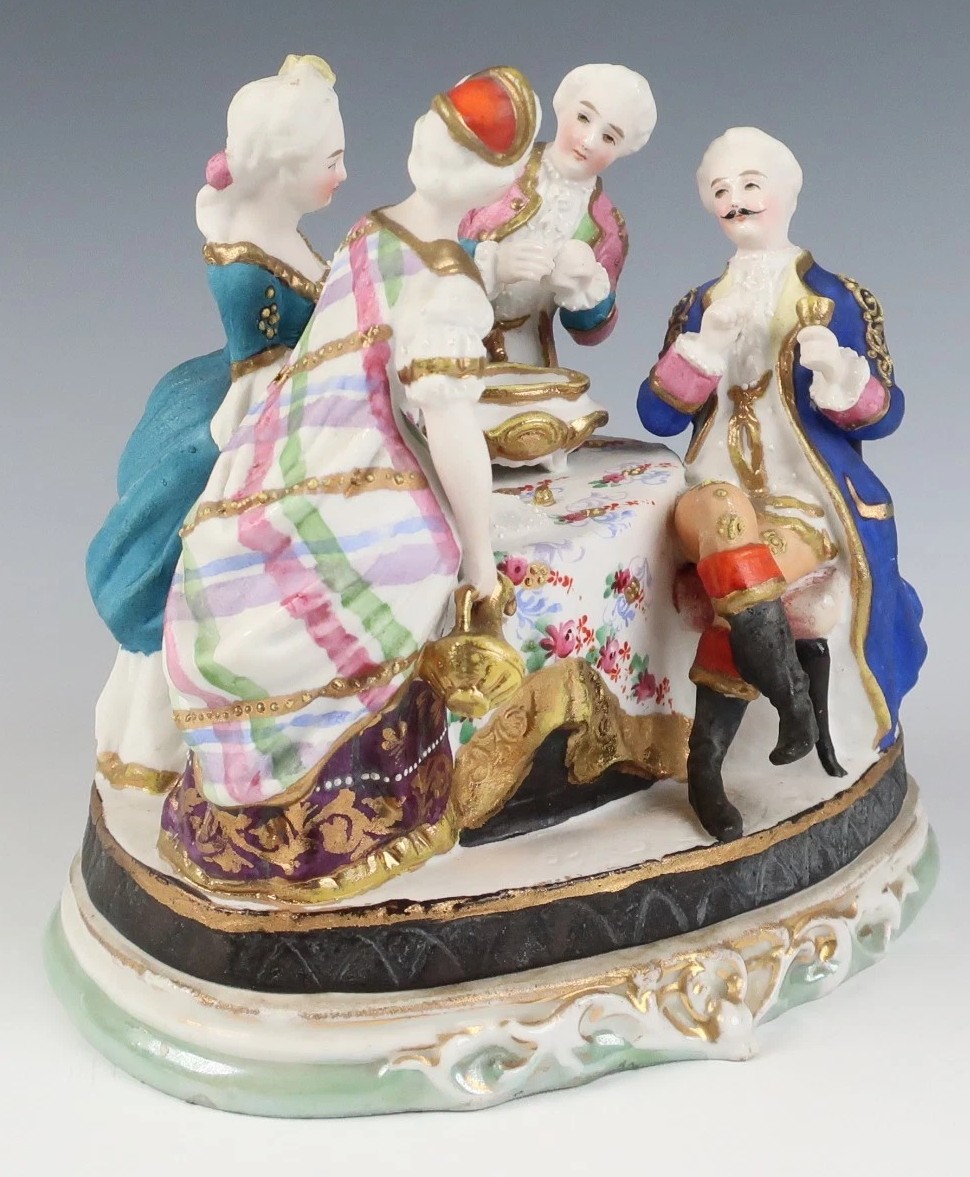
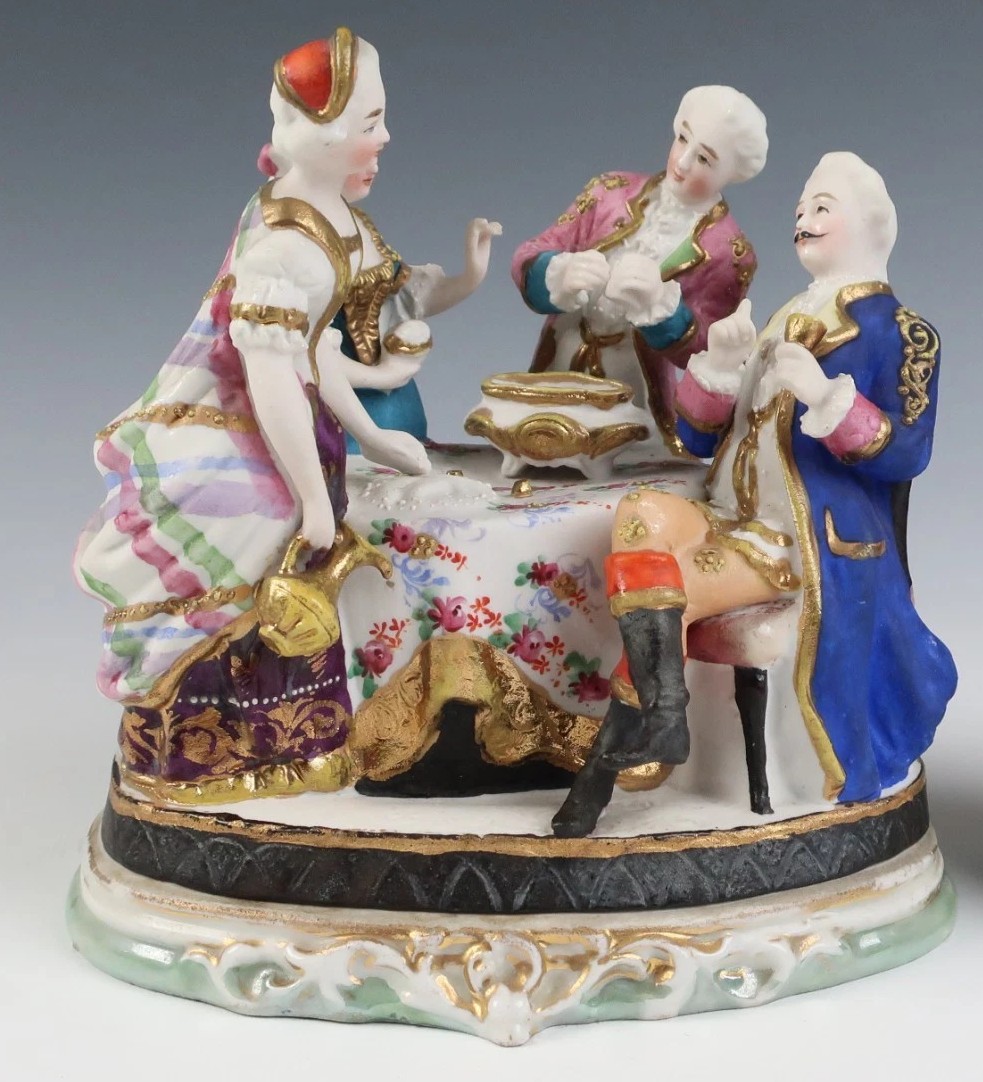
Conta & Boehme Courtier Scene
| Categories | Ceramics/Porcelain "Named" Makers |
| Type | Grouping |
| Material | Porcelain |
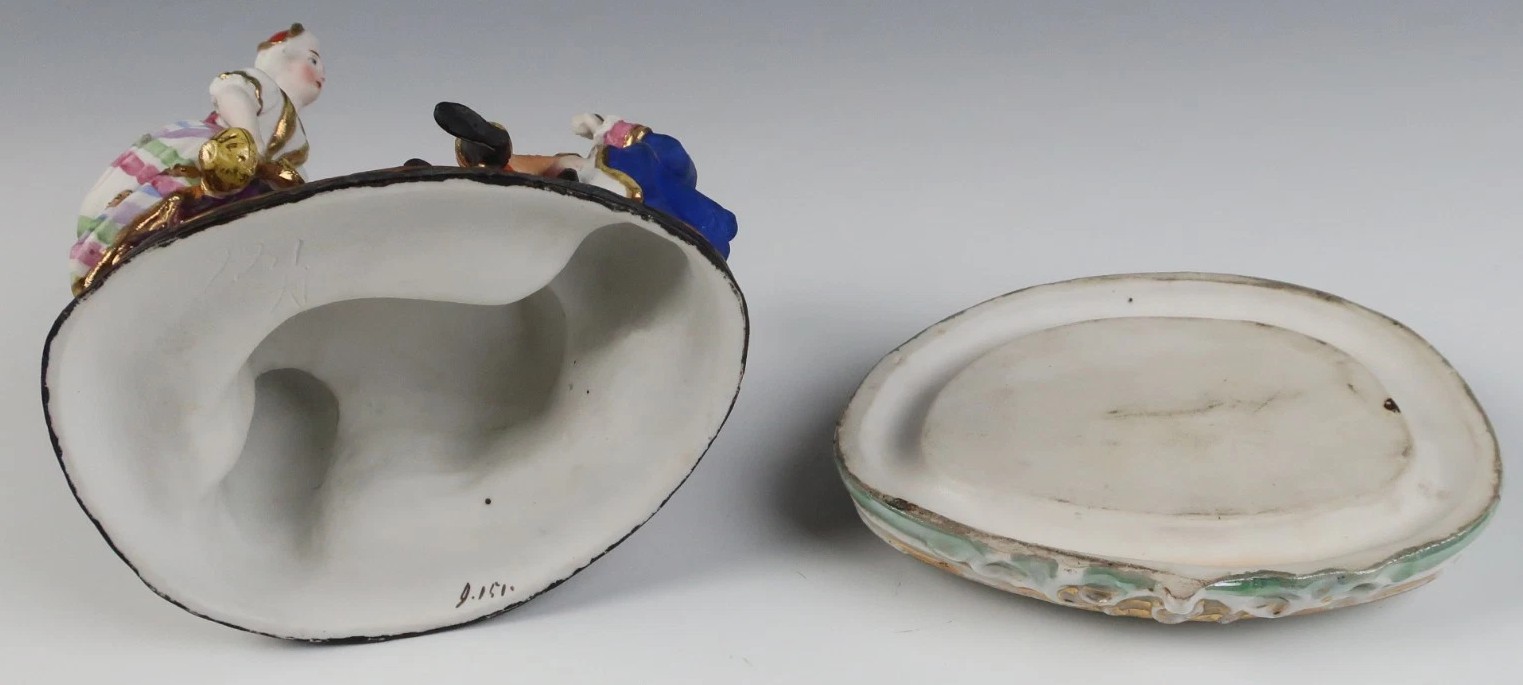
| Markings | Numbered |
| Manufacturer | Conta & Boehme |
| Origin | Germany |
| Date or Era | circa 1870 |
| Measuring | 6” across; 6” high |
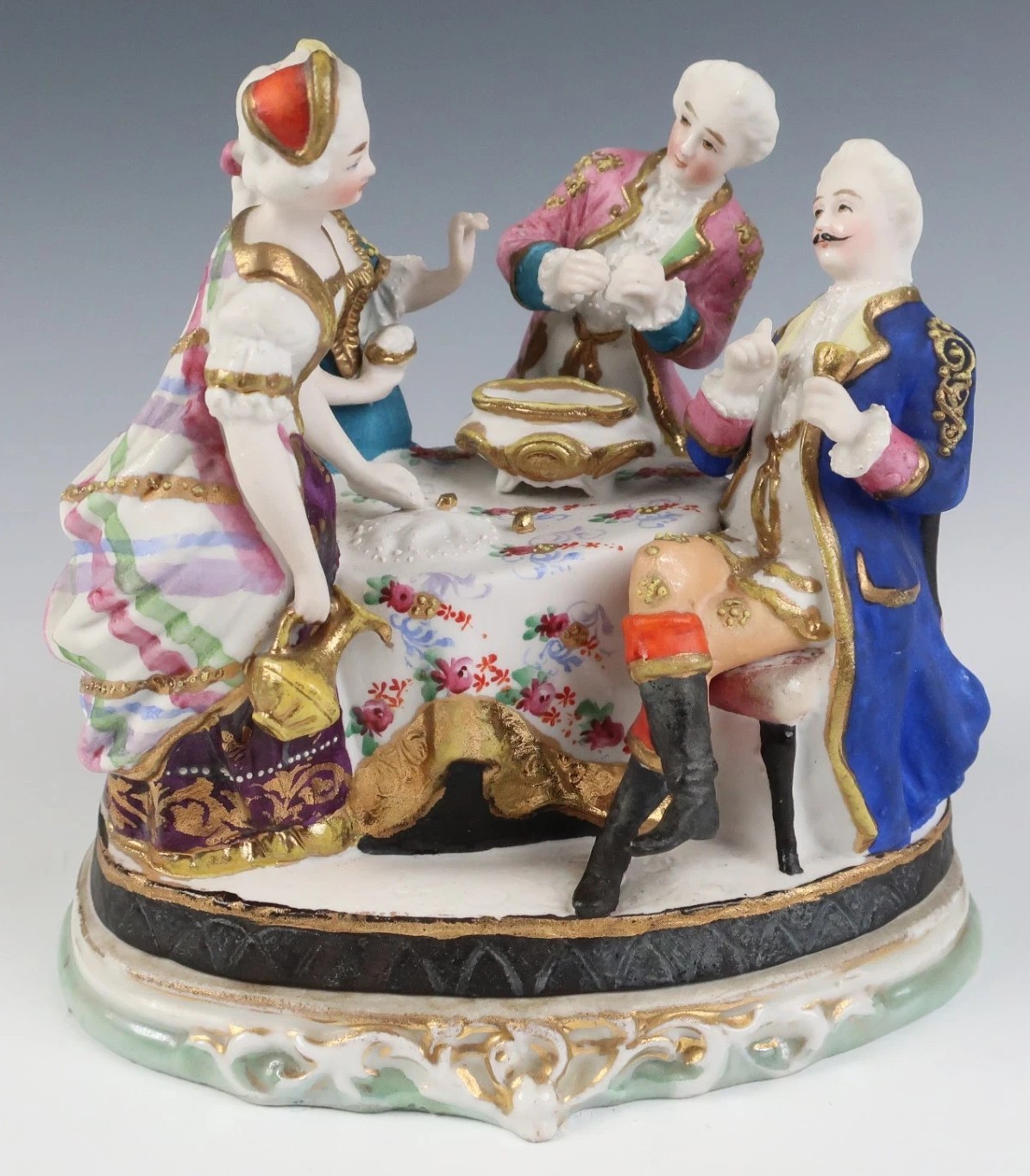
This porcelain bisque inkstand is an elaborate decorative set produced by Conta & Boehme in Germany. It features a figural scene that covers the inkwell and sander.
Description
- The Scene: The inkstand depicts a multi-figure courtier scene inspired by 18th-century Rococo themes. It features four figures dressed in ornate, colorful period attire:
- A seated man in a vibrant blue frock coat with gold trim.
- A standing woman in a purple and striped gown pouring from a golden ewer.
- A seated man in a pink coat.
- A seated woman in a teal-colored dress.
- Material: It is crafted from bisque porcelain (unglazed or matte-finish porcelain) and finished with colorful hand-painted glazes and extensive gilt (gold) accents.
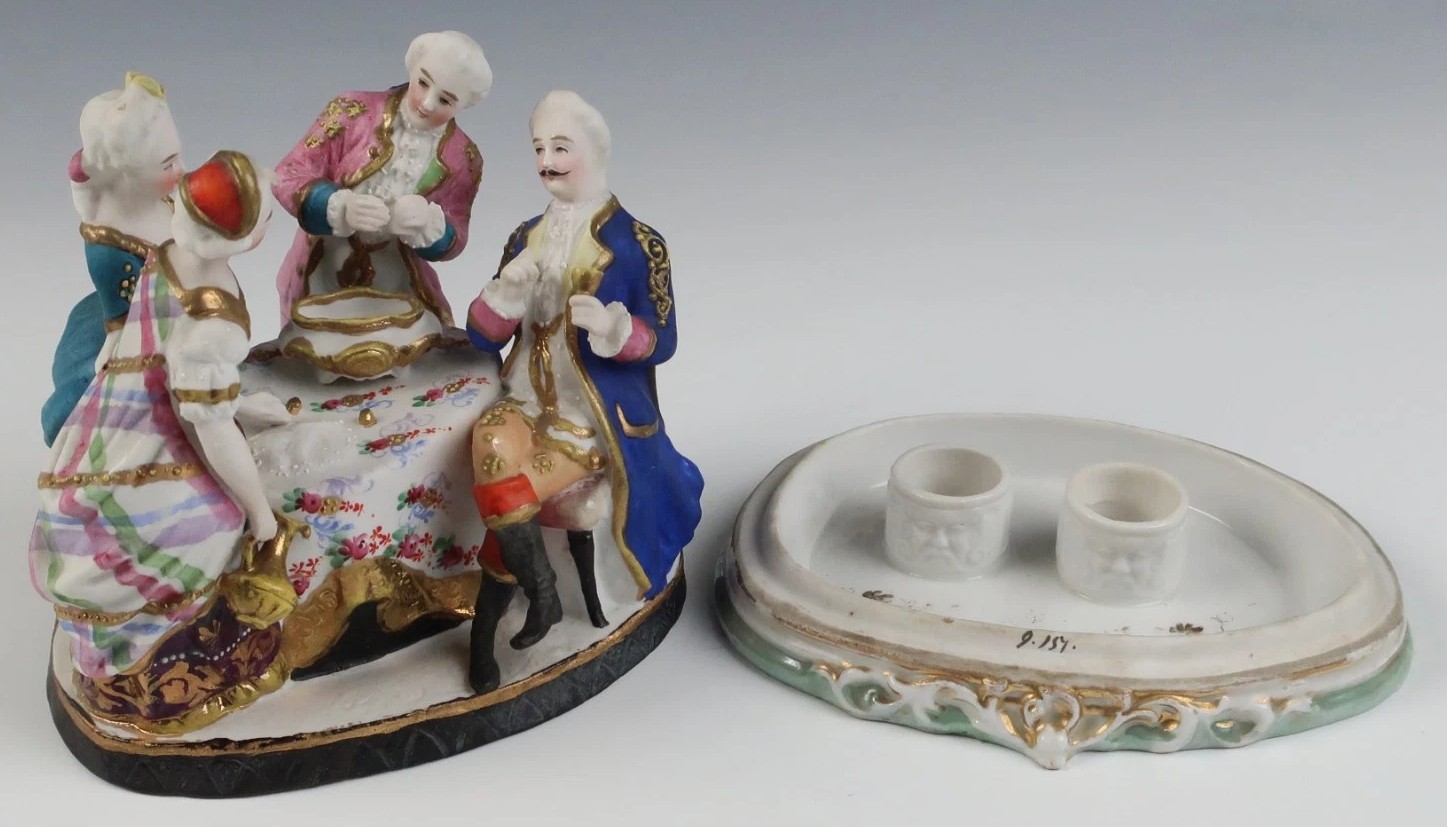
- The Mechanism: The entire figural group serves as a decorative lid that lifts completely off the pedestal-style base.
Internal Components
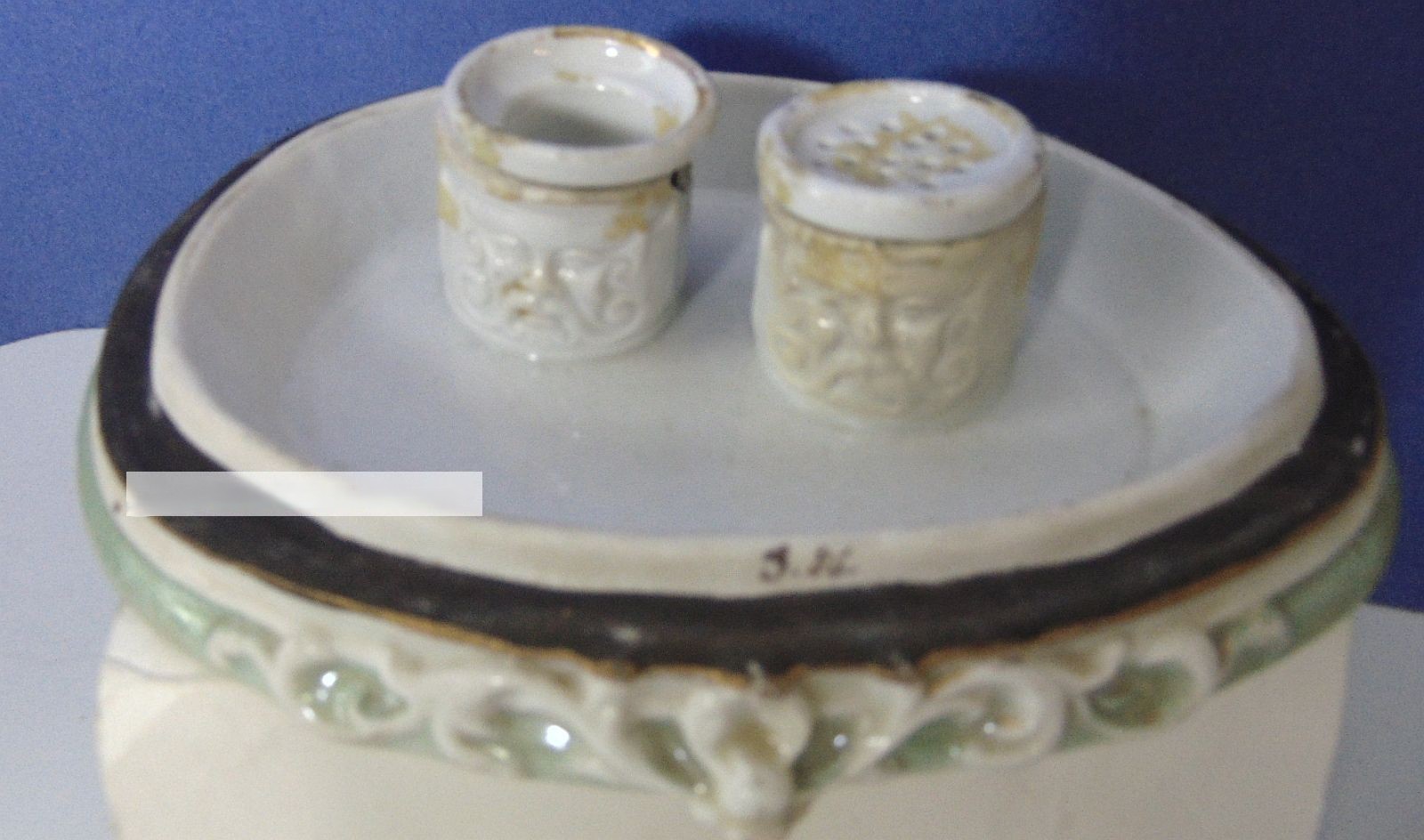
Once the top is removed, the base reveals two integrated ceramic wells decorated with high-relief grotesque faces:
- The Ink Pot
- The Sander (Pounce Pot): A second well with a perforated (holed) top. This held “pounce” or sand, which was sprinkled over wet ink to dry it before the invention of blotting paper.
About Conta & Boehme
Conta & Boehme (Conta & Böhme) was a prominent porcelain manufactory located in Pößneck, Thuringia, Germany.
- Active Years: The firm was established around 1840 and remained in production into the early 20th century (c. 1930s).
- Specialty: They were world-renowned for their highly detailed porcelain figurines and “fairing” boxes (prizes won at fairs). They specialized in the export market, particularly to England and the United States.
Estimated Age: Circa 1870–1880
This inkstand dates to the late Victorian era. The complex multi-figure mold and the inclusion of a sander (which began to fall out of use in the late 19th century in favor of blotting paper) are characteristic of the high-end novelty porcelain produced in Thuringia during the 1870s and 1880s.
Sold for $73 in January 2026
Content disclaimer. The information posted is the owner’s best knowledge and may not have been vetted by the SOIC. We welcome comments, corrections, and additions, working to make our website information comprehensive and accurate.
Join the Society of Inkwell Collectors (SOIC) – it’s free!
Founded in 1981 as a non-profit organization,
we are documenting inkwells (and accessories).
We’re here to help and inform!