








Conta & Boehme Bisque Porcelain Figural Inkstand: “Mother and Child Dressing”
| Categories | Ceramics/Porcelain Figural, Ceramics/Porcelain "Named" Makers |
| Type | Family |
| Material | Porcelain |
| Markings | numbered |
| Manufacturer | Conta & Boehme |
| Origin | Germany |
| Date or Era | circa 1870 |
| Measuring | 5 ½” x 4” x 5 ¼” high |
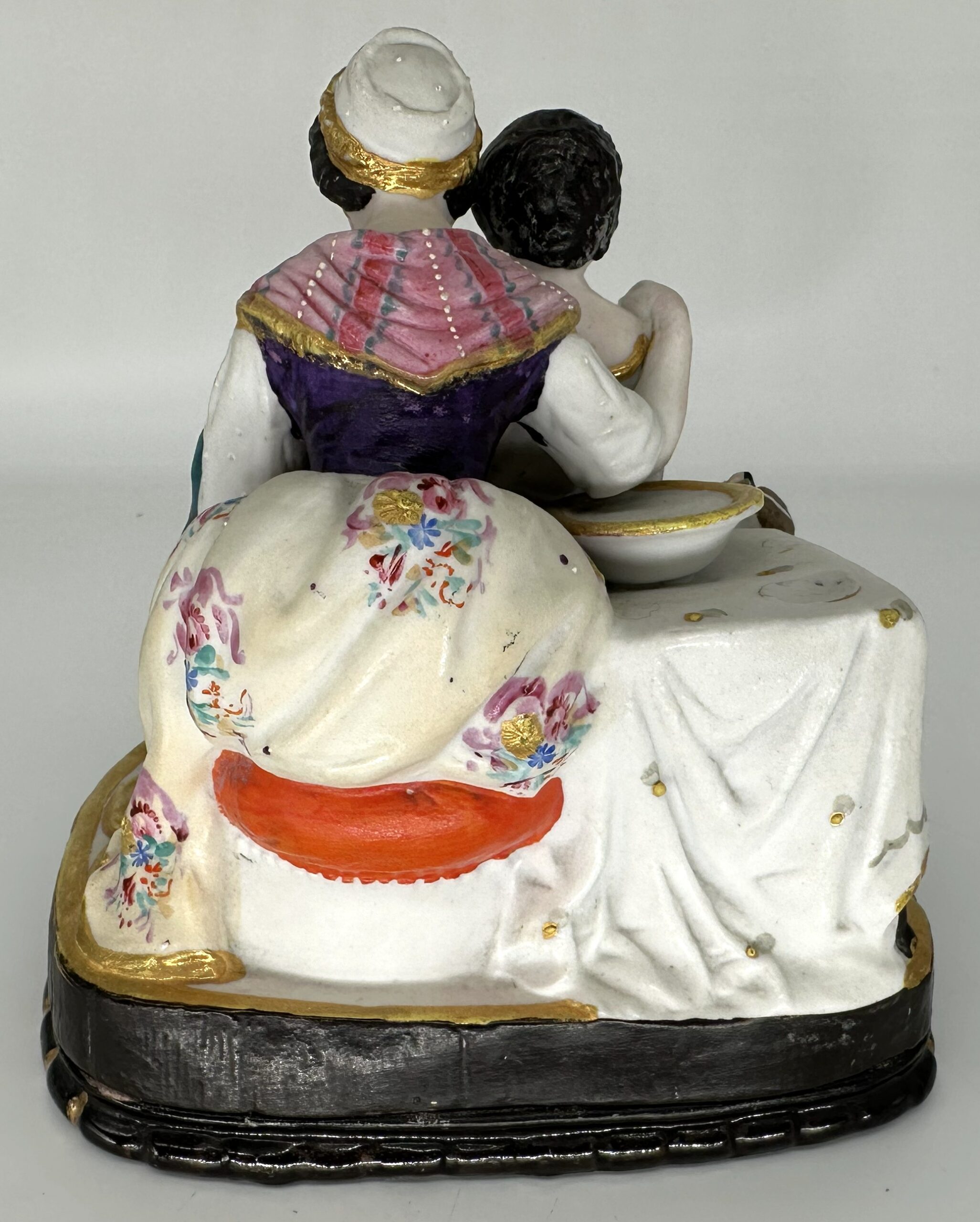
Overview A beautifully modeled figural inkstand executed in unglazed bisque porcelain. Made by Conta & Boehme, the piece captures a sentimental Victorian-era “genre scene” (a depiction of everyday life). The matte, white finish of the bisque lends the figures a delicate, marble-like quality.
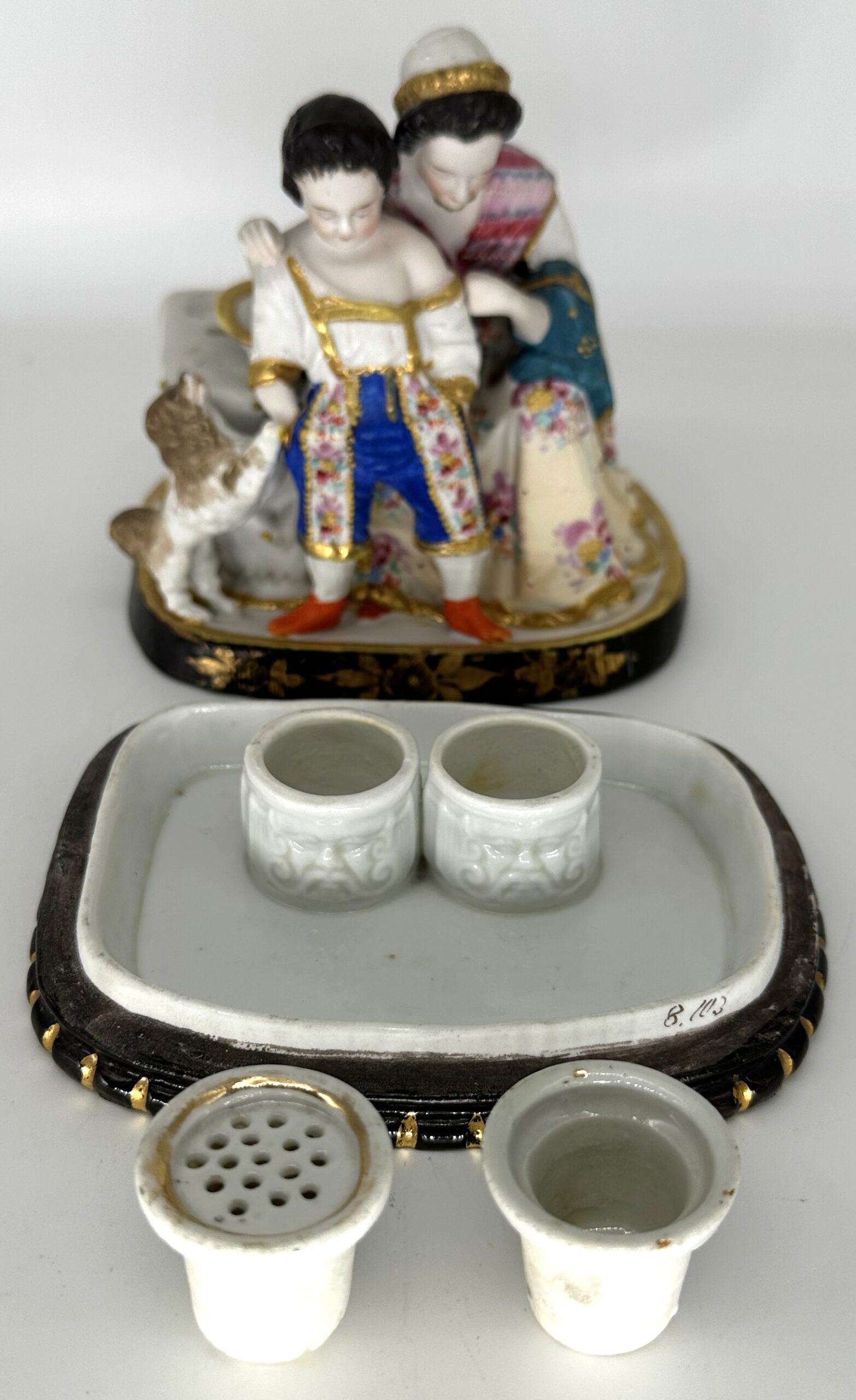
The Figural Scene (The Lid) The entire figural group serves as the lid, resting securely on the base:
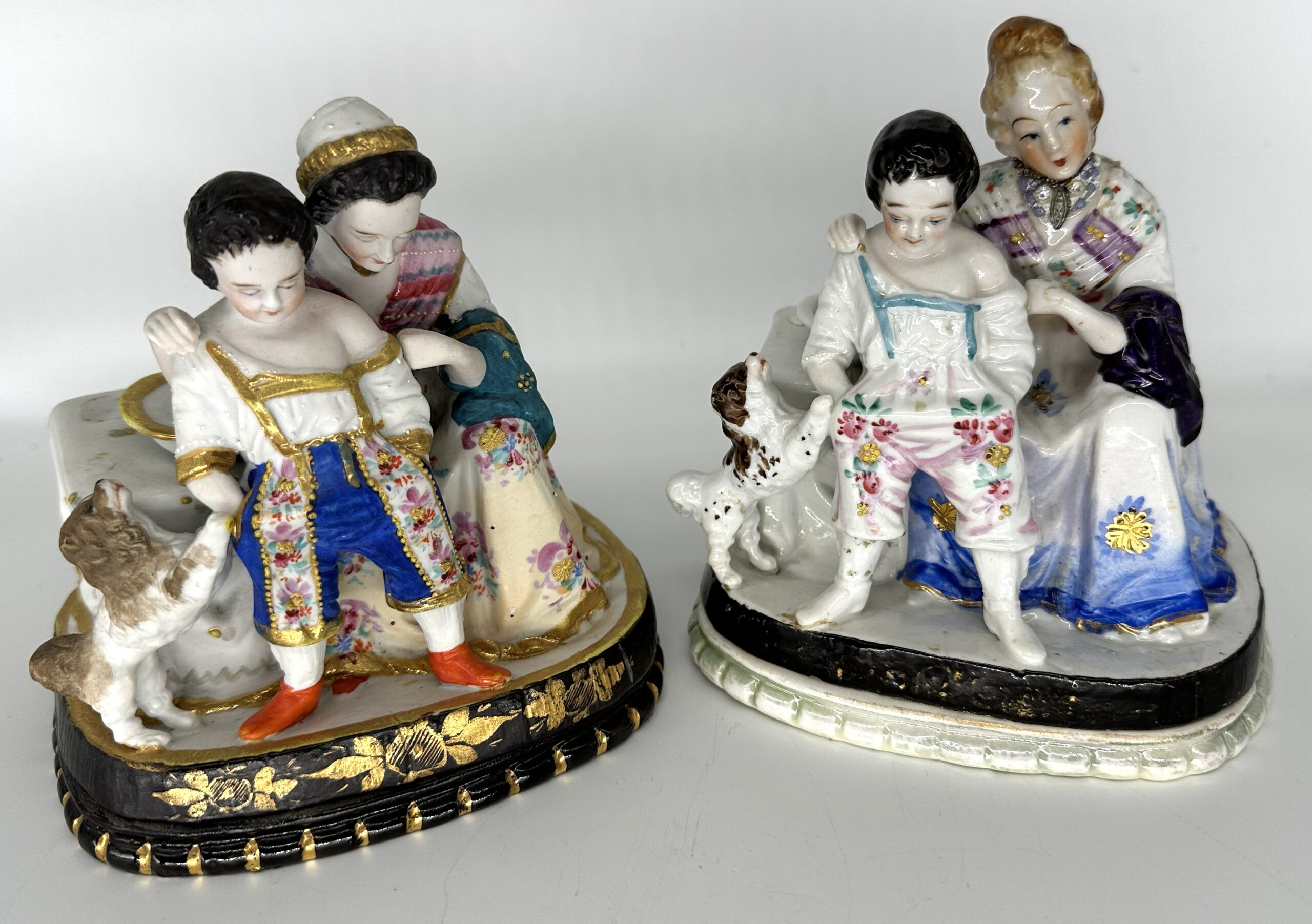
- The Focus: The scene portrays a tender, domestic moment: a mother is attentively helping her young son, who appears to be struggling with or being dressed in his clothes. The mother is rendered in a kneeling position, her period dress showing delicate folds and detailing.
- The Dog: Adding a playful and dynamic element, a small, curly-haired spaniel is sculpted jumping up excitedly, ready to participate in the activity.
- Modeling: The figures are expertly modeled with high detail, conveying a sense of movement and depth, typical of the best 19th-century German figural porcelain.
Detailed Commentary on the Painting and Gilding
The painting and decorative applications on this inkstand are detailed and elevate the piece beyond standard figural porcelain.
- The Polychrome Floral Garments
The most striking feature is the execution of the clothing:
- Miniature Florals (Streublümchen): The painter has meticulously rendered tiny, scattered floral bouquets across the fabric of the mother’s skirt and shawl. These are not broad strokes but fine, miniature hand-painting featuring specific flowers (likely pink or yellow roses, small blue forget-me-nots, and green foliage). This detail simulates expensive, hand-embroidered silk or brocade, adding a layer of material realism.
- Color Harmony: The solid-colored elements (such as the boy’s coat or a sash on the mother’s dress) are painted in rich, opaque enamels (e.g., deep blue, magenta, or forest green) that contrast beautifully with the white ground and the tiny floral patterns.
- Skin and Hair: The faces are finely detailed with natural flesh tones, careful rendering of the pupils, and fine lines defining the hair texture, all captured under the bright glaze.
- The Use of Gold (Gilding)
The gilding is extensive, highly reflective, and serves to define the quality and luxury of the object:
- Simulating Luxury Trim: Gold is applied to simulate expensive metallic threads or woven trim on the clothing, outlining collars, cuffs, and the edges of the mother’s shawl. This visual opulence confirms the high-status nature of the piece for the Victorian market.
- The Glaze Effect: The high-gloss glaze enhances the reflectivity of the gold, making it appear brighter and more lustrous than gold applied to a matte bisque surface.
The Base and Functionality The figures are permanently mounted on a rectangular base, which lifts entirely to reveal the inkwell components beneath:
- Interior: The stationary lower base contains two recessed circular wells designed to hold the original inserts. This complete set includes the separate pots for ink and pounce (sander).
- Distinctive Feature: The front vertical surface of the well holders features unique and elaborate molded relief elements. These reliefs take the form of highly detailed classical masks, specifically featuring prominent mustachioed men’s faces.
Attribution and Markings The piece is securely attributed to Conta & Boehme (Pößneck, Thuringia, Germany).
- Mold Number: The inkstand bears the matching mold number 8.103 on both the underside of the base and the underside of the figural lid. This matching number is vital, confirming that the figures and the base are the original components, ensuring a factory-matched pair.
Second Example: Another example added, showing how the same manufacturer’s output can differ. The second example is glazed porcelain. The mother’s head and gaze are at a different angle. She wears no hat but has more hair. The painting and coloring are not as elaborate and differ in color.
Estimated value: $125
Content disclaimer. The information posted is the owner’s best knowledge and may not have been vetted by the SOIC. We welcome comments, corrections, and additions, working to make our website information comprehensive and accurate.
Join the Society of Inkwell Collectors (SOIC) – it’s free!
Founded in 1981 as a non-profit organization,
we are documenting inkwells (and accessories).
We’re here to help and inform!