


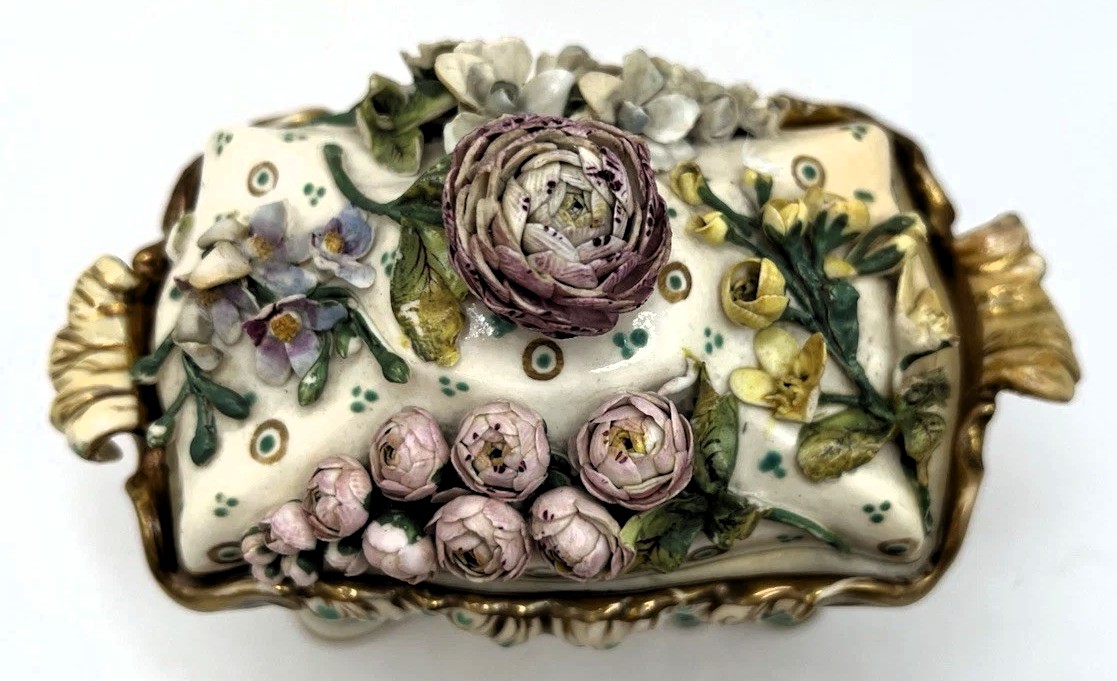
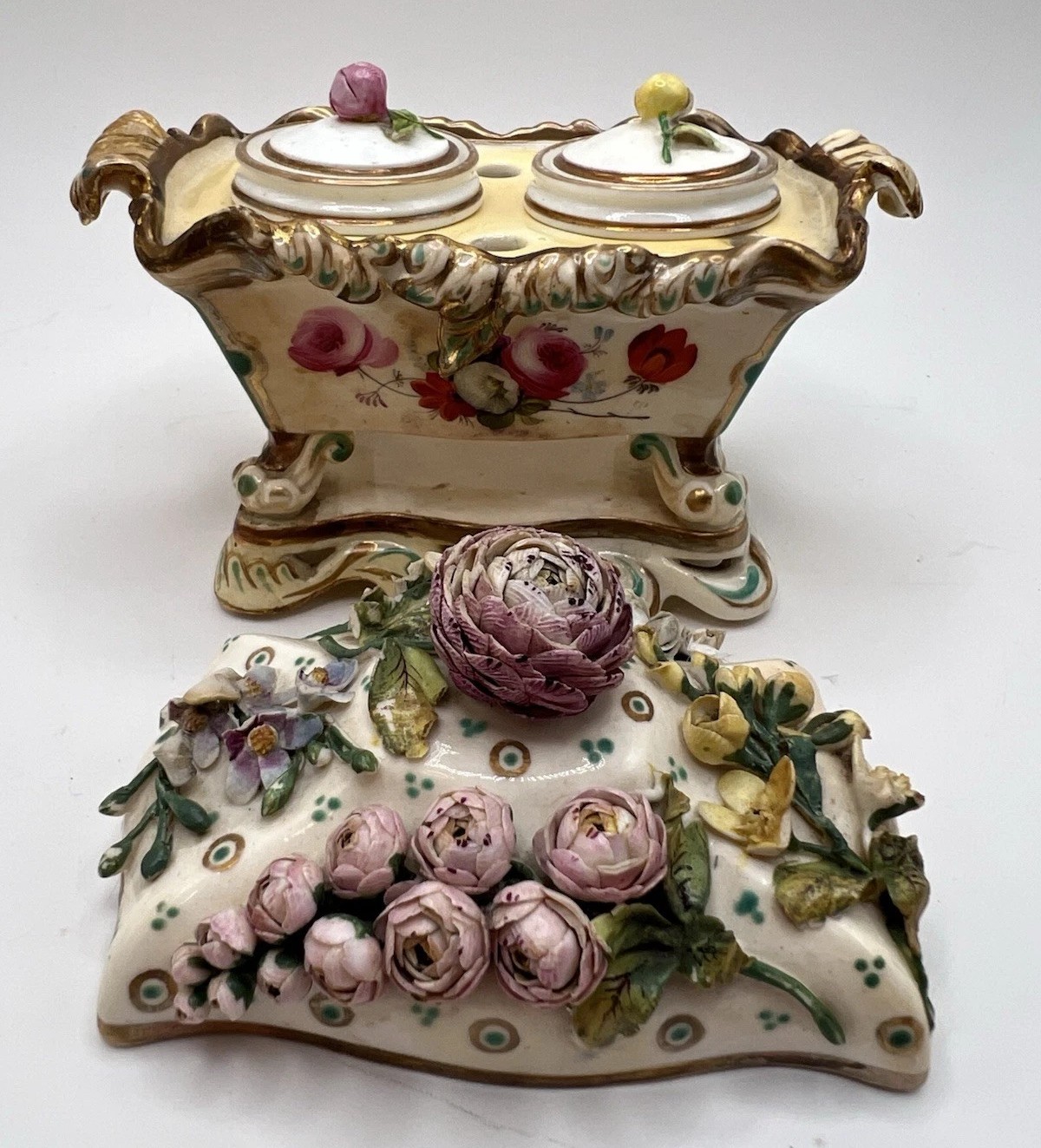

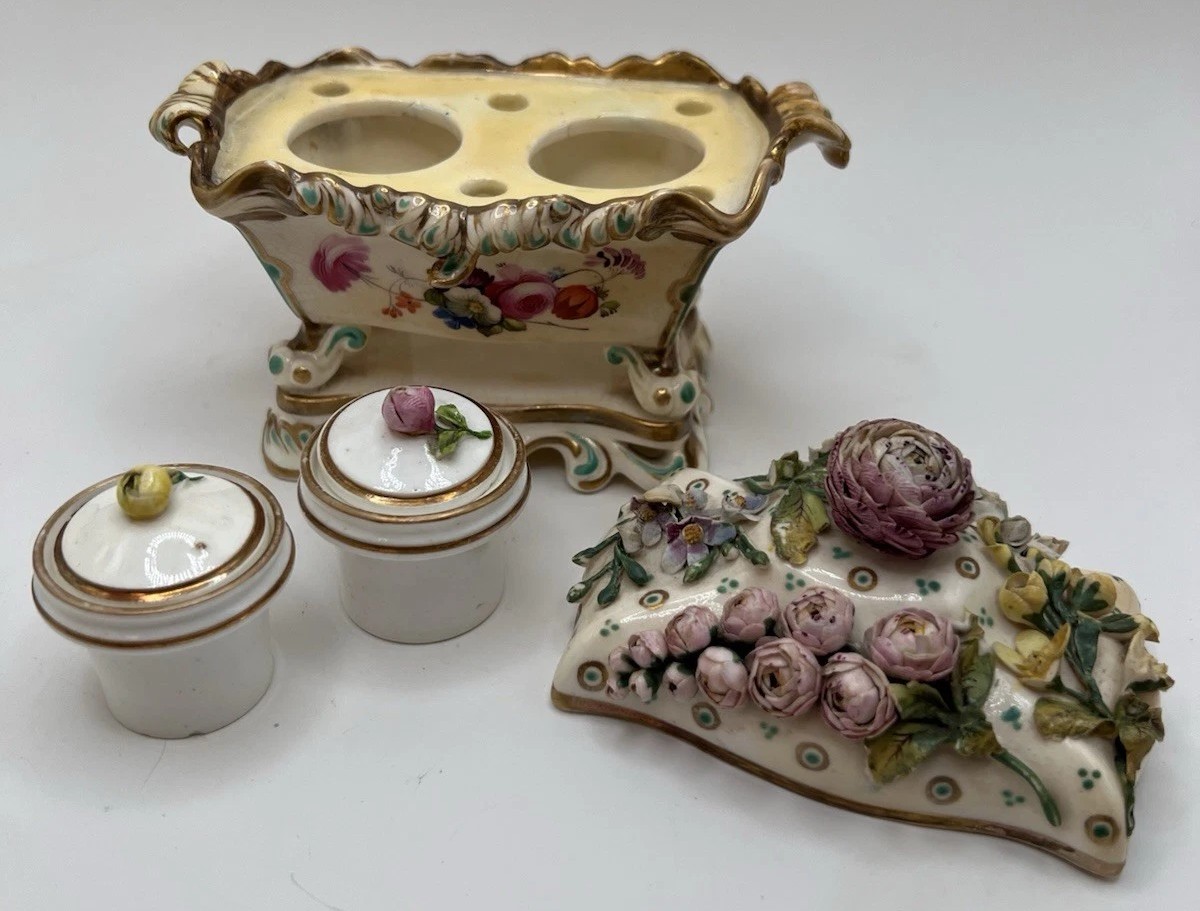
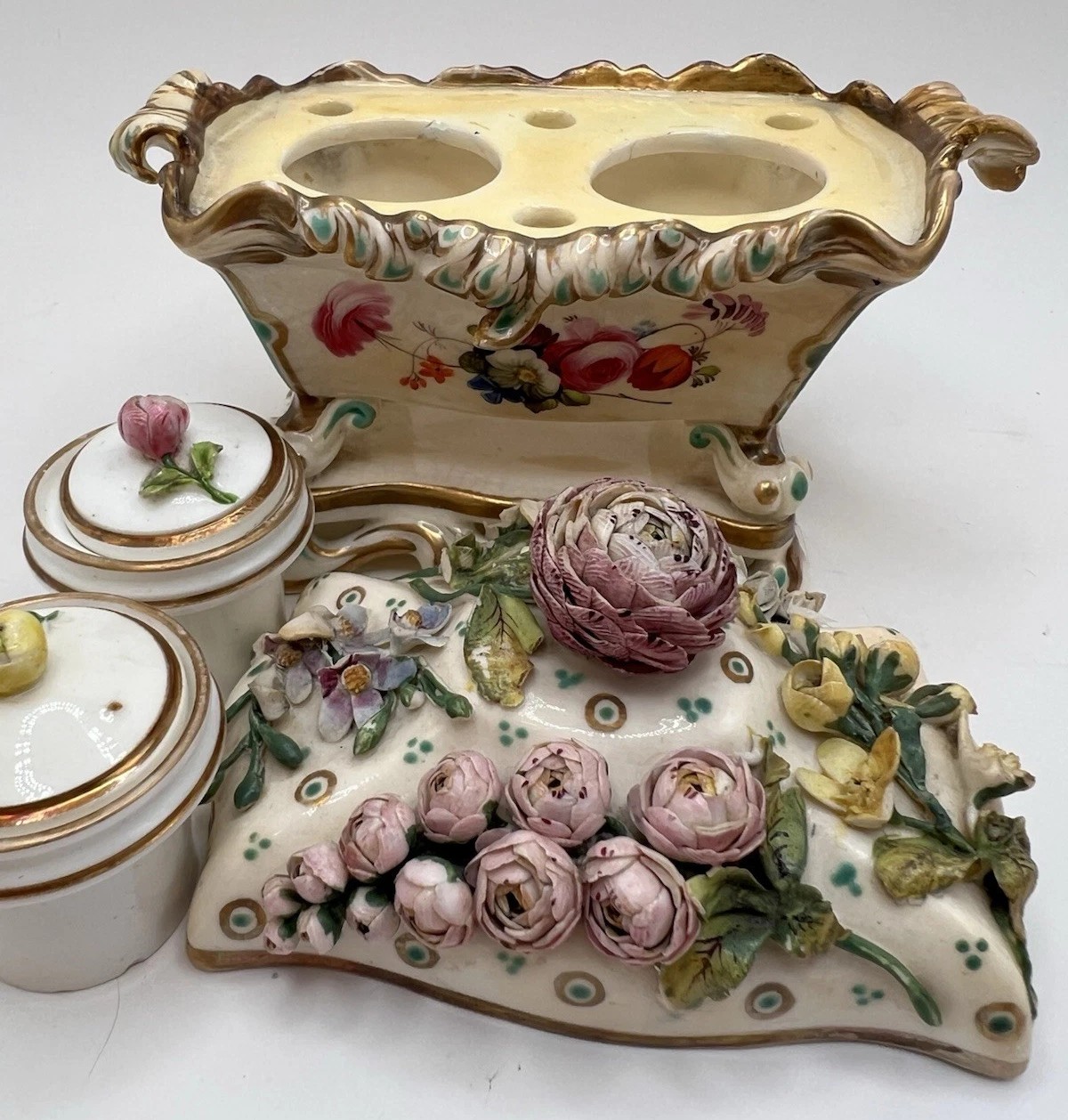
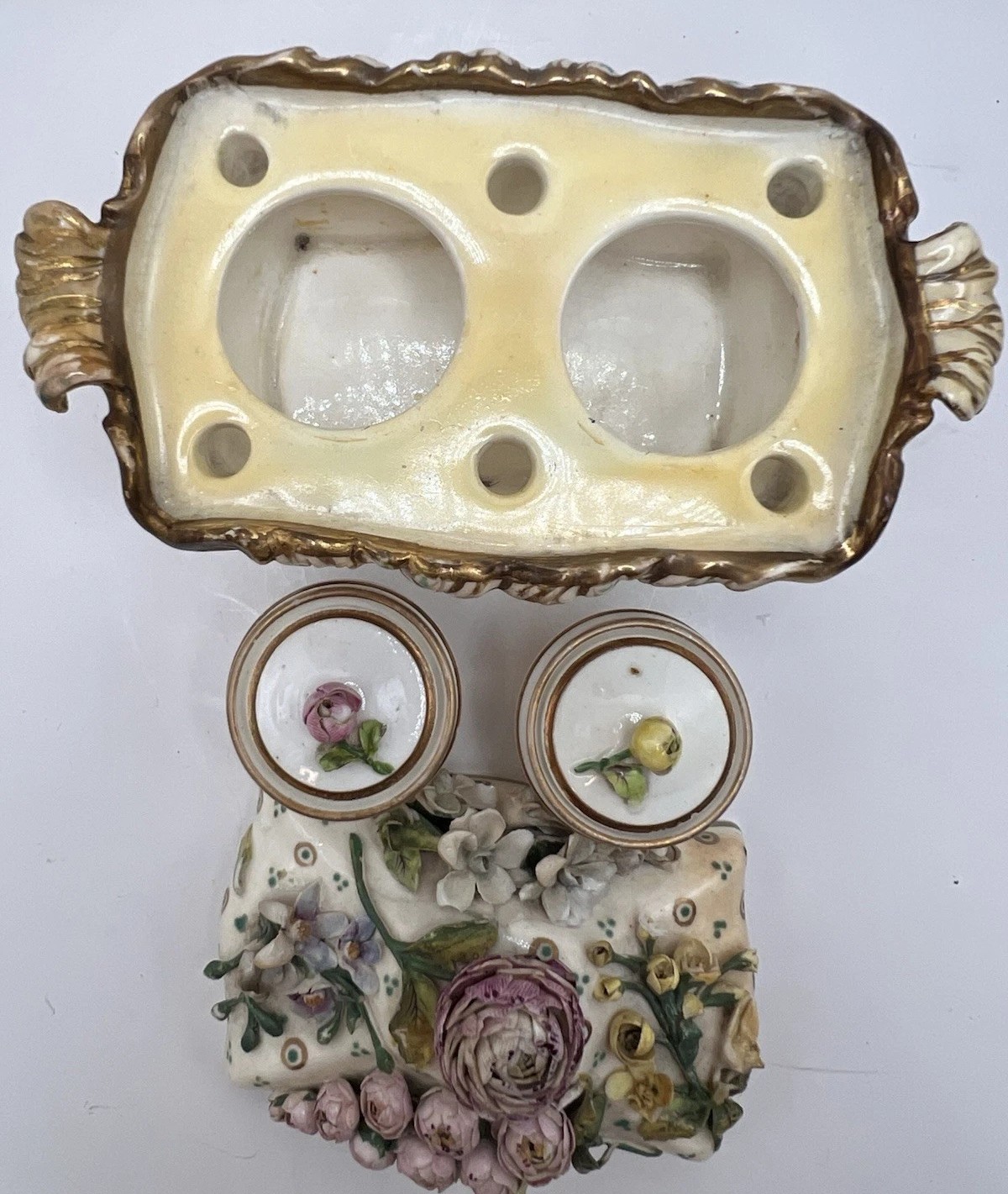
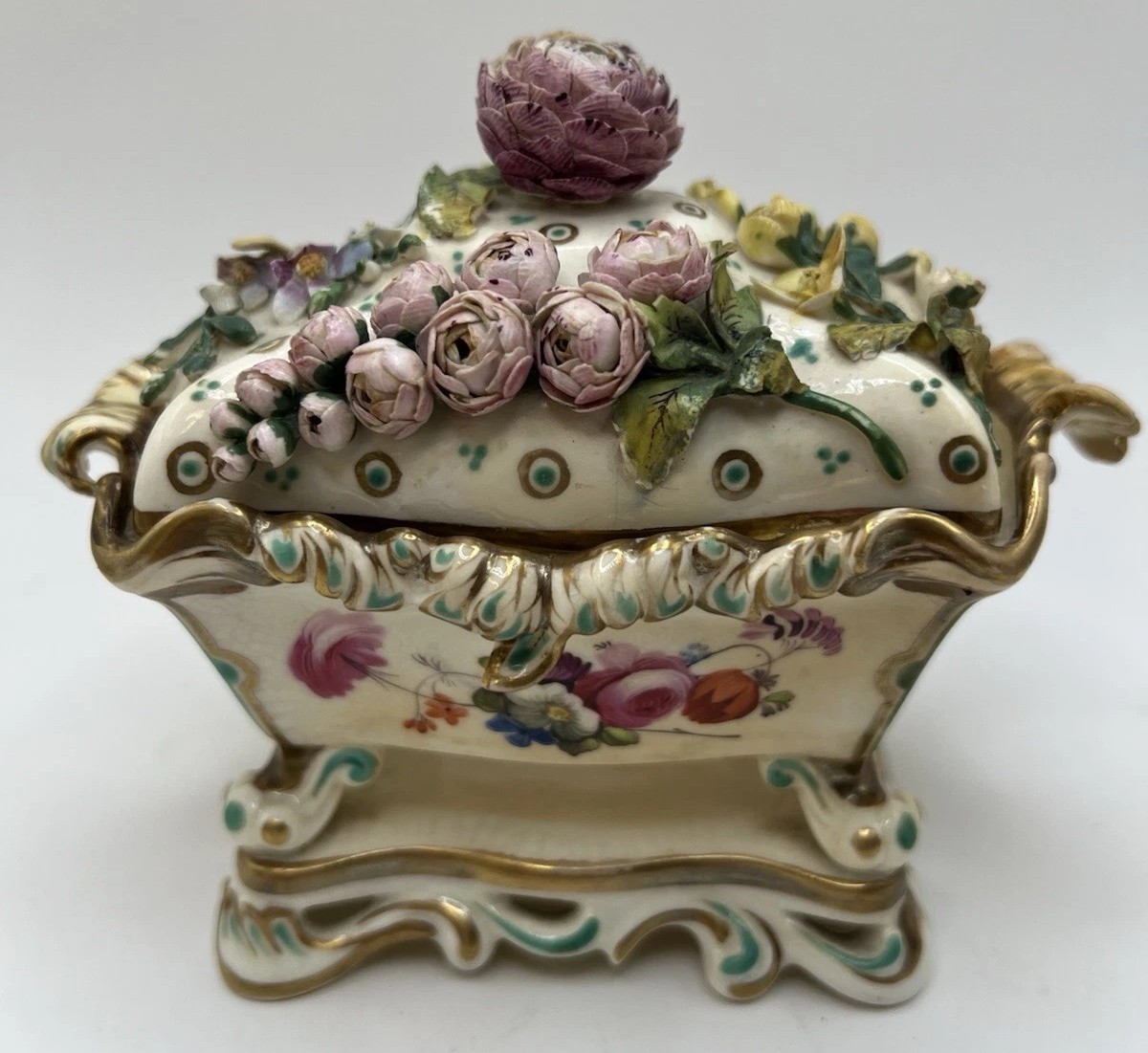
Coalport Porcelain Inkstand
| Categories | Ceramics/Porcelain "Named" Makers |
| Material | Porcelain |
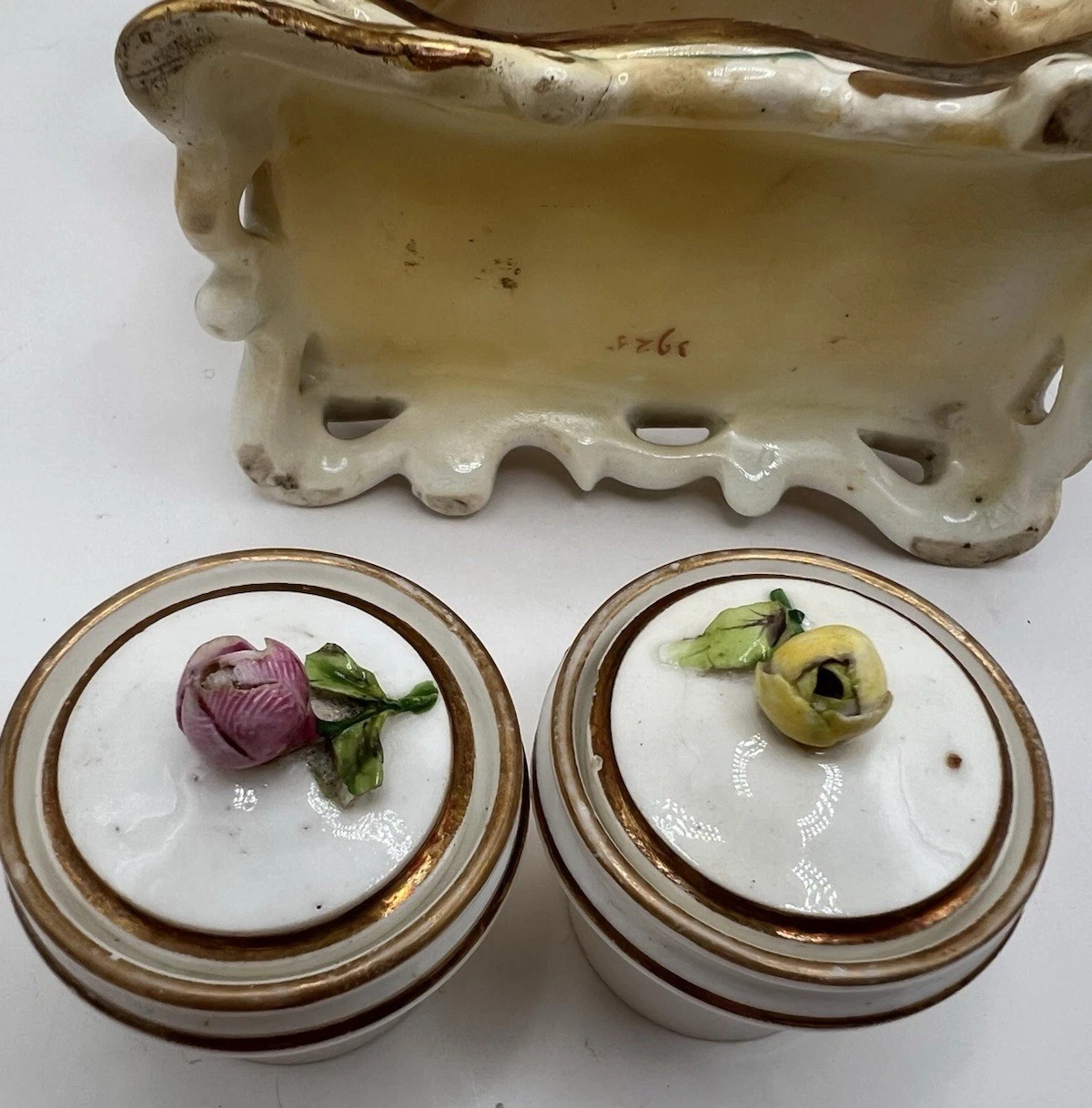
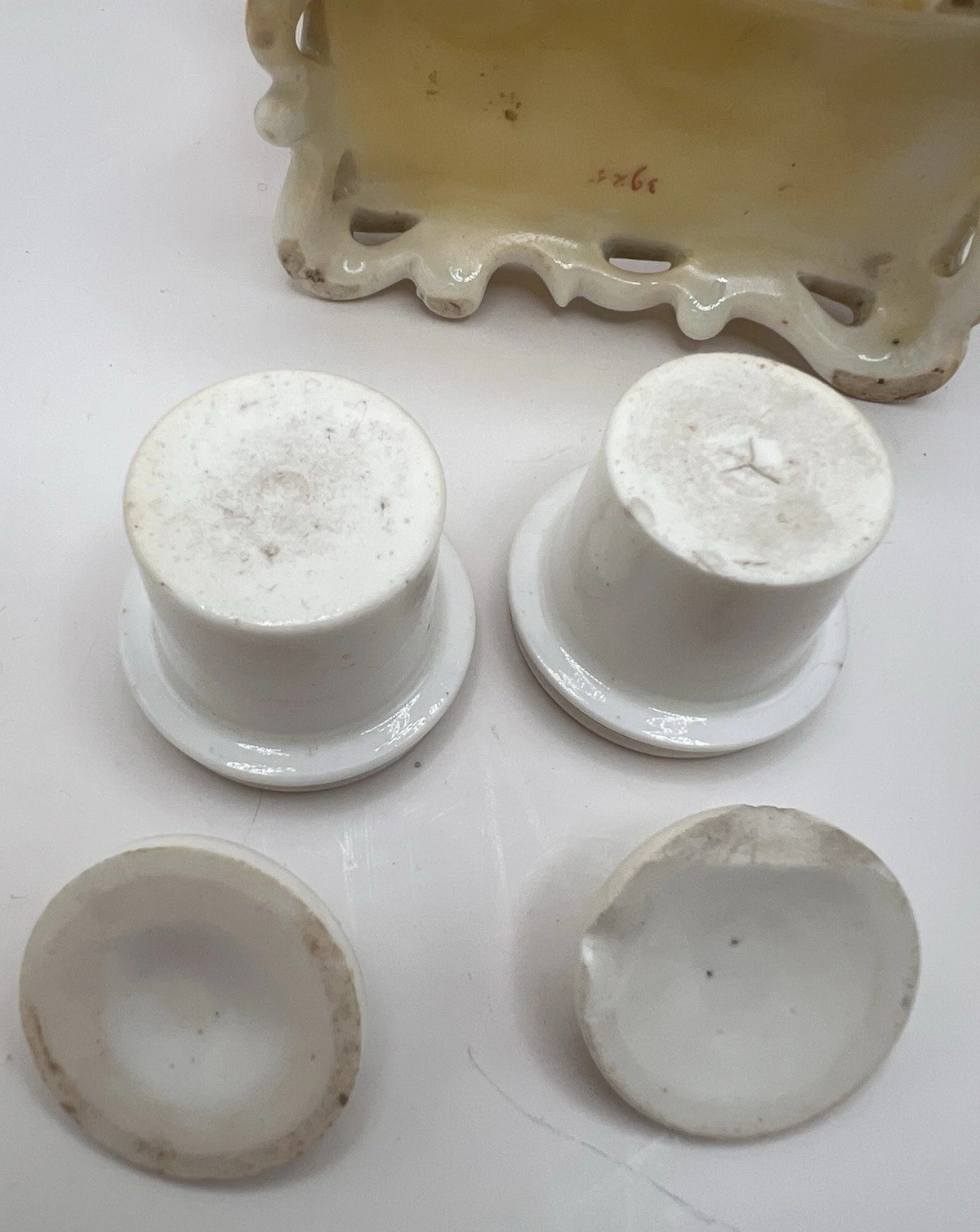
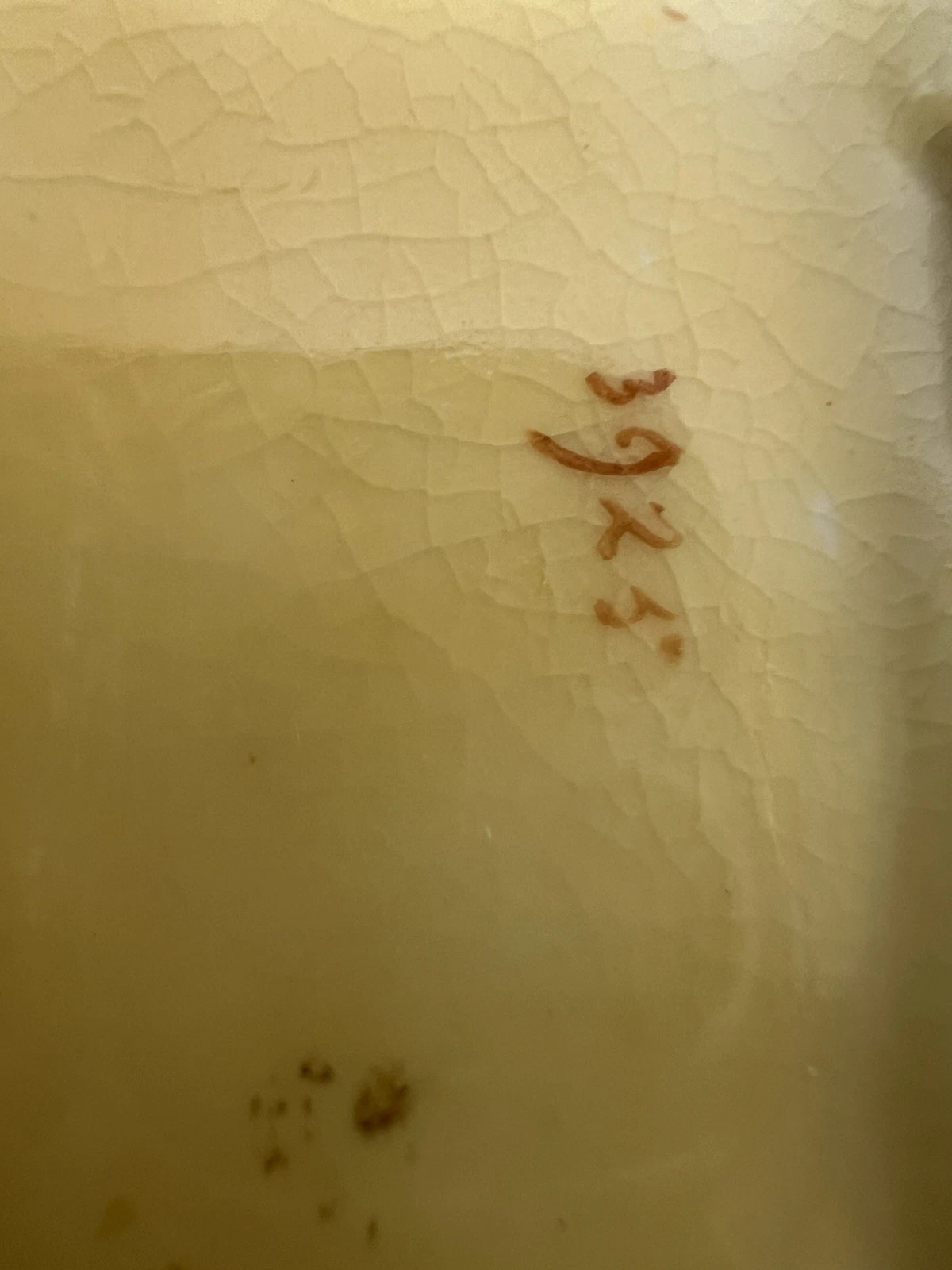
| Markings | 3925 |
| Manufacturer | Coalport |
| Origin | England |
| Date or Era | circa 1840 |
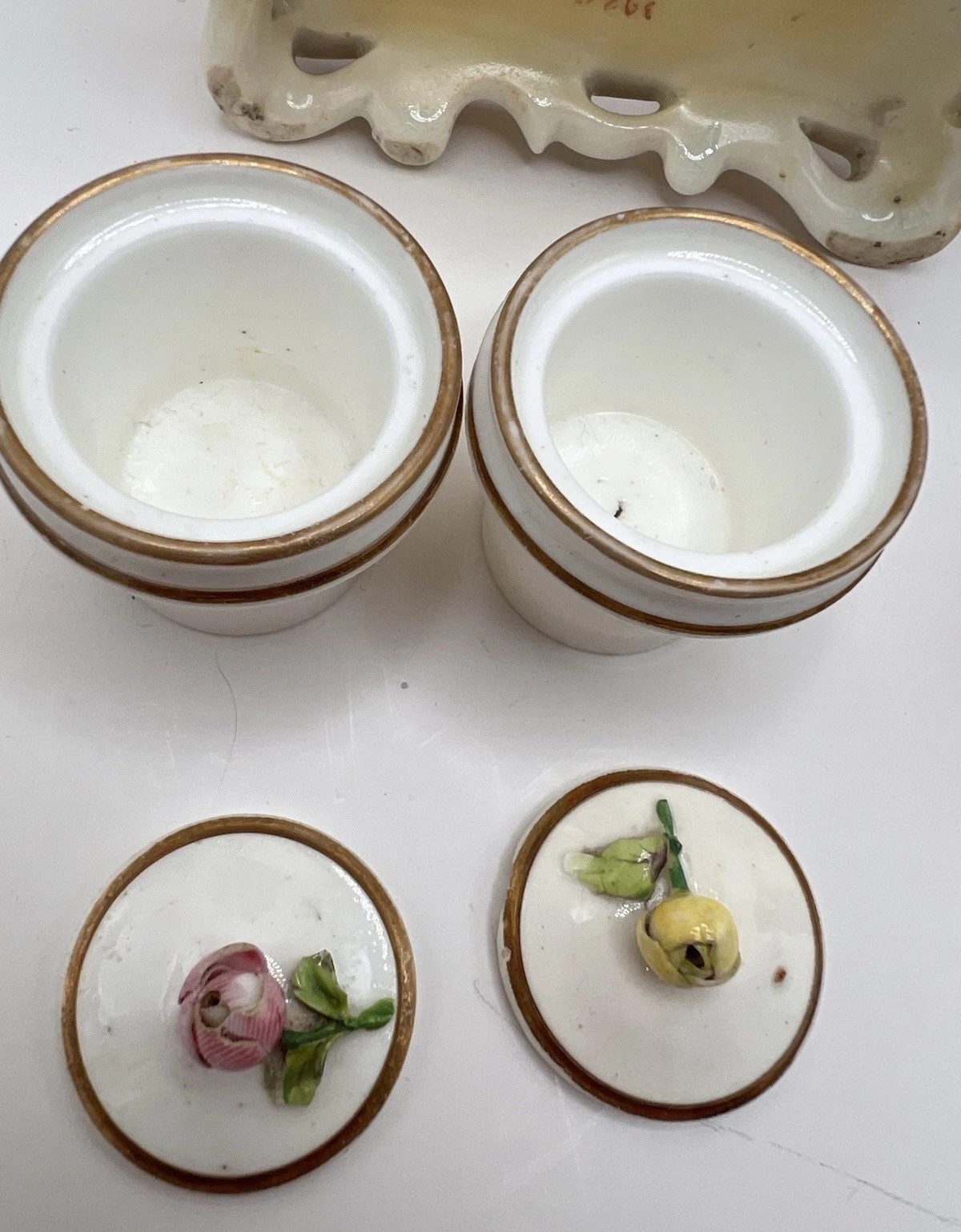
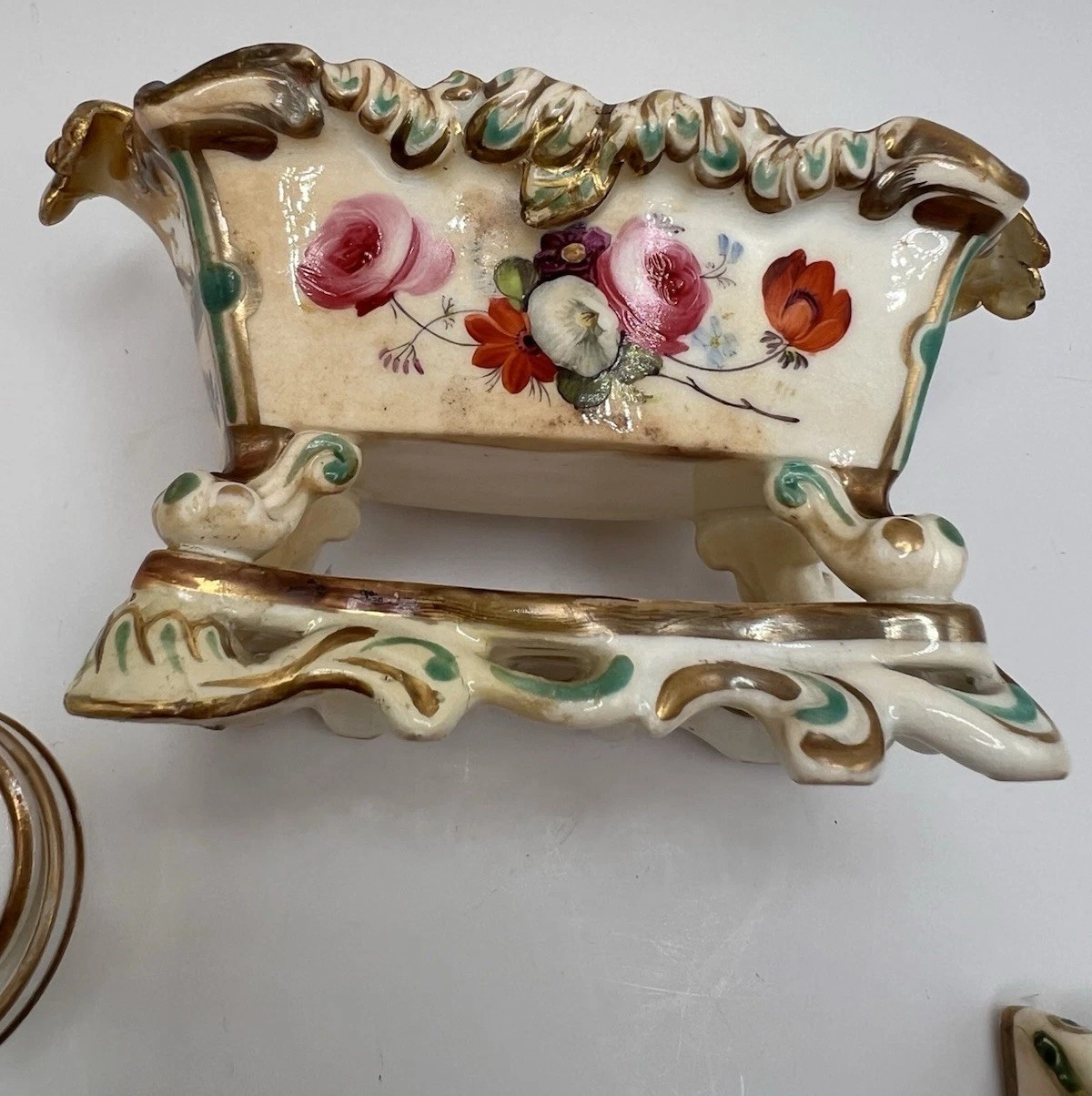
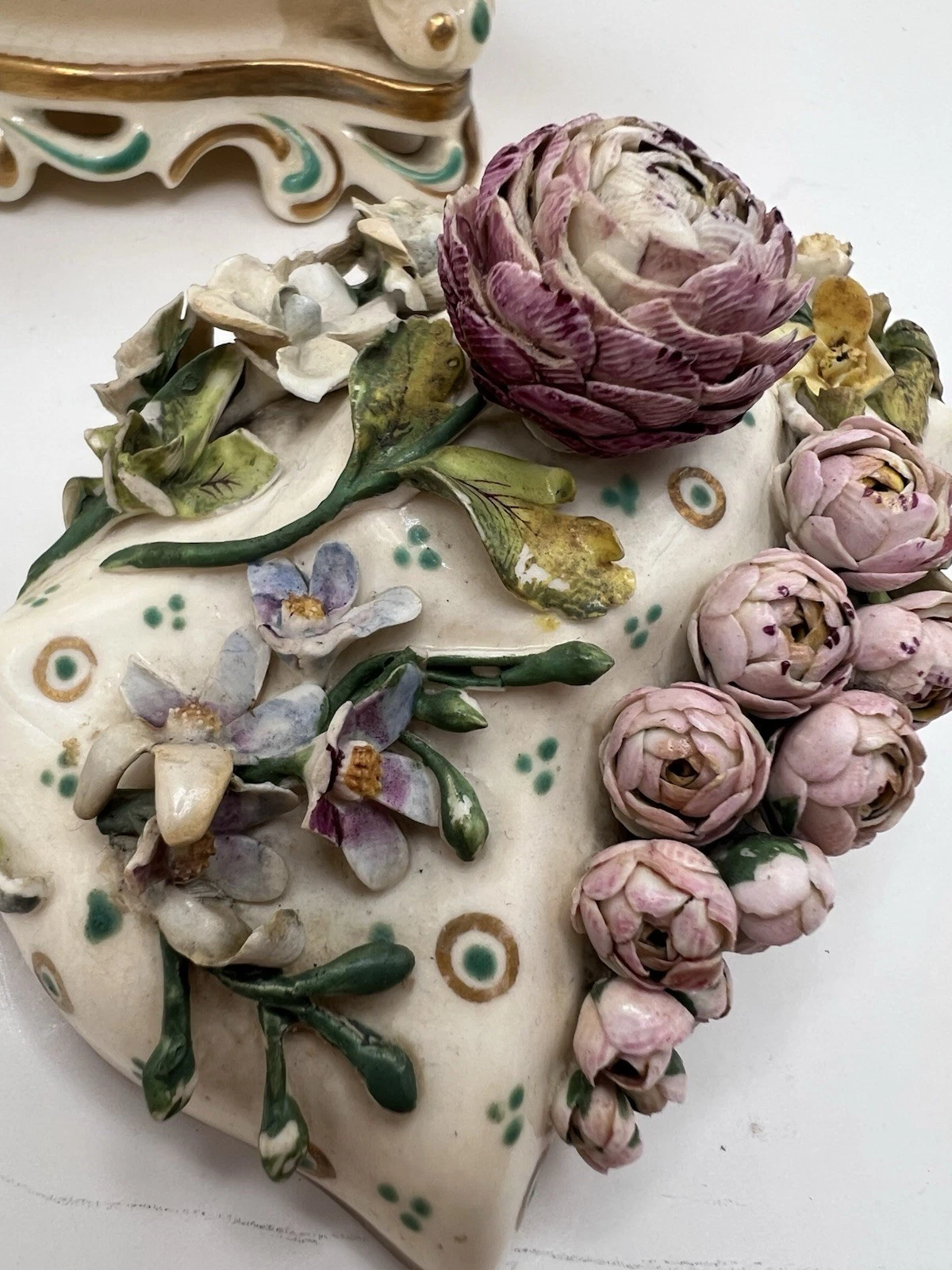
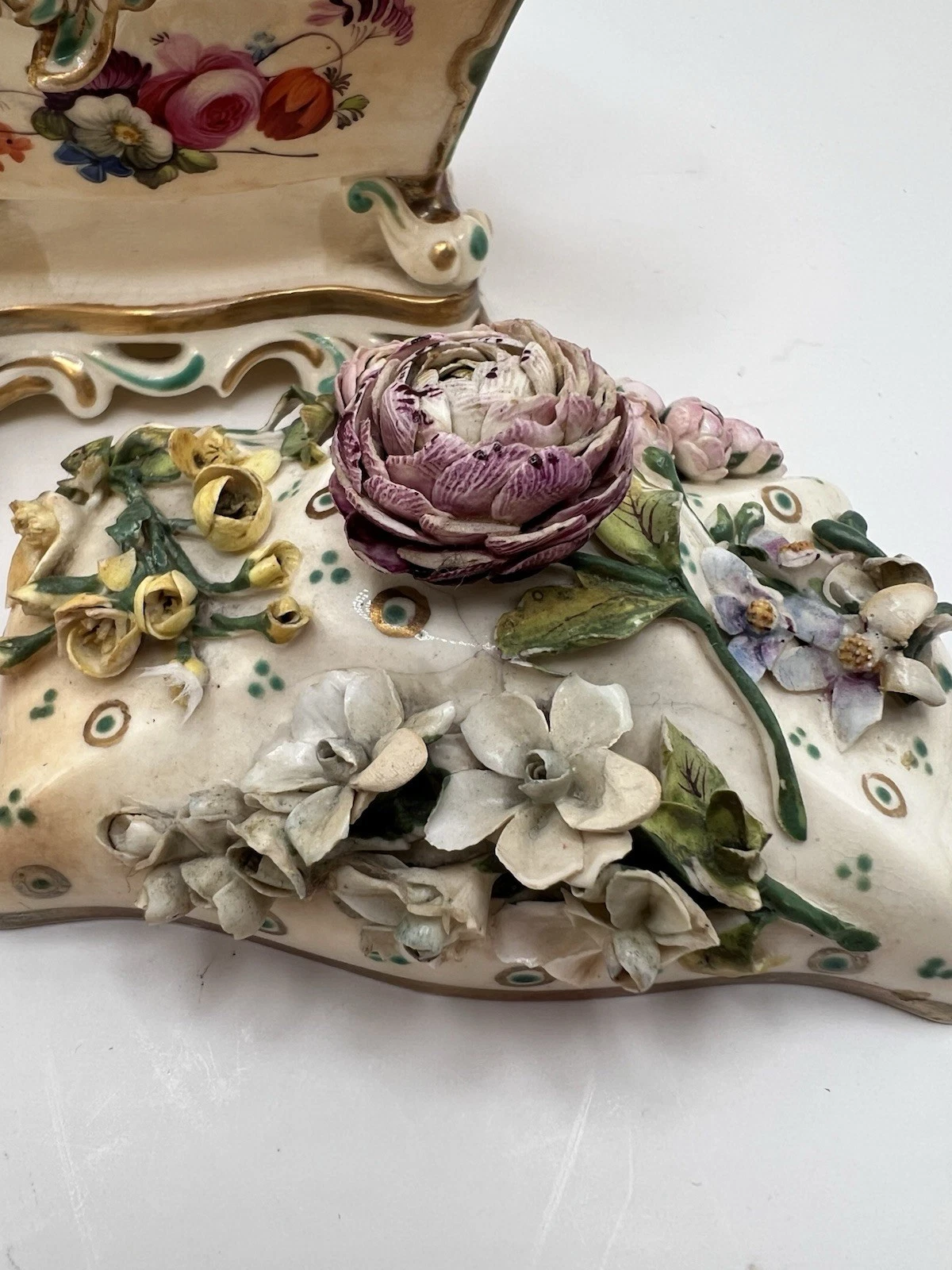
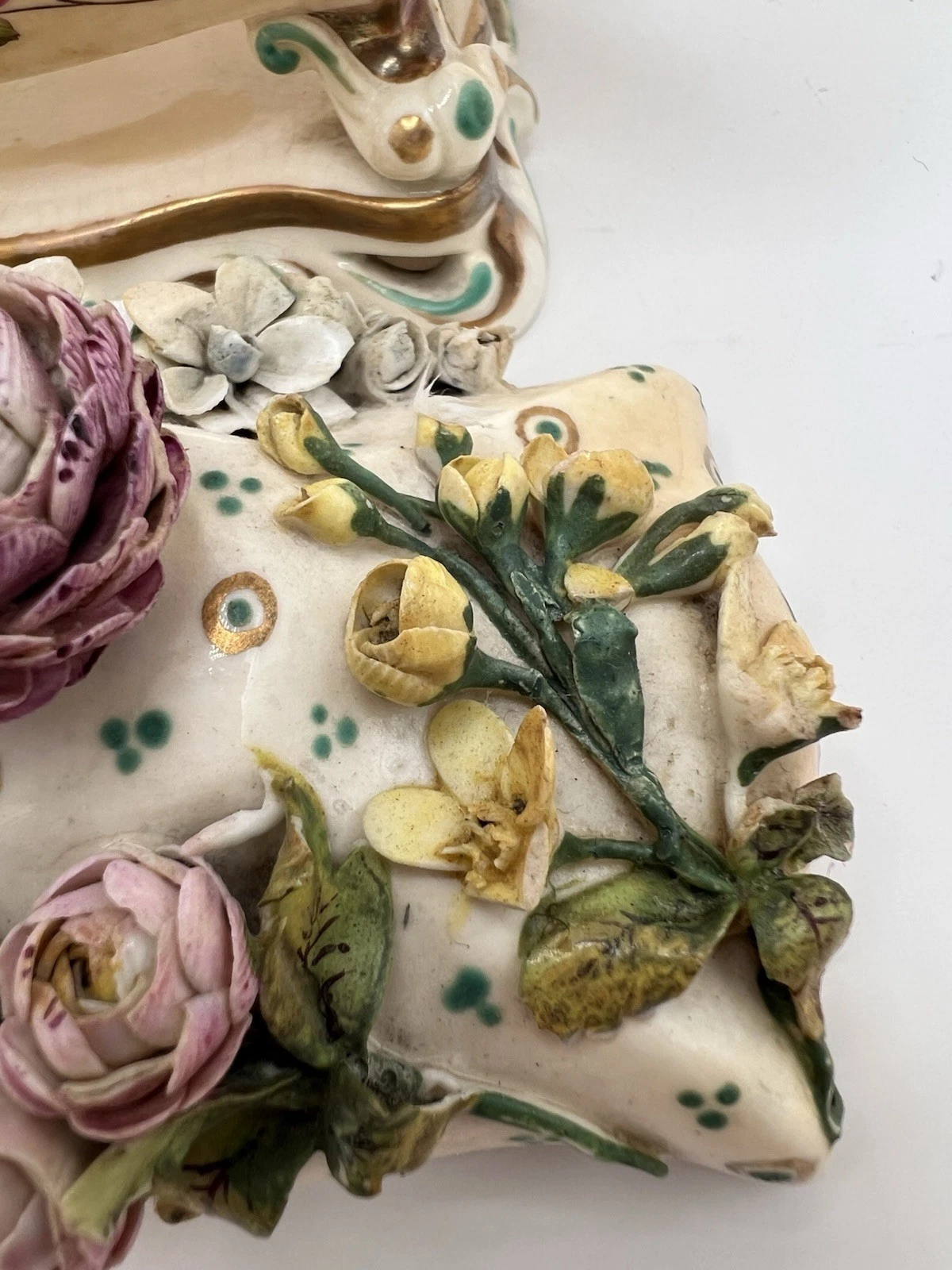
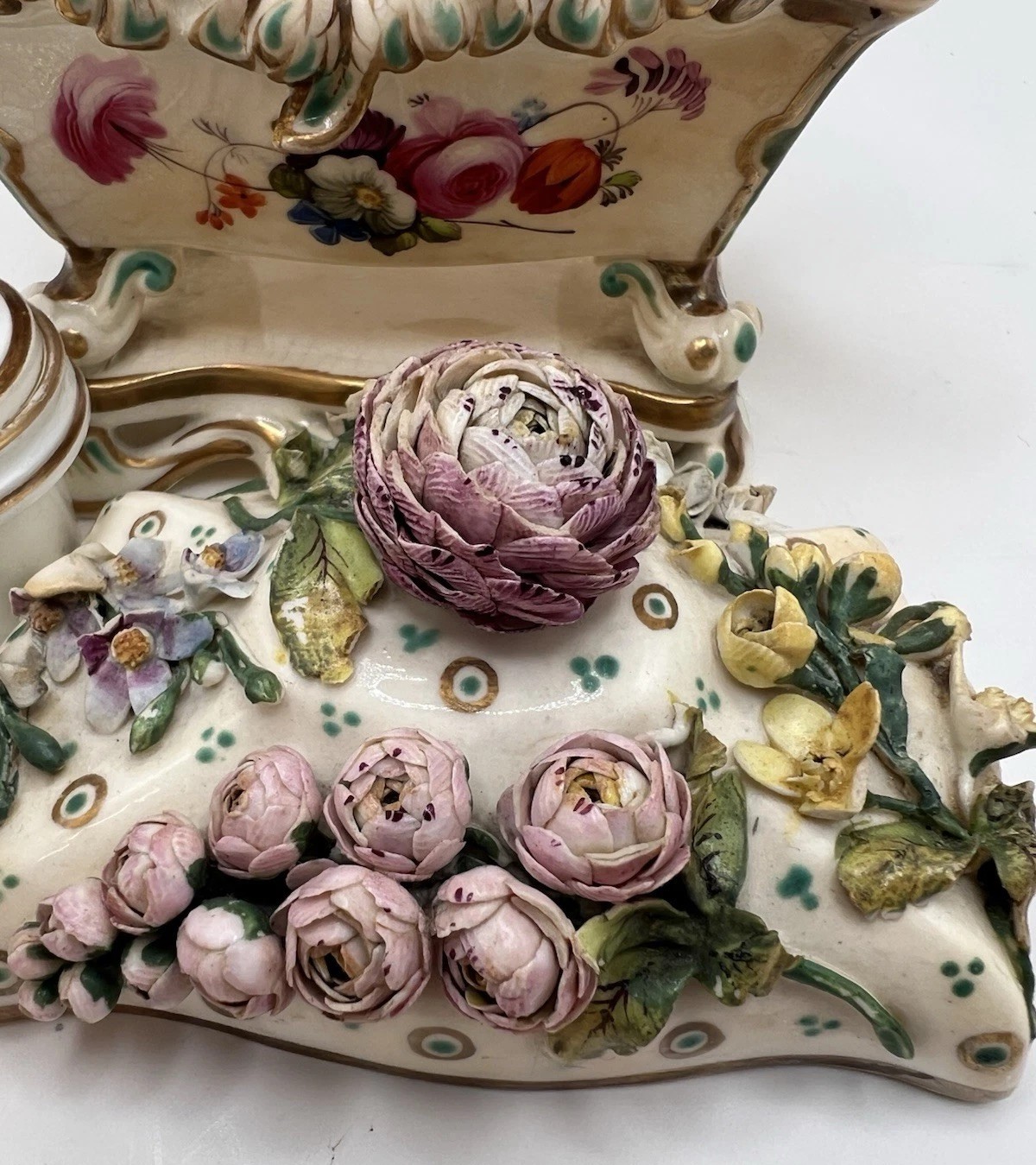
This is an exquisite Coalport lidded porcelain inkstand, a premier example of what is commonly known as “Coalbrookdale” style porcelain. This type of ware is celebrated for its lavish, three-dimensional floral ornamentation.
Approximate Age
This inkstand dates to the Rococo Revival period, specifically between c. 1830 and 1840.
- Pattern Number: The hand-painted number “3925” on the base is a factory pattern number. Coalport produced a staggering variety of patterns—reaching into the thousands by the mid-19th century—to keep up with the Victorian demand for unique desk accessories.
- Style Indicators: The scalloped, “C-scroll” edges, vibrant hand-painted floral bouquets, and the dense application of modeled flowers are hallmark features of Coalport’s production during the 1830s.
The Art of Floral Encrustation
The “Coalbrookdale” name (often used interchangeably with Coalport for these pieces) refers to the intricate, hand-modeled flowers that cover the lid and body. The process for making them was incredibly labor-intensive:
- The Material: The flowers were made from bone china clay mixed with gum arabic (a plant sap). This additive made the clay highly pliable, allowing artists to roll it into paper-thin sheets without cracking.
- Hand-Modeling: Skilled women artists, often referred to as “flowerers,” would roll a small bead of clay between their fingers to form a petal. They used simple tools like leather combs, bone scalpels, or even tea strainers to texture the petals and create realistic centers for daisies or roses.
- Assembly: Each petal was applied one by one to the leather-hard body of the inkstand before its first firing. A single master flower maker could often produce a complete rose in about 30 seconds.
- Multi-Stage Firing: Because each enamel color requires a different temperature to fuse with the glaze, a piece this detailed might have been fired up to eight separate times to achieve the final multicolor effect.
Sold for $364 in December 2025
Content disclaimer. The information posted is the owner’s best knowledge and may not have been vetted by the SOIC. We welcome comments, corrections, and additions, working to make our website information comprehensive and accurate.
Join the Society of Inkwell Collectors (SOIC) – it’s free!
Founded in 1981 as a non-profit organization,
we are documenting inkwells (and accessories).
We’re here to help and inform!