

Chinoiserie Lacquerware Inkstand
| Categories | Far East / Oriental, Wood Inkstands |
| Material | Papier Mache/Paper/Composition/Cork |
| Markings | Unmarked |
| Manufacturer | Undetermined |
| Origin | England |
| Date or Era | circa 1880 |
| Measuring | 9” x 4” x 2” high |
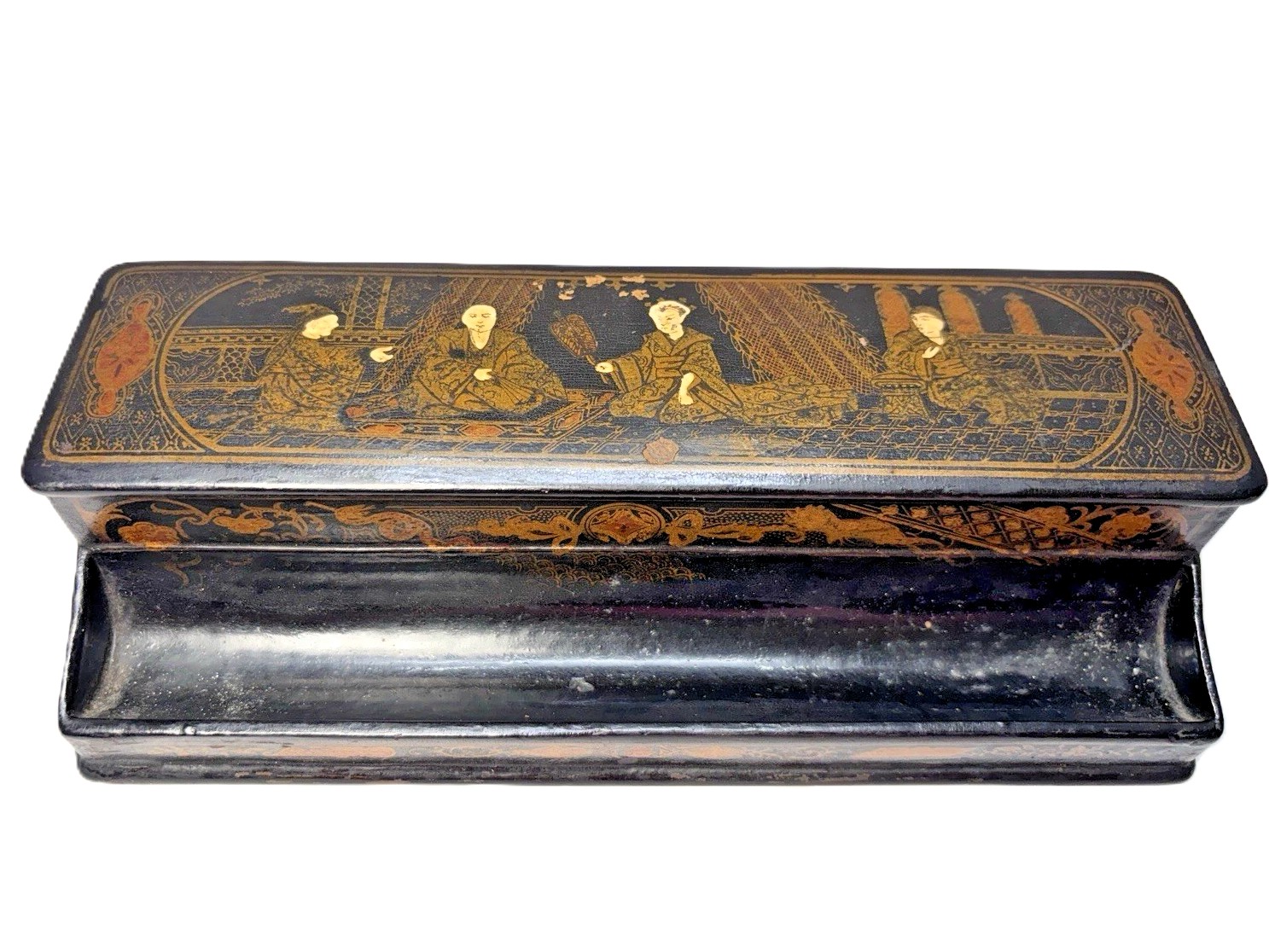
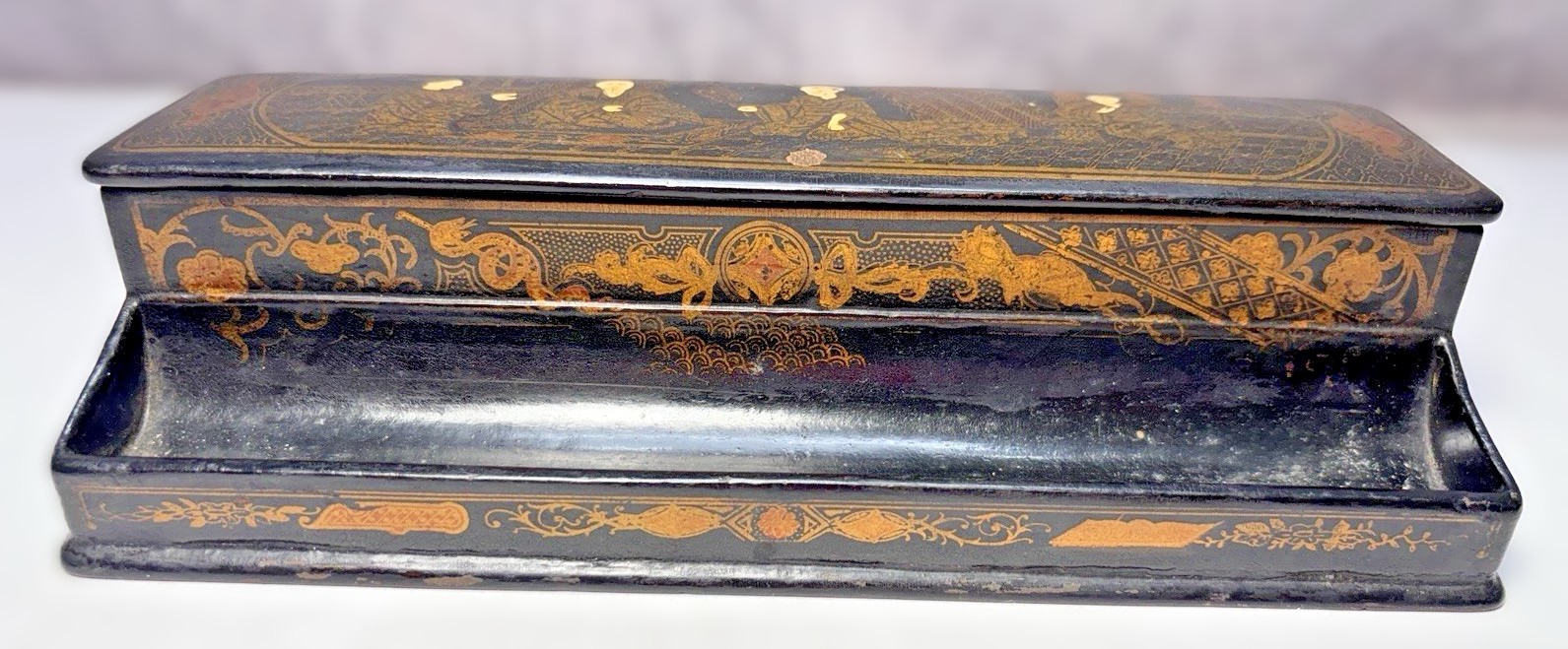
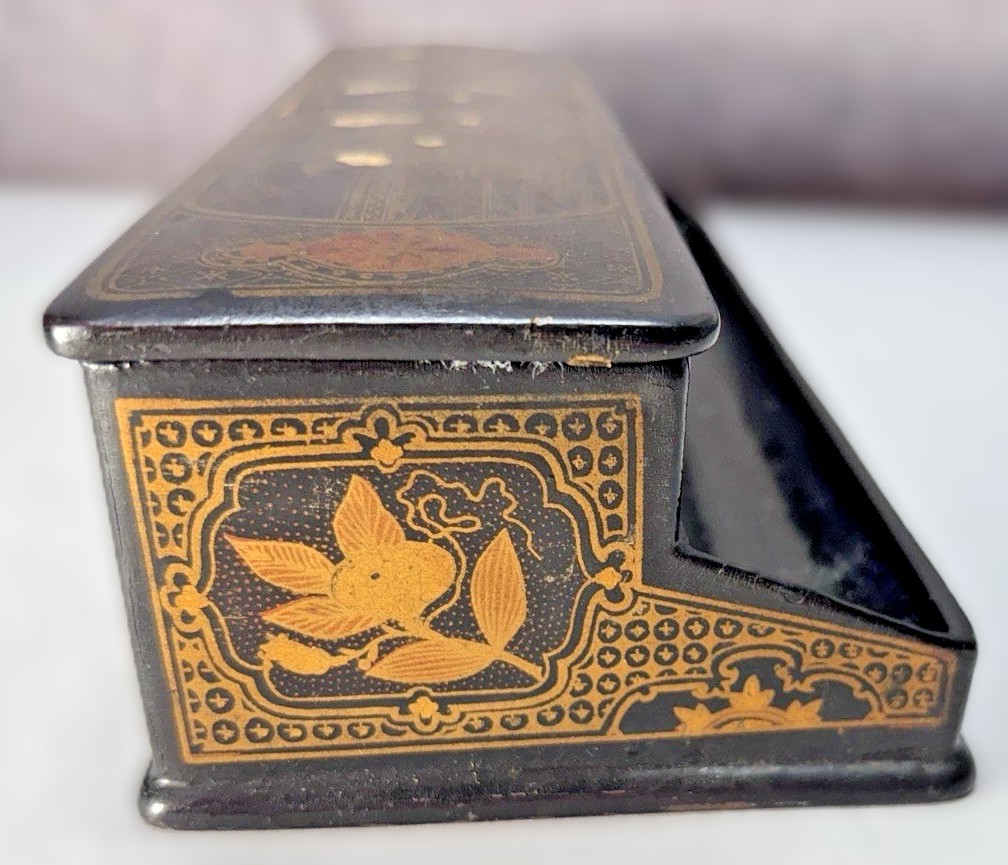
This inkstand is a beautiful example of Chinoiserie lacquerware, most likely made in England during the mid-to-late 19th century (Victorian era). It is constructed from papier-mâché, a material that became incredibly popular in the 1800s for decorative household items due to its ability to take a high-gloss “japanned” finish.
Description
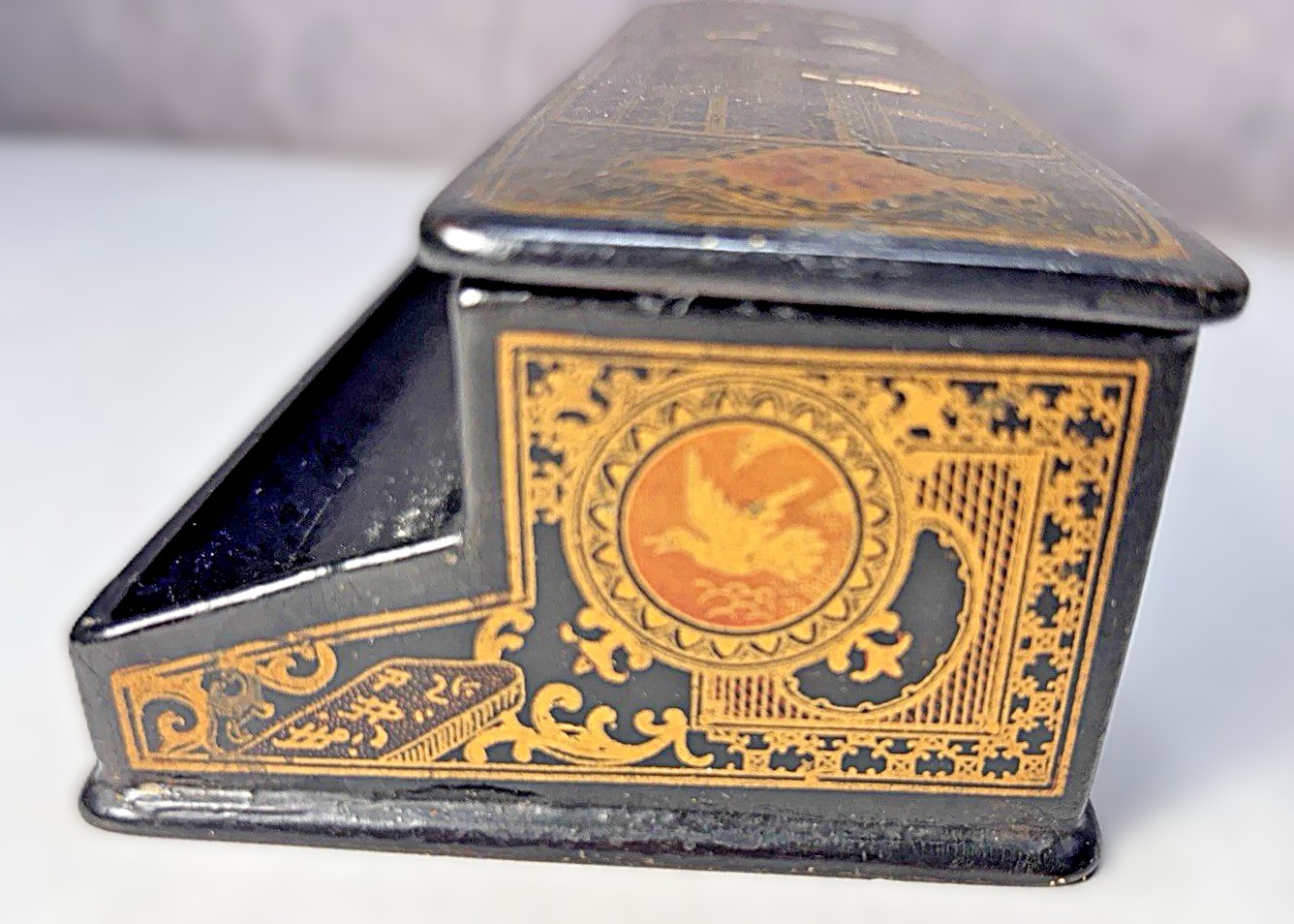
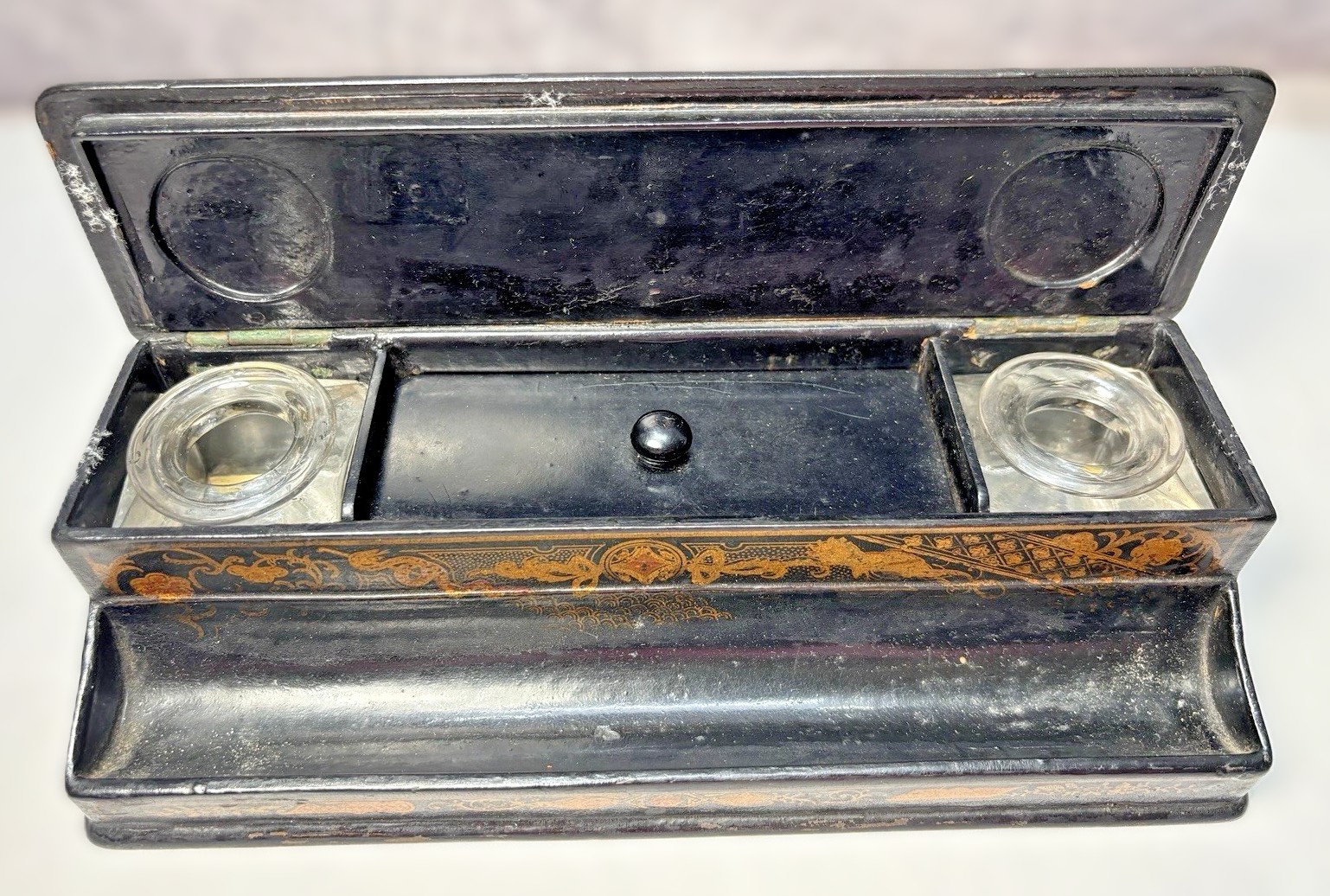
The piece features a classic tiered design with a slanted pen tray at the front and a raised rectangular box at the back.
- The Finish: A deep black lacquer (often called “Japanning”) serves as the canvas for elaborate gold-toned decorations.
- The Decorations: These details are hand-painted in gold size (a tacky adhesive) and then dusted with metallic powders, a technique known as gilding.
- The Lid: The top surface depicts a tranquil interior scene with four figures dressed in traditional robes, seated on mats. The faces and hands are made of applied mother-of-pearl slivers, giving them a slight three-dimensional, luminous quality.
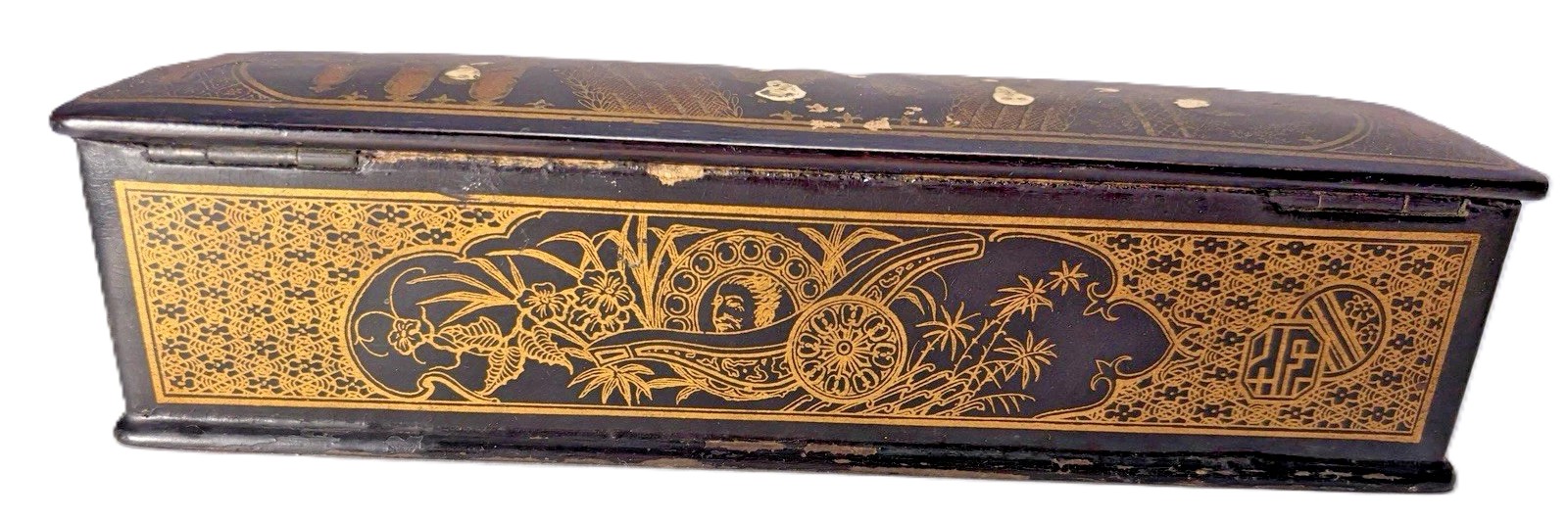
- Side Panels: The sides feature intricate floral motifs, a bird in flight within a circular medallion, and a striking image of a traditional figure appearing near a wheel (possibly a “Wheel of Life” motif).
- Interior: The hinged lid opens to reveal a compartmentalized interior containing two square glass inkwells with wide collars and a central storage area with a small black pull-knob, perfect for storing nibs or seals.
The Writing and Language
The “writing” seen on the side panels and the back are pseudo-Chinese characters.
- Language: It is not a functional dialect of Mandarin or Cantonese.
- Meaning: During the 19th-century Chinoiserie craze, European craftsmen often imitated the look of Asian calligraphy to enhance the “exotic” feel of a piece without actually using real characters. To a native speaker, these would appear as stylized, decorative strokes rather than legible words.
Historical Context & Origin
- Origin: While the theme is Oriental, the construction—specifically the hinges and the style of the glass inkwells—points toward Wolverhampton or Birmingham, England. Companies like Jennens and Bettridge were the masters of this specific style of papier-mâché and bone-inlay work.
- Age: Circa 1850–1880.
Summary Table
| Feature | Detail |
| Material | Papier-mâché with mother-of-pearl inlay |
| Technique | Japanned lacquer with hand-painted gilding |
| Style | Victorian Chinoiserie |
| Origin | Likely United Kingdom (Wolverhampton/Birmingham) |
| Age | Mid-to-late 19th Century |
Sold for $33 in January 2026
Content disclaimer. The information posted is the owner’s best knowledge and may not have been vetted by the SOIC. We welcome comments, corrections, and additions, working to make our website information comprehensive and accurate.
Join the Society of Inkwell Collectors (SOIC) – it’s free!
Founded in 1981 as a non-profit organization,
we are documenting inkwells (and accessories).
We’re here to help and inform!