

Chinese Export Silver Double Inkstand with Dragons
| Categories | Far East / Oriental |
| Type | Dragon |
| Material | Silver |
| Markings | See Narrative |
| Manufacturer | Wang Hing |
| Origin | China |
| Date or Era | circa 1900 |
| Measuring | 5 ⅛” x 3” |
Description
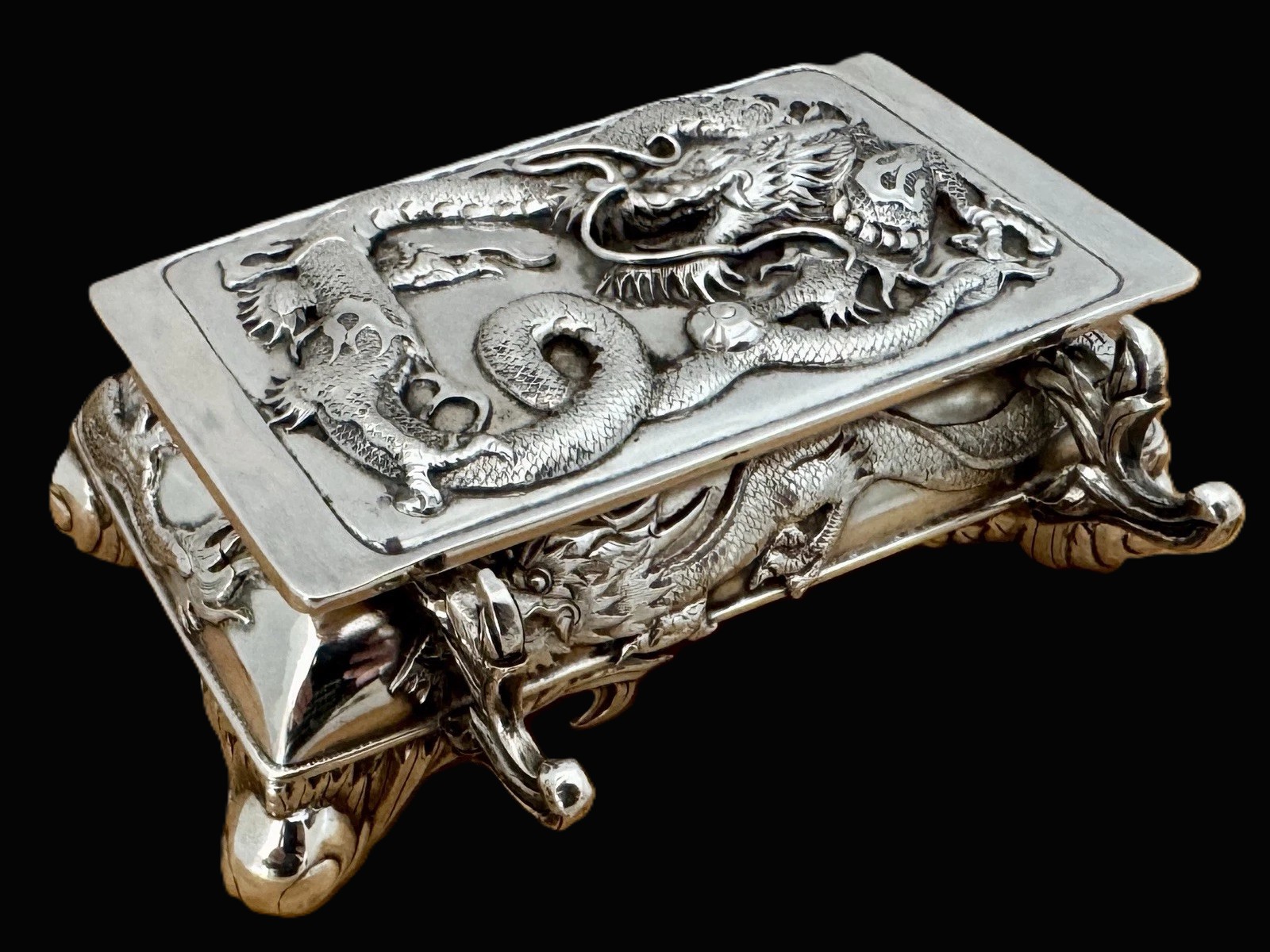
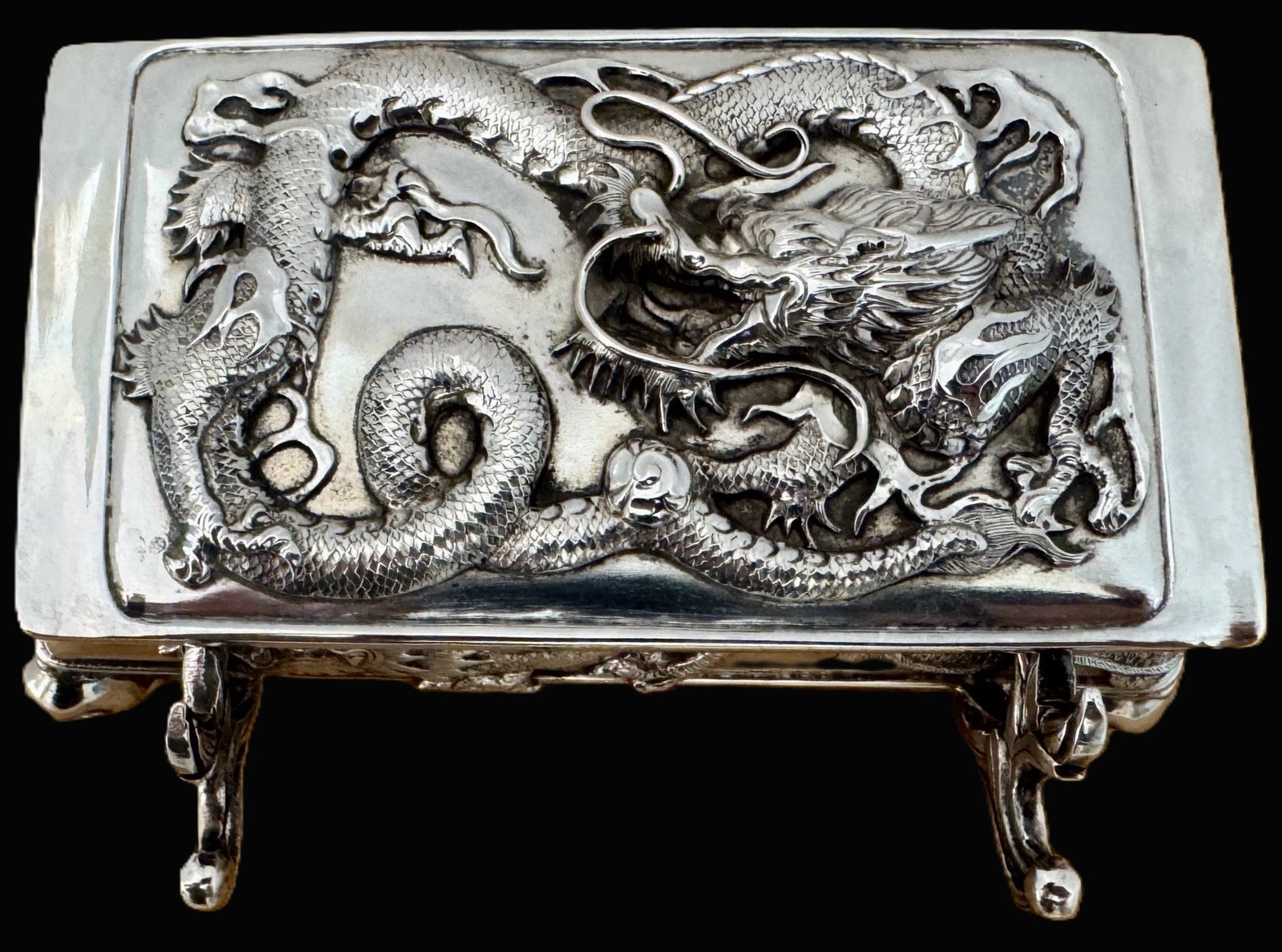
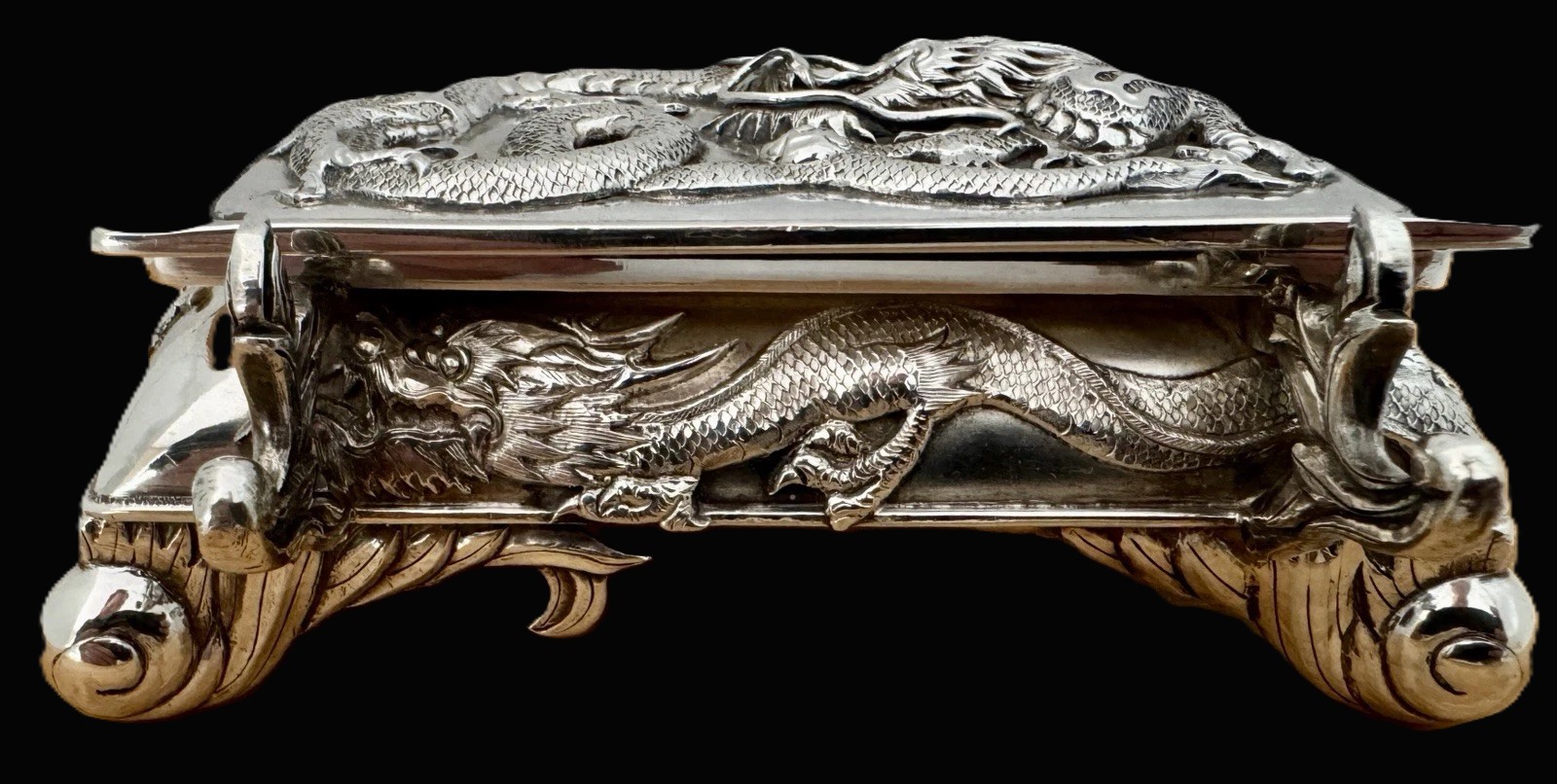
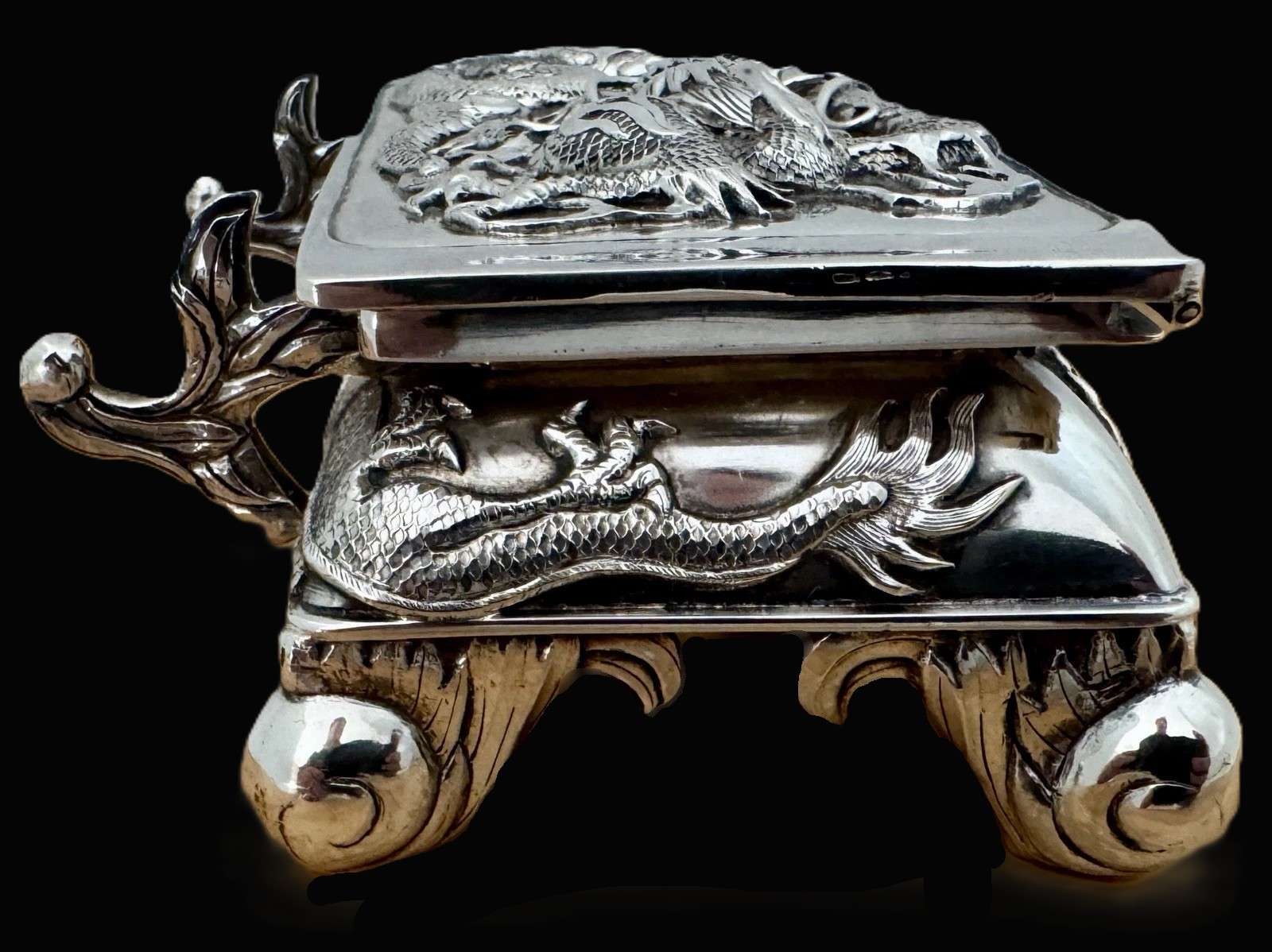
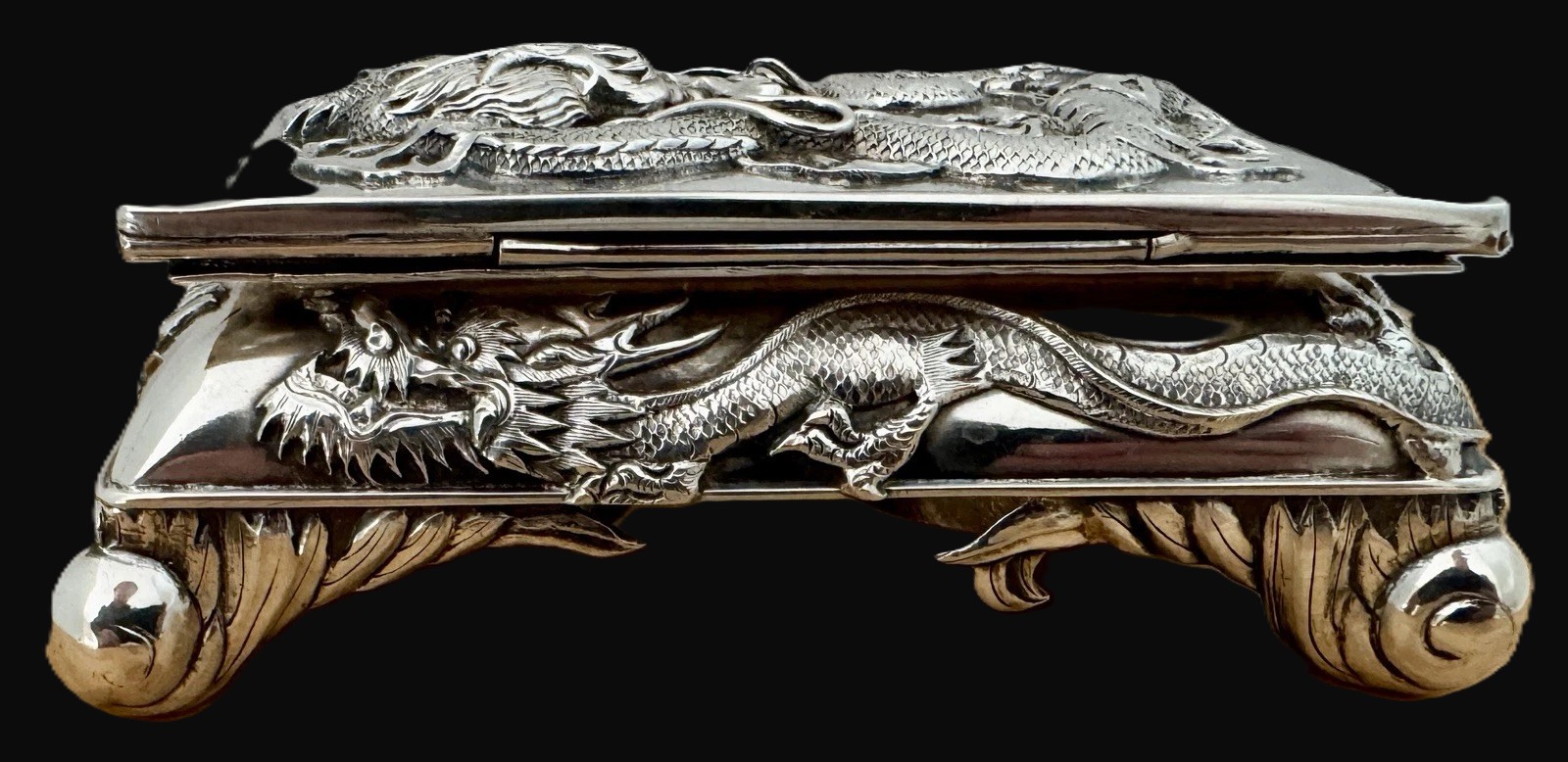
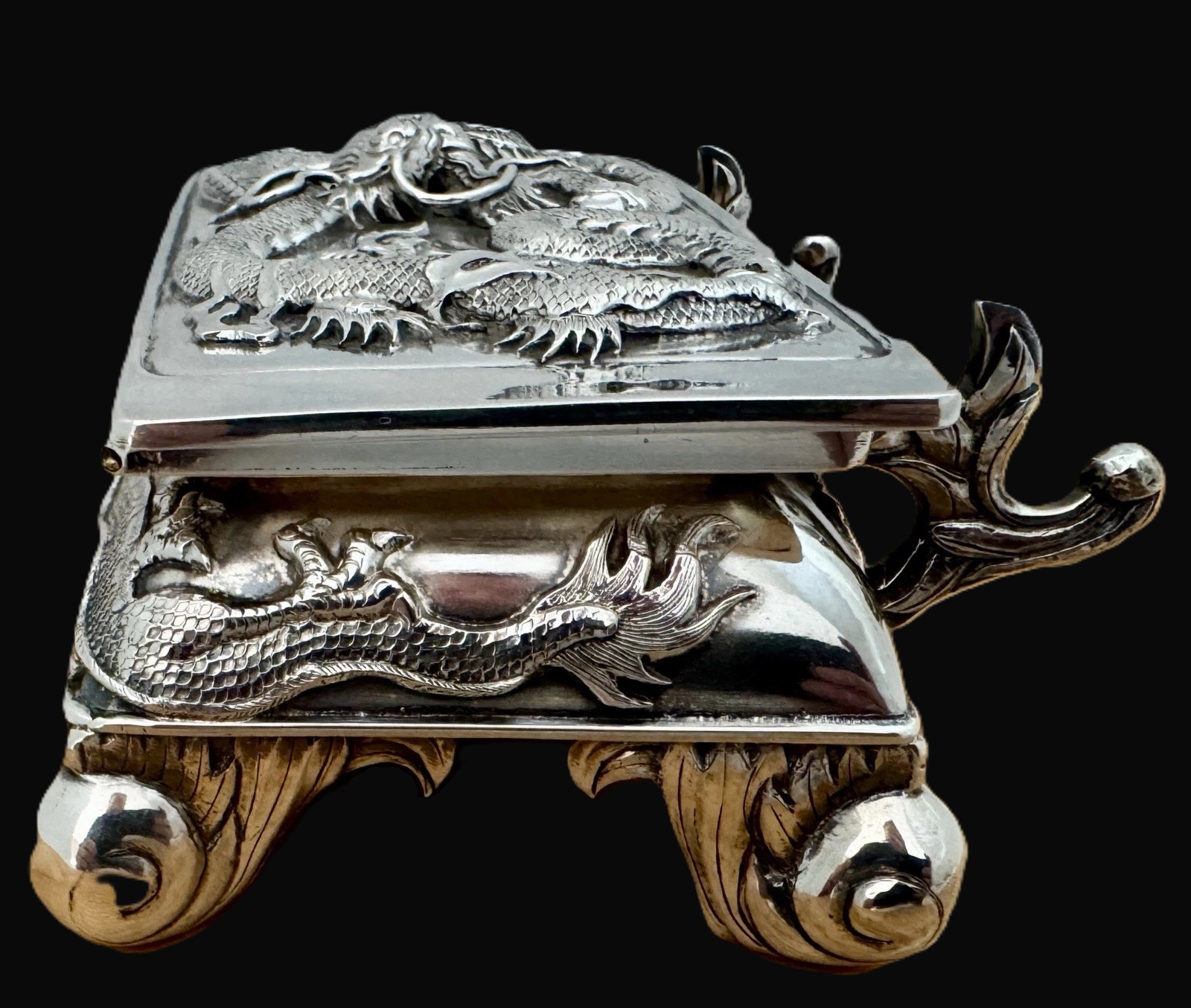
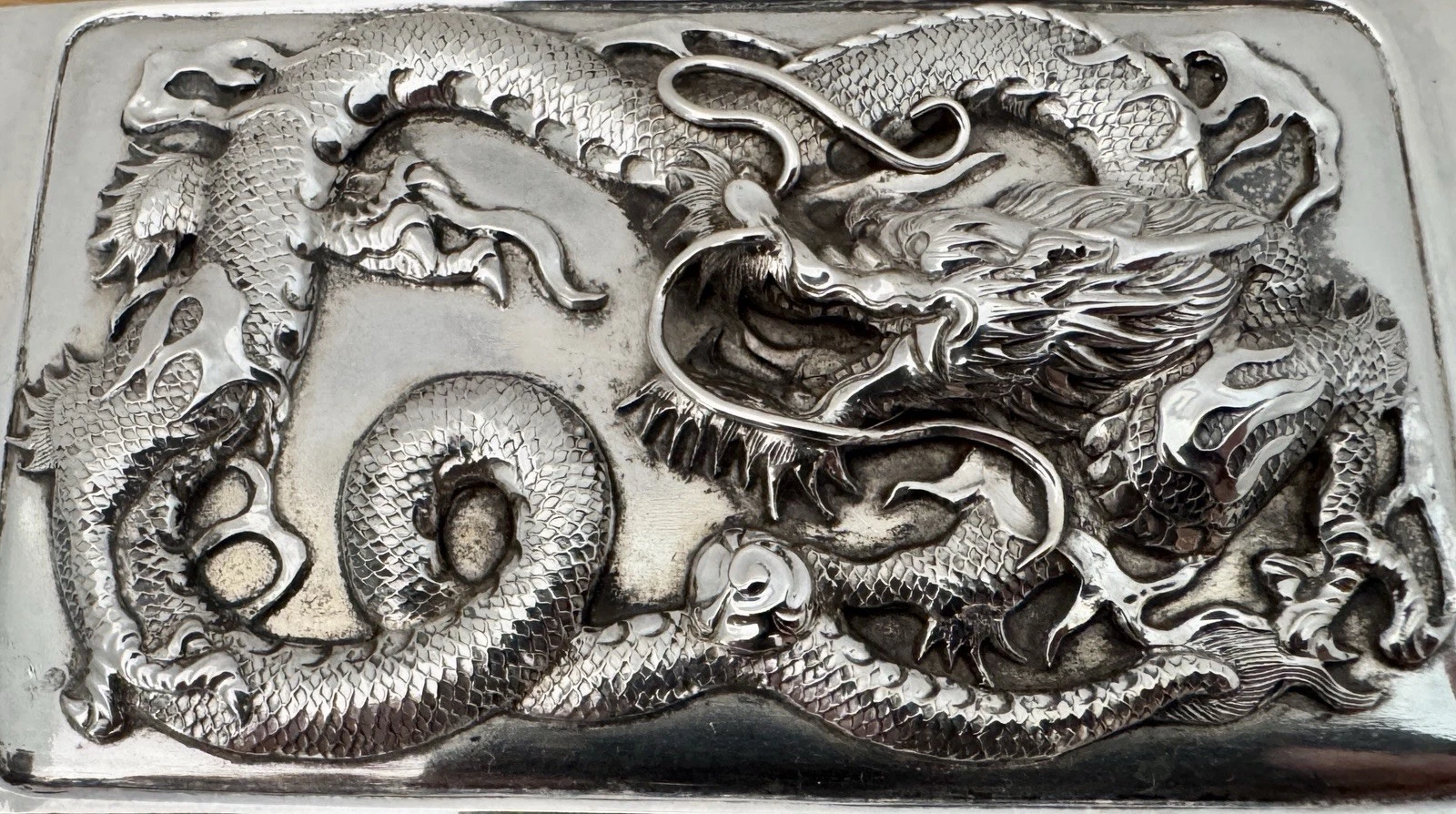
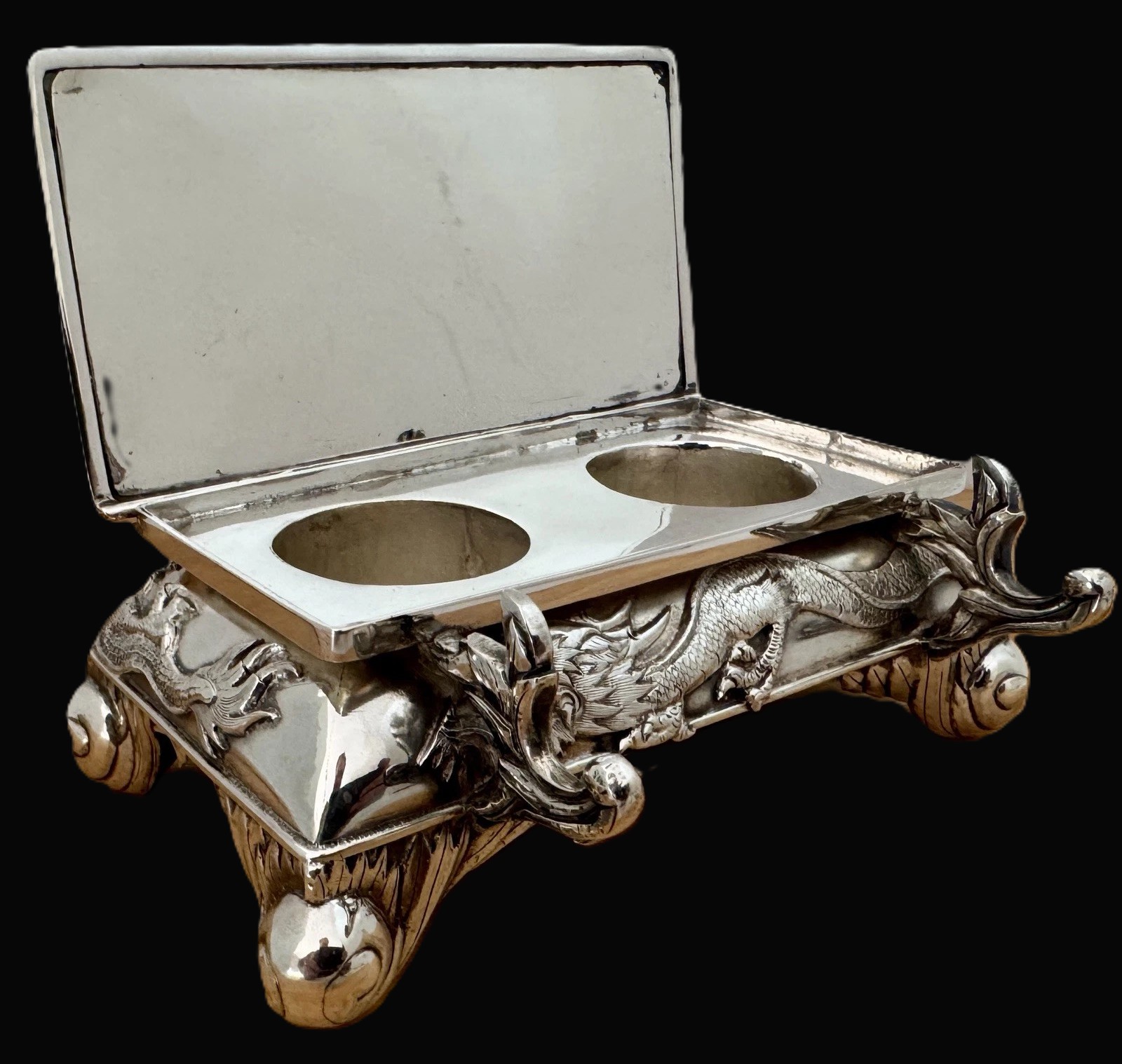
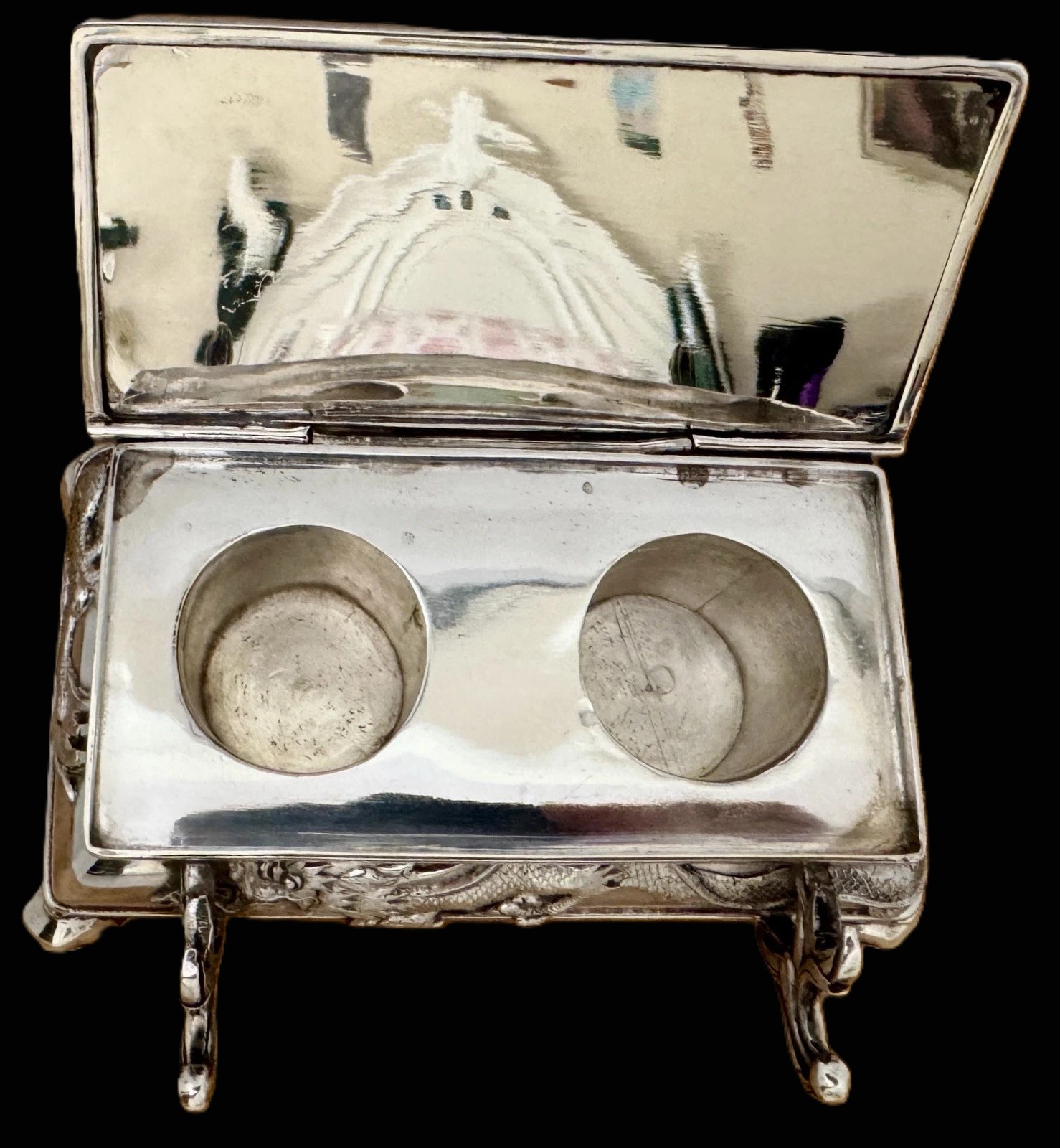
The piece is a rectangular, footed standish featuring exceptionally high-relief repoussé decoration (metal hammered into relief from the reverse side).
- The Lid: The lid is dominated by a “full-bodied” dragon. Its serpentine body is deeply chased with fine scales, and its head is expressive with flared nostrils and long whiskers. The dragon appears to be pursuing the “Flaming Pearl” – a small, circular orb visible near the center—which represents wisdom and spiritual energy.
- The Body: The sides of the inkstand feature two additional dragons that wrap around the corners, creating a sense of continuous movement. The “wrought” or hand-beaten texture of the silver provides a shimmering, organic background that makes the polished dragons stand out.
- The Interior: When opened, the stand reveals two circular apertures designed to hold glass or porcelain inkwell inserts.
- The Feet: The inkstand rests on four ornate feet, which appear to be stylized “cloud-scroll” or “lappet” designs, consistent with the celestial theme of the dragon imagery.
Interpretation of the Marks
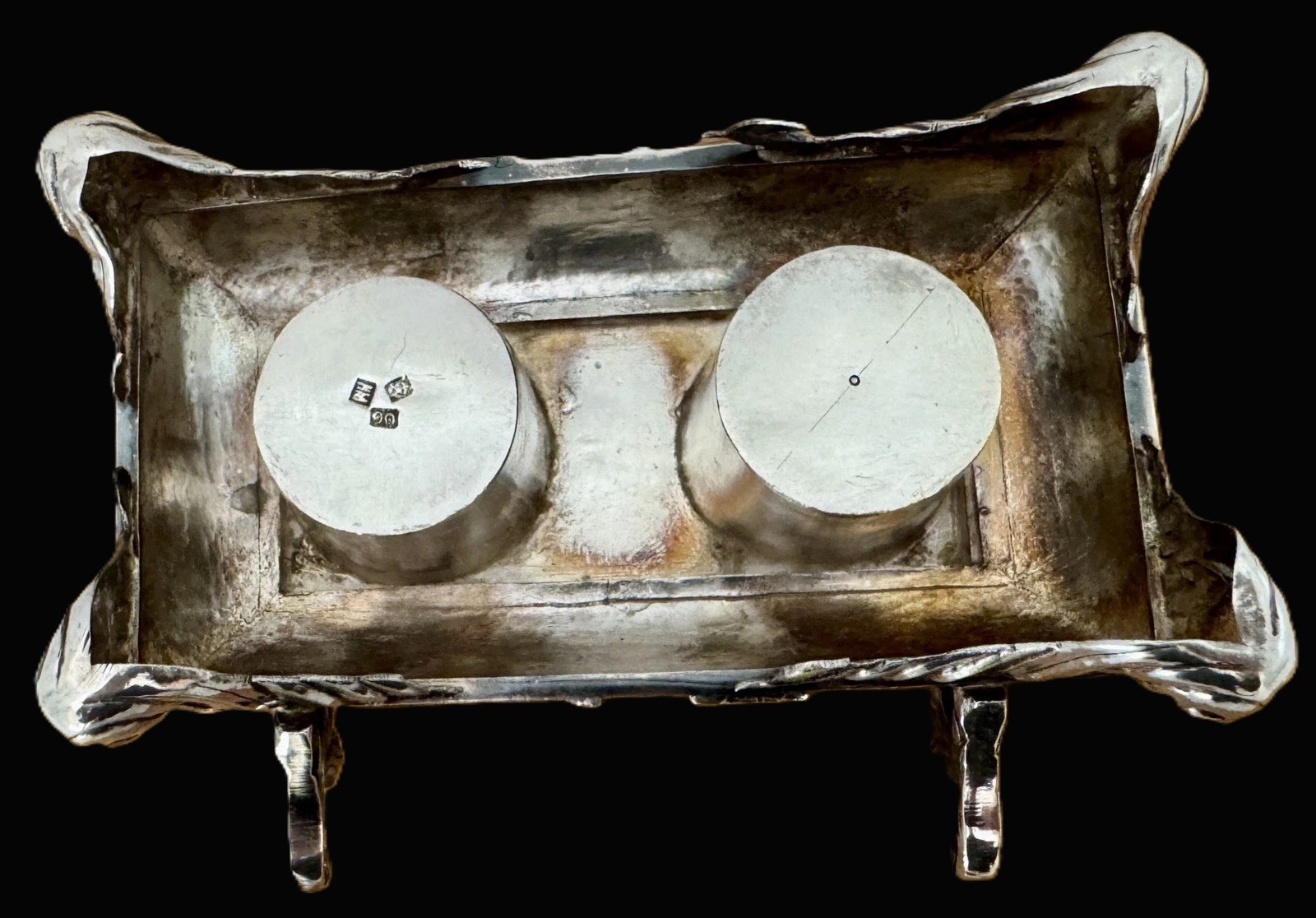
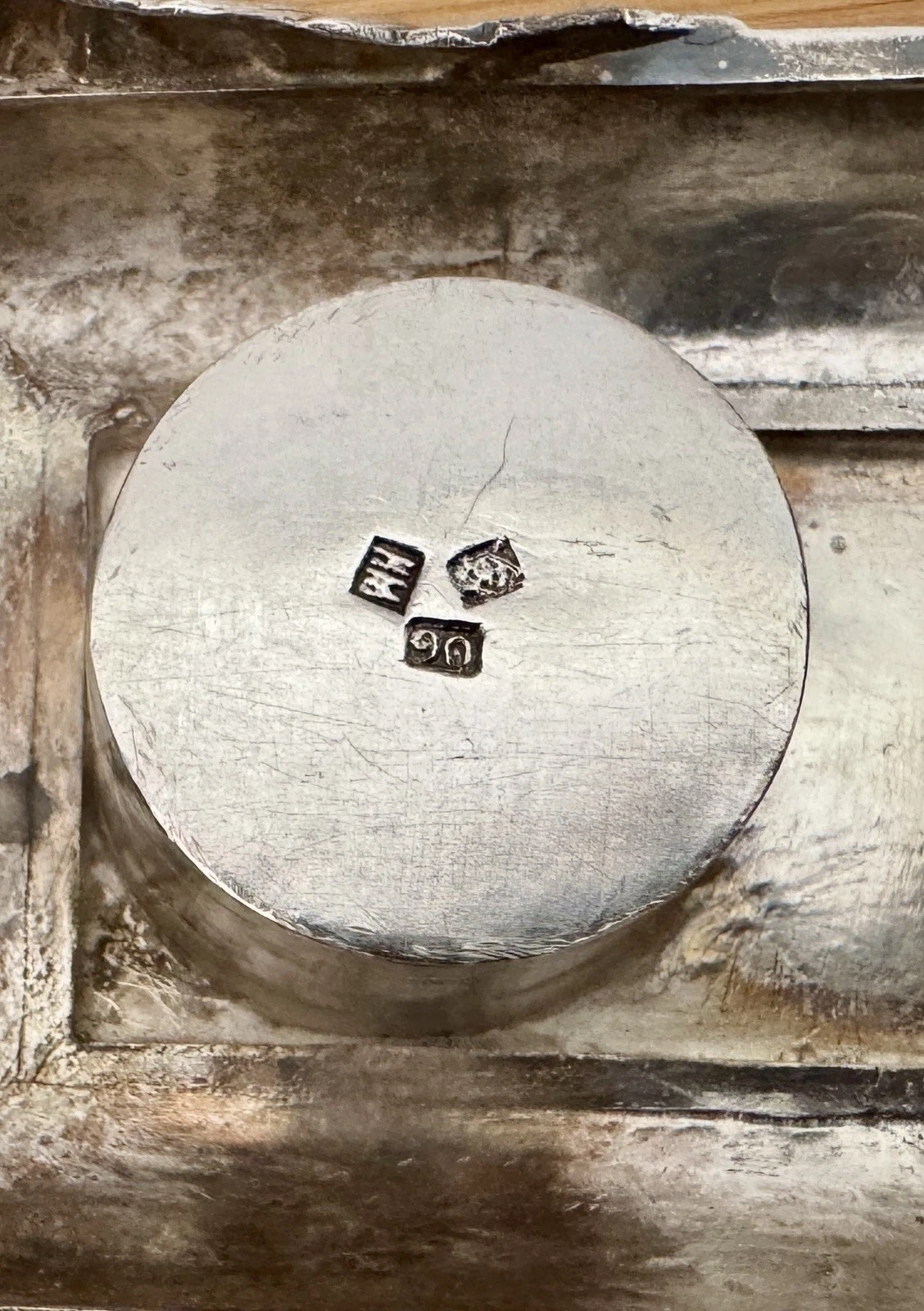
The marks on the underside are the standard “trio” used for high-end export silver:
- WH: This is the retailer’s mark for Wang Hing & Co. Wang Hing was the most prolific and celebrated retailer of Chinese export silver, active between roughly 1854 and 1941. They had flagship stores in Canton (Guangzhou), Hong Kong, and Shanghai.
- The Chinese Character: This is the Artisan Mark. Unlike Western hallmarks, which denote a city or year, Chinese silver usually features a character identifying the specific workshop or silversmith who actually made the piece for the retailer. In this case, the character appears to be “Sheng” (盛), a well-known workshop that frequently produced high-quality work for Wang Hing.
- 90: This indicates the silver purity. In the Chinese export market, “90” meant the item was 90% silver (900/1000). While slightly lower than the British “Sterling” standard of 92.5%, this was the premium standard for the Chinese market and was often achieved by melting down Spanish trade dollars (silver coins) which were the primary currency for trade at the time.
The Significance of the Dragon
In Chinese culture, the dragon (Lóng) is a benevolent and powerful symbol, starkly different from the “treasure-hoarding” dragons of Western mythology.
- Imperial Power: Traditionally, the dragon symbolized the Emperor and his divine right to rule.
- The Flaming Pearl: The dragon is frequently depicted chasing or clutching a flaming pearl. This represents the pursuit of wisdom, prosperity, and enlightenment.
- Protection & Prosperity: For the Westerners who purchased these items, the dragon represented the exotic “East” and was believed to bring good fortune and protection to the household.
Context: Chinese Export Silver
Where was it made? While retailed by Wang Hing in Hong Kong or Shanghai, the piece was almost certainly manufactured in Canton (Guangzhou). Canton was the heart of the silver trade, home to highly skilled artisans who had spent generations perfecting techniques to suit Western tastes.
What is Export Sterling? “Chinese Export Silver” refers to items made in China specifically for the Western market from the late 18th century through the early 20th century.
- Hybrid Style: These pieces are fascinating because they combine Western forms (like the double inkstand, which was a European writing desk staple) with traditional Chinese motifs (dragons, bamboo, and plum blossoms).
- Historical Rarity: Because much of this silver was melted down during various conflicts in the 20th century, well-preserved, heavily decorated pieces like this are sought after by collectors today for their “virtuoso” metalwork.
Sold for $1300 in March 2026
Content disclaimer. The information posted is the owner’s best knowledge and may not have been vetted by the SOIC. We welcome comments, corrections, and additions, working to make our website information comprehensive and accurate.
Join the Society of Inkwell Collectors (SOIC) – it’s free!
Founded in 1981 as a non-profit organization,
we are documenting inkwells (and accessories).
We’re here to help and inform!