



Charleton Inkstand (Double Inkwell)
| Categories | Modern-day Production / Reproduction / "Fake" |
| Material | Porcelain |
| Markings | Charleton Hand Decorated |
| Origin | United States |
| Date or Era | circa 1950 |
| Measuring | 6 ½” x 4 ½” (Base) |
Charleton Inkstand (Double Inkwell)
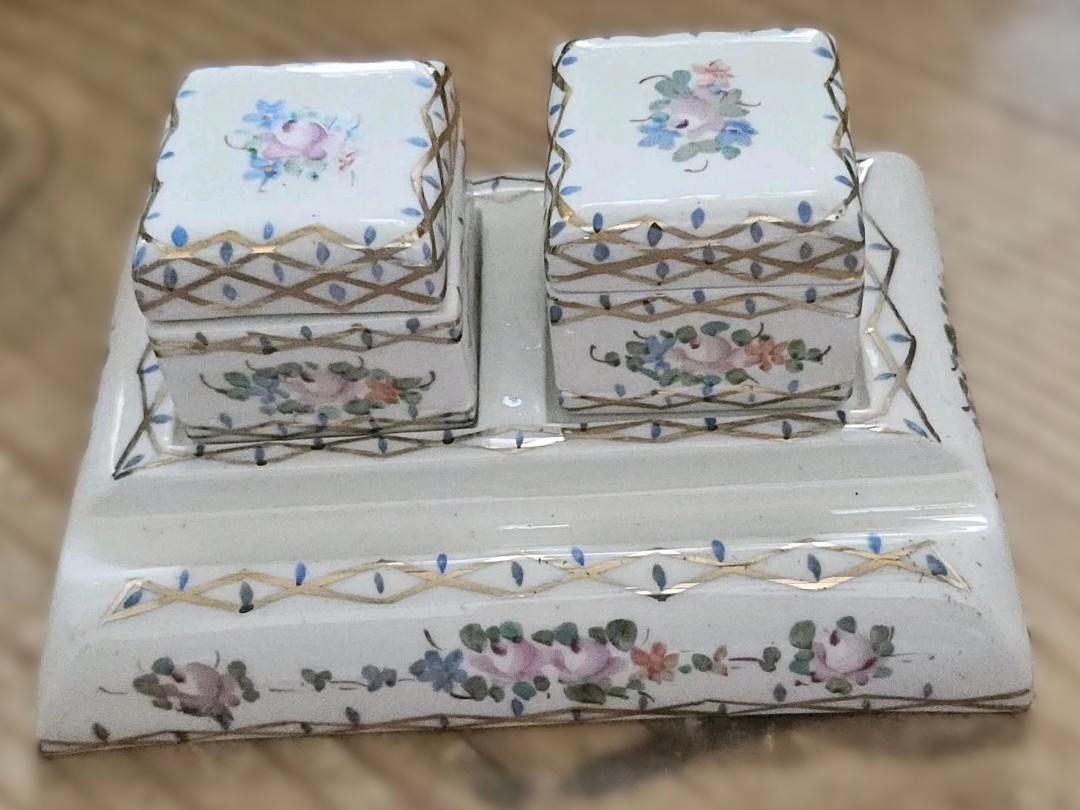
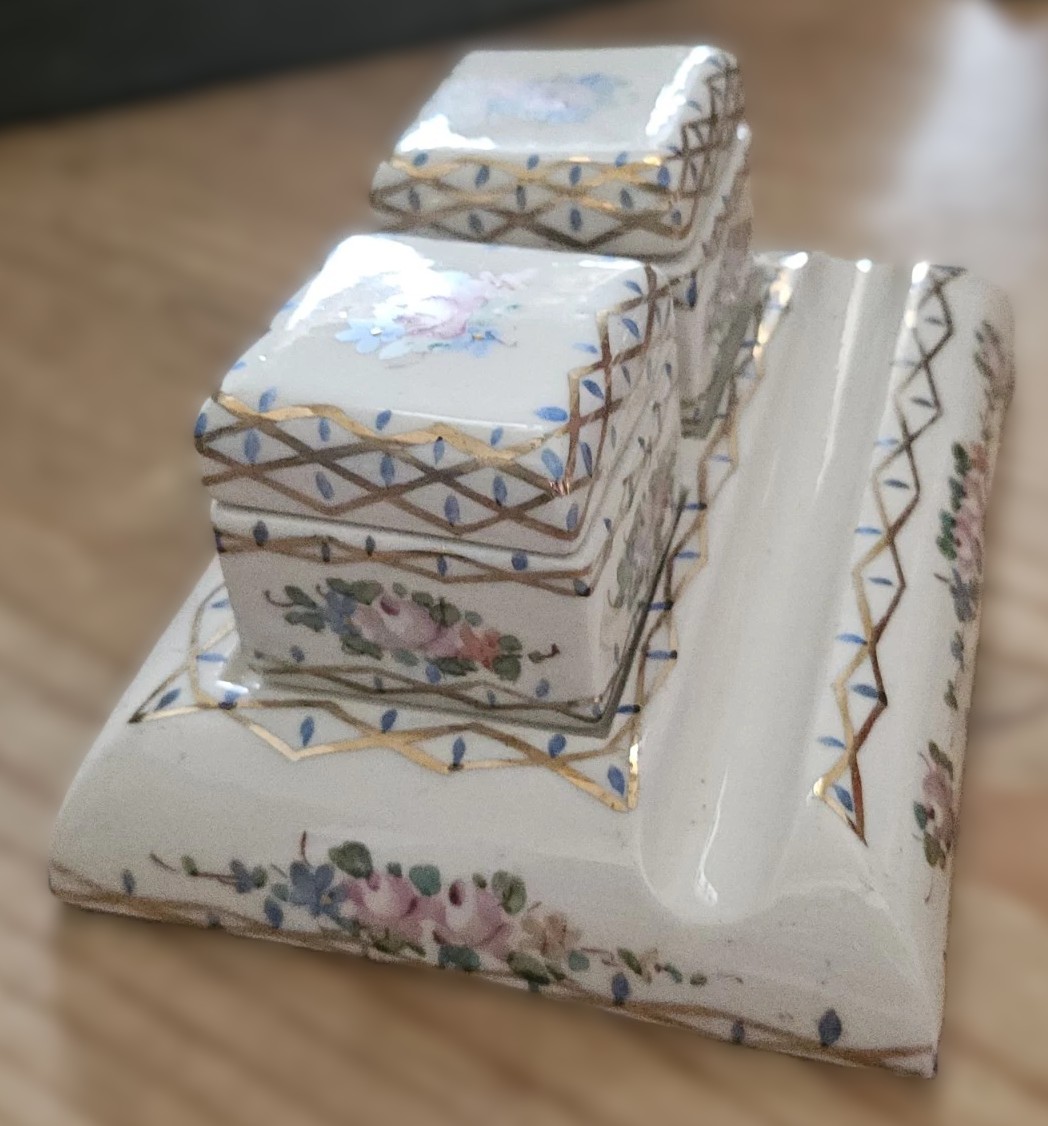
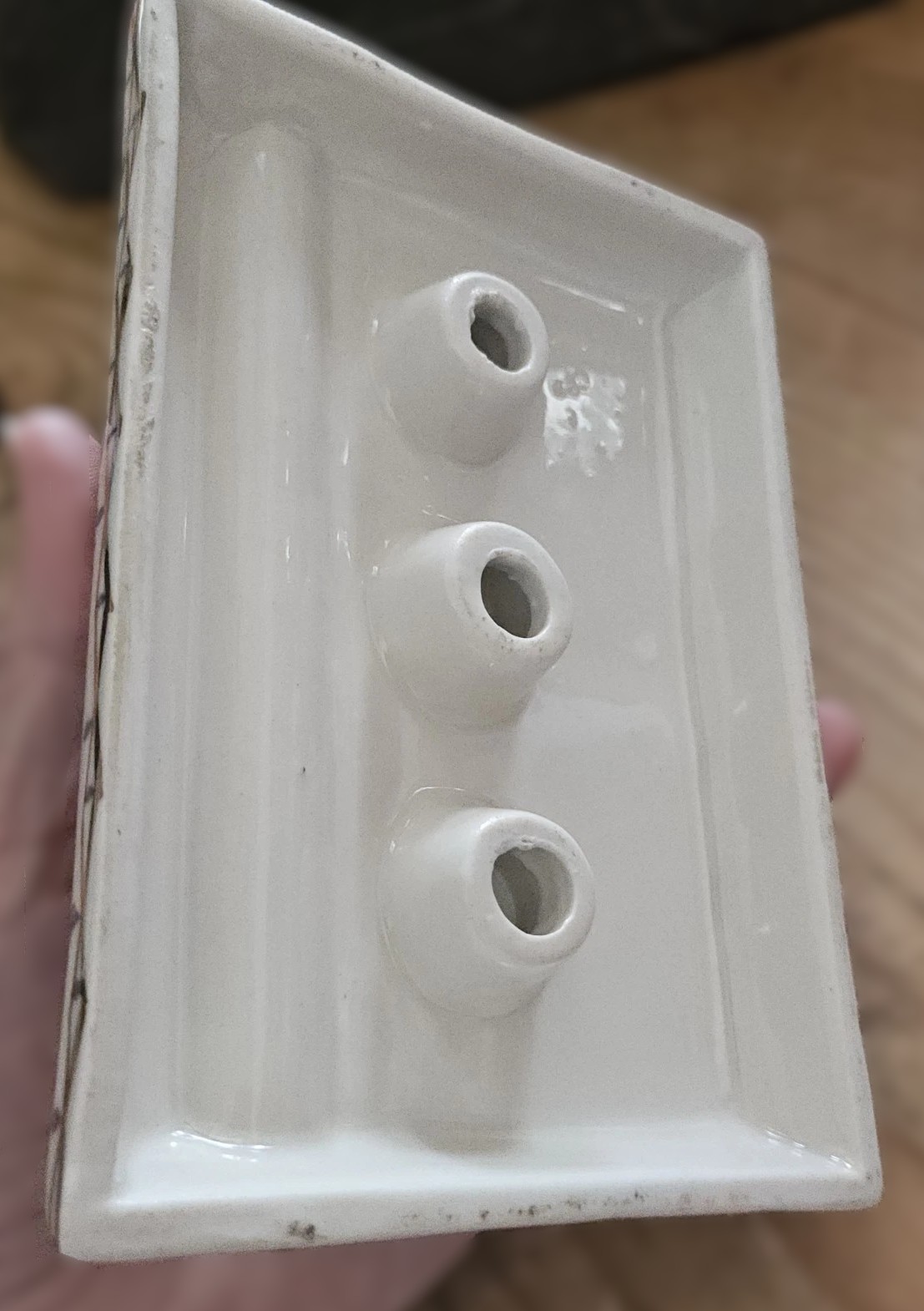
- Overall Form: This is a rectangular, ceramic inkstand with two inkwells. The base features a long pen channel in the front.
- Inkwells: It has two square wells designed to hold ink, with the lids which are designed to simply lift off.
- Decoration: The decoration is characterized by:
- Small, repeated floral sprays (pink roses and blue accent flowers) that run along the sides and pen rest.
- A distinct, delicate gold and blue geometric pattern (likely hand-traced over a pattern) creating a border around the lids and the pen rest.
- Technique: The label, “Charleton Hand Decorated,” explicitly states the decoration technique. This confirms the floral and geometric patterns were applied by hand, likely over a commercially-produced blank ceramic piece.
Information on Charleton
The mark “Charleton Hand Decorated” refers to a decorating company, not a ceramics manufacturer.
- Company Name: The Charleton line was the decorative trade name for Abels, Wasserberg & Company (AWCO), which was based in New York City.
- What they did: AWCO did not make the porcelain or glass itself. They purchased “blanks” (undecorated pieces) from various high-quality American and European manufacturers and then hand-decorated them in their studio with their own designs.
- Blanks Used: Charleton decorated blanks from many sources, including famous American glass companies like Fenton, Cambridge, Westmoreland, and Heisey, as well as European porcelain.
- Age/Vintage: The period of prolific Charleton decoration on glass and porcelain was primarily the 1940s and 1950s.
Age Estimate: Circa 1940s – 1950s
This Charleton inkstand represents a post-war era trend where imported or domestically produced undecorated ceramics were customized and finished with decorative patterns to appeal to the American market.
Sold for $40 in October 2025
Content disclaimer. The information posted is the owner’s best knowledge and may not have been vetted by the SOIC. We welcome comments, corrections, and additions, working to make our website information comprehensive and accurate.
Join the Society of Inkwell Collectors (SOIC) – it’s free!
Founded in 1981 as a non-profit organization,
we are documenting inkwells (and accessories).
We’re here to help and inform!