

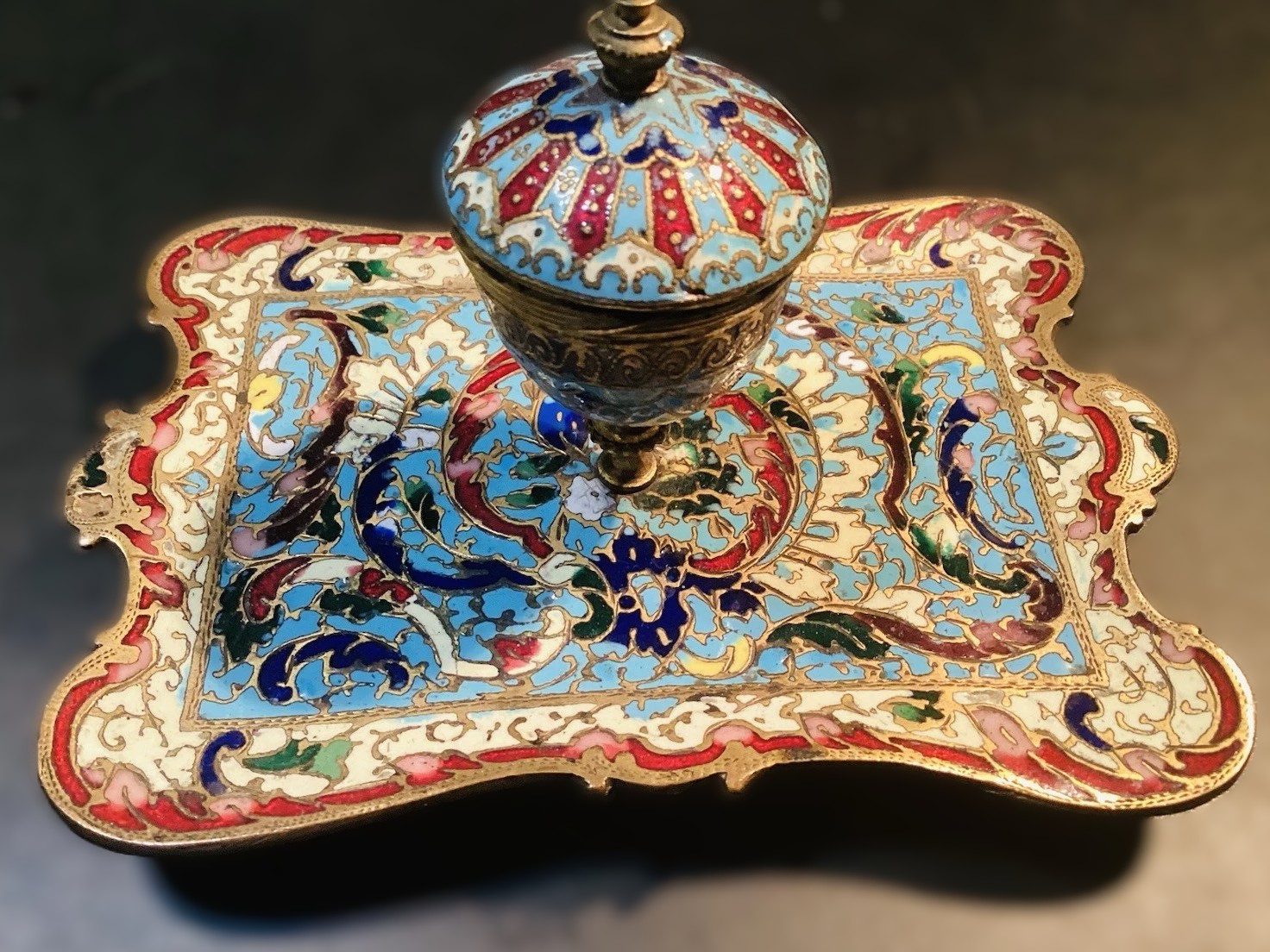
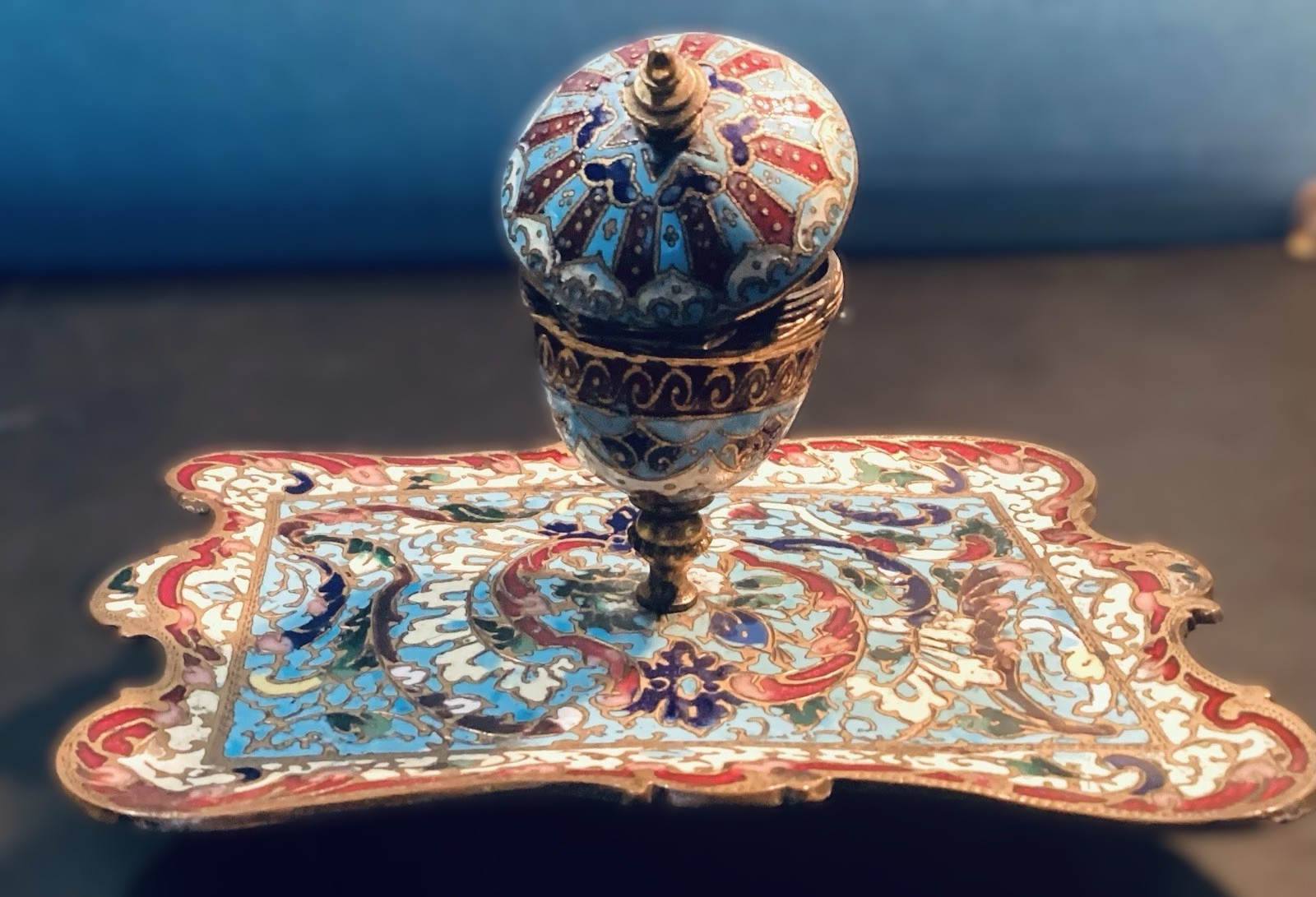
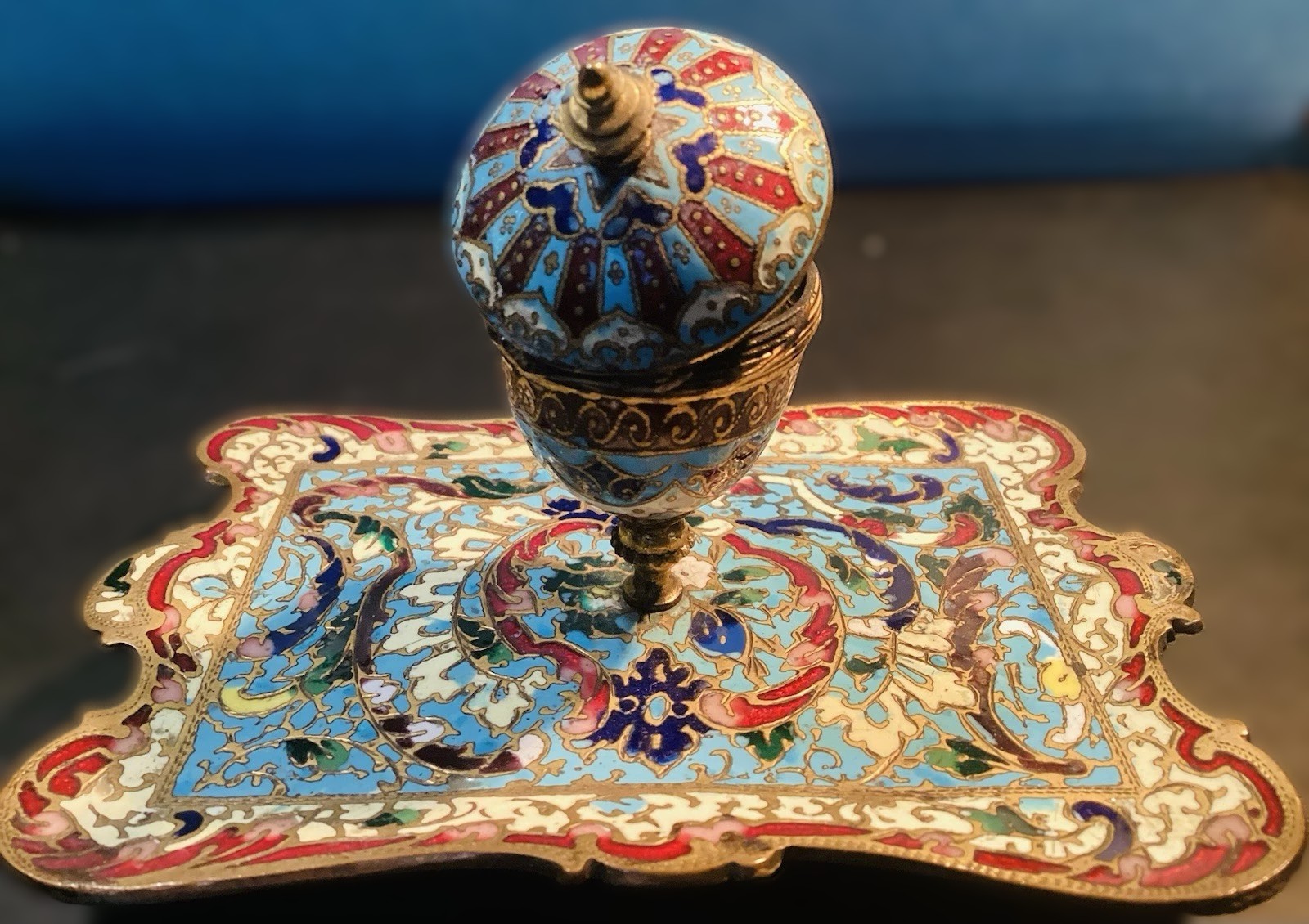
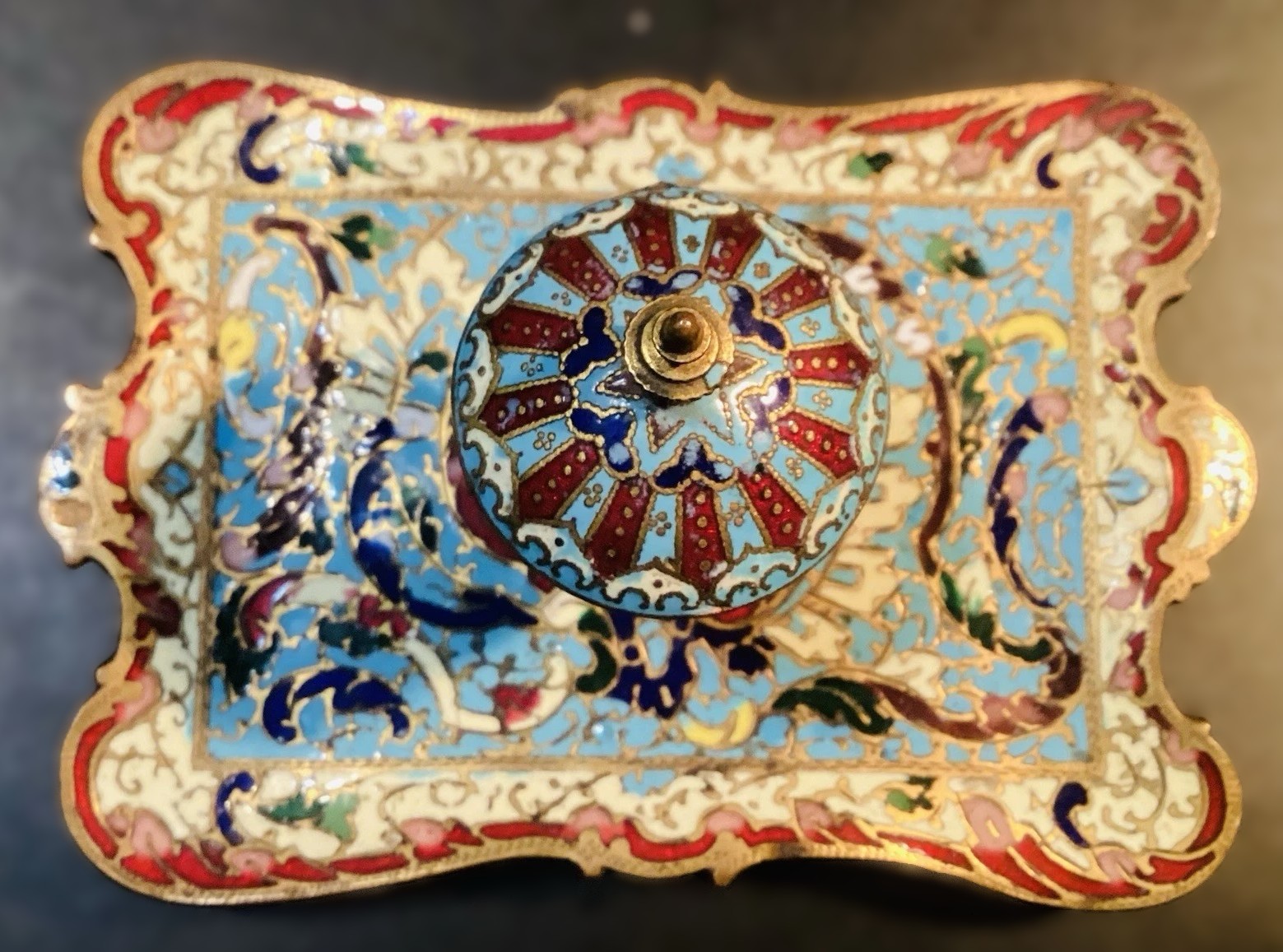
Champlevé Enamel Inkstand
| Categories | Enameled Metal |
| Type | Champlevé |
| Material | Enameled Brass/Bronze/Metal |
| Markings | Unmarked |
| Manufacturer | Undetermined |
| Origin | France |
| Date or Era | circa 1880 |
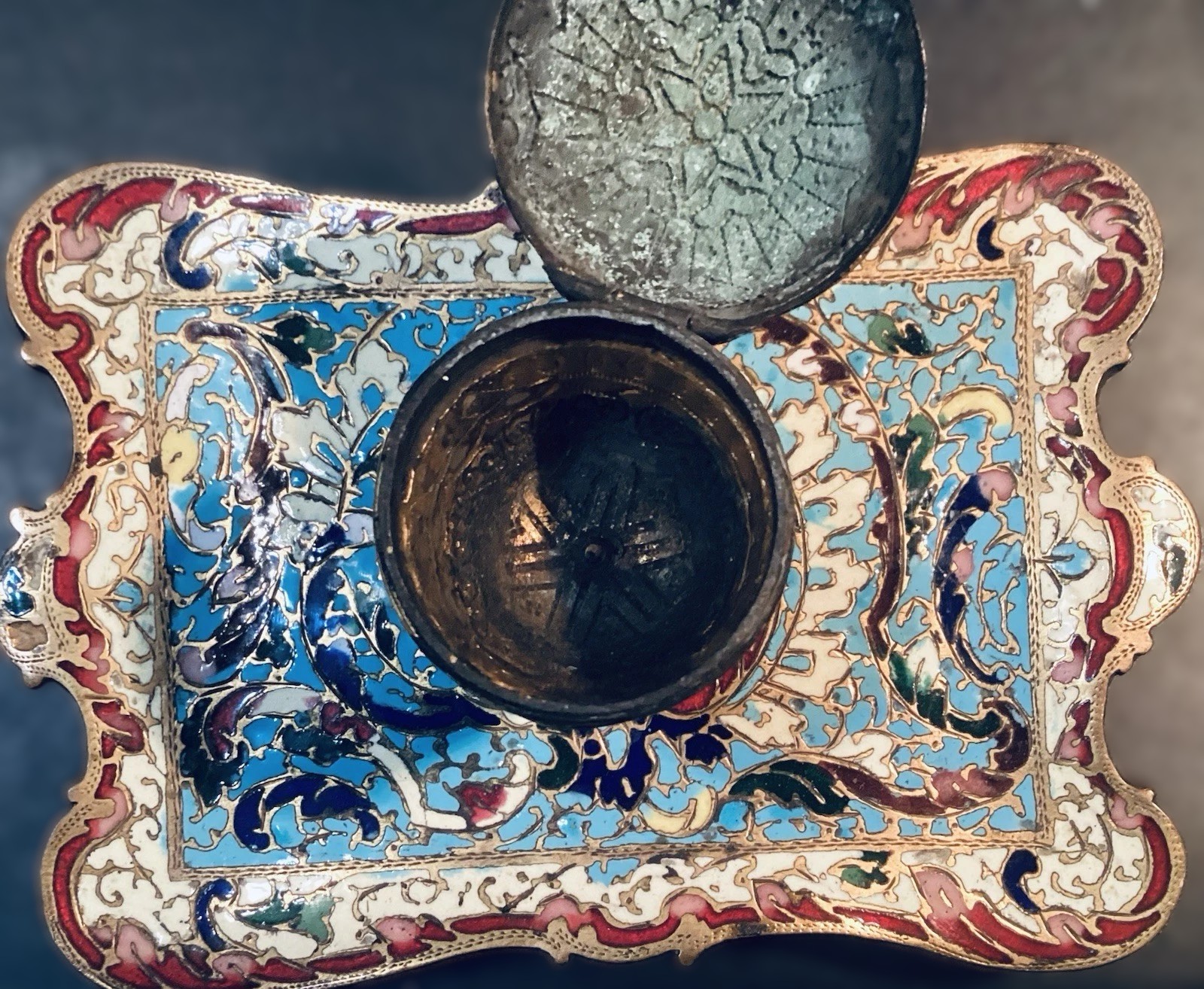
This is a nice example of a French Champlevé enamel inkstand, dating from the late 19th century (circa 1870–1890). This period, often associated with the Napoleon III style, saw a huge revival in medieval and Renaissance enameling techniques used for luxury desk accessories.
Description
The inkstand is constructed from gilded brass (often referred to as ormolu) and features a central, goblet-shaped inkwell mounted on a shaped rectangular base.
- The Inkwell: The vessel is adorned with intricate enamel patterns. The hinged lid features a radiating “starburst” or “petal” design in vibrant turquoise, deep red, and cobalt blue. It is topped with a simple, turned brass finial. The insert is missing.
- The Base: The base has a scalloped or “serpentine” edge, common in French decorative arts. The central field is dominated by a sky-blue enamel background, overlaid with flowing foliate and scrollwork patterns (rinceaux) in white, red, and dark blue.
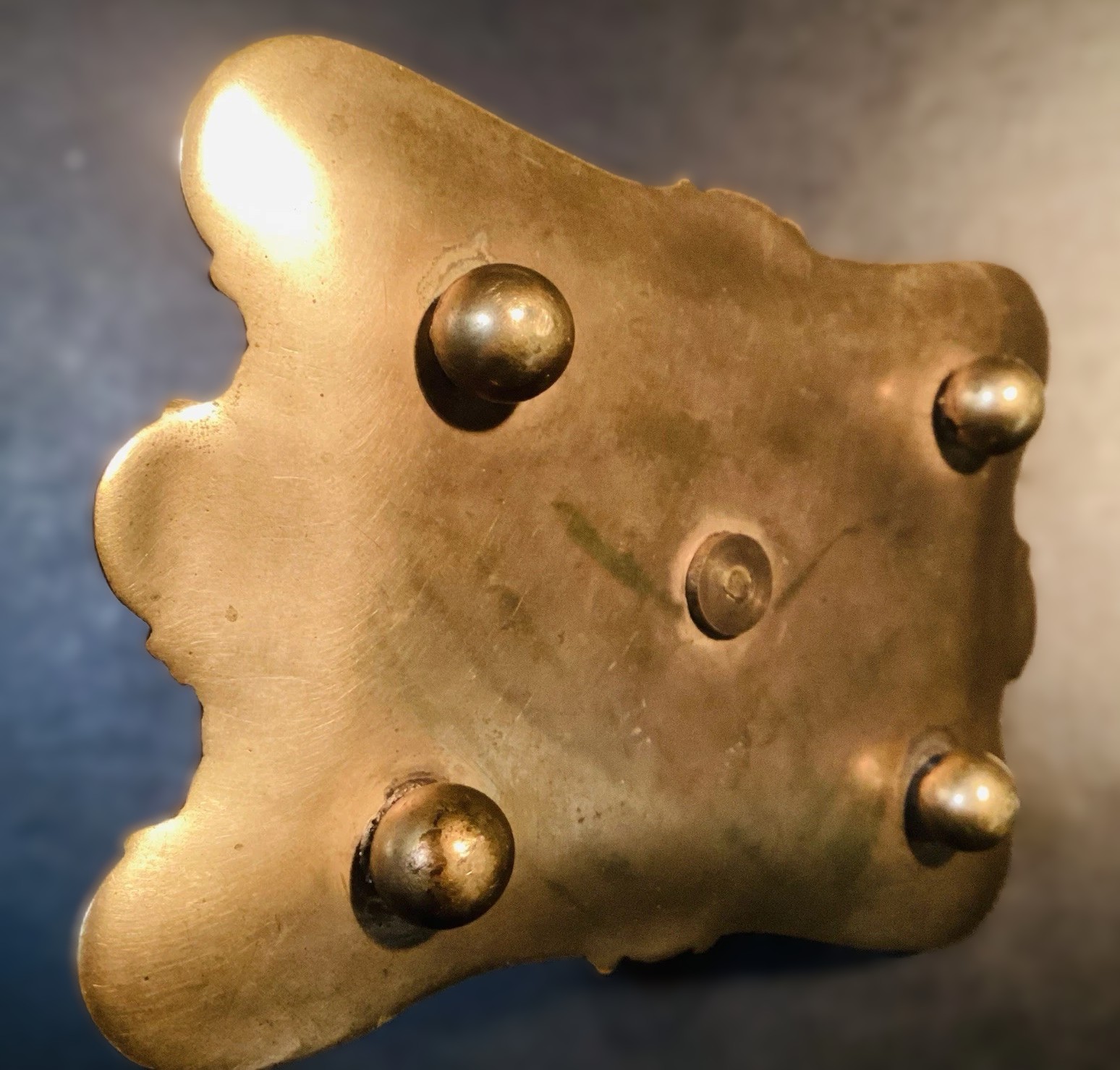
- The Underside: The base is supported by four classic “bun” feet made of solid brass, and the center shows the mounting screw that secures the inkwell to the tray.
The Champlevé Process
The term Champlevé literally translates from French as “raised field.” It is a labor-intensive decorative technique that differs from its cousin, cloisonné (where wires are soldered to the surface to create compartments).
- Carving the Cells The artist begins with a thick plate of brass. Using tools like gravers or acid etching, they carve or cast deep “troughs” or cells into the metal, leaving thin ridges of the original brass surface to serve as the outlines of the design.
- Filling with Enamel Finely powdered colored glass (frit) is placed into these recessed cells. Each color is applied carefully to prevent mixing.
- Firing The piece is placed in a high-temperature kiln. The glass powder melts and fuses to the metal. Because different colors of glass melt at different temperatures, the piece often has to be fired multiple times.
- Polishing After firing, the enamel is usually uneven and higher than the metal ridges. The artist grinds the surface down with abrasives until the enamel and the brass ridges are perfectly flush and smooth.
- Gilding Finally, the exposed brass ridges are gilded (often with gold) to prevent tarnishing and to give the piece its luxurious, bright finish.
Estimated Age
Based on the color palette and the specific style of the foliate scrolls, this is likely a product of the Third Republic era (1870–1900). During this time, French workshops in Paris were world-renowned for “Export Enamels,” creating high-end pieces for the growing middle and upper classes across Europe and America.
Sold for $300 in February 2026
Content disclaimer. The information posted is the owner’s best knowledge and may not have been vetted by the SOIC. We welcome comments, corrections, and additions, working to make our website information comprehensive and accurate.
Join the Society of Inkwell Collectors (SOIC) – it’s free!
Founded in 1981 as a non-profit organization,
we are documenting inkwells (and accessories).
We’re here to help and inform!