

Inkipedia
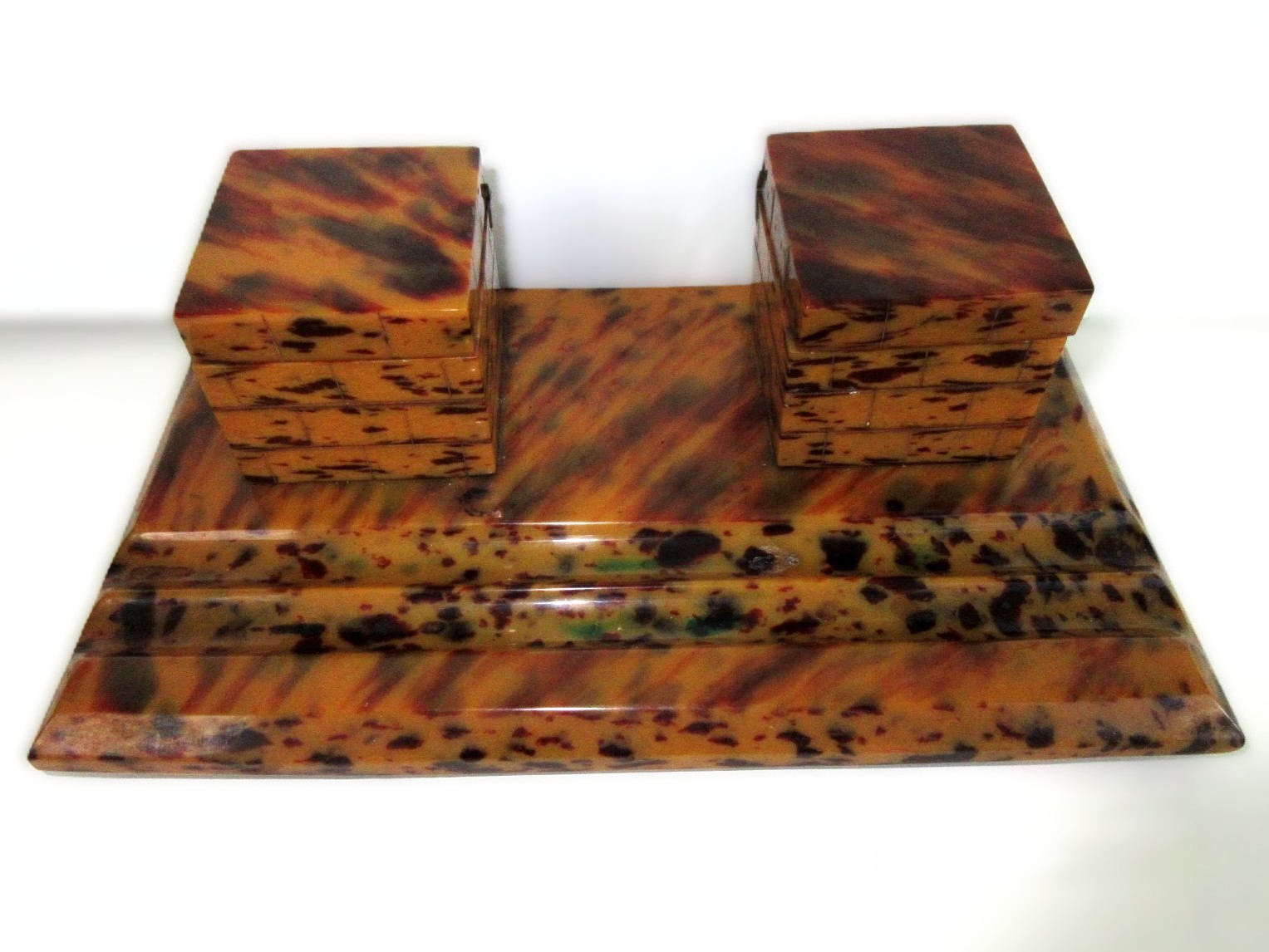
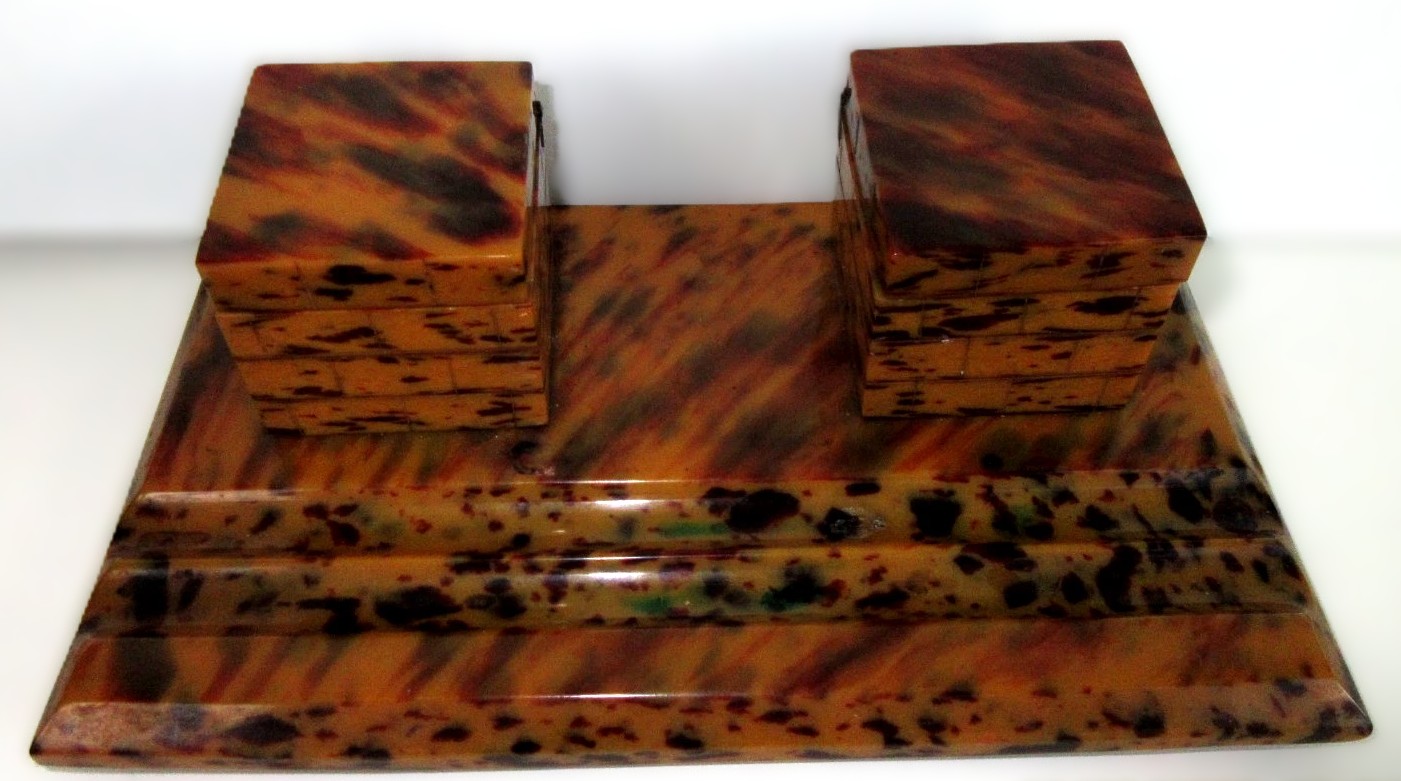
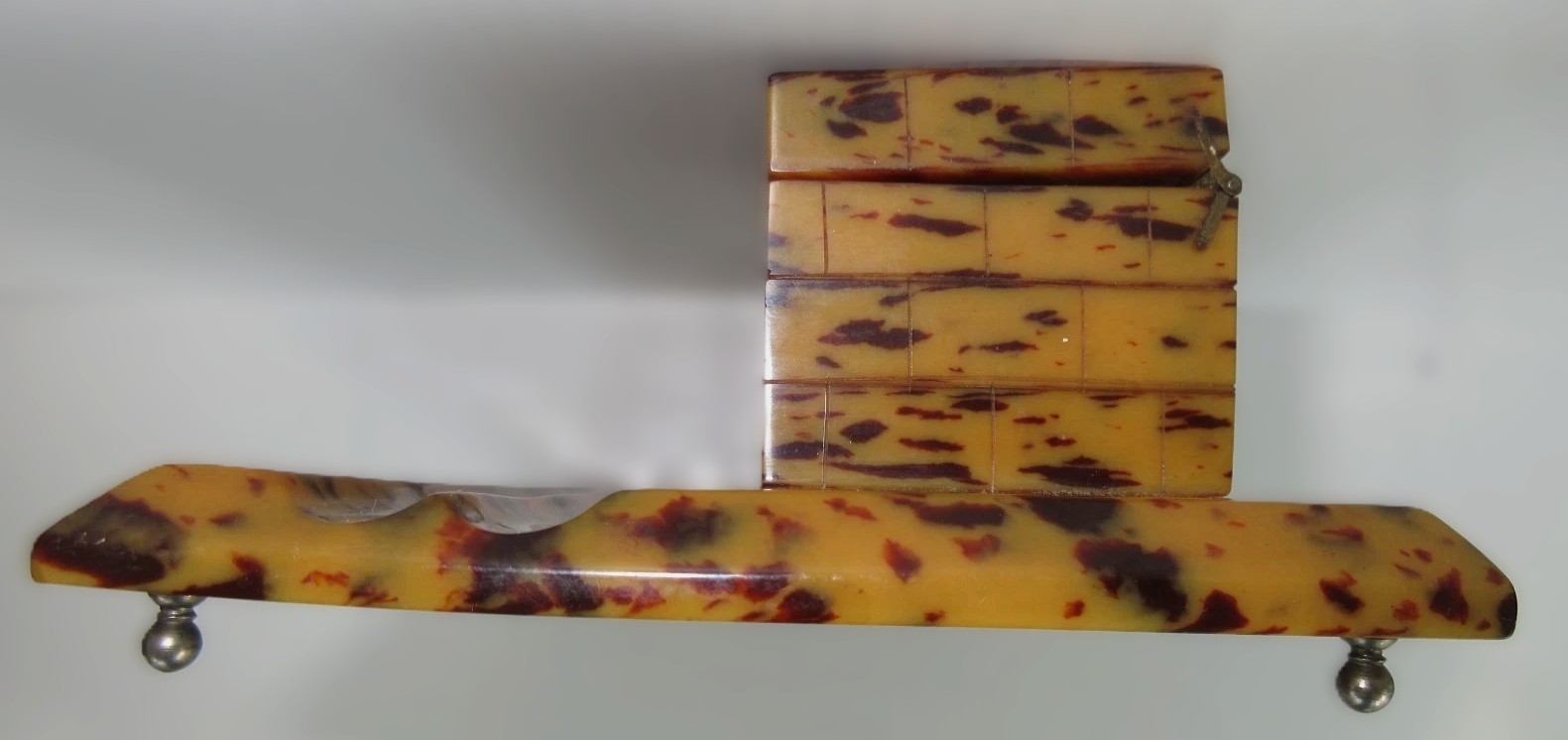
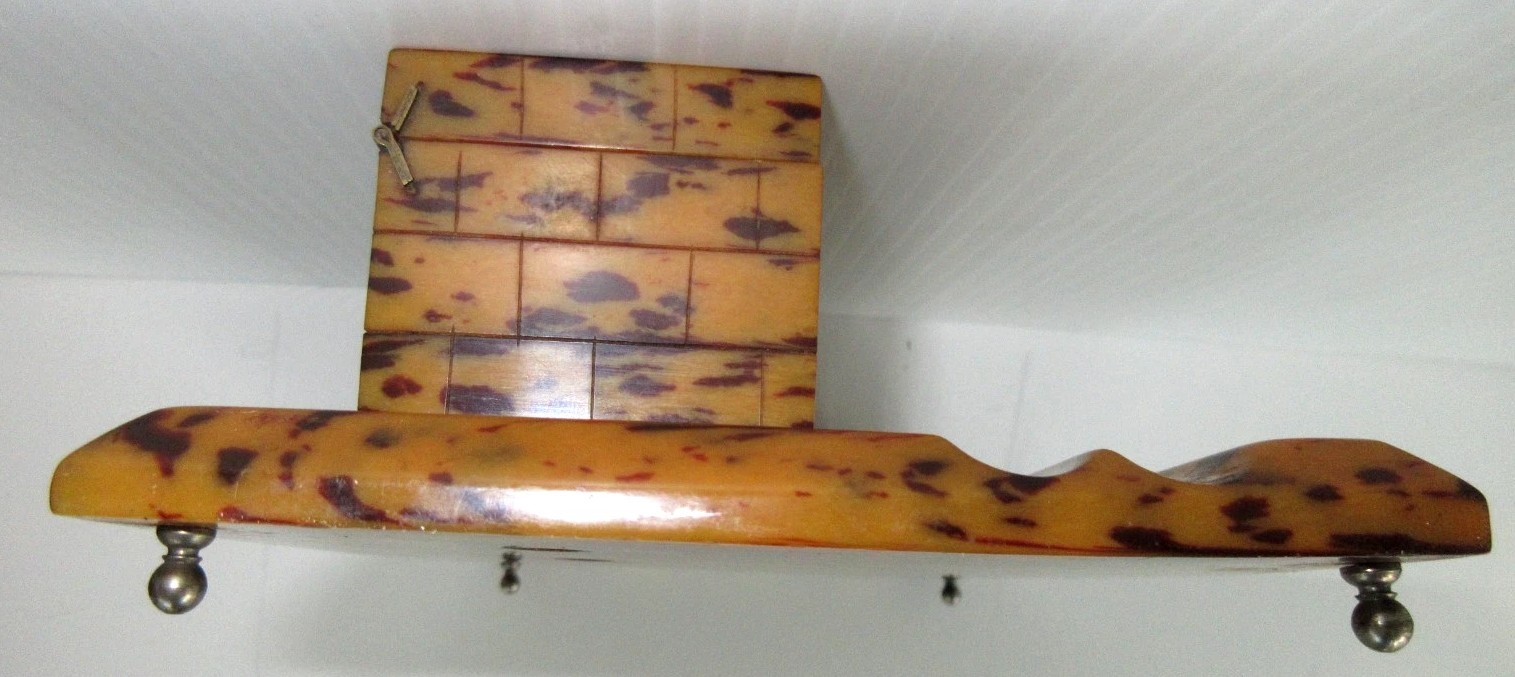
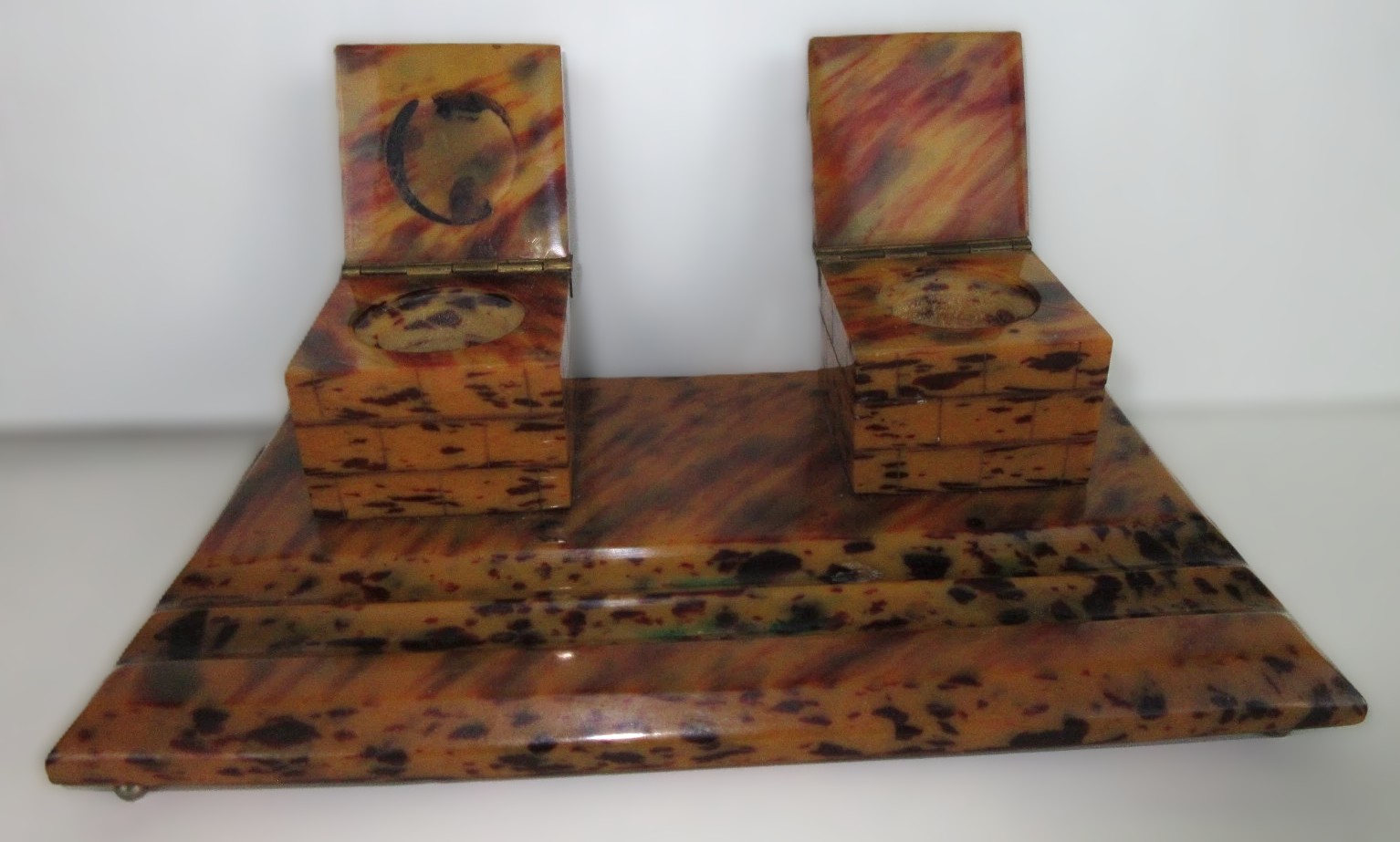
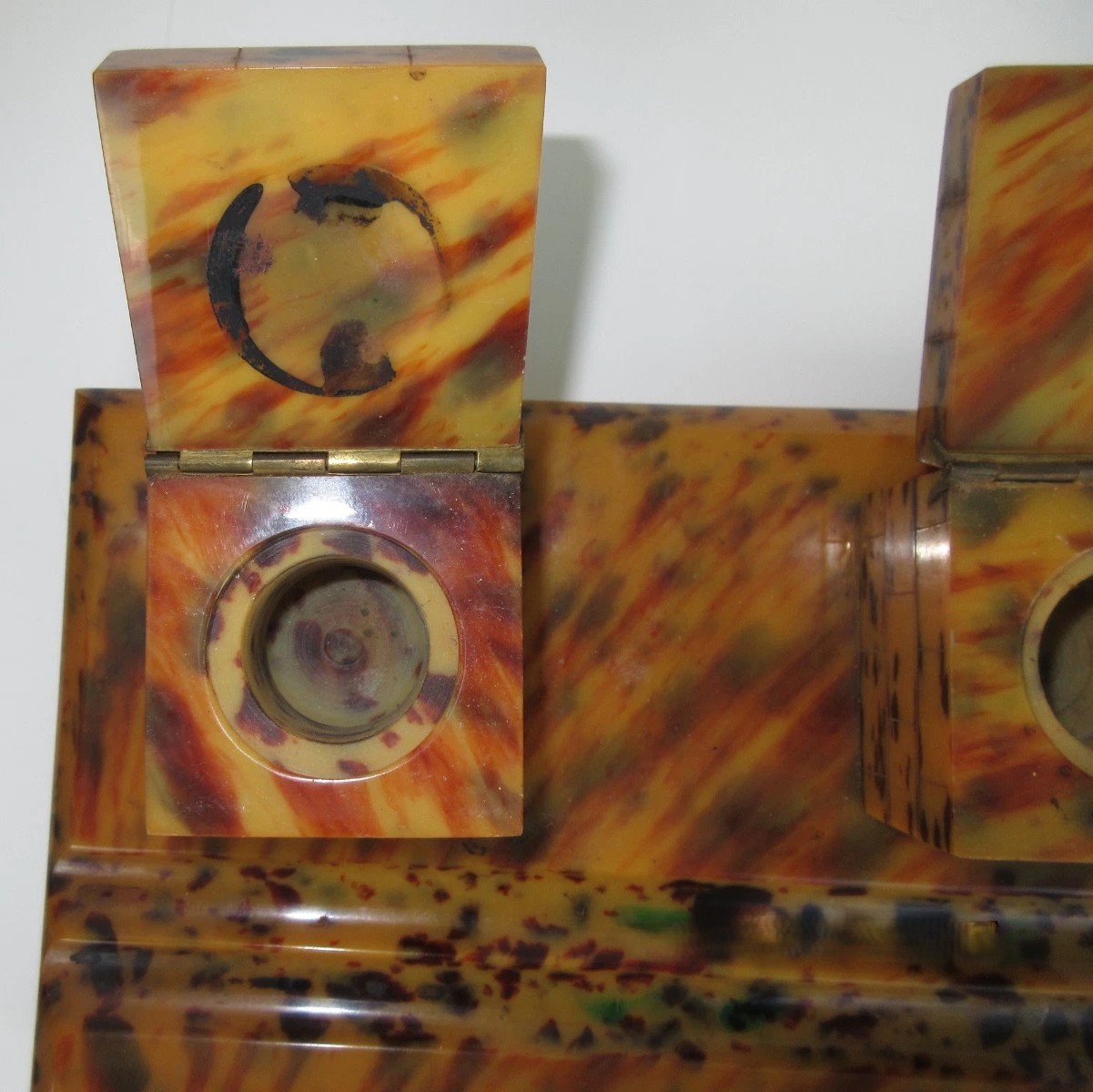
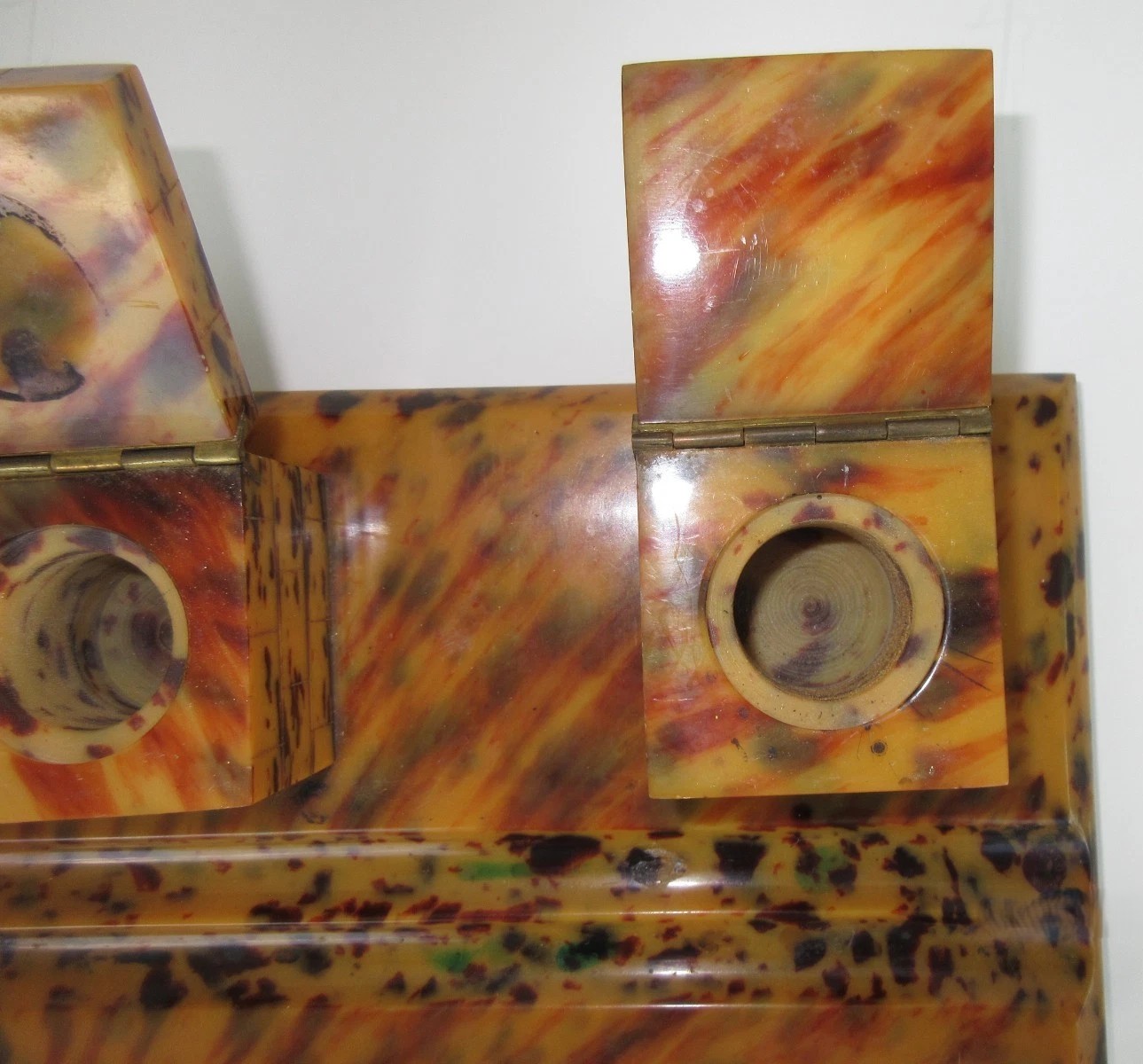
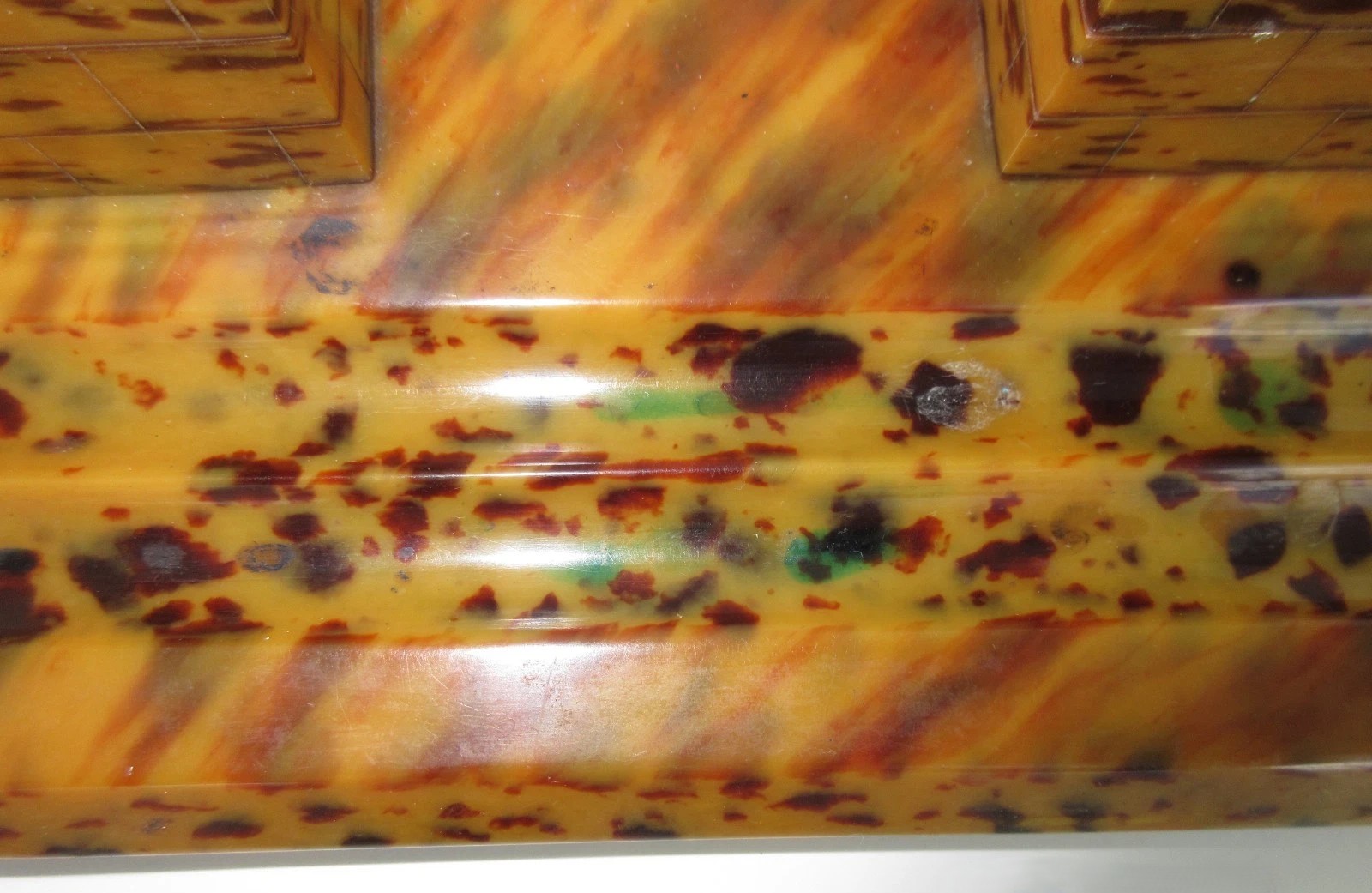
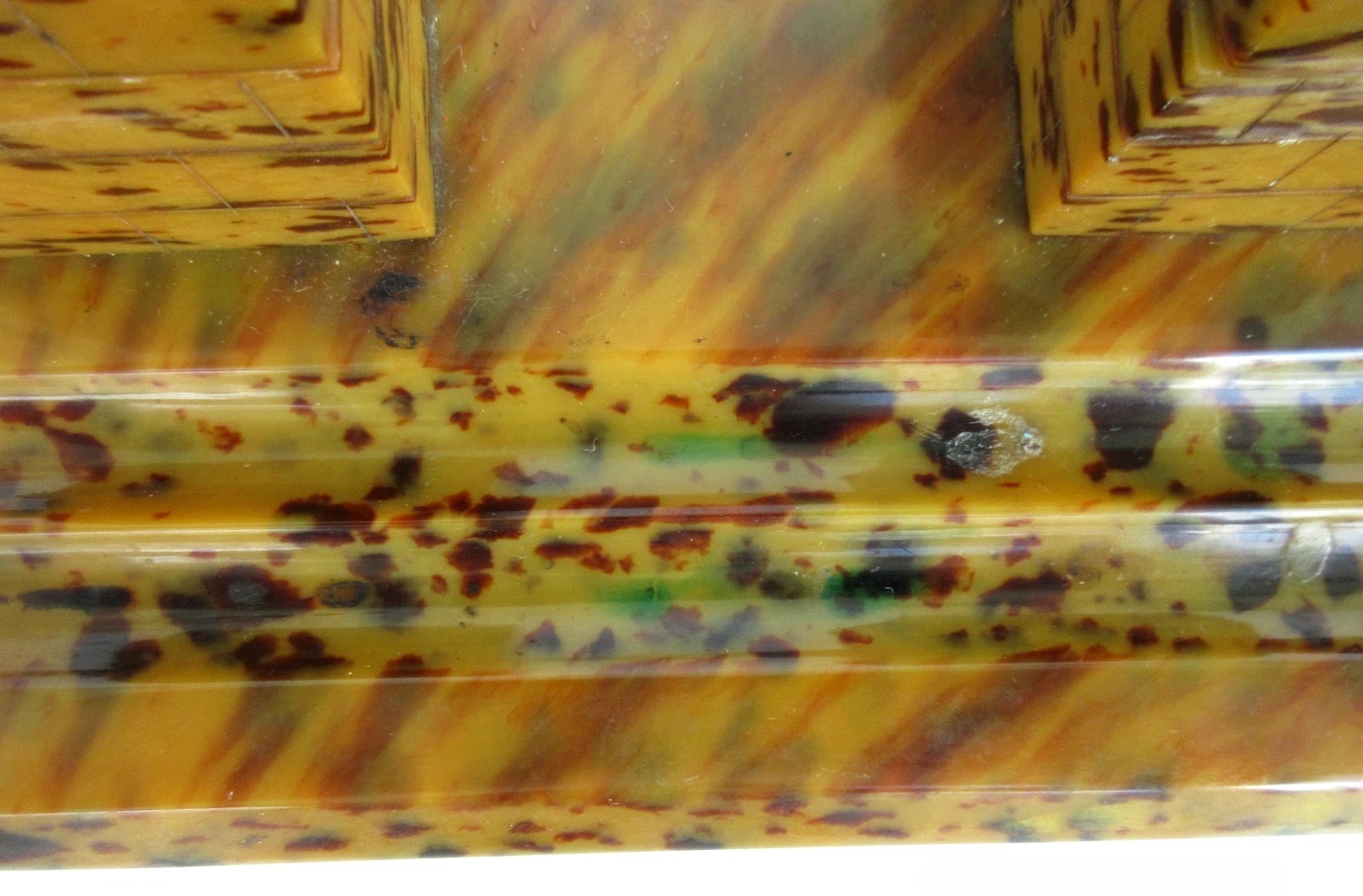
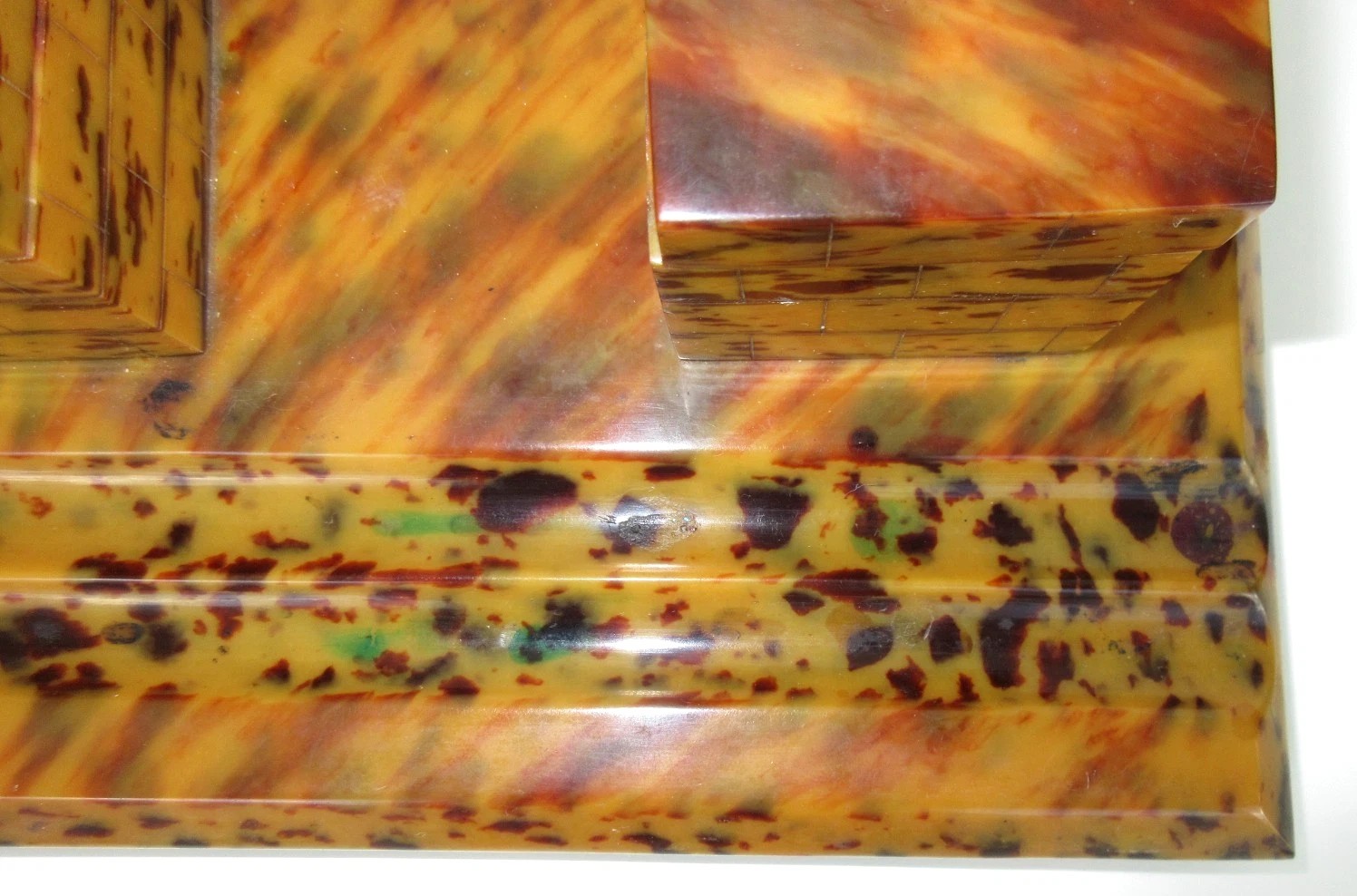
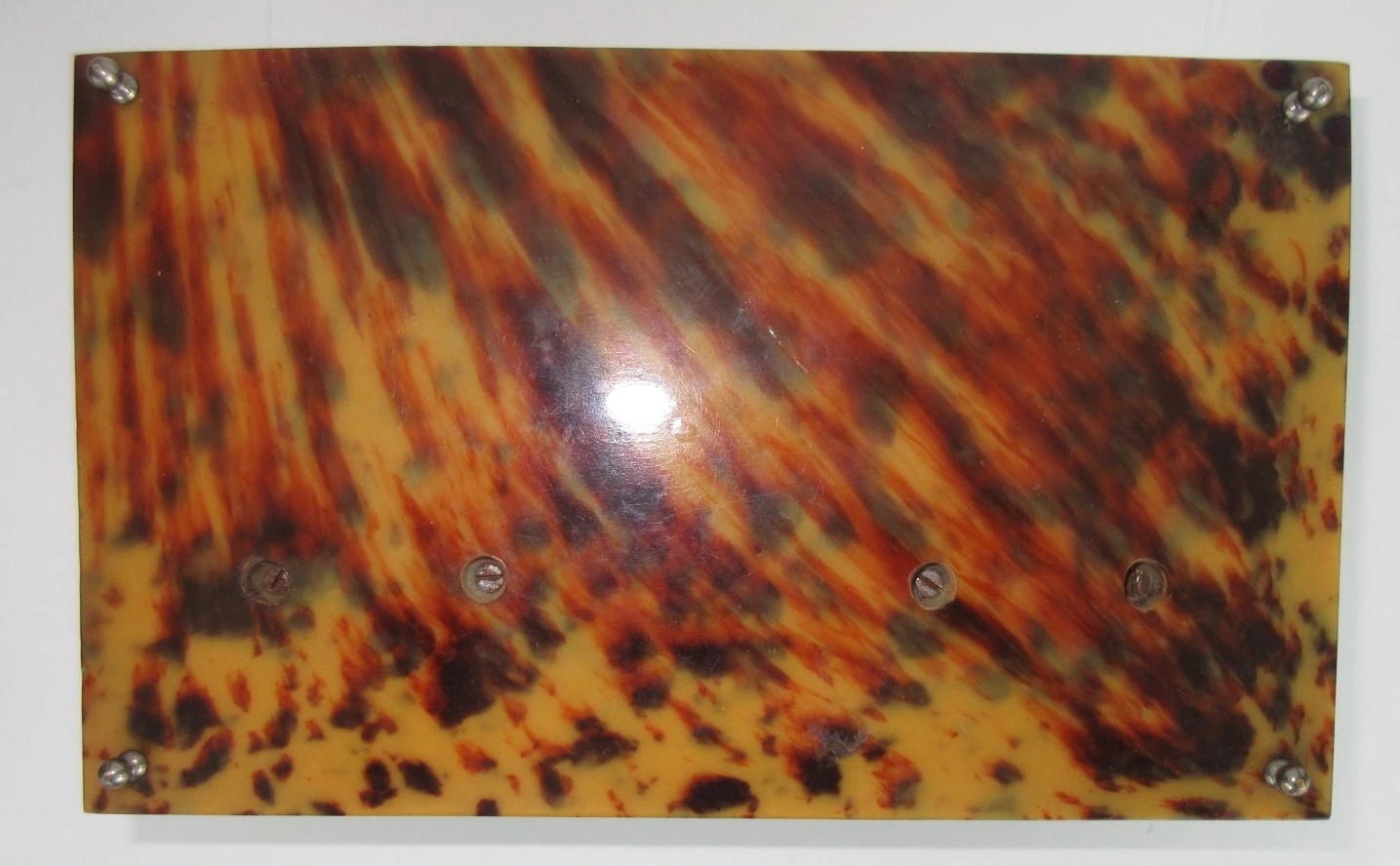
Celluloid Double Inkwell Desk Set in Tortoiseshell Motif
| Categories | Plastic - Bakelite - Gutta Percha |
| Material | Plastic/Celluloid |
| Markings | Unmarked |
| Manufacturer | Undetermined |
| Origin | Undetermined |
| Date or Era | circa 1920 |
| Measuring | 8” x 5” x 2 ¼” high |
Description
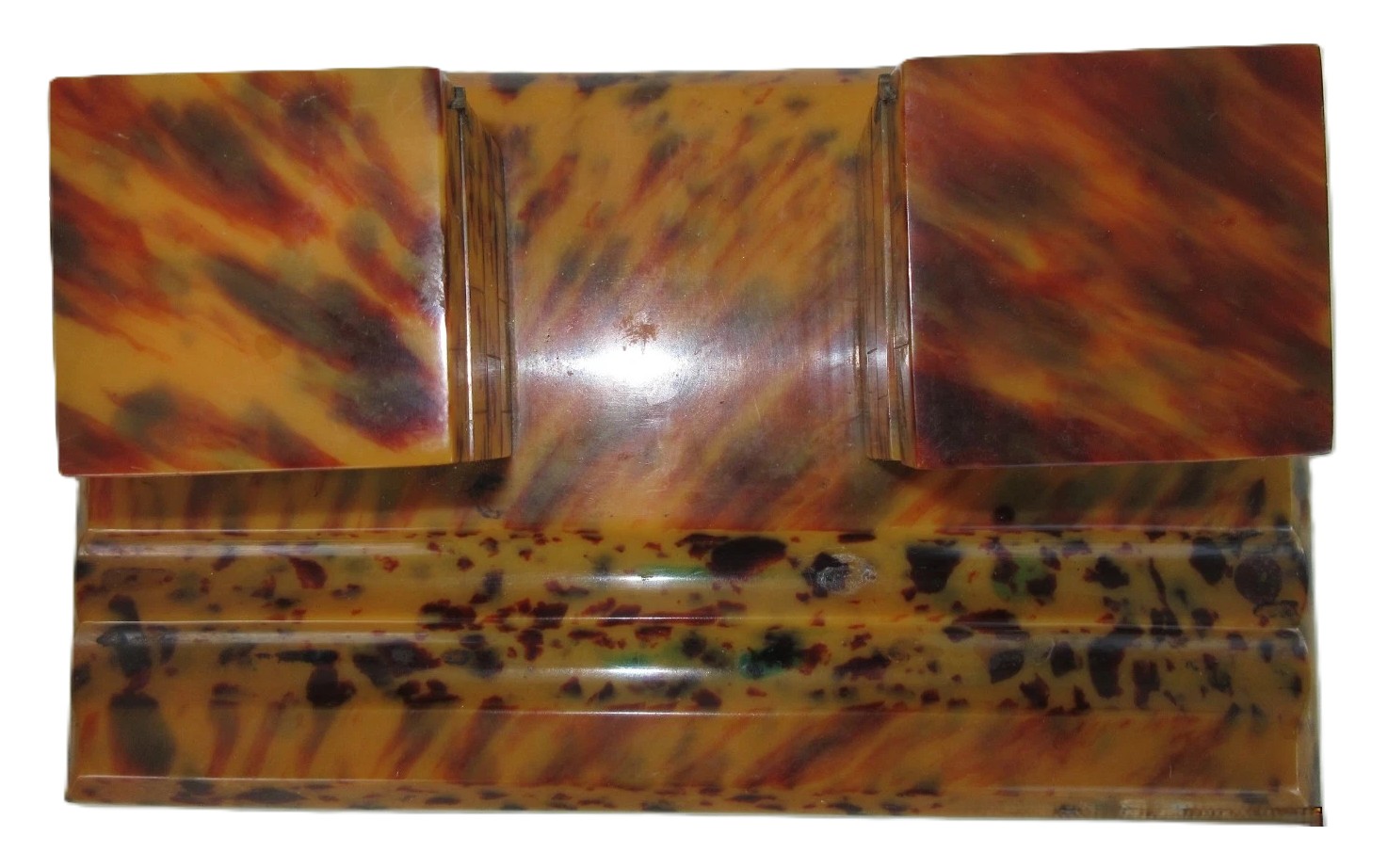
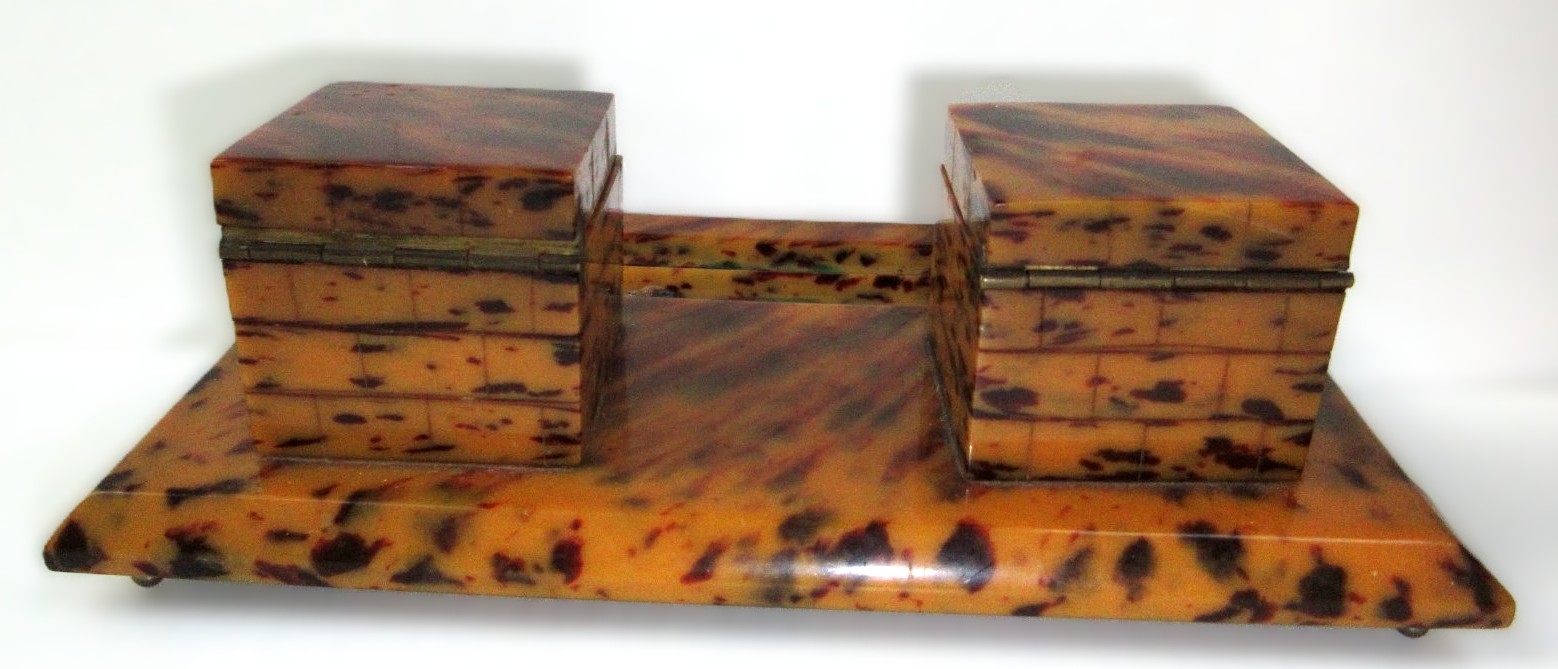
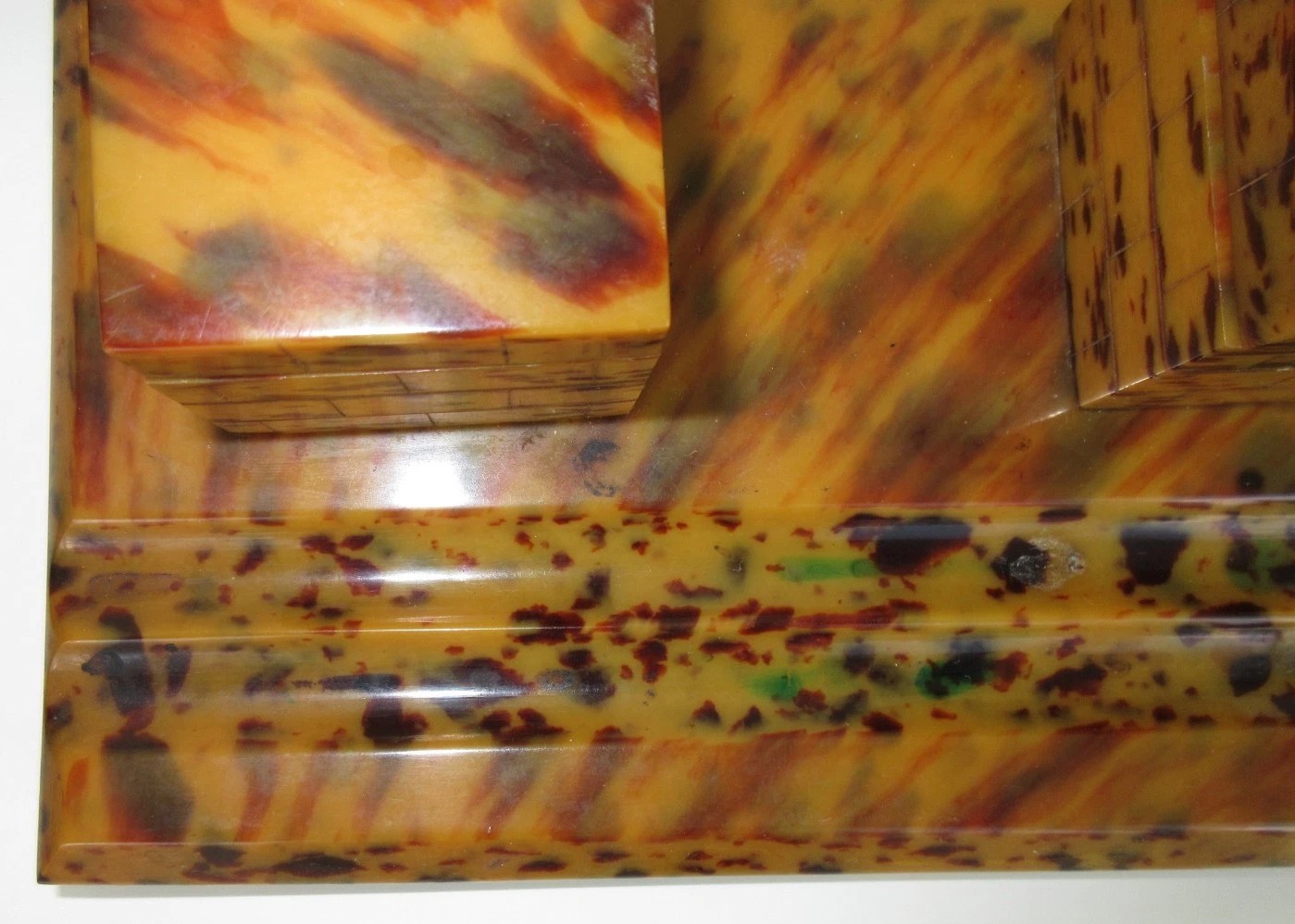
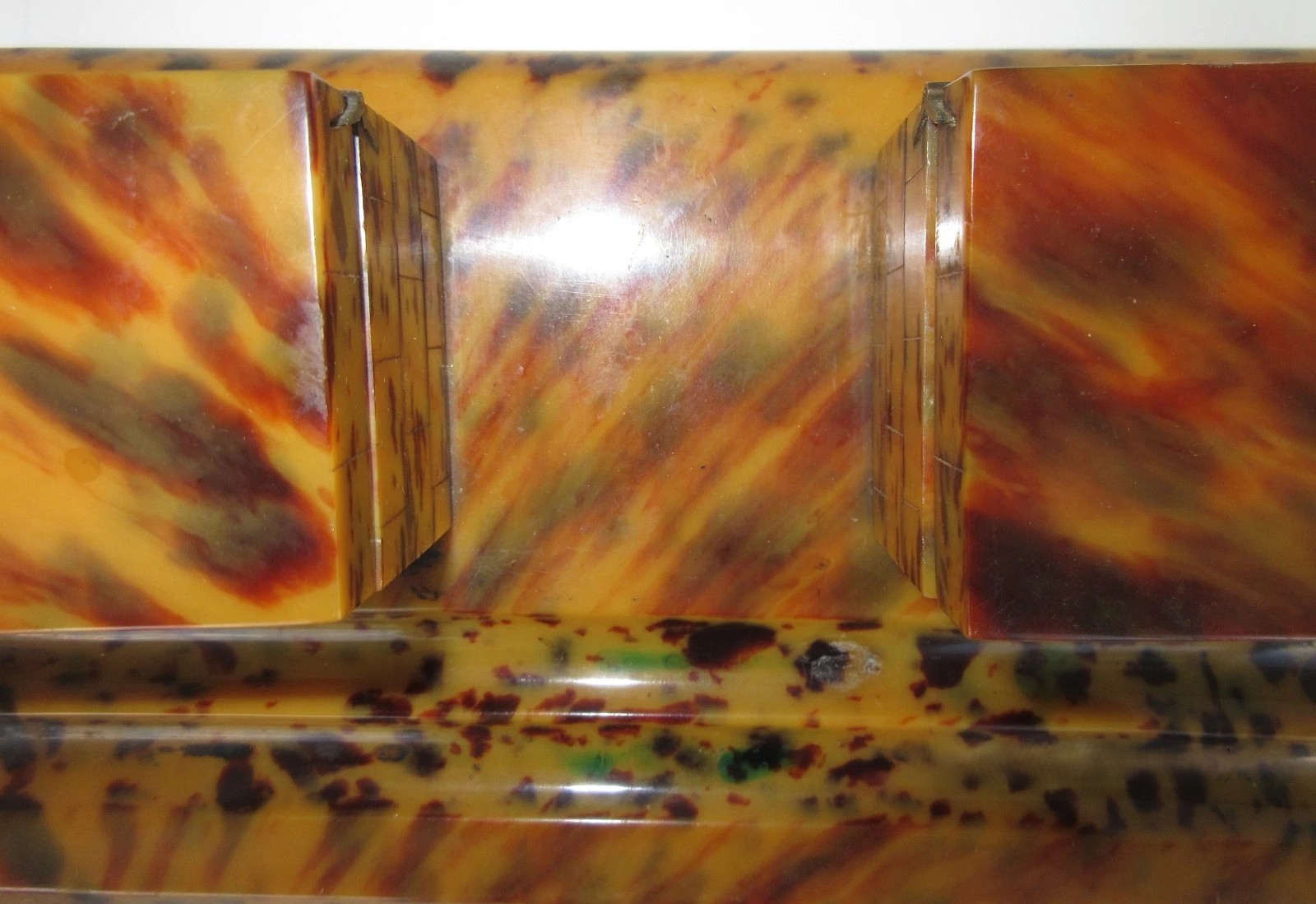
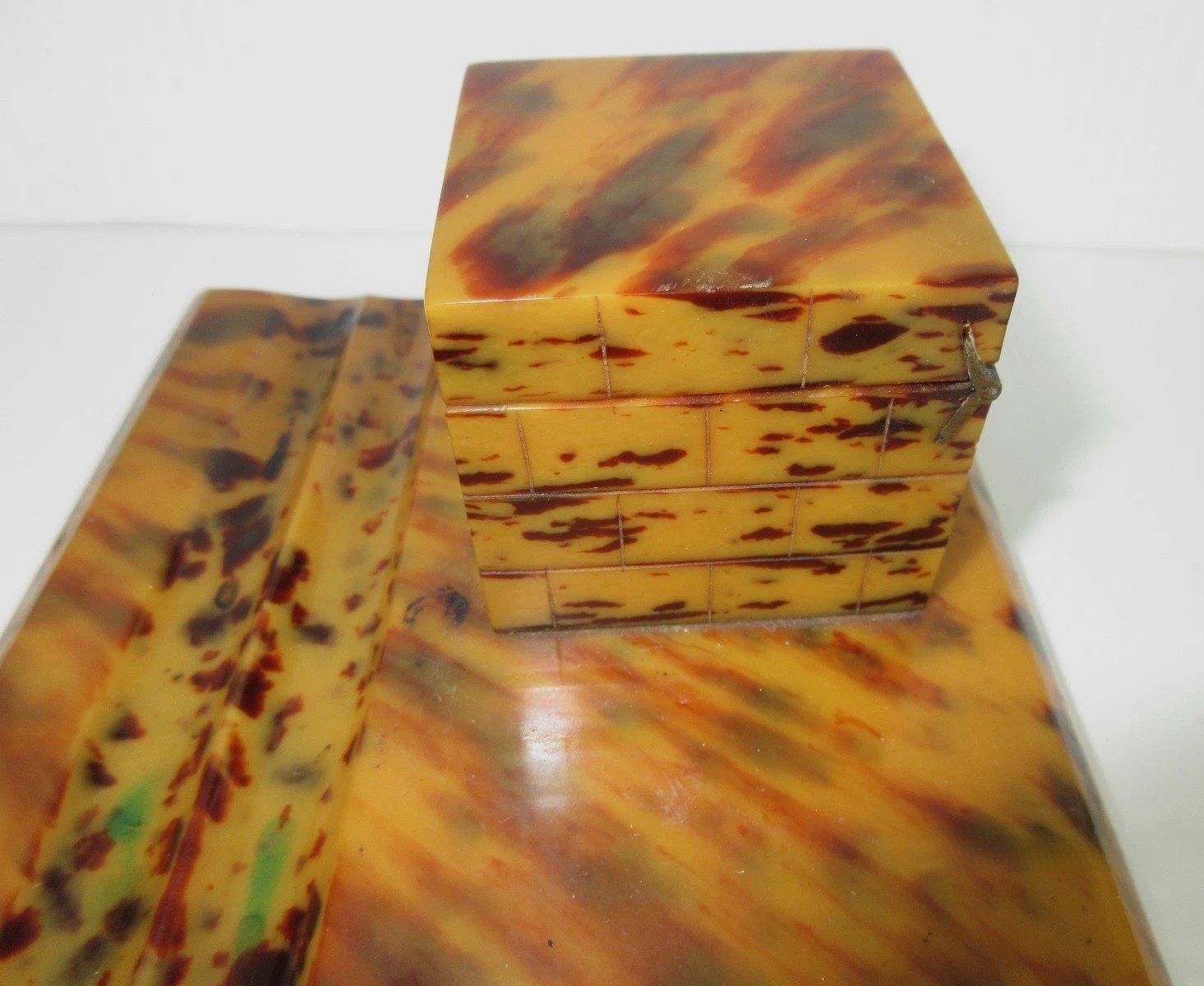
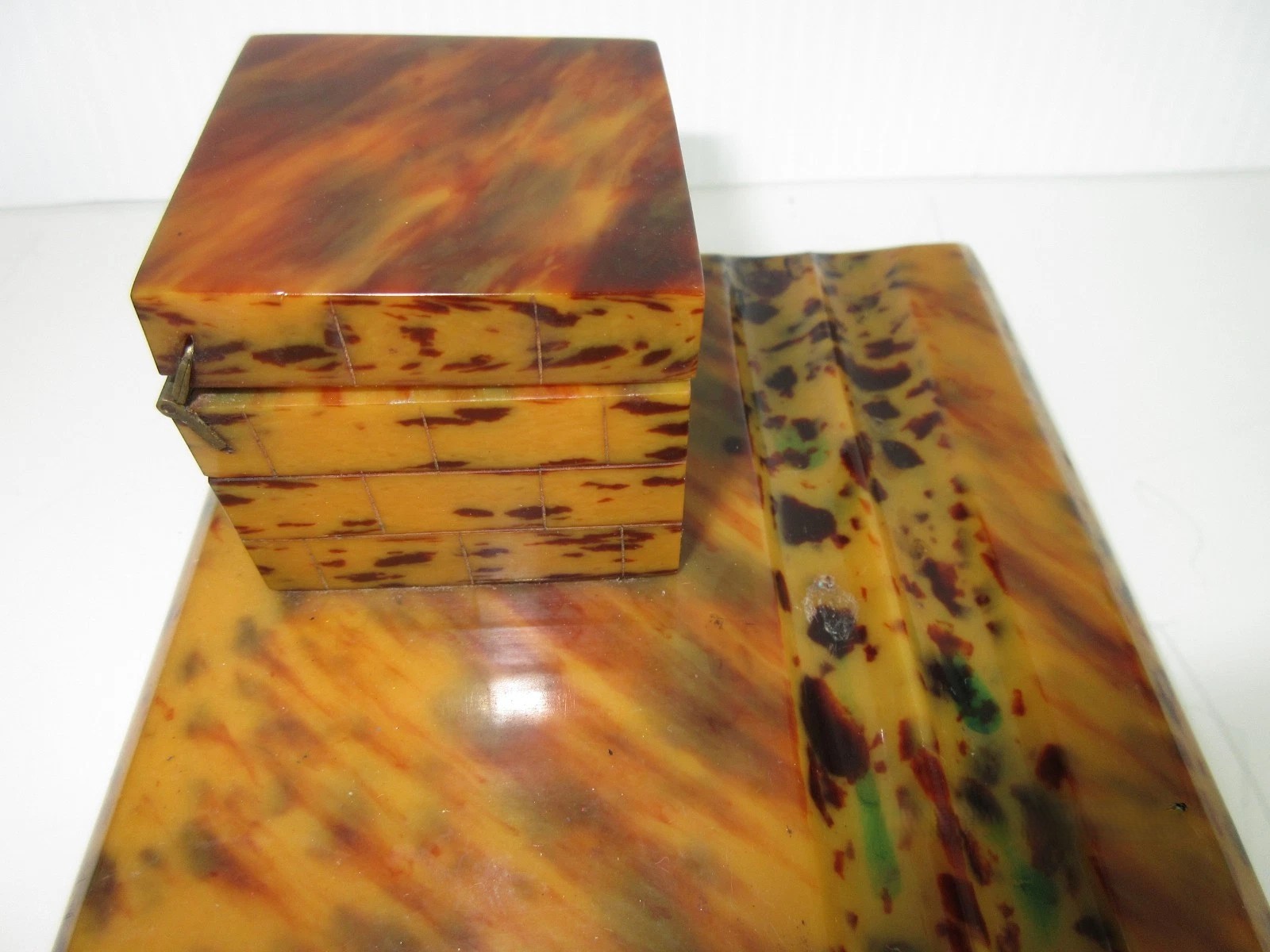
- Form & Structure: This is a rectangular, flat-topped double inkstand featuring two pen channels running along the front edge. The stand rests on four small, turned metal ball-and-stem feet secured from underneath by flat-head screws.
- Inkwells: Set toward the rear are two square, box-form inkwells. Each inkwell has hinged lids with brass piano hinges. Inside, circular wells are recessed to hold standard inserts (missing here).
- Material & Finish: The piece is made from a rich, mottled yellow, amber, and dark brown early plastic material engineered to imitate natural tortoiseshell.
- Decorative Details: The base features bold, diagonal “swirled” striping, while the outer walls of the square inkwell boxes are incised with a distinct staggered “brickwork” or masonry pattern.
Origin & Identification
Material
- Early Plastic Composition: Based on the overall translucency, rich swirls, and visible construction features (screws, hinges, internal lathe-turned circular wells), this item is made of an early synthetic polymer—most likely Celluloid (Cellulose Nitrate), crafted into a faux tortoiseshell aesthetic.
Who Made This?
- Maker: Most celluloid and early plastic desk accessories of this style were produced by desk set manufacturers or novelty plastics molders and fabricators (such as the Celluloid Manufacturing Company, DuPont Viscoloid, or European counterparts like Rheinische Gummi- und Celluloid-Fabrik).
- Markings: Pieces of this nature were rarely stamped directly into the early plastic base.
Where Was It Made?
- Location: Primary manufacturing hubs for high-end celluloid and early plastic novelty desk sets were located in Germany, France, the United Kingdom, and the United States.
When Was It Made?
- Period: Circa 1920s–1930s (Art Deco era).
- Context: The geometric square boxes combined with smooth, sweeping pen channels strongly reflect the design transition into the early Art Deco period, when celluloid was widely used to achieve luxury materials like tortoiseshell and horn at a fraction of the cost.
Sold for $36 in June 2026
Content disclaimer. The information posted is the owner’s best knowledge and may not have been vetted by the SOIC. We welcome comments, corrections, and additions, working to make our website information comprehensive and accurate.
Join the Society of Inkwell Collectors (SOIC) – it’s free!
Founded in 1981 as a non-profit organization,
we are documenting inkwells (and accessories).
We’re here to help and inform!