

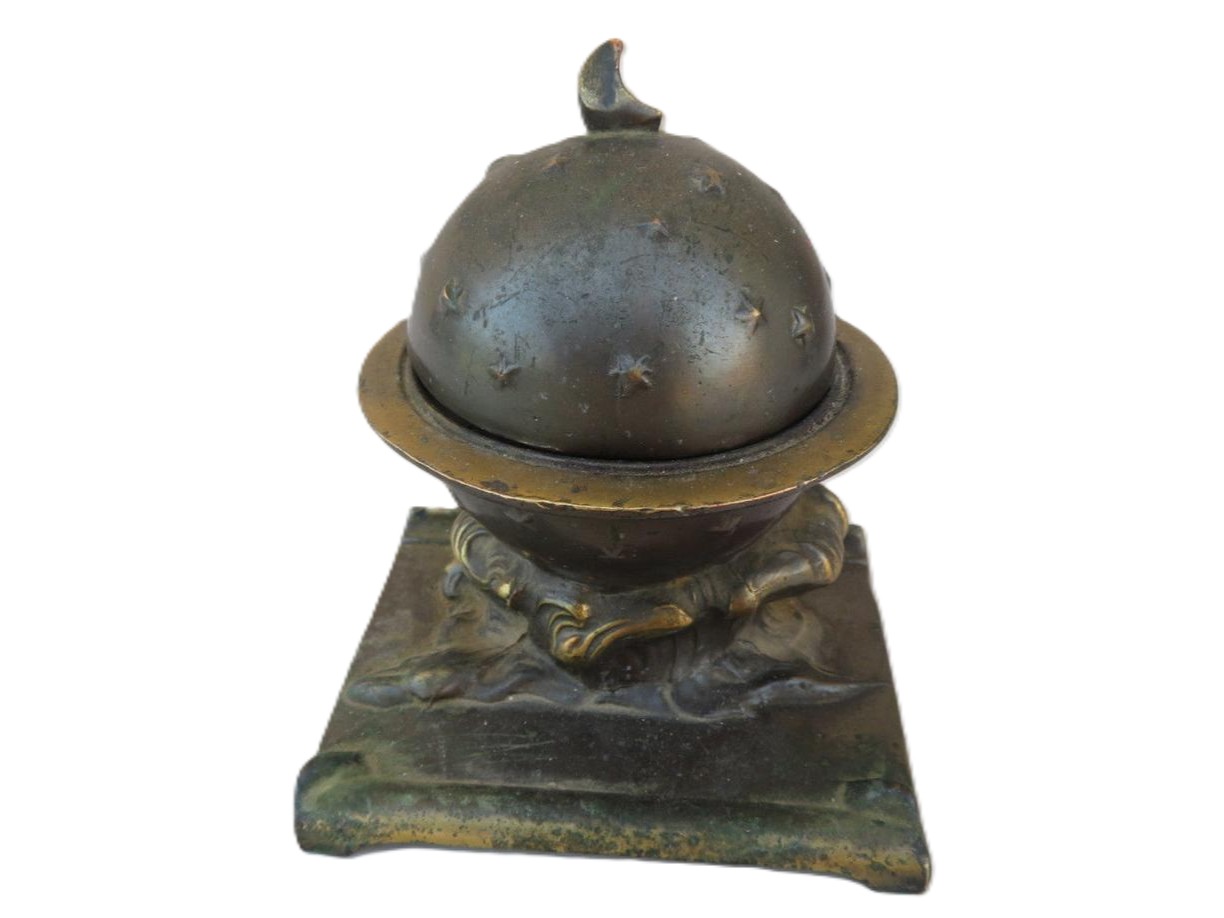
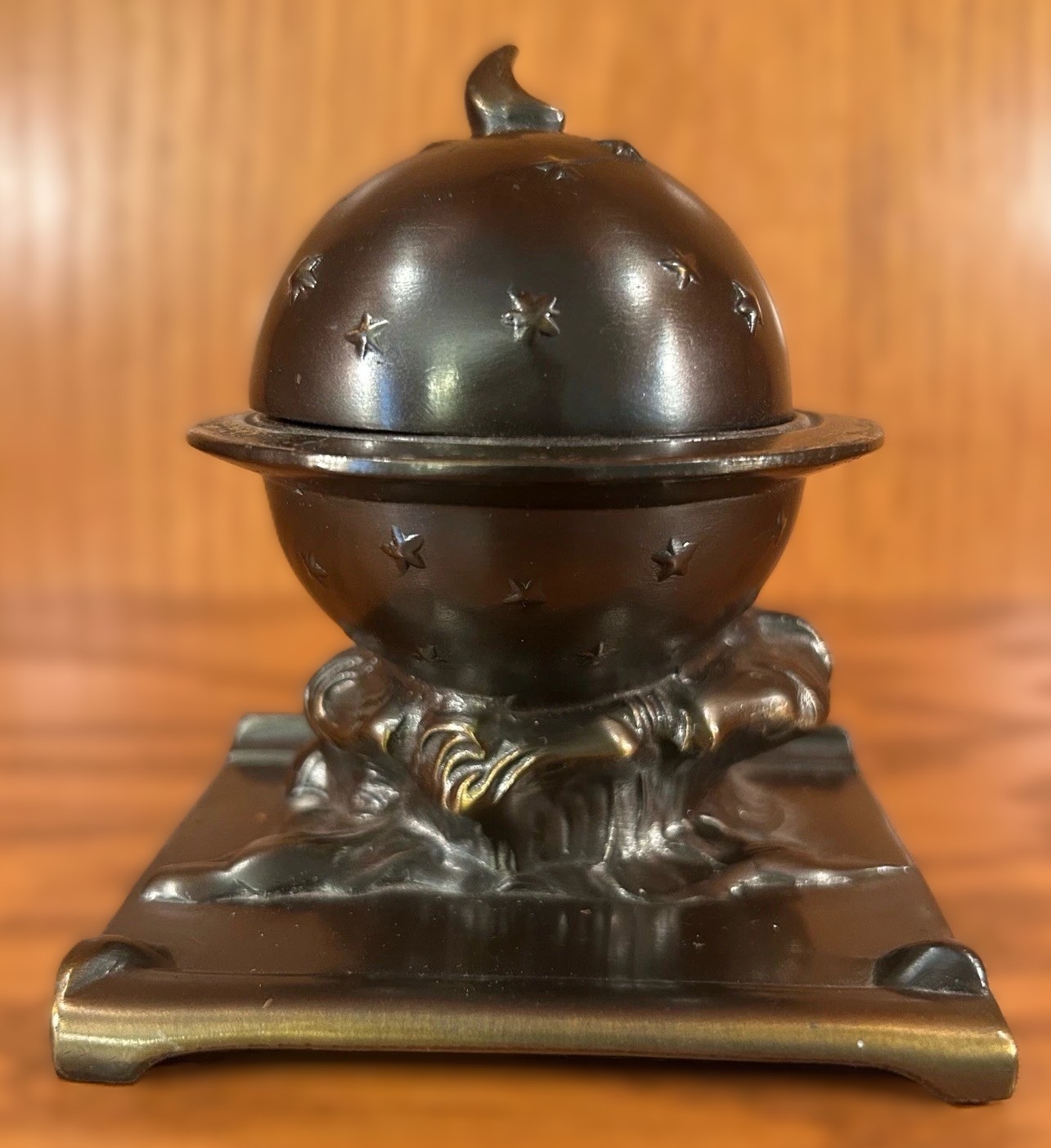


Celestial-Themed Inkwell
| Categories | Figural - Inanimate |
| Material | Bronze finish |
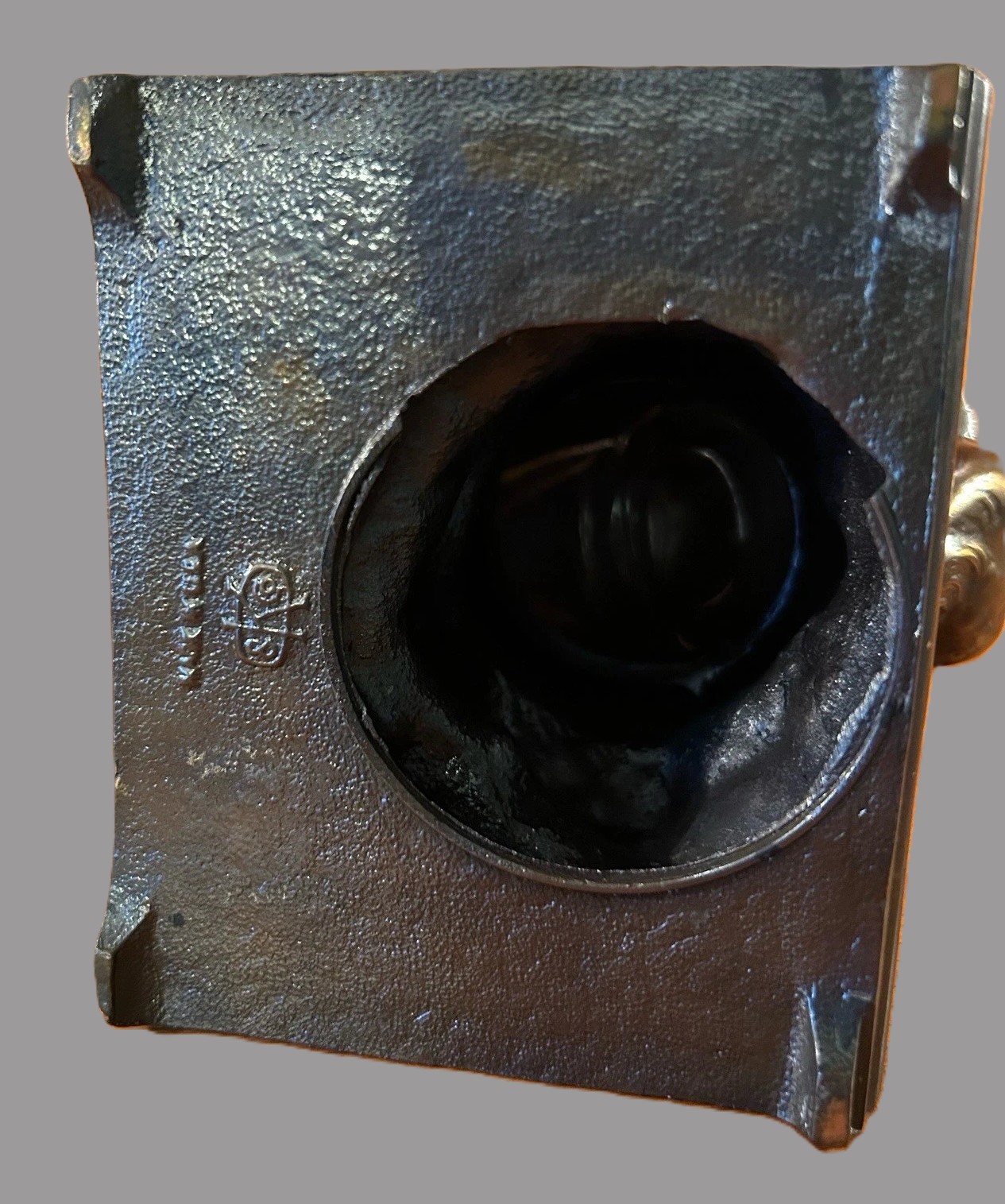
| Markings | See Narrative |
| Manufacturer | K. & O. Novelties Company |
| Origin | United States |
| Date or Era | circa 1915 |
| Measuring | 3 ¼” x 2 ¾” x 3 ½” high |
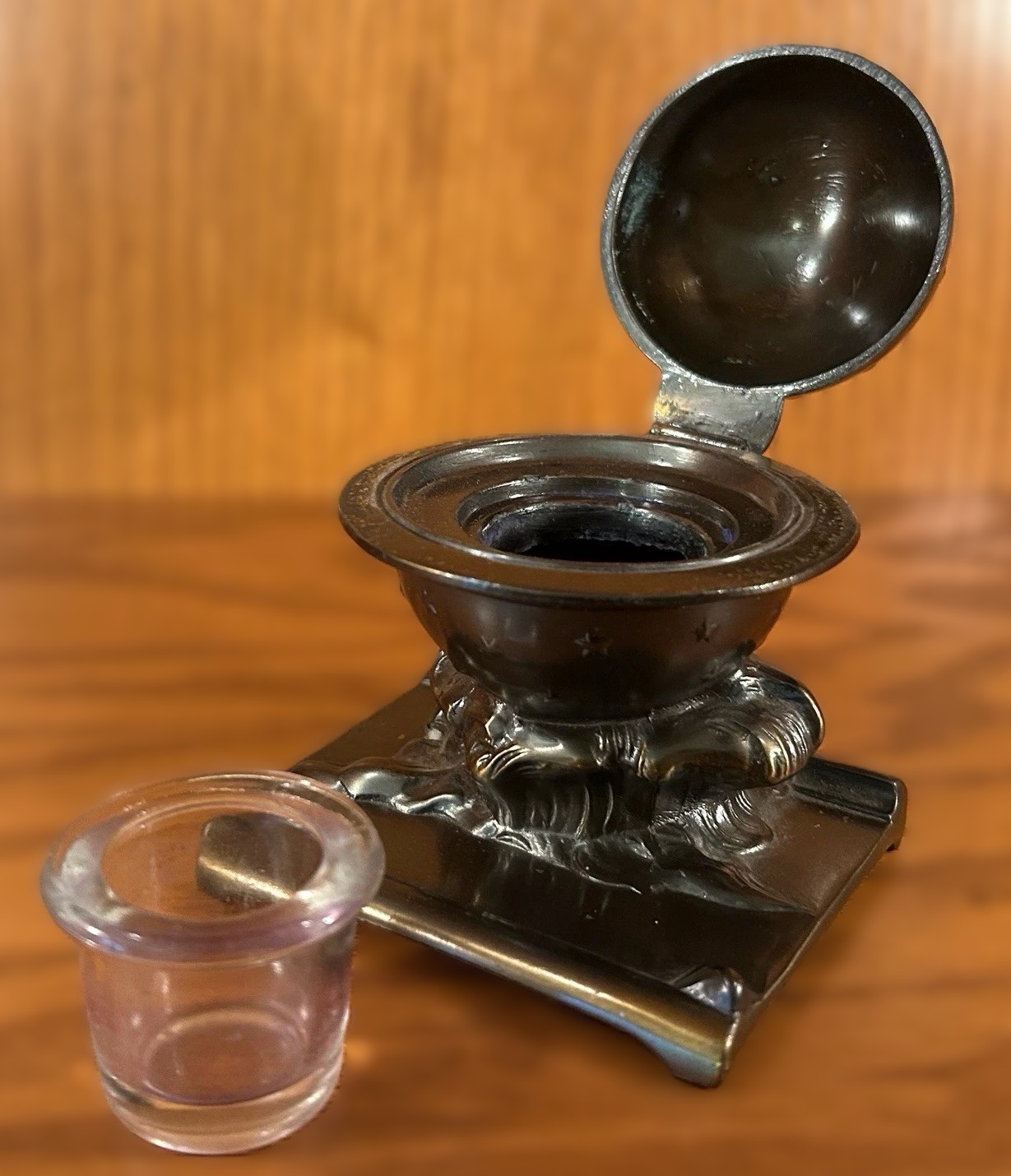
This inkwell is an example of celestial-themed metalware from the early 20th century, produced by the Kronheim & Oldenbusch (K&O) Company.
Description and Symbolic Elements
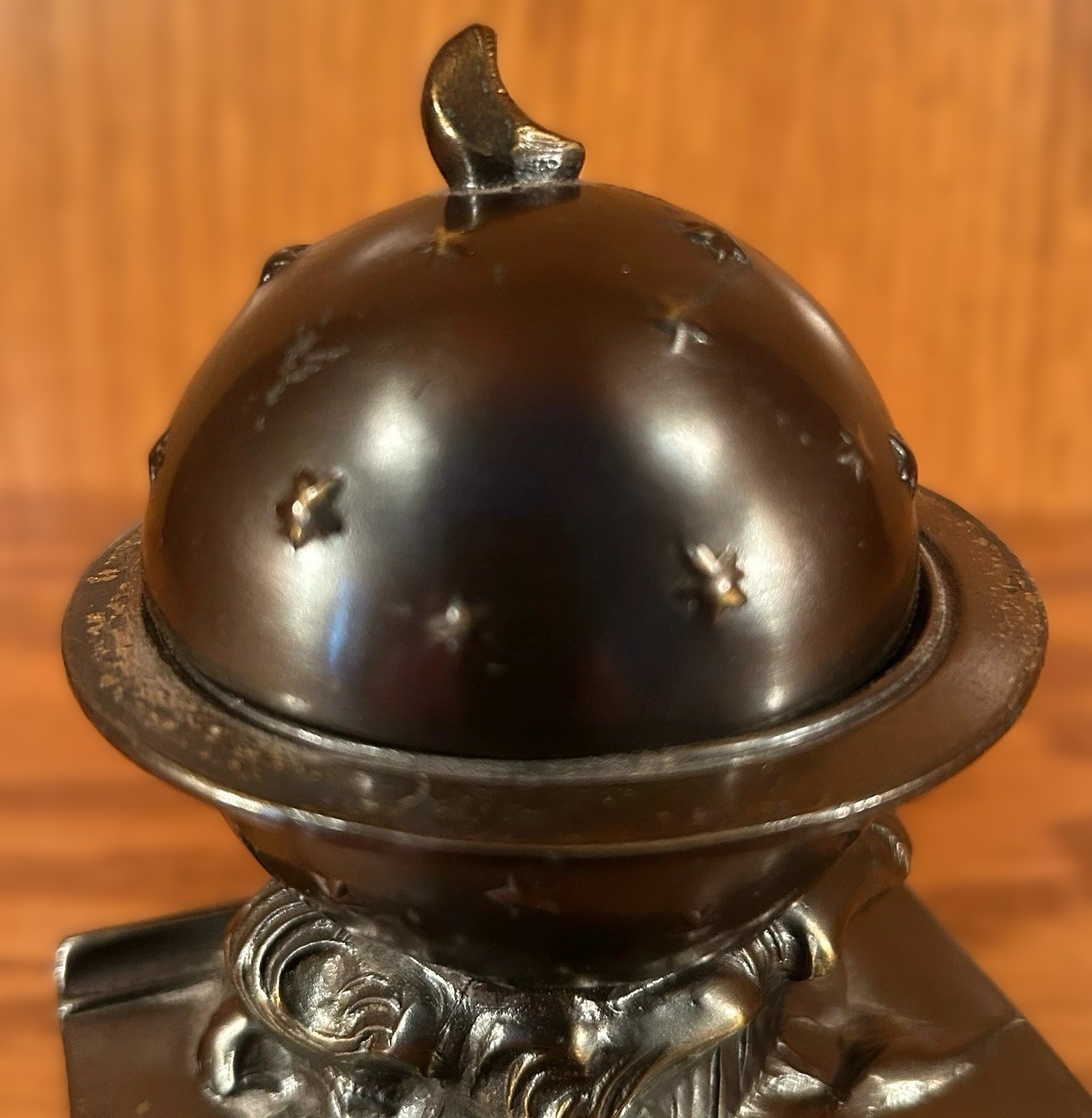
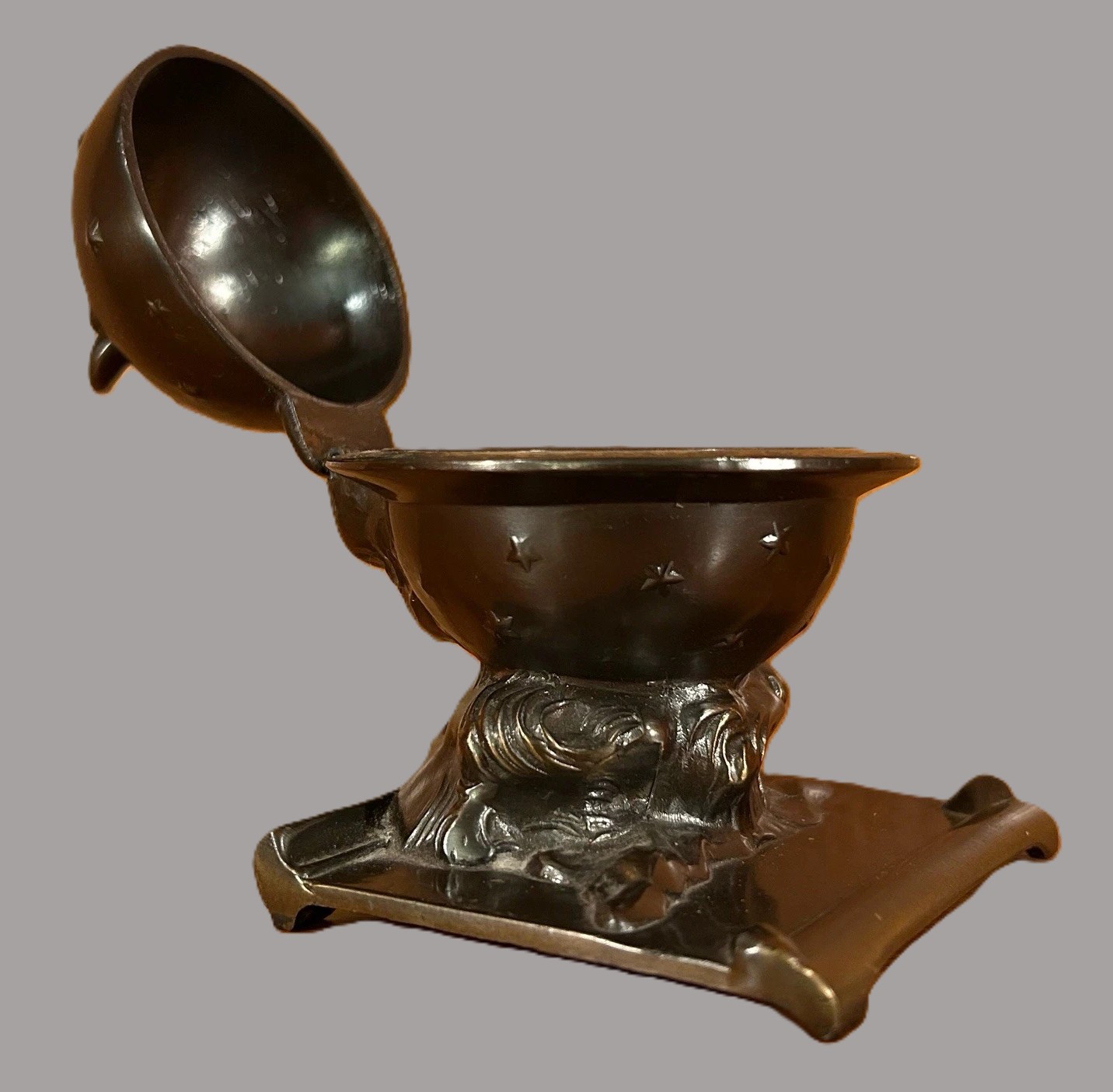
- The Globe: The celestial sphere could possibly represent Saturn. The horizontal flange around the center of the globe could be viewed as a ring, which would identify the globe as Saturn. Whether Saturn or a generic celestial sphere, in the context of early 1900s “astrology” or “celestial” novelties, this represents the heavens or the cosmos.
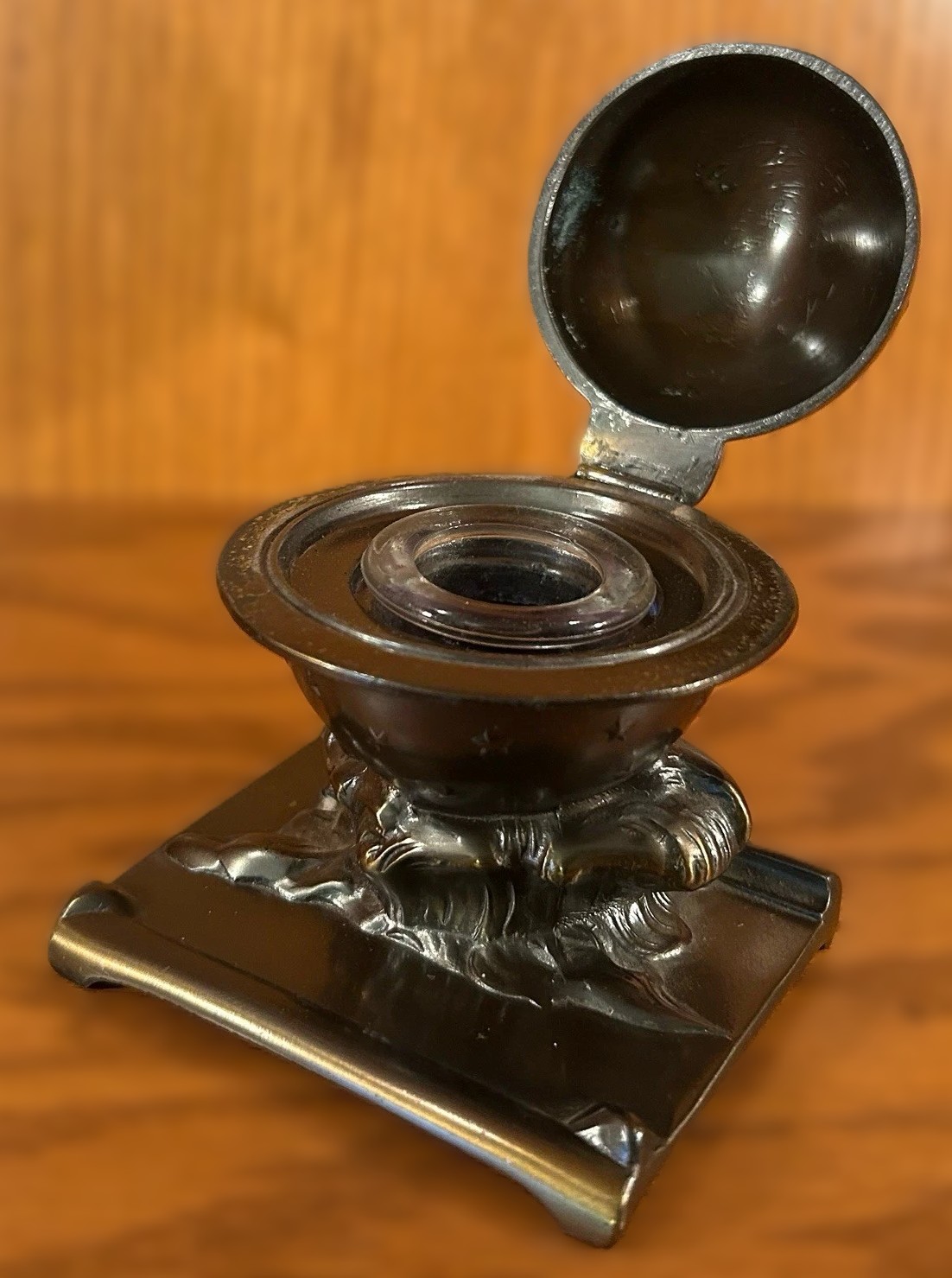
- The Stars and Moon: The raised stars across the surface and the crescent moon finial reinforce the nocturnal, astrological theme. The crescent moon serves as a functional handle to lift the hinged lid.
- The Sculptural Base: The base features high-relief, stylized billowing clouds. In celestial iconography, the heavens are often depicted resting upon or emerging from a bank of clouds, signifying that the globe exists in a space “above” the earthly realm.
- The Finish: This is a bronzed lead/white metal. K&O was famous for using “gray metal” or “spelter” (a zinc alloy) and applying a high-quality bronze or copper electroplated finish to give it the look of solid cast bronze at a more accessible price point.
Manufacturer: Kronheim & Oldenbusch (K&O)
- Company History: Founded in 1899 by Joseph Kronheimer and Ernest Oldenbusch in Brooklyn, New York. They were one of the premier American manufacturers of metal novelties until the company closed in 1939.
Catalog Listings and Advertising
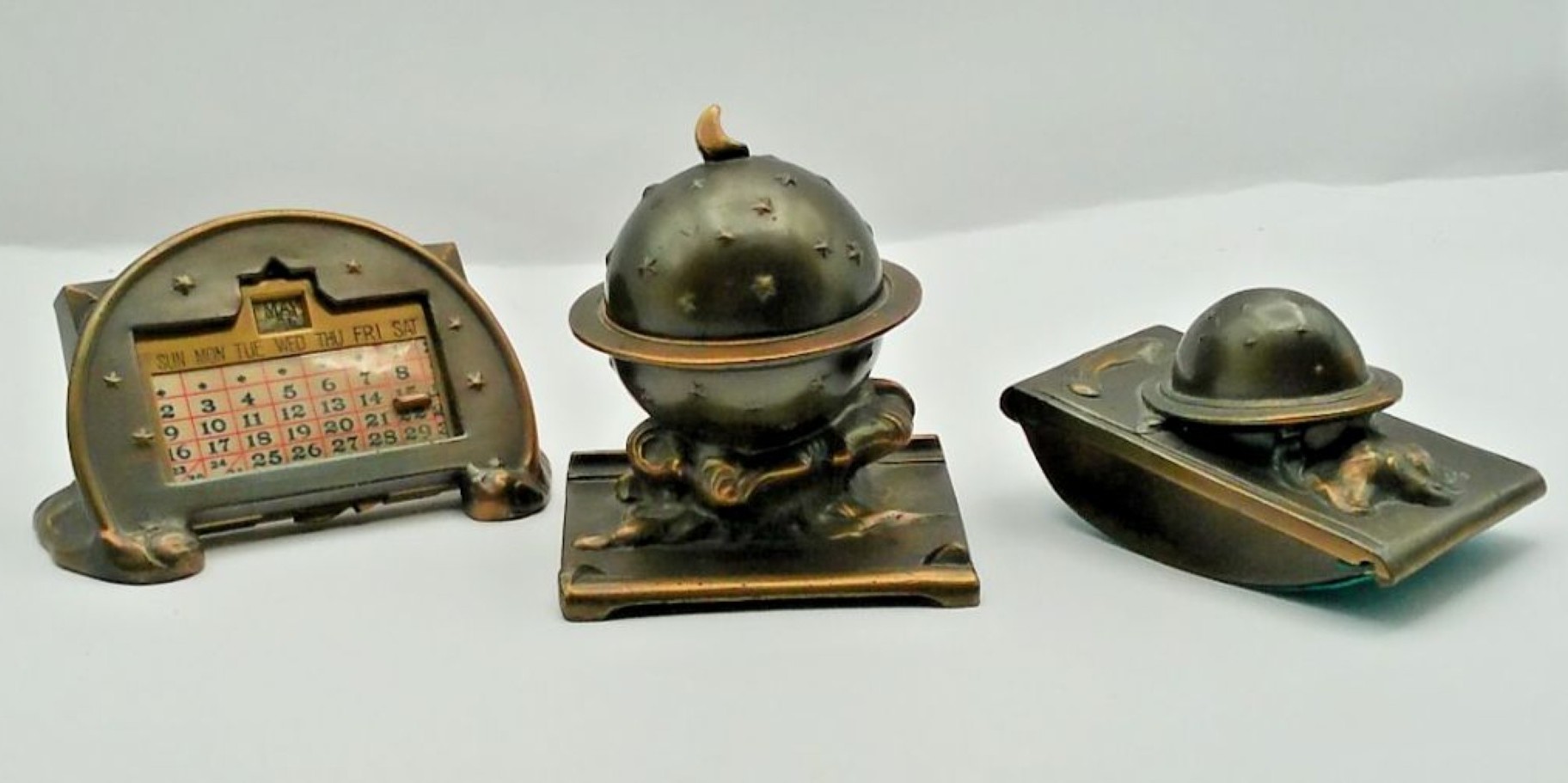
- Terminology: While “Astrology” was a popular cultural fascination at the time, K&O’s professional trade catalogs generally used the word “Celestial” to describe this motif. It was often sold not just as a standalone inkwell, but as part of a multi-piece “Celestial Desk Set” that included a matching pen tray, blotter, and stamp box, all featuring the same star-studded globe and cloud-like base.
Identifying Marks and Numbers
- The text near the K&O mark is “MADE IN U.S.A.”
- The Symbol: The mark itself—K and O flanking a crown or a shield—was the company’s signature branding from their Brooklyn, New York, factory.
Production and Style
- Estimated Date: This inkstand was likely produced between 1912 and 1920. The style blends the organic, flowing forms of late Art Nouveau (seen in the cloud-like waves of the base) with the more structured, geometric themes that heralded the beginning of the Art Deco era.
- The Base Design: The sculptural base is indeed intended to represent billowing clouds. In the artistic language of the period, placing a star-covered sphere atop a bed of clouds was a literal representation of the “Heavens” or the “Celestial Sphere” resting above the earth.
Because these were made of white metal (spelter) with a “bronze” or “antique” electroplated finish, they were high-style luxury items for the average American home, bringing the mysteries of the cosmos to the everyday writing desk.
Sold for $100 in January 2026
Content disclaimer. The information posted is the owner’s best knowledge and may not have been vetted by the SOIC. We welcome comments, corrections, and additions, working to make our website information comprehensive and accurate.
Join the Society of Inkwell Collectors (SOIC) – it’s free!
Founded in 1981 as a non-profit organization,
we are documenting inkwells (and accessories).
We’re here to help and inform!