

Inkipedia
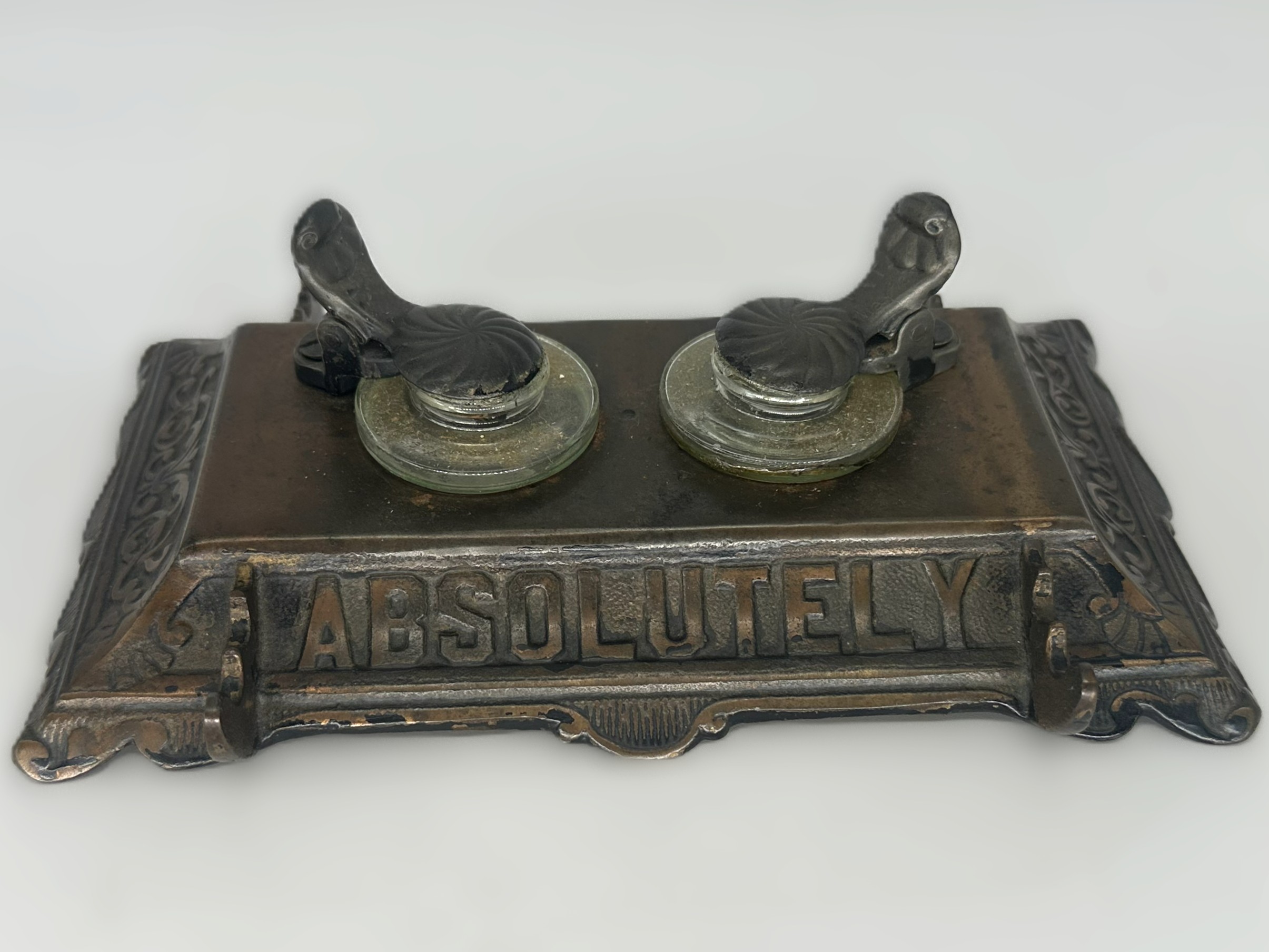
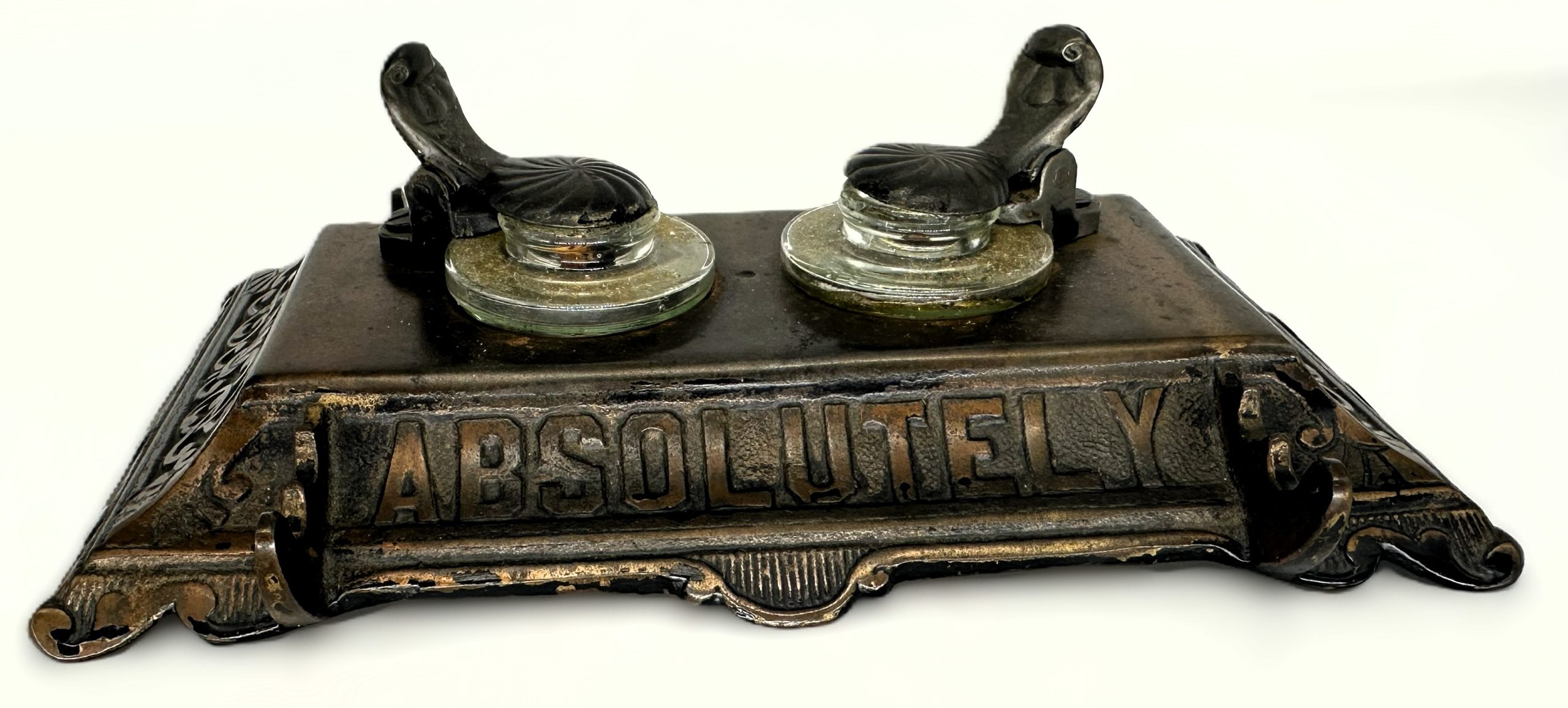
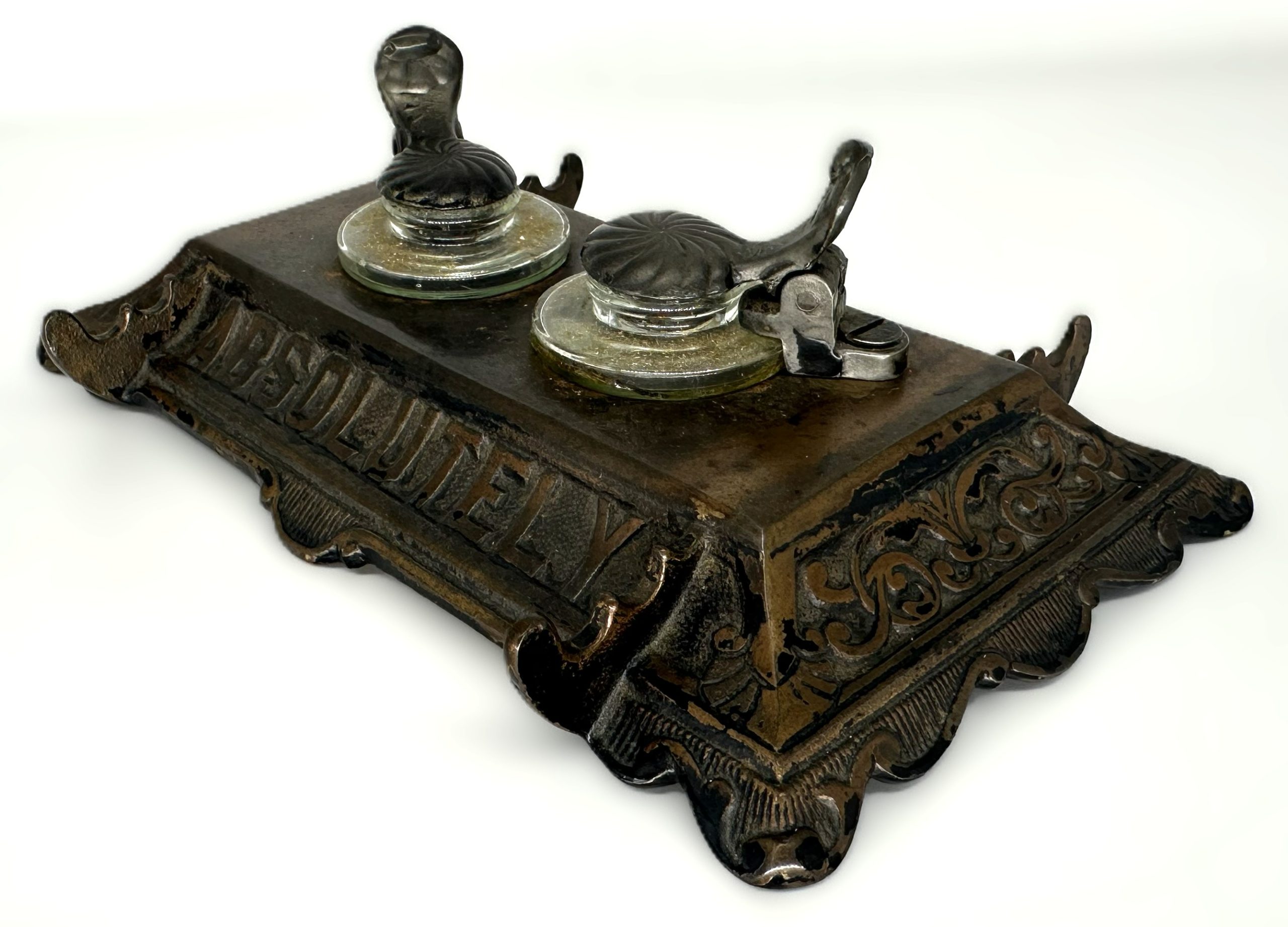
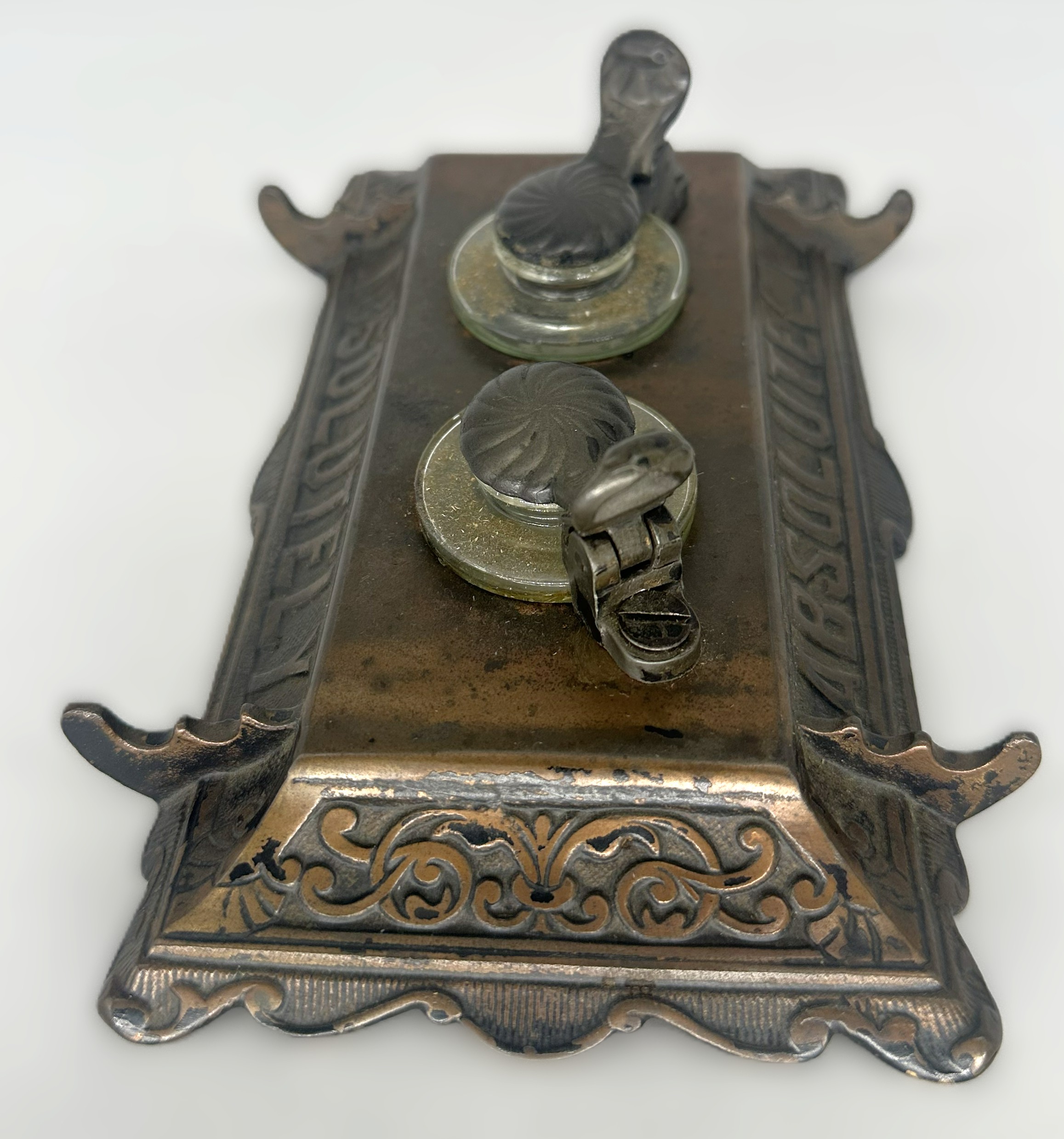
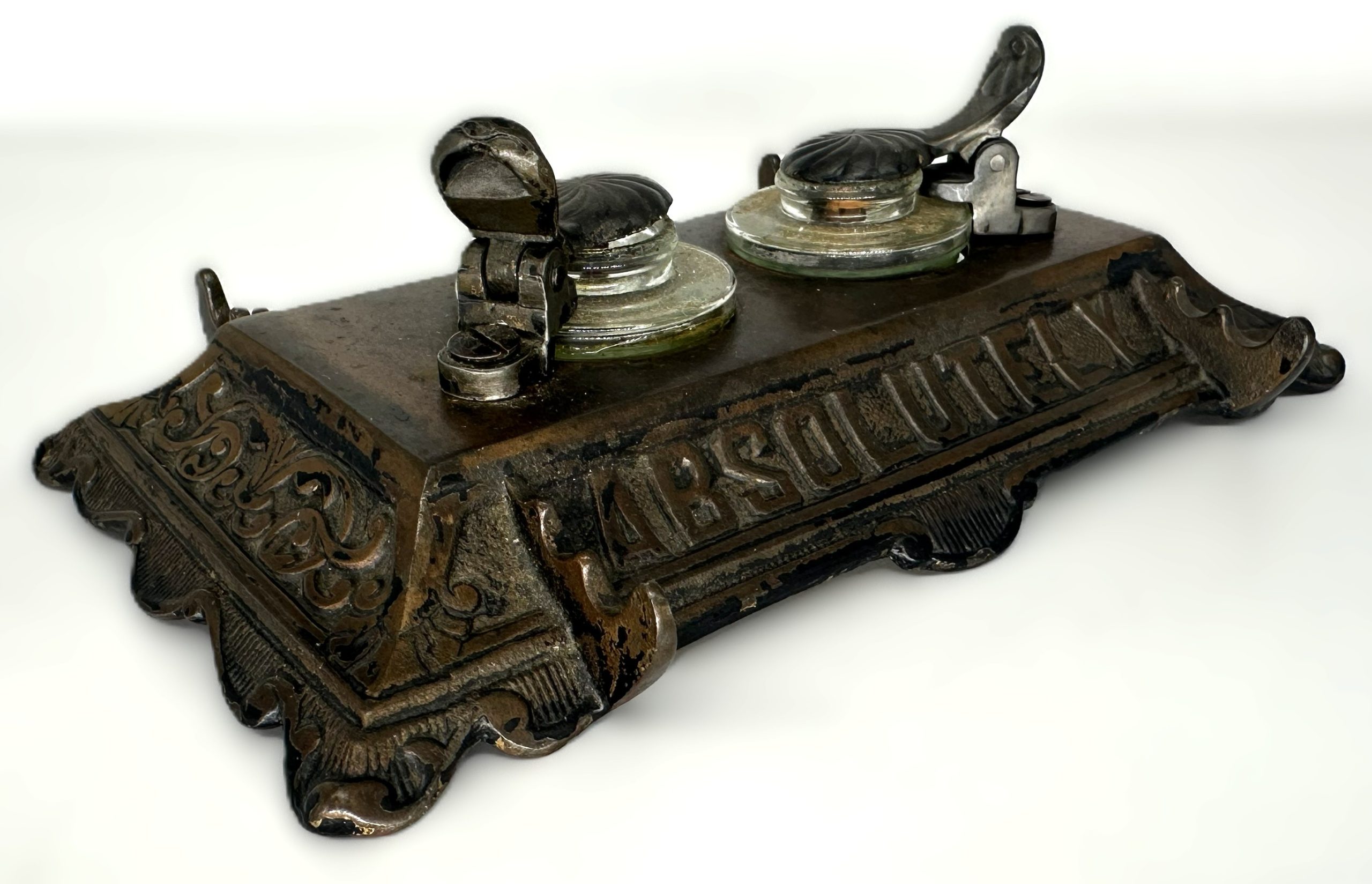
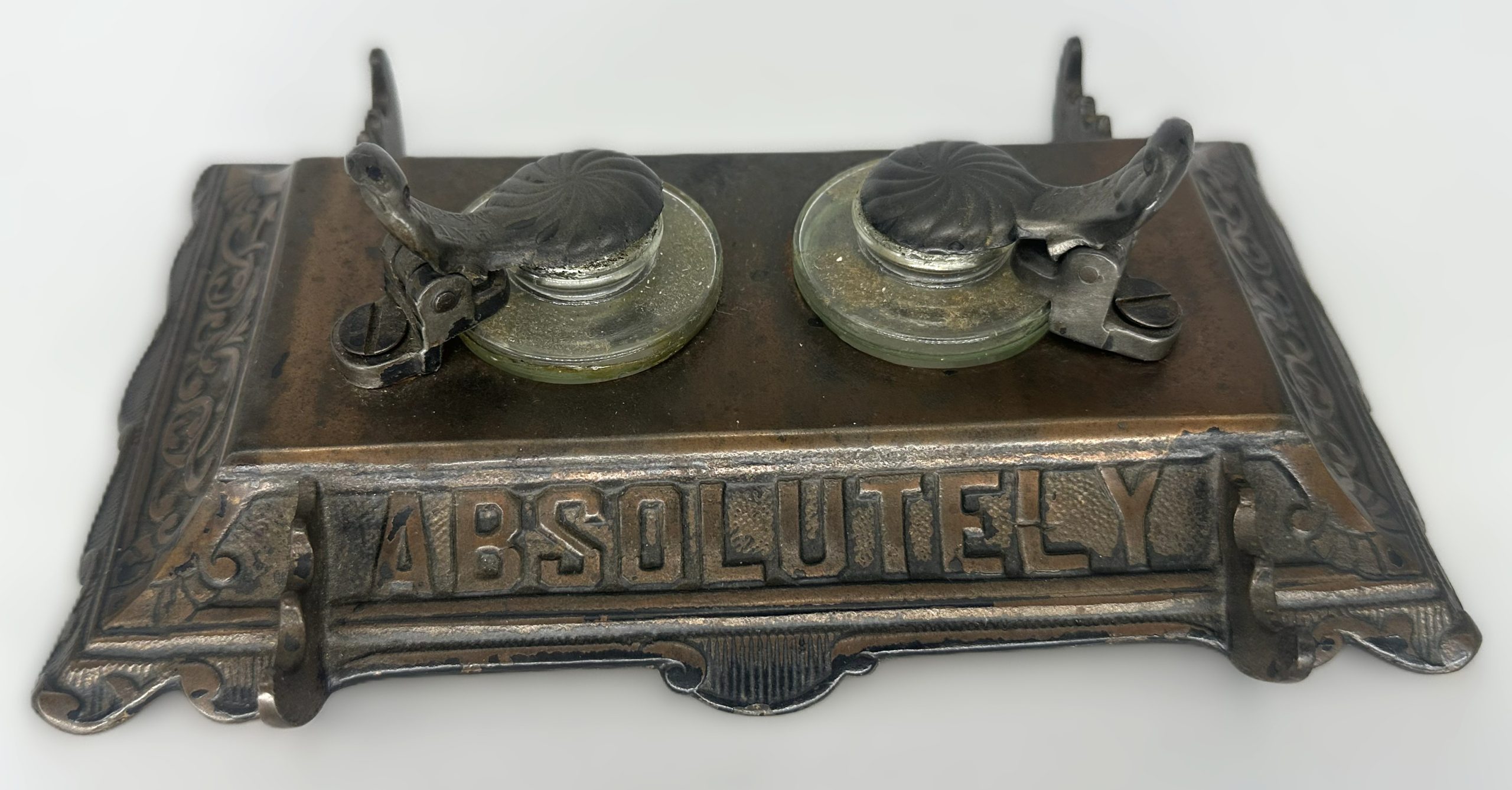
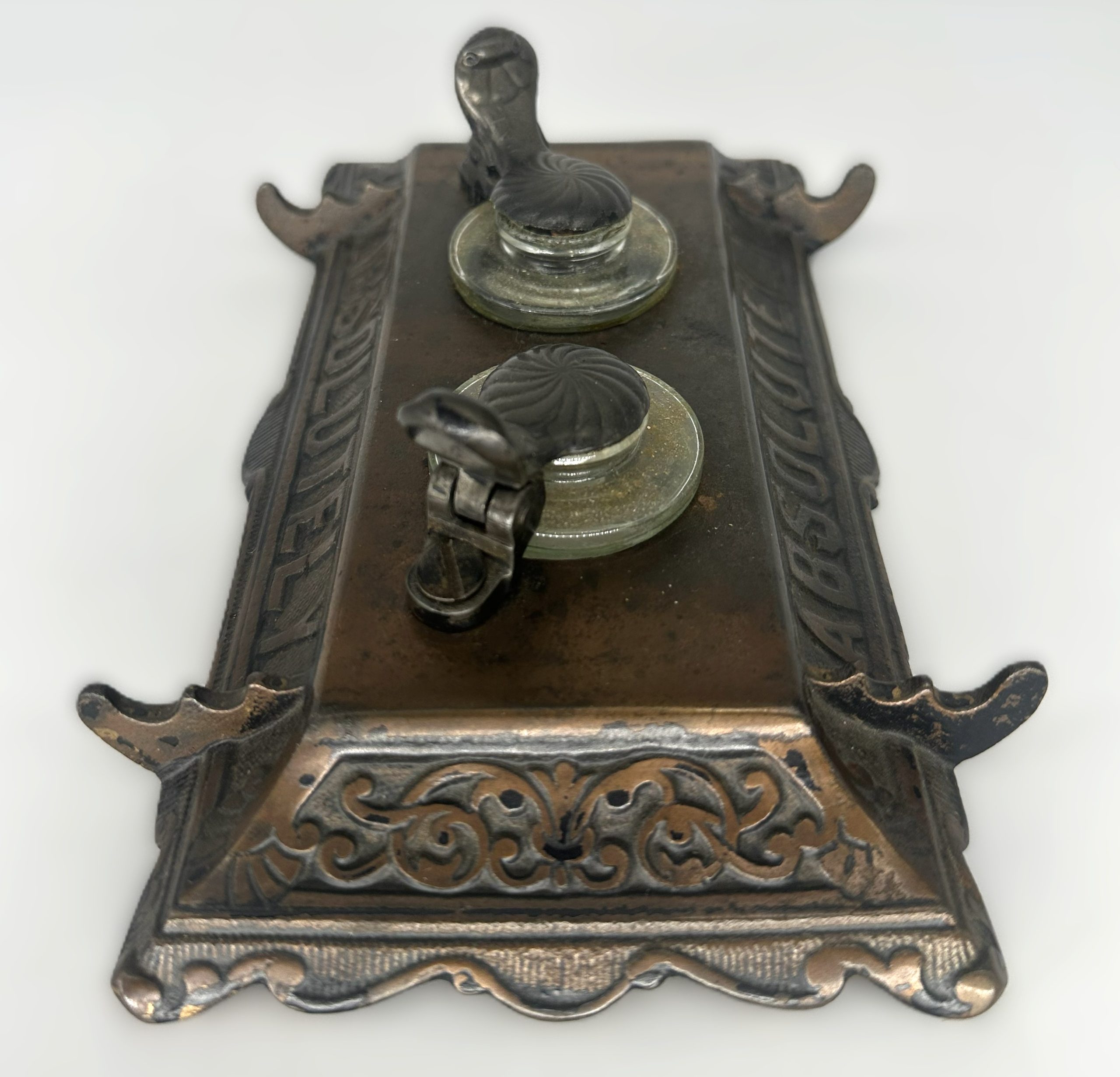
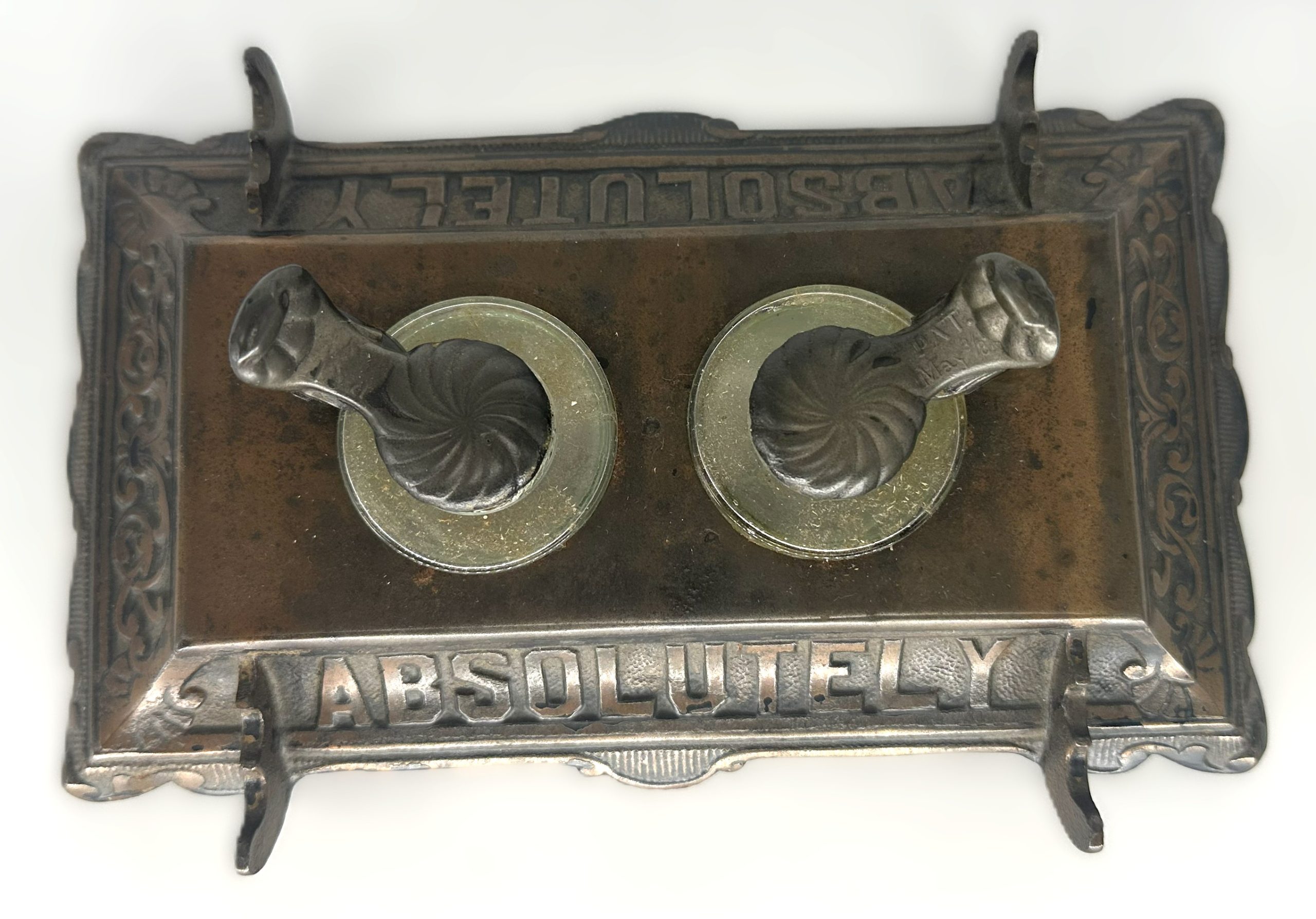
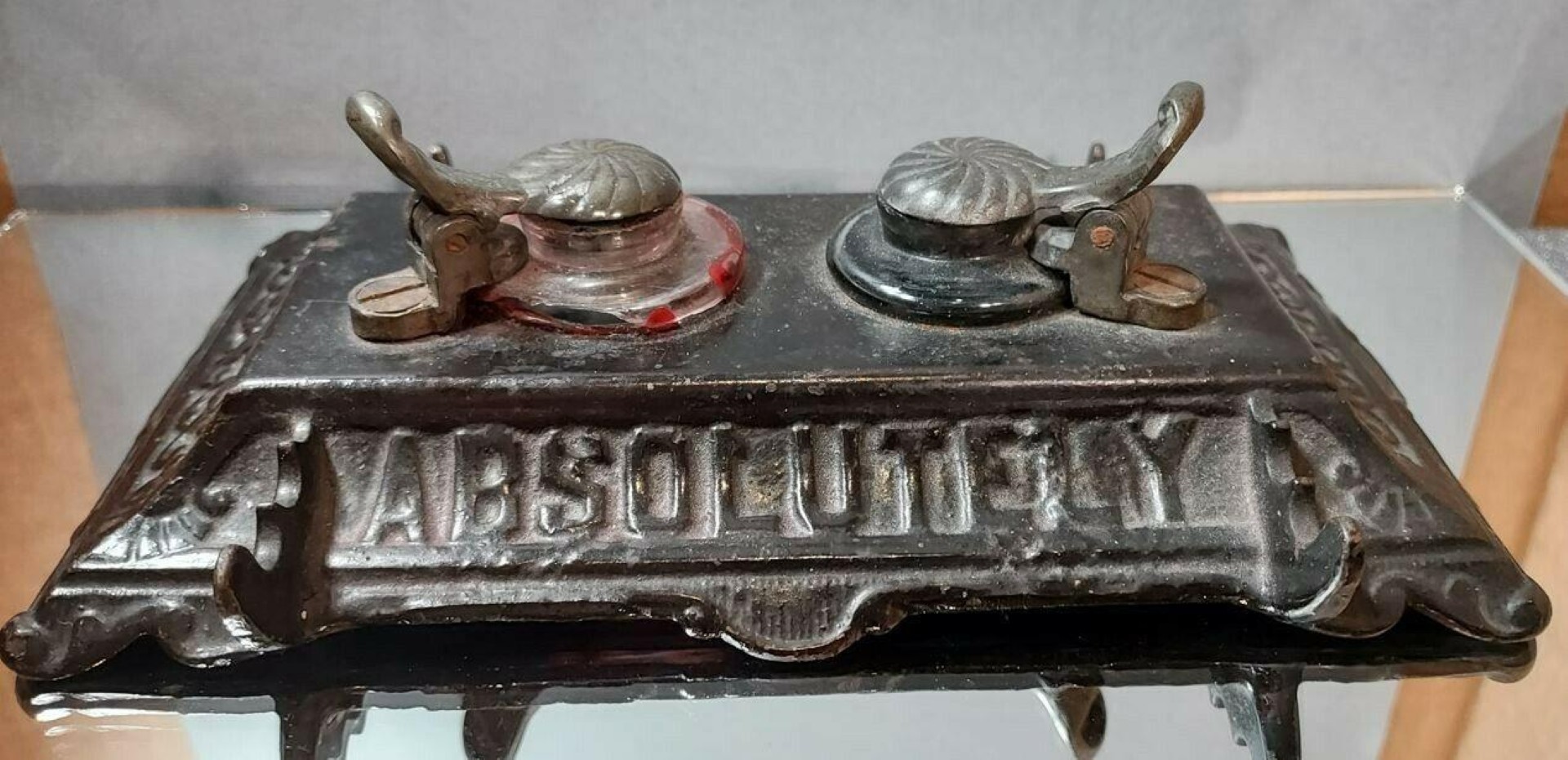
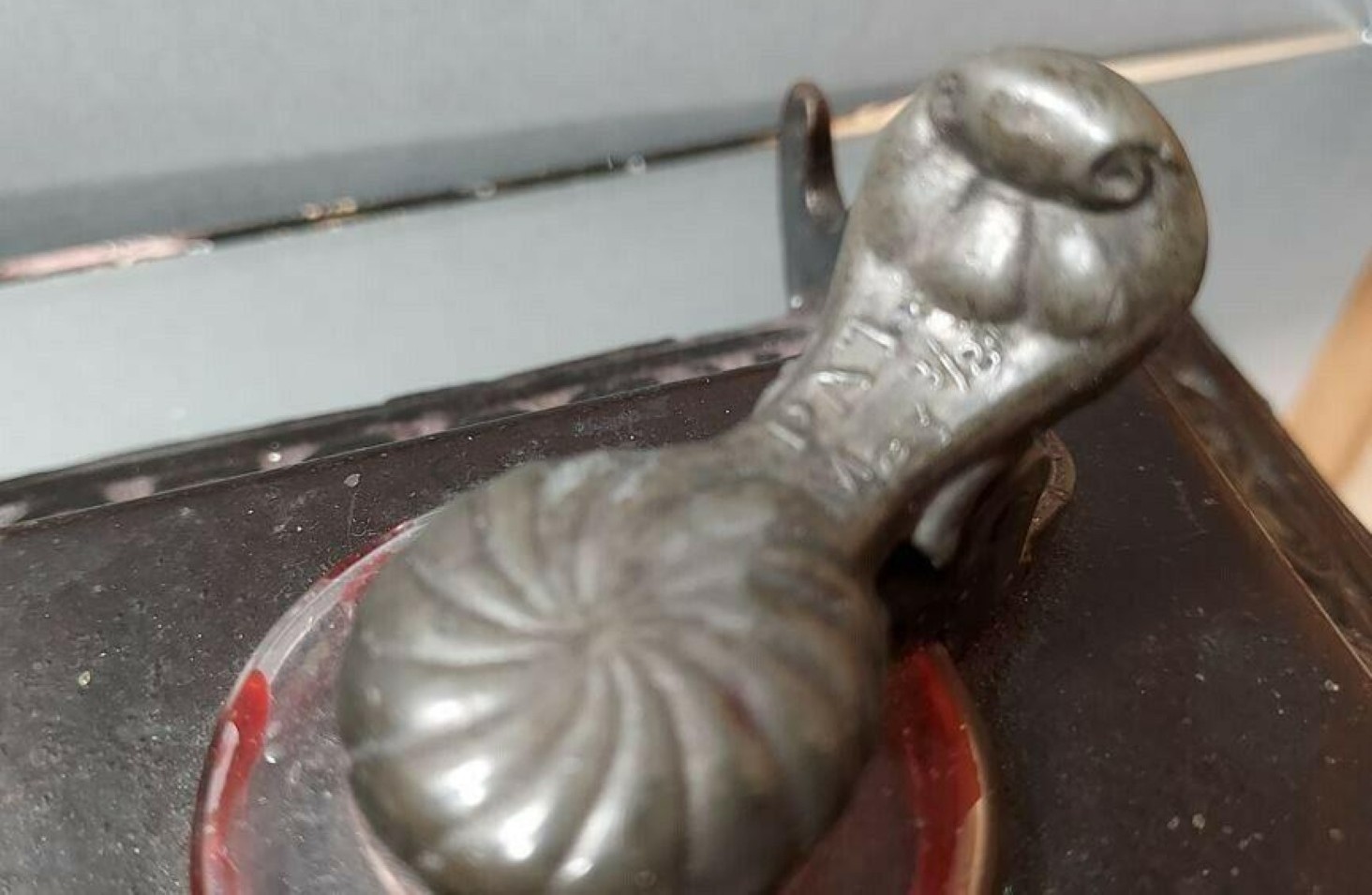
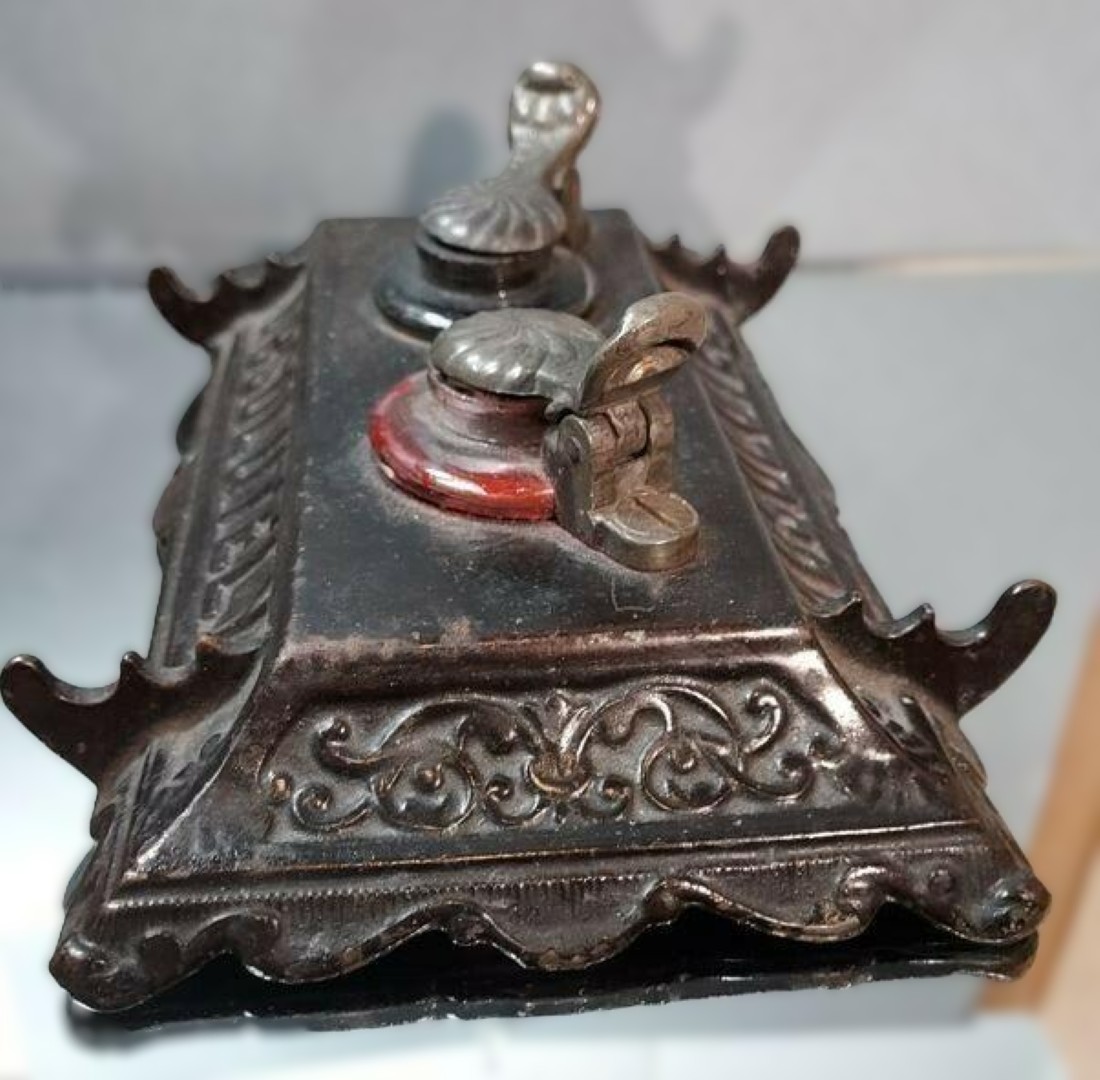
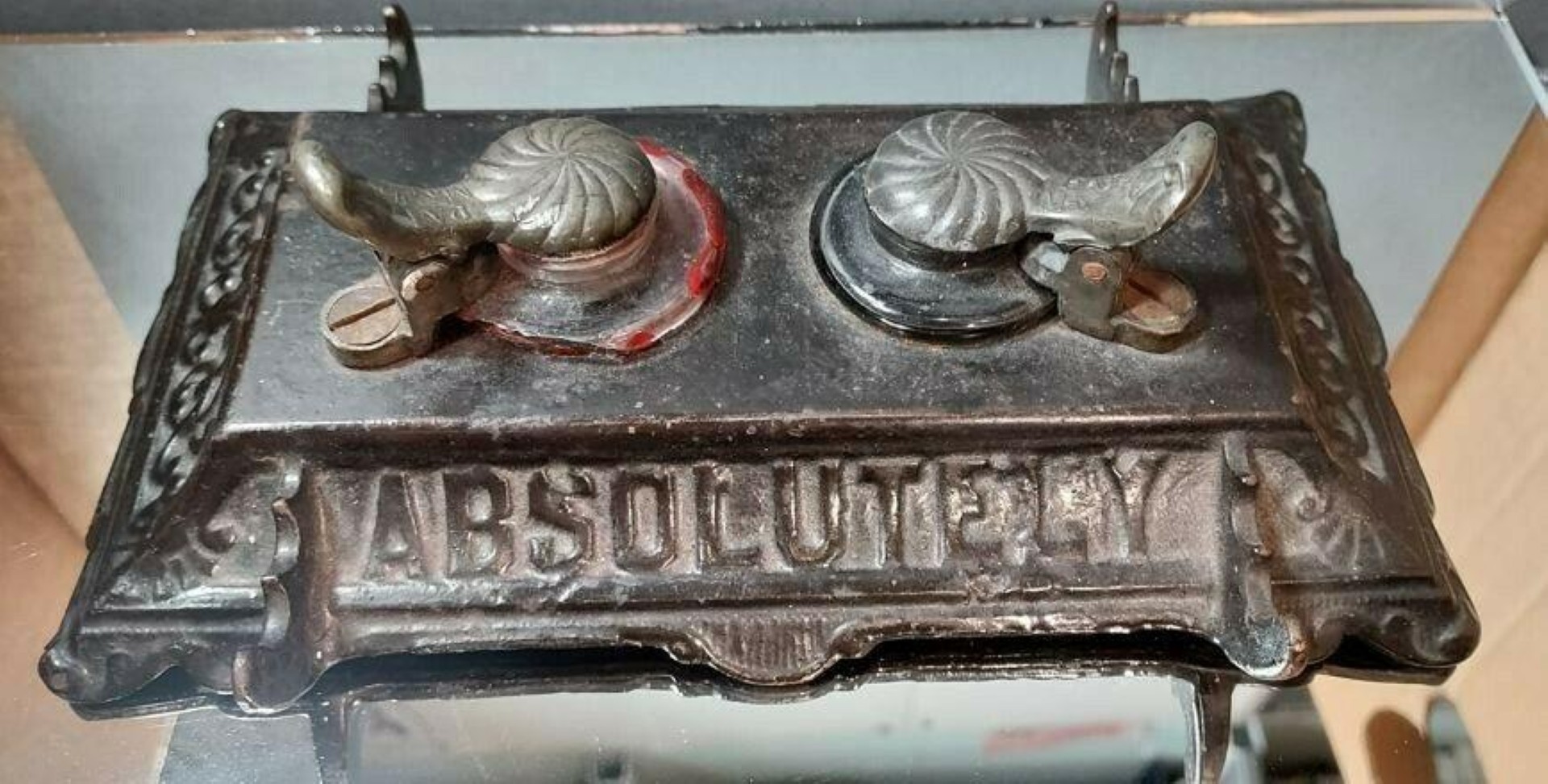
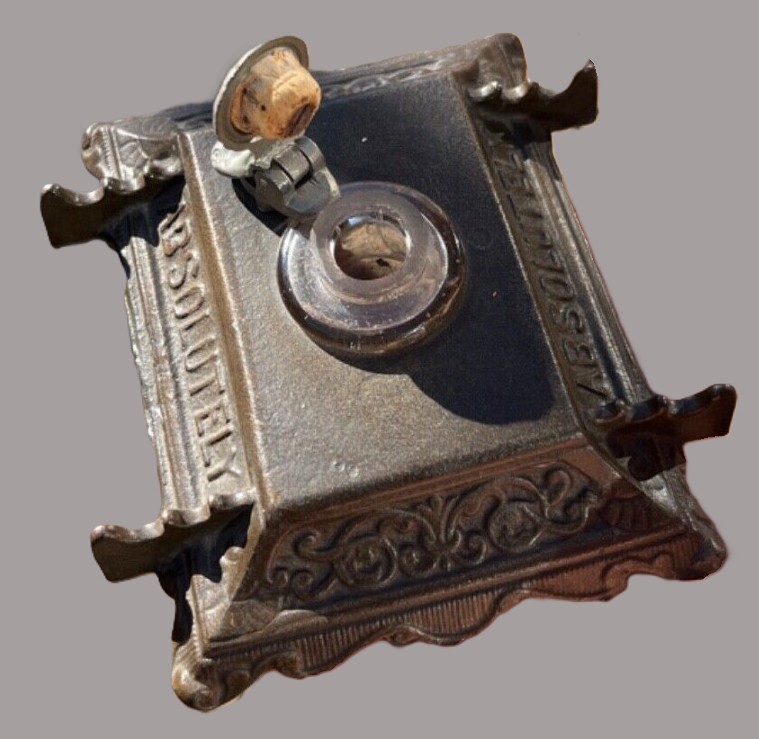
Cast-Iron Double Inkstand with “ABSOLUTELY” Badging
| Categories | Cast Iron, Mechanical - Levered or Rotating Lids |
| Material | Cast iron, Glass |
| Markings | See Narrative |
| Origin | United States |
| Date or Era | circa 1887 |
| Measuring | 8” x 4 ½” x 3” high |
| Patent | Patent No. 362,154 – Patented May 3, 1887 |
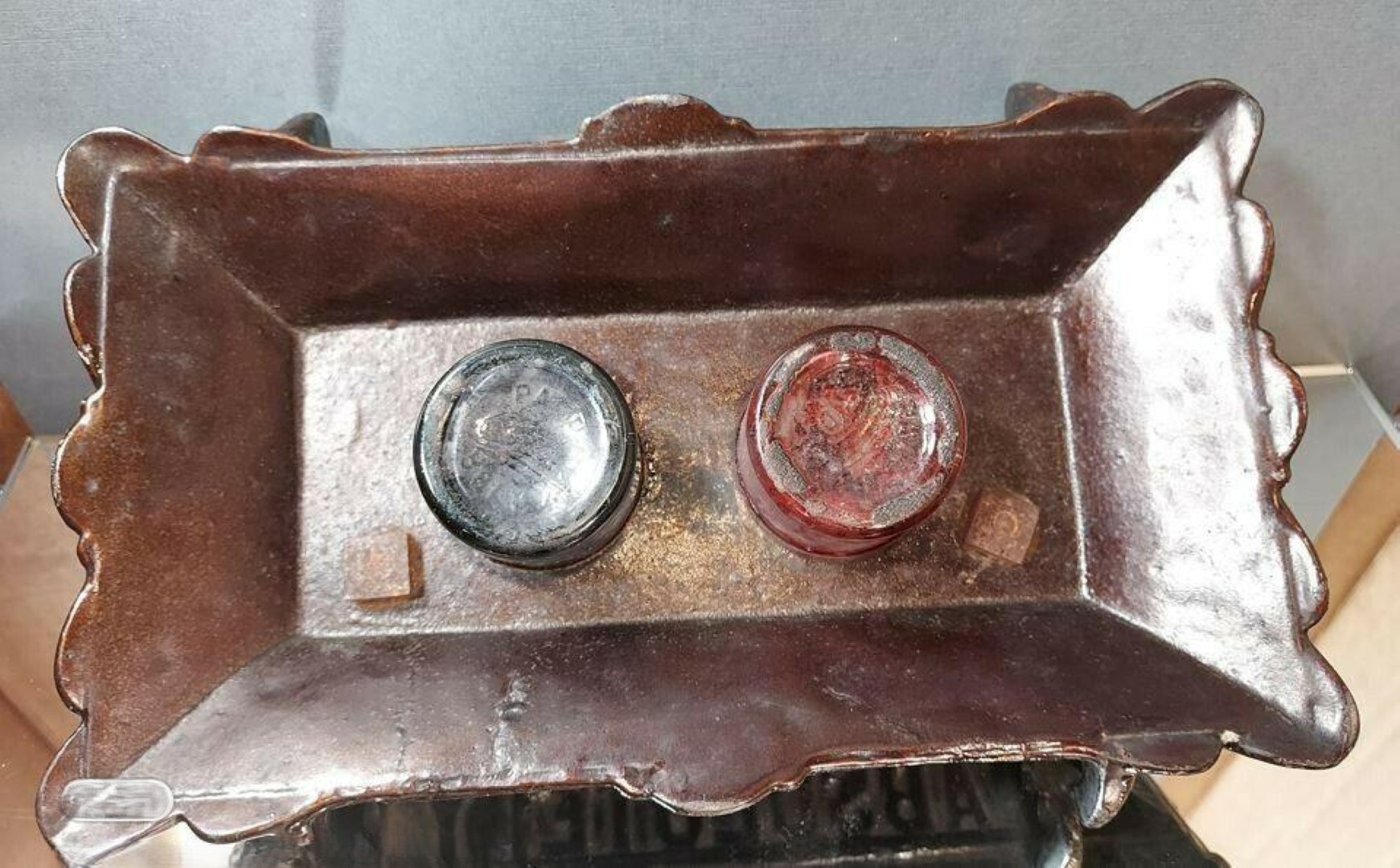
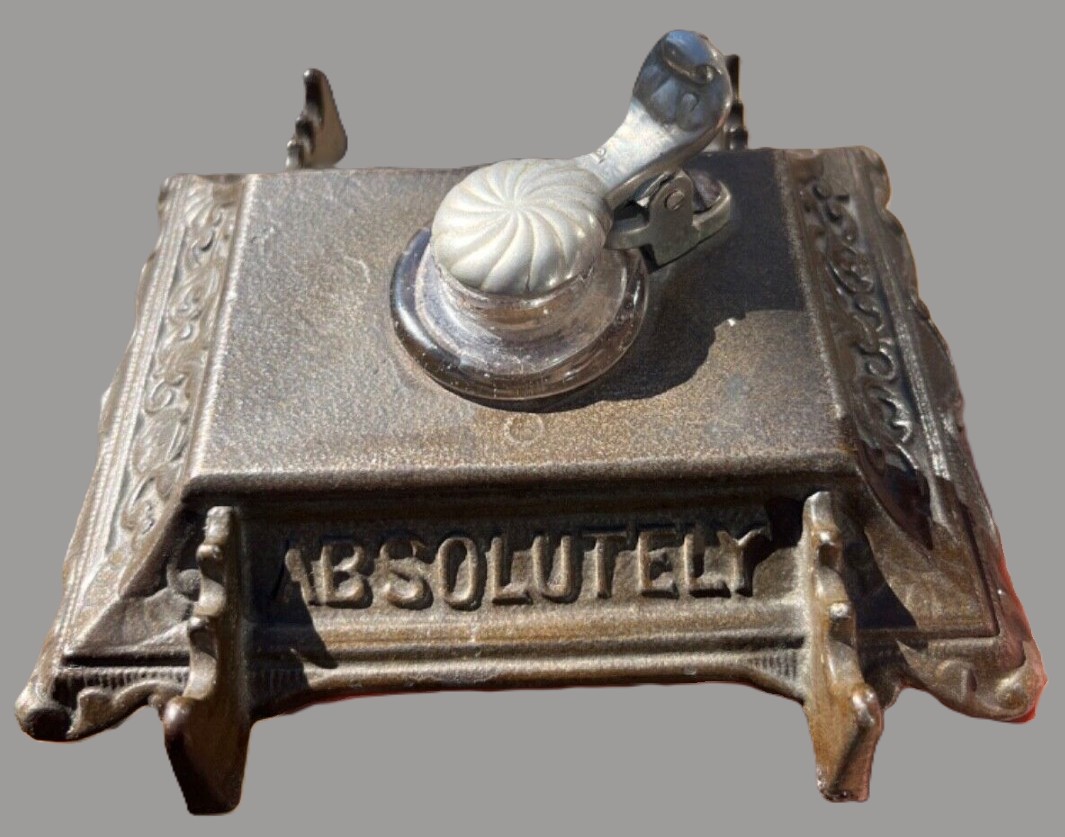
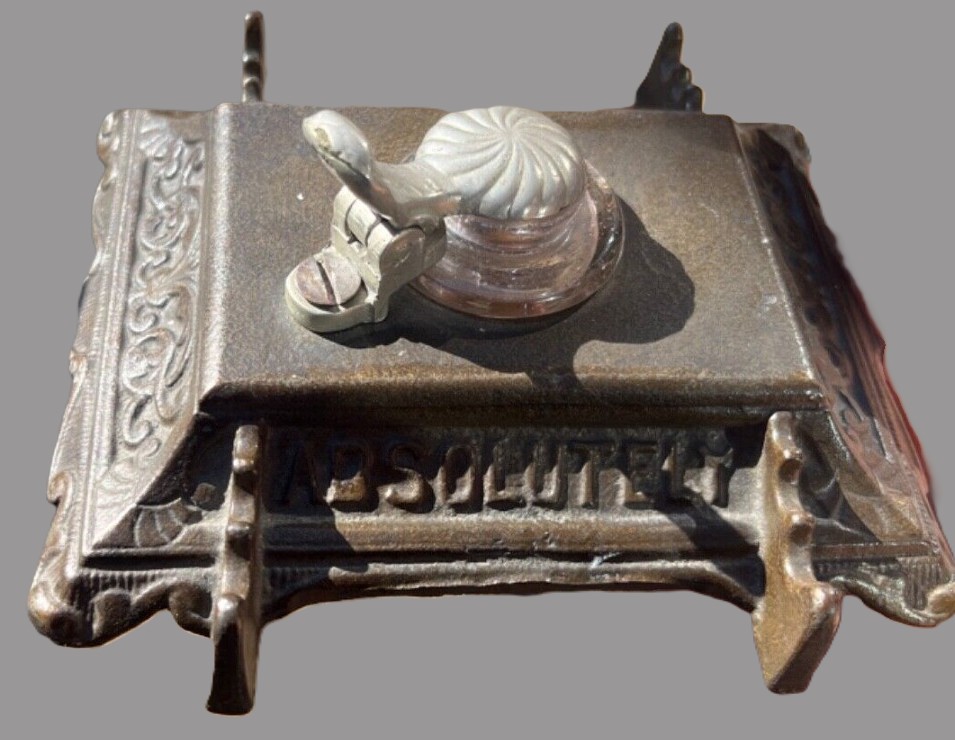
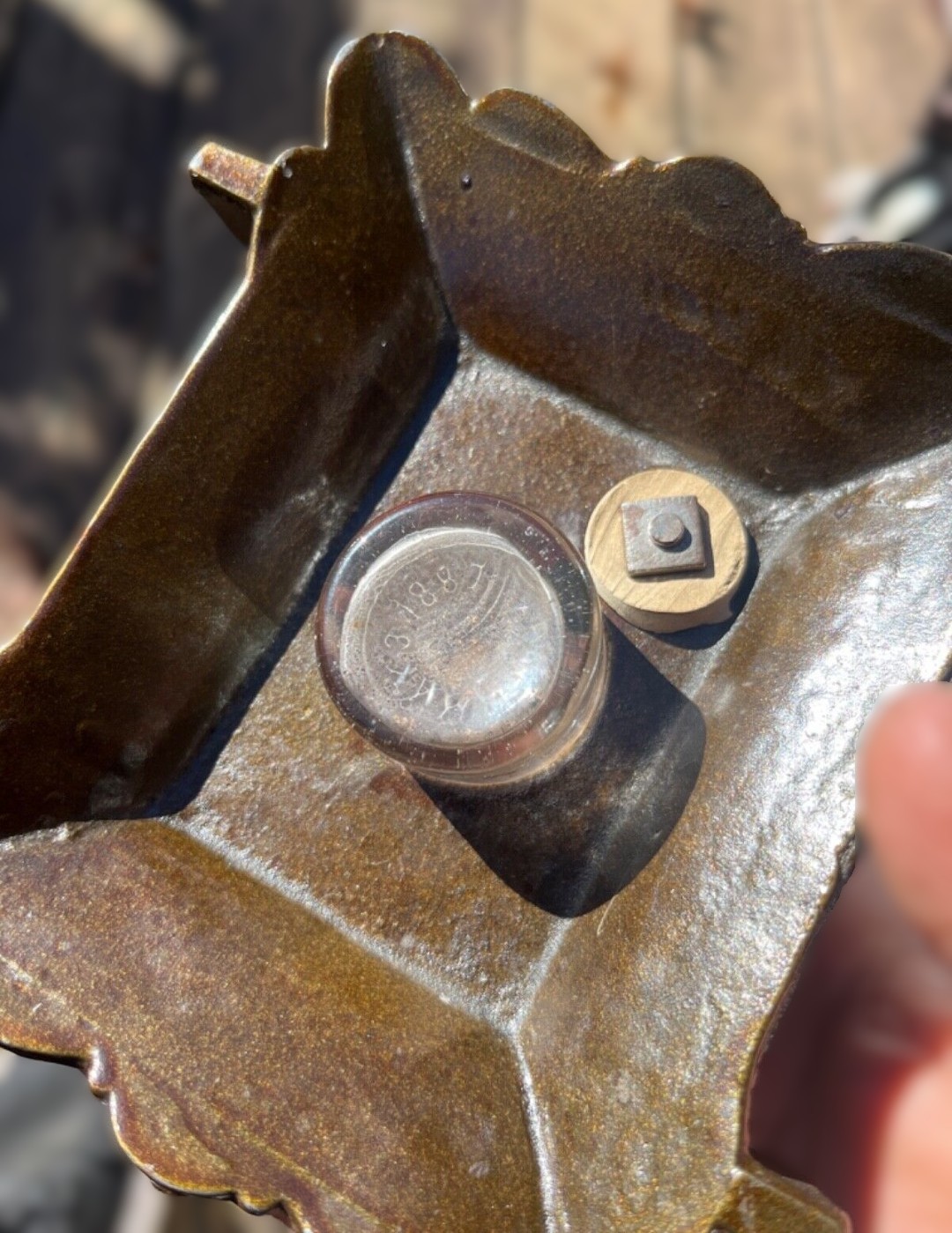
Three examples are pictured.
Based on the patent documents (U.S. Patent No. 362,154, granted May 3, 1887, to James C. Gable of Lancaster, Pennsylvania), we can provide the following:
- Inventor and Manufacturer Background
- The Inventor: The patent was invented by James C. Gable residing in Lancaster, Lancaster County, Pennsylvania.
- The Purpose of the Invention: According to Gable’s specification, his improvements were engineered to address five distinct frustrations of 19th-century writing desks:
- Preventing dust entry.
- Preventing ink thickening from evaporation.
- Preventing the corrosion of ink caused by direct contact with metal covers.
- Providing a cleaner manner of raising the stopper to prevent spilling.
- Securely locking the ink bottle into a table or desk opening while keeping it easily removable.
- A Thorough Breakdown of the May 3, 1887 Patent Mechanism
Looking at Figures 1 through 4 of the patent reveals how the hardware operates:
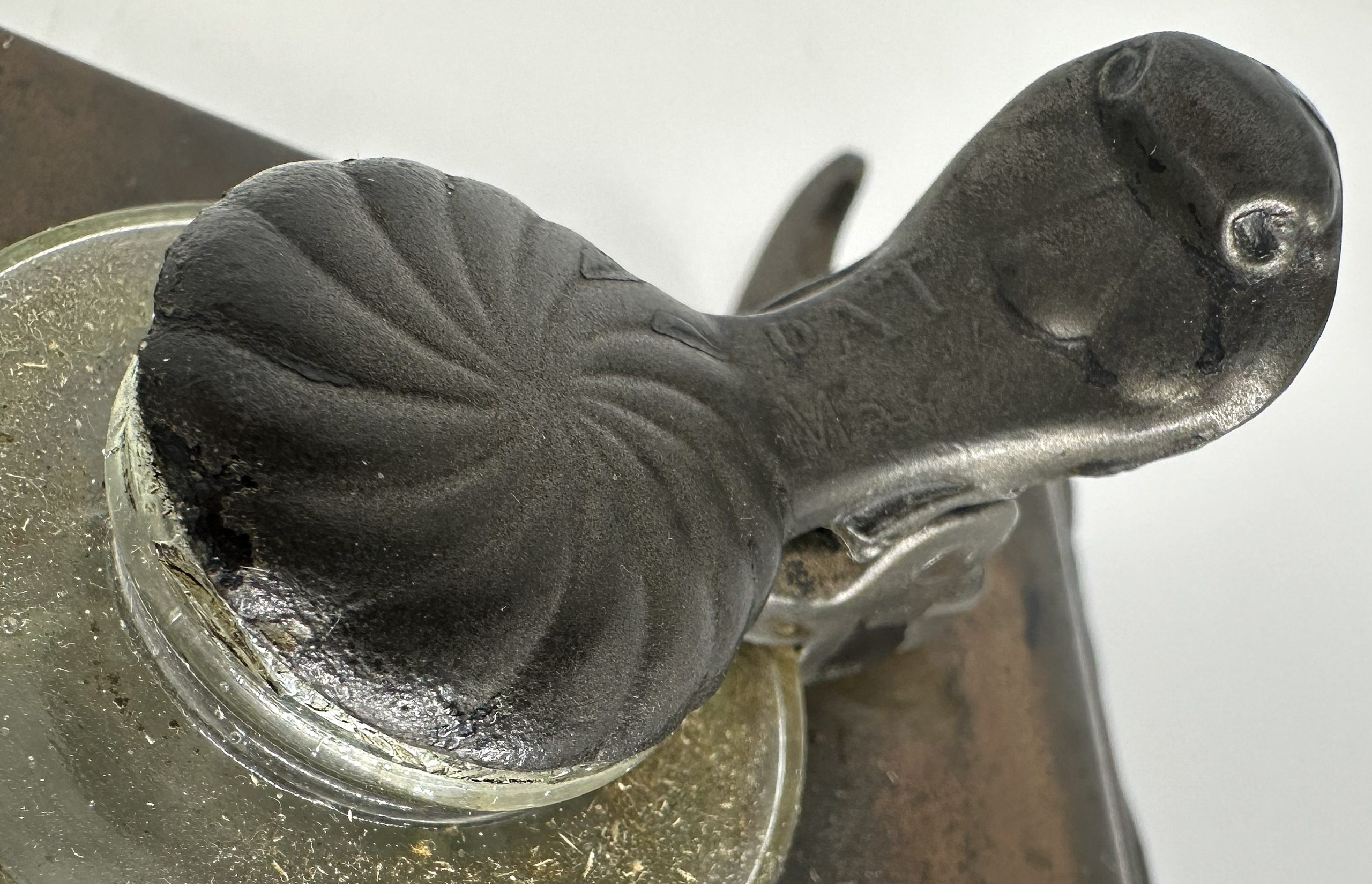
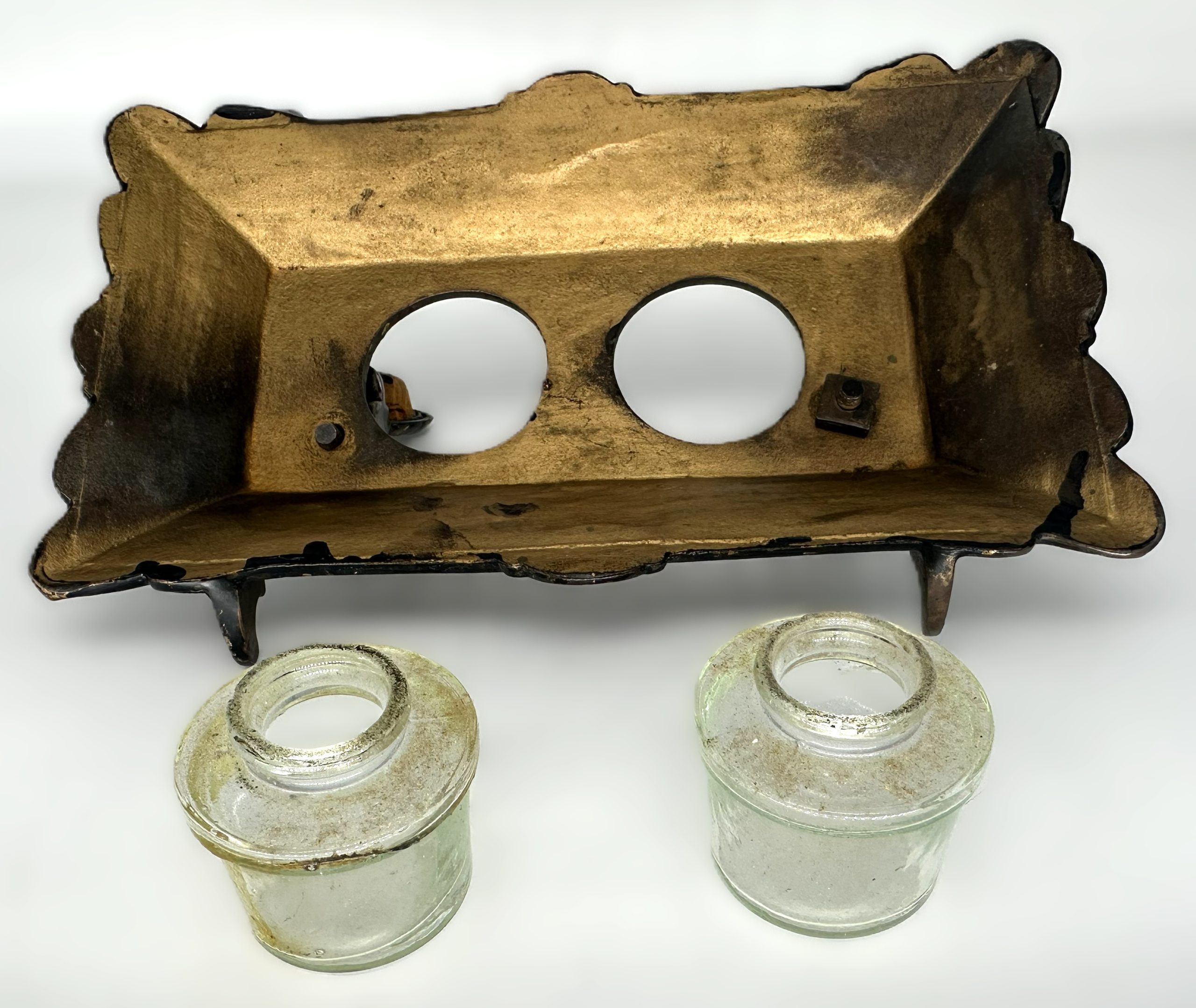
- The Flanged Glass Bottle ( and ): The patent describes an ink bottle designed to drop down into an aperture (such as a desk cutout or, in this standalone piece, a heavy cast-iron base). It features a “supporting-flange ” around the top to hold it suspended securely without tipping.
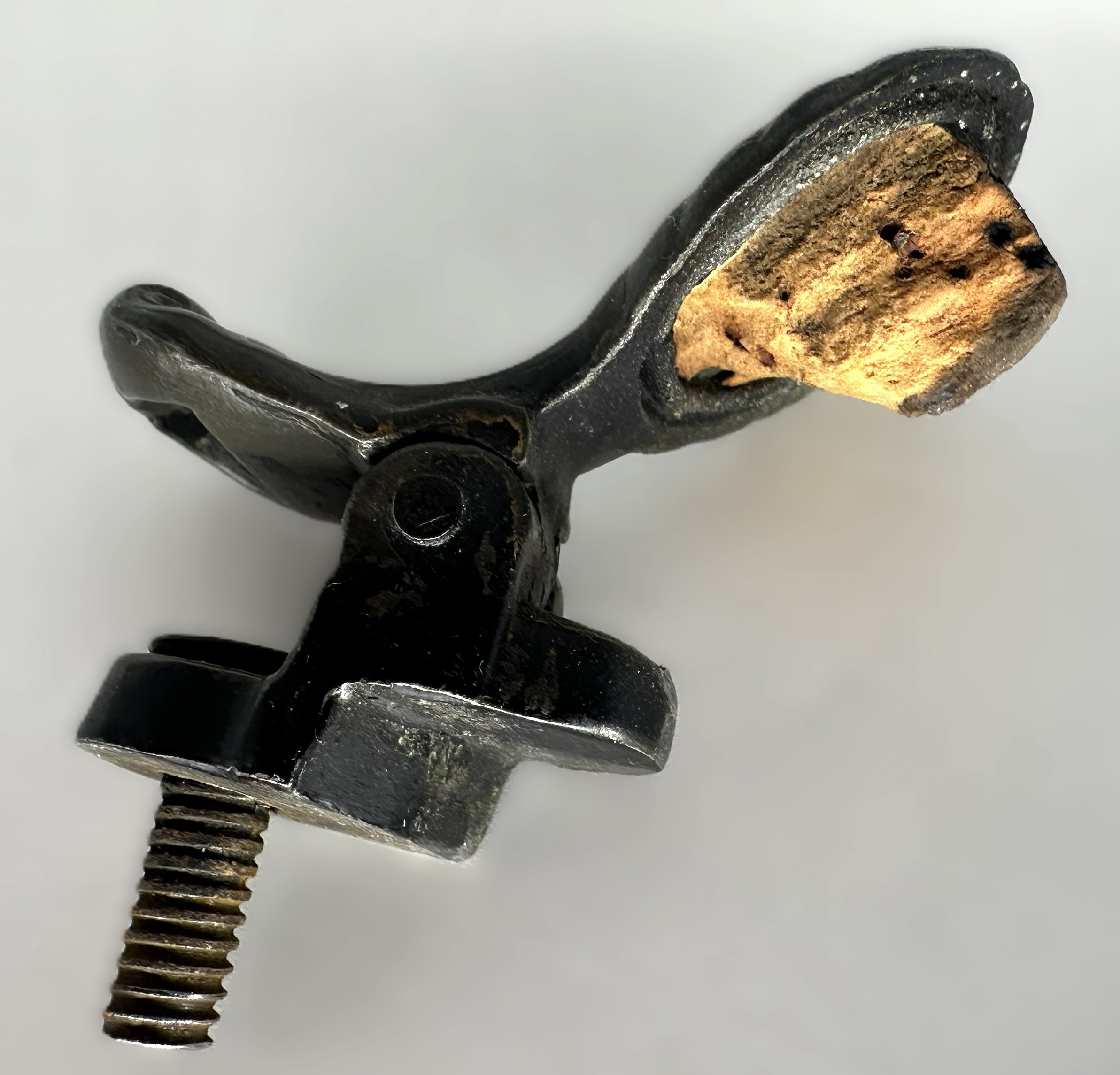
- The Cork or Stopper ( and ): Unlike lids that merely rest on top of an open funnel, Gable’s design features a stopper (fitted with a cork, ) that screws directly into an “annular plate” hanging beneath the lever. This ensures an airtight plug explicitly engineered to seal inside the neck of the bottle ().
- The Lever and Finger-Rest ( and ): The long arm () is pivoted at point . Pressing down on the rear finger-rest () acts as a lever to lift the stopper cleanly out of the glass neck and hold it in an elevated position (illustrated by the dotted lines in Fig. 1). Releasing or gently pressing the front allows the cork to seat back down.
- The Pivoting Catch ( and ): The hinge mount isn’t just screwed straight to a flat plate; it features a pivoted catch () secured at . By turning the catch on its pivot (as shown by dotted lines in Fig. 2), the entire bottle, stopper, and lever assembly can be instantly unlocked and lifted out of the housing for refilling or cleaning.
- Description of the “ABSOLUTELY” Double Inkstand
Incorporating the patent facts yields this summary:
- Item: Patent Cast-Iron Double Inkstand with “ABSOLUTELY” Marketing Badging
- Inventor: James C. Gable (Lancaster, Pennsylvania)
- Patent Date: May 3, 1887 (Patent No. 362,154)
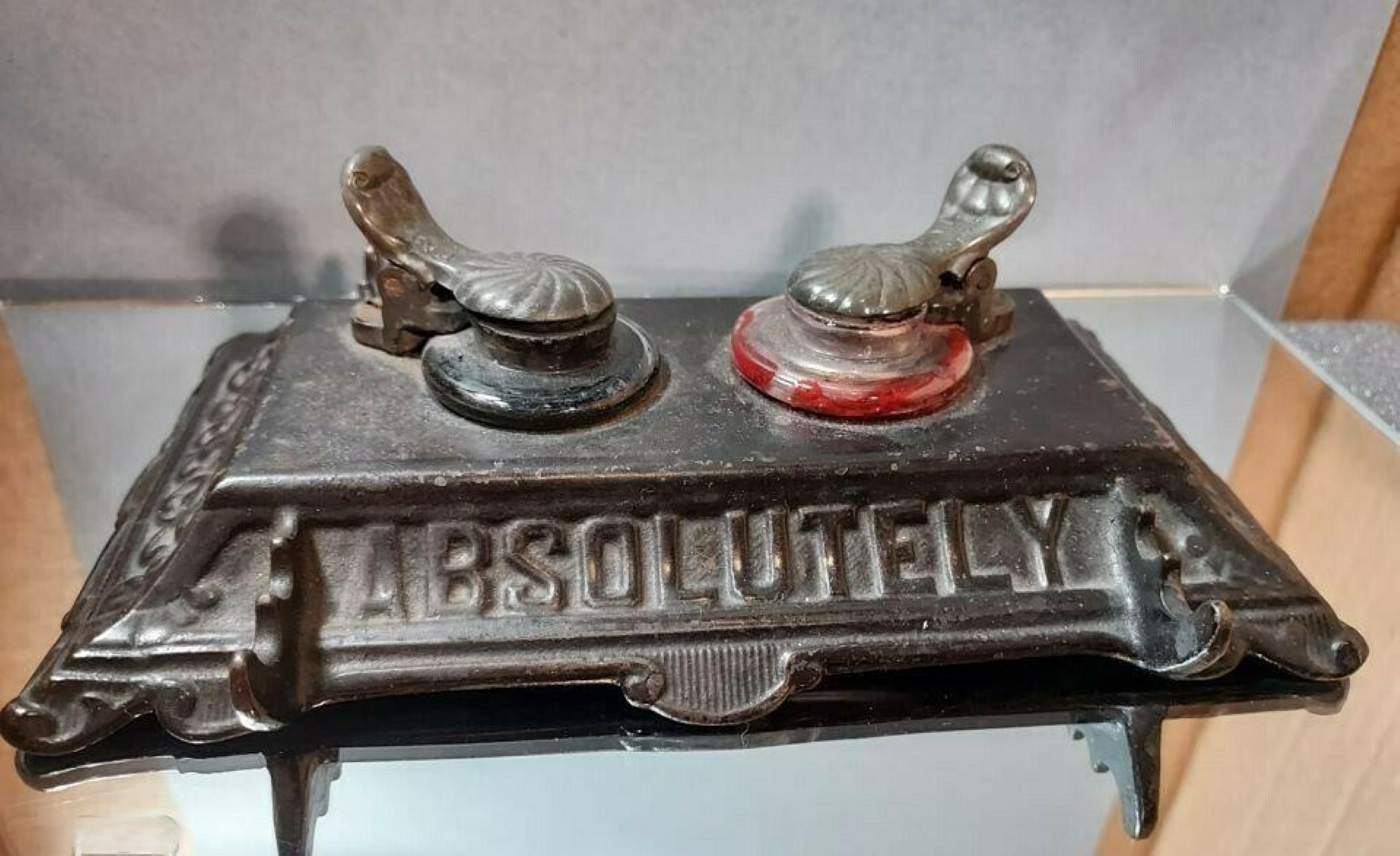
- Design & Function: Built on a heavy, decorative Rococo/Eastlake-style cast-iron base with integrated front and back dip-pen cradles, this double inkstand utilizes Gable’s patented mechanical lever system. The shell-molded thumb presses () leverage internal springs and cork stoppers () to keep both glass inkwells tightly sealed against dust and evaporation.
- The “ABSOLUTELY” Marking: Cast in bold block letters across both the front and back skirt panels, the word served as a direct marketing nod to Gable’s functional claims—promising that the mechanical stoppers were absolutely airtight, absolutely spill-proof, and absolutely protective against ink thickening.
Estimated value: $125
Content disclaimer. The information posted is the owner’s best knowledge and may not have been vetted by the SOIC. We welcome comments, corrections, and additions, working to make our website information comprehensive and accurate.
Join the Society of Inkwell Collectors (SOIC) – it’s free!
Founded in 1981 as a non-profit organization,
we are documenting inkwells (and accessories).
We’re here to help and inform!