


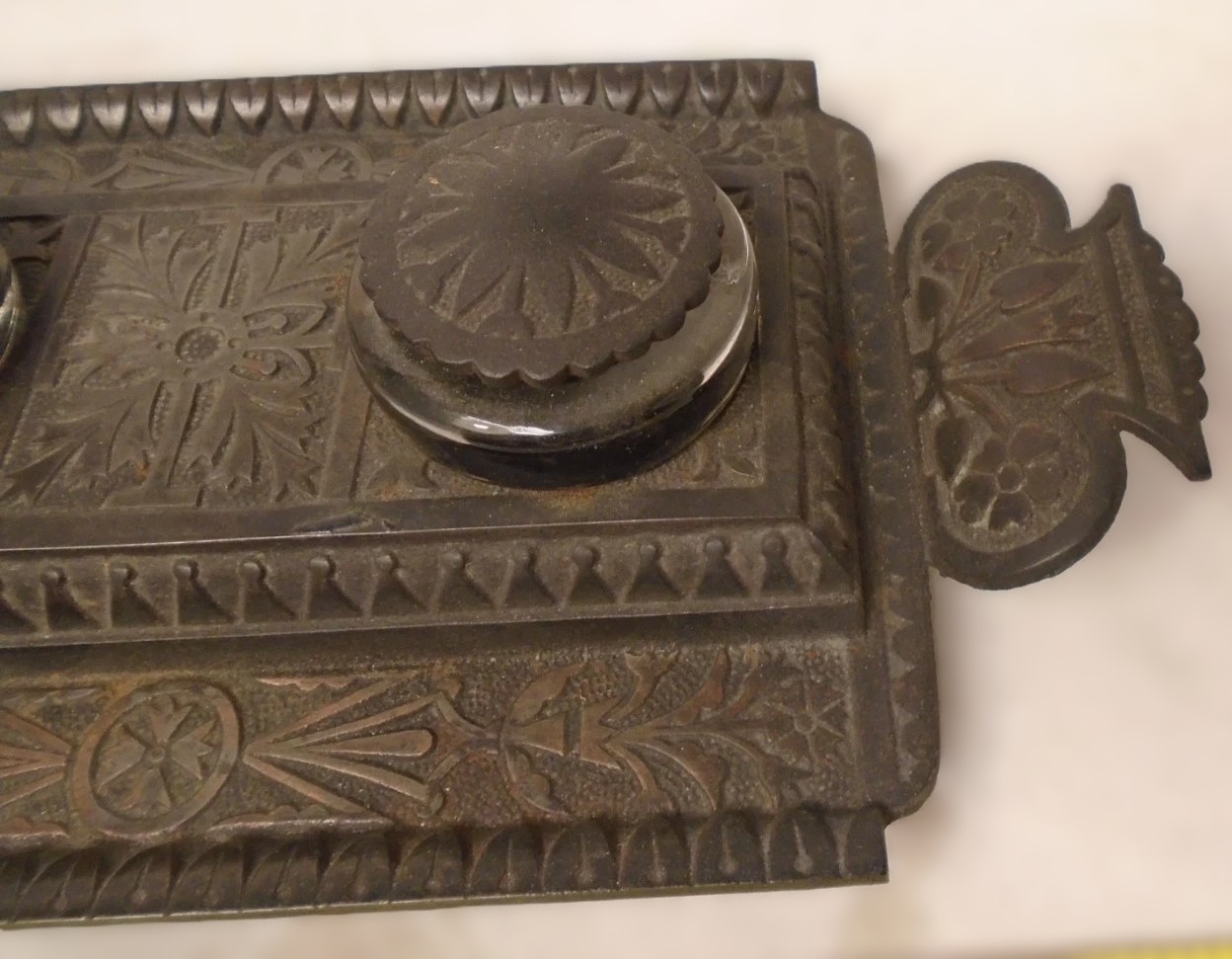


Cast Iron Double Inkstand
| Categories | Cast Iron |
| Material | Cast iron, Glass |
| Markings | Unmarked |
| Manufacturer | Undetermined |
| Origin | United States |
| Date or Era | circa 1880 |
Cast Iron Double Inkstand
- Material and Style: This inkstand is made of cast iron, a material popular in the Victorian period for its durability and ability to capture intricate molded details. Its style is typical of the Eastlake or Aesthetic Movement of the late 19th century, characterized by geometric forms and stylized, naturalistic motifs.
- Form: It is a double inkstand (or standish), designed to hold two separate inkwells.
- Base/Frame: The heavy, rectangular cast iron base has pen trays molded directly into the structure along the length of each side. This provided a rest for dip pens when they were not in use. There are handles at each end.
- Decoration: The cast iron displays a repeating geometric and scrollwork design (sometimes referred to as Eastlake style), giving it an ornate, mechanical-yet-naturalistic appearance.
- Inkwells:
- Type: The set contains two clear glass inkwells with a distinct stemmed or pedestal base.
- Fit: They are designed to fit securely into the circular holes in the cast iron base.
- Covers: The inkwells feature lift-off covers—also cast iron.
This desk set would have been a common and practical accessory on the writing desk of a middle-class or professional person in the late 19th century.
The manufacturing of cast iron desk accessories, including the type of Eastlake-style inkstand you have, was a specialty of several prominent American companies during the late Victorian era.
Here are the most famous manufacturers associated with these ornate cast iron desk sets:
- Bradley & Hubbard Manufacturing Company (B&H)
- Significance: Bradley & Hubbard, based in Meriden, Connecticut, was one of the most prolific and highest-quality producers of decorative metal goods in the United States, active from the mid-19th century into the 20th century.
- Products: They are sought after by collectors for their lamps, chandeliers, and, importantly, a wide range of cast iron and brass desk sets and inkstands in various Victorian styles, including the geometric and architectural Eastlake style.
- Markings: B&H pieces are often marked on the underside.
- Judd Manufacturing Company (Judd & Co.)
- Significance: Also based in Connecticut (Wallingford), Judd & Co. was another major producer of metal decorative items, particularly in cast iron and white metal, during the same period.
- Products: They made many functional and decorative household items, including a variety of highly detailed cast iron inkstands and pen trays in the Victorian and Eastlake styles. A patent date of November 25, 1879, is frequently seen on Judd cast iron inkstands, which falls right in line with the Eastlake period.
- Markings: Many Judd inkstands will be marked, sometimes with a patent date or the company name.
- Nicholas Muller & Sons
- Significance: Nicholas Muller & Sons (New York) specialized in ornate, often figural or highly decorated desk sets and art objects, typically using cast iron, bronze, and white metal.
- Products: They were known for desk accessories in the highly stylized Victorian and Revivalist movements (like Egyptian Revival), and they also produced pieces that align with the Eastlake aesthetic.
- Markings: Pieces by Nicholas Muller & Sons are usually well-marked.
Sold for $67 in October 2025
Content disclaimer. The information posted is the owner’s best knowledge and may not have been vetted by the SOIC. We welcome comments, corrections, and additions, working to make our website information comprehensive and accurate.
Join the Society of Inkwell Collectors (SOIC) – it’s free!
Founded in 1981 as a non-profit organization,
we are documenting inkwells (and accessories).
We’re here to help and inform!