


Inkipedia
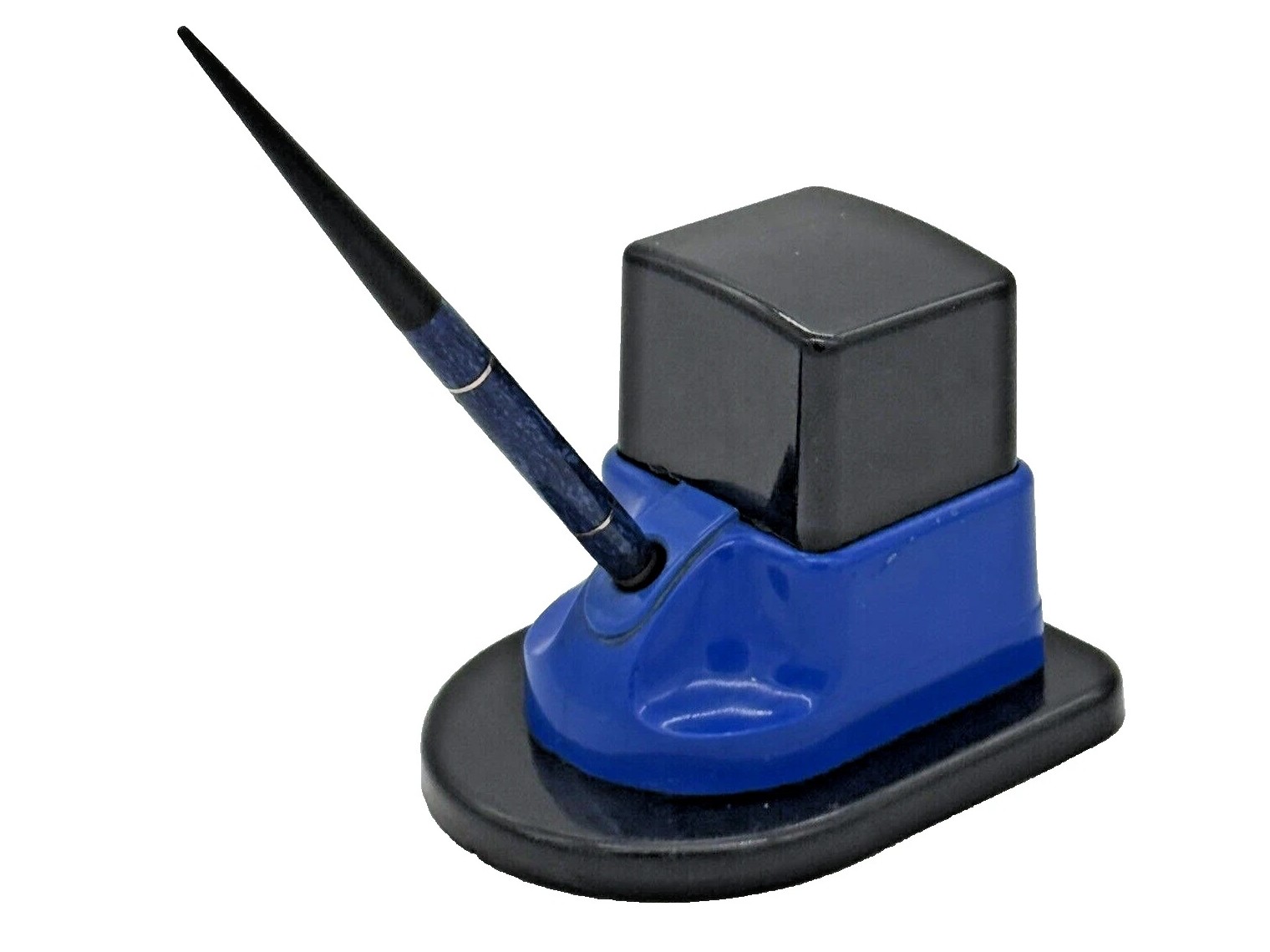
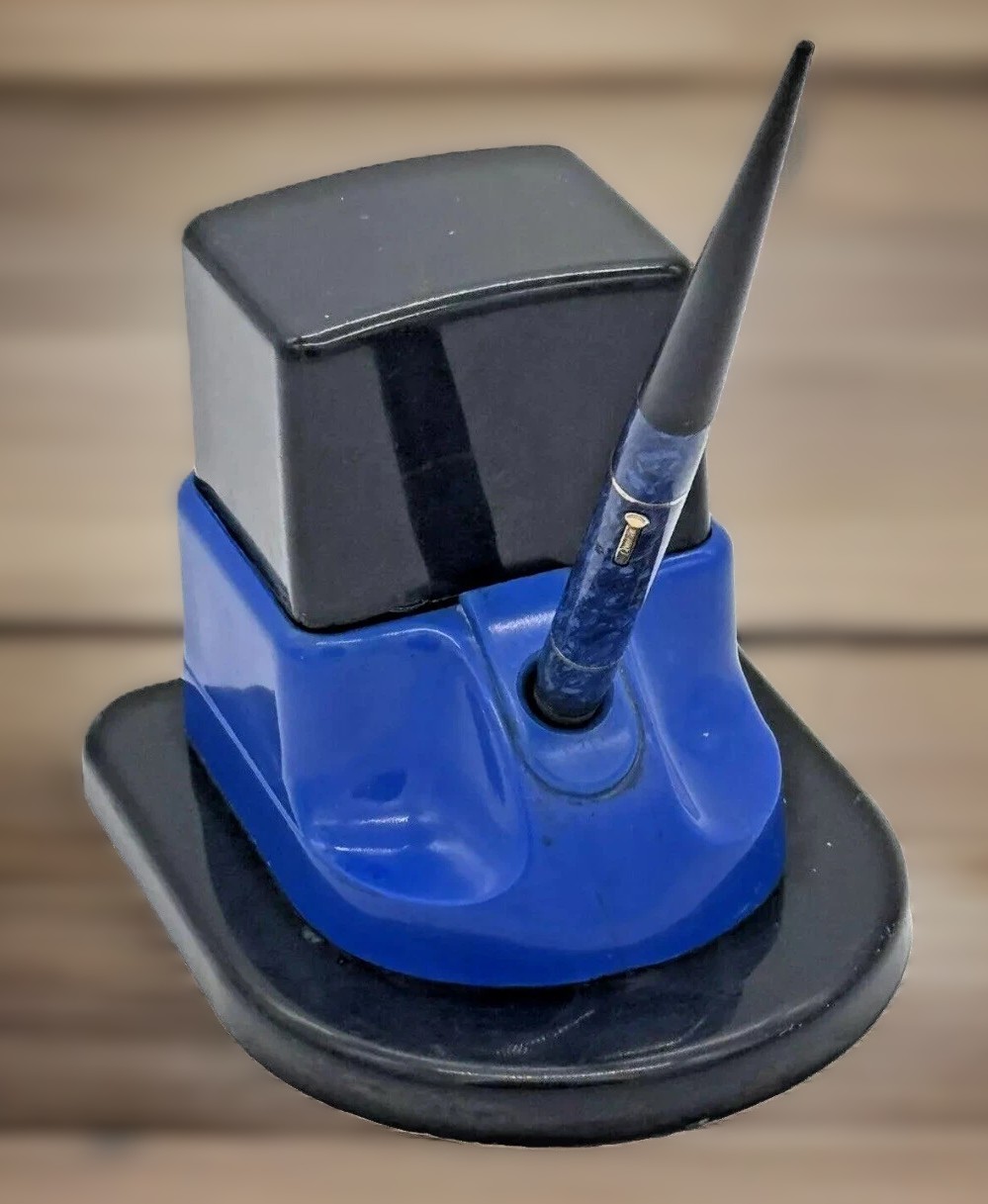
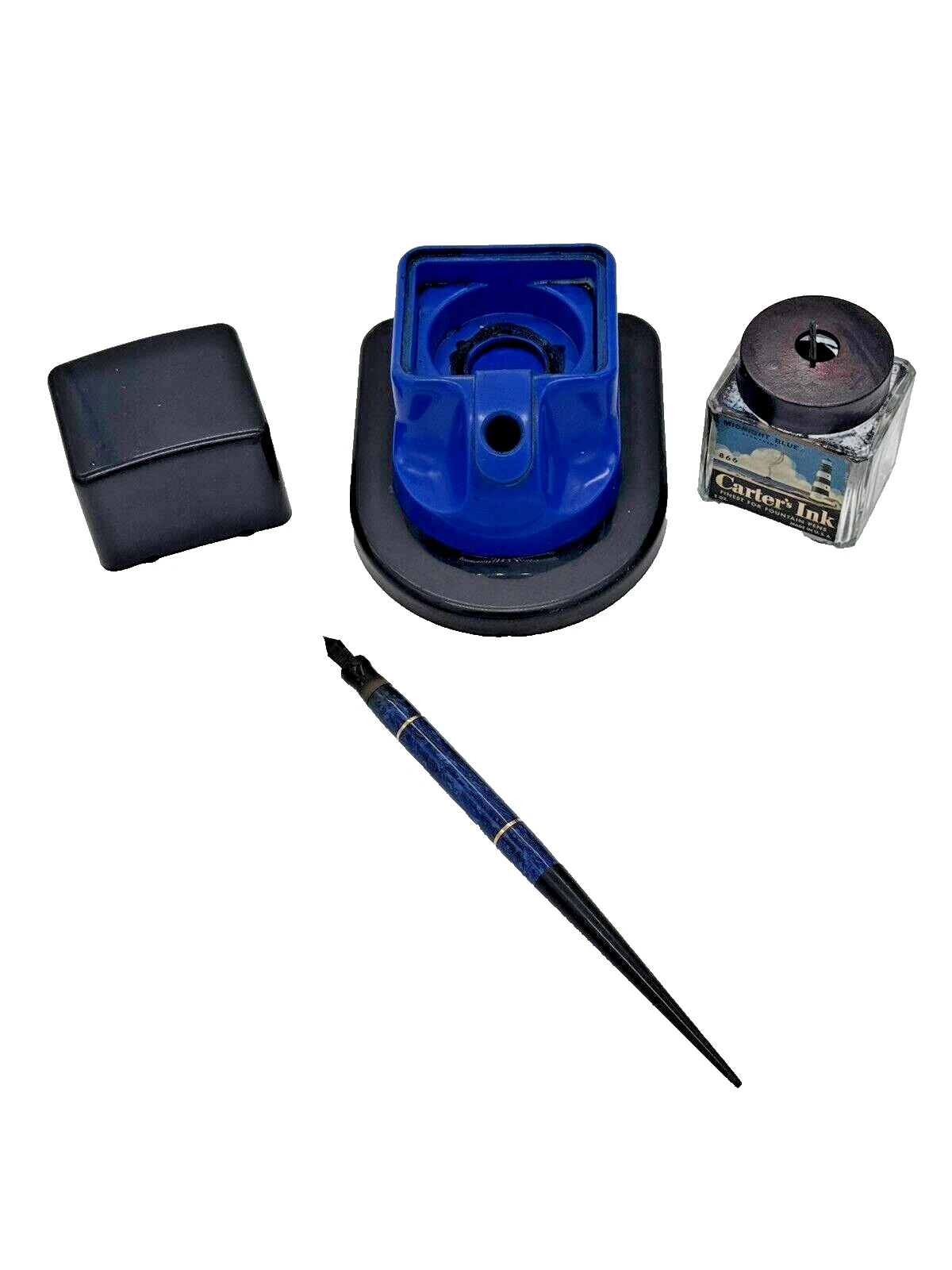


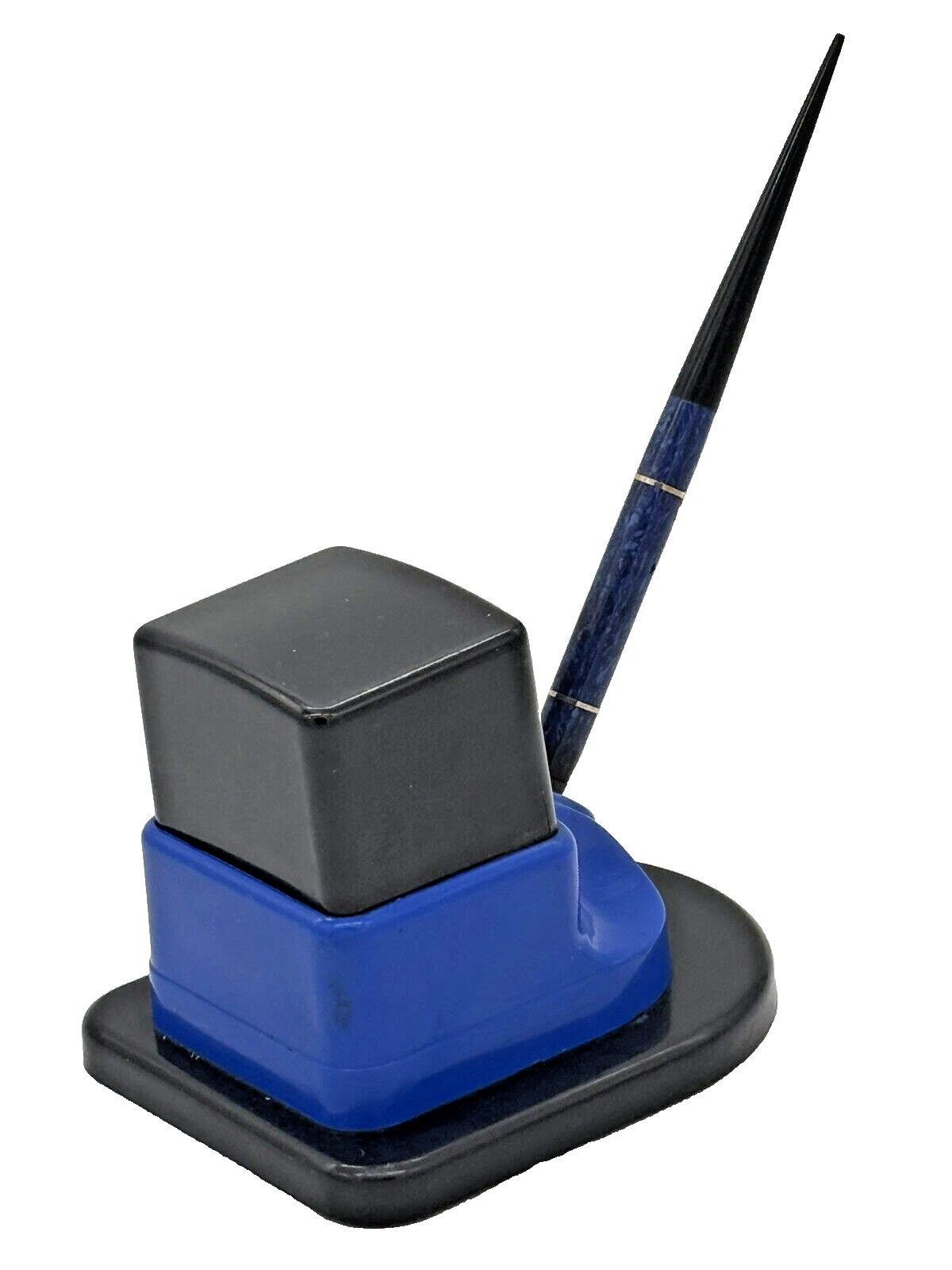


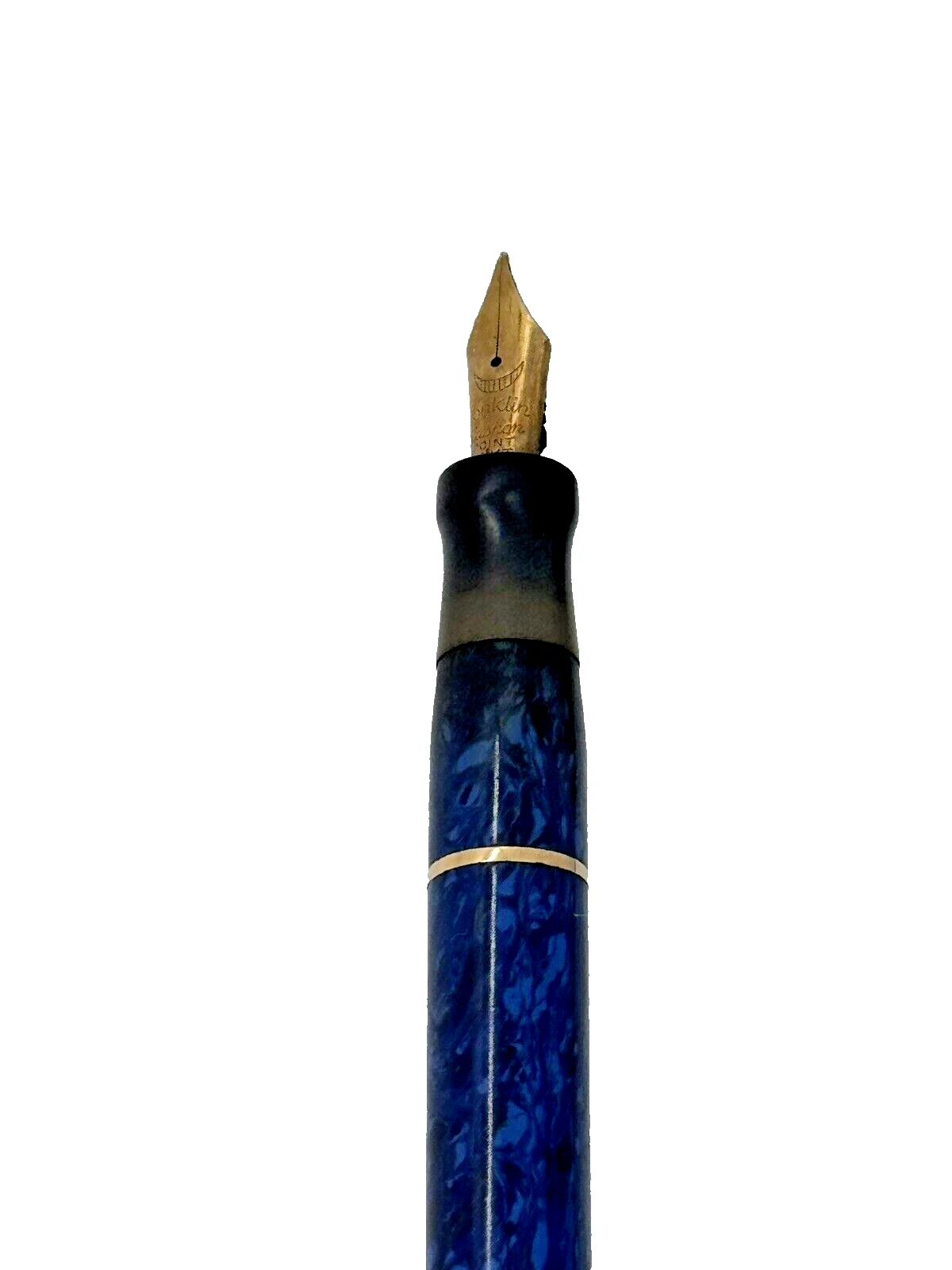

Carter’s “Cube” Inkstand with Conklin Pen
| Categories | Plastic - Bakelite - Gutta Percha |
| Material | Plastic/Celluloid |
| Markings | See Narrative |
| Manufacturer | Carter's Ink |
| Origin | United States |
| Date or Era | circa 1930 |
This vintage desk set is a “marriage” of two high-quality items from the same era: a Carter’s Ink Company inkstand and a Conklin fountain pen.
- This is not a Factory Set:
- The Inkstand: This was made by The Carter’s Ink Company (Boston, Massachusetts). It is specifically designed to hold their proprietary “Cube” ink bottles.
- The Pen: This was made by the Conklin Pen Manufacturing Company (Toledo, Ohio).
- The Connection: While they were made by different companies, they were likely paired by the original owner in the 1930s because the Lapis Blue celluloid of the pen matches the Cobalt Blue of the stand so perfectly. This kind of “color coordination” was very fashionable in Art Deco office styling.
- The Inkwell: Carter’s “Cube” Stand
- Maker: The Carter’s Ink Company. Famous for their inks and adhesives, they introduced the “Cube” bottle in the late 1920s to look modern and stackable.
- Design: This is a “Dip-Less” or “Desk” Stand.
- The “Cube”: One photo shows the square glass Carter’s Midnight Blue ink bottle which fits in the inkstand.
- Function: The stand disguises the utility bottle. The blue base holds the bottle, and the black square cap covers it. The “snout” on the front is a socket designed to hold a desk pen at the perfect angle, keeping the nib airtight so the ink doesn’t dry out.
- Material: The stand is likely made of Plaskon (early durable plastics) which allowed for these bright, permanent colors.
- The Pen: Conklin Desk Pen
- Maker: Conklin.
- Markings: The nib is stamped “Conklin / Toledo / USA”. The lever on the side is also stamped “Conklin”.
- Style: This is a desk pen. You can tell because it has a long, tapered “tail” instead of a cap. It was designed specifically to sit in a socket on a desk, not to be carried in a pocket.
- Material:
- Celluloid: The blue and black marbled section is made of Celluloid (pyroxylin plastic). This specific pattern is often called “Lapis Lazuli” or simply “Lapis Blue,” a signature color for Conklin in the late 1920s.
- Hard Rubber: The black tapered tail is likely hard rubber (ebonite).
- Mechanism (How it works): This is a Lever Filler.
- Inside the barrel is a rubber sac.
- To fill it, you dip the nib into the ink, lift the gold lever on the side to squeeze the sac, and then release the lever. The suction pulls ink into the pen.
- Age and Origin
- Date: Circa 1929–1935 (Art Deco / Depression Era).
- The Carter’s “Cube” stand was patented/popularized around 1929.
- Conklin produced this style of celluloid lever-filler during the same window.
- Origin:
- Pen: Toledo, Ohio, USA.
- Inkstand: Boston/Cambridge, Massachusetts, USA.
Sold for $230 in November 2025
Content disclaimer. The information posted is the owner’s best knowledge and may not have been vetted by the SOIC. We welcome comments, corrections, and additions, working to make our website information comprehensive and accurate.
Join the Society of Inkwell Collectors (SOIC) – it’s free!
Founded in 1981 as a non-profit organization,
we are documenting inkwells (and accessories).
We’re here to help and inform!