

Buyer Be Aware – Brass Double Inkstand
| Categories | Modern-day Production / Reproduction / "Fake" |
| Markings | Unmarked |
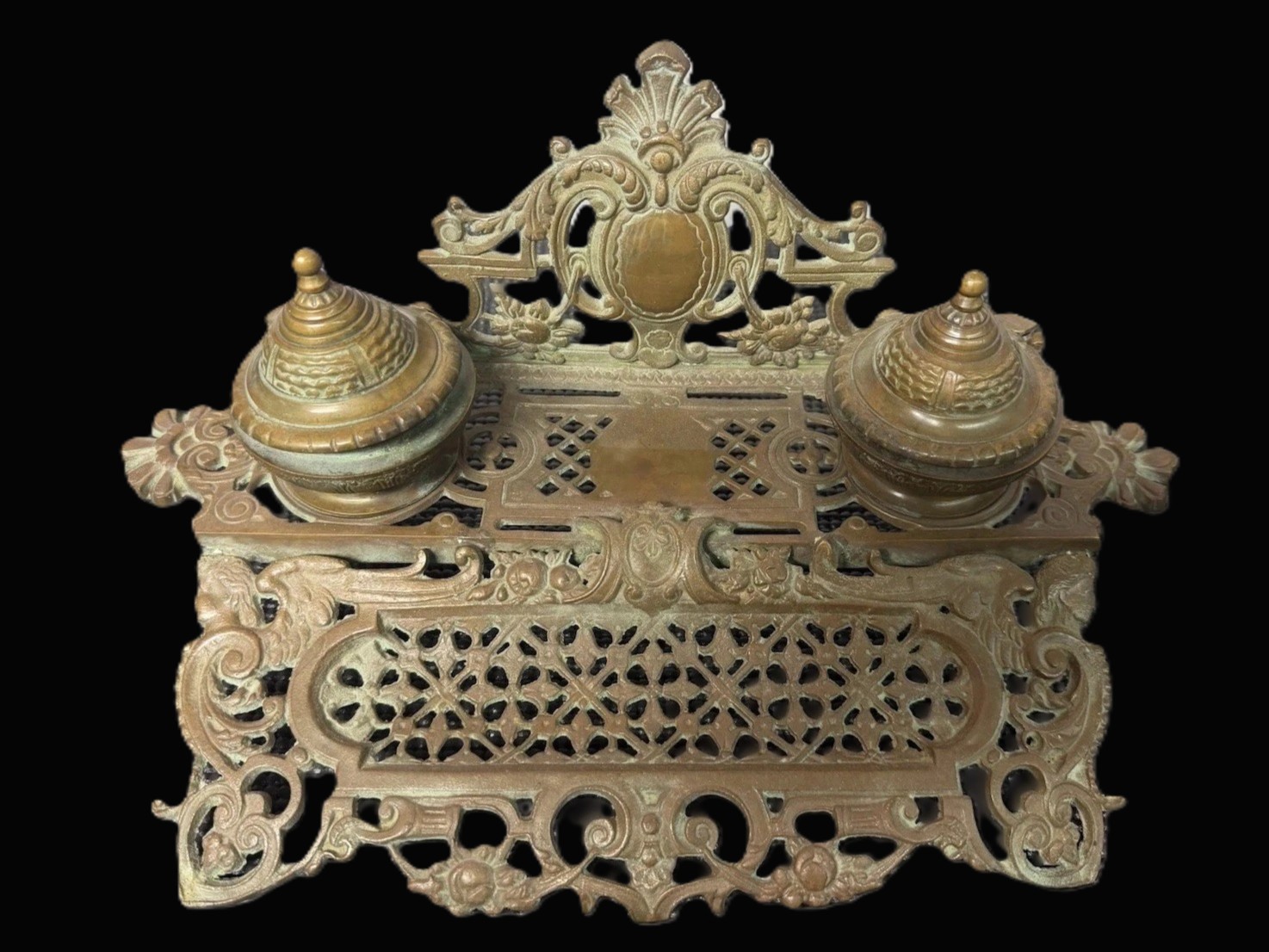
This inkstand is a modern reproduction late 20th-century decor piece, consistent with mass-produced sand-cast brass items heavily exported from metalworking centers in India (such as Moradabad) from the 1970s through the late 20th century.
Here are key red flags that immediately give away its modern origin:
- The Fasteners (The Smoking Gun)
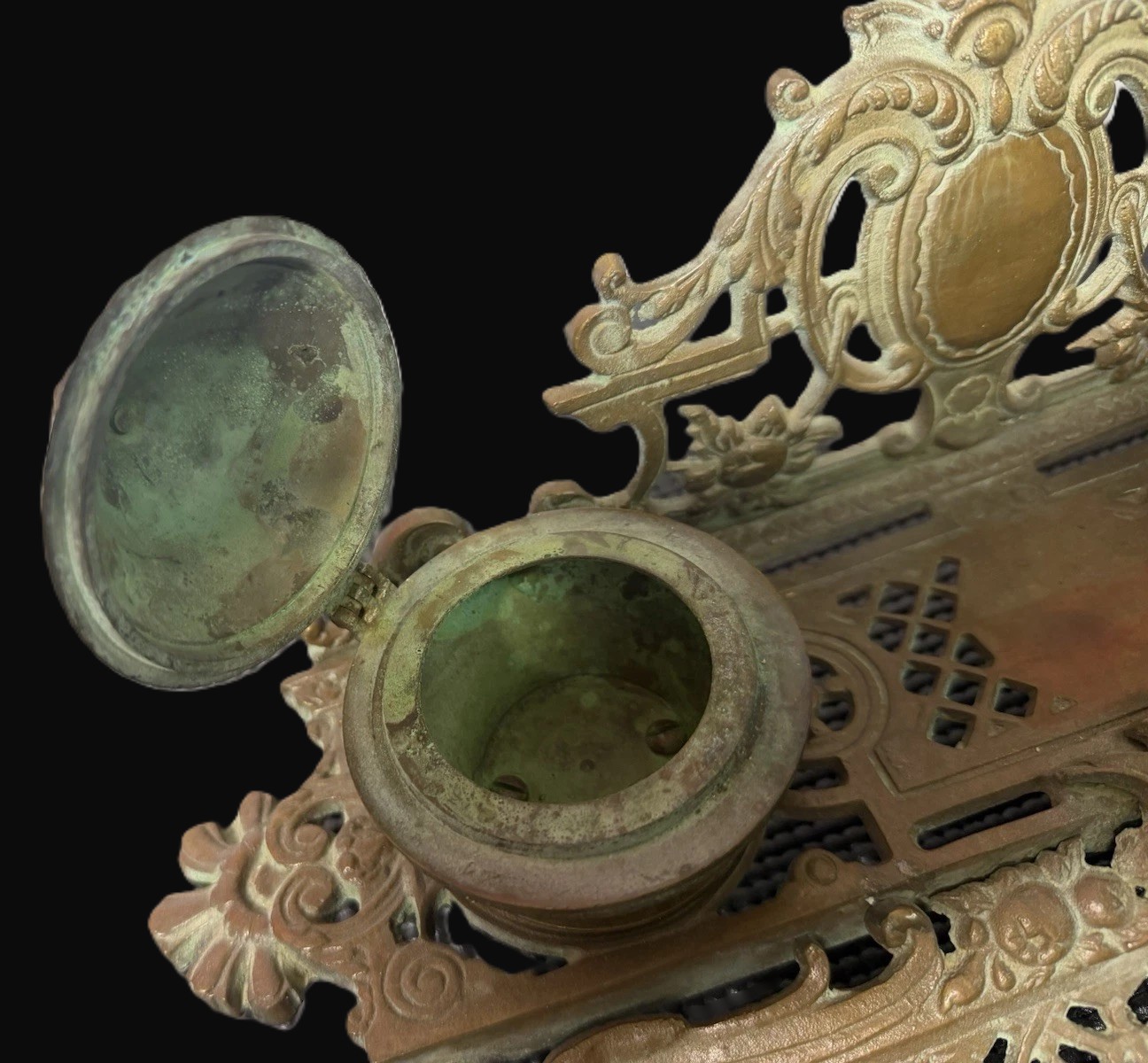
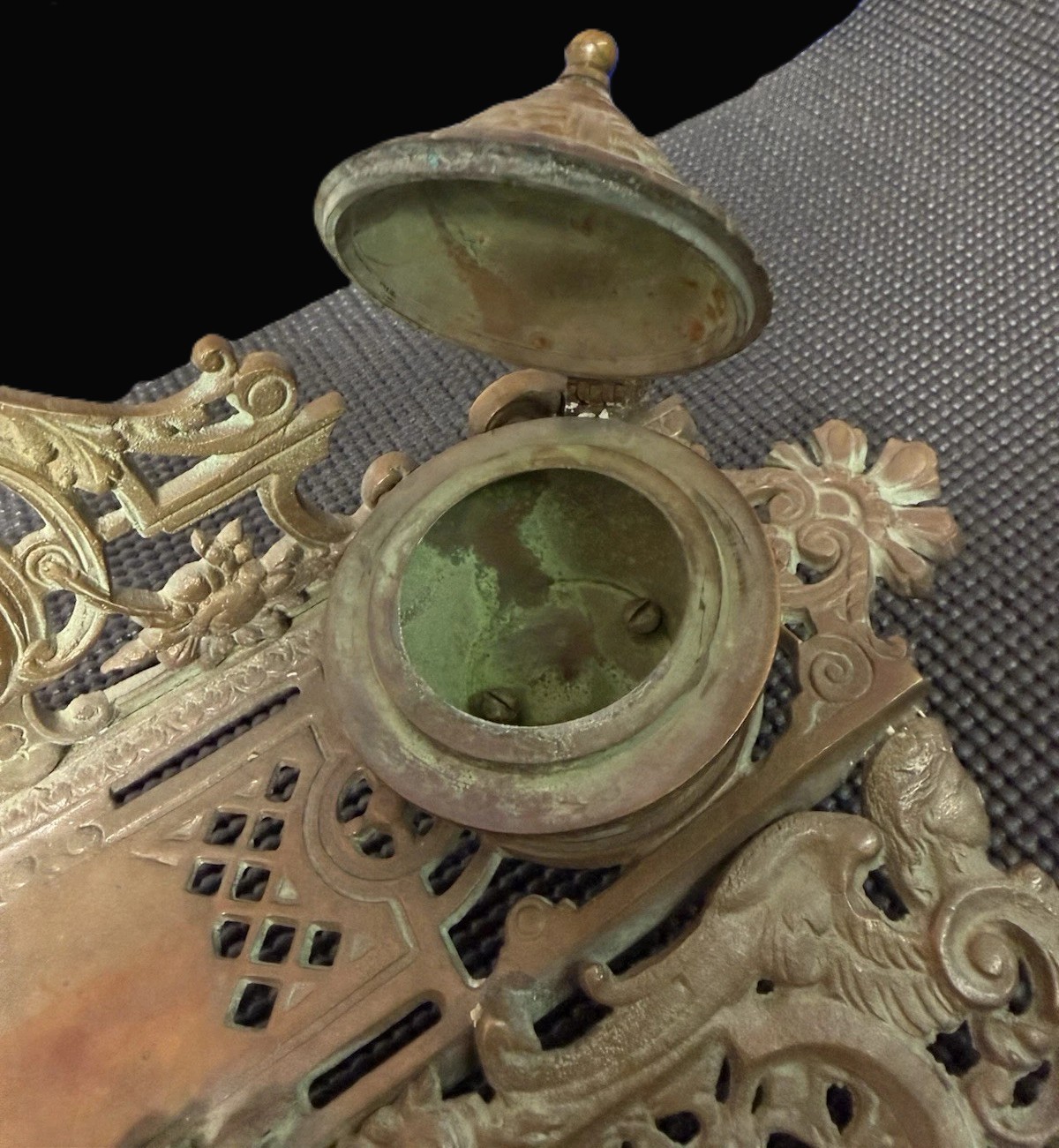
- Inside the Wells: The screws visible at the bottom of the inkwell cups are standard modern machine screws with clean, uniform, factory-cut threads.
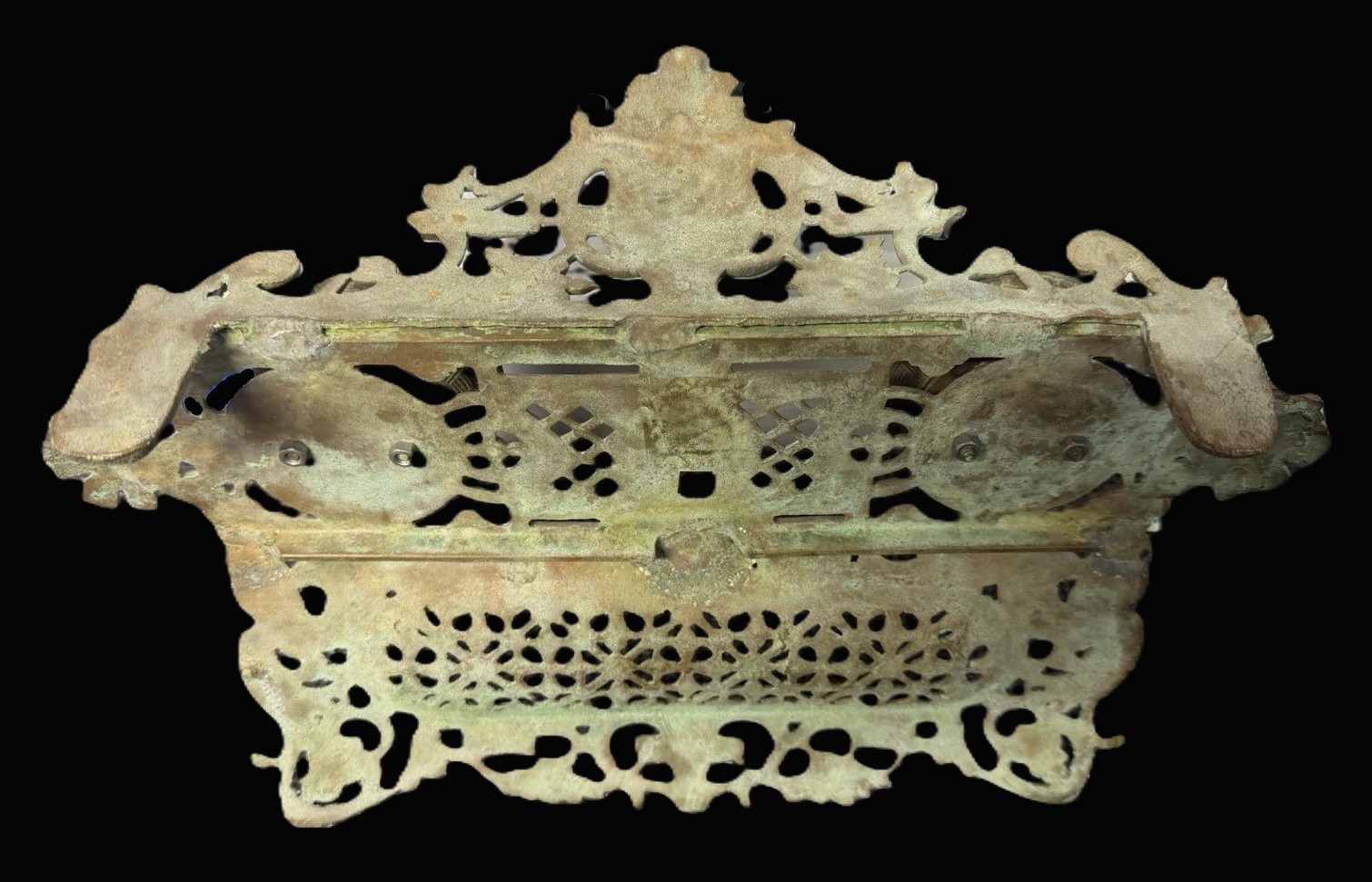
- The Underside: Looking at the bottom, the pieces are secured using perfectly uniform hexagonal nuts on modern threaded posts. A genuine 19th-century Victorian or Rococo inkstand would feature hand-cut threads, square nuts, irregular handmade fasteners, or components that were integrated, pinned, or brazed directly into the casting. Clean hex nuts are a definitive indicator of modern assembly line manufacturing.
- Casting Quality and Soft Details
- While the design attempts a highly ornate, Victorian Rococo-revival style—complete with scrolling flourishes, a central cartouche, and pierced latticework—the execution is relatively crude.
- The edges and details lack the crisp, sharp definition of true antique hand-chasing. Close inspection reveals soft, rounded details and minor casting flash/pitting, which is typical of quick, mass-production sand-casting. The underside is also quite rough and left unfinished, showing the grainy texture of the sand mold.
- Artificial Patina and “Wear”
- The powdery green verdigris concentrated heavily inside the wells and deep in the crevices could be chemically accelerated to simulate age.
- On a true antique, a century or more of handling would result in natural highlights—areas where frequent polishing, dusting, or fingertips would wear the patina down to smooth, bright brass on the raised surfaces. Here, the dark and green coloration is applied superficially across the piece to give it an instant “relic” look for the decorator market.
Summary
This piece was created to serve as a vintage-style decorative desk accessory rather than a functional piece of historic writing equipment.
Content disclaimer. The information posted is the owner’s best knowledge and may not have been vetted by the SOIC. We welcome comments, corrections, and additions, working to make our website information comprehensive and accurate.
Join the Society of Inkwell Collectors (SOIC) – it’s free!
Founded in 1981 as a non-profit organization,
we are documenting inkwells (and accessories).
We’re here to help and inform!