


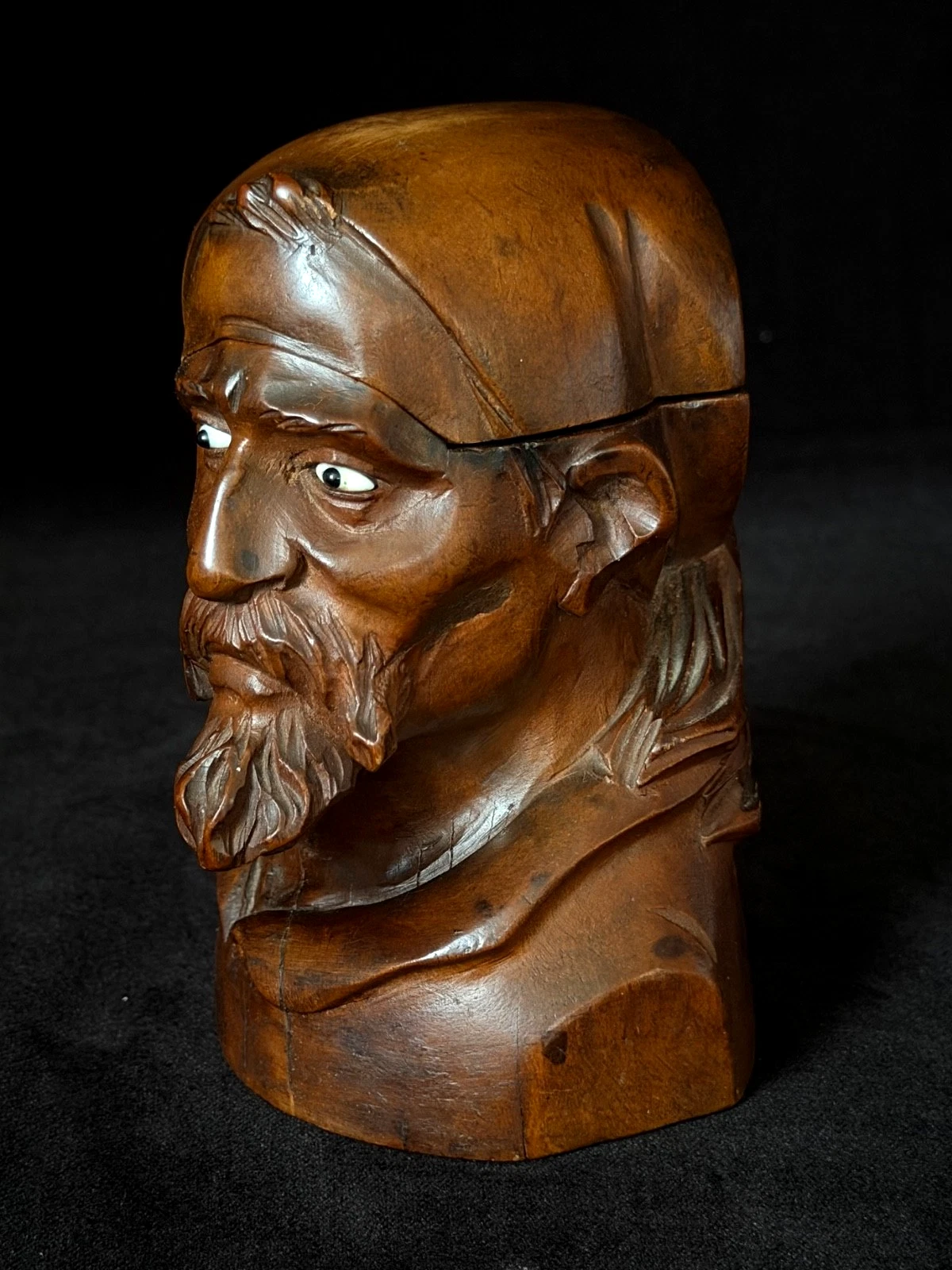
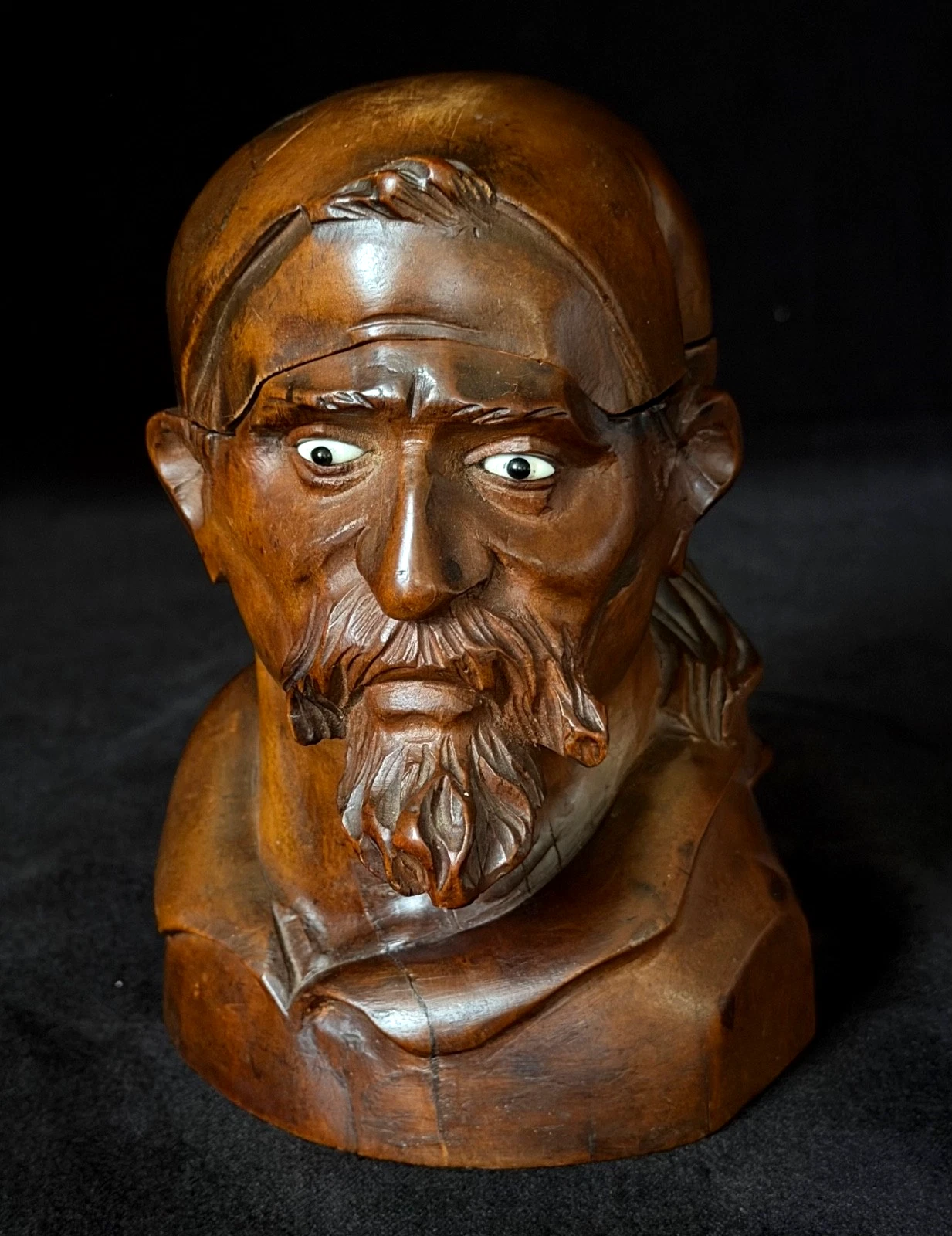




Bust of a Buccaneer
| Categories | Figural - Persons |
| Type | Pirate |
| Material | Wood |
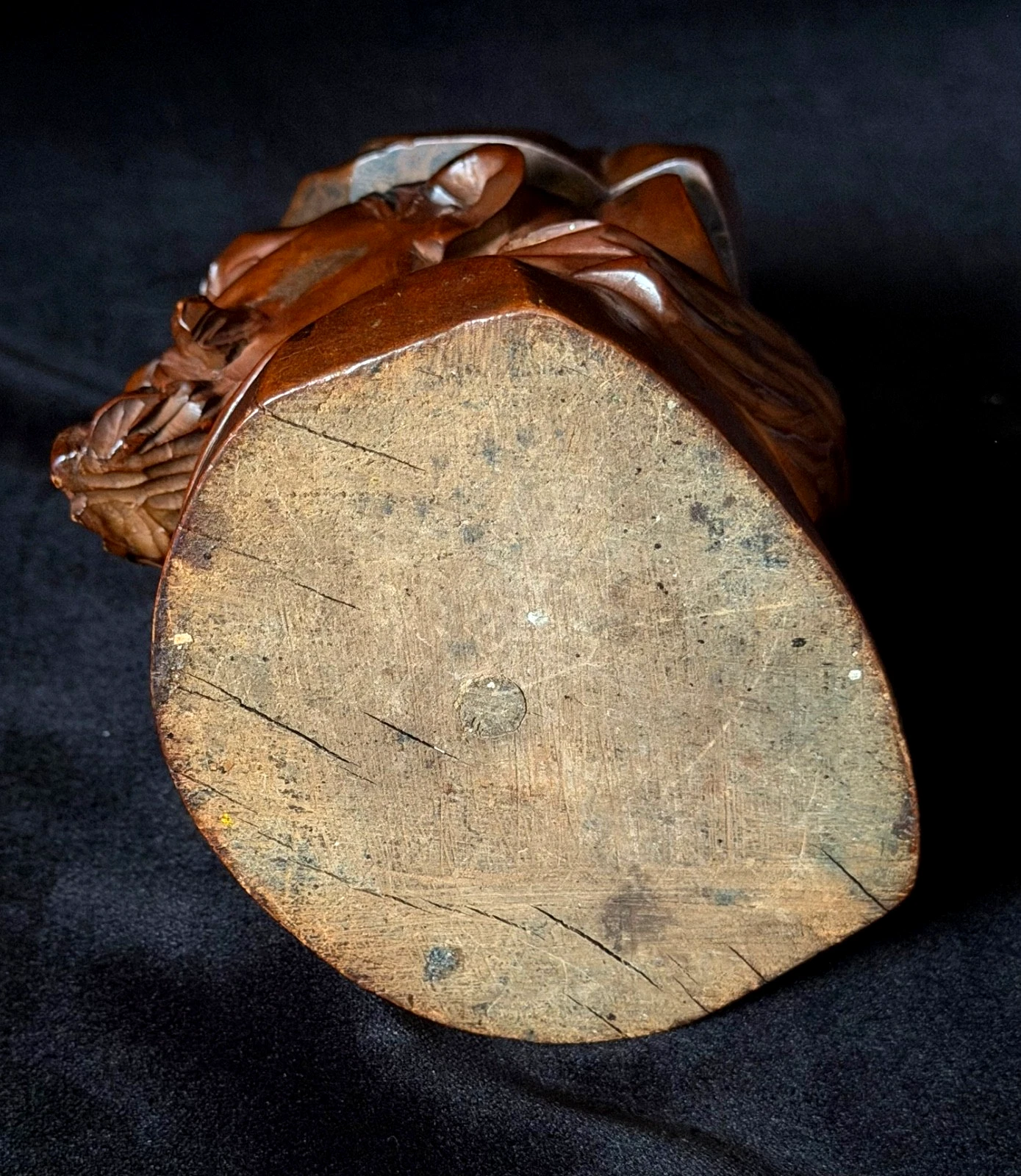
| Markings | Unmarked |
| Manufacturer | Black Forest |
| Origin | Switzerland |
| Date or Era | circa 1880 |
| Measuring | 3 ¾” x 2 ½” x 5” high |
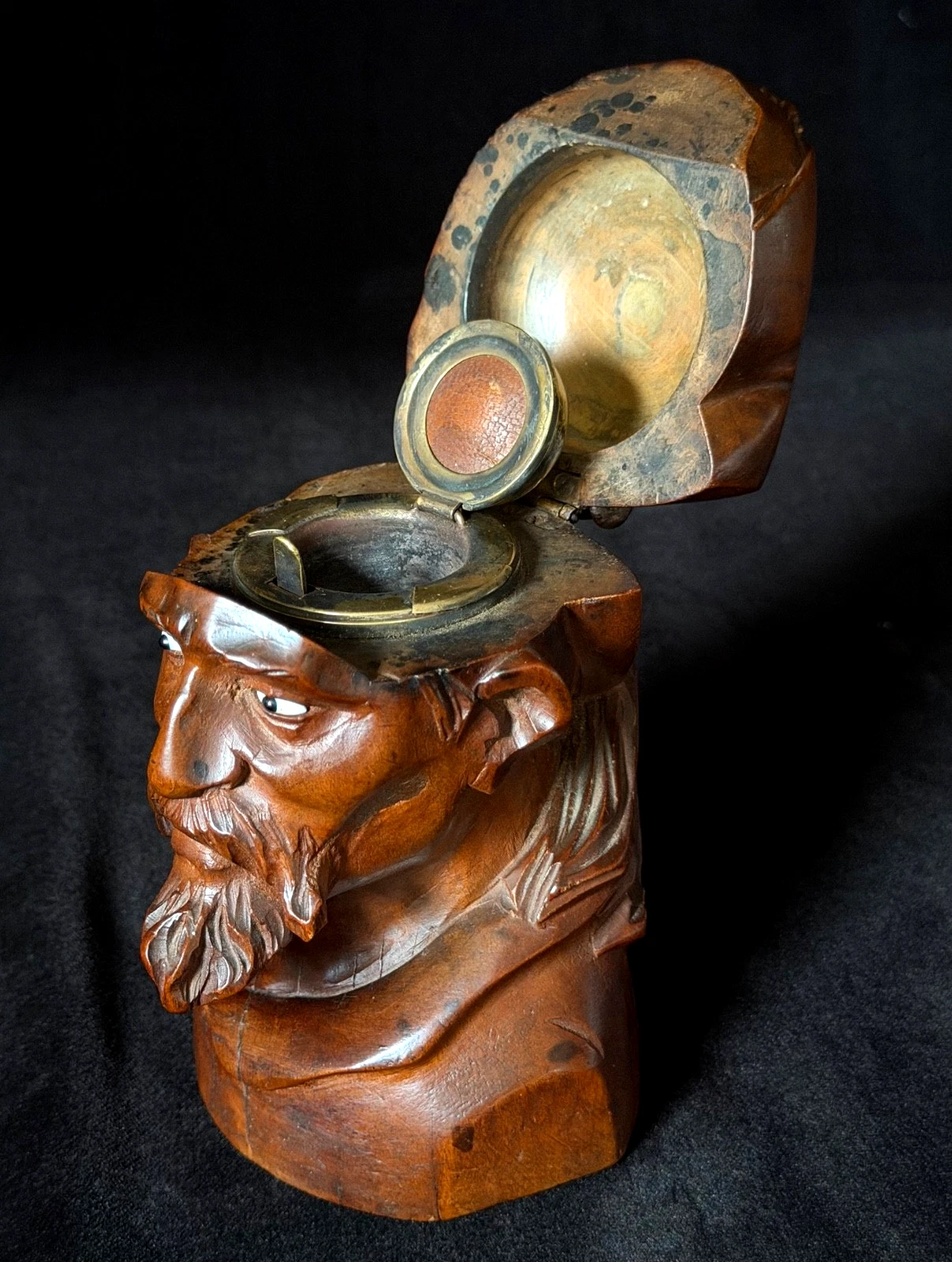
This carved wooden figural inkwell is an excellent example of 19th-century character carving, most likely originating from the high-end workshop tradition of Brienz, Switzerland, or the surrounding Alpine region.
Character Identification: The Buccaneer or “Galley Slave”
The subject’s fierce expression, combined with his specific attire, suggests he represents a Buccaneer (Pirate) or a Mediterranean Sailor.
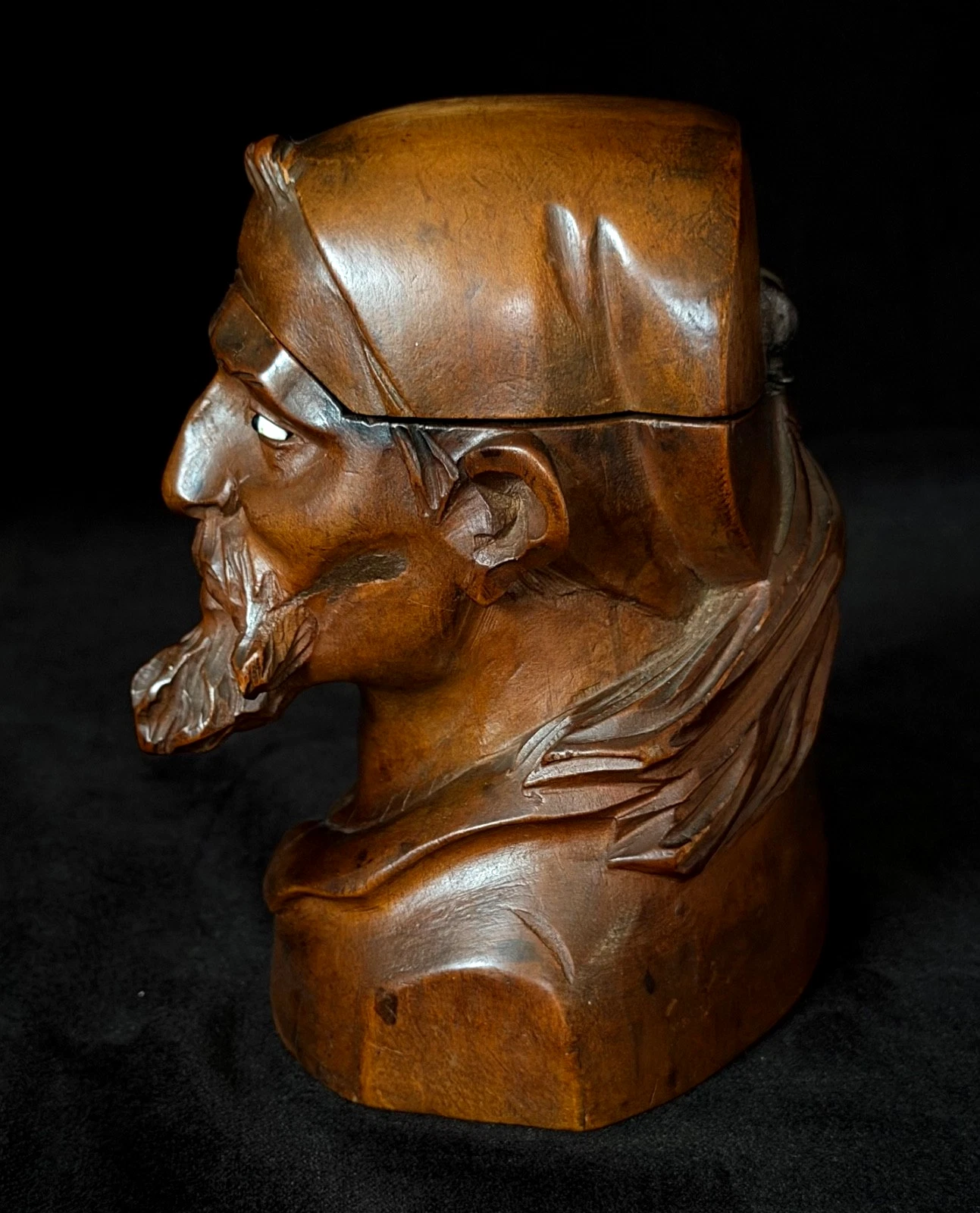
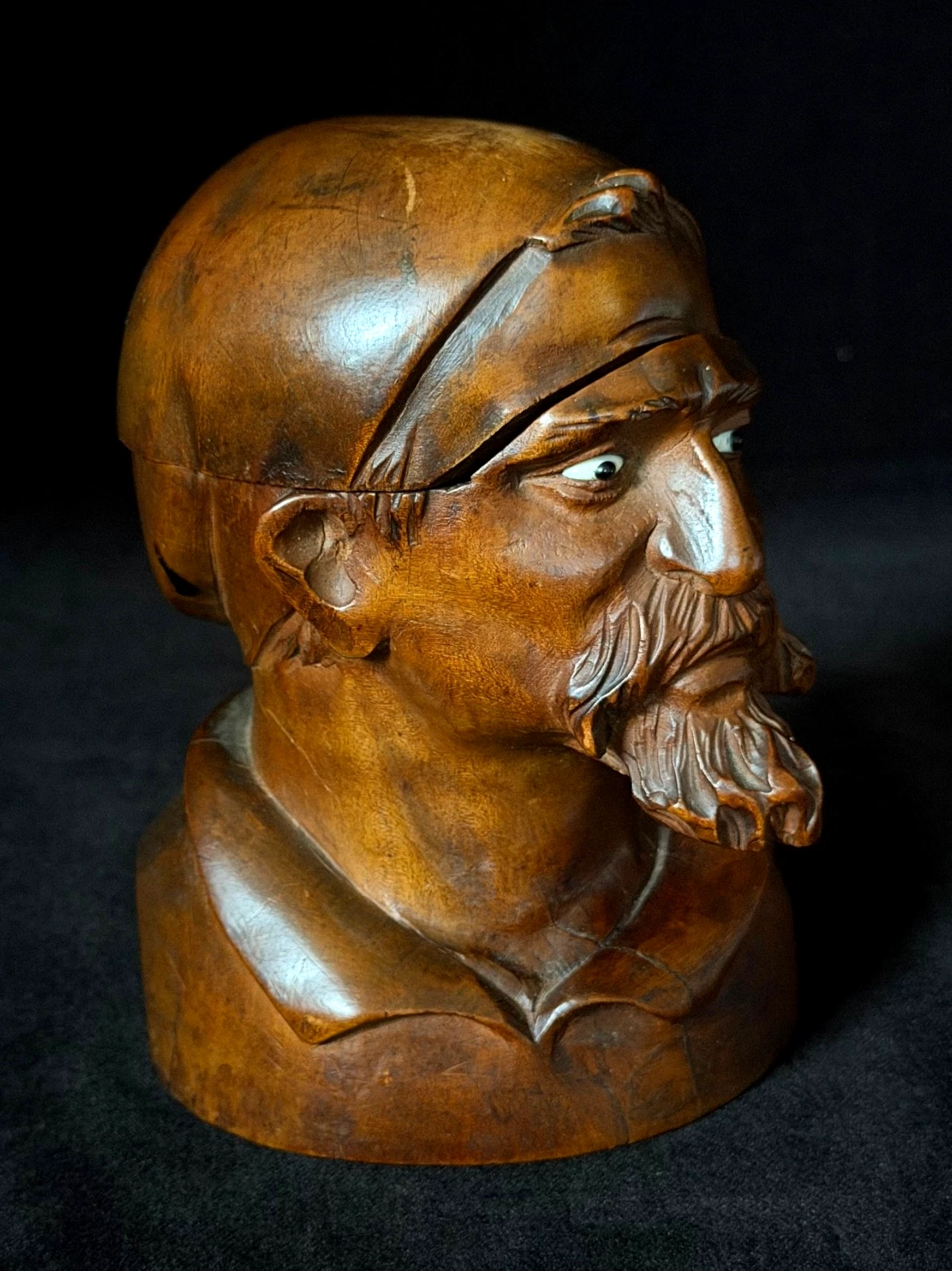
- The Gaze: His riveting glass eyes are set with a slight “side-eye” orientation, a technique used by master carvers to give the figure a cunning, watchful personality.
- Head Covering: He is wearing a Phrygian cap or a “stocking cap,” which was a standard 18th and 19th-century symbol for sailors and revolutionaries.
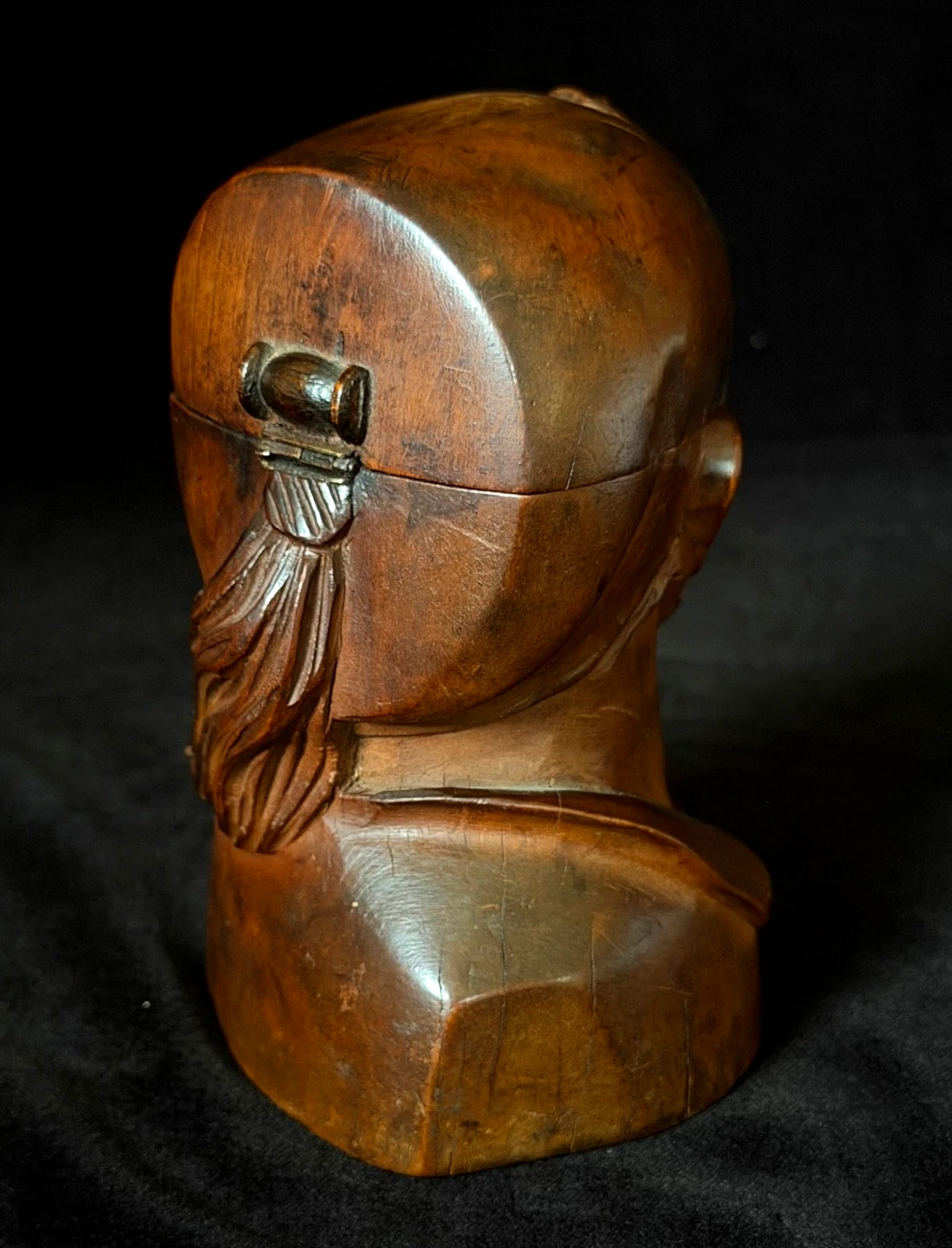
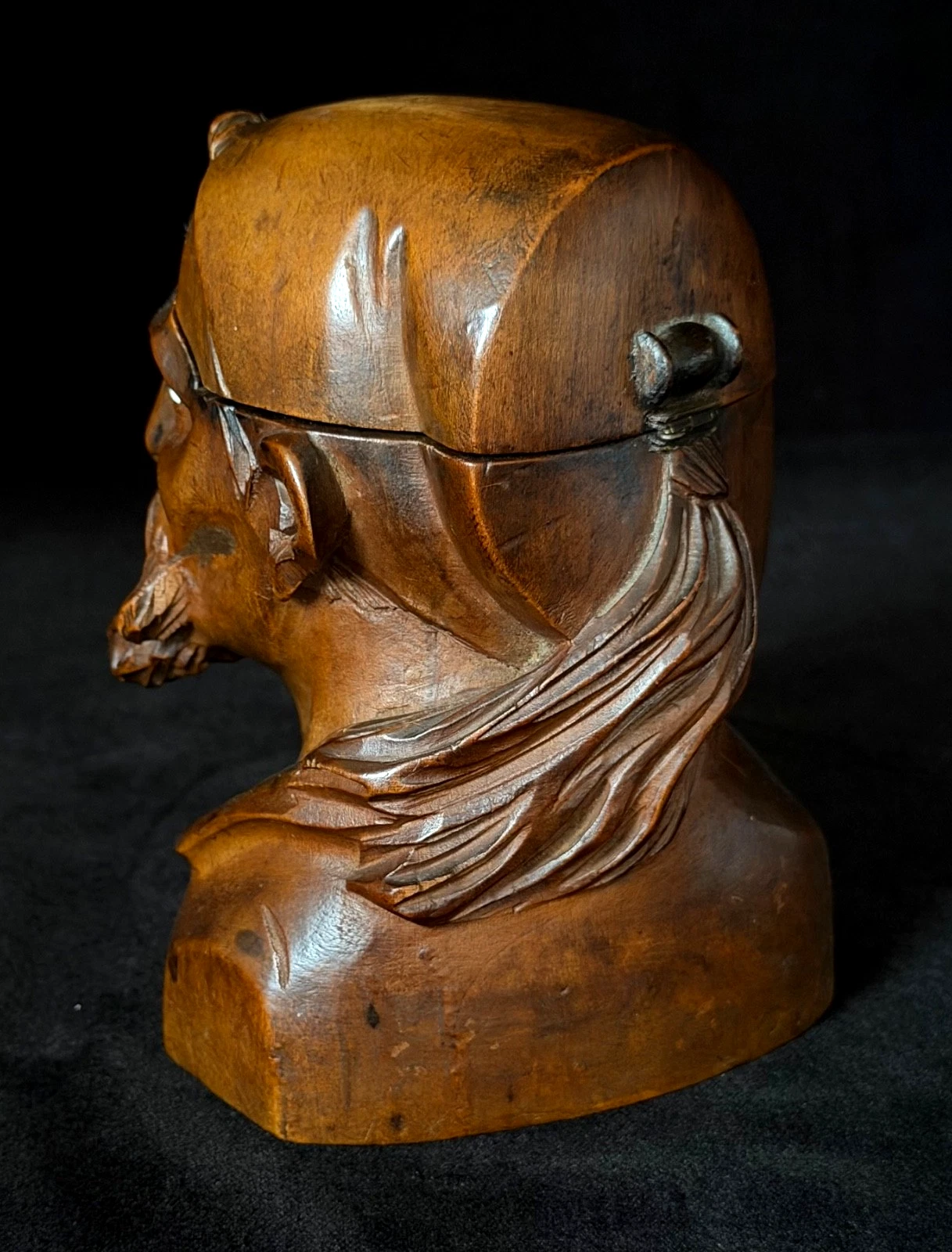
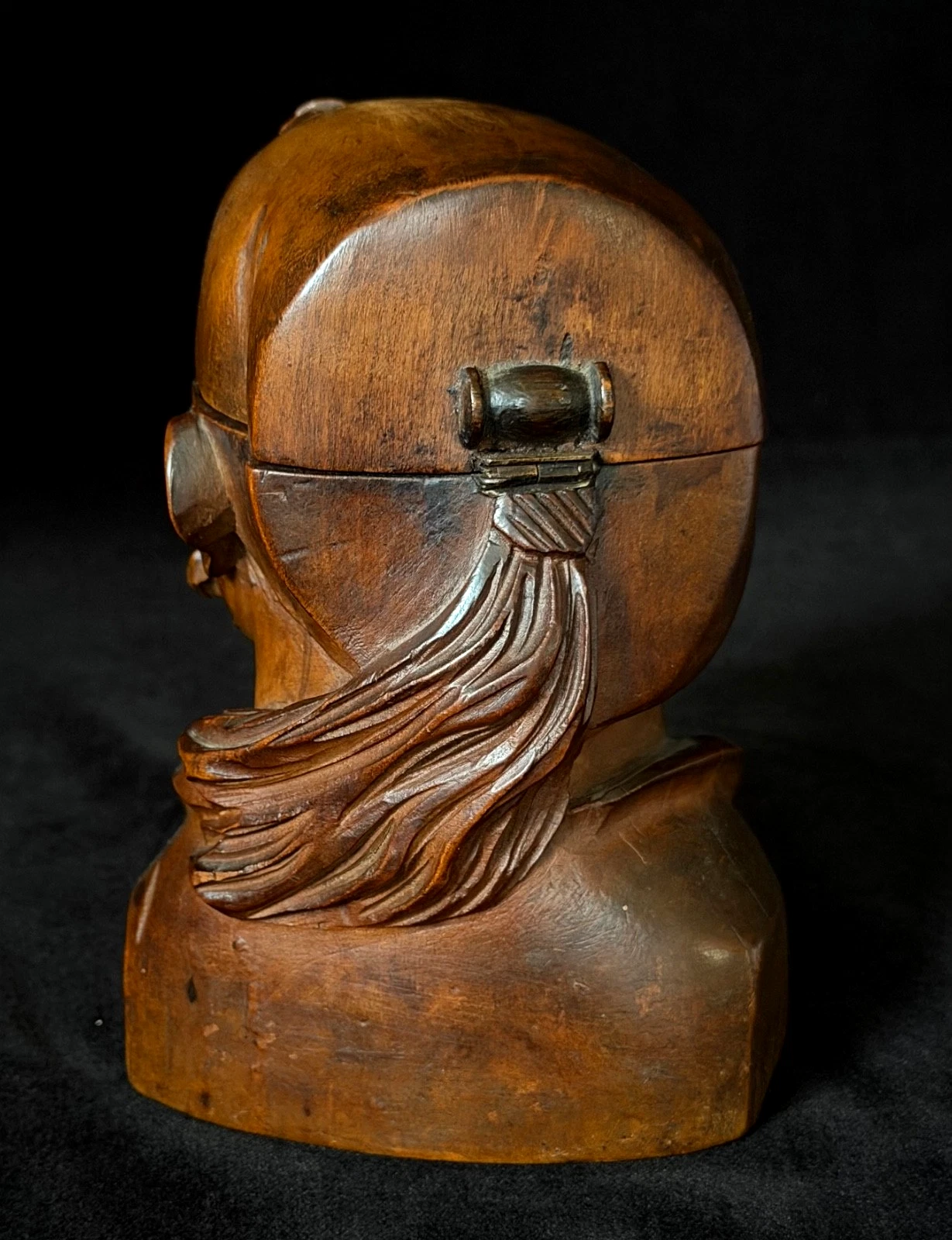
- The Ponytail: The carving in the back is a ponytail, secured by a ribbon. Historically, sailors often tarred their queues to keep them neat, which may be why the carver has rendered it with such stiff, textured detail.
- Facial Features: His pointed goatee and high, arched collar further lean into the “rough-hewn” aesthetic of an 18th-century privateer.
Mechanism and Construction
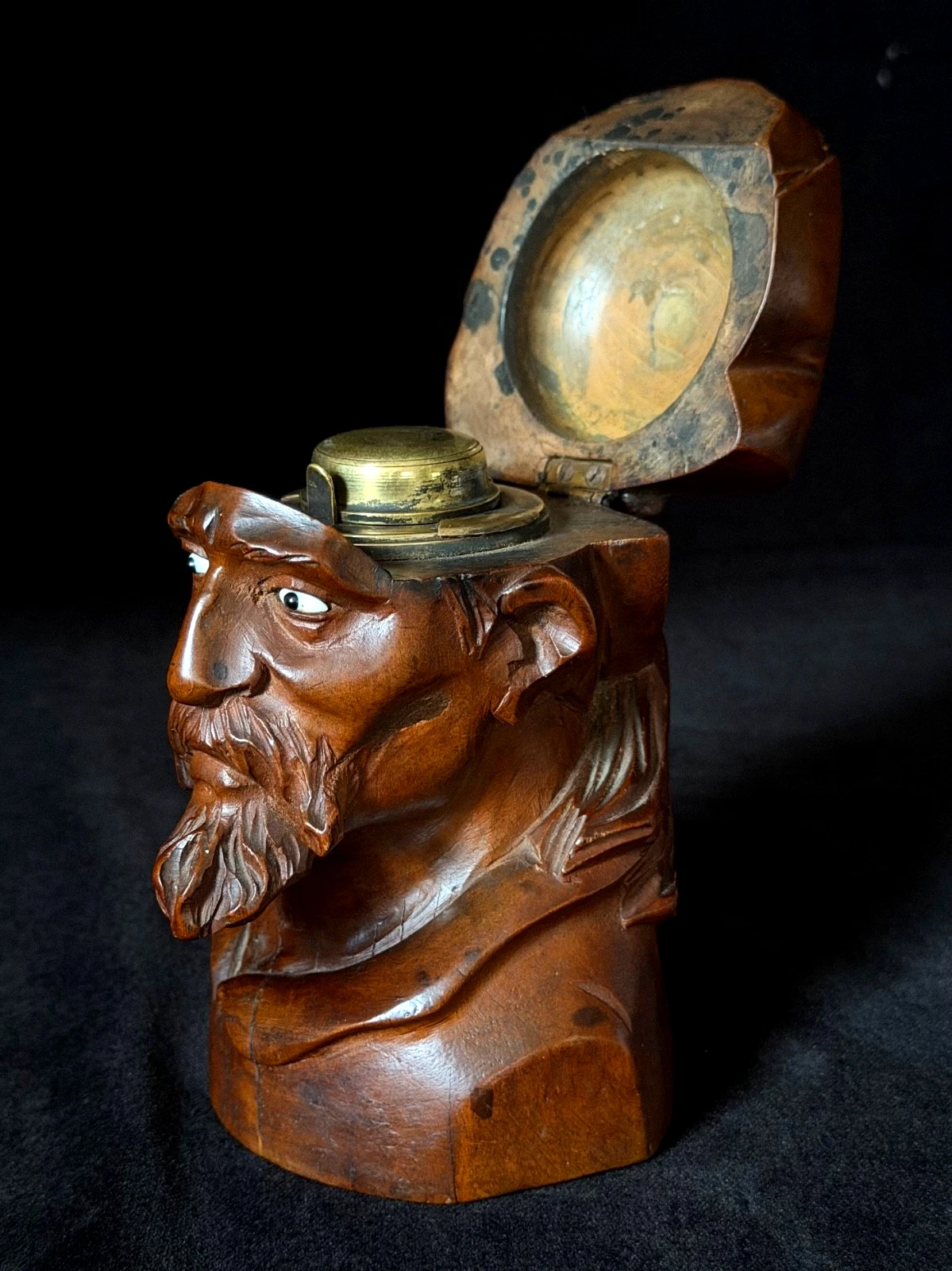
This piece features a sophisticated double-closure system designed to protect both the wood and the ink:
- Outer Hinge: The entire top half of the head (the hat) is hinged at the back with a concealed brass mount, allowing access to the interior cavity.
- Spring-Loaded Inner Lid: Inside, there is a dedicated metal ink reservoir. The spring-loaded, thumb-release lid was a premium feature. This “pop-top” mechanism was designed to be operated with one hand, allowing the writer to quickly dip their pen without fumbling with a loose lid.
Materials and Origin
- The Wood: This bust is carved from a single block of European Walnut or Pearwood. These woods were favored for figural busts because their tight grain allows for the extremely fine “stubble” and hair texture seen on the face and queue.
- The Finish: The dark, rich patina has been achieved through hand-burnishing and wax, which emphasizes the muscles of the neck and the creases around the eyes.
- Origin: While commonly called “Black Forest,” the quality of the mechanical thumb-release and the anatomical precision of the facial features strongly point to the Brienz, Switzerland school. Workshops like those of Edouard Jobin specialized in these “Character Heads” during the 1870s to 1890s.
Sold for $409 in December 2025
Content disclaimer. The information posted is the owner’s best knowledge and may not have been vetted by the SOIC. We welcome comments, corrections, and additions, working to make our website information comprehensive and accurate.
Join the Society of Inkwell Collectors (SOIC) – it’s free!
Founded in 1981 as a non-profit organization,
we are documenting inkwells (and accessories).
We’re here to help and inform!