




Burl Wood Inkwell with Pen Wipe
| Categories | Wood Inkstands |
| Material | Wood |
| Markings | GERSIL |
| Manufacturer | Undetermined |
| Origin | Germany |
| Date or Era | circa 1900 |
| Measuring | 4” across |
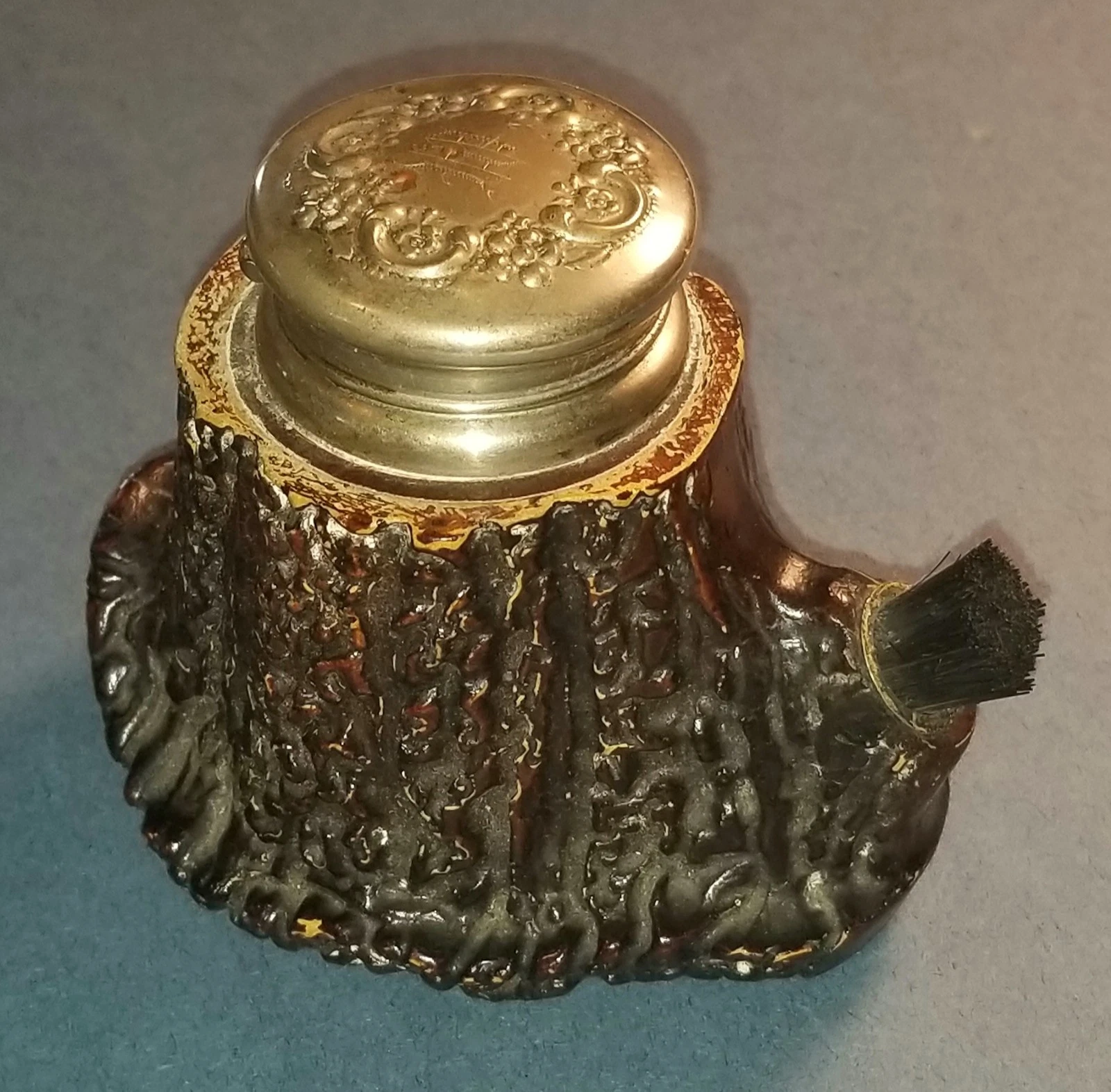
This is a charming piece of late 19th-century “Naturalist” desk ware. It combines a rustic, organic aesthetic with the refined metalwork typical of the era.
Description
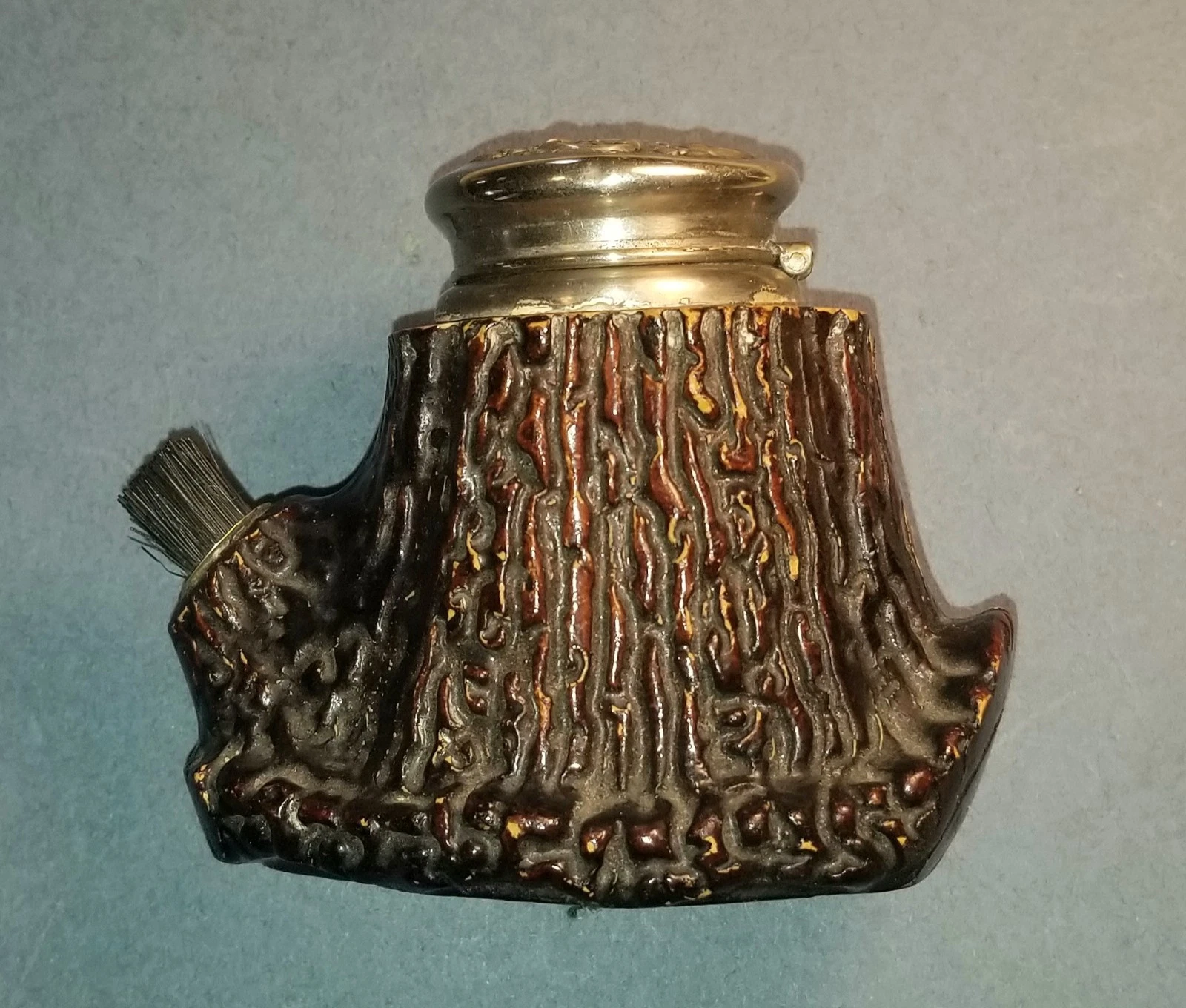
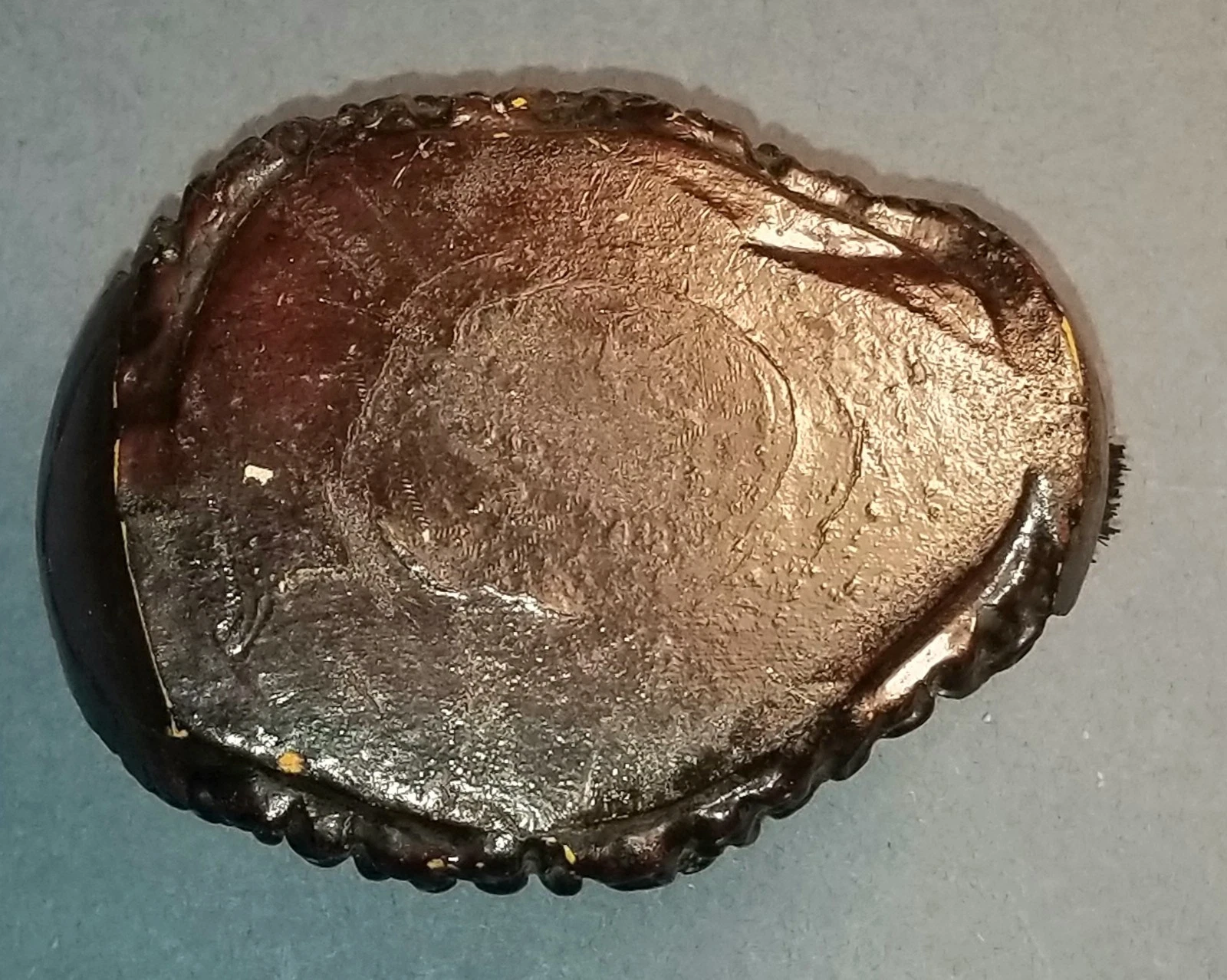
- The Base: The inkwell is built from a natural tree burl (or root section). The maker intentionally left the “live edge” or bark-like texture on the front and sides to create a stump-like appearance, while polishing the top and back to a high sheen to showcase the internal grain.
- The Pen Wipe: Protruding from the right side is an integrated pen wipe—a stiff bristle brush. In the era of dip pens, these were used for cleaning excess ink and paper fibers from a nib to prevent clogs and corrosion.
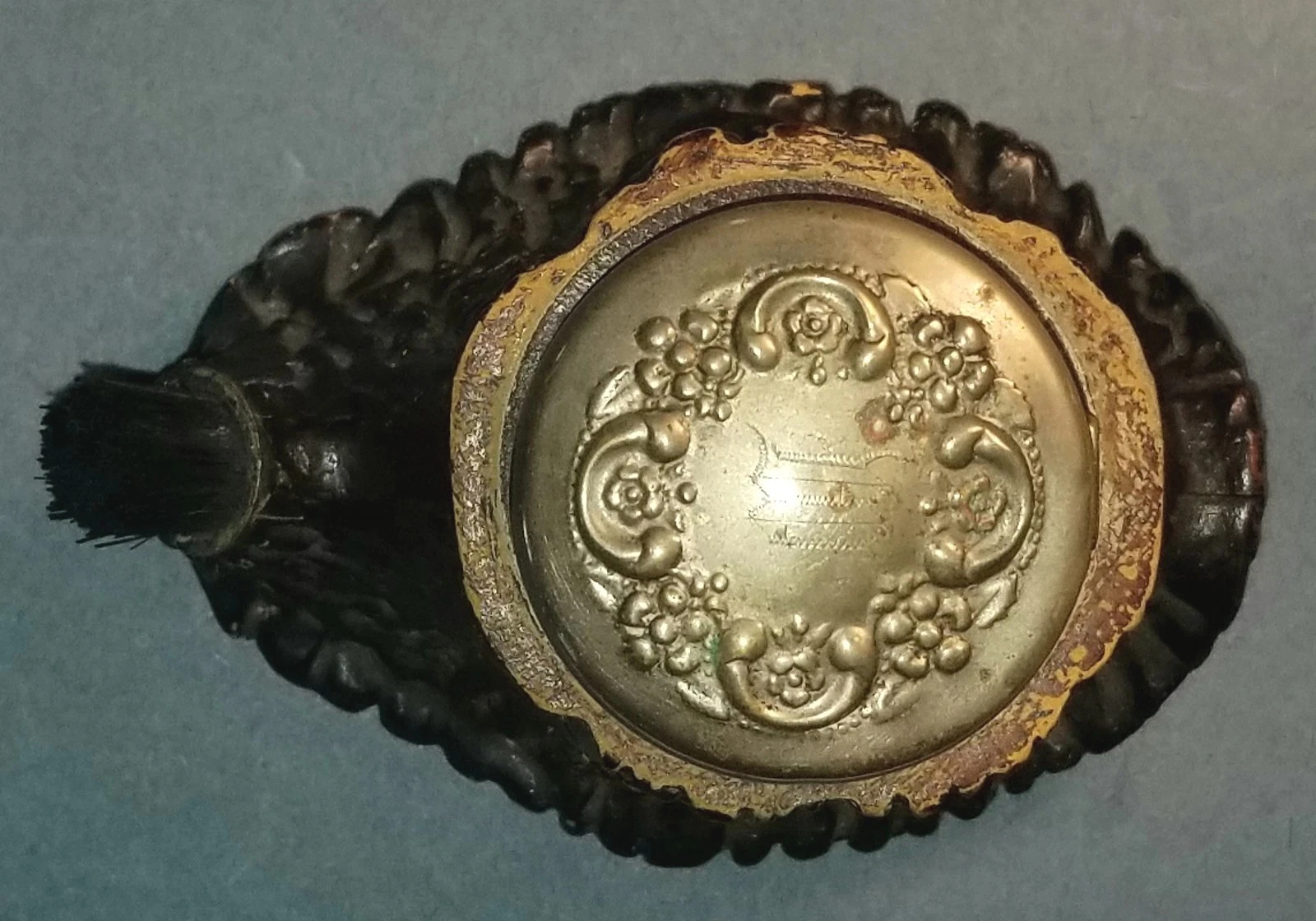
- The Lid & Casing: The metalwork is elaborate. The lid features a repoussé (hammered from behind) floral and foliate design. At the center is a stylized monogram, which appears to be a Gothic-script “JH.” The interior of the lid shows the reverse of this detailed hand-work.
- The Mark: The “GERSIL” stamp on the rim is a trade name for German Silver.
What is Burl Wood?
A burl is a tree growth in which the grain has grown in a deformed, chaotic manner. It usually appears as a large, lumpy protrusion on the trunk or roots of a tree.
- Cause: Burls are the tree’s response to some form of stress—such as an injury, virus, or fungal infection.
- The Grain: Because the cells grow in a “disorganized” way, the wood inside does not have the straight lines of a normal trunk. Instead, it features tight swirls, “eyes,” and mottling.
- Value: Because of this unique, non-repeating pattern, burl wood has been highly prized by woodworkers and collectors for centuries for use in fine furniture, bowls, and—as seen here—novelty inkwells.
The “GERSIL” Mark and Metal
Despite the name, German Silver (marked here as “GERSIL”) contains no actual silver.
It is an alloy of copper, nickel, and zinc. It was favored in the 19th century because it was durable, resisted corrosion better than brass, and could be polished to a luster that closely mimicked sterling silver at a fraction of the cost. The “GERSIL” mark was a common trade branding used by German manufacturers to denote high-quality nickel silver.
Age and Origin
- Age: This inkwell likely dates to the late 19th or very early 20th century (c. 1880–1910). This was the peak of the “Naturalist” movement, where items were designed to look like they were plucked directly from a forest or garden.
- Made in Germany? Almost certainly. The use of the “GERSIL” mark, combined with the “Black Forest” adjacent style (though this is burl-work rather than traditional figural carving), points directly to Germany or Austria. Germany was a massive exporter of these high-quality “souvenir” and novelty desk items during this period.
Sold for $125 in March 2026
Content disclaimer. The information posted is the owner’s best knowledge and may not have been vetted by the SOIC. We welcome comments, corrections, and additions, working to make our website information comprehensive and accurate.
Join the Society of Inkwell Collectors (SOIC) – it’s free!
Founded in 1981 as a non-profit organization,
we are documenting inkwells (and accessories).
We’re here to help and inform!