

Inkipedia
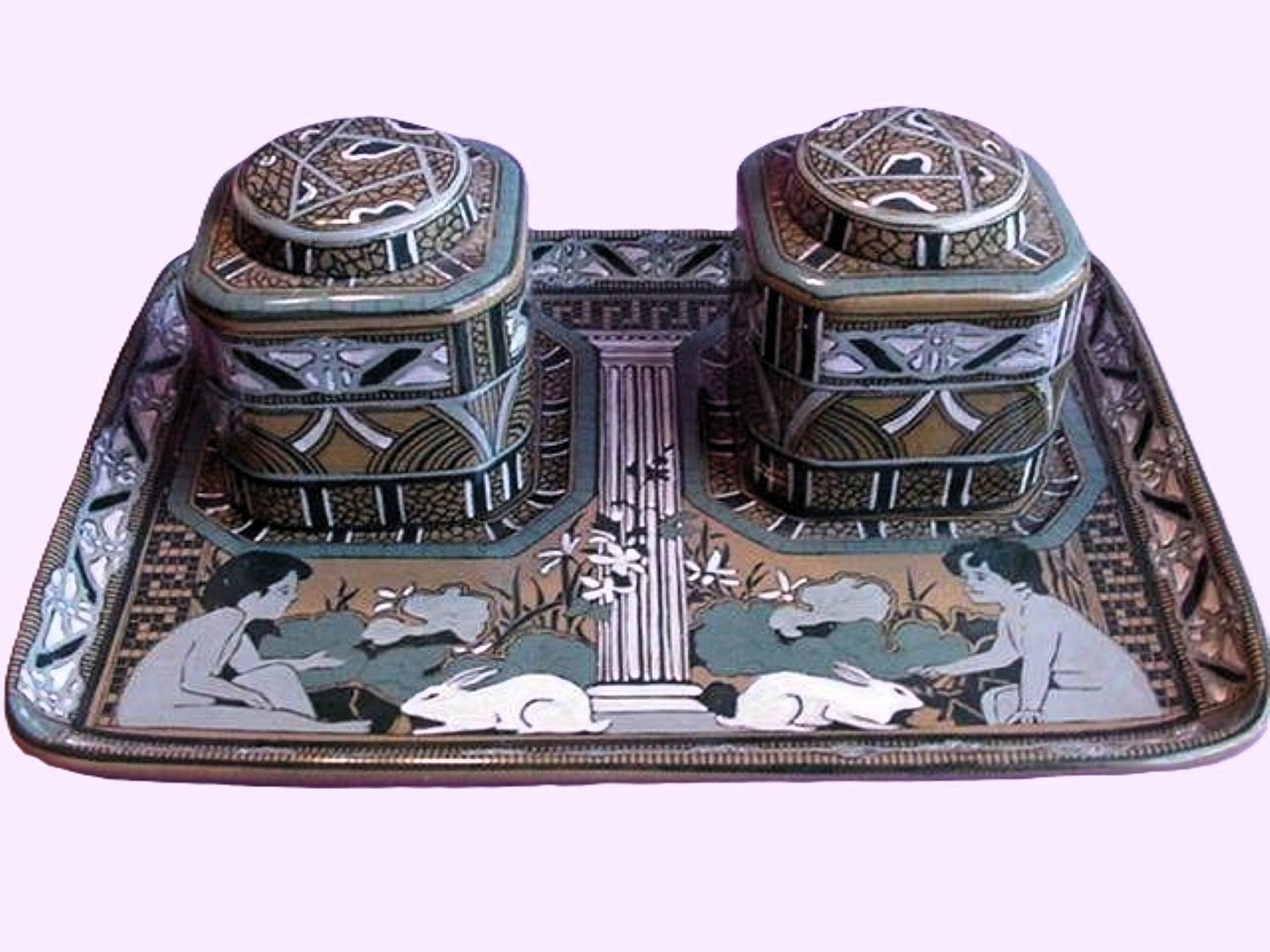


Buffalo Pottery “Emerald” Deldare Ware Inkstand
| Categories | Ceramics/Porcelain "Named" Makers |
| Material | Pottery |
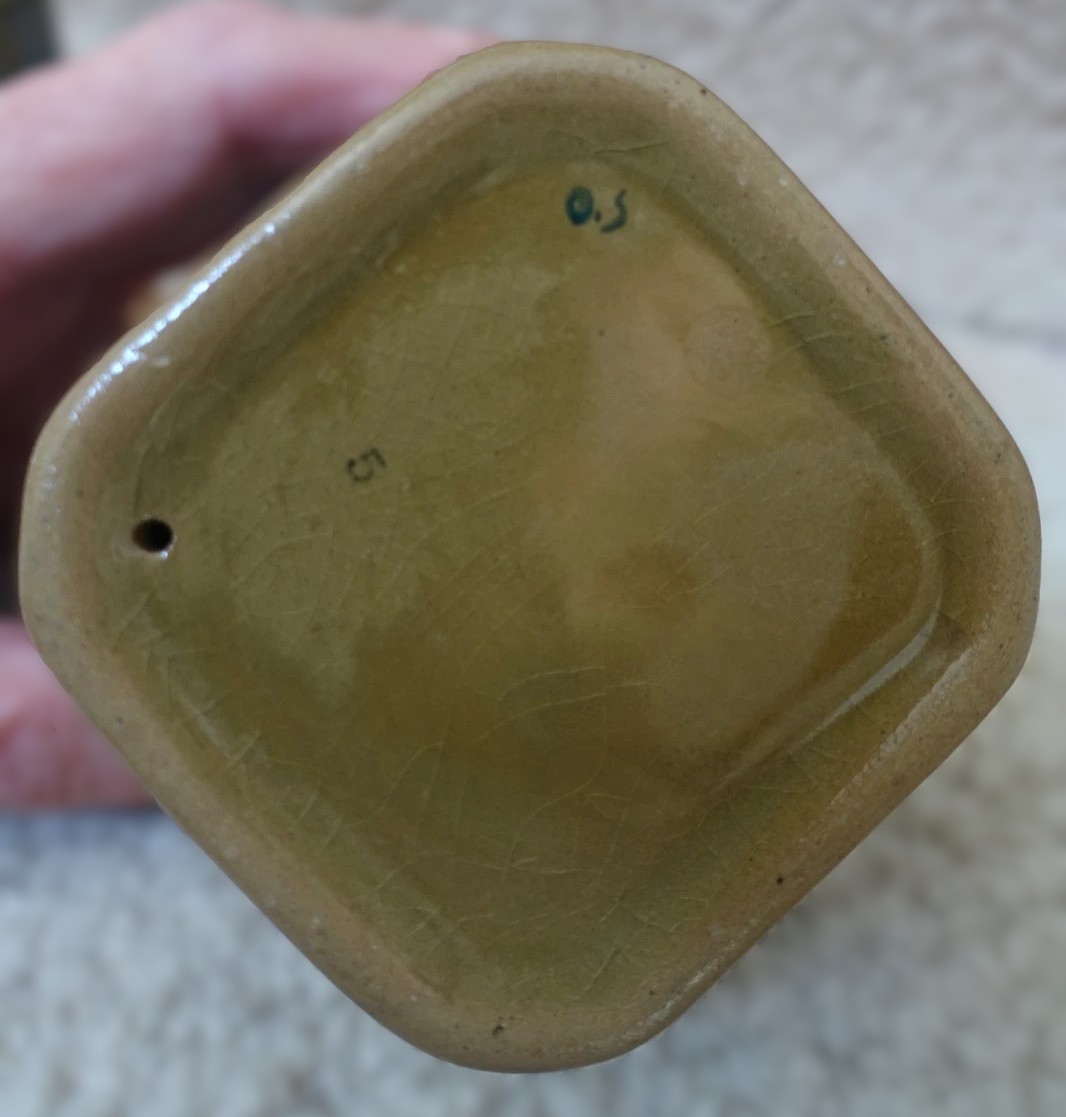
| Markings | See Narrative |
| Manufacturer | Buffalo Pottery |
| Origin | United States |
| Date or Era | circa 1911 |
| Measuring | Tray: 8 ⅞” x 6 ½”; inkwell 2 ½” x 2 ½” x 2 ½” high |
This is a beautiful and collectible piece of early American art pottery: a Buffalo Pottery Deldare Ware Double Inkstand, dated and signed by the artist.
Physical Description
- Form: A double inkstand, consisting of an oblong rectangular tray/base with two openings for inkwells.
- Material: Semi-vitreous earthenware pottery, typical of Buffalo Pottery, finished with a glossy glaze over the decoration.
- Components: The stand accommodates two inkwells, each with a simple, matching lift-off lid. The wells and lids feature the same style of decoration as the tray.
- Decoration (Deldare Ware – Emerald Colorway):
- Palette: The colors are characteristic of the “Emerald” colorway (produced 1908–1914), featuring deep olive-greens, rich browns, and dark reds, giving the piece a warm, antique finish against the cream-colored pottery body.
- Subject: The central scene on the tray is a detailed genre scene depicting two children interacting with rabbits in a pastoral or domestic setting. This imagery is consistent with the sentimental or literary themes often drawn from 18th-century English prints that Deldare Ware is known for.
- Technique: The scene was applied using a transfer print technique for the outline and then meticulously hand-painted by an artist to apply the color, making each piece unique.
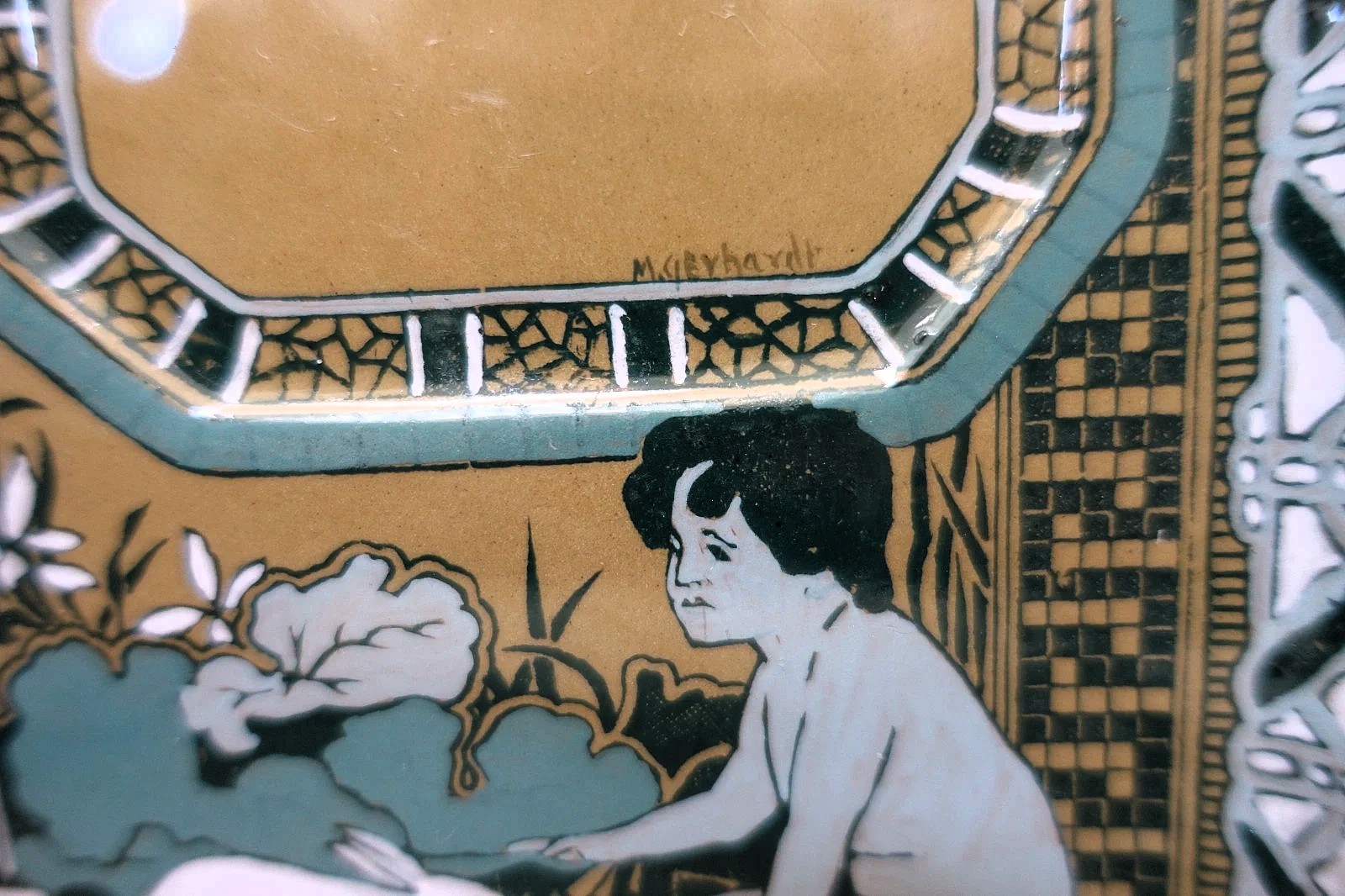
- Artist’s Signature: The scene is signed “M. Gerhardt” on the front of the tray, identifying the skilled decorator who finished the piece by hand.
Marks and Provenance
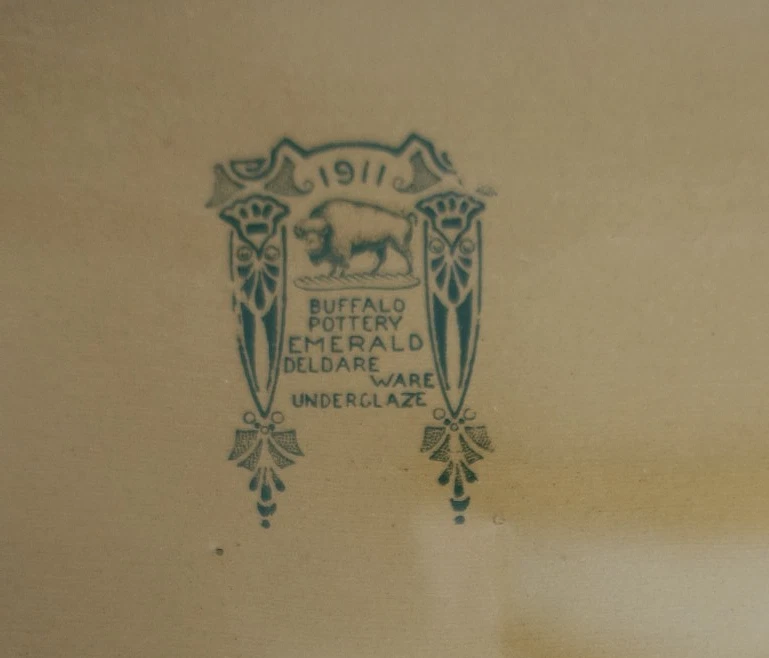
The underside of the tray is clearly stamped with the following crucial information:
- Date: 1911
- Manufacturer: Buffalo Pottery
- Line: Deldare Ware
- Colorway: Emerald
- Technique: Underglaze
Context and History
- Buffalo Pottery
- Origin: Founded in Buffalo, New York, in 1901 by the Larkin Soap Company.
- Significance: Known for producing high-quality utilitarian china and distinctive lines of art pottery during the American Arts and Crafts movement. Their success lay in combining industrial manufacturing methods with skilled hand-finishing.
- Deldare Ware
- Production Run: Deldare Ware was Buffalo Pottery’s most famous art pottery line, produced for a relatively short period, primarily from 1908 to 1914.
- Aesthetic: The style mimics the appearance of hand-painted European tin-glazed earthenware (like Delft or Italian maiolica). The scenes are often derived from historical illustrations of English literary or everyday life, and the “Emerald” colorway utilized rich, warm tones of green and brown.
- “Underglaze”: The decoration was applied before the final transparent glaze, which protected the hand-painting and resulted in a durable, glossy finish.
- M. Gerhardt (The Decorating Artist)
- Role: M. Gerhardt was one of the many decorating artists employed at the Buffalo Pottery factory. After the transfer outline was applied to the piece, M. Gerhardt was responsible for the skillful, hand-applied coloring that brought the “Children with Rabbits” scene to life.
- Collectibility: The visible signature confirms the piece was hand-finished and is highly valued by collectors as it identifies the individual artist responsible for the unique painted details.
Sold for $1959 in September 2025
Content disclaimer. The information posted is the owner’s best knowledge and may not have been vetted by the SOIC. We welcome comments, corrections, and additions, working to make our website information comprehensive and accurate.
Join the Society of Inkwell Collectors (SOIC) – it’s free!
Founded in 1981 as a non-profit organization,
we are documenting inkwells (and accessories).
We’re here to help and inform!