

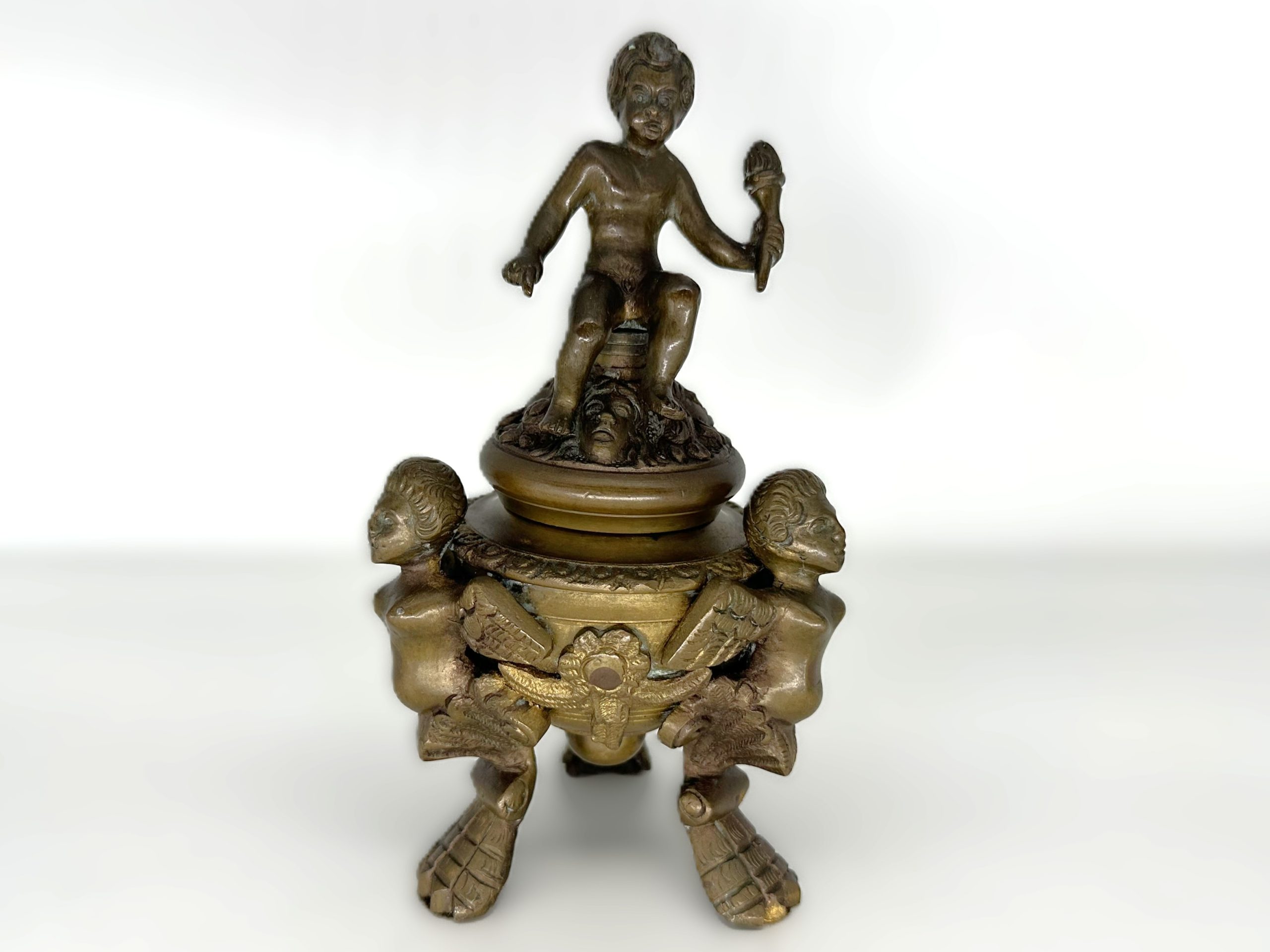
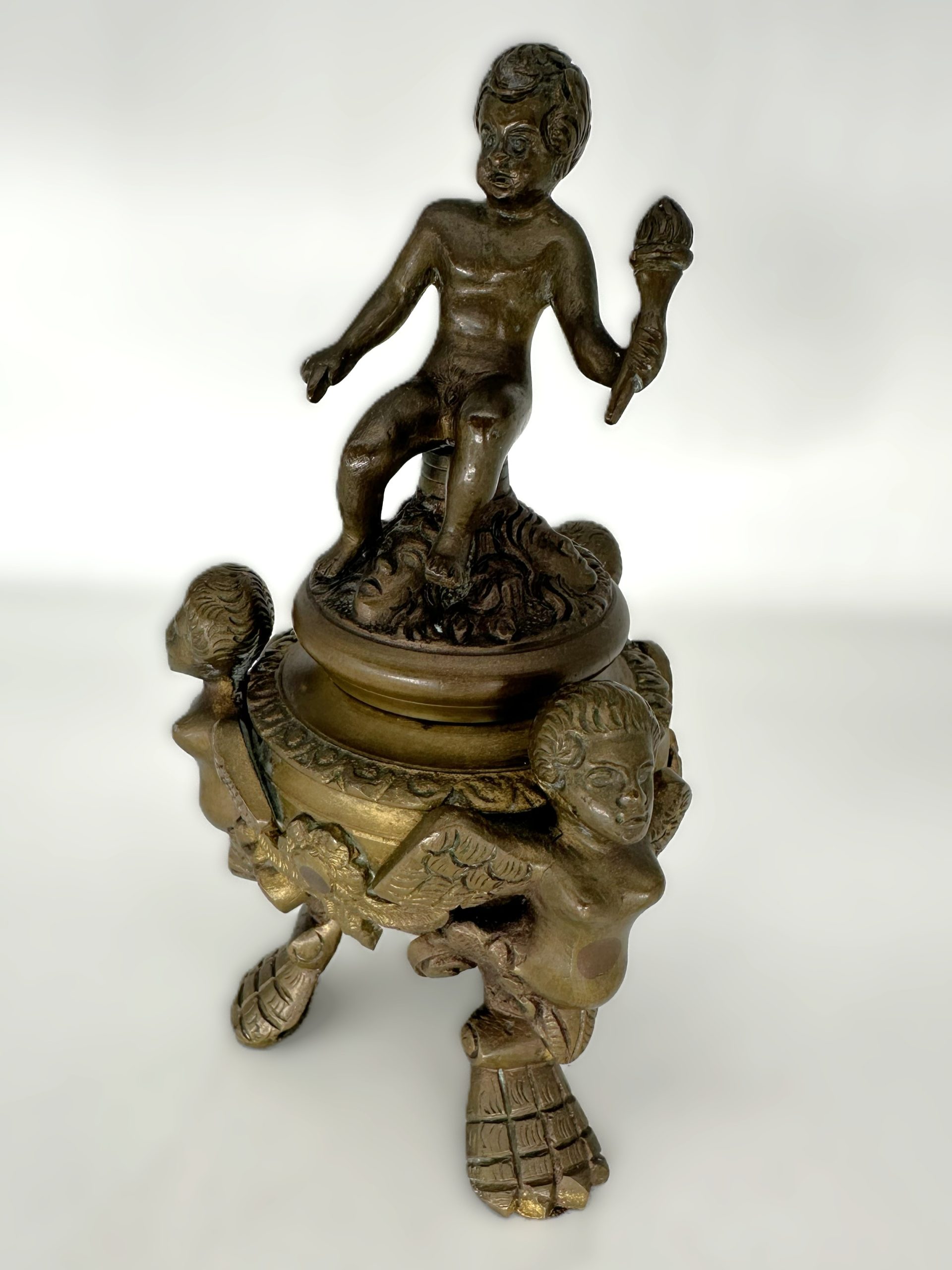
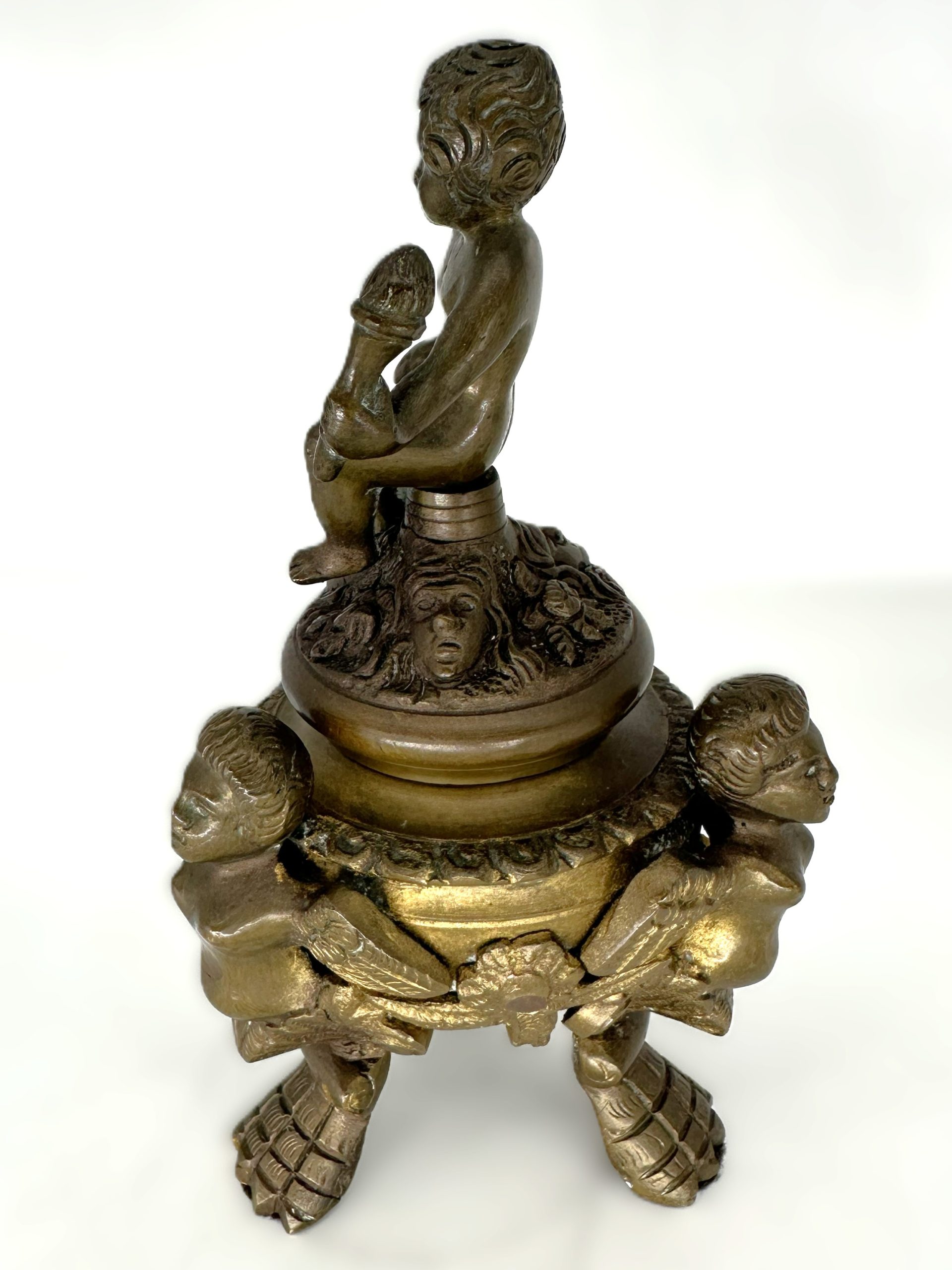
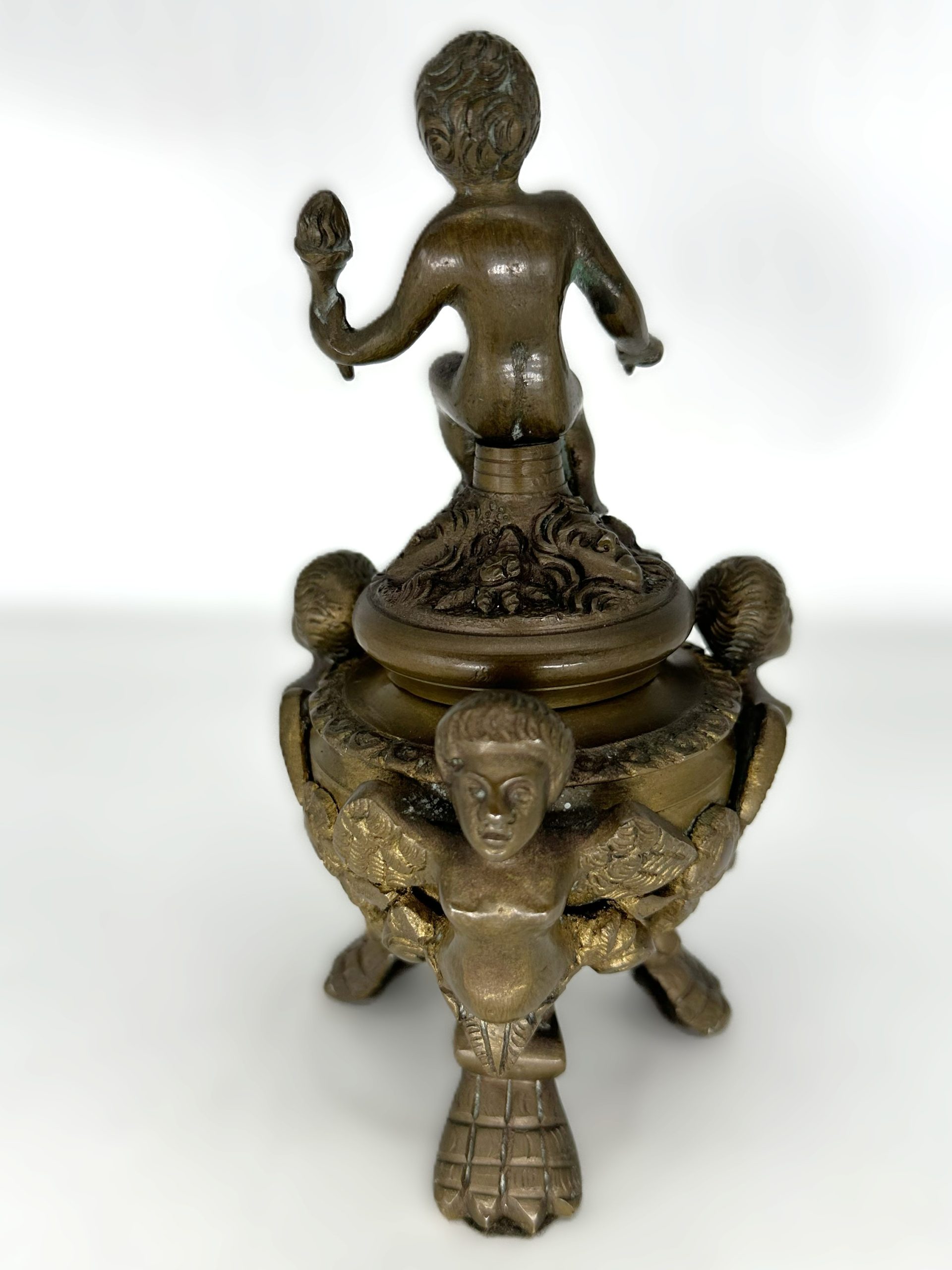
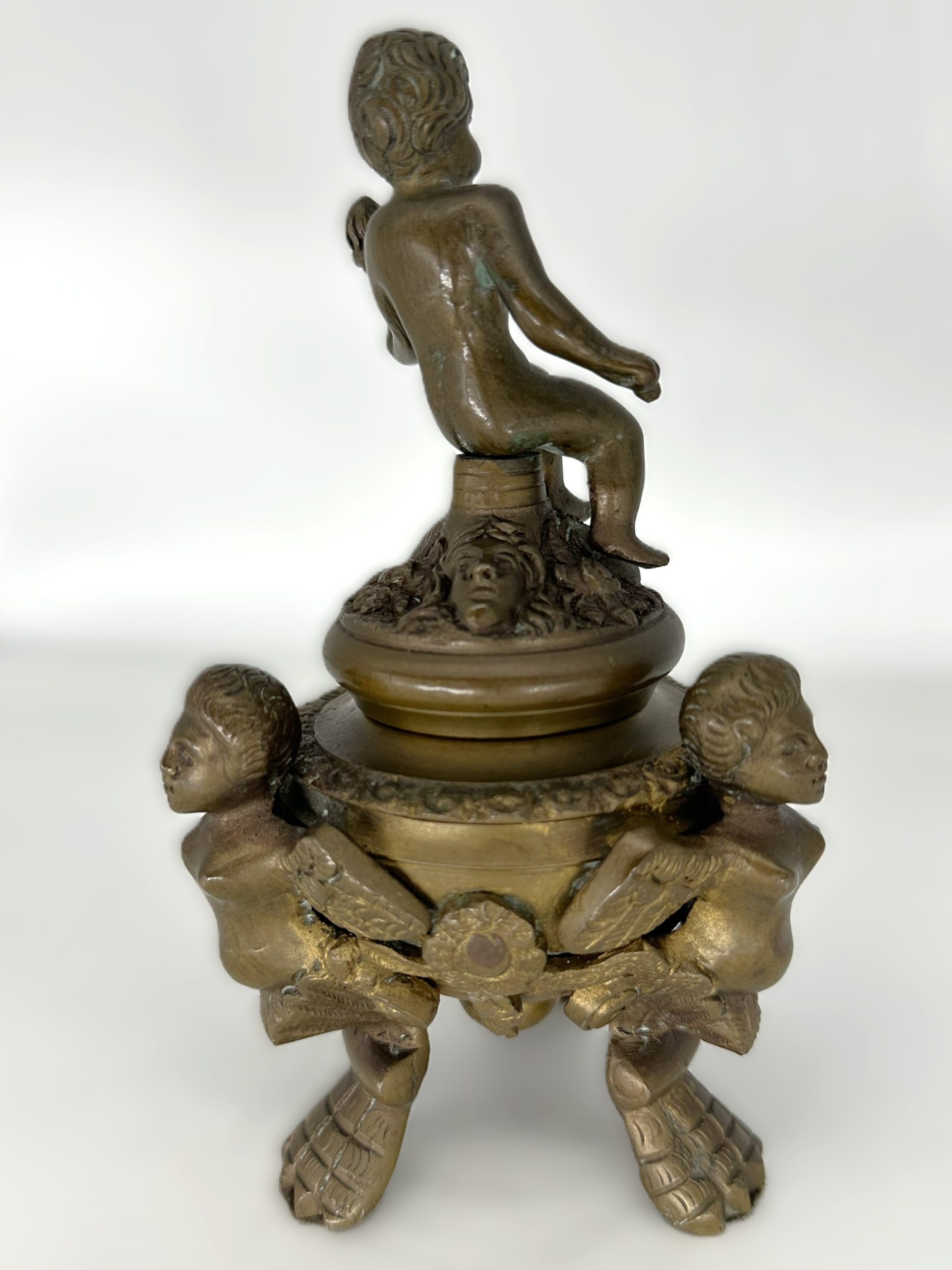
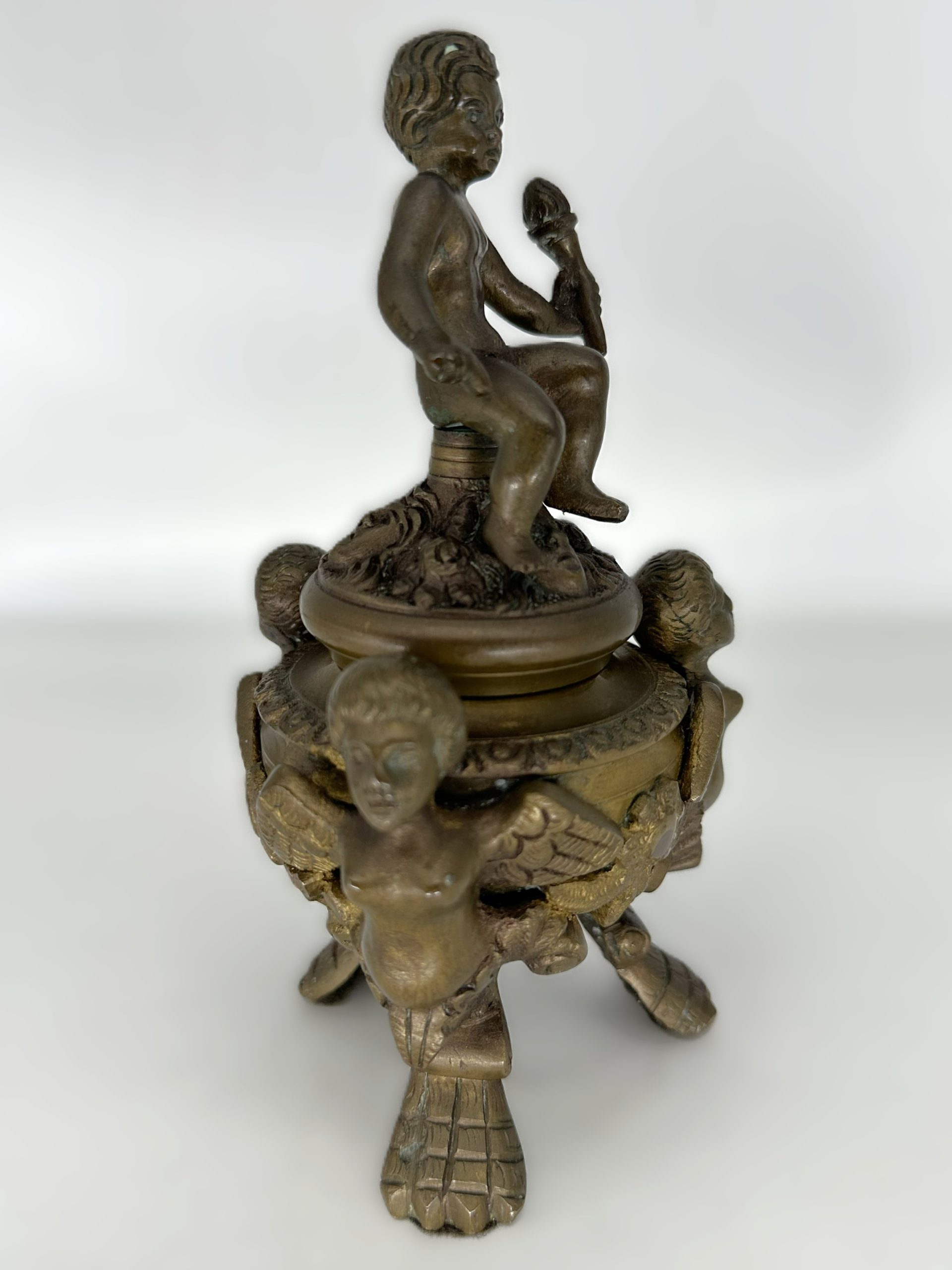
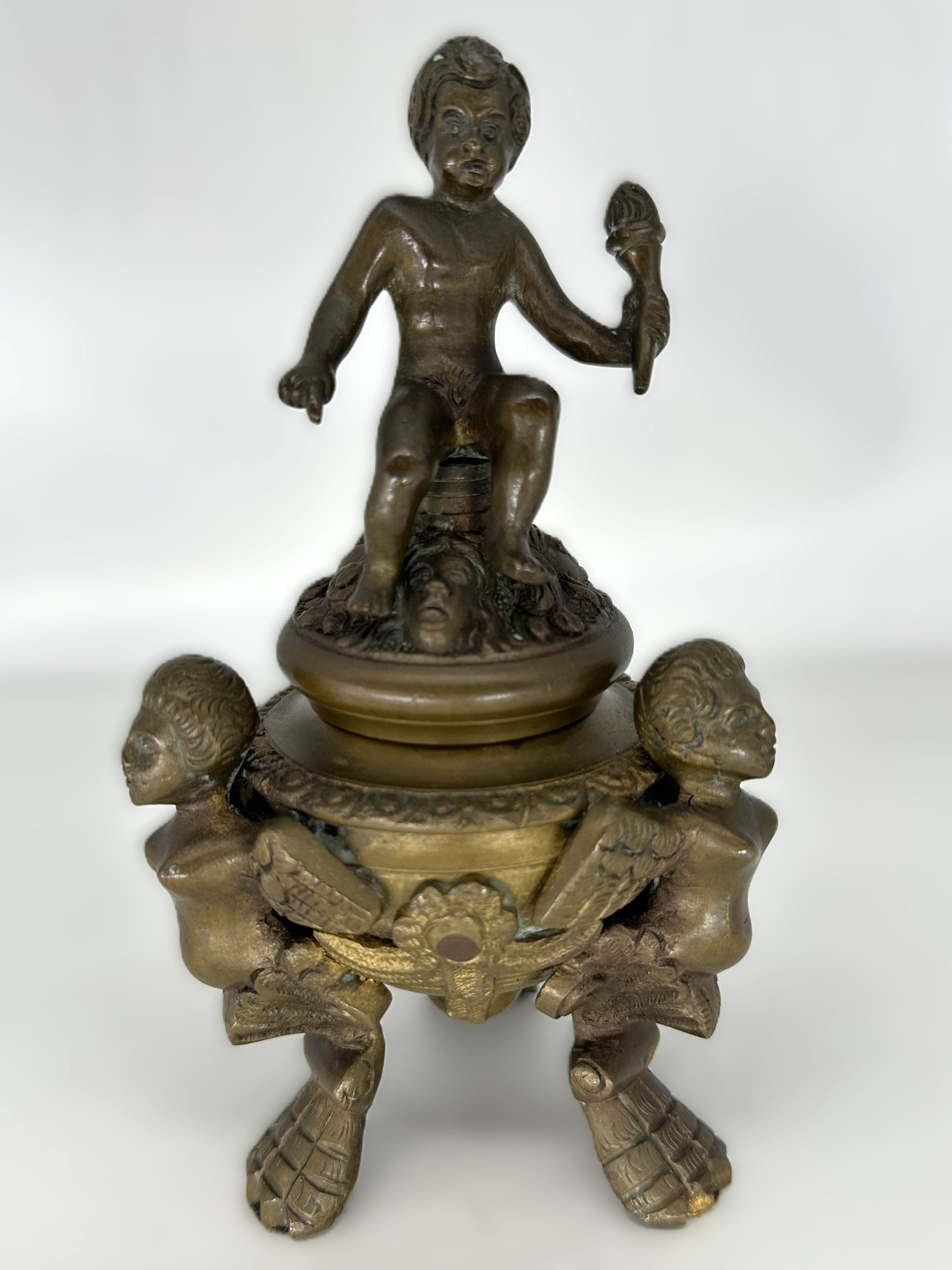
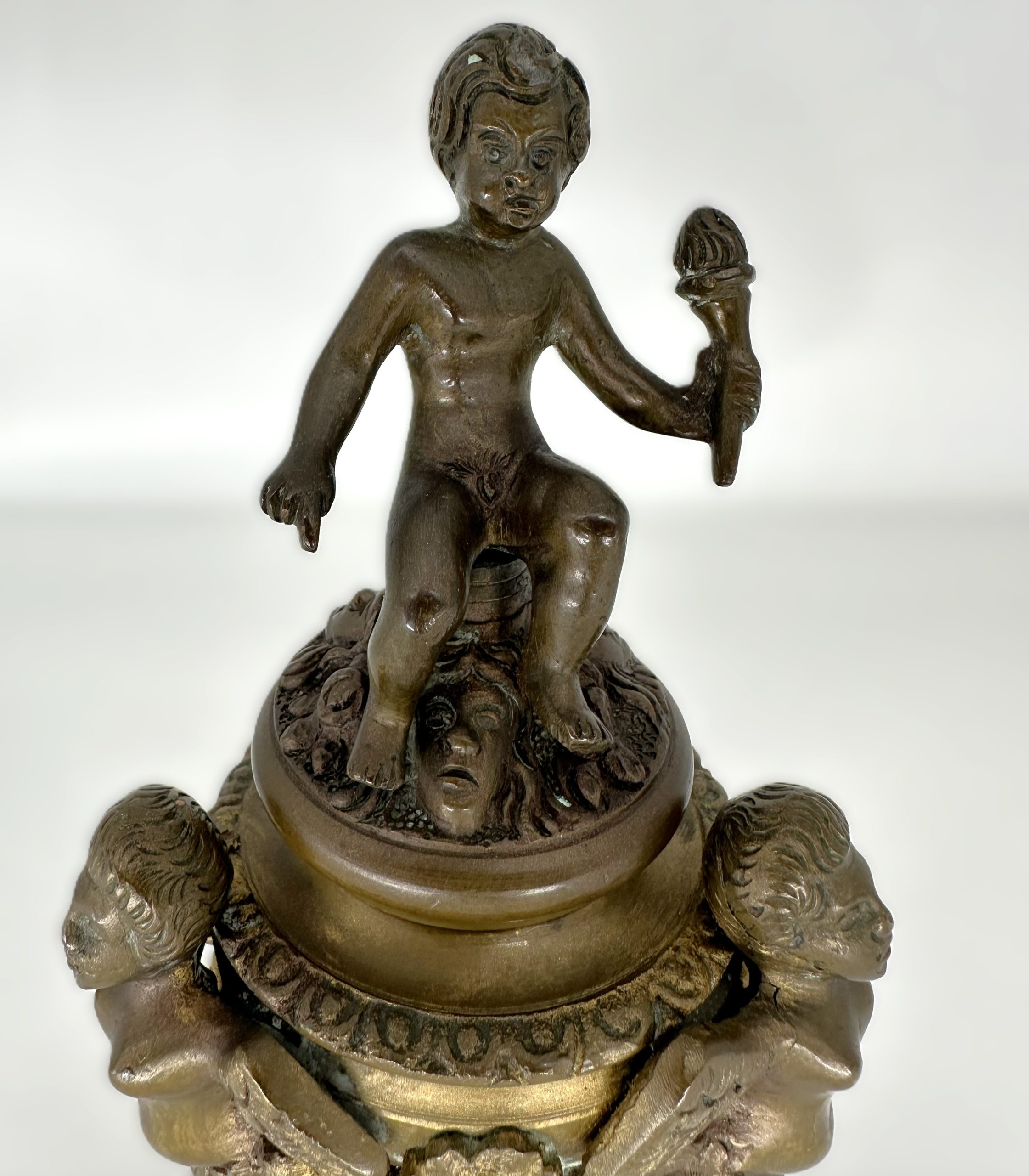
Bronze Tripod Inkwell with Harpies
| Categories | Figural - Mythology; Literature; Religion; Fictional, Souvenir |
| Type | Grand Tour, Mythology |
| Material | Bronze |
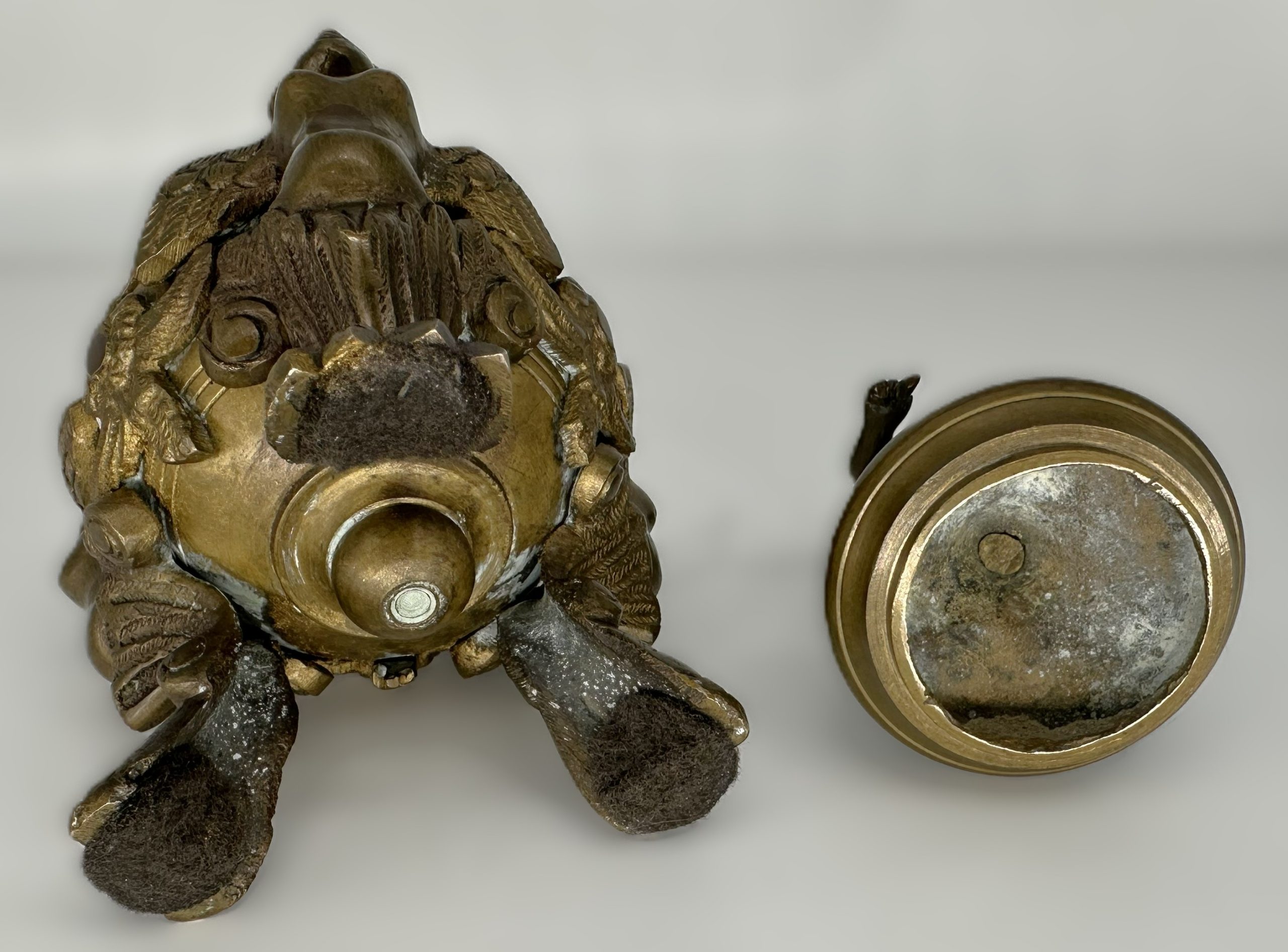
| Markings | Unmarked |
| Manufacturer | Undetermined |
| Origin | Undetermined |
| Date or Era | circa 1880 |
| Measuring | 4” across; 6 ¾” high |
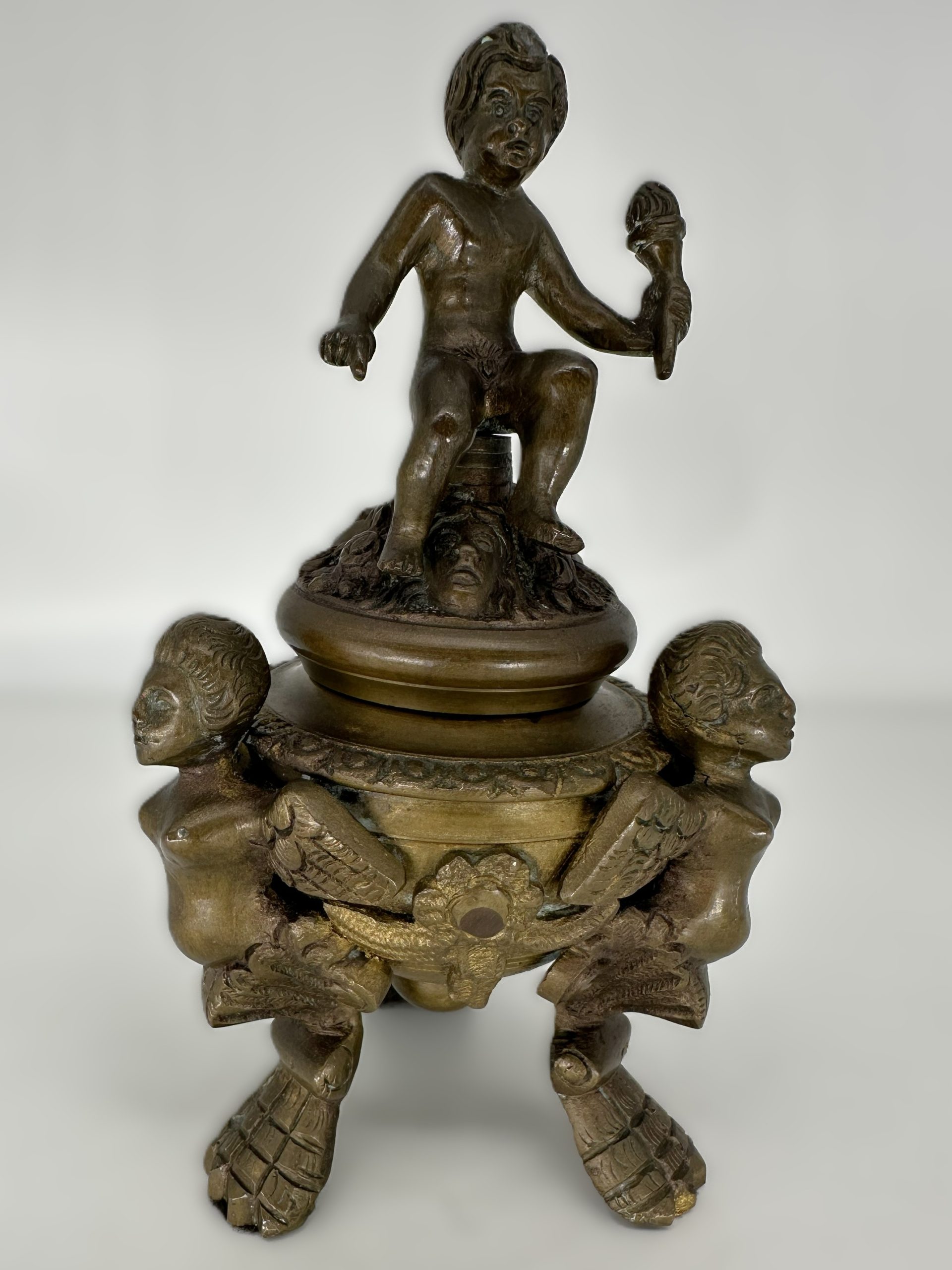
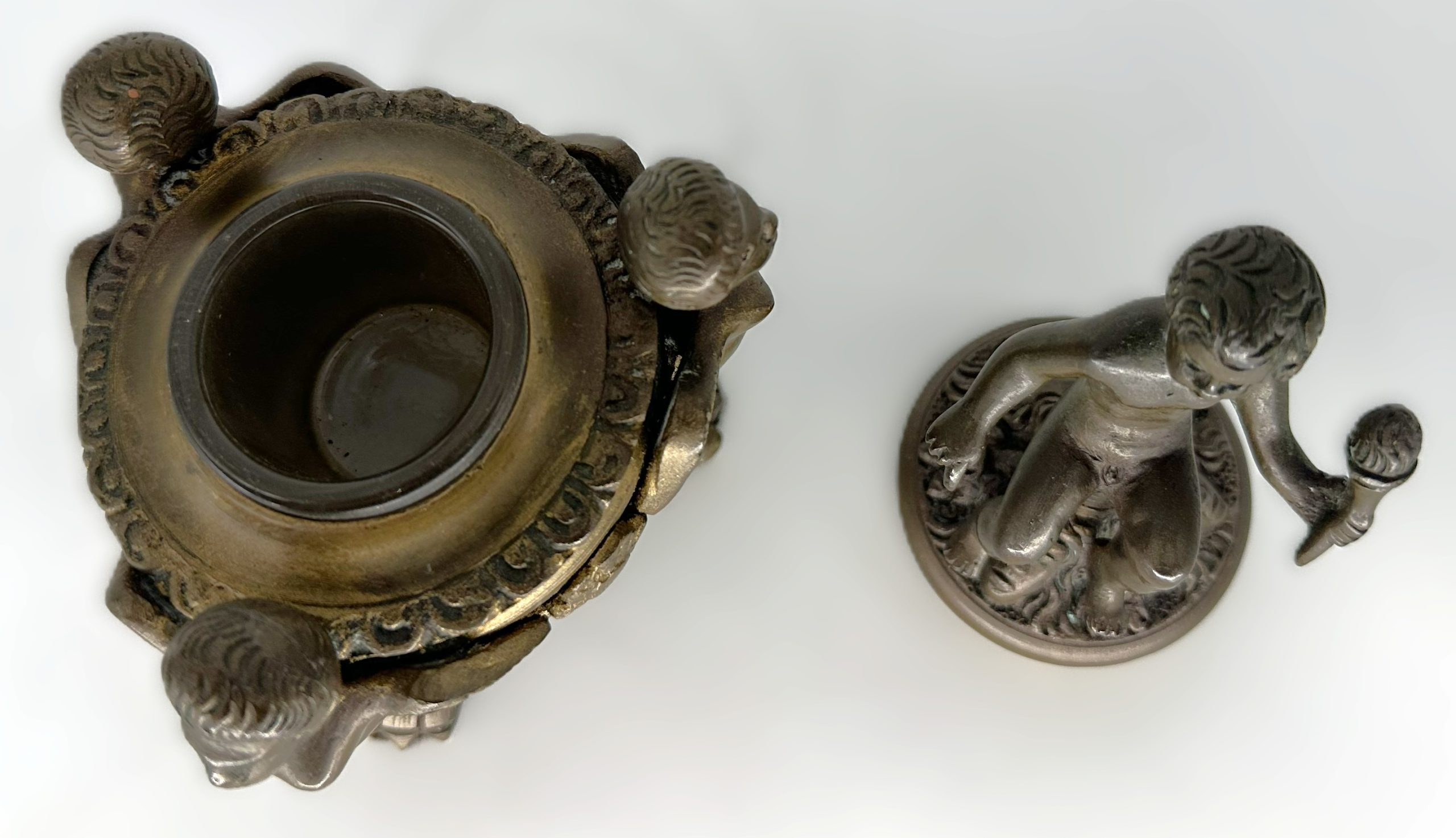
This is a 19th-century Renaissance Revival (Grand Tour) cast bronze tripod inkwell, modeled closely after 16th-century North Italian (Paduan or Venetian) Renaissance bronzes.
Iconography
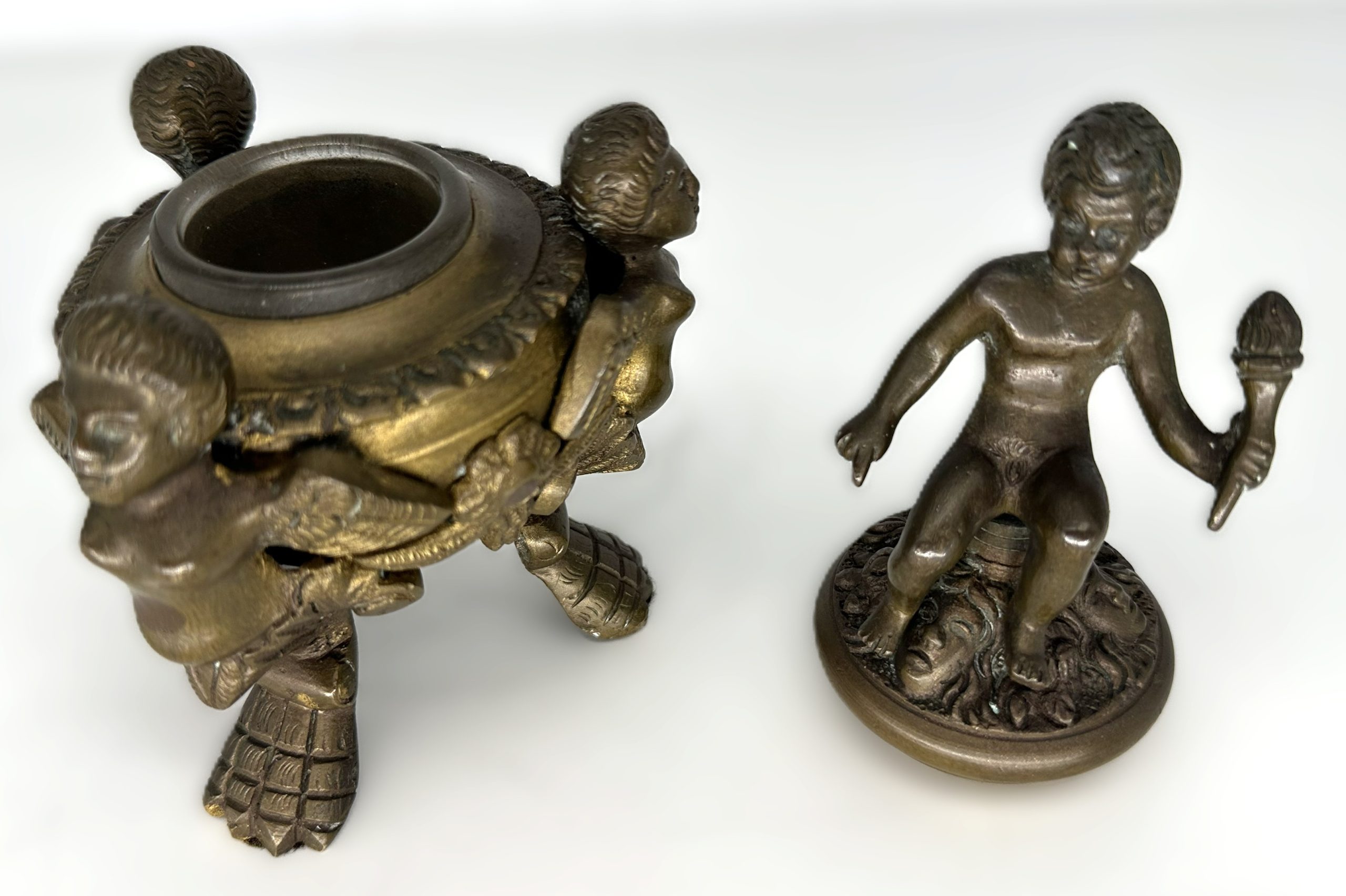
- The Lid Finial (Seated Boy / Wingless Genius with Torch): The crowning figure is a classical wingless boy (or unwinged spiritello / youth) holding an upright flaming torch. In Renaissance and Neoclassical allegory, the wingless boy with a torch frequently personifies a Genius of Knowledge, Truth, or Enlightenment (or classically, Hymen/Eros in human guise). His seated position directly atop the masks symbolizes the triumph of intellect, reason, and light over chaos and theatrical passions.
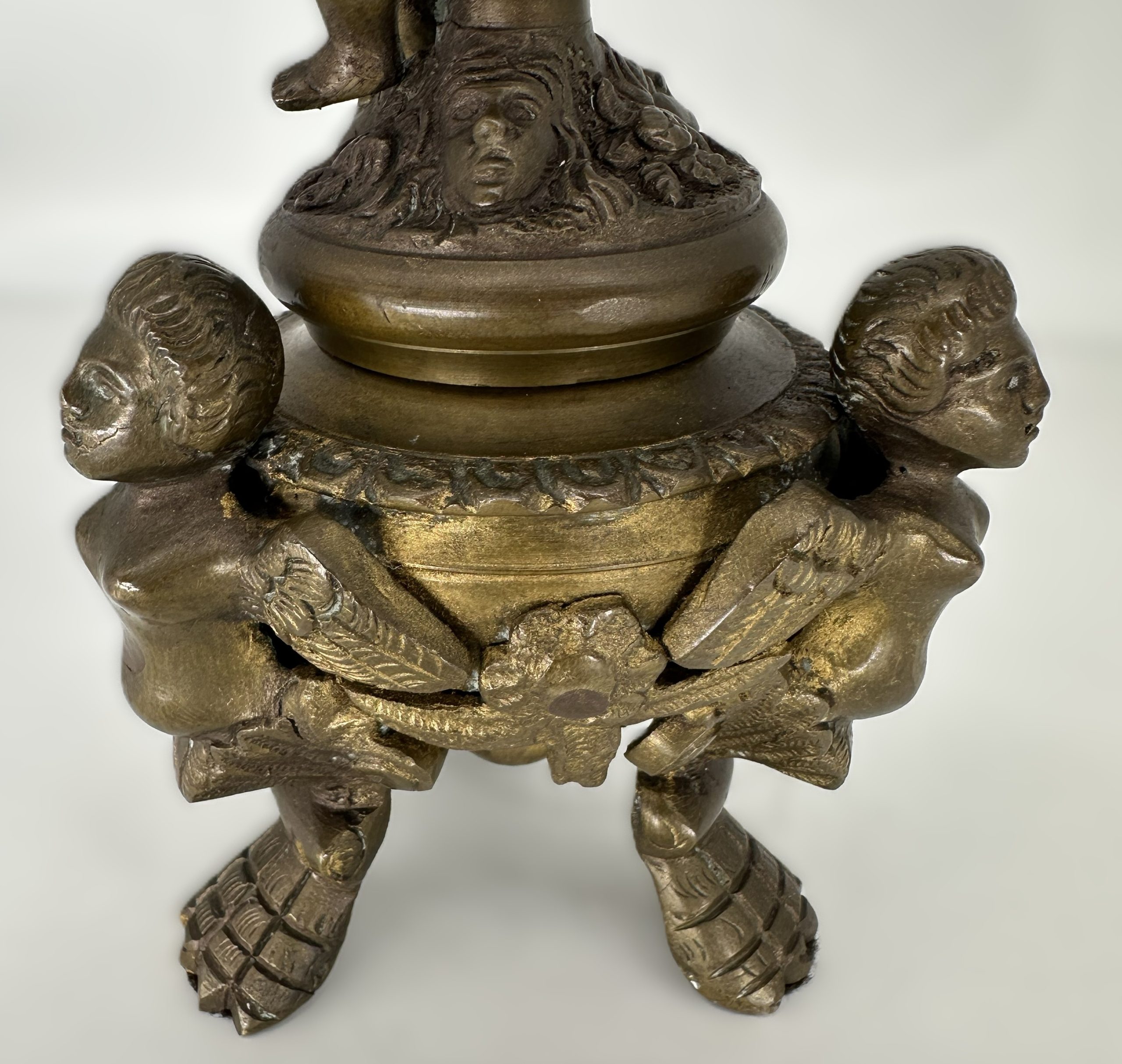
- The Lid Surface (Three Grotesque / Theatrical Masks): The domed base of the lid is chased with three expressive faces surrounded by drapery and foliage. These represent classical Greco-Roman theatrical masks (or Medusa/grotesque masks), traditional motifs used on Renaissance writing boxes to ward off folly.
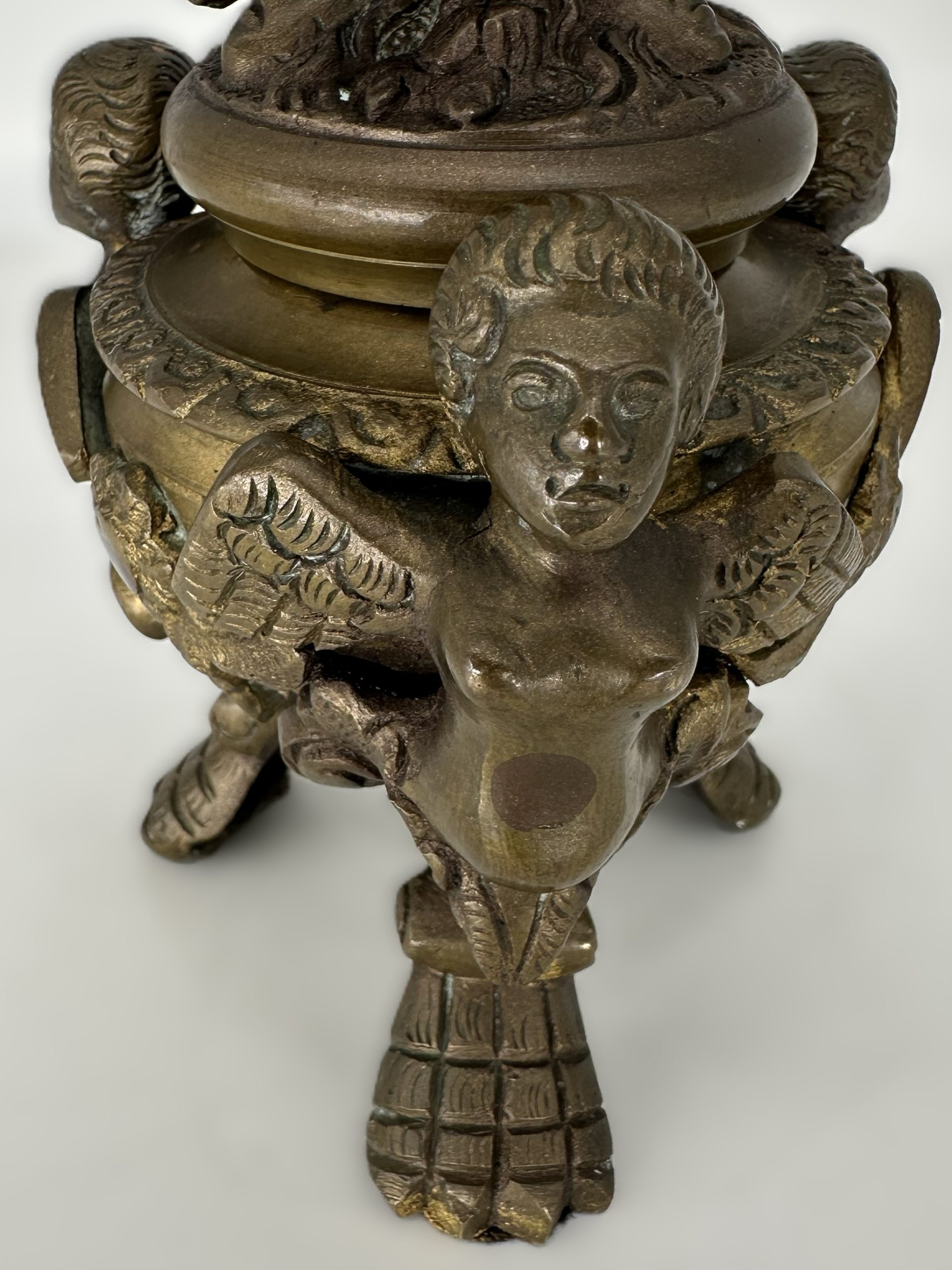
- The Body / Reservoir: The central urn (cauldron) held the ink and is adorned with floral rosettes and draped fruit or laurel festoons connecting the supporting figures.
- The Tripod Supports (Winged Sirens / Harpy Caryatids): The three female figures supporting the urn are mythological hybrid figures—part female caryatid, part winged siren or harpy, terminating in scaled bird or reptilian taloned feet. In Renaissance decorative art, such hybrid grotesques served as protective guardians of vessels.
“Grand Tour” Inkwell
This inkwell is a classic example of decorative metalwork produced for travelers on the Grand Tour.
- The Grand Tour was a customary 17th- to 19th-century journey undertaken primarily by wealthy young European aristocrats to finish their education. The journey centered around Italy—specifically Rome, Florence, Venice, and Naples—to study classical antiquity, the Renaissance, and fine arts.
- Travelers sought high-end, functional souvenirs to display in their private studies and libraries back home. Foundries flourished by producing scaled reductions and reinterpretations of classic 16th-century Italian bronzes (often inspired by sculptors like Severo Calzetta da Ravenna and Andrea Riccio).
Origin, Maker, and Date
- Date: Circa 1860–1890 (Late 19th century, during the French Second Empire Renaissance Revival era).
- Origin: Italy (Venice or Florence) or France (Paris). Northern Italian workshops specialized in direct Grand Tour reproductions of Renaissance antiquities, while Parisian foundries also widely cast fine Renaissance Revival desk accessories.
- Maker: Most likely an unmarked Italian or French commercial art foundry. Small functional Grand Tour bronzes were rarely signed unless cast by major commercial founders like Barbedienne or Chiurazzi.
Estimated value: $200
Content disclaimer. The information posted is the owner’s best knowledge and may not have been vetted by the SOIC. We welcome comments, corrections, and additions, working to make our website information comprehensive and accurate.
Join the Society of Inkwell Collectors (SOIC) – it’s free!
Founded in 1981 as a non-profit organization,
we are documenting inkwells (and accessories).
We’re here to help and inform!