



Bronze Hunting-Themed Inkstand
| Categories | Figural - Inanimate |
| Type | Hunting |
| Material | Bronze |
| Markings | Unmarked |
| Manufacturer | Undetermined |
| Origin | Undetermined |
| Date or Era | circa 1870 |
| Measuring | 5 ½” x 3 ½” x 4” high |
Inkstands like this feature dense, naturalistic groupings of objects for collectors with interests in hunting, sport, and nature.
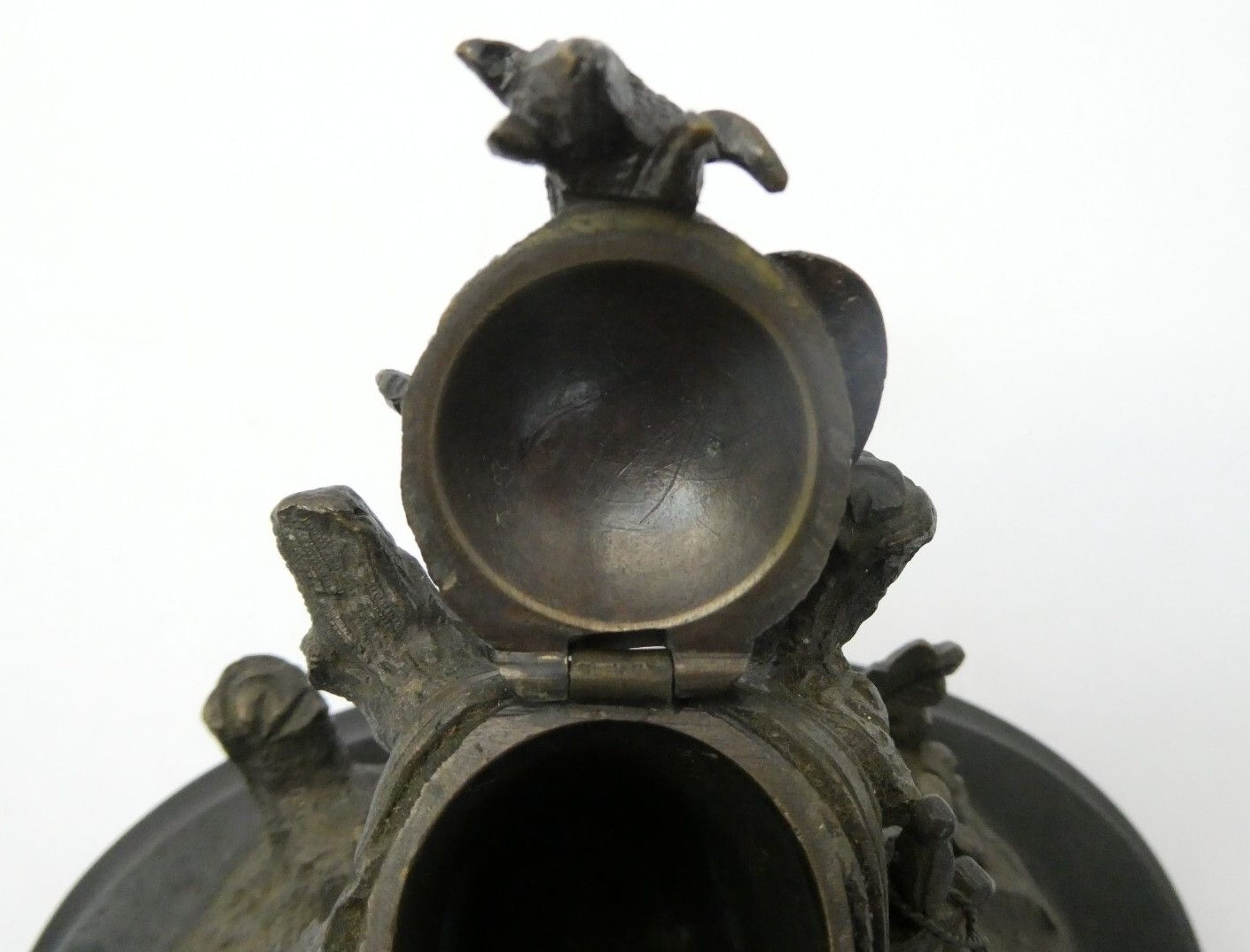
- Style: Naturalistic/Realist, executed in a Trompe-l’œil style, meaning the objects are sculpted so realistically that they “fool the eye” into thinking they are real items scattered on the base. The theme is a hunting tableau—a display of gear and quarry after a successful hunt.
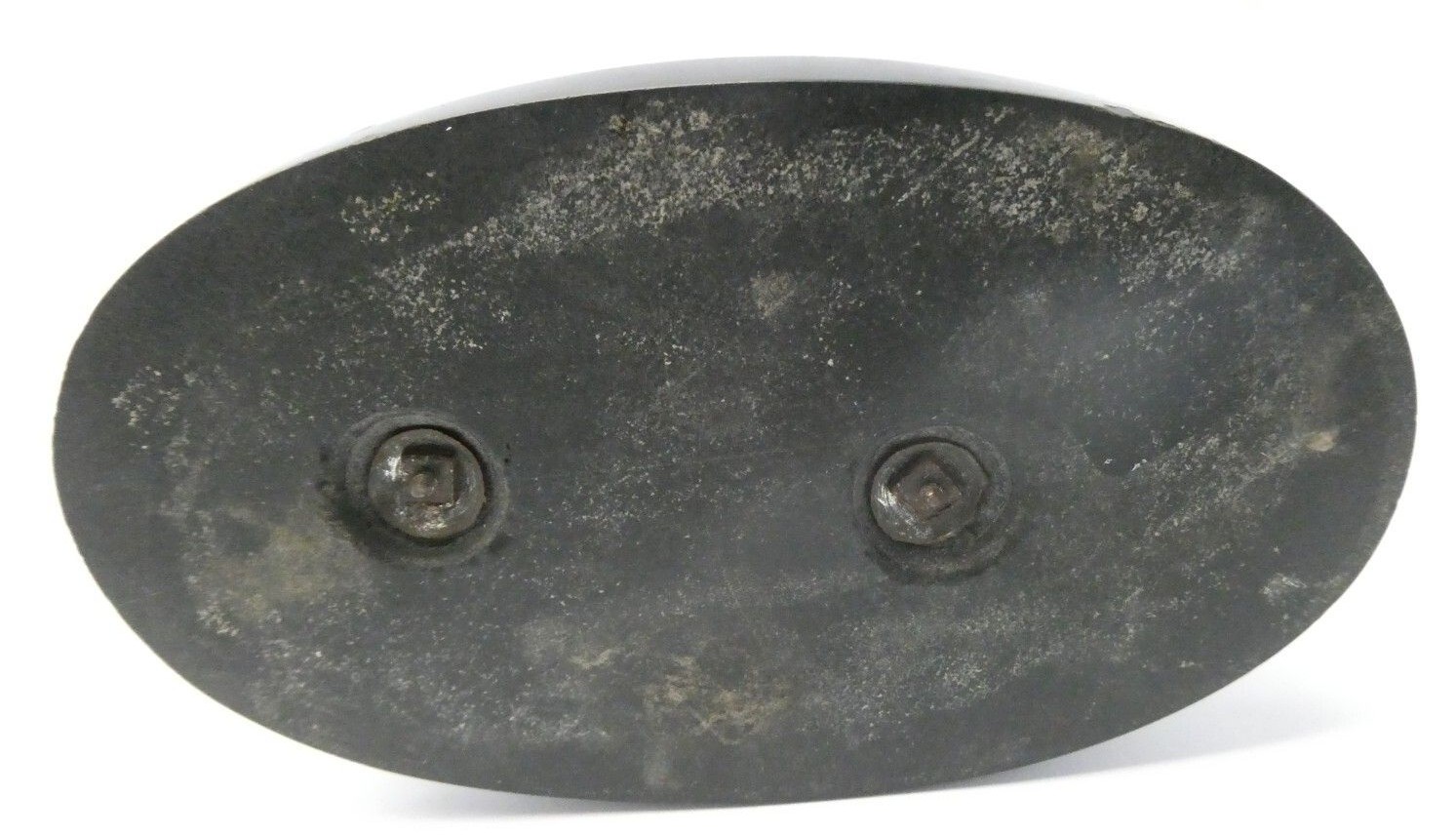
- Material and Base: The inkstand is crafted from cast bronze. It is mounted on an oval base of slate.
- Inkwell Component: The main inkwell reservoir is concealed within the hollowed-out tree stump. The hinged lid, featuring the game animals, covers the opening where the original glass or ceramic liner would have sat (now missing). The small, sculpted branch nubs around the stump serve as the functional pen rests.
Identification of the Scattered Hunting Implements
Here is an inventory of the items cast onto the base, representing classic 19th-century hunting gear (Trompe-l’œil):
| Item | Visible | Detailed Identification | Function/Context |
| Game | Rabbit/Hare, Bird/Fowl | Hare/Rabbit and a Game Bird (e.g., grouse or partridge) | The quarry of the hunt; used as the lid handle. |
| Guns | Two Rifles or Muskets | Two Long-Barrel Firearms (a rifle and a shotgun) | Essential hunting tools, leaning against the stump. |
| Container | Powder Horn | Powder Horn (for carrying black powder) | Used with muzzle-loading firearms. |
| Bag | Hunting Sack | Game Bag or Hunting Pouch (Gibecière) | A leather or canvas bag for carrying ammunition, tools, or small game. |
| Signaling | Hunting Horn | Hunting Horn or Bugle | Used to communicate during the hunt. |
| Tool | Knife/Sword Handle | Hunting Knife/Dagger (Hirschfänger) | A short, sturdy knife used for dispatching large game or general camp work. |
| Headwear | Cap or Hat | Hunting Cap | A soft-crowned hat |
| Stacked Balls | Two Stacked Balls | Cannonballs or Ball Shot (less common) or more likely a Flask of Shot/Percussion Caps | In this context, they most likely represent a small, decorative Flask of Shot or a cartridge box for carrying round ball shot or percussion caps for muzzleloaders. |
Origin and Age Assessment
This style of bronze tableau is strongly associated with Continental European production during the mid-to-late 19th century.
- Likely Origin:
- France (Paris): Known for producing high-quality, highly detailed bronze desk accessories, often mounted on black slate, throughout the Second Empire (c. 1850-1870). The detail and execution quality suggest a Parisian foundry.
- Germany/Austria: Also produced excellent hunting-themed items, particularly linking to the Germanic hunting traditions.
- Style Period: The naturalistic detail and the use of the mixed-media base (bronze on black stone) are hallmarks of the Victorian/Gilded Age decorative aesthetic.
- Estimated Age: circa 1860 – 1890
Sold for $281 in October 2025
Content disclaimer. The information posted is the owner’s best knowledge and may not have been vetted by the SOIC. We welcome comments, corrections, and additions, working to make our website information comprehensive and accurate.
Join the Society of Inkwell Collectors (SOIC) – it’s free!
Founded in 1981 as a non-profit organization,
we are documenting inkwells (and accessories).
We’re here to help and inform!