


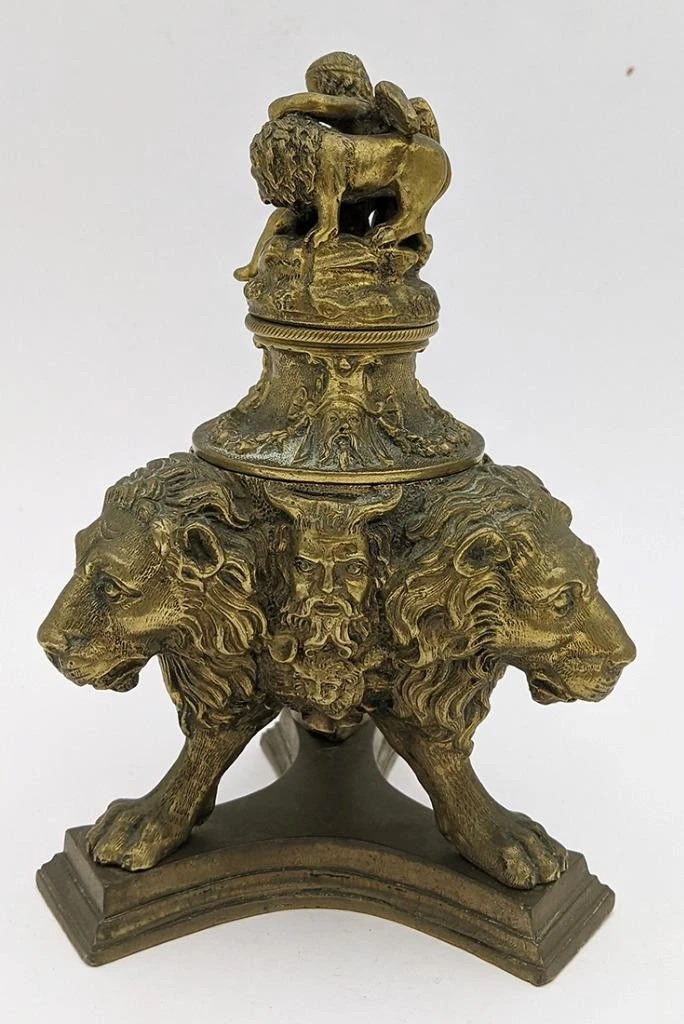
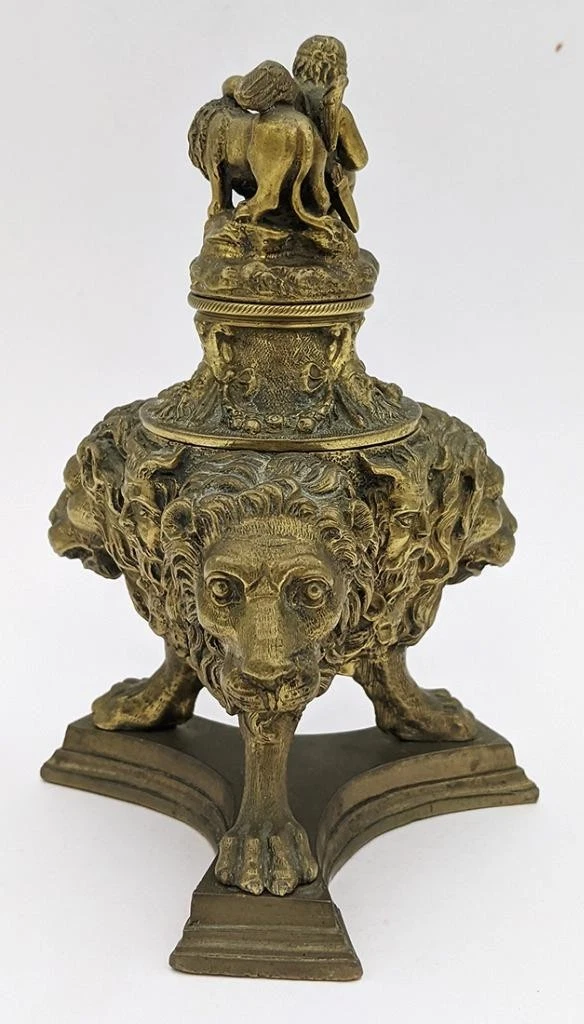
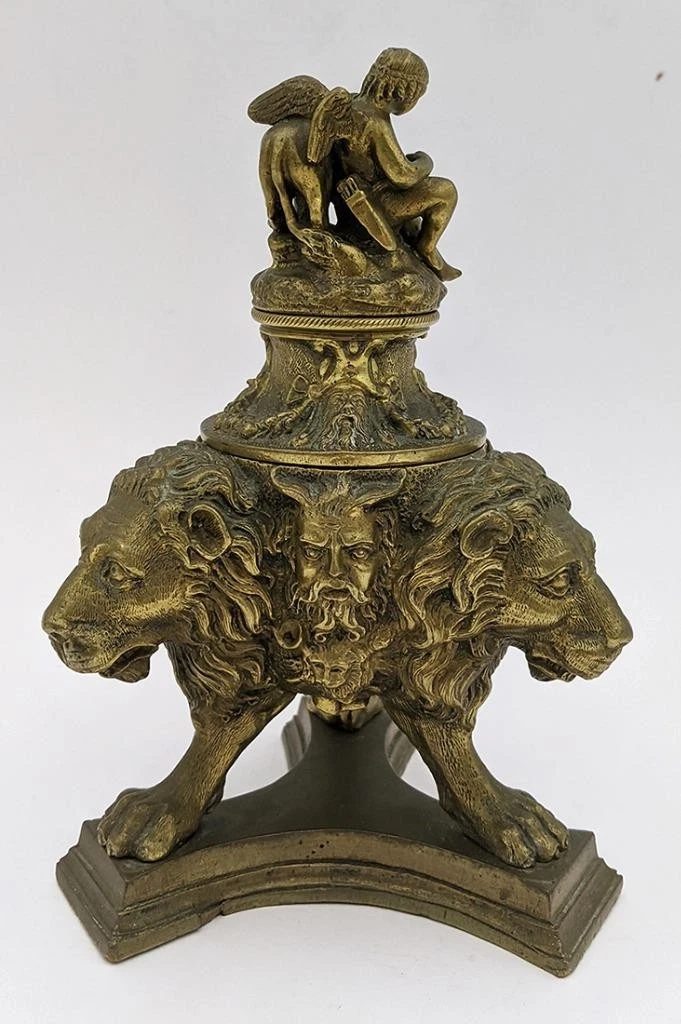


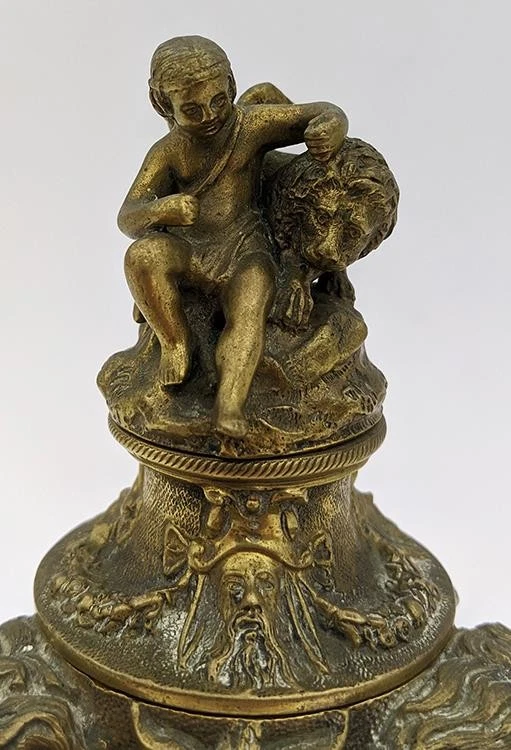



Bronze Grand Tour Inkstand
| Categories | Souvenir |
| Type | Grand Tour |
| Material | Bronze |
| Markings | Unmarked |
| Manufacturer | Undetermined |
| Origin | Italy |
| Date or Era | circa 1860 |
| Measuring | 4 ½” wide; 6 ½” high |
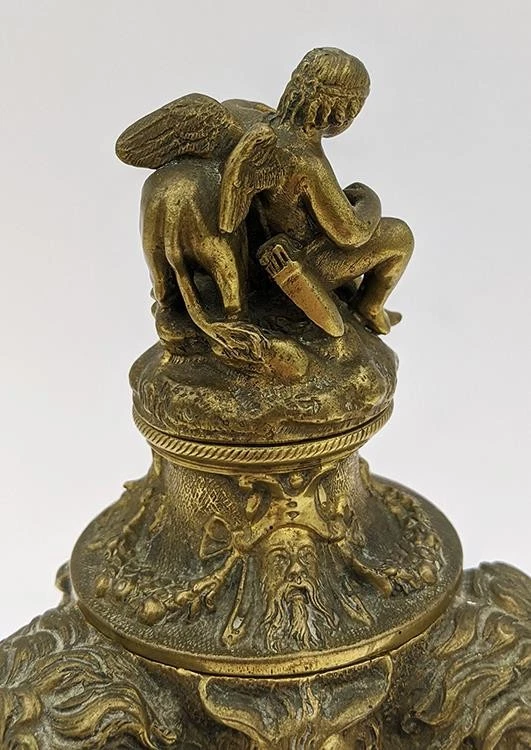
This is an example of a Grand Tour inkstand, a type of souvenir valued by educated travelers in the 18th and 19th centuries. It directly references classical antiquity and mythology.
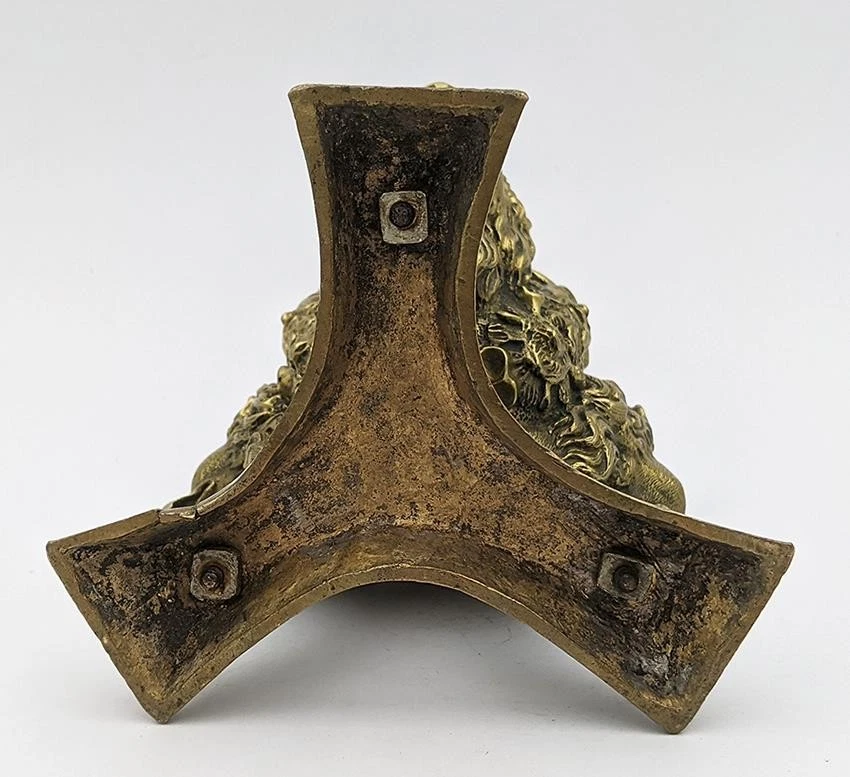
- Overall Form: A complex, multi-tiered architectural inkstand cast in bronze. It is designed to resemble a miniature classical monument or temple.
- Material and Finish: Cast Bronze
- Inkwell Access: The main ink reservoir is contained within the structure, accessed by lifting the entire upper section. The original glass or porcelain liner for the ink is missing.
Symbolism of the Elements
The elements are drawn from classical Roman and Greek mythology and architecture, which were the primary focuses of the Grand Tour.
| Element | Description | Symbolism/Context | Why Included? |
| Cupid (Eros) | The winged, nude figure sitting atop the dome. | Love, desire, or literary inspiration. In a desk context, Cupid’s presence is often allegorical, representing the fire of genius or passion behind the written word. | To serve as the finial/handle to lift the lid and a symbol of creative spark. |
| Lions/Lion’s Paws | Found on the legs or base of the inkstand. | Strength, majesty, protection, and eternity. The lion is a symbol of Rome (e.g., the fountain in St. Peter’s Square) and classical power. | To provide stability (functioning as feet) and lend a sense of monumental, classical authority to the piece. |
| Wizened/Masked Faces | These are likely Bacchic or Theatrical Masks (also known as grotesque or mascarons). They may be satyrs, Bacchantes, or sometimes representations of the four seasons or elements. | Drama, revelry, mortality, or the passage of time. In the Grand Tour context, they directly reference the masks found in Roman ruins and sculpture. | As decorative, classical friezes or accents, connecting the inkstand to the unearthed treasures and decorative art of antiquity. |
Estimated Age and Origin
- Origin: The style is unequivocally tied to the Grand Tour, a traditional trip to Europe (especially Italy, with Rome being a key destination) taken by wealthy young men.
- Likely Origin: Italy (specifically Rome or Florence). These cities were centers for workshops that produced high-quality bronze reductions and copies of ancient works for the tourist market.
- Style Period: This classical revival style was consistently popular, but the execution suggests the peak of the Grand Tour phenomenon.
- Estimated Age: circa 1830 – 1870
This era saw a high demand for such meticulously crafted bronze souvenirs, which served as tangible proof of a gentleman’s education and travels.
Sold for $400 in October 2025
Content disclaimer. The information posted is the owner’s best knowledge and may not have been vetted by the SOIC. We welcome comments, corrections, and additions, working to make our website information comprehensive and accurate.
Join the Society of Inkwell Collectors (SOIC) – it’s free!
Founded in 1981 as a non-profit organization,
we are documenting inkwells (and accessories).
We’re here to help and inform!