

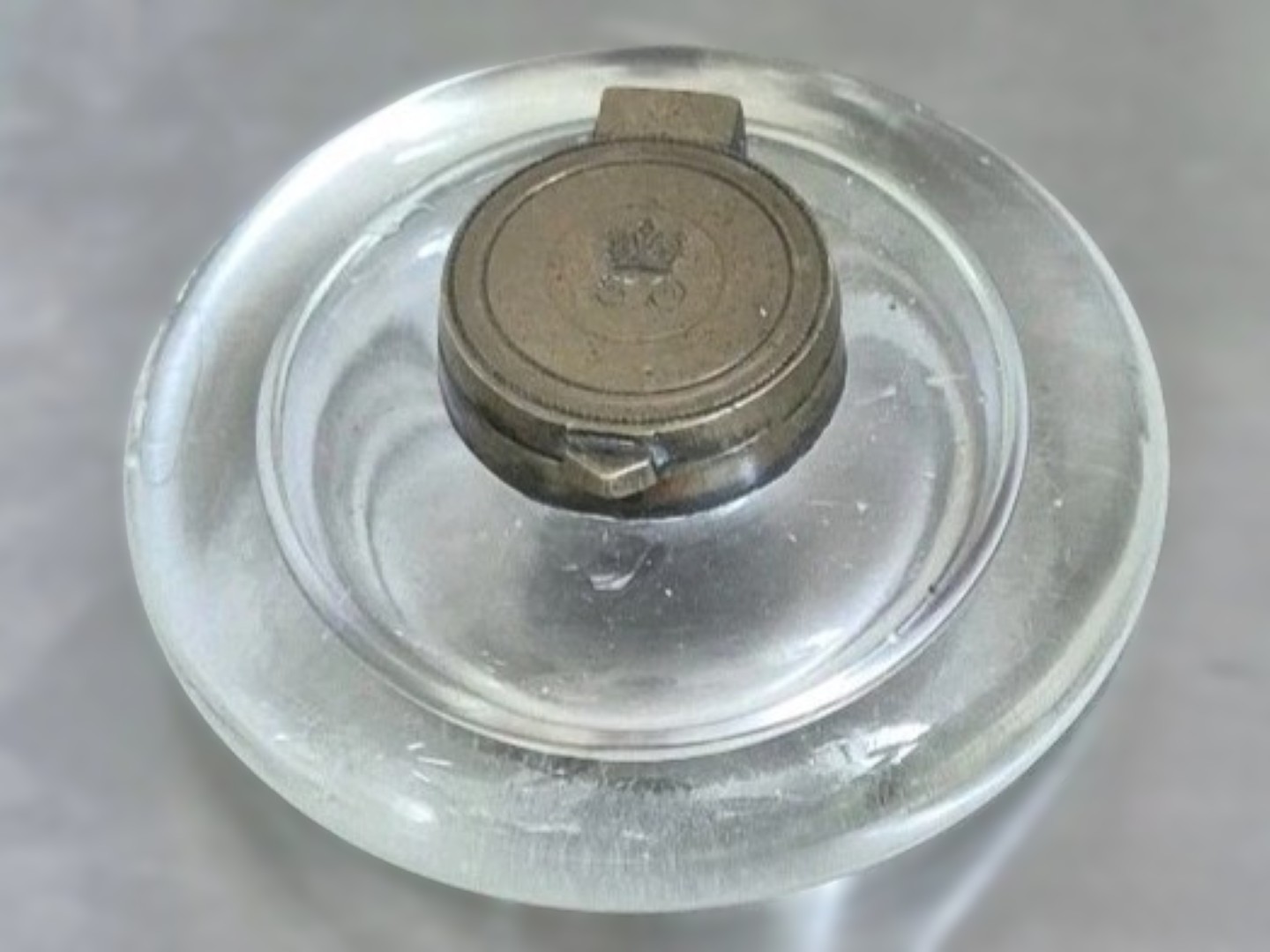
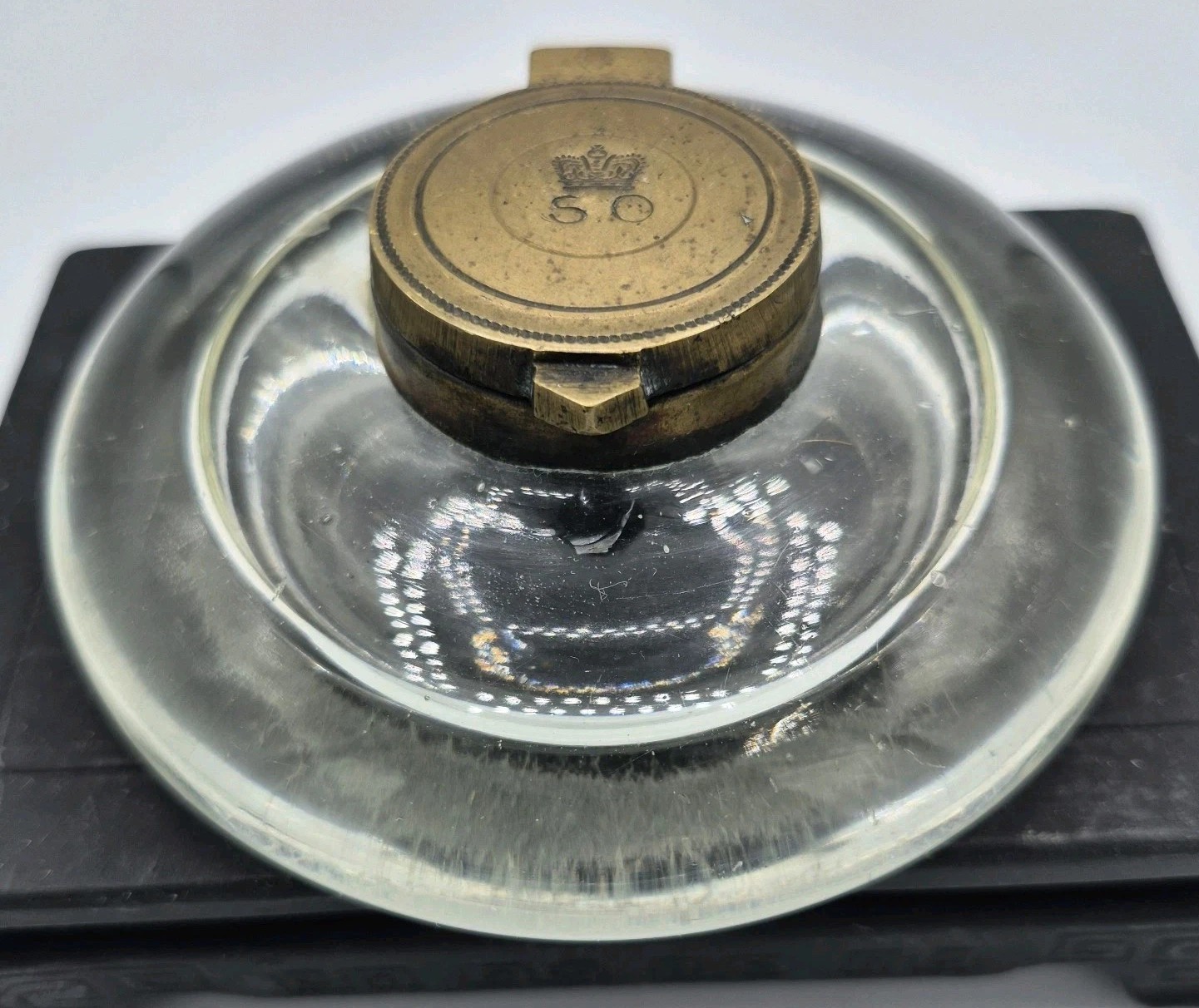
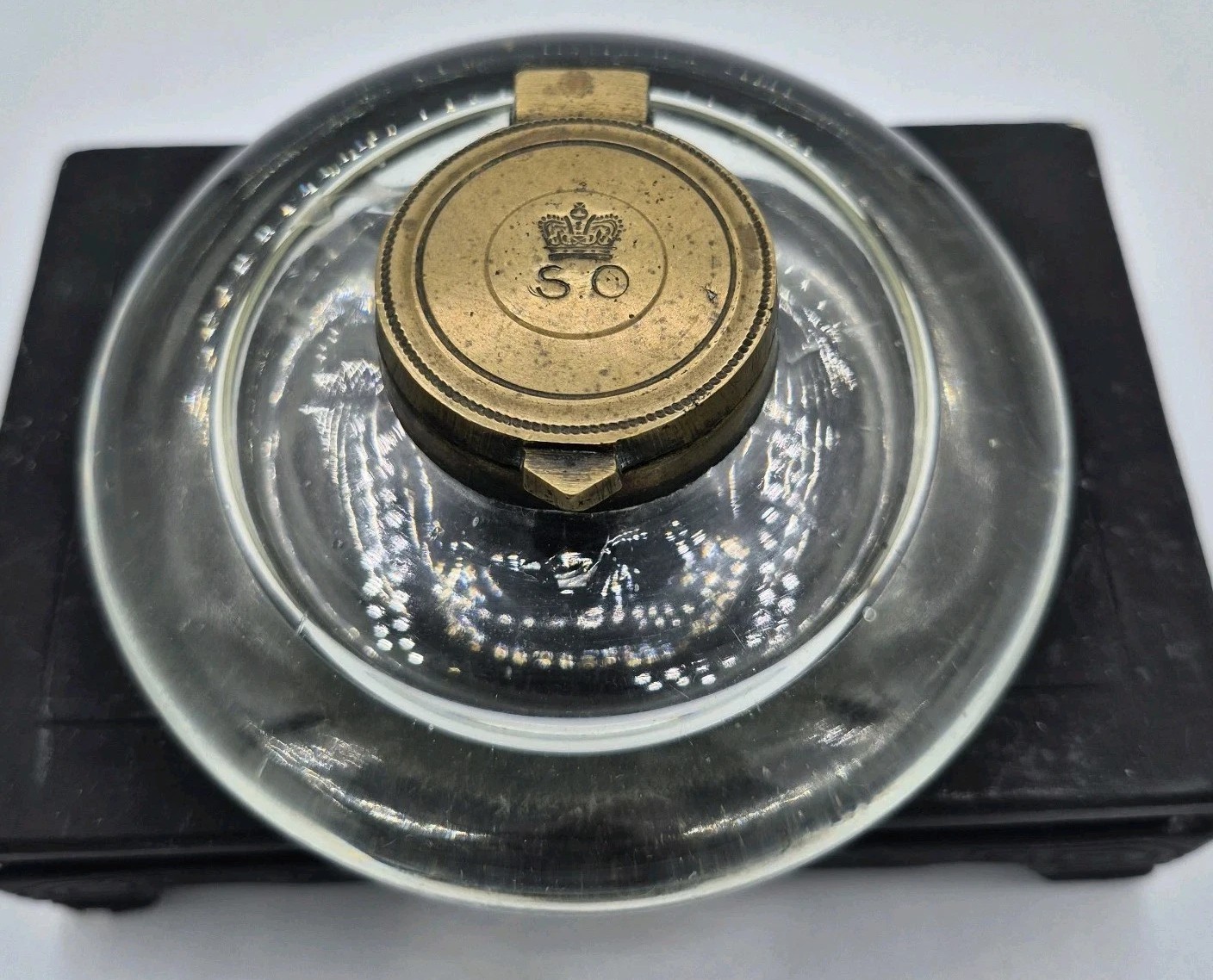
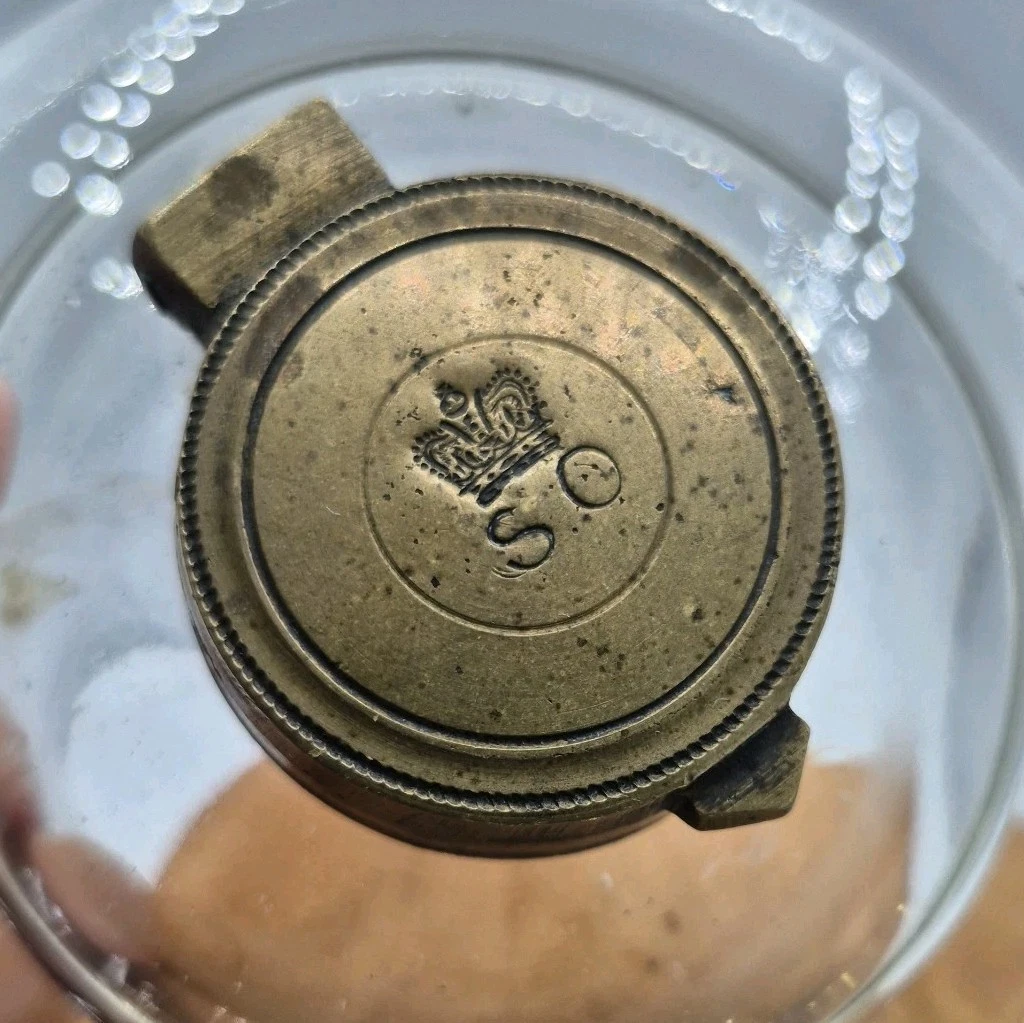
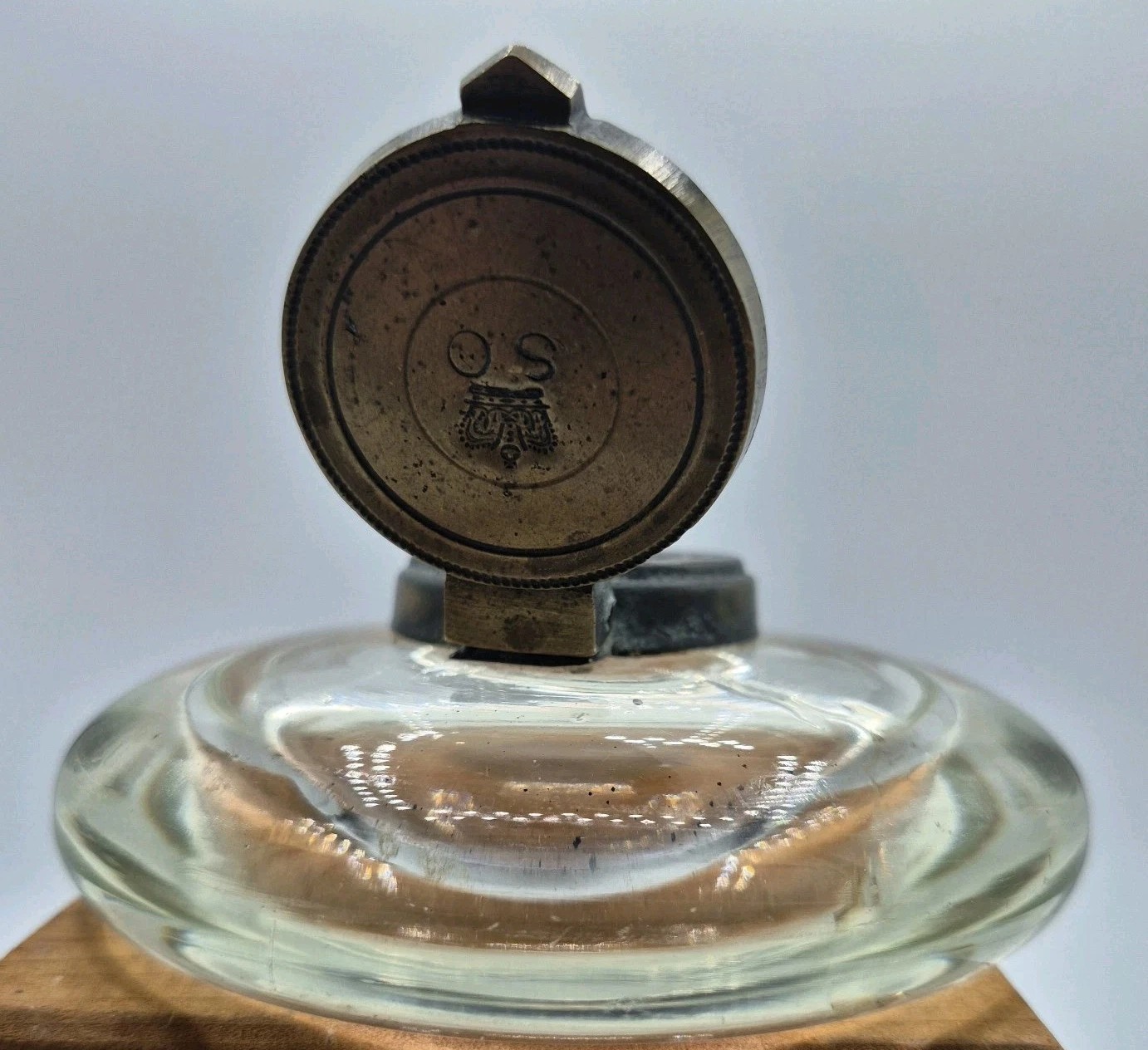
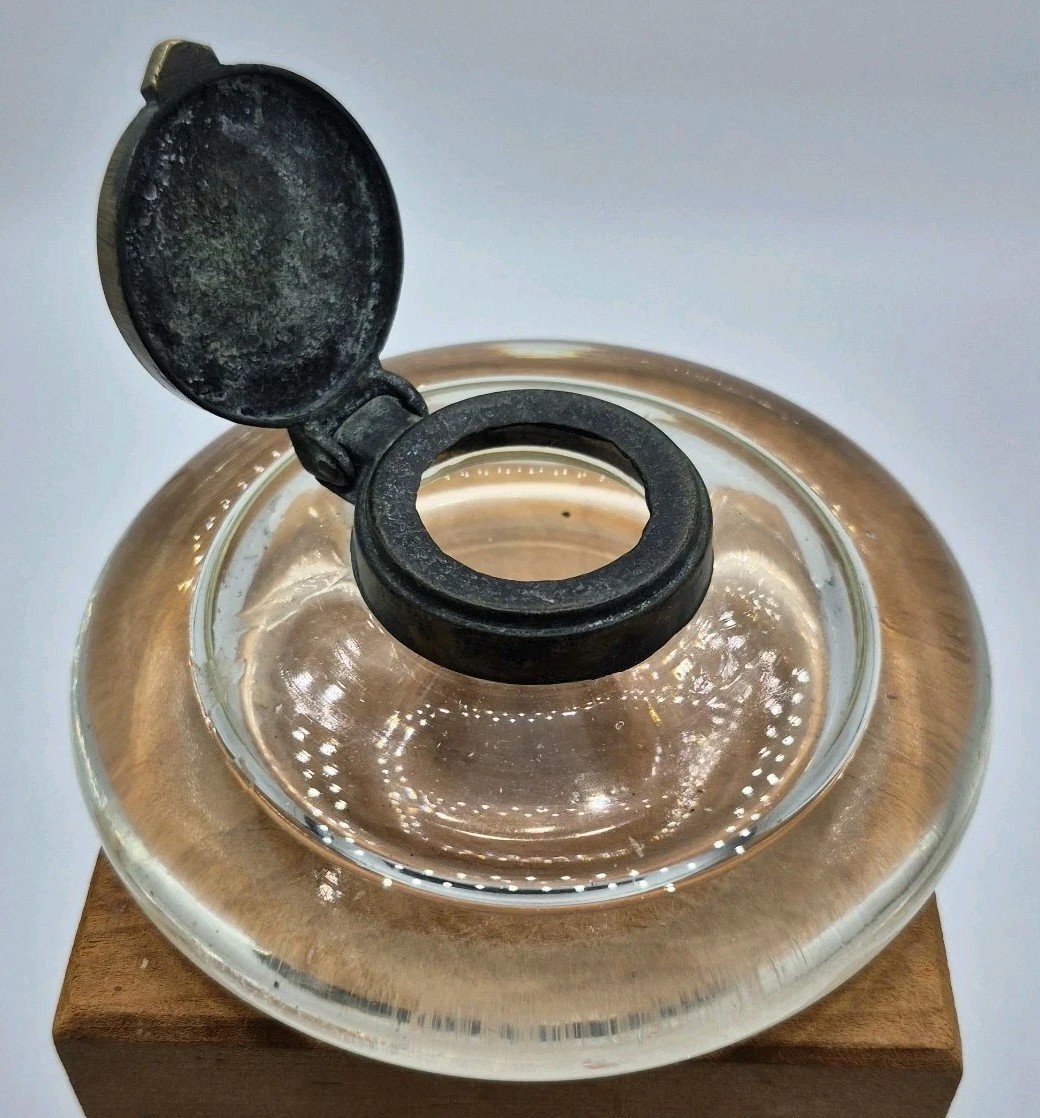
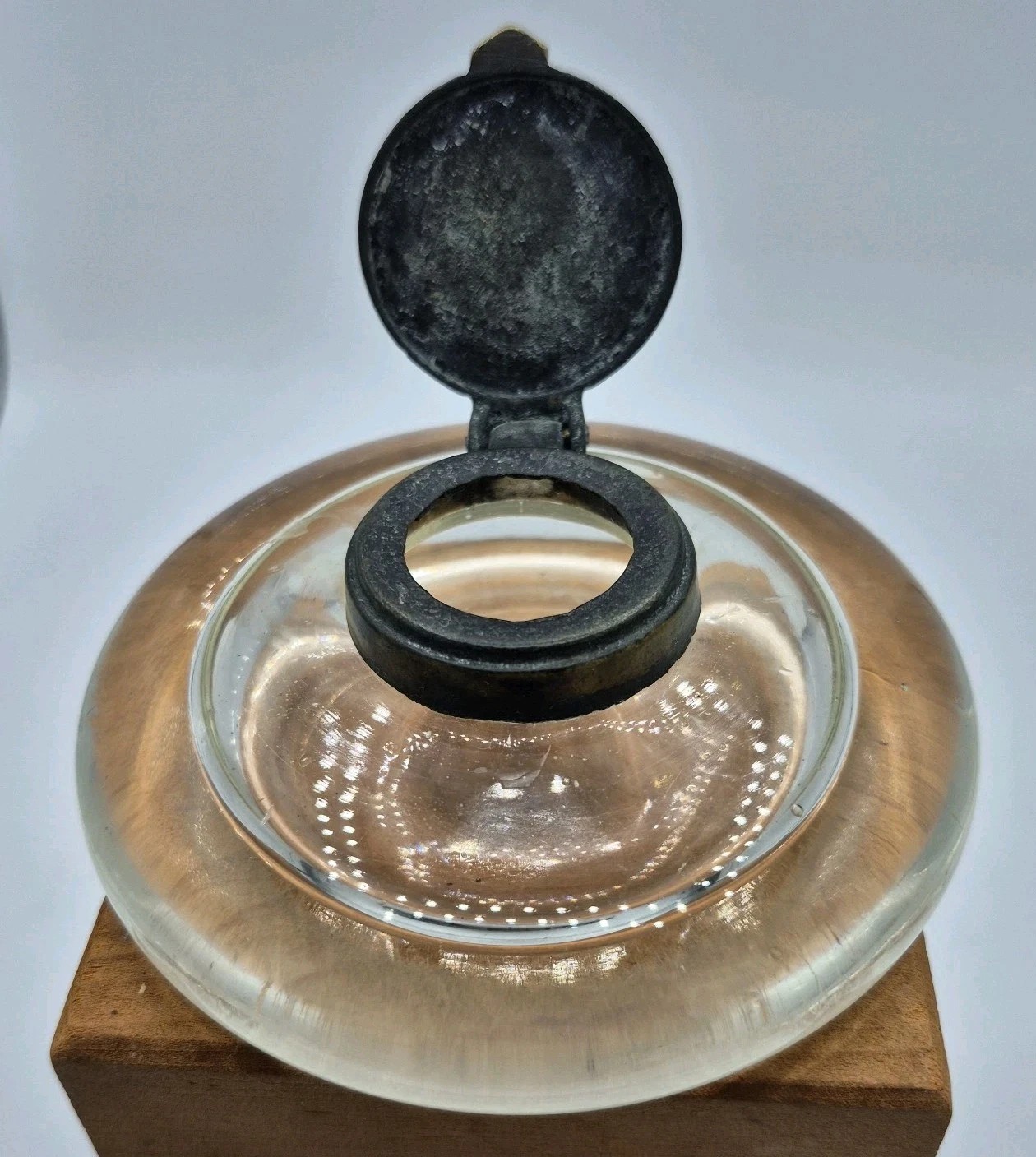
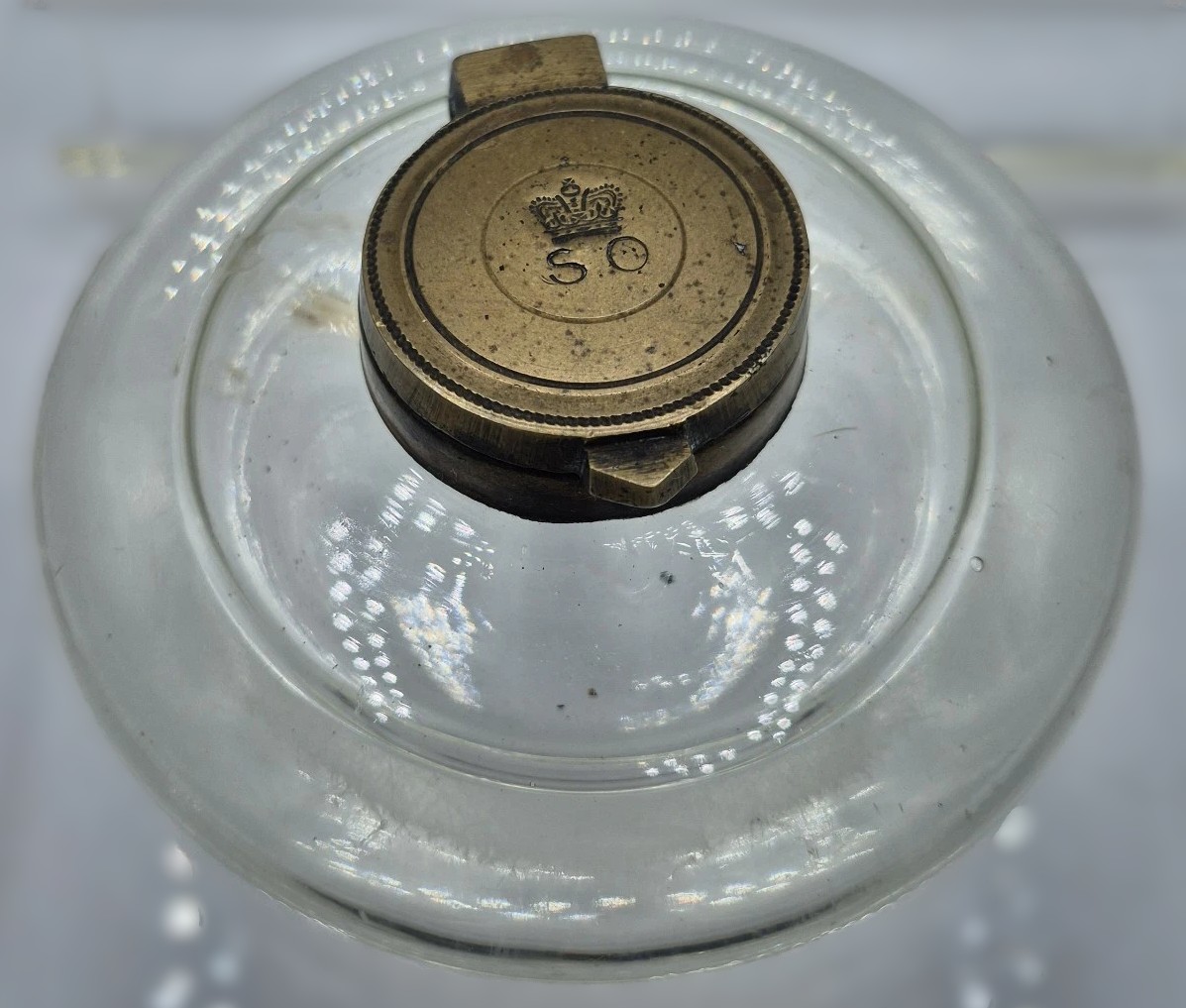
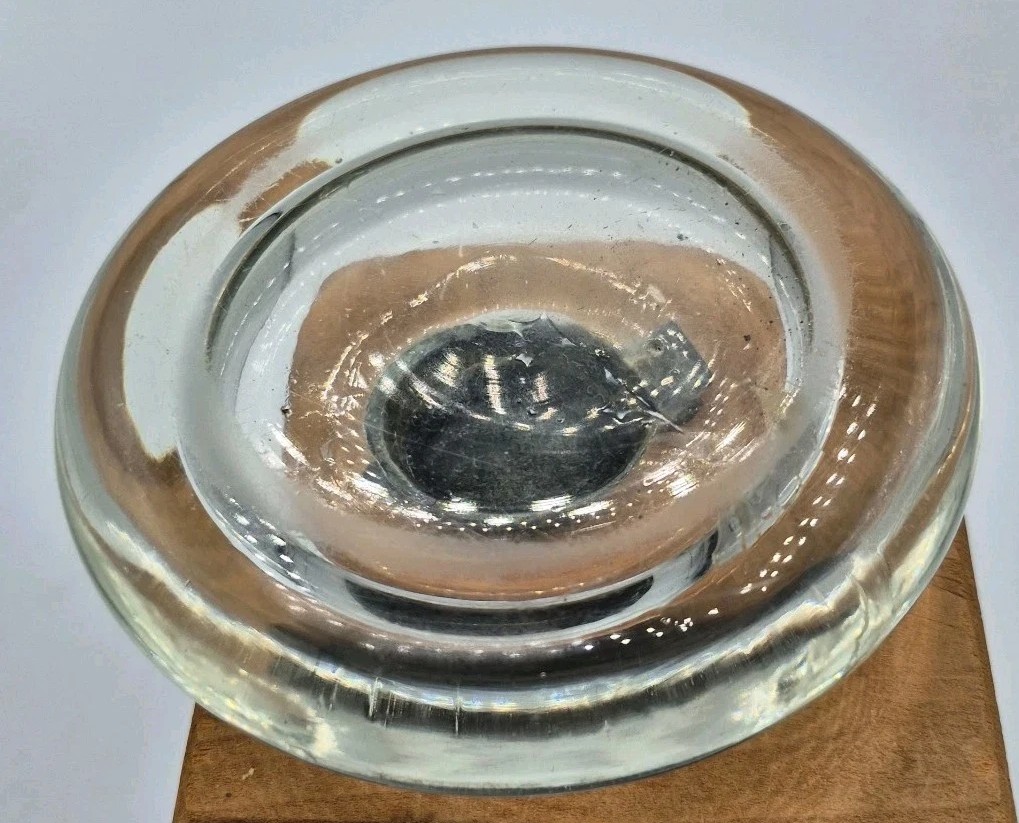
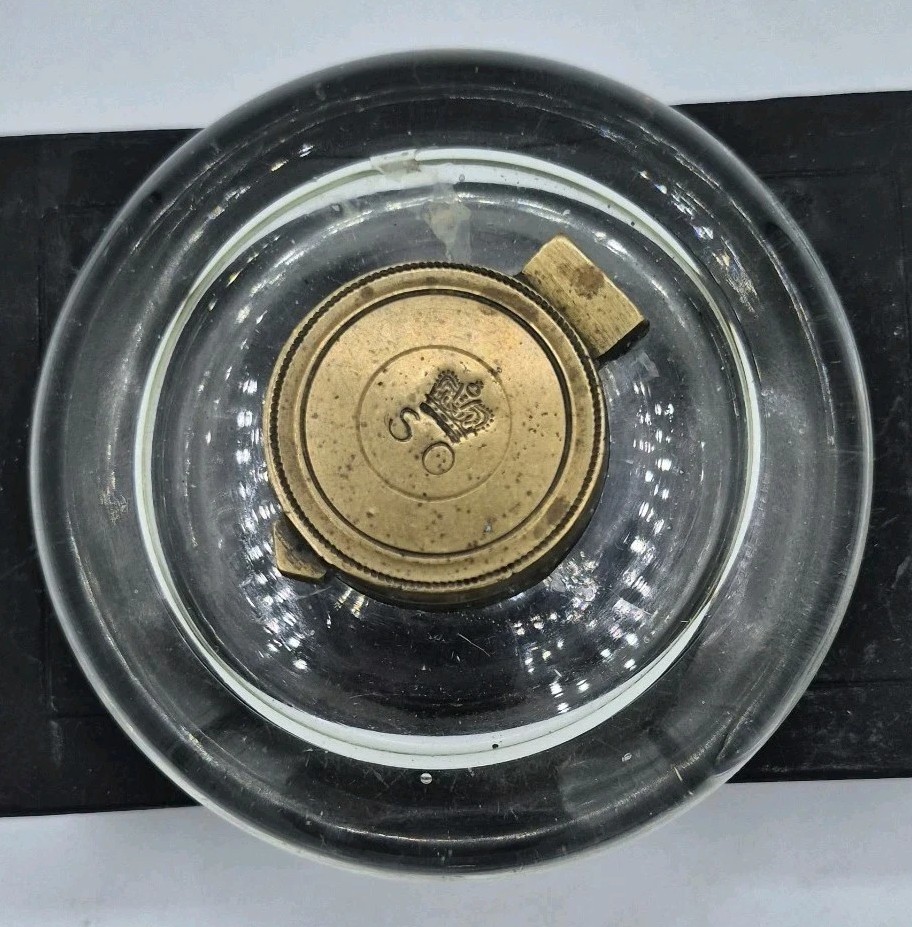
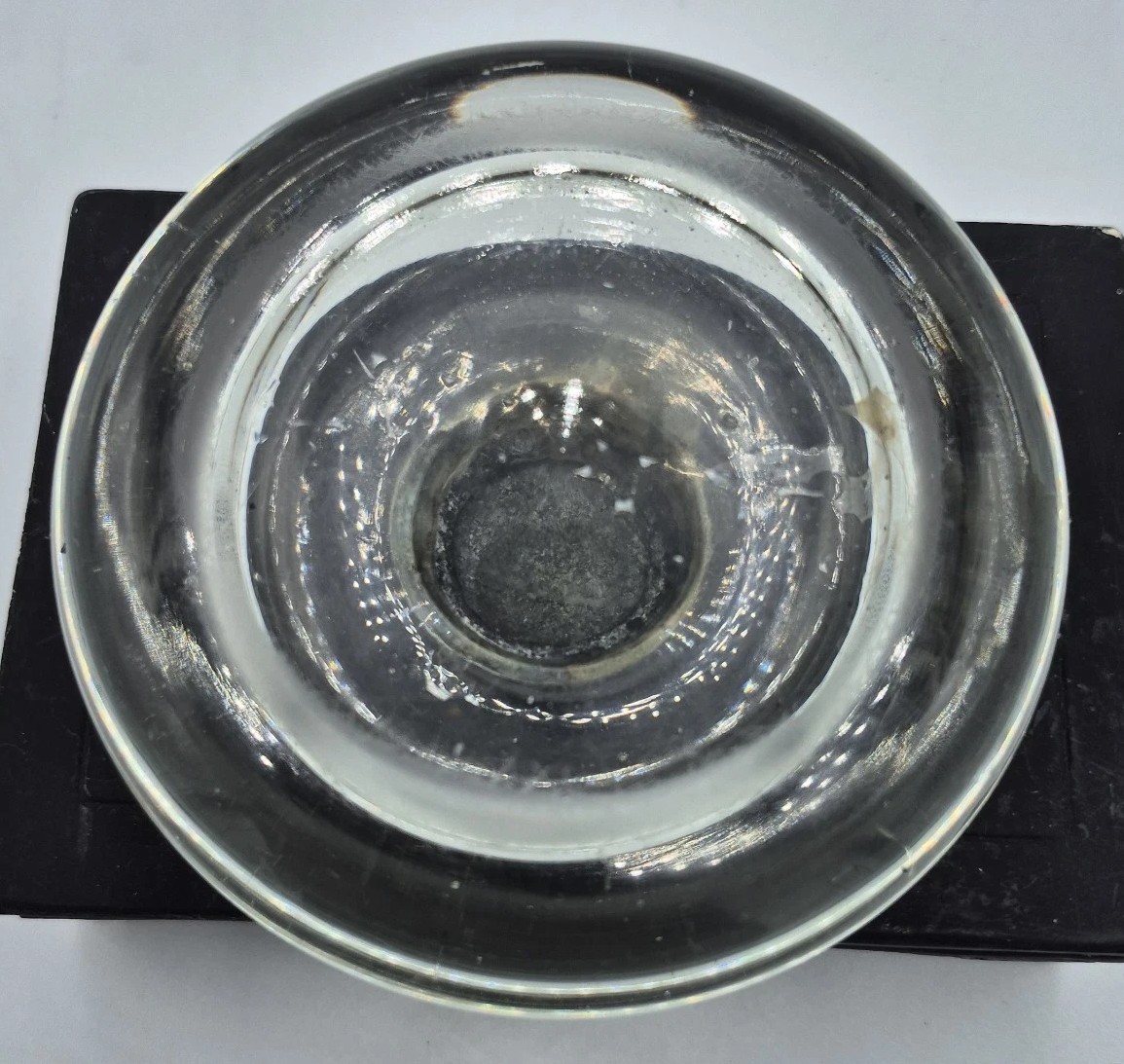
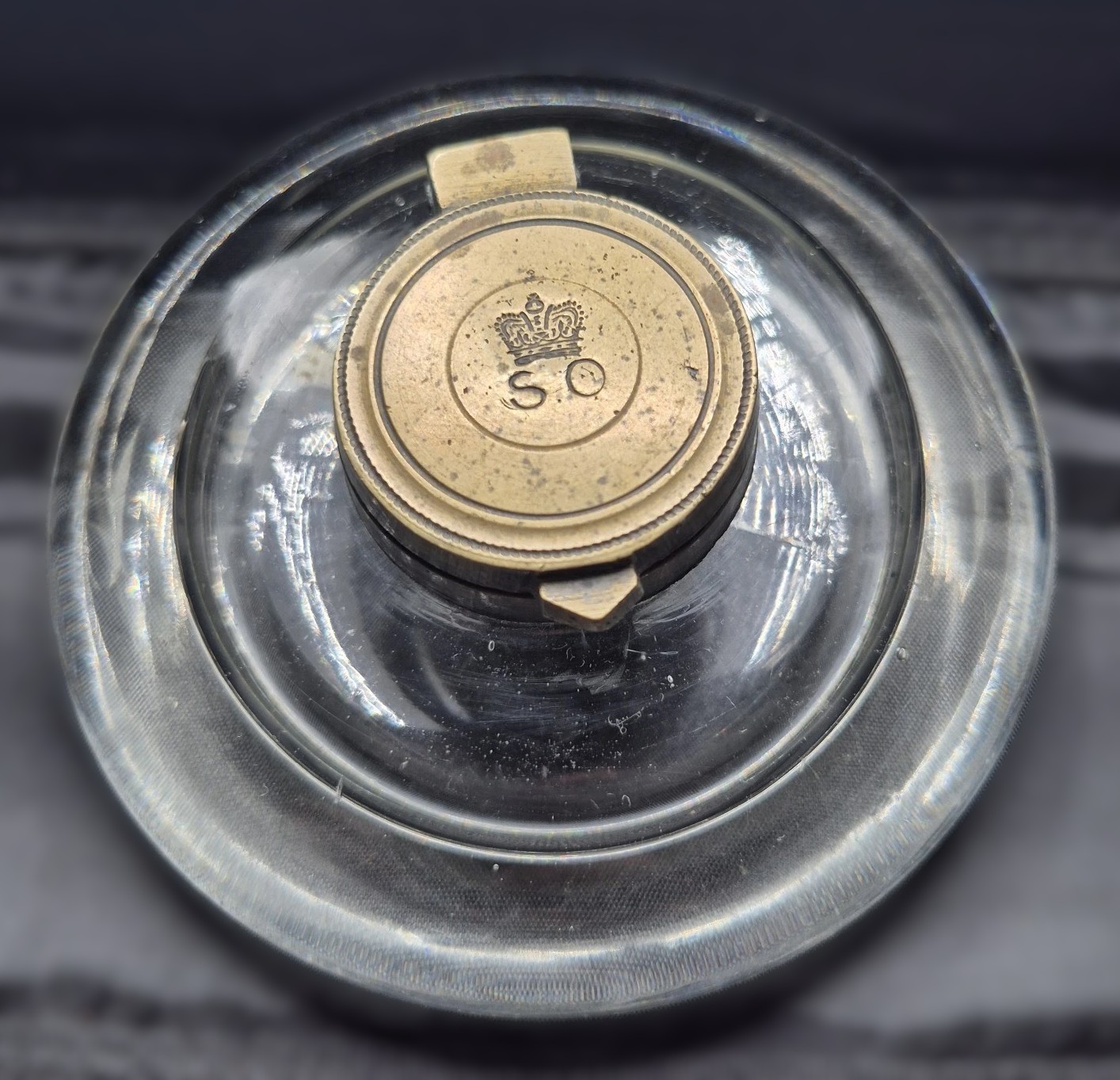
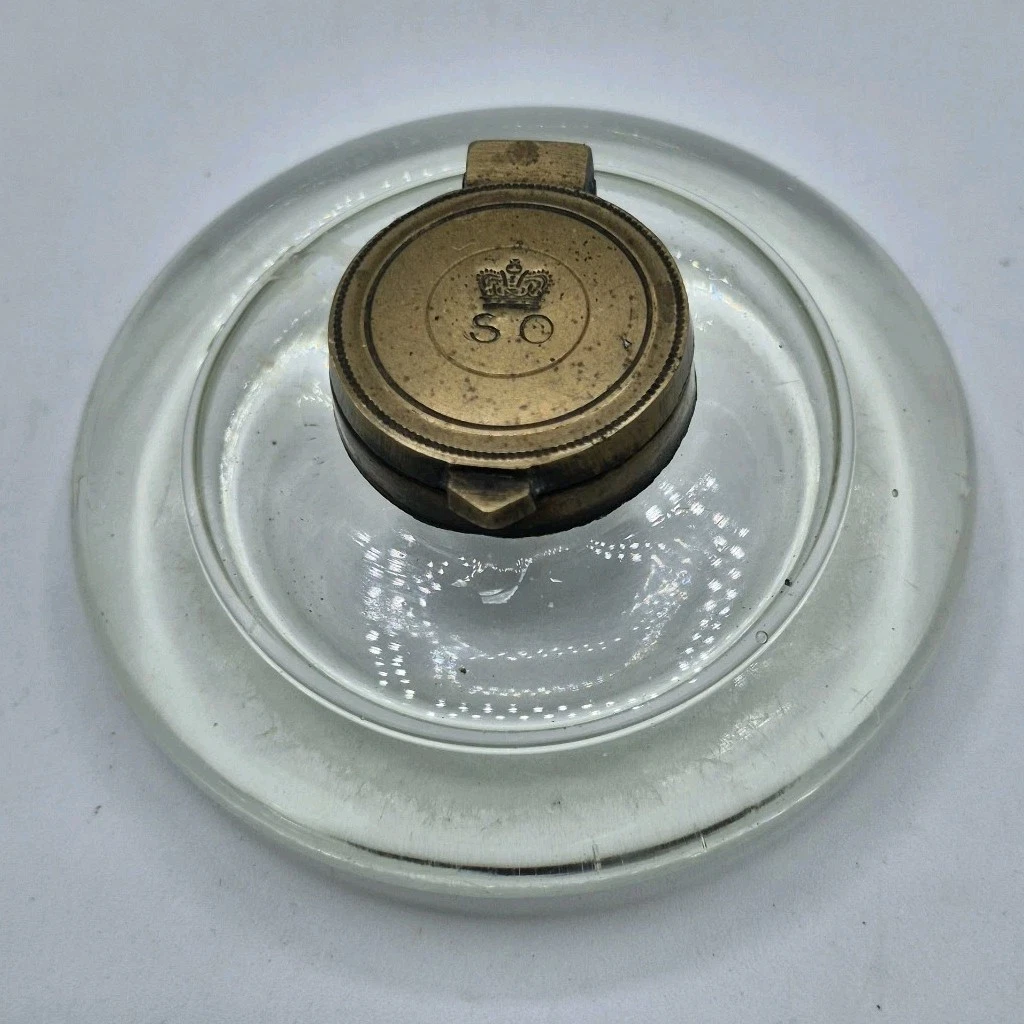
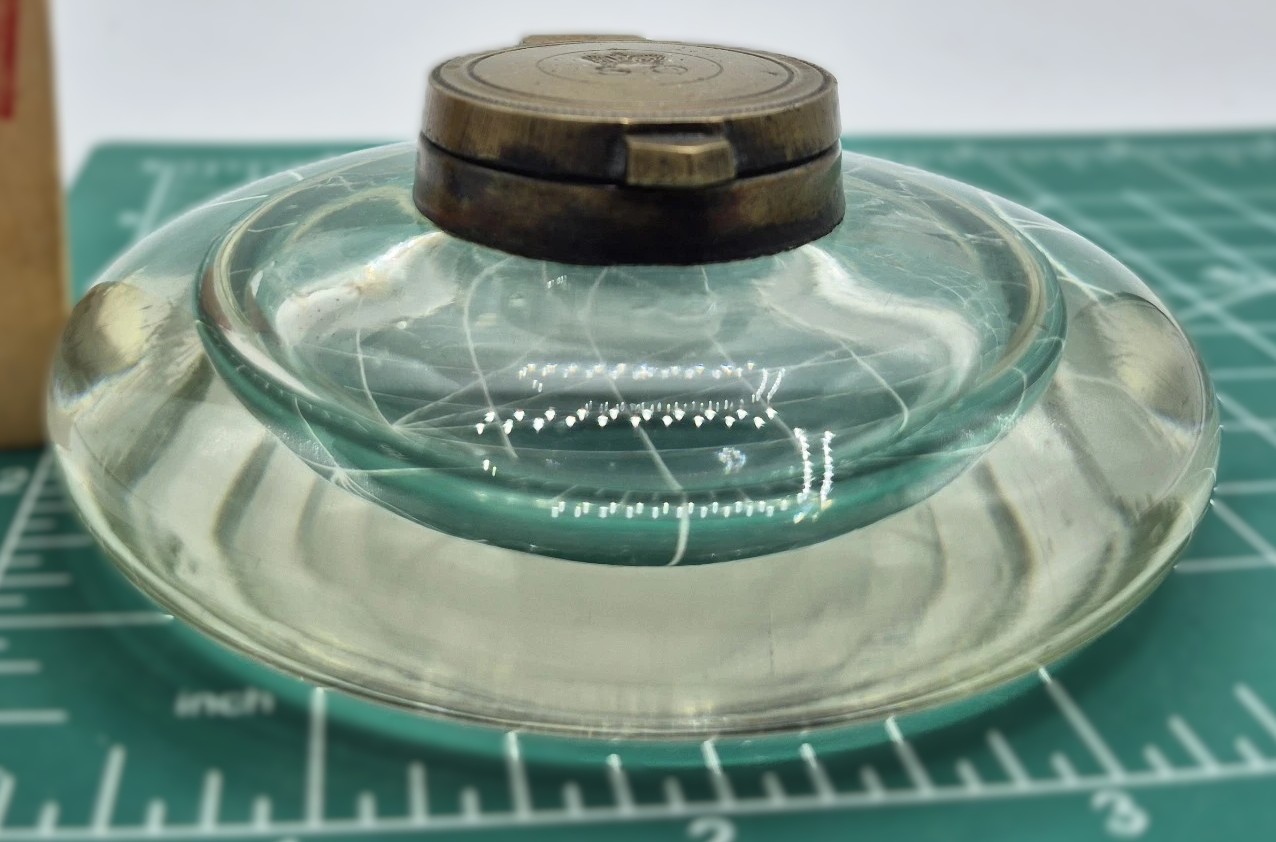
British Government Issue Brass & Heavy Pressed Glass Inkwell
| Categories | Glass - Non-figural |
| Material | Glass |
| Markings | See Narrative |
| Manufacturer | Undetermined |
| Origin | England |
| Date or Era | circa 1910 |
| Measuring | 4” diameter; 1 ¼” high |
Design & Function This heavy, low-profile design—often called a “pancake,” “flying saucer,” or “capstan” inkwell—was engineered specifically for maximum stability. By concentrating the majority of the glass mass in a wide perimeter ring with a recessed central reservoir, the center of gravity sits extremely low to prevent accidental tipping.
- Maritime Myth vs. General Issue: While frequently labeled as “ship’s inkwells” or “marine inkwells” due to their tip-resistant geometry, they were not exclusive to maritime service. As official HMSO (Her/His Majesty’s Stationery Office) issue, they served as standard-issue desk equipment across British civil service bureaus, post offices, military administration desks, courthouses, and naval stations alike.
Age & Dating
- Estimated Period: Circa 1890s – 1920s (Late Victorian to King George V era).
- Marking: The brass lid is stamped with the British Royal Cypher/Crown over “S.O.” (Stationery Office). The specific arched shape of the crown corresponds to the late Victorian / Imperial crown style used on British government property during the turn of the 20th century.
Manufacturing & Construction
- Glass Body (Press-Molded): The reservoir and broad flange were formed using heavy press-molded glass (pressed glass). Molten flint glass was pressed into a multi-part steel mold with a plunger to create the thick, weighted base and smooth central well in a single operation, eliminating any pontil scar.
- Collar & Lid (Machined/Stamped Brass): The brass collar and hinged flip-cap were stamped and lathe-finished, featuring knurled/beaded perimeter borders and a front lift tab.
- Assembly: The brass collar was anchored directly into the glass neck opening using traditional plaster of Paris or litharge-glycerin cement, creating a firm, mechanical seal that allowed the hinged cap to open cleanly with one hand.
Sold for $162 in July 2026
Content disclaimer. The information posted is the owner’s best knowledge and may not have been vetted by the SOIC. We welcome comments, corrections, and additions, working to make our website information comprehensive and accurate.
Join the Society of Inkwell Collectors (SOIC) – it’s free!
Founded in 1981 as a non-profit organization,
we are documenting inkwells (and accessories).
We’re here to help and inform!