




Brilliant Period Cut Glass Inkwell
| Categories | Glass - Non-figural |
| Material | Glass |
| Markings | Unmarked |
| Manufacturer | Undetermined |
| Origin | United States |
| Date or Era | circa 1890 |
| Measuring | 4” x 4” x 3 ½” high |
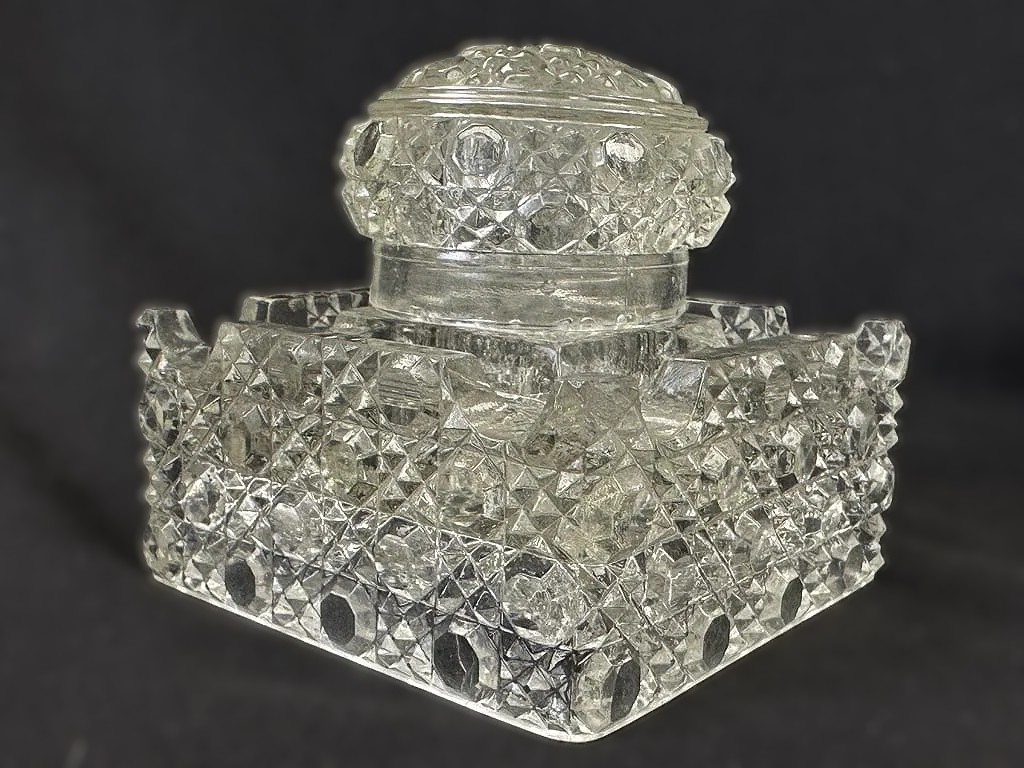
This is a beautiful example of Brilliant Period glasswork. The complexity of the geometry and the “all-over” cutting suggest a piece from the height of the American Brilliant Period (ABP), which flourished between 1876 and 1917.
Description
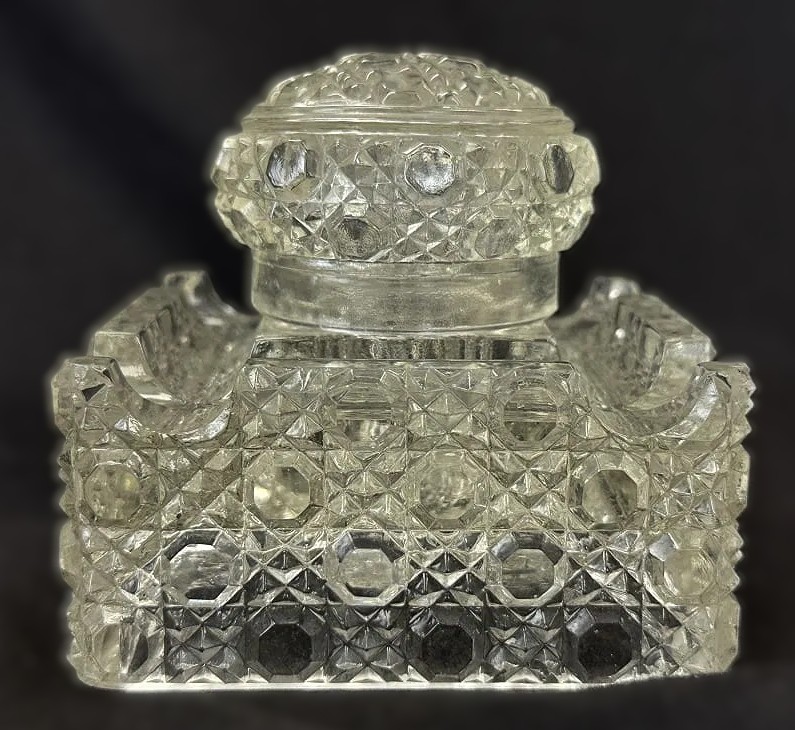
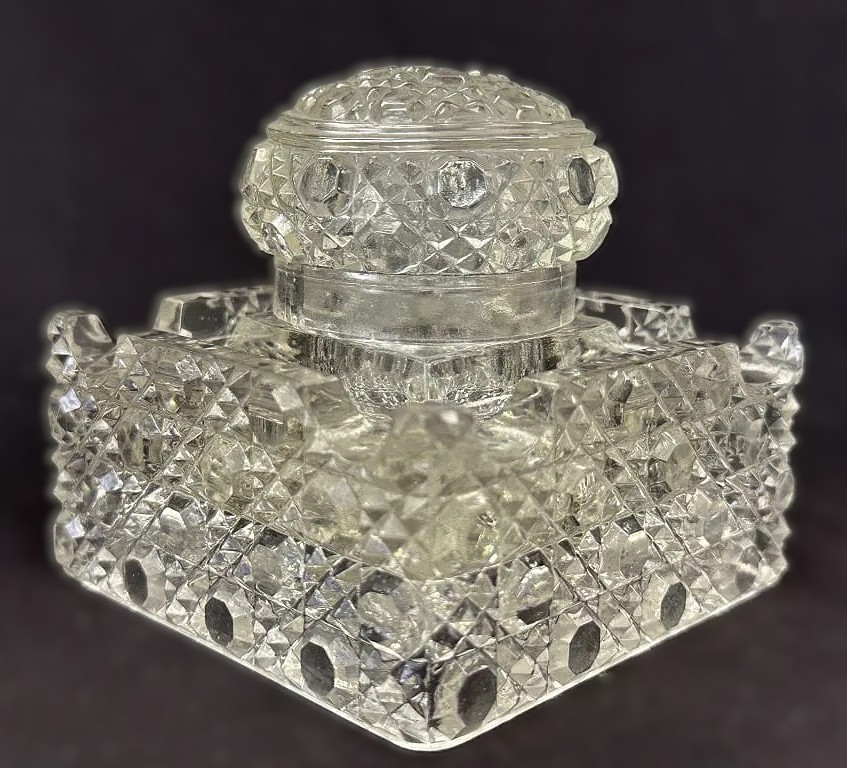
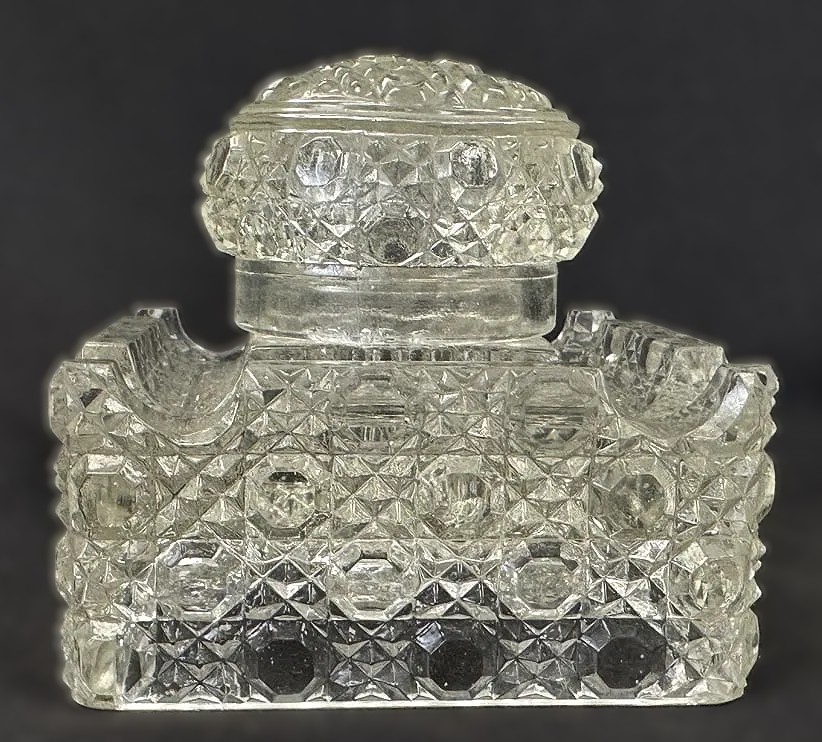
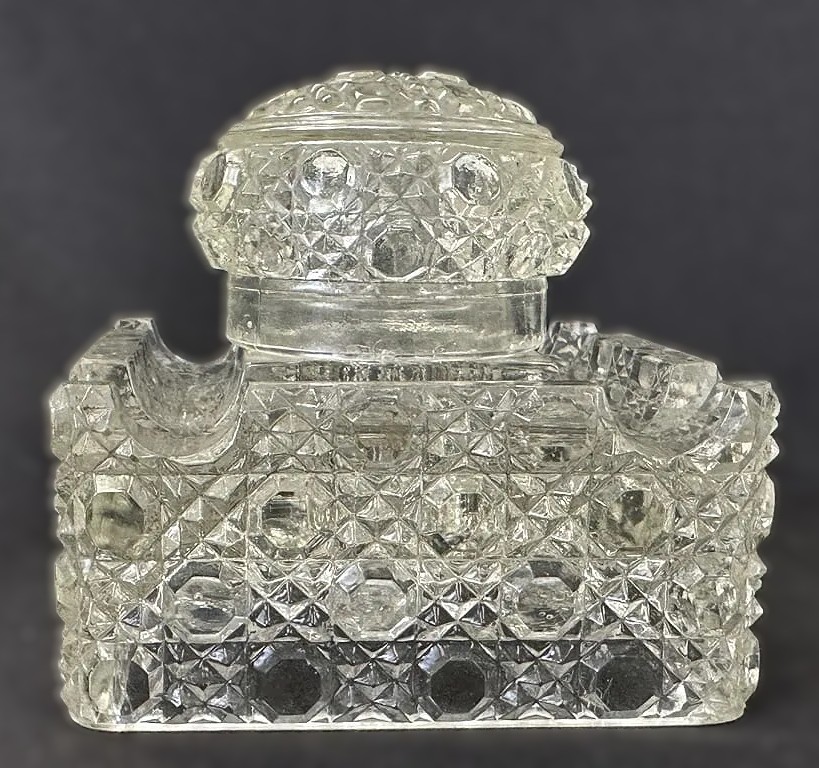
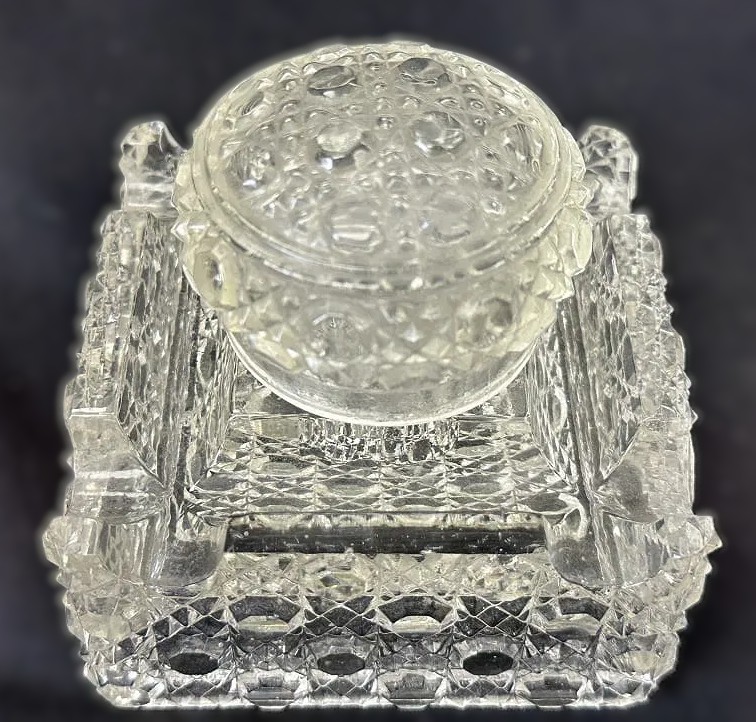
This heavy, square-form inkwell is a masterwork of light refraction, featuring a dense, “all-over” deep-cut pattern. The primary motif is a variation of the Daisy and Button or Hobstar pattern, characterized by large, circular-faceted “buttons” or “medallions” framed by intricate diamond-point and crosshatch cutting.
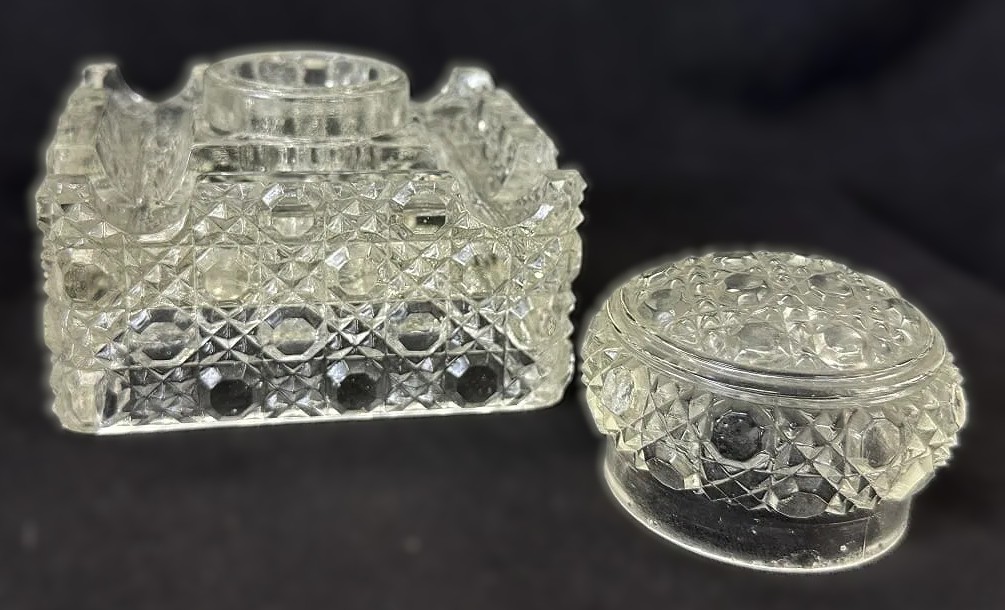
- The Base: The square base features two integrated, U-shaped pen rests on the top shoulders, flanking the central ink neck. These rests are smooth ground to protect the shafts of delicate dip pens while maintaining the visual flow of the faceted edges.
- The Cutting: The depth of the miter cuts is significant, creating a sharp, “toothed” texture at the corners and along the rim. The base is also cut on the underside, ensuring that light is trapped and reflected upward through the body of the vessel.
- The Lid: The matching dome-shaped lid fits snugly over the neck. It continues the base’s decorative program with a central star or floral motif on the crown, surrounded by a ring of faceted medallions that mirror the proportions of the base.
Historical Context & Attribution
Determining a specific maker for Brilliant Period glass is challenging without a signature (acid stamp), as many patterns were shared or subtly varied between the major houses. However, based on the craftsmanship and style, we can narrow down the origins:
When was it made?
Circa 1885–1905. This timeframe aligns with the era’s preference for heavy, lead-crystal blanks and labor-intensive, deep-cut geometric designs before the industry shifted toward molded “near-cut” patterns and simpler Art Deco lines.
Where was it made?
Almost certainly the United States. During this era, American glass houses outperformed European competitors in the “brilliance” of their lead glass and the complexity of their cutting. Centers of production included Corning (NY), New Bedford (MA), and Philadelphia (PA).
Who made it?
While many firms produced similar geometric patterns, the quality of this piece is consistent with top-tier manufacturers such as:
- C. Dorflinger & Sons: Known for their exceptional clarity and sophisticated desk sets.
- Libbey Glass Company: Famous for their intricate geometric motifs and high-lead content blanks.
- J. Hoare & Co.: A prolific producer of “Daisy and Button” variations.
Technical Summary
| Feature | Detail |
| Material | Heavy lead crystal (likely 30%+ lead oxide for maximum refraction) |
| Form | Square architectural base with matching domed lid |
| Technique | Hand-cut on a rotating stone or diamond wheel; hand-polished |
| Pattern | Geometric variant featuring medallions, diamond points, and mitre cuts |
| Function | Dual pen-rest inkstand for dip pens |
Sold for $155 in April 2026
Content disclaimer. The information posted is the owner’s best knowledge and may not have been vetted by the SOIC. We welcome comments, corrections, and additions, working to make our website information comprehensive and accurate.
Join the Society of Inkwell Collectors (SOIC) – it’s free!
Founded in 1981 as a non-profit organization,
we are documenting inkwells (and accessories).
We’re here to help and inform!